
Child Psychology Piaget Erikson Kohlberg Piaget Cognitive Development
Child Psychology Piaget Erikson Kohlberg
Piaget: Cognitive Development • Sensorimotor Stage – Birth to age Two • • Discovering the world Mouth helps to “know” the world Use senses to explore world Object Permanence – Jean Piaget: at 9 months – Renee Baillargeon: at 3 months (or earlier)
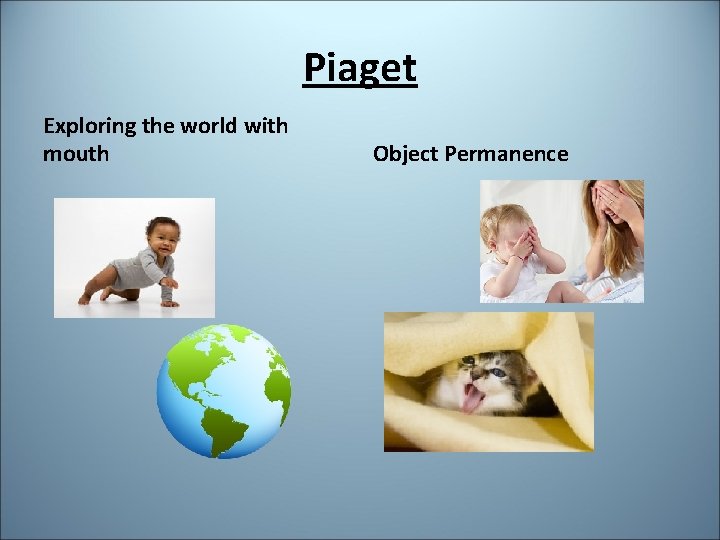
Piaget Exploring the world with mouth Object Permanence
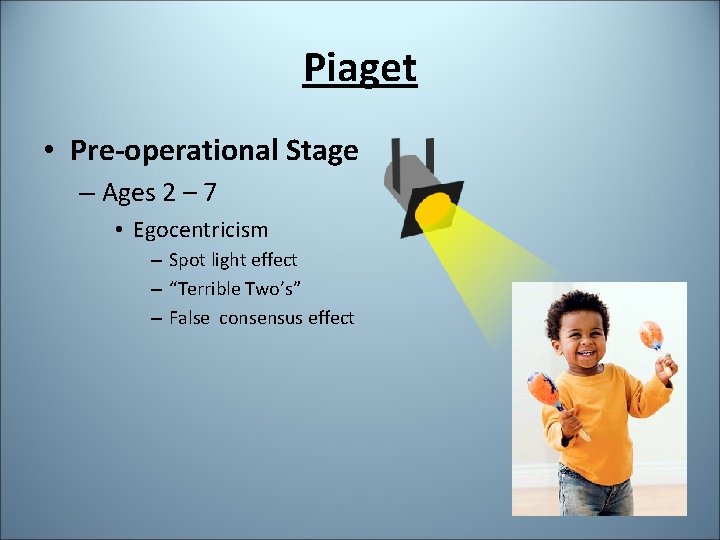
Piaget • Pre-operational Stage – Ages 2 – 7 • Egocentricism – Spot light effect – “Terrible Two’s” – False consensus effect
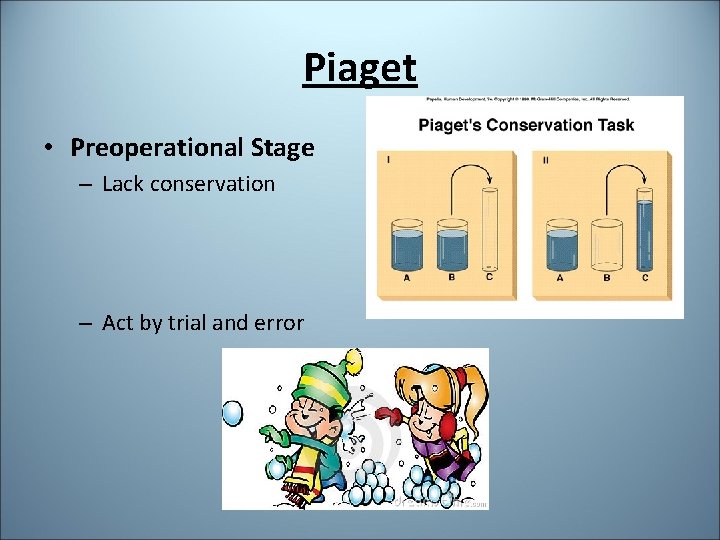
Piaget • Preoperational Stage – Lack conservation – Act by trial and error
Piaget • Concrete Stage – Ages 7 – 11 • Logical thought processes appear: – Reversibility: 3+2=5 – Less egocentric AND 5 -3=2 !!! • Possess conservation skills • Need Concrete examples to learn – “Manipulatives”
Piaget • Formal Stage – Ages 12 - 18 • • Use hypothetical : if…then… Moral development Personal belief system emerge Use abstract thought processes – Algebra, Geometry
Erikson: Social Development • Adolescence: Identity vs. Identity Diffusion – Teens “try on” different roles to help them discover who they are – Goal is not to finalize identity, but to begin to make choices about who you are
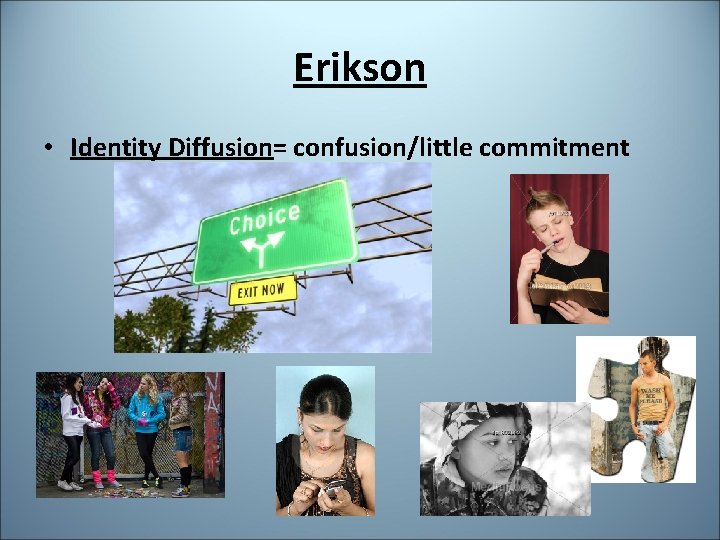
Erikson • Identity Diffusion= confusion/little commitment
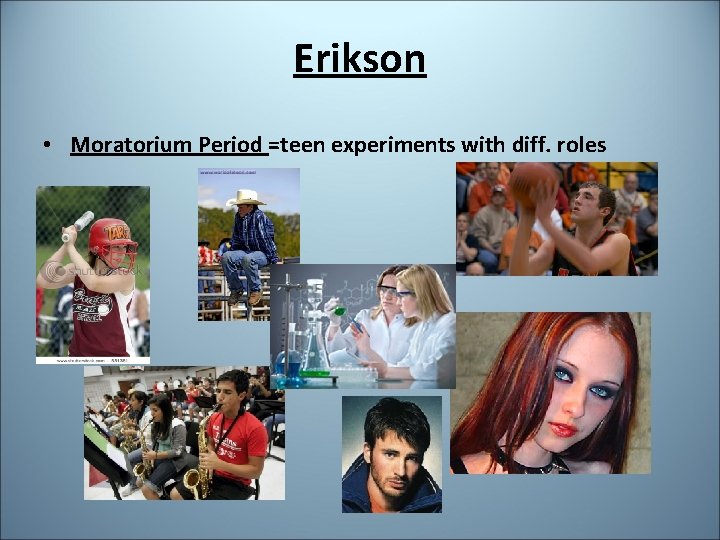
Erikson • Moratorium Period =teen experiments with diff. roles
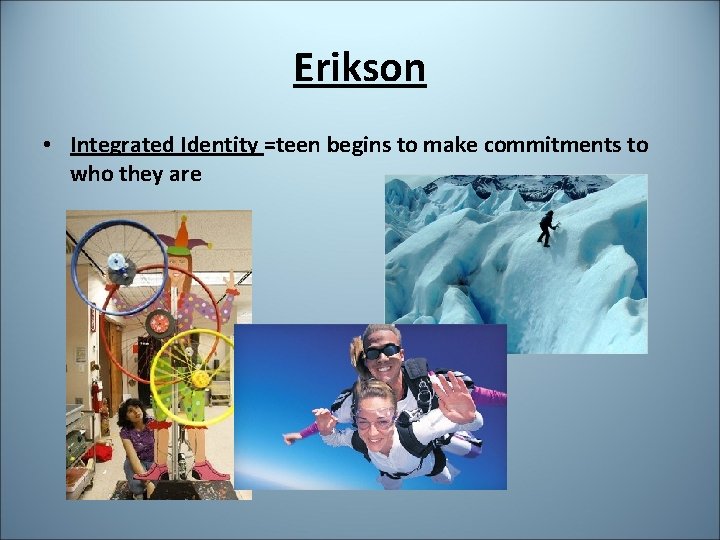
Erikson • Integrated Identity =teen begins to make commitments to who they are
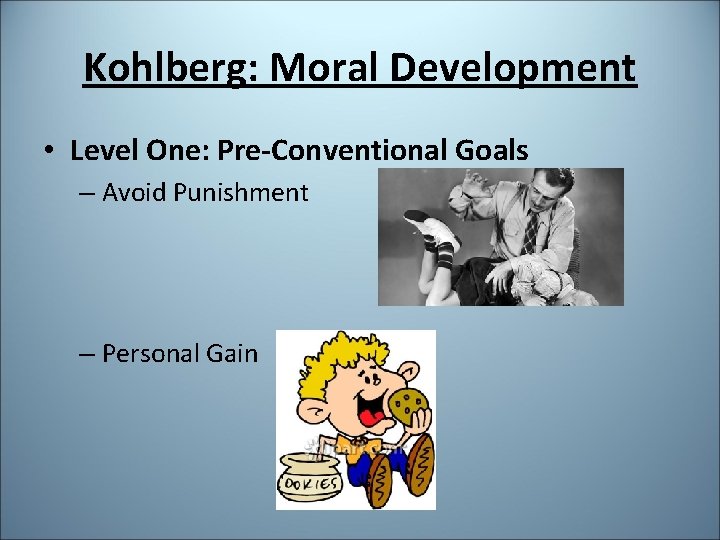
Kohlberg: Moral Development • Level One: Pre-Conventional Goals – Avoid Punishment – Personal Gain
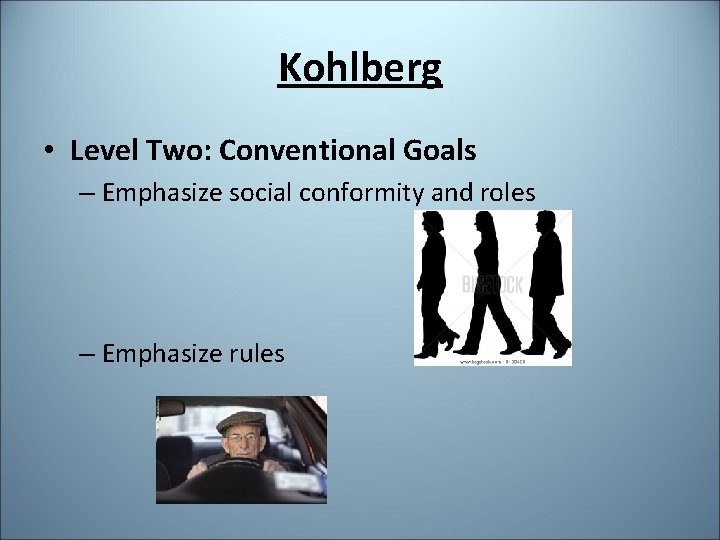
Kohlberg • Level Two: Conventional Goals – Emphasize social conformity and roles – Emphasize rules

Kohlberg • Level Three: Post-Conventional Goals – Idealistic moral principles…? – Protects rights of all…?
- Slides: 14