
CHILD PROTECTION UPDATE 2015 Module 3 Identifying and
- Slides: 17
CHILD PROTECTION UPDATE 2015 Module 3 Identifying and responding to sexual behaviours in students 1
Session outline This session includes information on: • identifying problematic sexual behaviours • responding appropriately to: – children and young people who demonstrate sexualised, as well as, problematic sexual behaviours – the safety, welfare and wellbeing of other children and young people involved • staff responsibilities to follow up child protection concerns. 2
Any sexualised behaviour between students at school must be responded to, including: • • sexual play • unwanted kissing • touching in a sexual • manner • communication of graphic sexual matters oral sexual contact or making another student perform such acts exposing oneself or looking at another student’s genitals. 3
The principal must be informed if: • you learn about sexual abuse, or have concerns about sexual contact involving a child or young person • you are concerned about a child or young person’s sexual behaviour toward others • you are concerned that a child or young person is at risk of sexual abuse • a child or young person’s behaviour, including sexualised behaviour, makes you worry that they may have been a victim of sexual abuse. 4
Problematic sexual behaviour is: Sexual activity instigated by a child or young person, who is more powerful than the other child or young person in ways which include: • a substantial difference in age, ability and/or development • use of coercion, bribery, aggression and/or clandestine behaviour. 5
Problematic sexual behaviour is: • sexual behaviour that is abnormal for age or development and is compulsive and excessive • a range of behaviours that may require intervention and monitoring by the school, behaviours requiring specialist support, through to more serious behaviours requiring criminal charges and prosecution. 6
Why is intervention important? Problematic and sexualised behaviour can be: • harmful to other children or young people • harmful to the child or young person engaging in sexualised behaviour because of: – – – increased risk of being abused themselves disruption to developmental life stages stigmatisation or identity issues child protection issues may be unresolved risk of the behaviour escalating and continuing into adolescence and adulthood. 7
Some statistics • Over the 3 month period from October – December 2013, Family and Community Services received 406 reports from NSW public schools where ‘Child inappropriate sexual behaviour’ was the primary reported issue for risk of significant harm report. Community Services Quarterly Report to Partner Agencies – October to December 2013 8
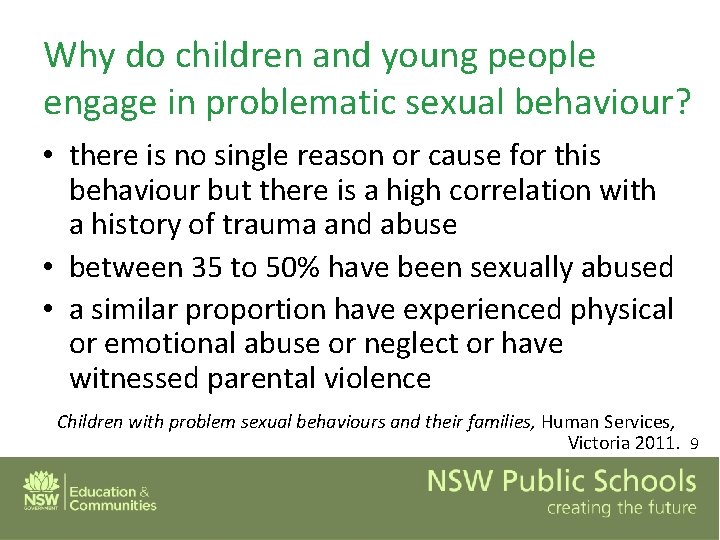
Why do children and young people engage in problematic sexual behaviour? • there is no single reason or cause for this behaviour but there is a high correlation with a history of trauma and abuse • between 35 to 50% have been sexually abused • a similar proportion have experienced physical or emotional abuse or neglect or have witnessed parental violence Children with problem sexual behaviours and their families, Human Services, Victoria 2011. 9
Recognising problematic sexual behaviour Activity – read the scenarios and discuss: • Is this normal behaviour? • Is this something I should be worried about? • Should this be reported? 10
Responding to sexual behaviours When deciding how to respond… • identify and consider the behaviour • explore the context of the behaviour. 11
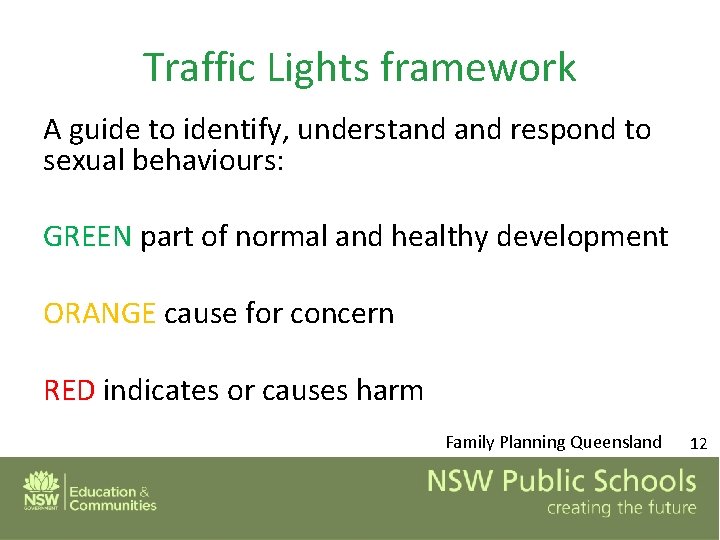
Traffic Lights framework A guide to identify, understand respond to sexual behaviours: GREEN part of normal and healthy development ORANGE cause for concern RED indicates or causes harm Family Planning Queensland 12
Case study What action do you take to: 1. protect and reassure the child or young person who has been harmed 2. respond to the child or young person who has harmed 3. manage the incident 4. support and protect other children or young people who may have been harmed 5. communicate with parents? Mandatory reporter guide http: //www. keepthemsafe. nsw. gov. au/ 13
Responding to the child or young person subjected to sexual behaviour • • • show care listen reassure them do not punish them ensure safety, and appropriate follow up, at school if a report is made to Family and Community Services, follow the case worker’s advice about follow up processes in the school. 14
Responding to the child or young person who has engaged in problematic sexual behaviour • be mindful of your own response • consider the age and development of the child or young person • implement strategies to ensure the safety of other children or young people • protect the child or young person from ‘over reactions’ within the broader school community. 15
Key messages to parents of students directly involved • allay fears • give parents confidence that the school is managing the situation • support parents to be attentive to their child’s wellbeing • support parents to manage their child’s behaviour and to seek assistance if needed • share information with the broader school community on a ‘needs to know’ basis. 16
Resources Mandatory Reporter Guide http: //www. keepthemsafe. nsw. gov. au/ Traffic Lights guide to sexual behaviours in children and young people: identify, understand respond – Family Planning Queensland 17