
Child Protection Information Management SystemKenya Case Management Workshop
- Slides: 20
Child Protection Information Management System-Kenya Case Management Workshop 4 -6 December, 2019 Presenters: Polycarp Otieno Joseph Mugah
Child Protection Information Management System. CPIMS • Aim • Objective • Problem Statement • Design • CPIMS-How it works • Targeted users • Integration • Achievements • Lessons learnt Outline 2
Child Protection Information Management System-CPIMS Aim A comprehensive information management system that: 1. Provides accurate, timely and consistent national data for evidence-based programming on children protection issues and be able to track the services provided to a child across all service points. 2. Encompasses all processes from use of individual pieces of data for case management to the generation of reports 3. Information management system linked to other key data management systems 3
Child Protection Information Management System. CPIMS Objectives Facilitate monitoring and evaluation of child protection interventions Track vulnerable children longitudinally and geographically Enhanced access to accurate, timely and reliable aggregate data Facilitate appropriate information sharing Facilitate record keeping and information management on individual case records Provide a software system which is flexible, extensible & scalable over time 4
Child Protection Information Management System-CPIMS What it was created to solve: • Lack of functional national child protection IMS that can provide statistics: a). The 1. national level: Performance Monitoring 2. informing and providing justification for budgeting decisions and 3. Meeting reporting requirement at the national, regional and international levels. 4. Data sharing at international forums and other agencies 5. Data review and routine reports, information product and policy formulation 5
Child Protection Information Management System -CPIMS What it was developed to solve b)The county and sub-county level: 1. Sharing data with child protection stakeholders 2. Reporting to external administrative partners like the area advisory council 3. Performance Monitoring 4. Supporting effective individual case management, referrals and reporting requirements 5. Partners and stakeholder coordination and accountability 6. Data collection, management and ownership 7. Data Quality 6
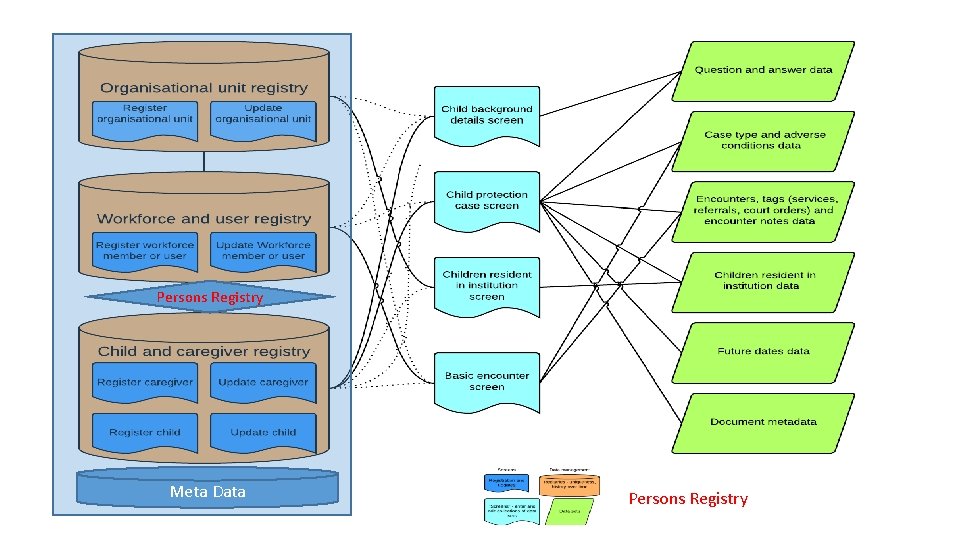
Child Protection Information Management System. CPIMS Design • Hybrid of online transaction processing (OLTP) and online analytics processing (OLAP) • Design approach on open standards and open sources applications. • Developed in Python Django framework on a Postgre. SQL back end. • Consist of two main instances, for the Department of Children services and OVC IPs. • Web-based for development, training and production. • Modular development approach to allow for both vertical and horizontal scalability. 7
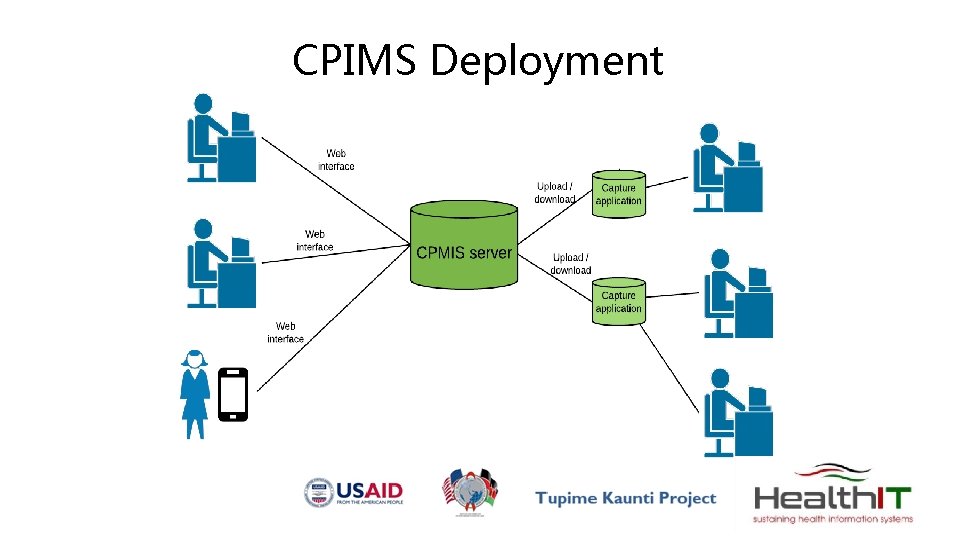
CPIMS Deployment
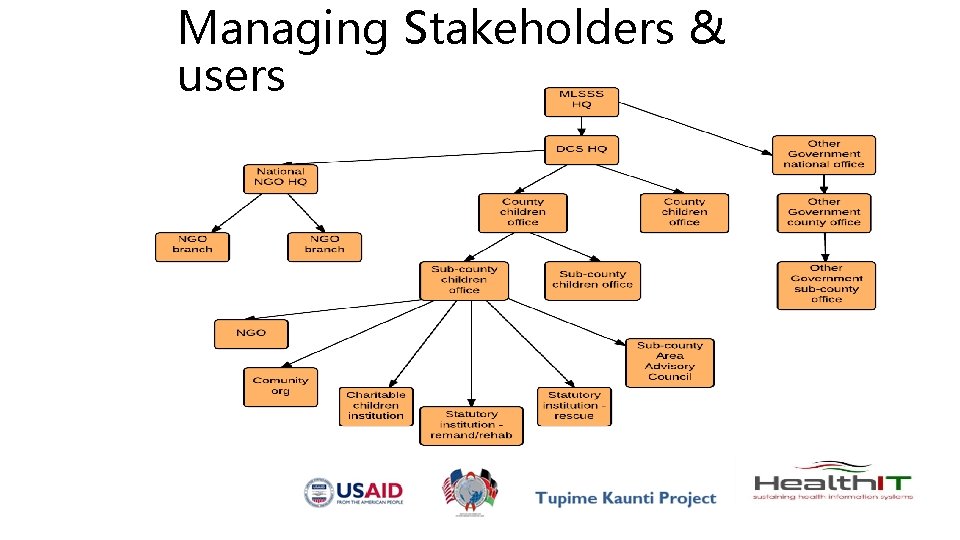
Managing Stakeholders & users
Persons Registry Meta Data Persons Registry
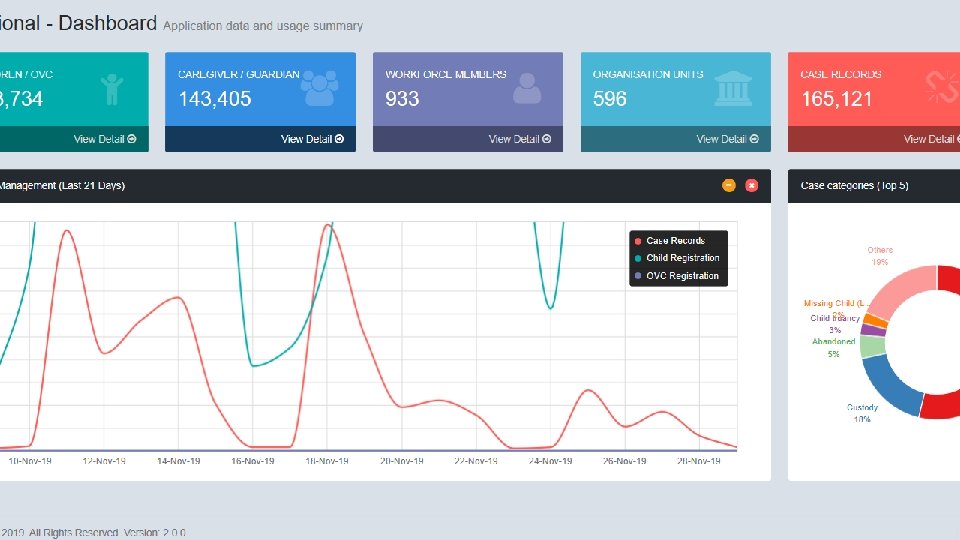
Child Protection Information Management System-CPIMS 11
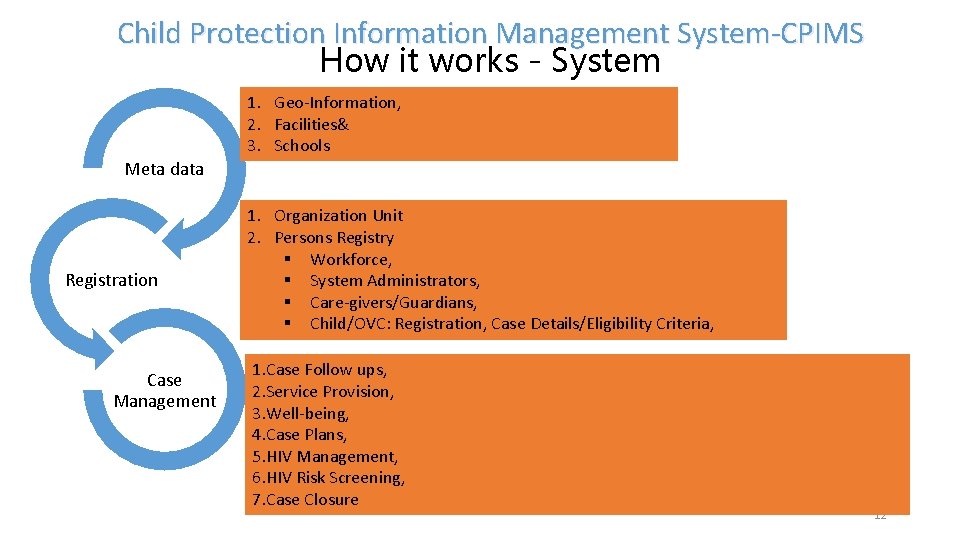
Child Protection Information Management System-CPIMS How it works - System 1. Geo-Information, 2. Facilities& 3. Schools Meta data Registration Case Management 1. Organization Unit 2. Persons Registry § Workforce, § System Administrators, § Care-givers/Guardians, § Child/OVC: Registration, Case Details/Eligibility Criteria, 1. Case Follow ups, 2. Service Provision, 3. Well-being, 4. Case Plans, 5. HIV Management, 6. HIV Risk Screening, 7. Case Closure 12
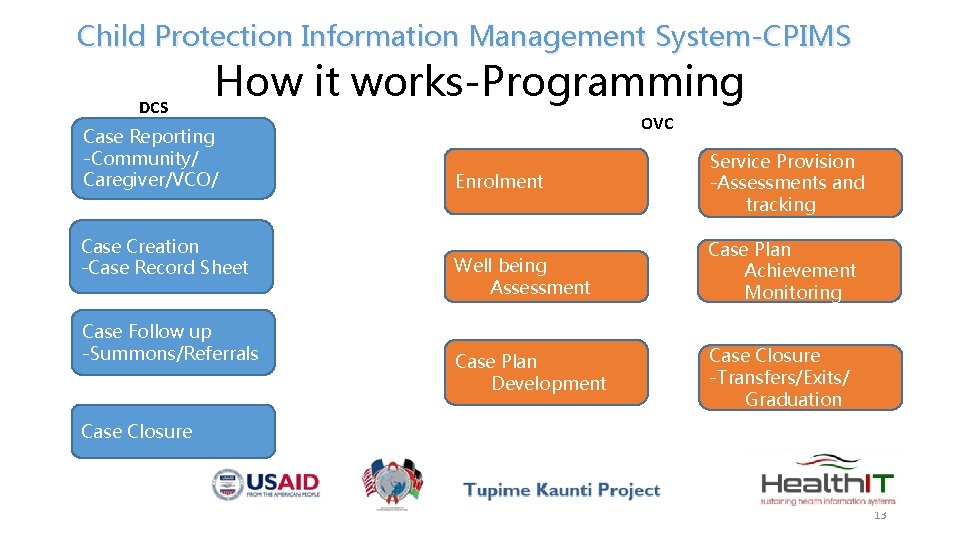
Child Protection Information Management System-CPIMS DCS How it works-Programming Case Reporting -Community/ Caregiver/VCO/ Case Creation -Case Record Sheet Case Follow up -Summons/Referrals OVC Enrolment Service Provision -Assessments and tracking Well being Assessment Case Plan Achievement Monitoring Case Plan Development Case Closure -Transfers/Exits/ Graduation Case Closure 13
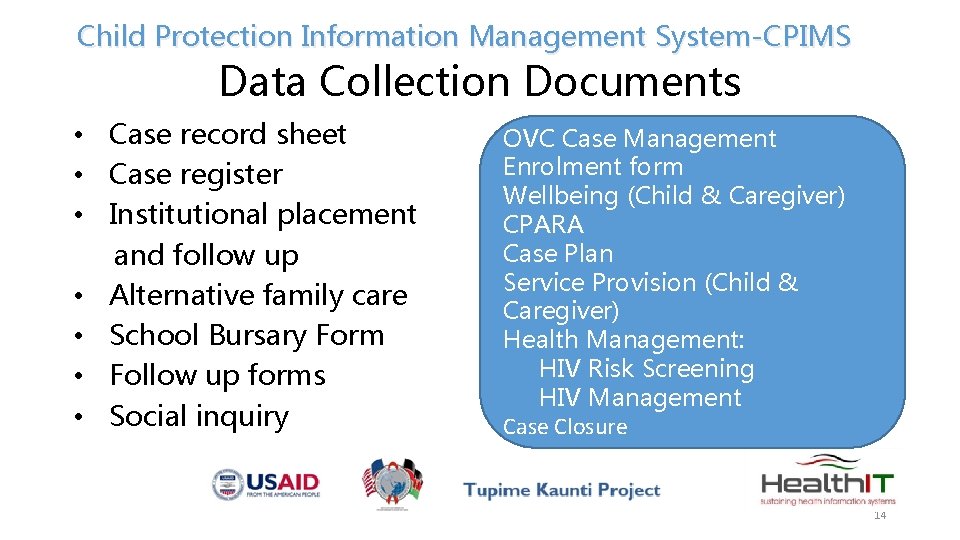
Child Protection Information Management System-CPIMS Data Collection Documents • Case record sheet • Case register • Institutional placement and follow up • Alternative family care • School Bursary Form • Follow up forms • Social inquiry OVC Case Management Enrolment form Wellbeing (Child & Caregiver) CPARA Case Plan Service Provision (Child & Caregiver) Health Management: HIV Risk Screening HIV Management Case Closure 14
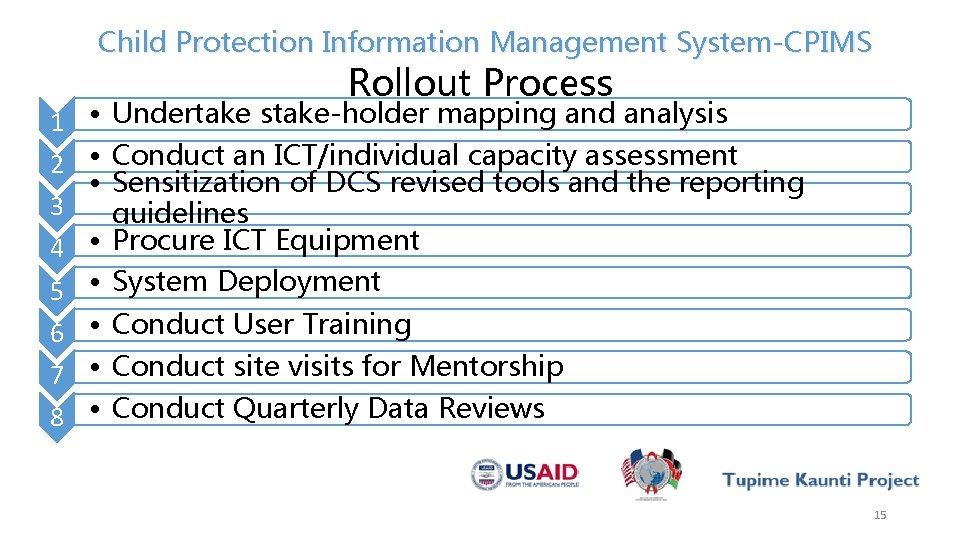
Child Protection Information Management System-CPIMS 1 • 2 • • 3 4 • 5 • Rollout Process Undertake stake-holder mapping and analysis Conduct an ICT/individual capacity assessment Sensitization of DCS revised tools and the reporting guidelines Procure ICT Equipment System Deployment 6 • Conduct User Training 7 • Conduct site visits for Mentorship 8 • Conduct Quarterly Data Reviews 15
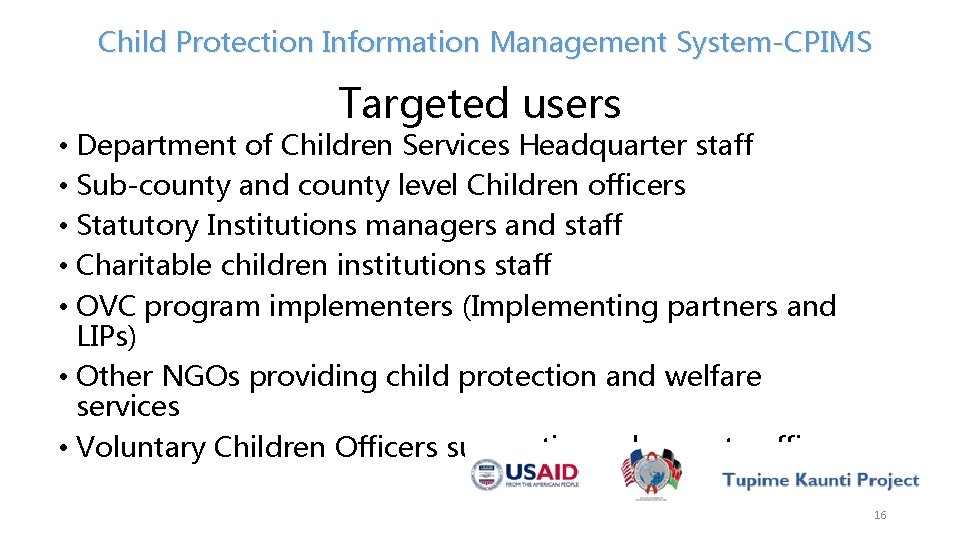
Child Protection Information Management System-CPIMS Targeted users • Department of Children Services Headquarter staff • Sub-county and county level Children officers • Statutory Institutions managers and staff • Charitable children institutions staff • OVC program implementers (Implementing partners and LIPs) • Other NGOs providing child protection and welfare services • Voluntary Children Officers supporting sub county offices 16
Child Protection Information Management System-CPIMS Integration • Referrals for interventions : Judiciary, NHIF, SI • Integration with other systems: 116, VURUGU mapper • Health (Kenya Master Facility Database and Viral Load/EID Database) • Judiciary – on going • Schools NEMIS system – yet to start 17
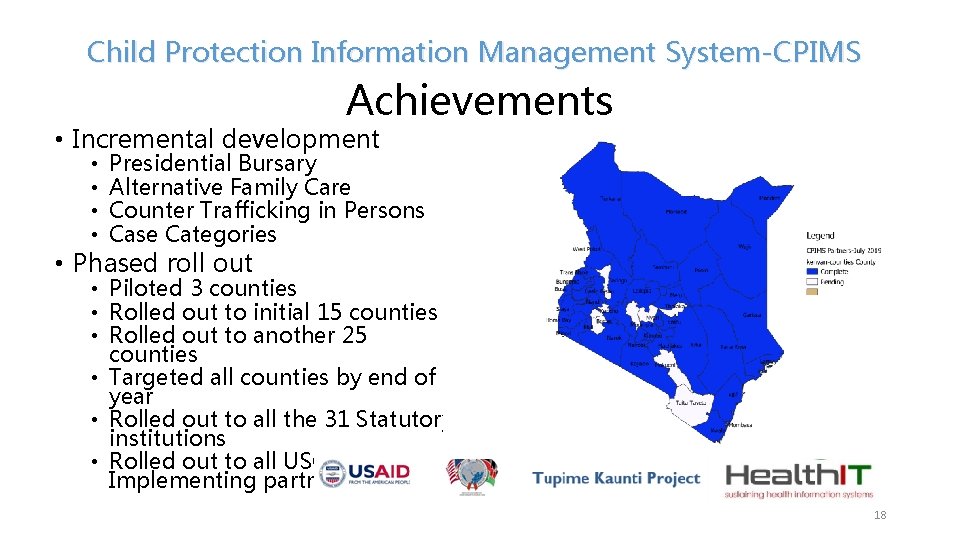
Child Protection Information Management System-CPIMS Achievements • Incremental development • • Presidential Bursary Alternative Family Care Counter Trafficking in Persons Case Categories • Phased roll out • Piloted 3 counties • Rolled out to initial 15 counties • Rolled out to another 25 counties • Targeted all counties by end of year • Rolled out to all the 31 Statutory institutions • Rolled out to all USG OVC Implementing partners 18
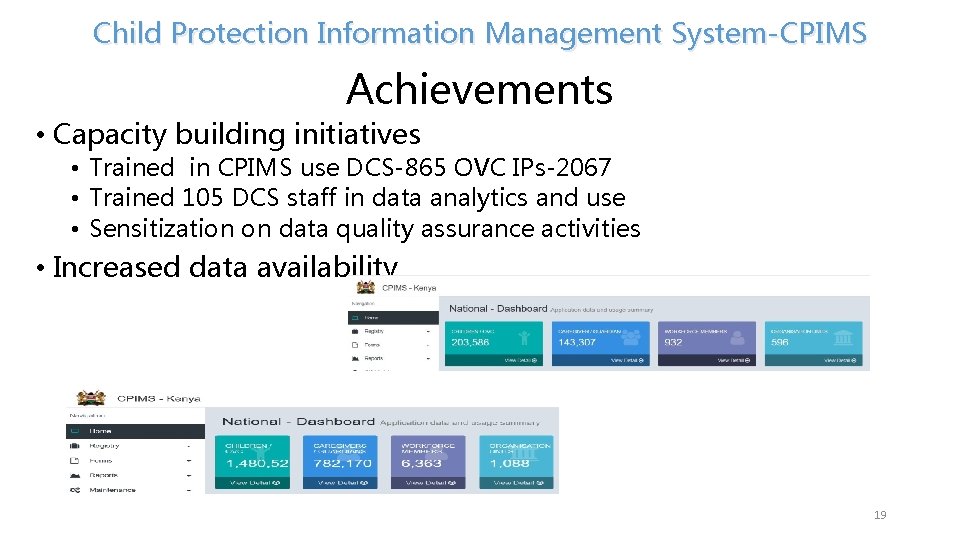
Child Protection Information Management System-CPIMS Achievements • Capacity building initiatives • Trained in CPIMS use DCS-865 OVC IPs-2067 • Trained 105 DCS staff in data analytics and use • Sensitization on data quality assurance activities • Increased data availability 19
Child Protection Information Management System. CPIMS Lessons learnt • Leadership: Technical Working Group and steering committee • Ownership and Support : Government owned, led and supported • Diverse business processes • Competing and non-aligned partners priorities • Lack of national level unique identifiers for children and caregivers 20