
CHILD LABOUR BY FANTASIA GUNN Child Labour Remains
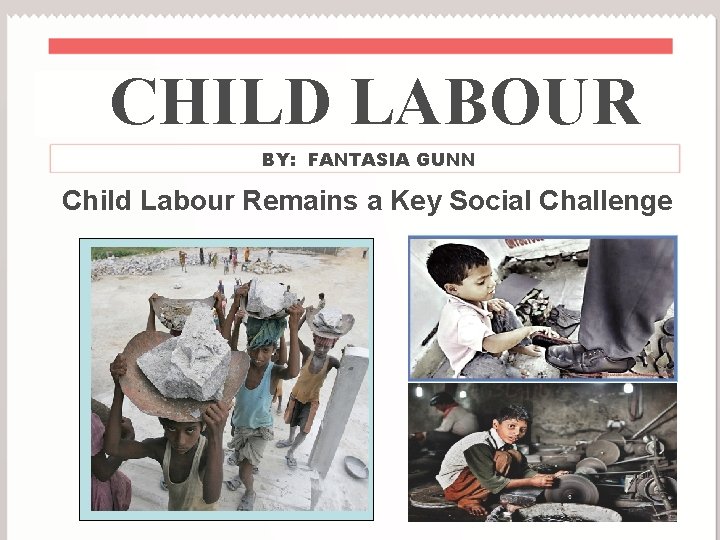
CHILD LABOUR BY: FANTASIA GUNN Child Labour Remains a Key Social Challenge
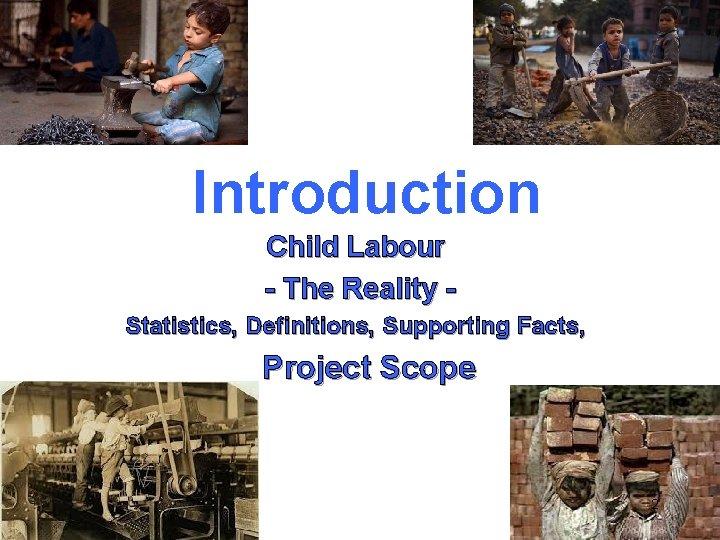
Introduction Child Labour - The Reality - Statistics, Definitions, Supporting Facts, Project Scope 2
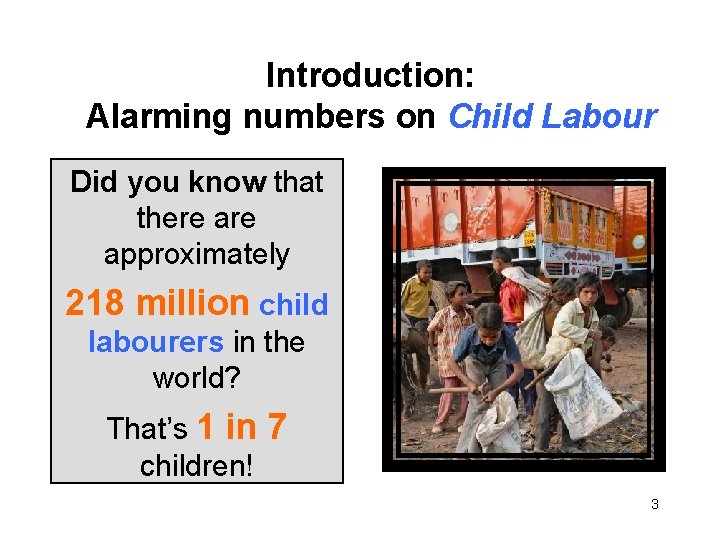
Introduction: Alarming numbers on Child Labour Did you know that there approximately 218 million child labourers in the world? That’s 1 in 7 children! 3
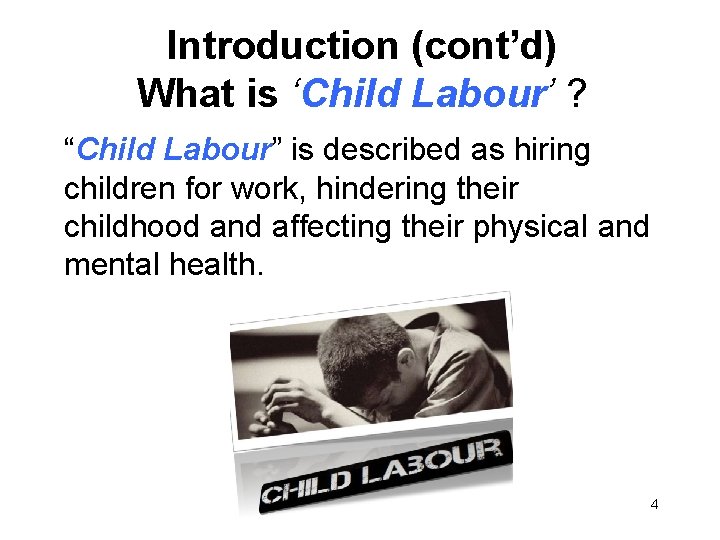
Introduction (cont’d) What is ‘Child Labour’ ? “Child Labour” is described as hiring children for work, hindering their childhood and affecting their physical and mental health. 4

Supporting facts and figures around Child Labour 5
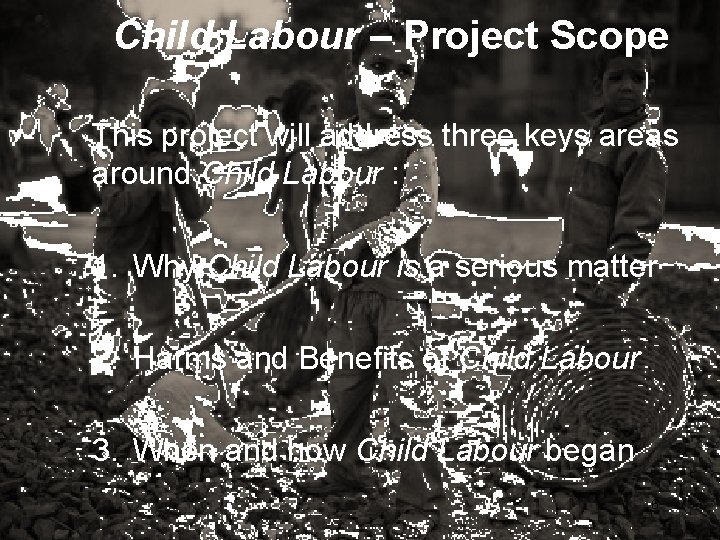
Child Labour – Project Scope This project will address three keys areas around Child Labour : 1. Why Child Labour is a serious matter 2. Harms and Benefits of Child Labour 3. When and how Child Labour began 6
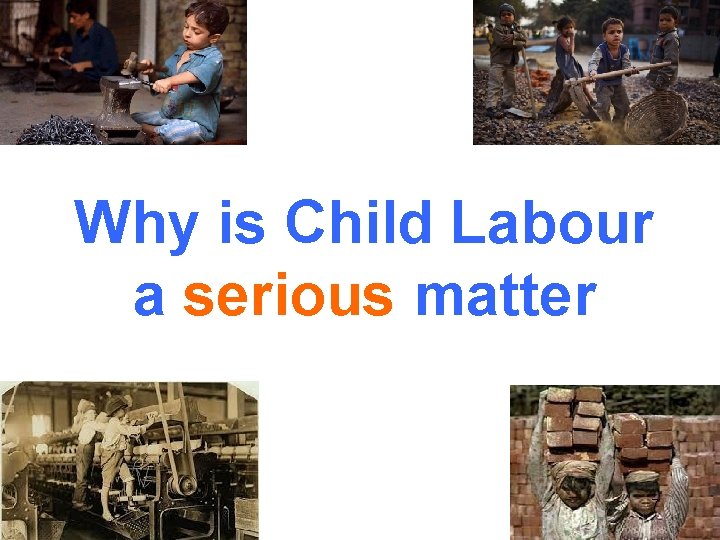
Why is Child Labour a serious matter 7
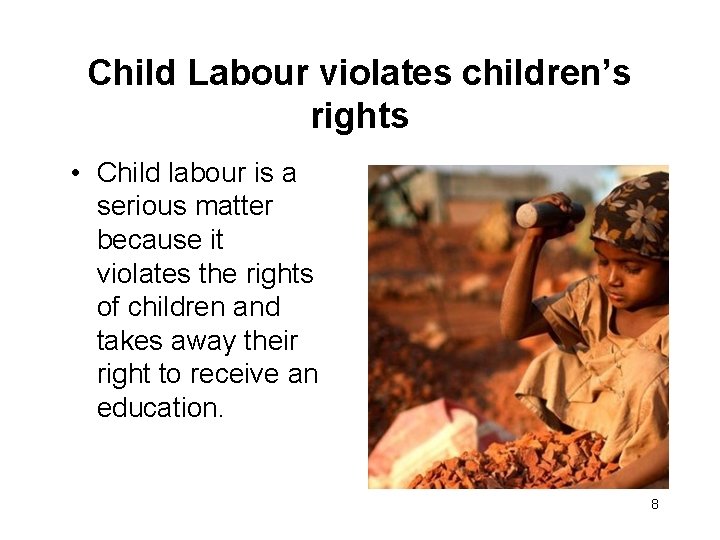
Child Labour violates children’s rights • Child labour is a serious matter because it violates the rights of children and takes away their right to receive an education. 8
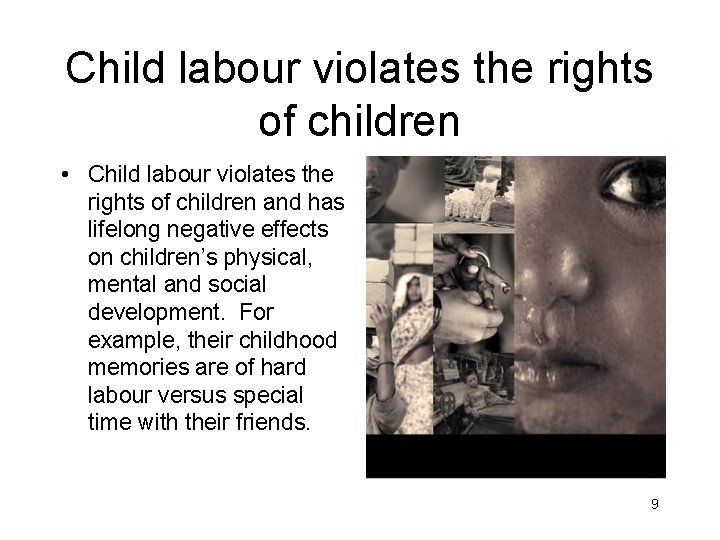
Child labour violates the rights of children • Child labour violates the rights of children and has lifelong negative effects on children’s physical, mental and social development. For example, their childhood memories are of hard labour versus special time with their friends. 9
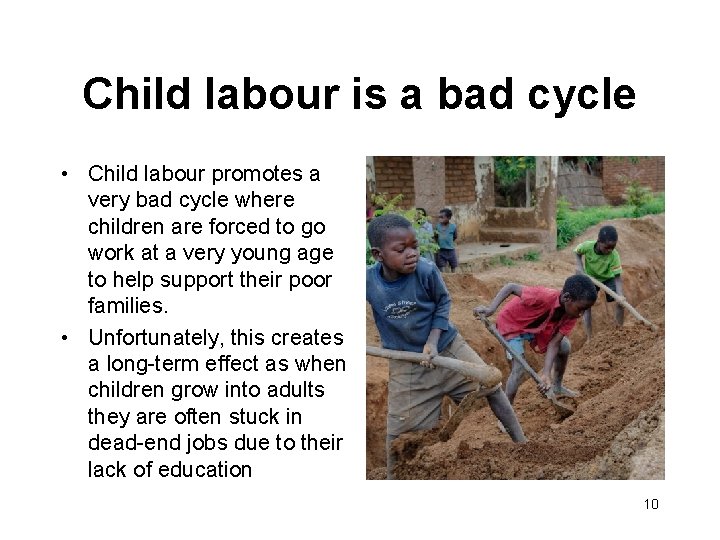
Child labour is a bad cycle • Child labour promotes a very bad cycle where children are forced to go work at a very young age to help support their poor families. • Unfortunately, this creates a long-term effect as when children grow into adults they are often stuck in dead-end jobs due to their lack of education. 10
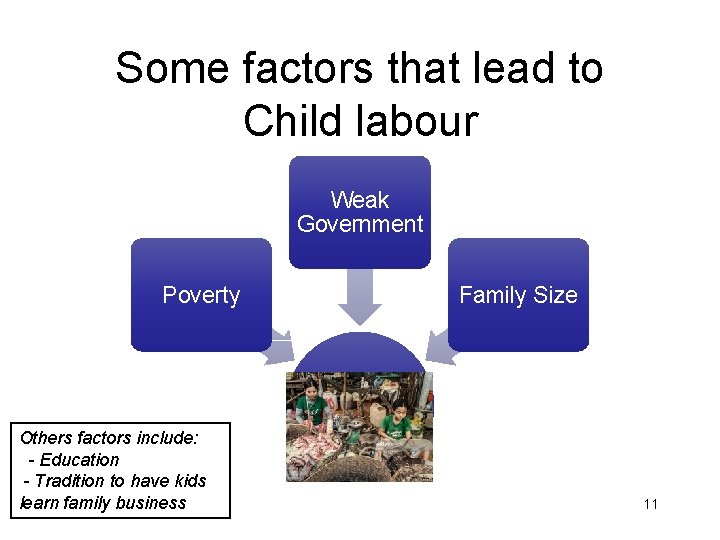
Some factors that lead to Child labour Weak Government Poverty Others factors include: - Education - Tradition to have kids learn family business Family Size Child Labour 11
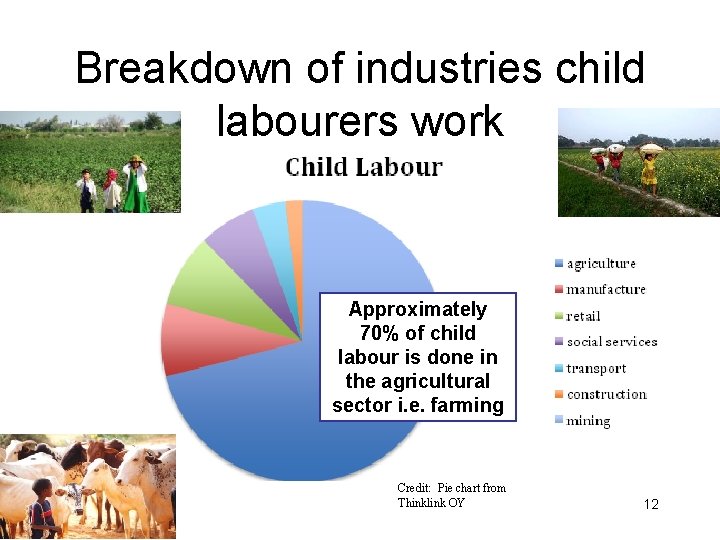
Breakdown of industries child labourers work Approximately 70% of child labour is done in the agricultural sector i. e. farming Credit: Pie chart from Thinklink OY 12
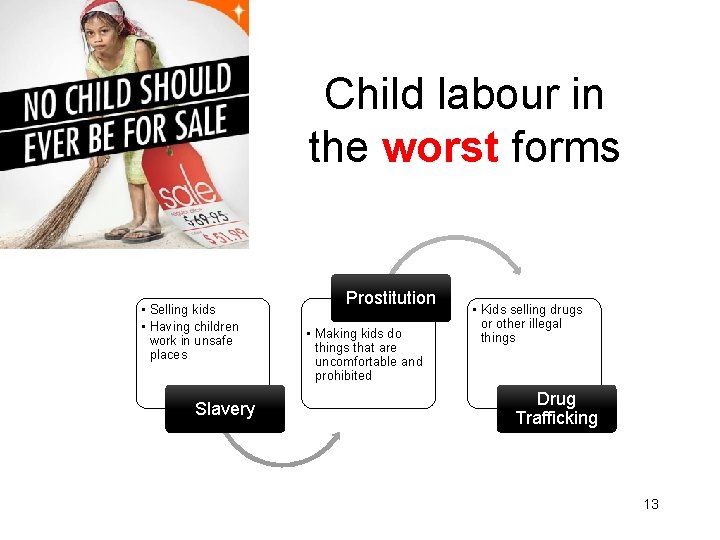
Child labour in the worst forms • Selling kids • Having children work in unsafe places Slavery Prostitution • Making kids do things that are uncomfortable and prohibited • Kids selling drugs or other illegal things Drug Trafficking 13
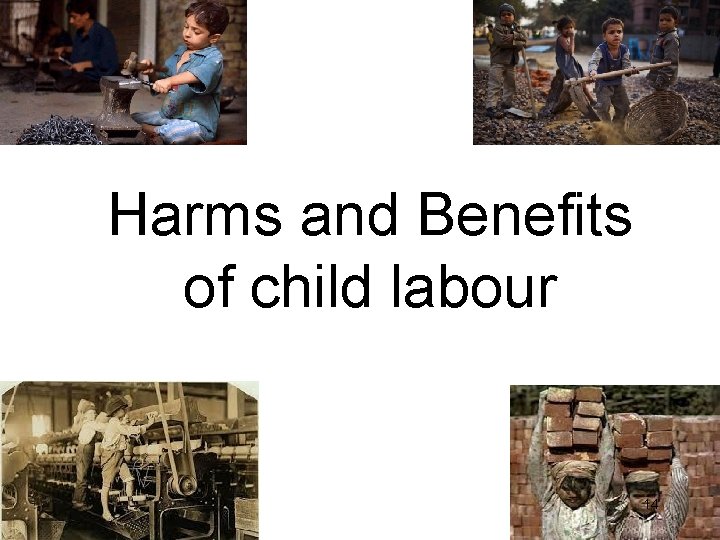
Harms and Benefits of child labour 14
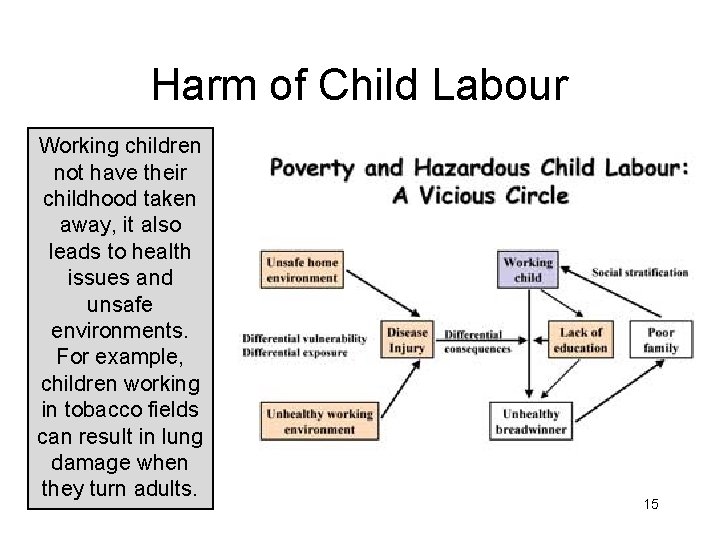
Harm of Child Labour Working children not have their childhood taken away, it also leads to health issues and unsafe environments. For example, children working in tobacco fields can result in lung damage when they turn adults. 15
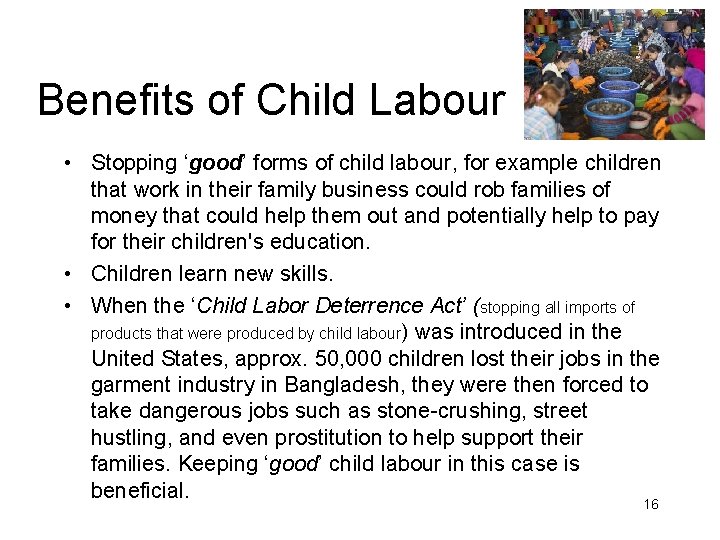
Benefits of Child Labour • Stopping ‘good’ forms of child labour, for example children that work in their family business could rob families of money that could help them out and potentially help to pay for their children's education. • Children learn new skills. • When the ‘Child Labor Deterrence Act’ (stopping all imports of products that were produced by child labour) was introduced in the United States, approx. 50, 000 children lost their jobs in the garment industry in Bangladesh, they were then forced to take dangerous jobs such as stone-crushing, street hustling, and even prostitution to help support their families. Keeping ‘good’ child labour in this case is beneficial. 16
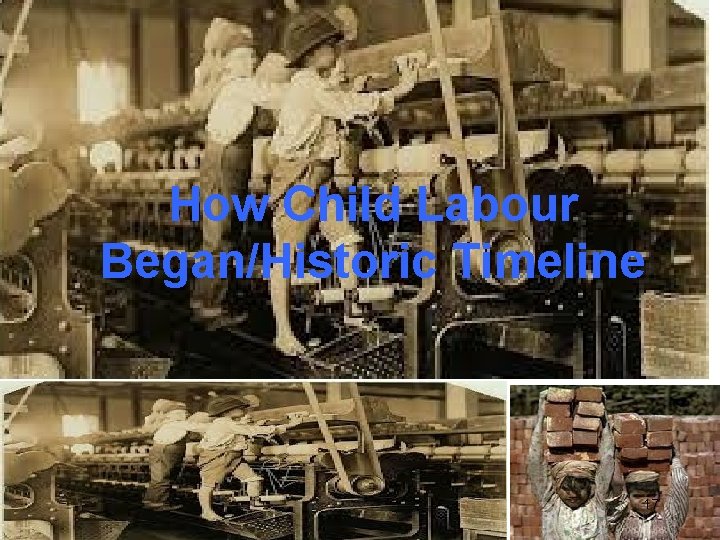
How Child Labour Began/Historic Timeline 17
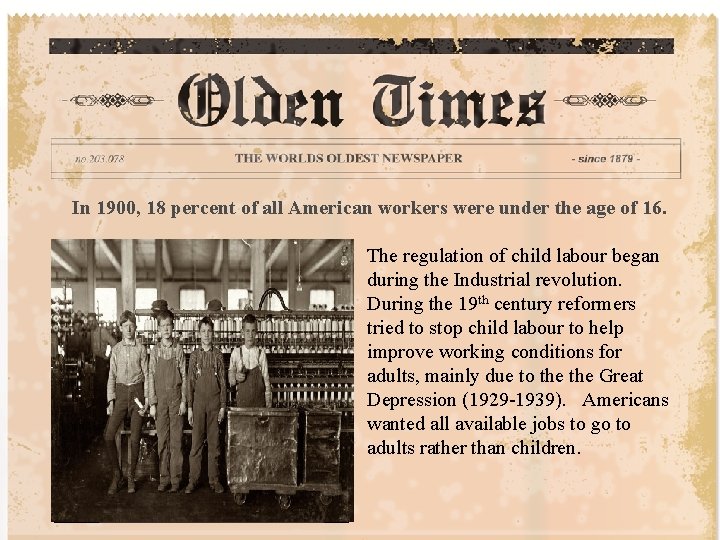
In 1900, 18 percent of all American workers were under the age of 16. The regulation of child labour began during the Industrial revolution. During the 19 th century reformers tried to stop child labour to help improve working conditions for adults, mainly due to the Great Depression (1929 -1939). Americans wanted all available jobs to go to adults rather than children.
Timeline of Child Labour Developments in the United States • 1800’s -1899 – (1836)Massachusetts creates the first state child labour law requiring children under 15 to go to school a minimum of three months per year. (1881) The America Federation of Labour barred children under 14 from wage labour. • 1900 – 1999 – Various charities and organizations formed, liked The National Child Labor Committee to find ways to stop child labour 19
Current State of Child Labour • There are many organizations, like International Labour Organization that organize (World Against Child Labour) who are working very hard to eliminate child labour completely. – These humanitarians are doing a great job and have made a lot of headway. – That said, there is still a lot to be done. 20
Current state of Child Labour • Political – Government still too slow to react • Economic – Businesses are still using children in their supply chain to increase profit , they can pay them less and earn more for them. • Social – poverty and lack of free universal education are still main reasons child labour still exists today. • Environmental – Not enough public attention, through media etc is given to this topic to generate the urgency it needs. 21
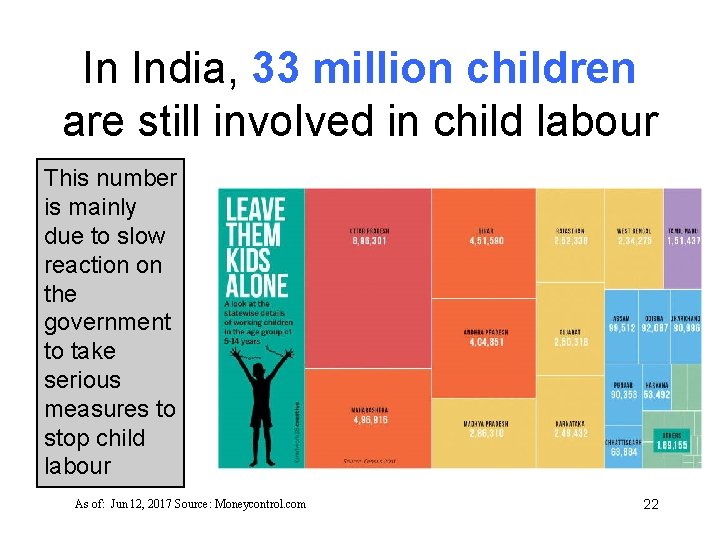
In India, 33 million children are still involved in child labour This number is mainly due to slow reaction on the government to take serious measures to stop child labour As of: Jun 12, 2017 Source: Moneycontrol. com 22

As the Child Labour Index of 2014 shows, there are still many countries with ‘extreme child labour 23
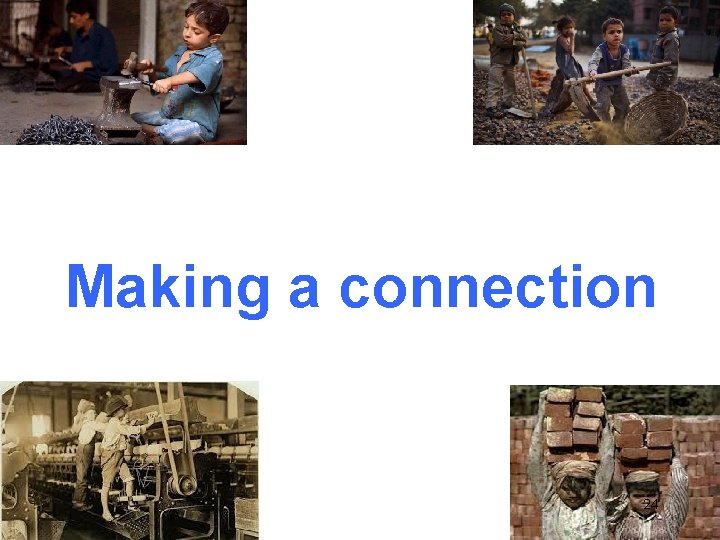
Making a connection 24
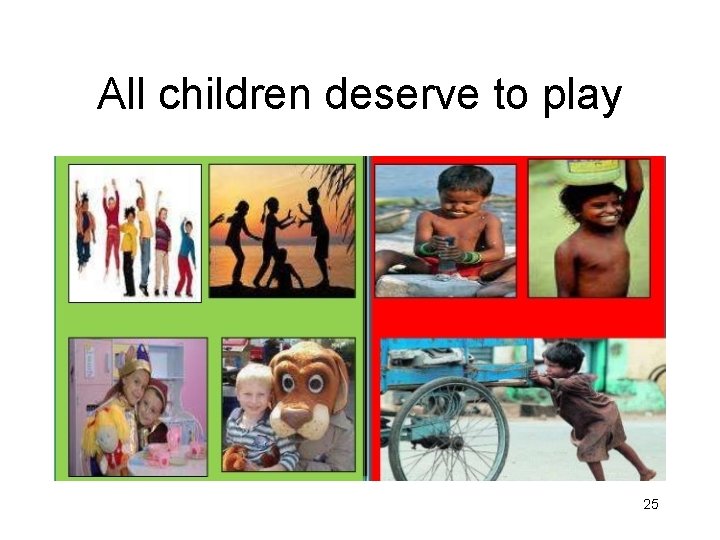
All children deserve to play 25
Connecting Child Labour to my personal view • I live in Canada and before I did this topic I had no idea what child labour meant. I just thought child labour meant during chores around the house with allowance. My views have totally changed, it is really difficult now that I know as I received quality education children in undeveloped countries are working in mines, supply chains just to help put food on their tables. 26
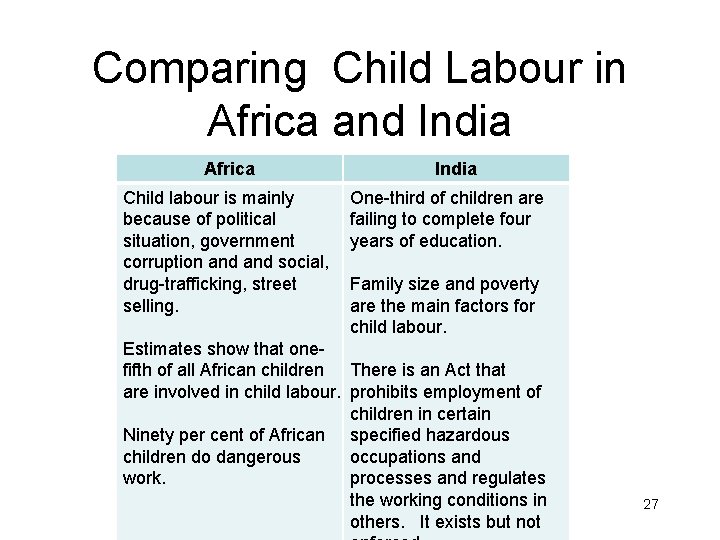
Comparing Child Labour in Africa and India Africa Child labour is mainly because of political situation, government corruption and social, drug-trafficking, street selling. India One-third of children are failing to complete four years of education. Family size and poverty are the main factors for child labour. Estimates show that onefifth of all African children There is an Act that are involved in child labour. prohibits employment of children in certain Ninety per cent of African specified hazardous children do dangerous occupations and work. processes and regulates the working conditions in others. It exists but not 27
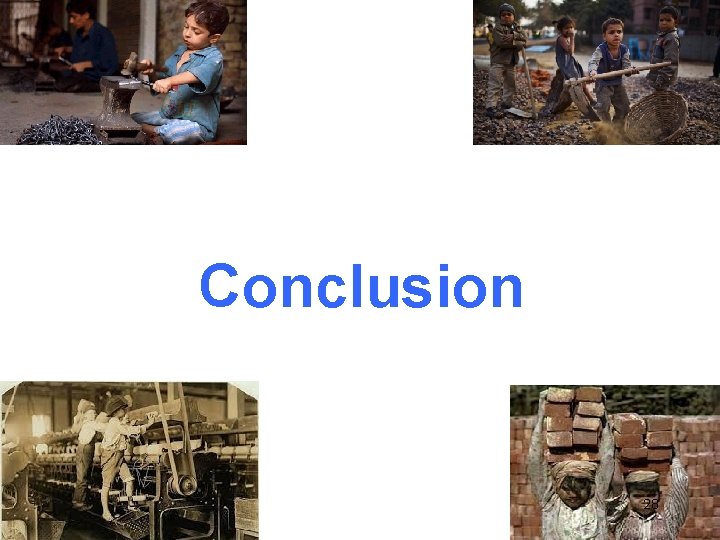
Conclusion 28
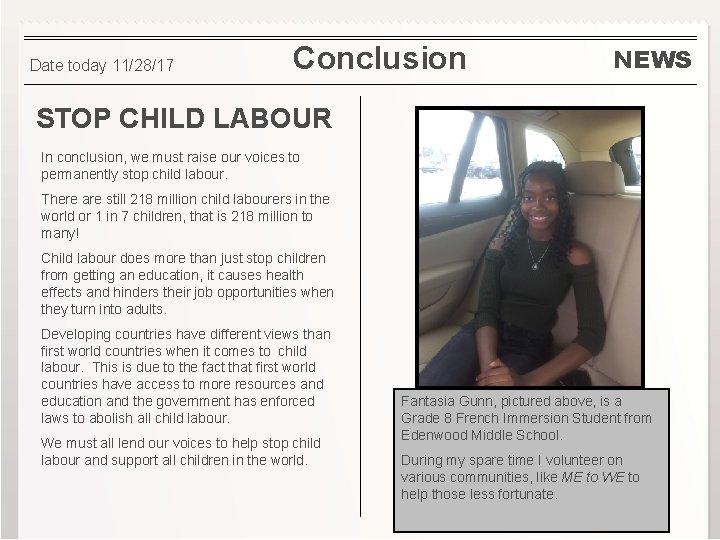
Date today 11/28/17 Conclusion NEWS STOP CHILD LABOUR In conclusion, we must raise our voices to permanently stop child labour. There are still 218 million child labourers in the world or 1 in 7 children, that is 218 million to many! Child labour does more than just stop children from getting an education, it causes health effects and hinders their job opportunities when they turn into adults. Developing countries have different views than first world countries when it comes to child labour. This is due to the fact that first world countries have access to more resources and education and the government has enforced laws to abolish all child labour. We must all lend our voices to help stop child labour and support all children in the world. Fantasia Gunn, pictured above, is a Grade 8 French Immersion Student from Edenwood Middle School. During my spare time I volunteer on various communities, like ME to WE to help those less fortunate.
- Slides: 30