
Child Health problems 1 Nutritional deficiency diseases 2
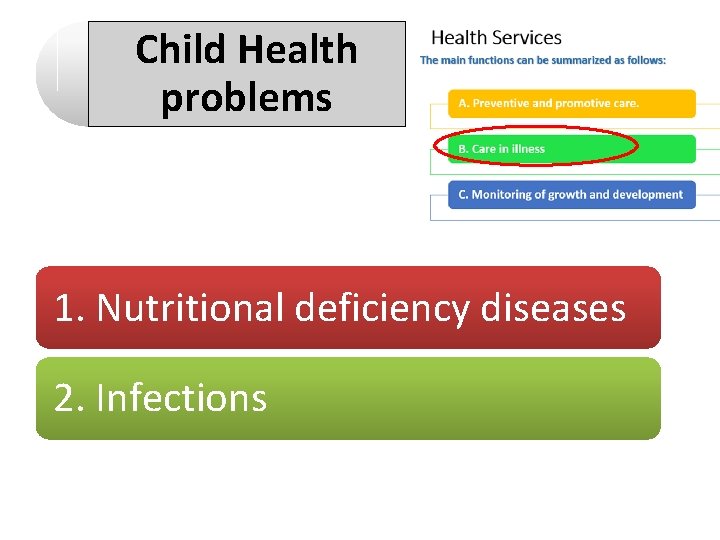
Child Health problems 1. Nutritional deficiency diseases 2. Infections
Nutritional deficiency diseases A. Protein Energy Malnutrition (PEM) B. Iron Deficiency Anaemia (IDA)
Nutritional deficiency diseases • Around 45% of deaths among children under 5 years of age are linked to undernutrition. • These mostly occur in low- and middleincome countries • The interaction between PEM & infection is the major cause of death & morbidity in young children.
A. Protein energy malnutrition Ø It is a group of body depletion disorders. Ø PEM is due to “food gap” between the intake and requirement. The most serious forms are kwashiorkor and marasmus. • MARASMUS Represents simple starvation. The body adapts to a chronic state of insufficient caloric intake • KWASHIORKOR It is the body’s response to insufficient protein intake but usually sufficient calories for energy

A. Protein energy malnutrition Causes: 1. Inadequate intake of protein or calories (LACK OF FOOD (famine, poverty)) 2. INADEQUATE BREAST FEEDING 3. DIARRHOEA & MALABSORPTION 4. INFECTIONS (worms, measles, T. B) 5. Contributory factors : poor environmental conditions, large family size, poor maternal health, WRONG CONCEPTS ABOUT NUTRITION
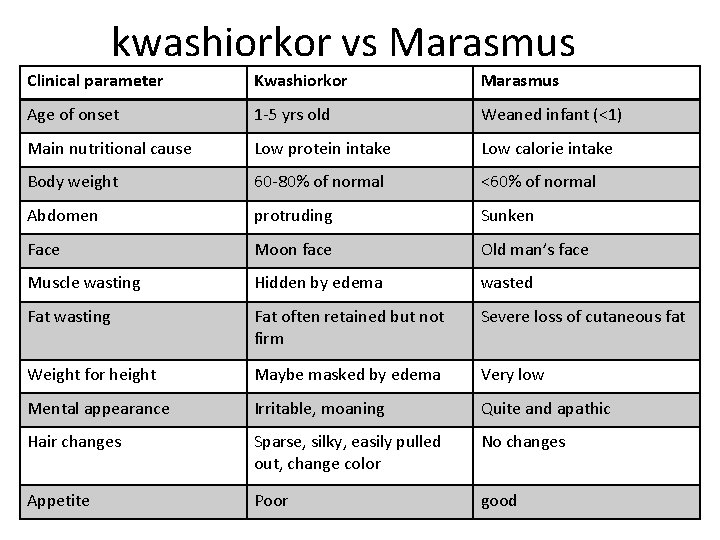
kwashiorkor vs Marasmus Clinical parameter Kwashiorkor Marasmus Age of onset 1 -5 yrs old Weaned infant (<1) Main nutritional cause Low protein intake Low calorie intake Body weight 60 -80% of normal <60% of normal Abdomen protruding Sunken Face Moon face Old man’s face Muscle wasting Hidden by edema wasted Fat wasting Fat often retained but not firm Severe loss of cutaneous fat Weight for height Maybe masked by edema Very low Mental appearance Irritable, moaning Quite and apathic Hair changes Sparse, silky, easily pulled out, change color No changes Appetite Poor good
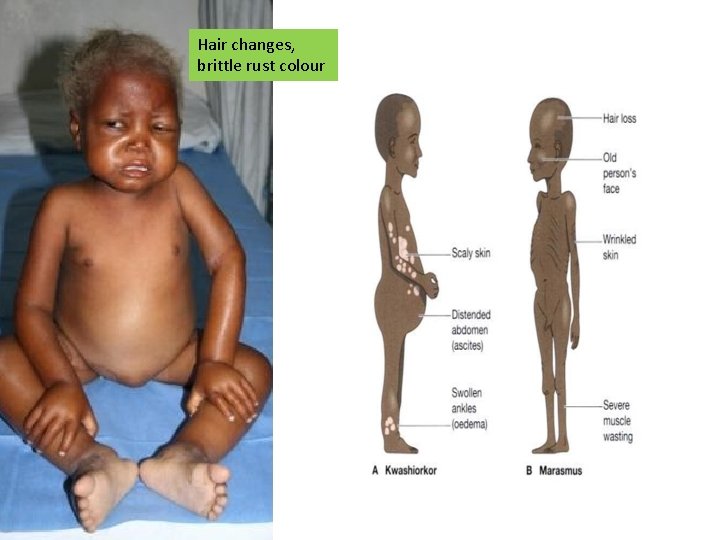
Hair changes, brittle rust colour
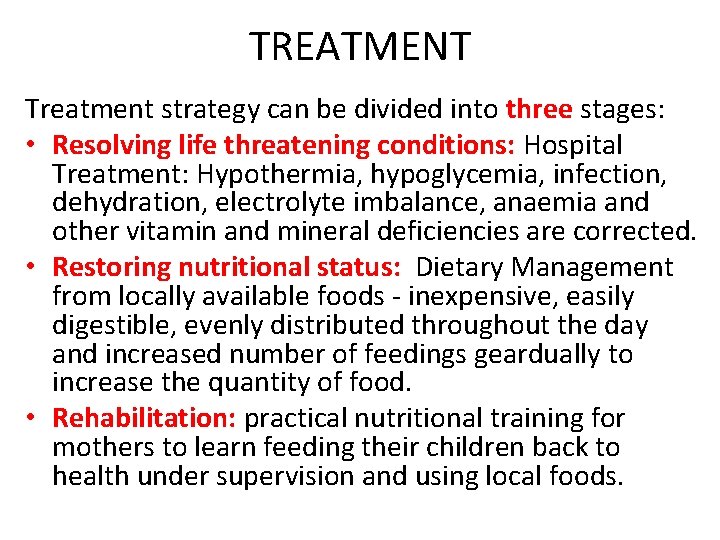
TREATMENT Treatment strategy can be divided into three stages: • Resolving life threatening conditions: Hospital Treatment: Hypothermia, hypoglycemia, infection, dehydration, electrolyte imbalance, anaemia and other vitamin and mineral deficiencies are corrected. • Restoring nutritional status: Dietary Management from locally available foods - inexpensive, easily digestible, evenly distributed throughout the day and increased number of feedings geardually to increase the quantity of food. • Rehabilitation: practical nutritional training for mothers to learn feeding their children back to health under supervision and using local foods.
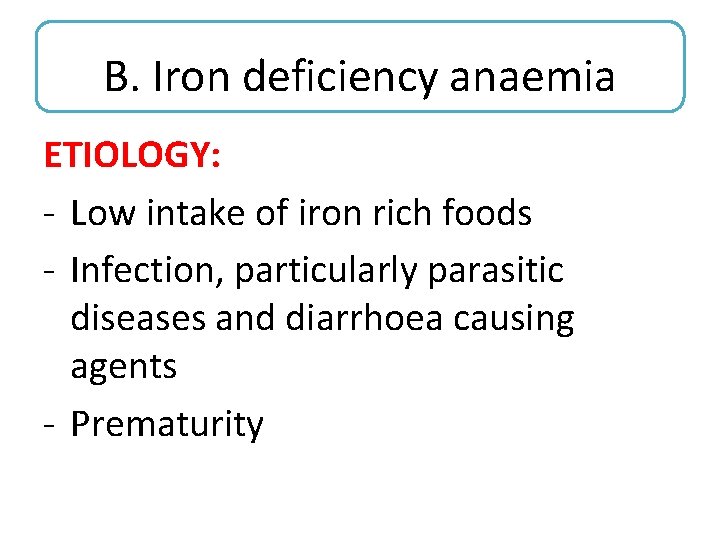
B. Iron deficiency anaemia ETIOLOGY: - Low intake of iron rich foods - Infection, particularly parasitic diseases and diarrhoea causing agents - Prematurity
B. Iron deficiency anaemia Prevention: q. Food containing iron starting by age of 5 -6 months q. Iron fortified formula q. Iron supplementation for breastfeeding infants at 4 months of age q. Avoid cows milk before 1 year of age q. Control of parasitic diseases Treatment: Iron supplementation
2. Infections • (Acute Respiratory Infections) ARI • Diarrhoeal diseases • Malaria About two-thirds of child deaths are preventable through practical, low-cost intervention 11
A. Acute respiratory infections An episode of acute symptoms and signs resulting from infection of any part of the respiratory tract or related structures (extending for less than 30 days). ARIs are classified according to the site of infection into: v. Acute upper respiratory tract infections (AURIs): these are common cold, pharyngitis, and otitis media v. Acute lower respiratory infections (ALRIs): these are epiglottises, laryngitis; trachiltis, bronchiolitis alveolitis and pneumonia.
Most children have about four to eight acute respiratory infections each year. Children with respiratory infections account for a large proportion of patients seen by health workers in health centres.
Ecology of ARI Viral agents are responsible for over 90% of cases of AURIs and a considerable proportion of ALRIs. The most frequent viral agents of ALRI in infants and young children are: a. Respiratory syncytial virus, b. adenoviruses, c. Para influenza and influenza A, B viruses, d. measles, mumps, and German measles. Bacterial agents include: Pertussis, Streptococcal pyogenes. Streptococcus pneumonia and Haemophilus influenza are the commonest causes of pneumonia in children.
The clinical features are: fever, running nose, cough, sore throat, difficult breathing and ear problems. Mortality: The main causes of ARI deaths for children under five are: Pneumonia bronchopneumonia and bronchiolitis. ARIs are common in urban areas than in rural ones. The death rates are 20 -50 times higher in the developing ones.
Prevention 1. Immunization 2. Chemoprophylaxis: o Used in prevention of recurrent streptococcal infections by penicillin. o It is possible to prevent some viral infections by anti-viral agents e. g. Tamil for influenza. 3. Non specific measures: Improvement of socio-economic and health status in general e. g. control of malnutrition, encouraging breast feeding, control of air pollution …etc
Home Care – Keep the baby warm – Continue breast feeding and feeding the child – To increase feeding after recovery – To clear the nose if it interferes with feeding – Proper dose of antibiotic for 5 days – Cough can be relieved by home made decoctions – To watch for danger signs
Diarrhoea is defined as the passage of three or more loose or liquid stools in a 24 -h period (or more frequent passage than is normal for the individual). However, it is the consistency of the stools rather than the number that is. B. Diarrheal disease Diarrhoea is usually a symptom of an infection in the intestinal tract. Viruses are the most common cause of a child's diarrhoea in the first 5 years of life. Most common virus is rotaviruses. Others: noroviruses and adenoviruses. Bacterial pathogen: Campylobacter jejuni, yersinia, salmonella, shigella, pathogenic E. coli, or clostridium difficile). Parasites are the cause in fewer than 5% (lamblia, cryptosporidia, Entamoeba histolytica, and others).
B. Diarrheal disease is defined as the passage of three or more loose or liquid stools in a 24 -h period (or more frequent passage than is normal for the individual). However, it is the consistency of the stools rather than the number that is.
Diarrhoea is usually a symptom of an infection in the intestinal tract. • Viruses are the most common cause of a child's diarrhoea in the first 5 years of life. • Most common virus is rotaviruses. • Others: noroviruses and adenoviruses. • Bacterial pathogen: Campylobacter jejuni, yersinia, salmonella, shigella, pathogenic E. coli, or clostridium difficile). • Parasites are the cause in fewer than 5% (lamblia, cryptosporidia, Entamoeba histolytica, and others
Ø Diarrhoeal disease is the second leading cause of death in children under five years old. Ø In low-income countries, children under three years old experience on average three episodes of diarrhoea every year. Ø Each episode deprives the child of the nutrition necessary for growth. As a result, diarrhoea is a major cause of malnutrition, and malnourished children are more likely to fall ill from diarrhoea.
Types of diarrhea: Three main clinical types of diarrhea § Acute watery diarrhea: This refers to acute diarrhea, lasts less than 14 days (average 7 days) and involves the passage of frequent loose or watery stools without visible blood. § Dysentery: It is diarrhea with visible blood in faeces accompanied by anorexia, rapid weight loss and damage to the intestinal mucosa by the invasive bacteria.
Types of diarrhea: §Persistent diarrhea: Diarrhea that begins acutely but is usually of long duration (more than 14 days). It may begin either as watery diarrhea or dysentery with risk of dehydration. Persistent diarrhea should not be confused with chronic diarrhea which is recurrent or long lasting diarrhea due to non infectious causes such as food sensitivity or metabolic disorders.
Prevention • access to safe drinking • Rotavirus vaccination water; • Measles immunization is a • use of improved very cost effective sanitation; measure for reducing diarrhea morbidity and • hand washing with soap; mortality. Measles • exclusive breastfeeding vaccine given at the for the first six months of recommended age can life; prevent up to 25% of • good personal and food diarrhea-associated hygiene; deaths in children under 5 • health education about years of age. how infections spread; and
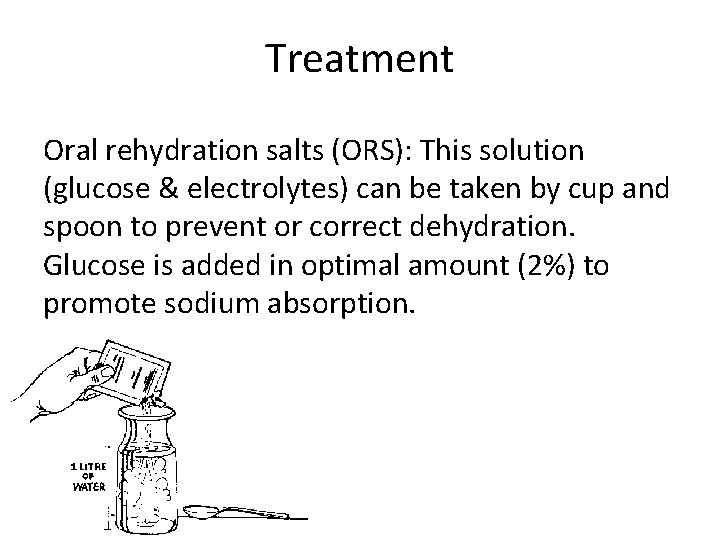
Treatment Oral rehydration salts (ORS): This solution (glucose & electrolytes) can be taken by cup and spoon to prevent or correct dehydration. Glucose is added in optimal amount (2%) to promote sodium absorption.
Treatment • A child classified with SEVERE Diarrhea (DEHYDRATION) needs fluids quickly. Treat with IV (intravenous) fluids. The four rules of home treatment are: 1. Give extra fluid 2. Give zinc supplements 3. Continue feeding 4. Return immediately if the child develops danger signs, drinks poorly, or has blood in stool
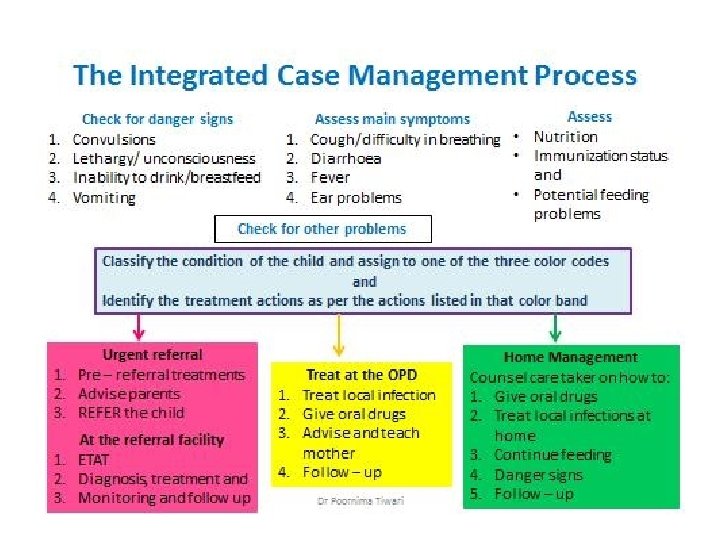
Integrated Management of Childhood Illness (IMCI). v WHO and UNICEF developed a strategy known as Integrated Management of Childhood Illness (IMCI). v The strategy includes preventive and curative interventions, which aim to improve practices both in the health facilities and at home. Why is IMCI better than single-condition approaches? 1. Children brought for medical treatment in the developing world are often suffering from more than one condition. 2. A single diagnosis may not be possible or appropriate 3. Treatment may need to combine therapy for several conditions. “Looking to The Child as a Whole”.
Diseases Covered By IMCI 1 -Acute respiratory infections 2 -Diarrhoeal diseases 3 -Malaria 4 -Measles 5 -Malnutrition. • Age Groups Covered By IMCI guidelines recommend case management procedures based on two age categories: • Young infants age up to 2 months • Children age 2 months up to 5 years.
BASIS FOR CLASSIFYING THE CHILD’S ILLNESS • The child’s illness is classified based on a color -coded triage system: • PINK- indicates urgent hospital referral or admission • YELLOW- indicates initiation of specific Outpatient Treatment • GREEN – indicates supportive home care
- Slides: 30