
Child Health Nursing Perspectives of child health nursing






- Slides: 27
Child Health Nursing
Perspectives of child health nursing Childhood Mortality & Morbidity. Pediatric nursing: - Philosophy of care. Ø Family-centered care. Ø Atraumatic care. Ø Case management The Roles of the child health nurse. Standards of child health nursing in Jordan.
Childhood Mortality & Morbidity. - Mortality statistic : describe the incidence or number of individuals who have died over a specific period. These statistics are usually presented as rates per 100, 000 and are calculated from a sample of death certificates. Infant mortality rate is the number of death during the first year of life per 1000 live births. Neonatal mortality (less than 28 days of life). Post neonatal mortality (28 days to 11 months) Birth weight is considered the major determinant of neonatal death. Many of the leading causes of death during infancy continue to occur during the perinatal period.
Infant mortality q 10 leading causes of infant death in 2001 : Table 1 -3, p 4 1. Congenital anomalies. 2. Unspecific low birth weight. 3. Sudden infant death syndrome. 4. Newborn affected by maternal complications of pregnancy. 5. Newborn affected by complications of placenta, cord, and membranes. 6. Respiratory distress syndrome. 7. Accidents (unintentional injuries). 8. Bacterial sepsis of newborn. 9. Diseases of the circulatory system. 10. Intrauterine hypoxia and birth asphyxia.
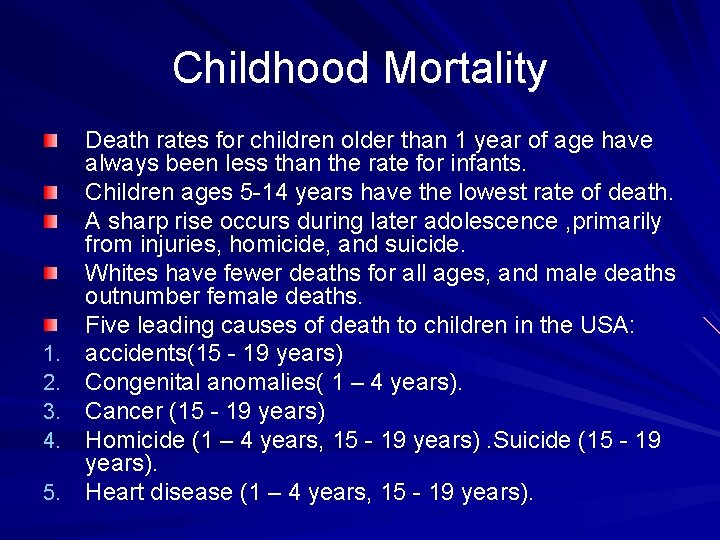
Childhood Mortality 1. 2. 3. 4. 5. Death rates for children older than 1 year of age have always been less than the rate for infants. Children ages 5 -14 years have the lowest rate of death. A sharp rise occurs during later adolescence , primarily from injuries, homicide, and suicide. Whites have fewer deaths for all ages, and male deaths outnumber female deaths. Five leading causes of death to children in the USA: accidents(15 - 19 years) Congenital anomalies( 1 – 4 years). Cancer (15 - 19 years) Homicide (1 – 4 years, 15 - 19 years). Suicide (15 - 19 years). Heart disease (1 – 4 years, 15 - 19 years).
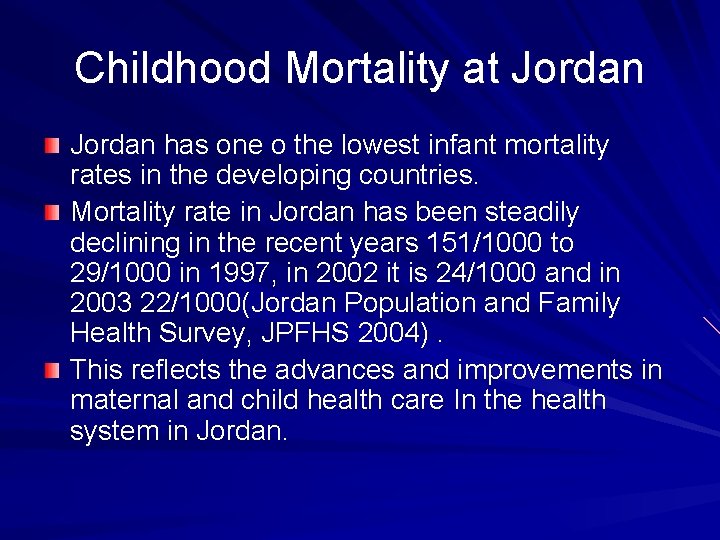
Childhood Mortality at Jordan has one o the lowest infant mortality rates in the developing countries. Mortality rate in Jordan has been steadily declining in the recent years 151/1000 to 29/1000 in 1997, in 2002 it is 24/1000 and in 2003 22/1000(Jordan Population and Family Health Survey, JPFHS 2004). This reflects the advances and improvements in maternal and child health care In the health system in Jordan.
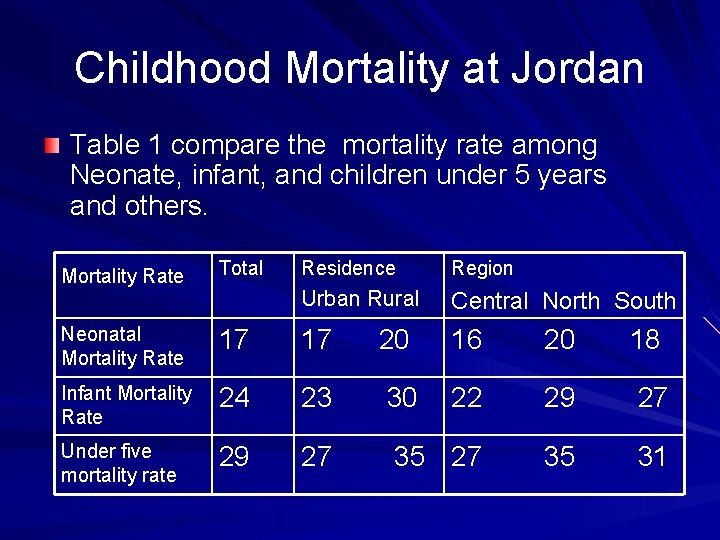
Childhood Mortality at Jordan Table 1 compare the mortality rate among Neonate, infant, and children under 5 years and others. Mortality Rate Total Residence Region Urban Rural Central North South Neonatal Mortality Rate 17 17 20 16 20 18 Infant Mortality Rate 24 23 30 22 29 27 Under five mortality rate 29 27 35 31
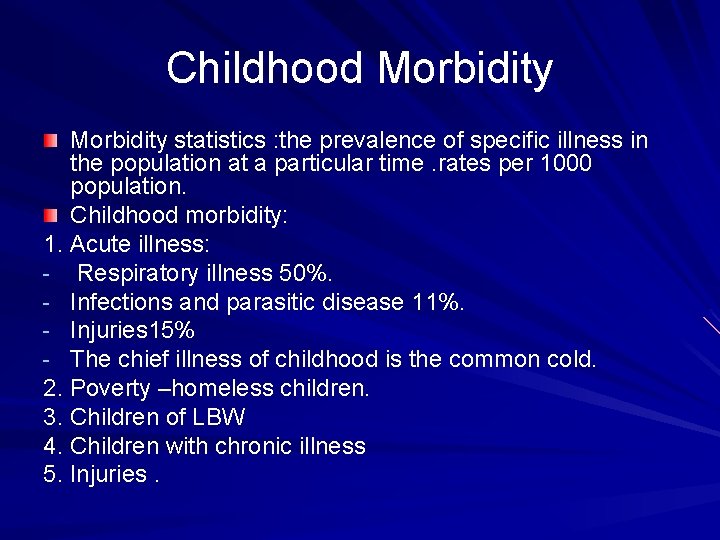
Childhood Morbidity statistics : the prevalence of specific illness in the population at a particular time. rates per 1000 population. Childhood morbidity: 1. Acute illness: - Respiratory illness 50%. - Infections and parasitic disease 11%. - Injuries 15% - The chief illness of childhood is the common cold. 2. Poverty –homeless children. 3. Children of LBW 4. Children with chronic illness 5. Injuries.
Mechanical suffocation
Improper use of firearms
Motor vehicles
Burns
Drowning
Pediatric nursing Philosophy of care: Nursing is the prevention of illness, the alleviation of suffering, and the protection, promotion, and restoration of health in the care of individuals, families, groups, communities, and population( ANA, 2003). Family-centered care: the philosophy of family-centered care recognizes the family as the one constant in a child's life. Three key components of Family-centered care: 1. Respect. 2. Collaboration. 3. Support
Philosophy of care : Familycentered care The key elements of Family-centered care: v Facilitating family/professional collaboration at all levels of hospital, home, and community. v Exchange complete and unbiased information between family members and professionals. v Incorporating into policy and practice the recognition and honoring of cultural diversity. v Recognizing and respecting different methods of coping that provide developmental, educational, emotional, environmental, and financial support v Encouraging and facilitating family-to-family support. v Ensuring that the community services are flexible, accessible and comprehensive for family. v Appreciating families as families and children as children
Philosophy of care: Familycentered care Two basic concepts in family-centered care : Enabling and Empowerment Professional enable families by creating opportunities for family members to display their current abilities and competencies and to acquire new ones that are necessary to meet the needs of the child and family. Empowerment: describe the interaction of professionals with families in such away that families maintain or acquire a sense of control over their lives and make positive changes that result from helping behaviors that foster their own strengths, abilities, and actions.
Philosophy of care: Atraumatic Care: is the provision of therapeutic care in settings, by personnel, and through the use of interventions that eliminate or minimize the psychologic and physical distress experienced by children and their families in the health care system. Atraumatic Goal : is do no harm. Principles provide for achieving this goal: 1. Prevent or minimize the child's separation from the family. 2. Promote a sense of control. 3. Prevent or minimize bodily injury and pain. Examples : fostering the parent-child relationship during hospitalization. Preparing the child before any unfamiliar procedure. controlling pain….
Philosophy of care: Case Management: providing care in a systematic manner, professional and government organization often follow clinical practice guidelines for the care of an illness, disease or, problem. Case managers are responsible and accountable for particular group of patients and often use timelines derives from standards of care. The benefits of case management include: - Improved patient/family satisfaction, - Decreased fragmentation of care. - Have Ability to describe and measure outcomes for a homogenous group of patients.
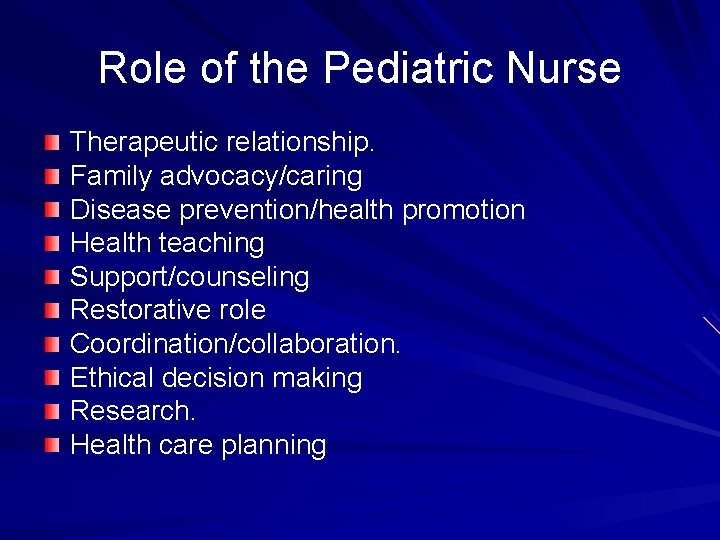
Role of the Pediatric Nurse Therapeutic relationship. Family advocacy/caring Disease prevention/health promotion Health teaching Support/counseling Restorative role Coordination/collaboration. Ethical decision making Research. Health care planning
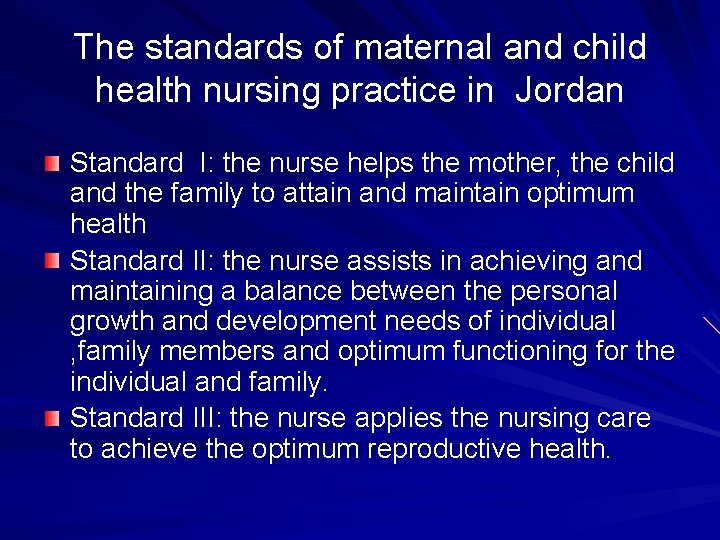
The standards of maternal and child health nursing practice in Jordan Standard I: the nurse helps the mother, the child and the family to attain and maintain optimum health Standard II: the nurse assists in achieving and maintaining a balance between the personal growth and development needs of individual , family members and optimum functioning for the individual and family. Standard III: the nurse applies the nursing care to achieve the optimum reproductive health.
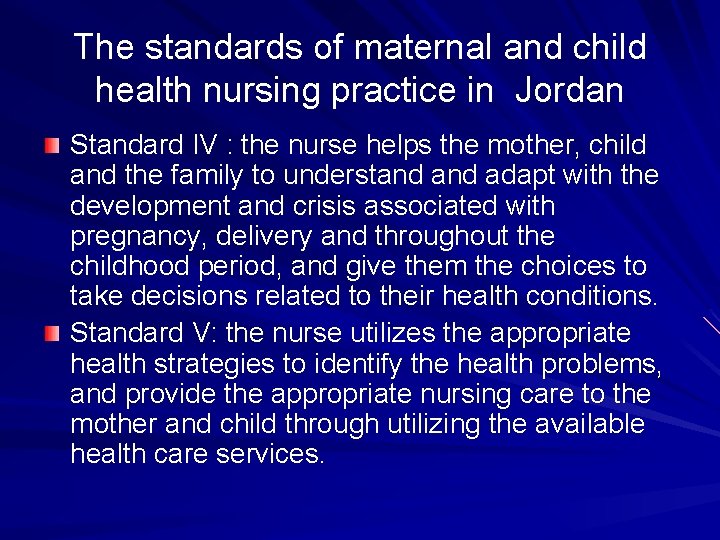
The standards of maternal and child health nursing practice in Jordan Standard IV : the nurse helps the mother, child and the family to understand adapt with the development and crisis associated with pregnancy, delivery and throughout the childhood period, and give them the choices to take decisions related to their health conditions. Standard V: the nurse utilizes the appropriate health strategies to identify the health problems, and provide the appropriate nursing care to the mother and child through utilizing the available health care services.
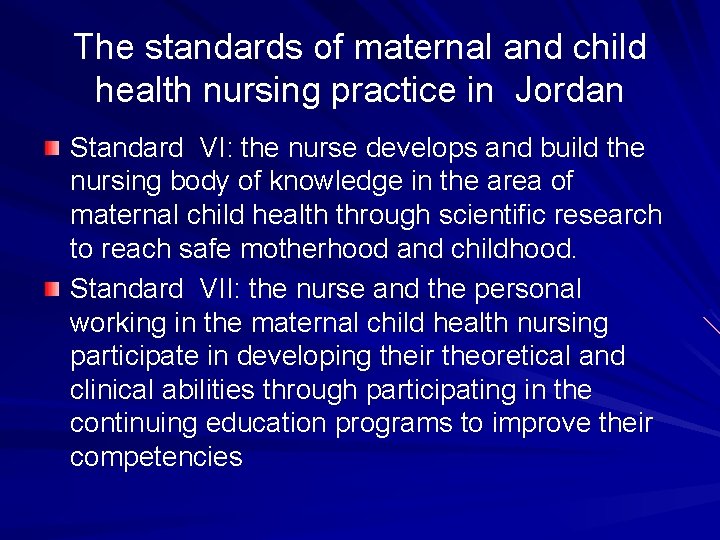
The standards of maternal and child health nursing practice in Jordan Standard VI: the nurse develops and build the nursing body of knowledge in the area of maternal child health through scientific research to reach safe motherhood and childhood. Standard VII: the nurse and the personal working in the maternal child health nursing participate in developing their theoretical and clinical abilities through participating in the continuing education programs to improve their competencies
The standards of maternal and child health nursing practice in Jordan Standard VIII: the nurse provides health education to the individual, family, and community depending upon their health needs. Standard IX: the nurse adheres and applies the Jordanian code of ethics for the nursing profession when taking a decision related to the mother and child.