
Child Birth Health 4 Mr Miller Human Reproduction
Child Birth Health 4 Mr. Miller
Human Reproduction n n Gestation –The period of development in the uterus from conception until birth (refers to pregnancy) Pregnancy is measured in trimesters from the first day of your last menstrual period, totaling 40 weeks. The first trimester of pregnancy is week 1 through week 12, (or about 3 months). The second trimester is week 13 to week 27. And the third trimester of pregnancy spans from week 28 to the birth.
Human Reproduction n n Family planning- refers to the conscious act of planning a family. Including when to have children, how many, and how far apart to space them. Fertilization/conception is the union of sperm and ovum (egg). For fertilization to take place, the sperm must get to the ovum w/in a 24 hour period after its release from the ovary. A process known as ovulation.
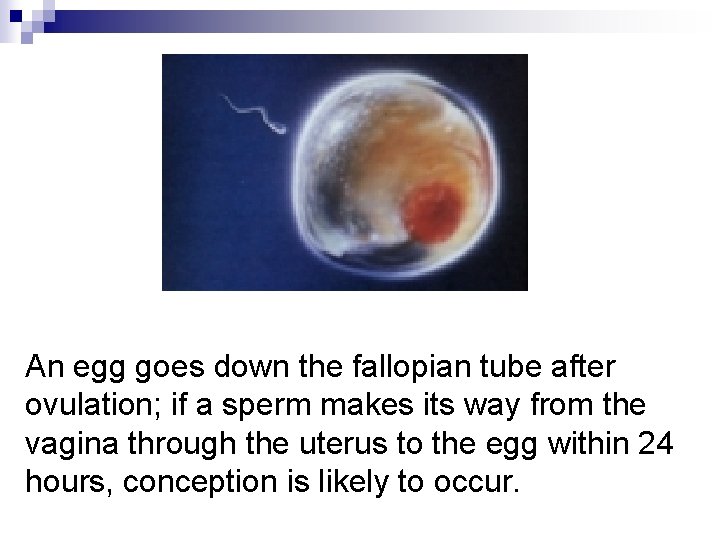
An egg goes down the fallopian tube after ovulation; if a sperm makes its way from the vagina through the uterus to the egg within 24 hours, conception is likely to occur.
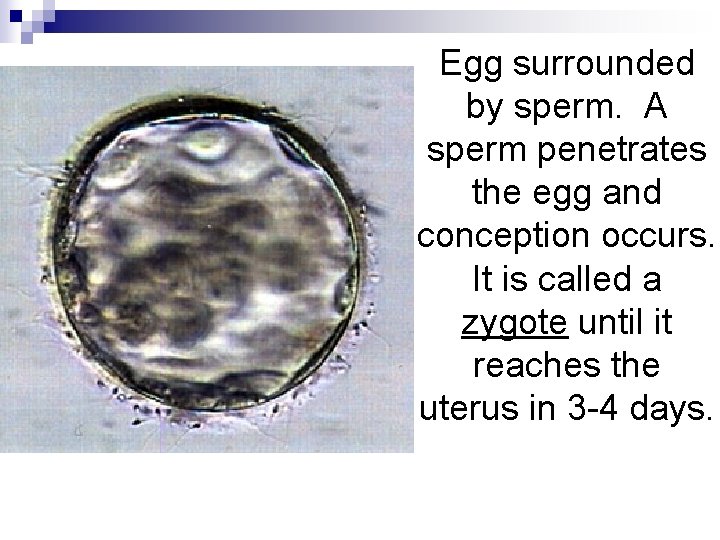
Egg surrounded by sperm. A sperm penetrates the egg and conception occurs. It is called a zygote until it reaches the uterus in 3 -4 days.
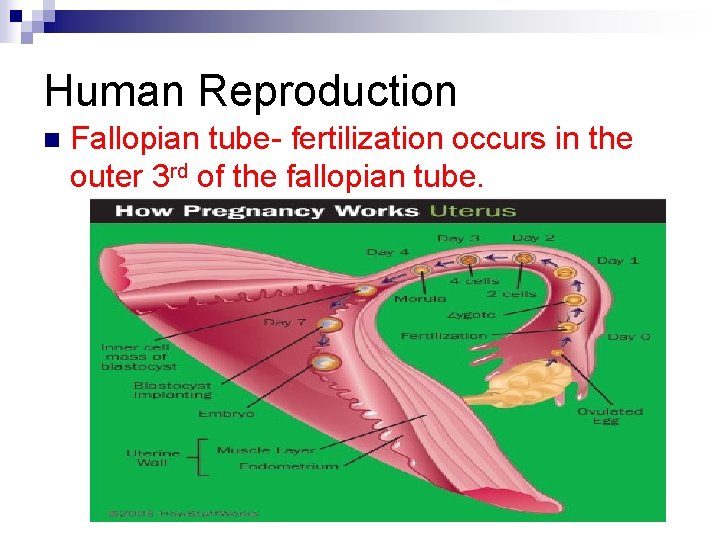
Human Reproduction n Fallopian tube- fertilization occurs in the outer 3 rd of the fallopian tube.
Human Reproduction Zygote – united egg and sperm. Within 36 hours the zygote is moving in the fallopian tube and cells are beginning to divide. Blastocyst –A thin-walled hollow sphere (that contains 50 -100 cells) from which the embryo arises. Implantation- attachment of a fertilized egg to the lining of the uterus. Embryo- fertilized egg up to 8 weeks of gestation.
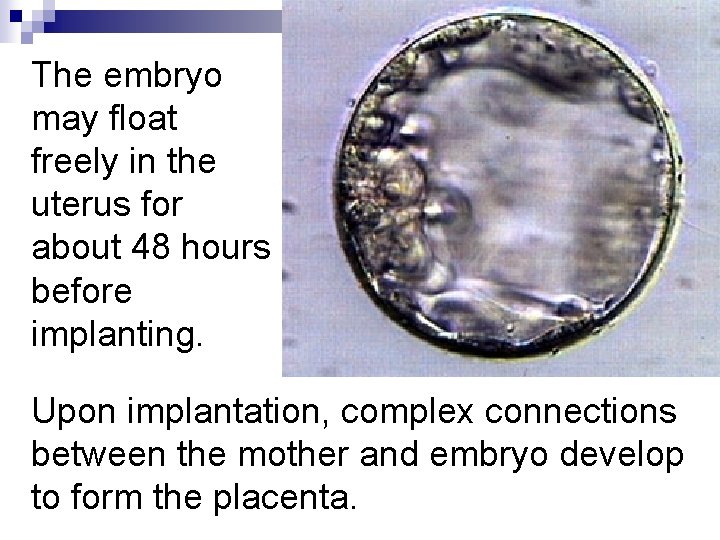
The embryo may float freely in the uterus for about 48 hours before implanting. Upon implantation, complex connections between the mother and embryo develop to form the placenta.
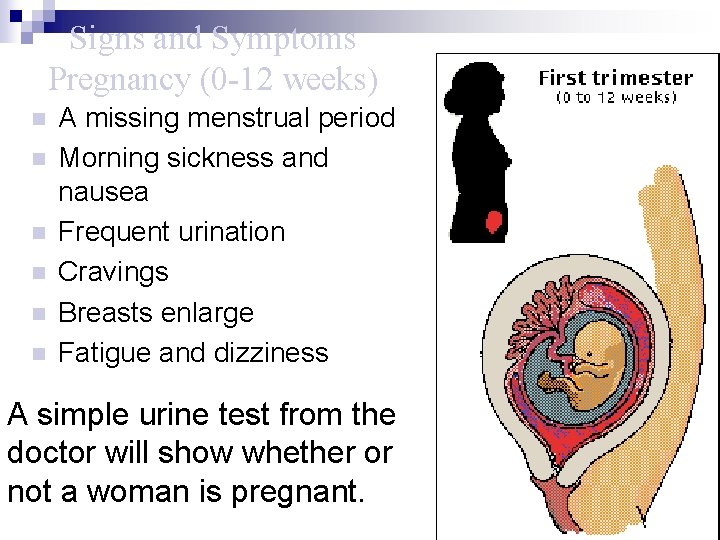
Signs and Symptoms Pregnancy (0 -12 weeks) n n n A missing menstrual period Morning sickness and nausea Frequent urination Cravings Breasts enlarge Fatigue and dizziness A simple urine test from the doctor will show whether or not a woman is pregnant.
Human Reproduction n HCG (human chorionic gonadotropin)hormone secreted during pregnancy that shows up in the urine of pregnant women. ¨ The basis for determining pregnancy using home kits
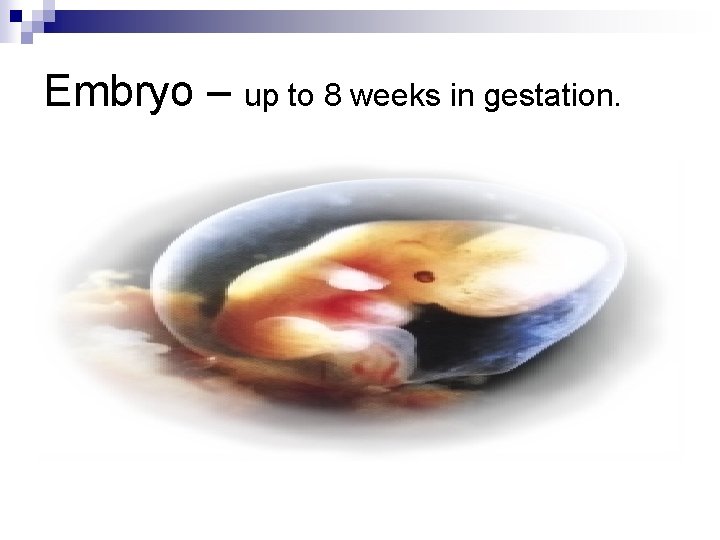
Embryo – up to 8 weeks in gestation.
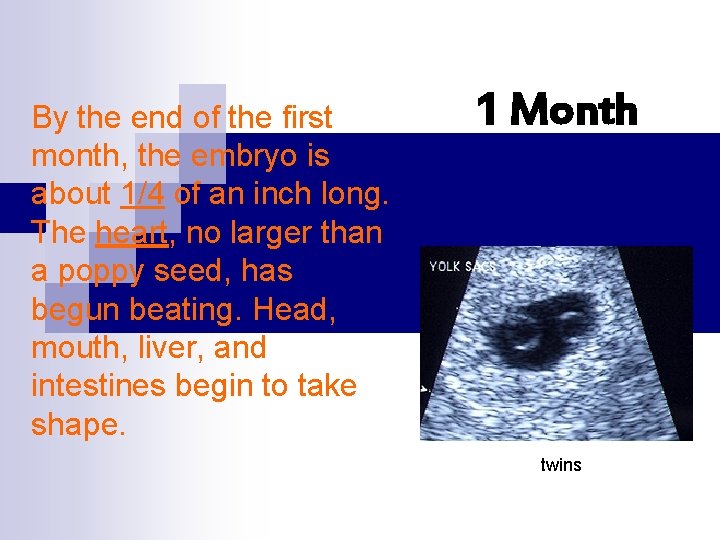
By the end of the first month, the embryo is about 1/4 of an inch long. The heart, no larger than a poppy seed, has begun beating. Head, mouth, liver, and intestines begin to take shape. 1 Month twins
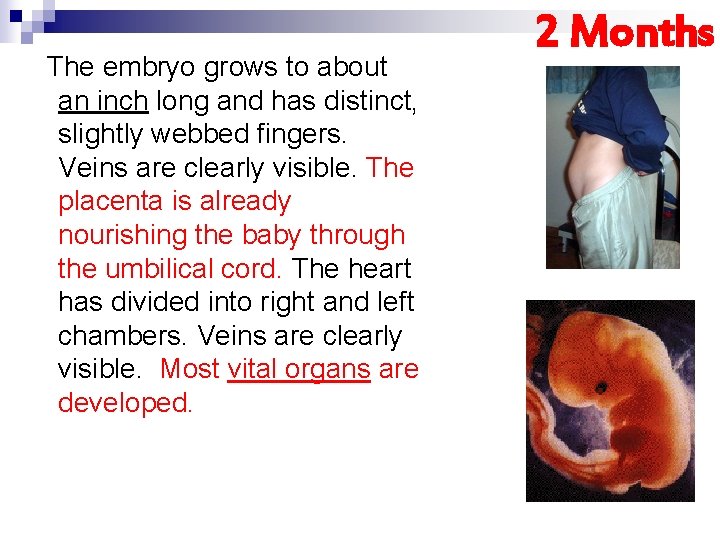
The embryo grows to about an inch long and has distinct, slightly webbed fingers. Veins are clearly visible. The placenta is already nourishing the baby through the umbilical cord. The heart has divided into right and left chambers. Veins are clearly visible. Most vital organs are developed. 2 Months
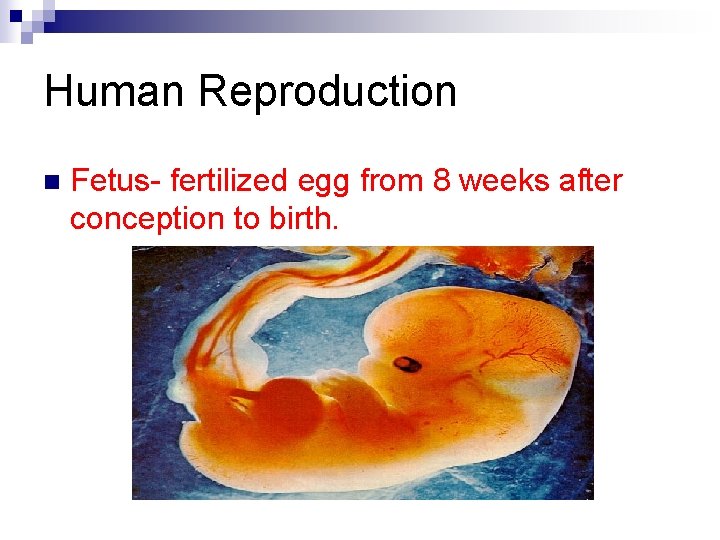
Human Reproduction n Fetus- fertilized egg from 8 weeks after conception to birth.
Human Reproduction n Amniotic Fluid- liquid contained in the amniotic sac that protects the fetus from injury and helps maintain an even temperature.
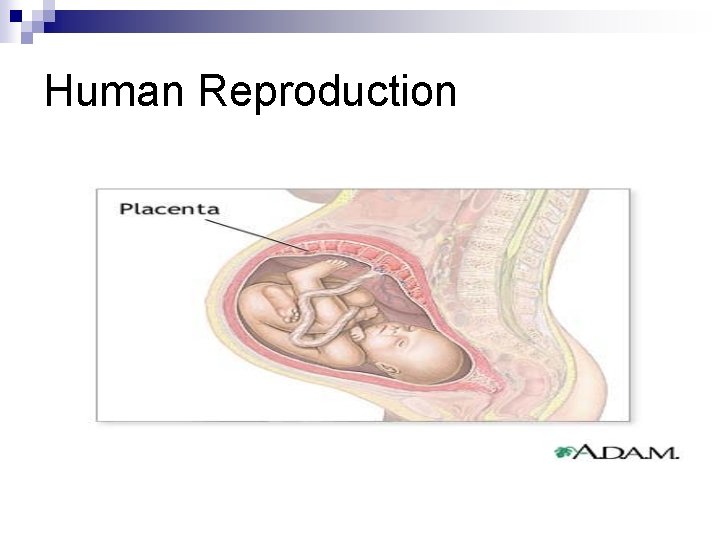
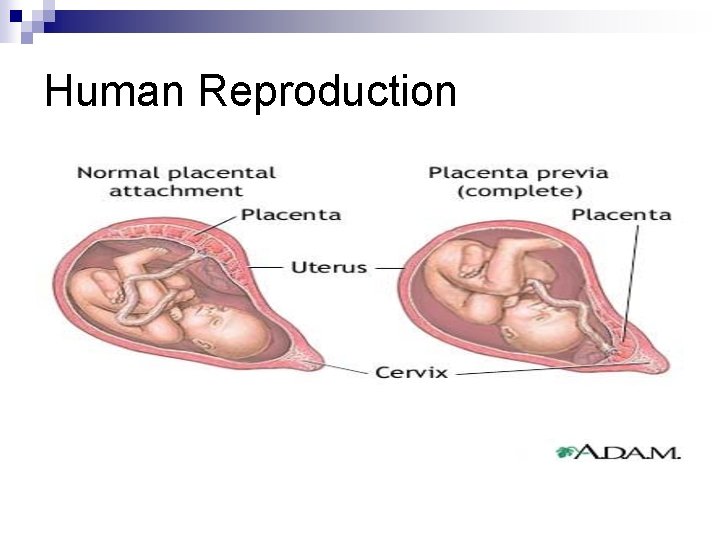
Human Reproduction n Placenta- organ that attaches to the uterus and serves as a passageway for oxygen and nutrients to pass to the developing fetus.
Human Reproduction n 1 st trimester (3 -months) the fetus has arms, legs, feet, toes, fingers, and the vital organs and body systems are functioning. ¨ Fetus is approx 4 inches in length and weighs approx 1 ounce.
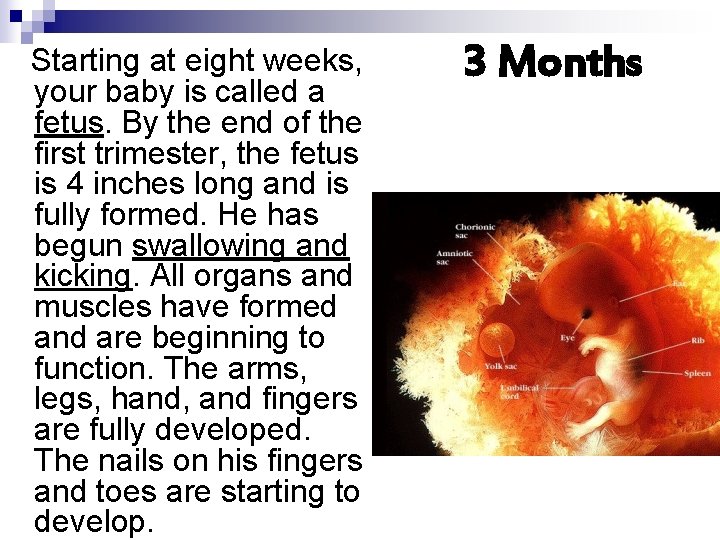
Starting at eight weeks, your baby is called a fetus. By the end of the first trimester, the fetus is 4 inches long and is fully formed. He has begun swallowing and kicking. All organs and muscles have formed and are beginning to function. The arms, legs, hand, and fingers are fully developed. The nails on his fingers and toes are starting to develop. 3 Months
Human Reproduction
Fundus n n n Fundus is the medical term for the upper portion of the uterus between the fallopian tubes. Fundal height is measured from the top of your pubic bone to the top of your fundus. Fundal height is measured in centimeters and should closely match your baby's gestational age. So, for example, if you're 24 weeks pregnant, your fundal height should be 24 centimeters. Fundal height can vary from person to person and it is not an exact measurement. As you approach late pregnancy, fundal height will become less accurate
Human Reproduction
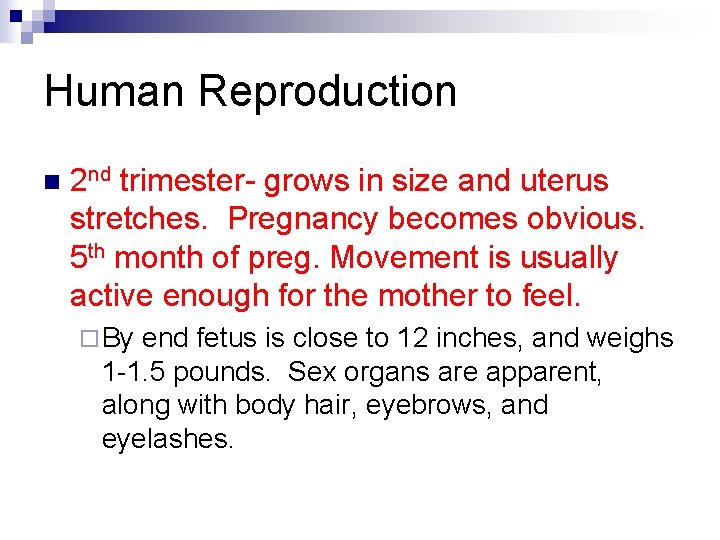
Human Reproduction n 2 nd trimester- grows in size and uterus stretches. Pregnancy becomes obvious. 5 th month of preg. Movement is usually active enough for the mother to feel. ¨ By end fetus is close to 12 inches, and weighs 1 -1. 5 pounds. Sex organs are apparent, along with body hair, eyebrows, and eyelashes.
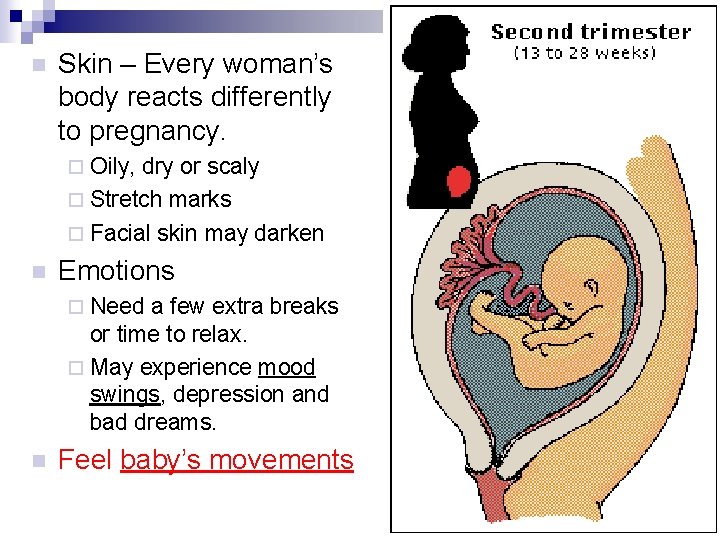
n Skin – Every woman’s body reacts differently to pregnancy. ¨ Oily, dry or scaly ¨ Stretch marks ¨ Facial skin may darken n Emotions ¨ Need a few extra breaks or time to relax. ¨ May experience mood swings, depression and bad dreams. n Feel baby’s movements
Human Reproduction n 3 rd trimester- all systems continue to grow, last one to develop is the respiratory system (lungs).
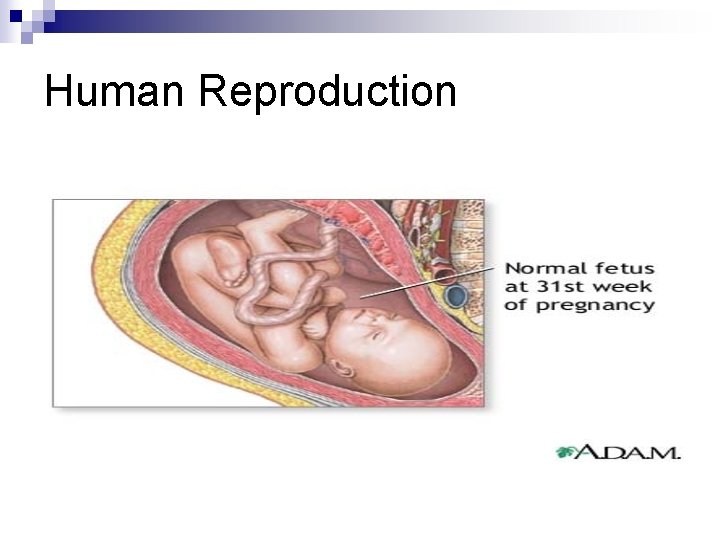
Human Reproduction
Human Reproduction n Gestation Period- Humans average 40 weeks. ¨ Deliveries before 38 weeks are considered premature. ¨ Deliveries after 42 weeks threaten health of the baby so labor is usually induced.
Human Reproduction n Sterility- permanent inability to reproduce. ¨ Vasectomy in men (cutting of the vas deferens) and tubal ligation in women (tying of the fallopian tubes) cause sterility.
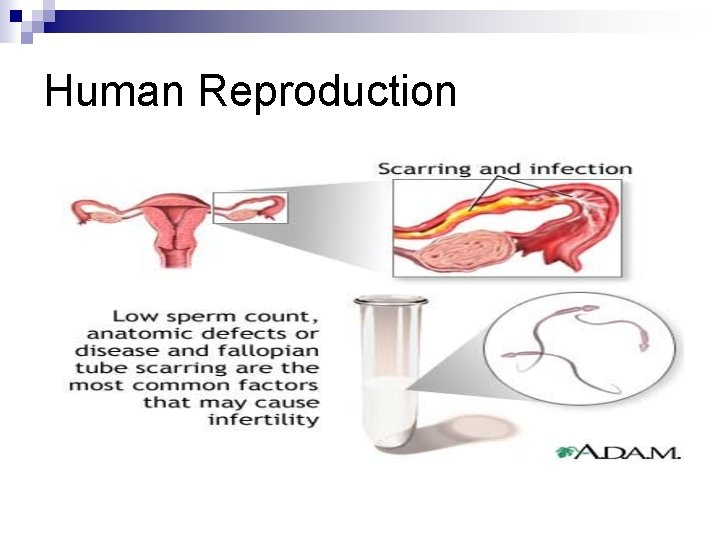
Human Reproduction Infertility- inability to conceive after 1 year of unprotected intercourse. Most common forms: n Low sperm count n Anatomical defects n Fallopian tube scarring n
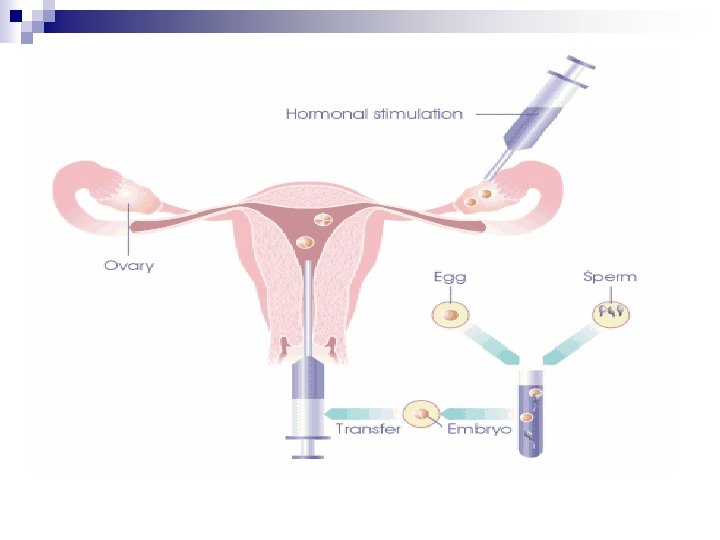
Human Reproduction n (IVF) In-vitro fertilization- ovum(egg) are removed from the woman’s body and fertilized with sperm in a lab. The embryo is surgically implanted into her uterus.
Human Reproduction
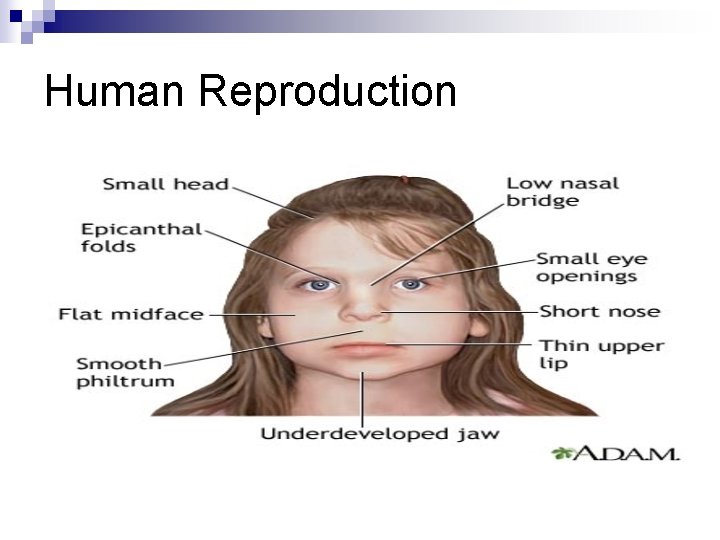
Human Reproduction n n Tetratogenic effects- side effects of drugs and other substances that cause birth defects. Fetal Alcohol Syndrome- effects on embryo and fetus of pregnant woman’s alcohol consumption. ¨ Symptoms include facial abnormalities, mental retardation, and nervous system damage.
Human Reproduction
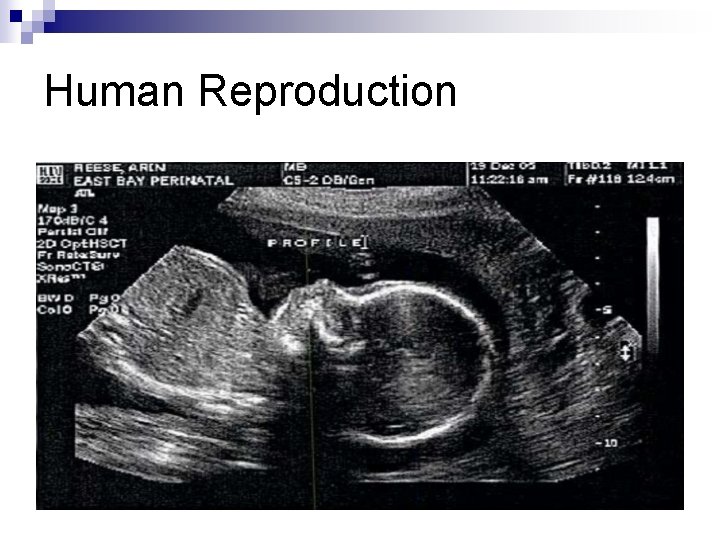
Human Reproduction n Sonogram- The picture of the fetus produced by an ultrasound screening. ¨ Can determine position of the baby, any abnormalities, and often the sex.
Human Reproduction
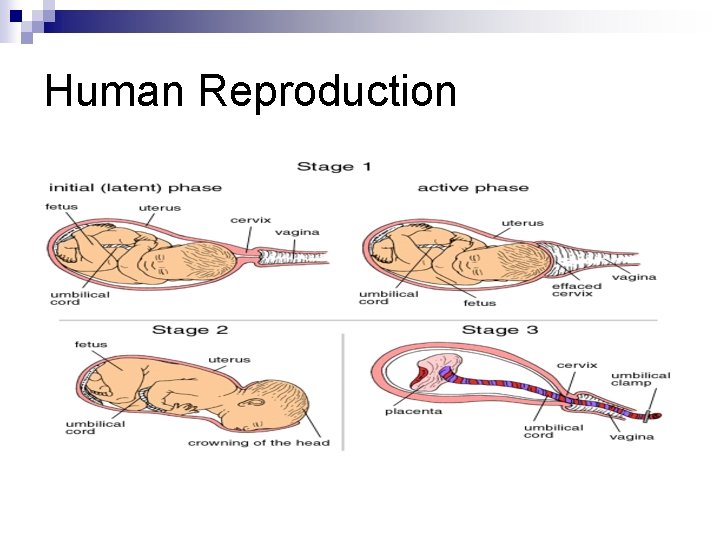
Human Reproduction n Childbirth- labor and delivery ¨ 3 phase process occurring over a 12 -14 hour period. ¨ 1 st stage- cervix dilates (gets wider) Uterus begins to have contractions. ¨ 2 nd stage- the actual birth. For some women 1 -3 pushes and the baby is out, others can push for 1 or 2 hours.
Human Reproduction n 3 rd stage- delivery of the afterbirth. ¨ Afterbirth is the placenta, umbilical cord (which has been cut at the baby’s stomach)
Human Reproduction
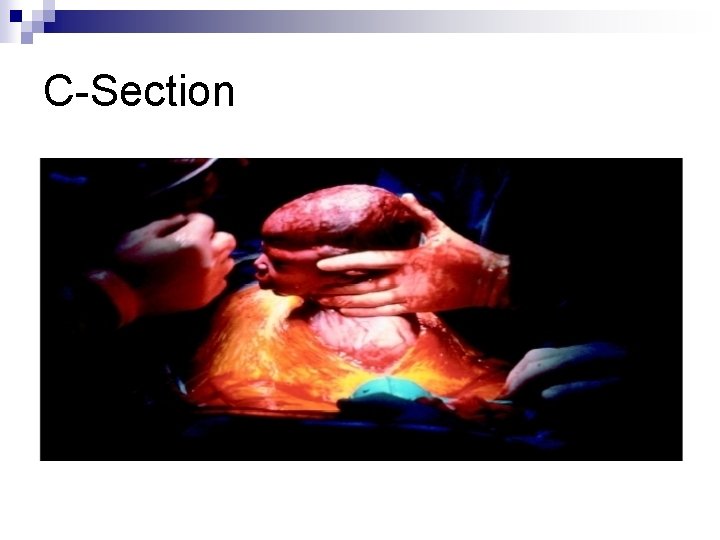
Human Reproduction n C-section (Cesarean Delivery)- surgical procedure done for reasons related to the health and survival of either the mother, the baby, or both. ¨ 20% rate of C-sections in the US.
C-Section
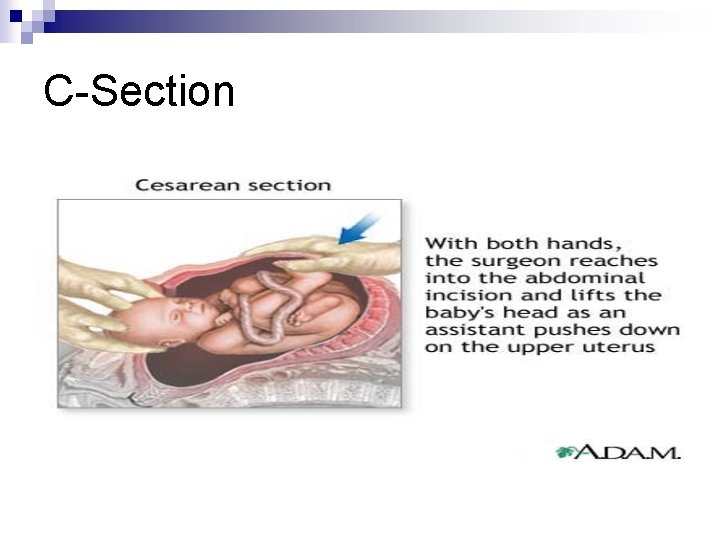
C-Section
Breech Position n Breech Position- birth position in which the foot or buttocks rather than the baby’s head is at the cervix.
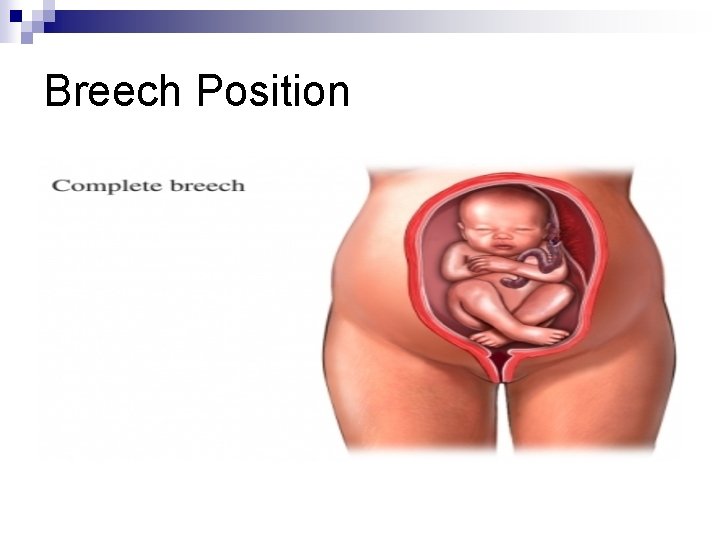
Breech Position
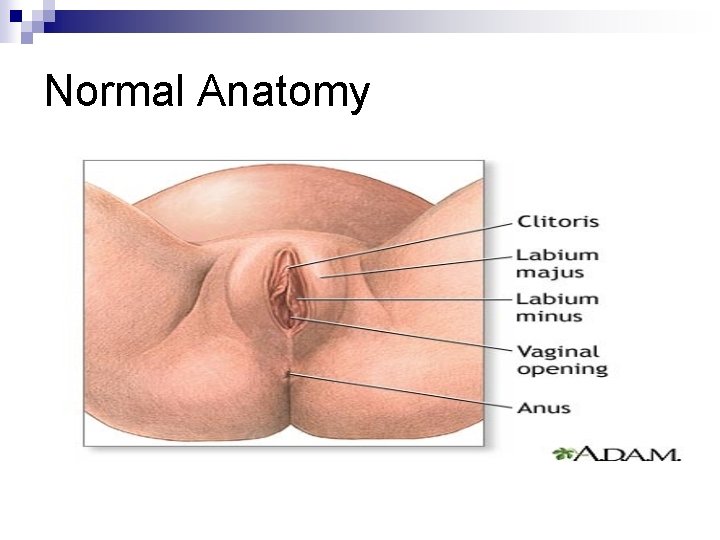
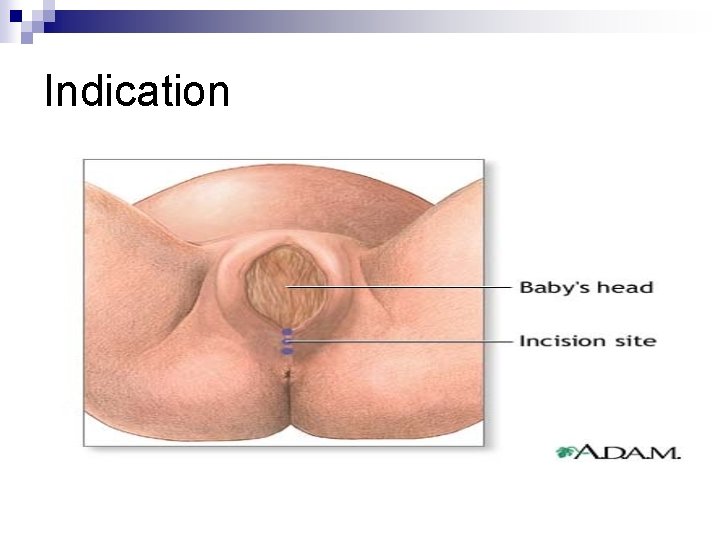
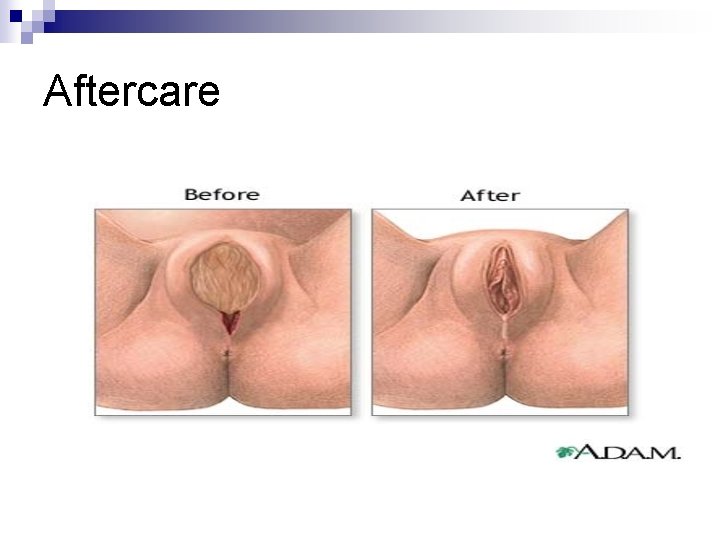
Episiotomy n Episiotomy- surgical cutting of the perineum to facilitate birth.
Normal Anatomy
Indication
Aftercare
- Slides: 47