
Child and Adult Care Food Program CACFP Meal
- Slides: 14
Child and Adult Care Food Program (CACFP) Meal Service Styles Adult Care Component
Meal Service Styles Pre-plated Cafeteria Style Family Style Offer versus Serve
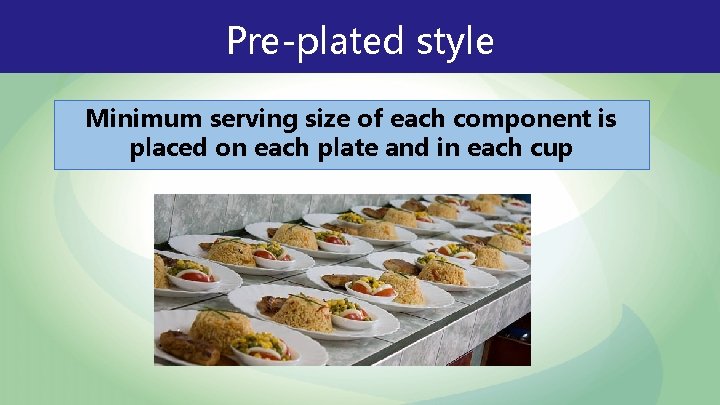
Pre-plated style Minimum serving size of each component is placed on each plate and in each cup
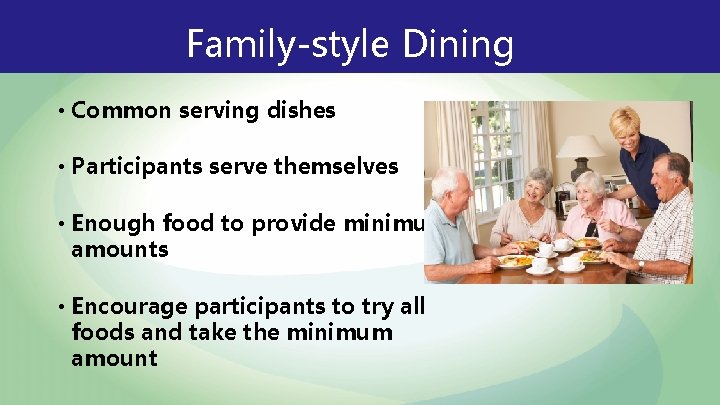
Family-style Dining • Common serving dishes • Participants serve themselves • Enough food to provide minimum amounts • Encourage participants to try all foods and take the minimum amount
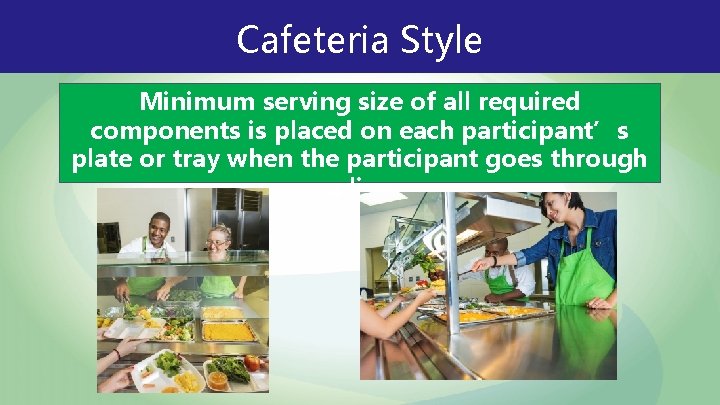
Cafeteria Style Minimum serving size of all required components is placed on each participant’s plate or tray when the participant goes through a line
Offer versus Serve (OVS) Breakfast Lunch Supper
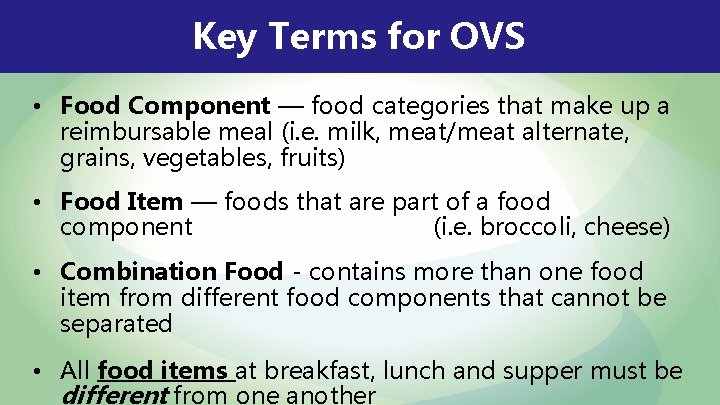
Key Terms for OVS • Food Component — food categories that make up a reimbursable meal (i. e. milk, meat/meat alternate, grains, vegetables, fruits) • Food Item — foods that are part of a food component (i. e. broccoli, cheese) • Combination Food - contains more than one food item from different food components that cannot be separated • All food items at breakfast, lunch and supper must be different from one another
Offer Versus Serve Option The “Offer versus Serve” option requires that all required components be offered
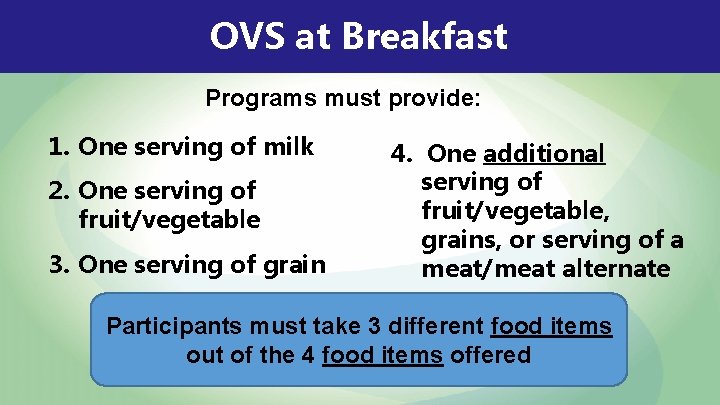
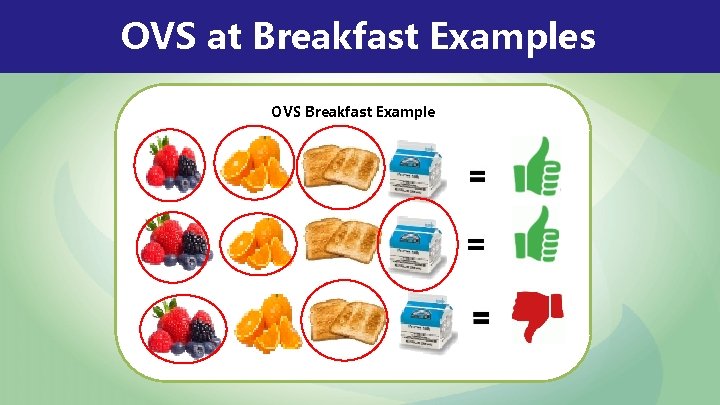
OVS at Breakfast Programs must provide: 1. One serving of milk 2. One serving of fruit/vegetable 3. One serving of grain 4. One additional serving of fruit/vegetable, grains, or serving of a meat/meat alternate Participants must take 3 different food items out of the 4 food items offered
OVS at Breakfast Examples OVS Breakfast Example
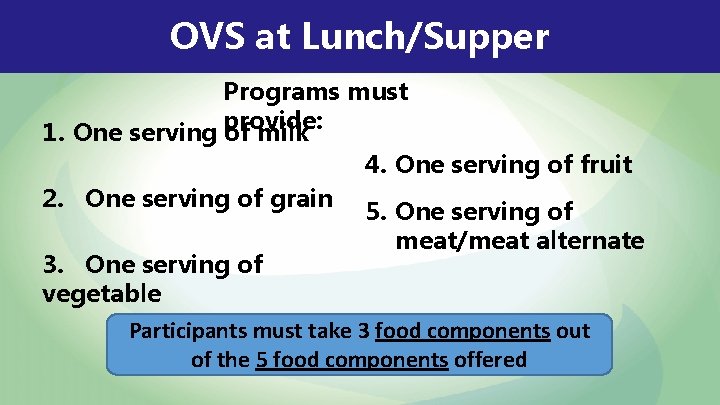
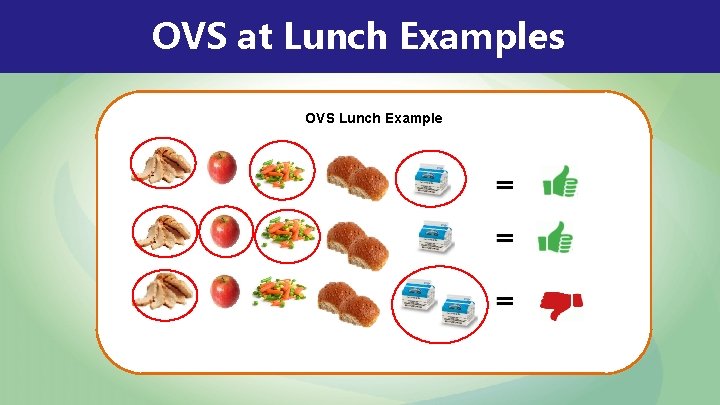
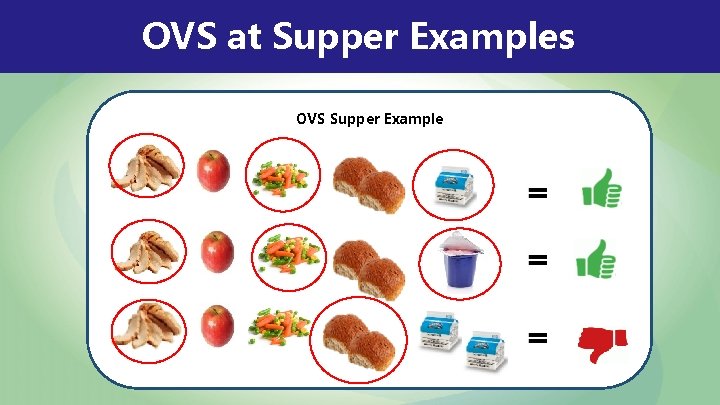
OVS at Lunch/Supper Programs must provide: 1. One serving of milk 4. One serving of fruit 2. One serving of grain 5. One serving of meat/meat alternate 3. One serving of vegetable Participants must take 3 food components out of the 5 food components offered
OVS at Lunch Examples OVS Lunch Example
OVS at Supper Examples OVS Supper Example
Non-Discrimination Statement (NDS) In accordance with Federal civil rights law and U. S. Department of Agriculture (USDA) civil rights regulations and policies, the USDA, its Agencies, offices, and employees, and institutions participating in or administering USDA programs are prohibited from discriminating based on race, color, national origin, sex, disability, age, or reprisal or retaliation for prior civil rights activity in any program or activity conducted or funded by USDA. Persons with disabilities who require alternative means of communication for program information (e. g. Braille, large print, audiotape, American Sign Language, etc. ), should contact the Agency (State or local) where they applied for benefits. Individuals who are deaf, hard of hearing or have speech disabilities may contact USDA through the Federal Relay Service at (800) 877 -8339. Additionally, program information may be made available in languages other than English. To file a program complaint of discrimination, complete the USDA Program Discrimination Complaint Form, (AD-3027) found online at: http: //www. ascr. usda. gov/complaint_filing_cust. html, and at any USDA office, or write a letter addressed to USDA and provide in the letter all of the information requested in the form. To request a copy of the complaint form, call (866) 632 -9992. Submit your completed form or letter to USDA by: (1) Mail: U. S. Department of Agriculture Office of the Assistant Secretary for Civil Rights 1400 Independence Avenue, SW Washington, D. C. 20250 -9410; (2) Fax: (202) 690 -7442; or (3) Email: program. intake@usda. gov This institution is an equal opportunity provider.