
CHILD ABUSE Aaron Stoddard Period 5 A Pictures
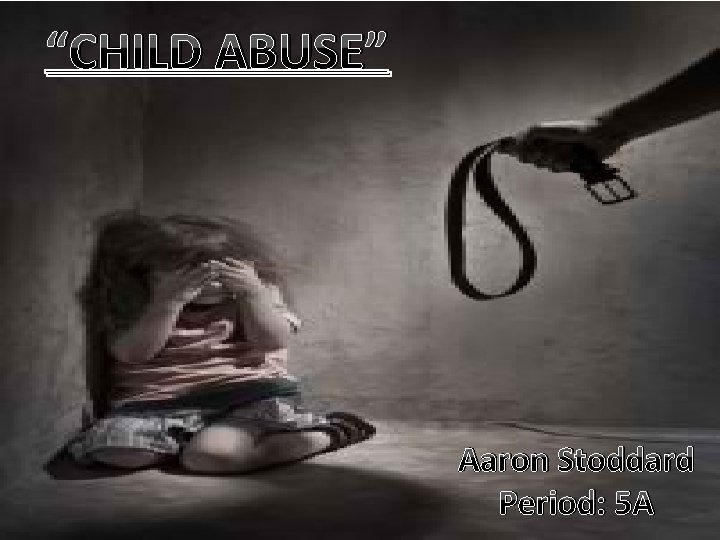
“CHILD ABUSE” Aaron Stoddard Period: 5 A
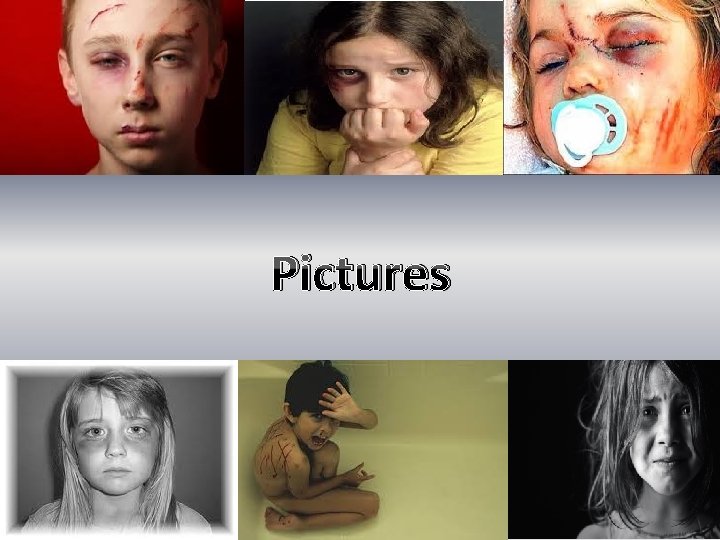
Pictures
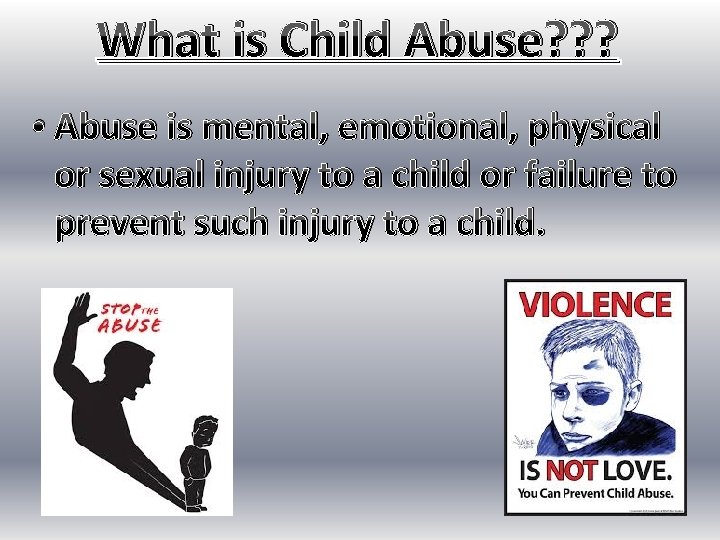
What is Child Abuse? ? ? • Abuse is mental, emotional, physical or sexual injury to a child or failure to prevent such injury to a child.
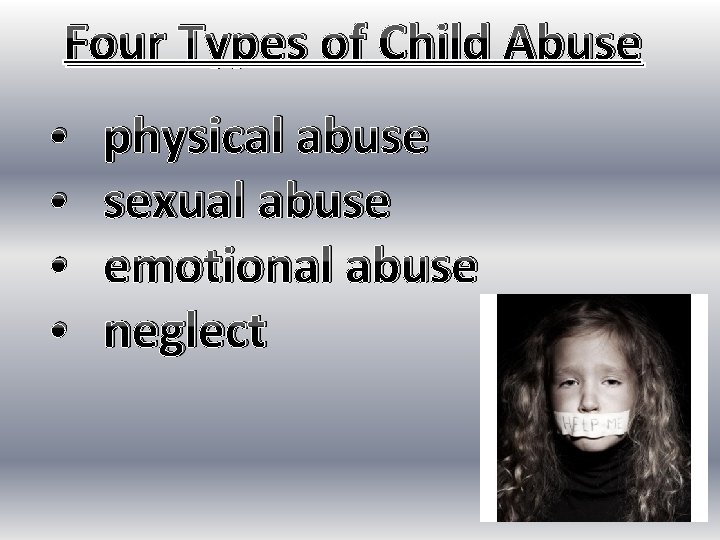
Four Types of Child Abuse • • physical abuse sexual abuse emotional abuse neglect
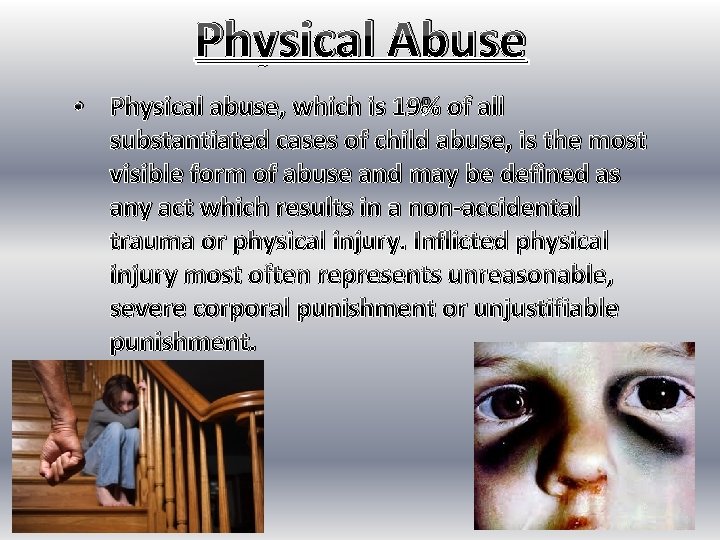
Physical Abuse • Physical abuse, which is 19% of all substantiated cases of child abuse, is the most visible form of abuse and may be defined as any act which results in a non-accidental trauma or physical injury. Inflicted physical injury most often represents unreasonable, severe corporal punishment or unjustifiable punishment.
Physical Indicators • Unexplained bruises (in various stages of healing) • Welts, human bite marks, bald spots • Unexplained burns, especially cigarette burns or immersion burns • Unexplained fractures, lacerations or abrasions • Swollen areas • Evidence of delayed or inappropriate treatment for injuries
Behavioral Indicators • Self destructive • Withdrawn and/or aggressive - behavioral extremes • Arrives at school early or stays late as if afraid to be at home • Chronic runaway (adolescent) • Complains of soreness or moves uncomfortably • Wears clothing inappropriate to weather, to cover body • Bizarre explanation of injuries

What Neglect? ? • Failure to provide a child with food, clothing, shelter, medical care. • Leaving a child in a situation where the child is at risk of harm.
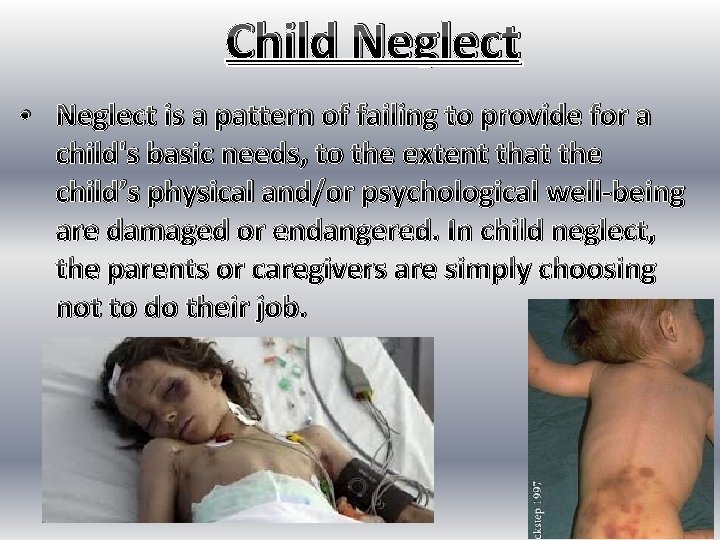
Child Neglect • Neglect is a pattern of failing to provide for a child's basic needs, to the extent that the child’s physical and/or psychological well-being are damaged or endangered. In child neglect, the parents or caregivers are simply choosing not to do their job.
Signs of Neglect • Clothes that are dirty, ill-fitting, ragged, and/or not suitable for the weather • Unwashed appearance; offensive body odor • Indicators of hunger: asking for or stealing food, going through trash for food, eating too fast or too much when food is provided for a group • Apparent lack of supervision: wandering alone, home alone, left in a car • Colds, fevers, or rashes left untreated; infected cuts; chronic tiredness
Sexual Abuse • Behavior involving penetration – vaginal or anal intercourse and oral sex • Fondling – Touching or kissing a child's genitals, making a child fondle an adult's genitals. • Violations of privacy – Forcing a child to undress, spying on a child in the bathroom or bedroom. • Exposing children to adult sexuality – Performing sexual acts in front of a child, exposing genitals, telling "dirty" stories, showing pornography to a child. • Exploitation – Selling a child’s services as a prostitute or a performer in pornography.
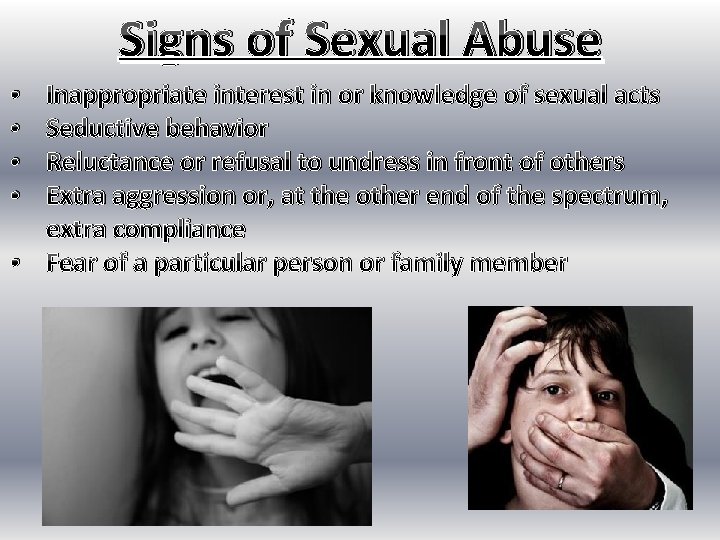
Signs of Sexual Abuse Inappropriate interest in or knowledge of sexual acts Seductive behavior Reluctance or refusal to undress in front of others Extra aggression or, at the other end of the spectrum, extra compliance • Fear of a particular person or family member • •
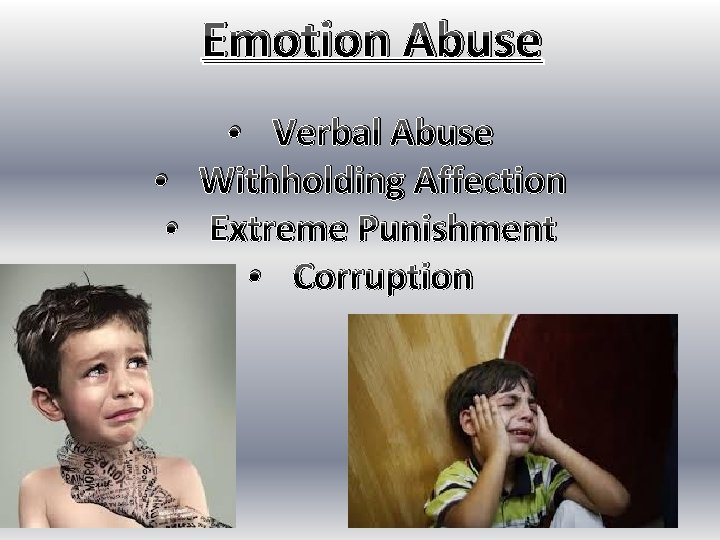
Emotion Abuse • Verbal Abuse • Withholding Affection • Extreme Punishment • Corruption

Verbal Abuse • Shaming the child: name-calling, making negative comparisons to others, telling the child he or she is “no good, " "worthless, " "a mistake. " • Habitual blaming: telling the child that everything is his or her fault.
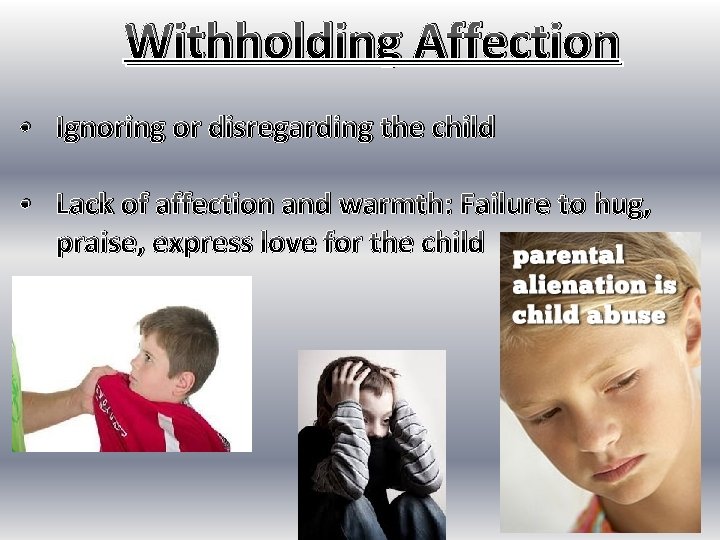
Withholding Affection • Ignoring or disregarding the child • Lack of affection and warmth: Failure to hug, praise, express love for the child
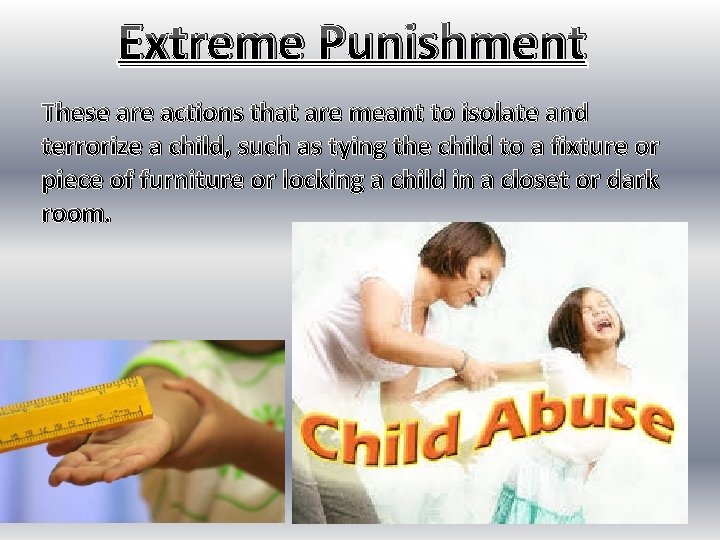
Extreme Punishment These are actions that are meant to isolate and terrorize a child, such as tying the child to a fixture or piece of furniture or locking a child in a closet or dark room.
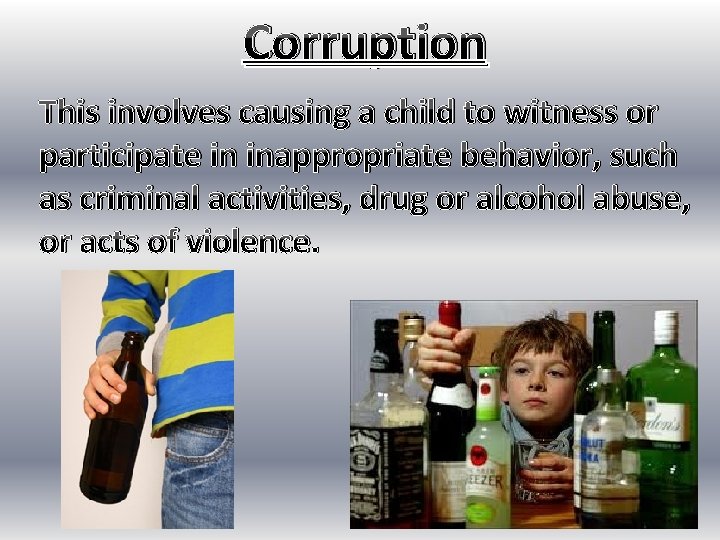
Corruption This involves causing a child to witness or participate in inappropriate behavior, such as criminal activities, drug or alcohol abuse, or acts of violence.
Causes of Child Abuse • Stress, including the stress of caring for children, or the stress of caring for a child with a disability, special needs, or difficult behaviors • Lack of nurturing qualities necessary for child care • Immaturity: a disproportionate number of parents who abuse their children are teenagers • Difficulty controlling anger • Personal history of being abused • Isolation from the family or community • Physical or mental health problems, such as depression and anxiety • Alcohol or drug abuse • Personal problems such as marital conflict, unemployment, or financial difficulties.
Reporting Child Abuse Website: • http: //www. dss. cahwnet. gov/cdssweb/PG 20. htm • Examples: Child Protective Services (CPS) Hotlines, Child Welfare Services Complaints, Child Abuse Prevention Services

The End http: //www. youtube. com/watch? v=Yf. DCi. QUH 2 b. M&list=PLvz. C 42 i 6_r. JIiw. BYbywue. G 2 jx. X sp 5 Td 6 R
- Slides: 22