
Chien Hsing James Wu David Gottesman Andrew Landahl

- Slides: 58
Chien Hsing James Wu David Gottesman Andrew Landahl
Outline • • • Classical and quantum channels Overview of error correction Classical linear codes Quantum codes Conclusions
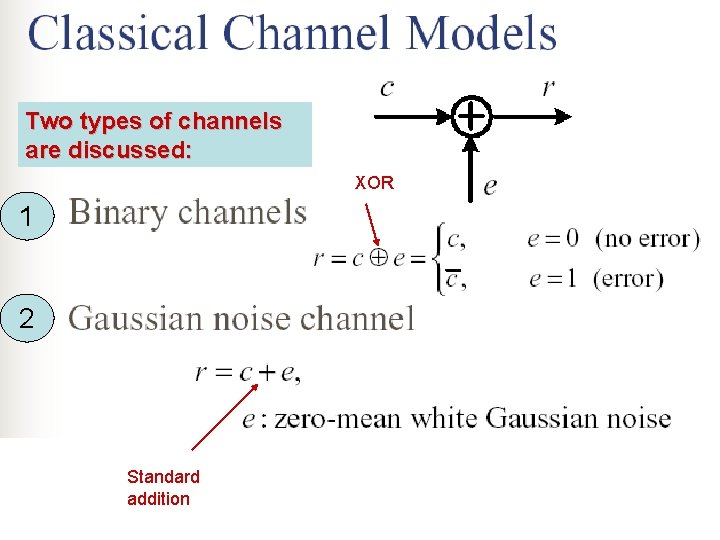
Two types of channels are discussed: XOR 1 2 Standard addition
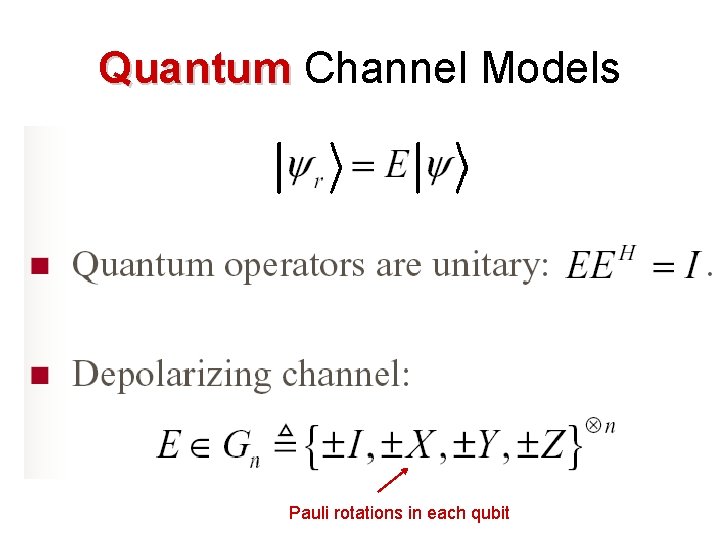
Quantum Channel Models Pauli rotations in each qubit
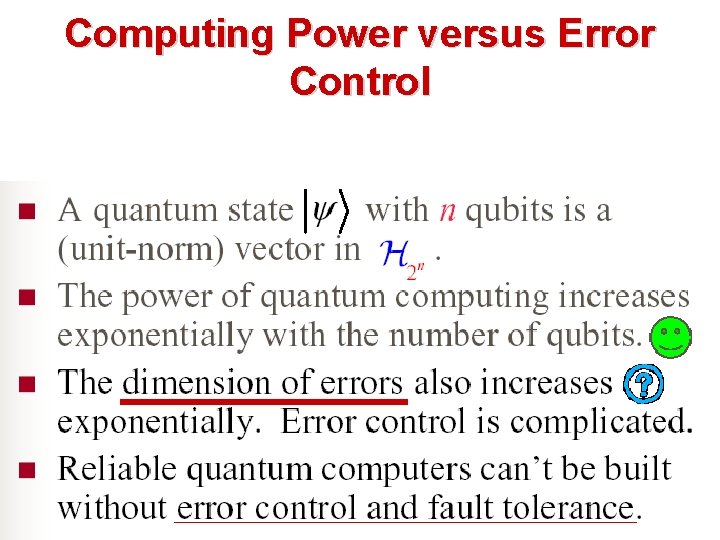
Computing Power versus Error Control
Basic Concepts in Error Control
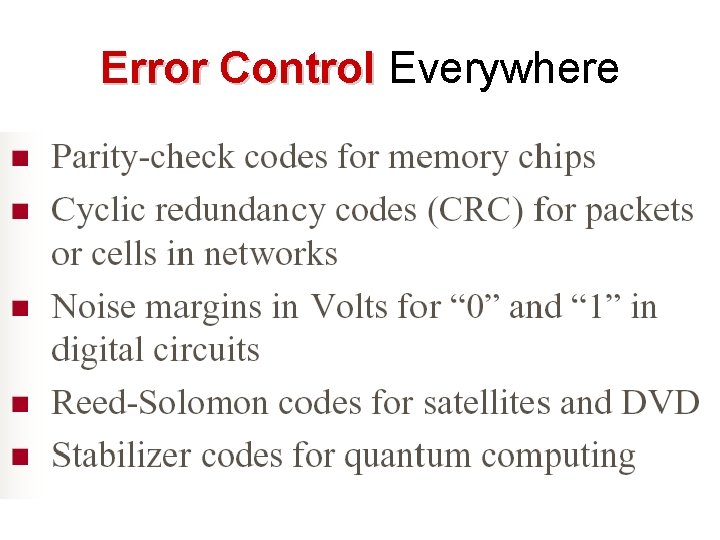
Error Control Everywhere
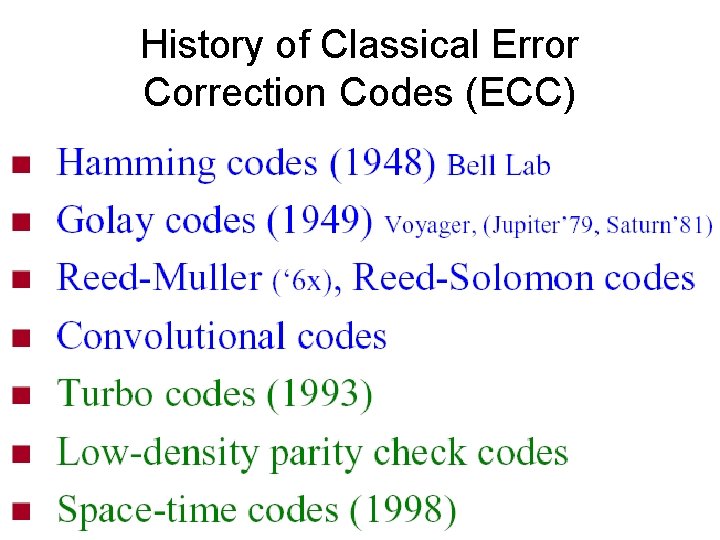
History of Classical Error Correction Codes (ECC)
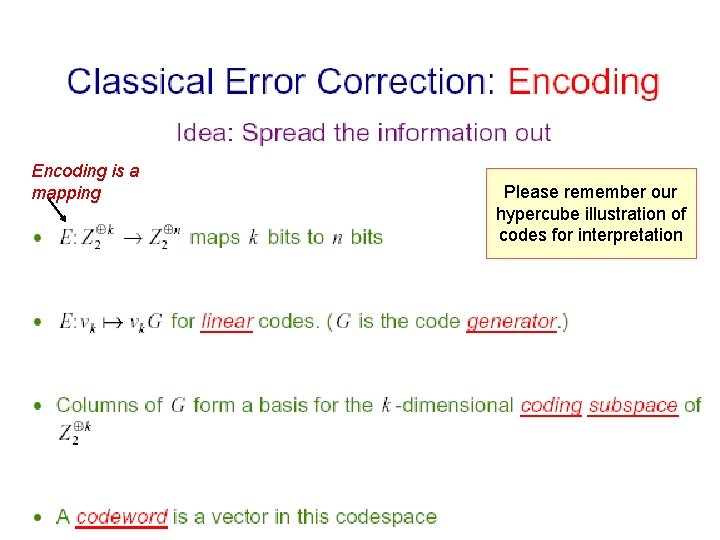
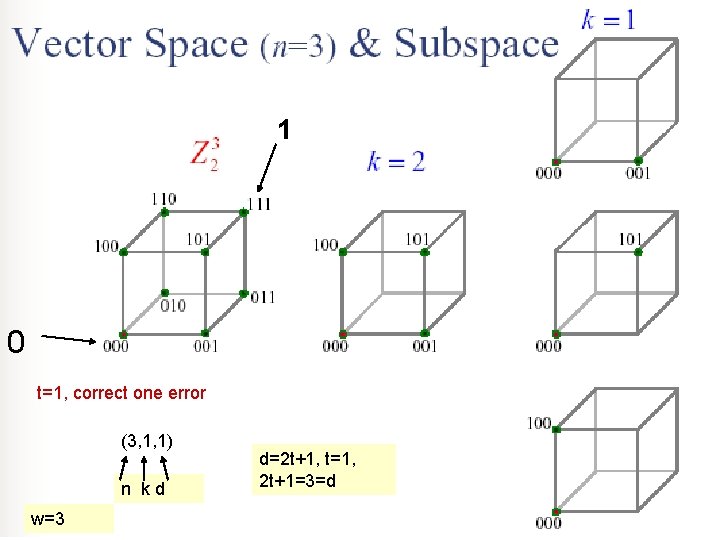
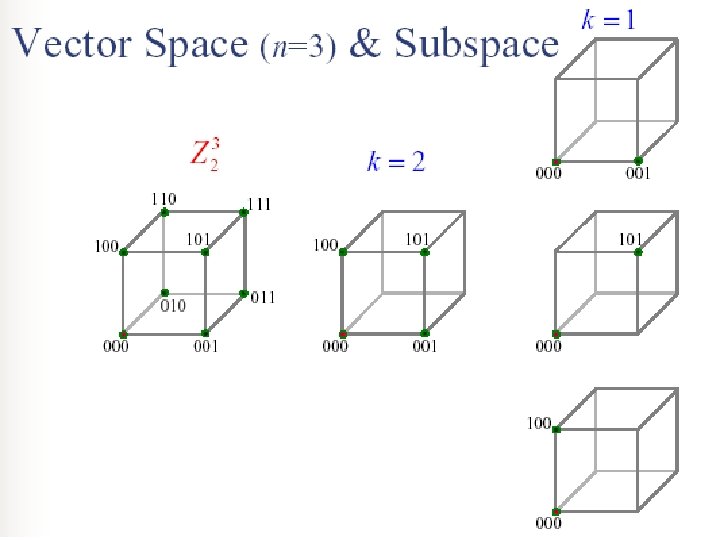
Encoding is a mapping Please remember our hypercube illustration of codes for interpretation
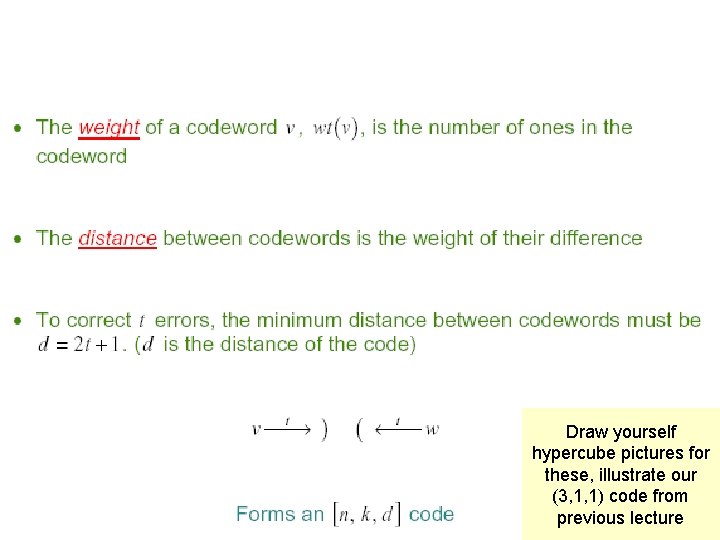
Draw yourself hypercube pictures for these, illustrate our (3, 1, 1) code from previous lecture
1 0 t=1, correct one error (3, 1, 1) n kd w=3 d=2 t+1, t=1, 2 t+1=3=d
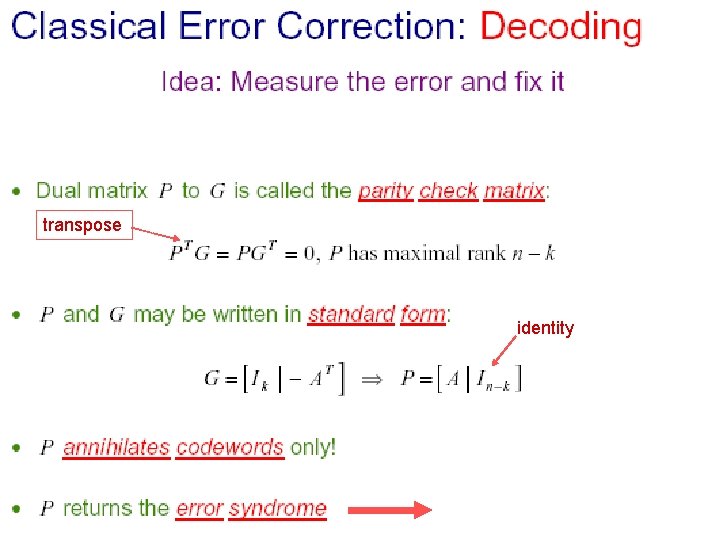
transpose identity
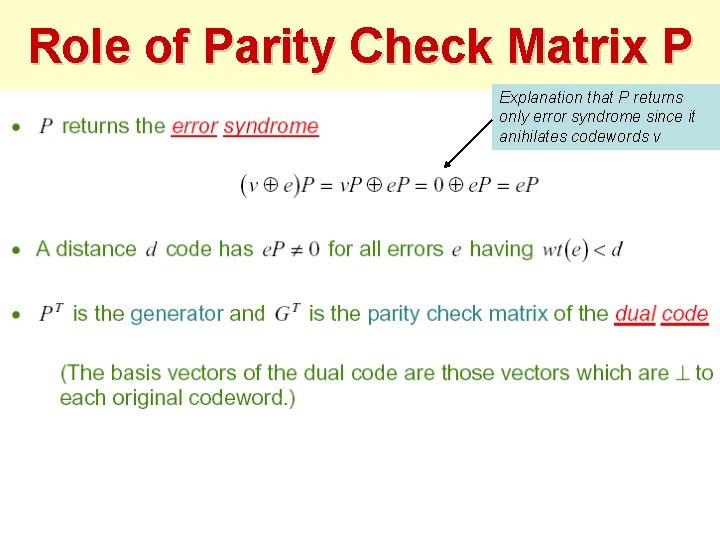
Role of Parity Check Matrix P Explanation that P returns only error syndrome since it anihilates codewords v
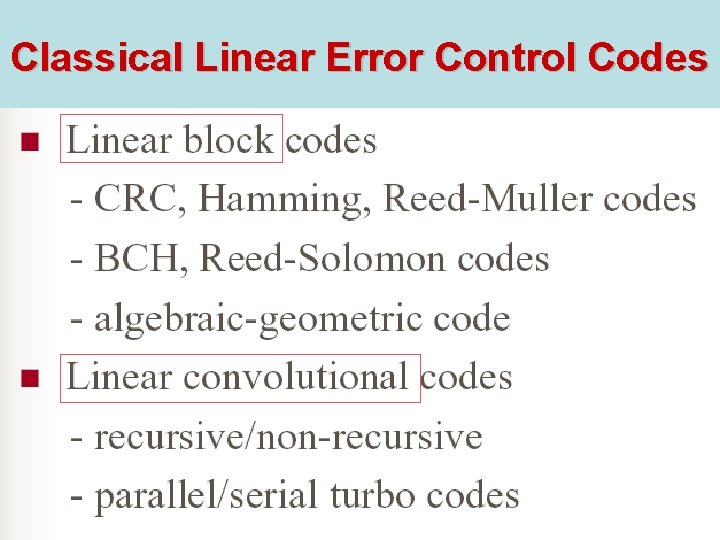
Classical Linear Error Control Codes
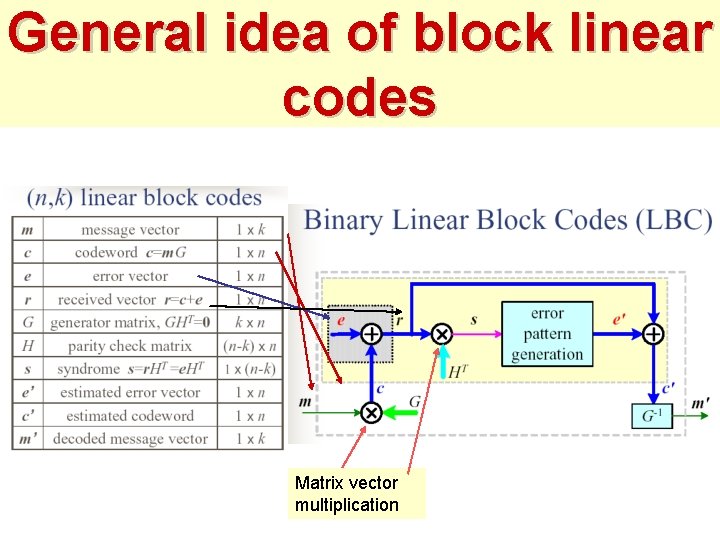
General idea of block linear codes Matrix vector multiplication
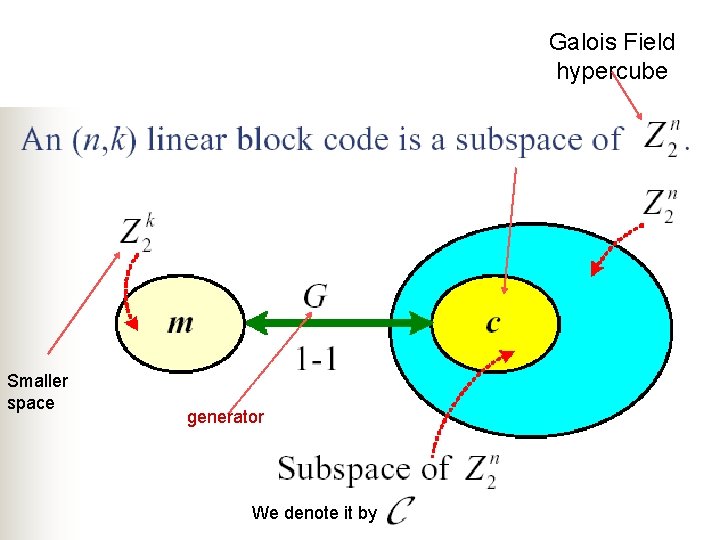
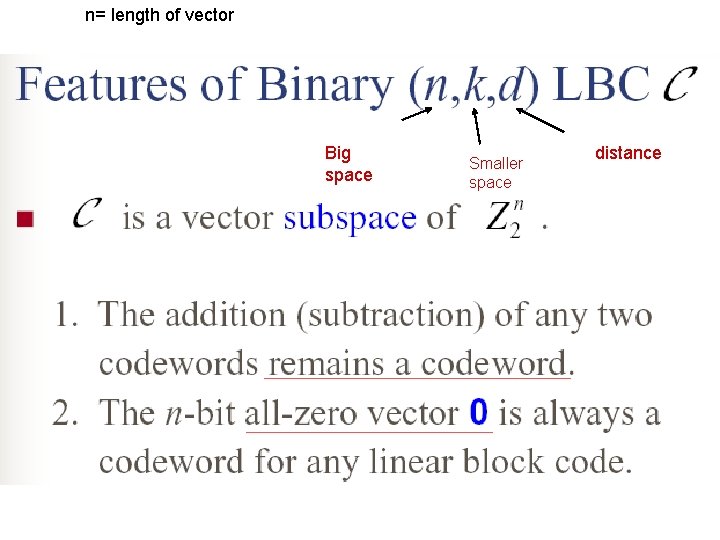
Galois Field hypercube Smaller space generator We denote it by
n= length of vector Big space Smaller space distance
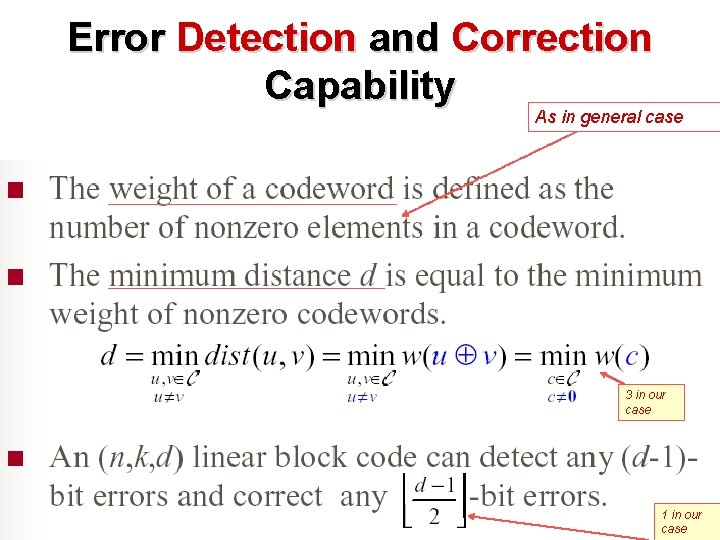
Error Detection and Correction Capability As in general case 3 in our case 1 in our case
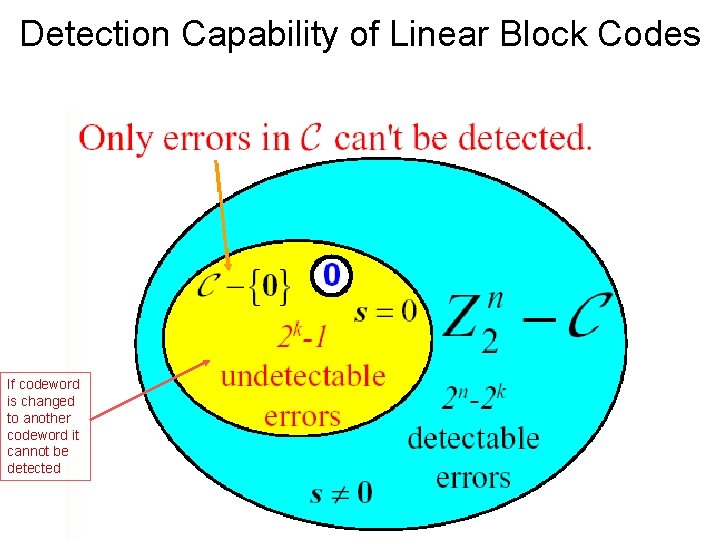
Detection Capability of Linear Block Codes If codeword is changed to another codeword it cannot be detected
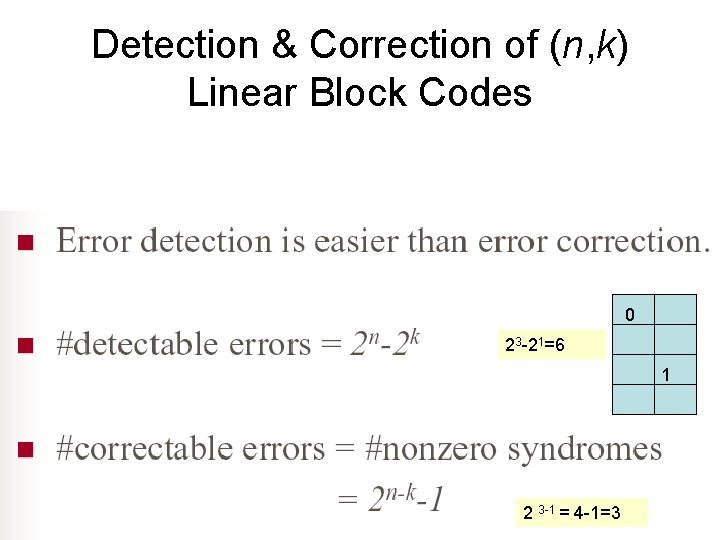
Detection & Correction of (n, k) Linear Block Codes 0 23 -21=6 1 2 3 -1 = 4 -1=3
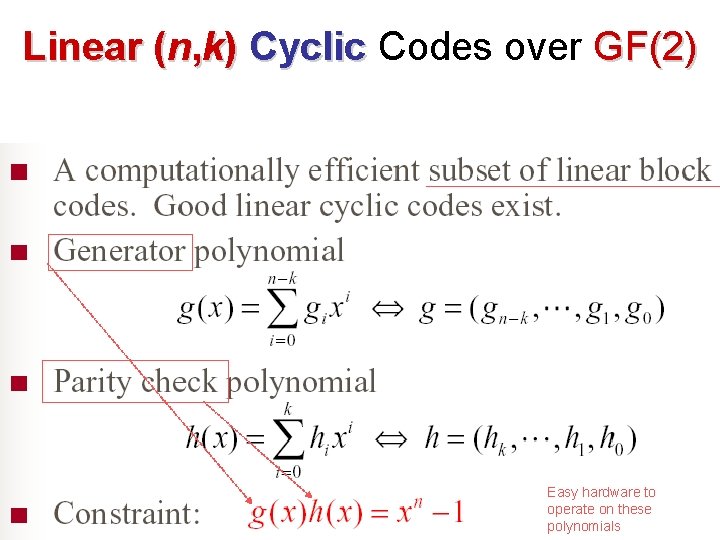
Linear (n, k) Cyclic Codes over GF(2) Easy hardware to operate on these polynomials
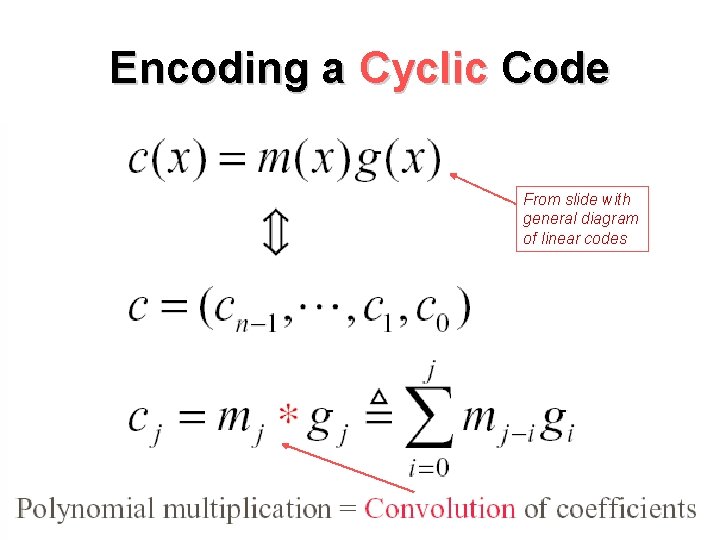
Encoding a Cyclic Code From slide with general diagram of linear codes
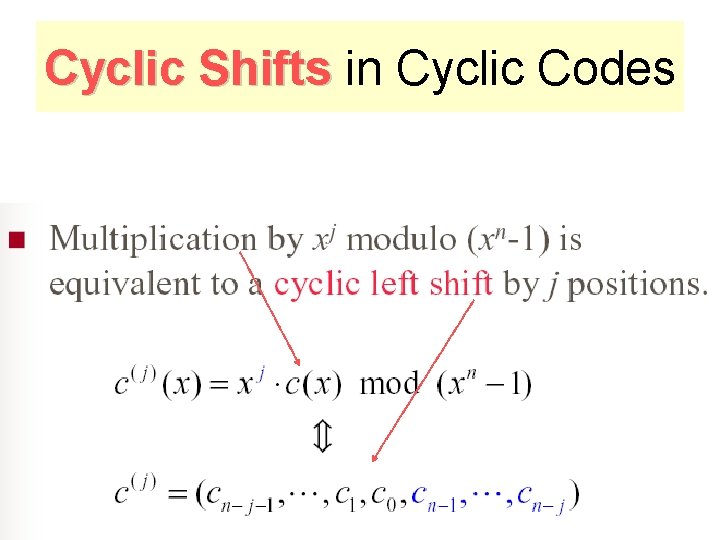
Cyclic Shifts in Cyclic Codes
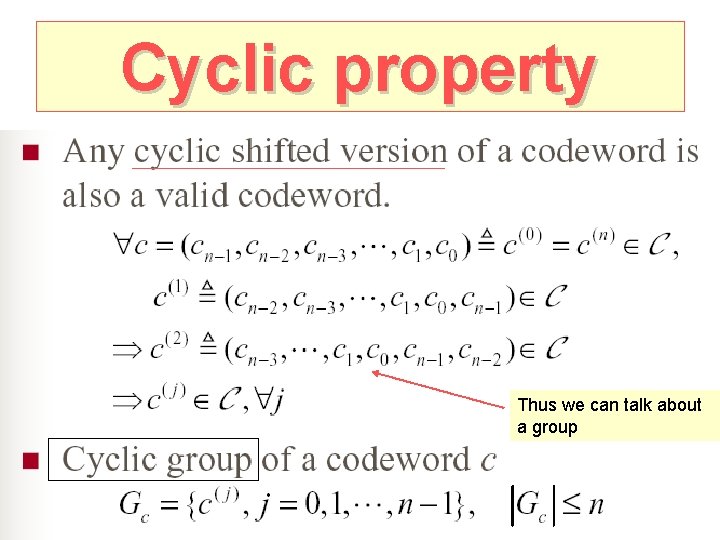
Cyclic property Thus we can talk about a group
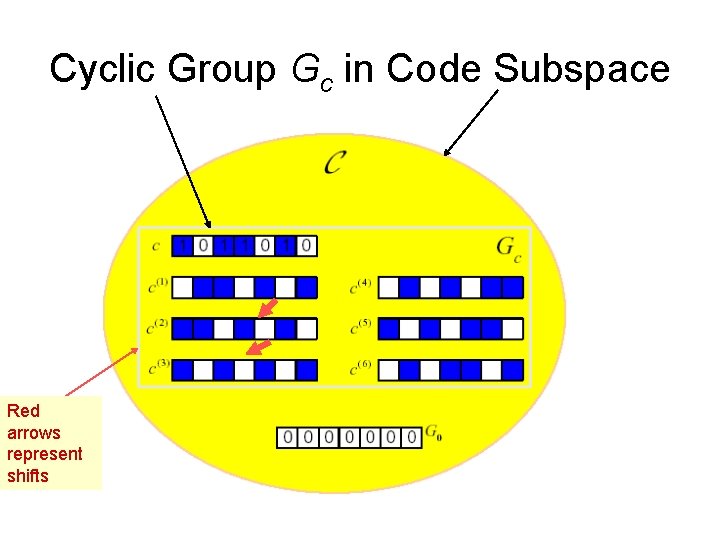
Cyclic Group Gc in Code Subspace Red arrows represent shifts
Quantum Error Correction
Outline • Sources and types of errors • Differences between classical and quantum error correction • Quantum error correcting codes
Introduction: why quantum error correction? • Quantum states of superposition (which stores quantum information) extremely fragile. • Quantum error correction more tricky than classical error correction. • In the field of quantum computation, what is possible in theory is very far off from what can be implemented. • Complex quantum computation impossible without the ability to recover from errors
What can go wrong? • Internal: – Initial states on input qubits not prepared properly. – Quantum gates used may not be accurate • Quantum gates may introduce small errors which will accumulate. • External: – Dissipation • A qubit loses energy to the environment. – Decoherence
Decoherence • Decoherence is the loss of quantum information of a quantum system due to its interaction with the environment. • Almost impossible to isolate a quantum system from the environment. • Over time, our quantum system will be entangled with the environment.
Detrimental role of environment • Information encoded in our quantum system will be encoded instead in the correlations between the quantum system and the environment. • The environment can be seen as measuring the quantum system, collapsing its superposition state. • Hence quantum information (encoded in the superposition) is irreversibly lost from the qubit.
How to Deal With Decoherence? First method to deal with decoherence 1. Design quantum algorithms to finish before decoherence ruins the quantum information. – Can be difficult as • • Decoherence occurs very quickly. Quantum algorithms may be very complex and long.
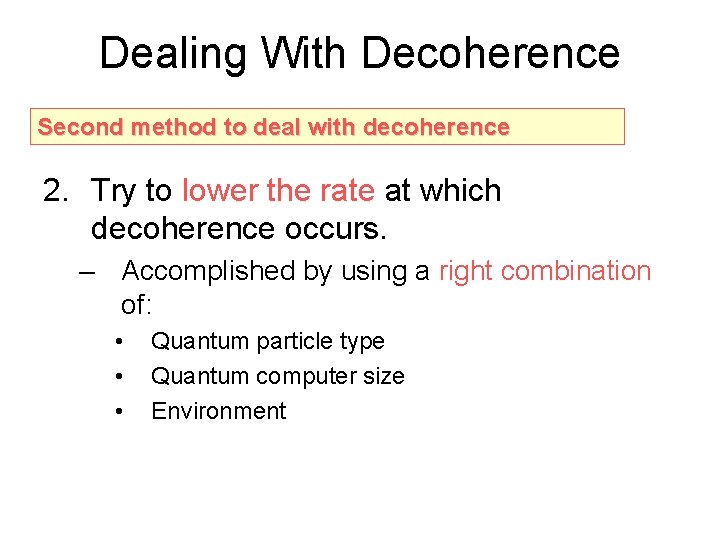
Dealing With Decoherence Second method to deal with decoherence 2. Try to lower the rate at which decoherence occurs. – Accomplished by using a right combination of: • • • Quantum particle type Quantum computer size Environment
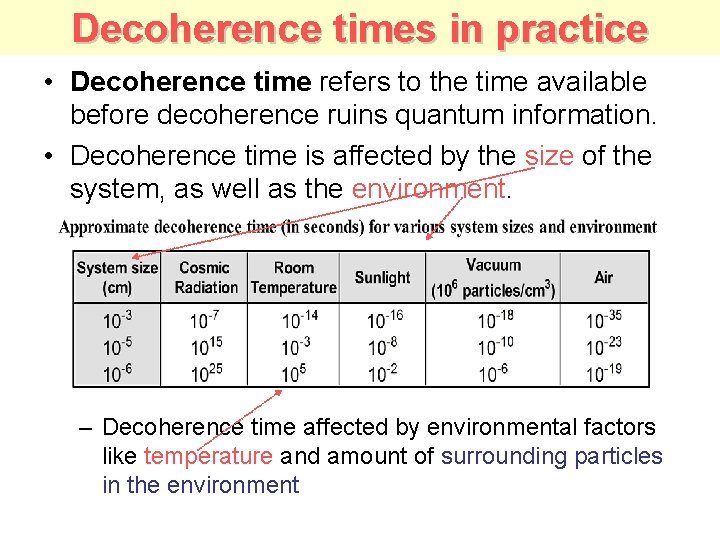
Decoherence times in practice • Decoherence time refers to the time available before decoherence ruins quantum information. • Decoherence time is affected by the size of the system, as well as the environment. – Decoherence time affected by environmental factors like temperature and amount of surrounding particles in the environment
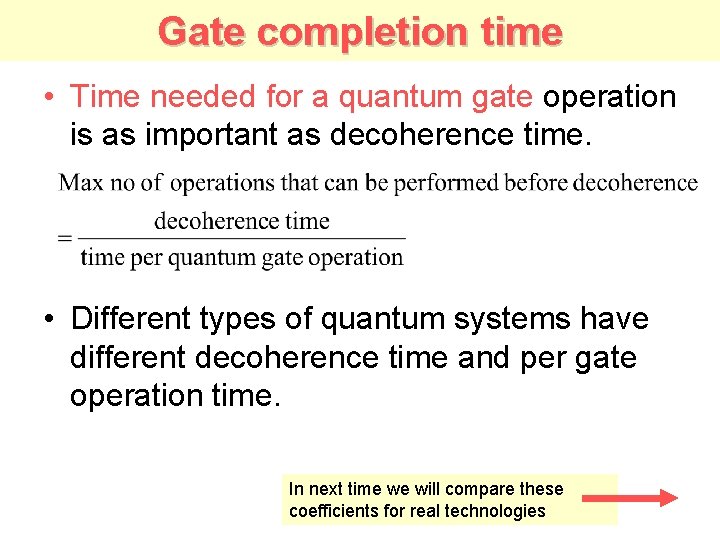
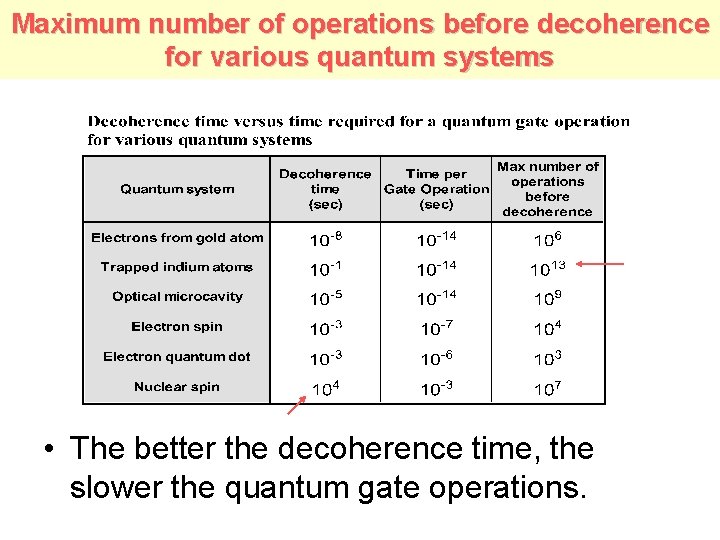
Gate completion time • Time needed for a quantum gate operation is as important as decoherence time. • Different types of quantum systems have different decoherence time and per gate operation time. In next time we will compare these coefficients for real technologies
Maximum number of operations before decoherence for various quantum systems • The better the decoherence time, the slower the quantum gate operations.
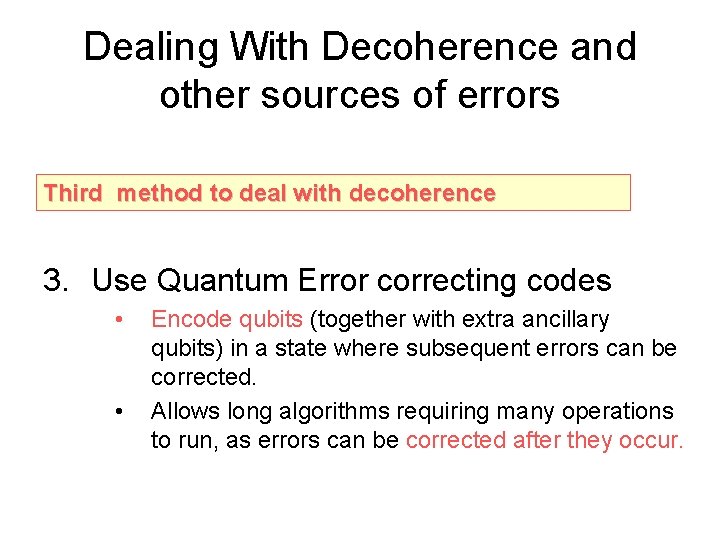
Dealing With Decoherence and other sources of errors Third method to deal with decoherence 3. Use Quantum Error correcting codes • • Encode qubits (together with extra ancillary qubits) in a state where subsequent errors can be corrected. Allows long algorithms requiring many operations to run, as errors can be corrected after they occur.
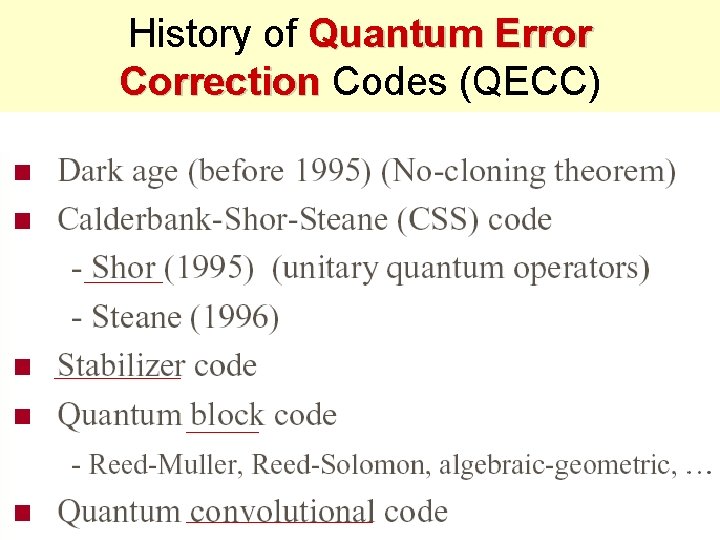
History of Quantum Error Correction Codes (QECC)
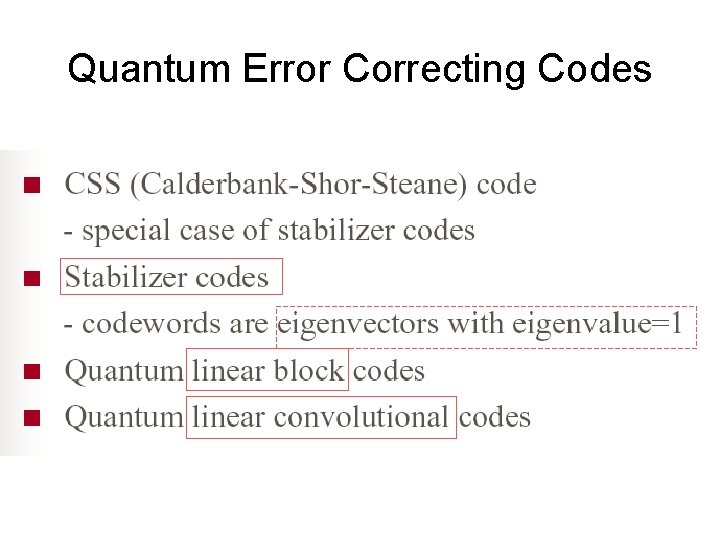
Quantum Error Correcting Codes
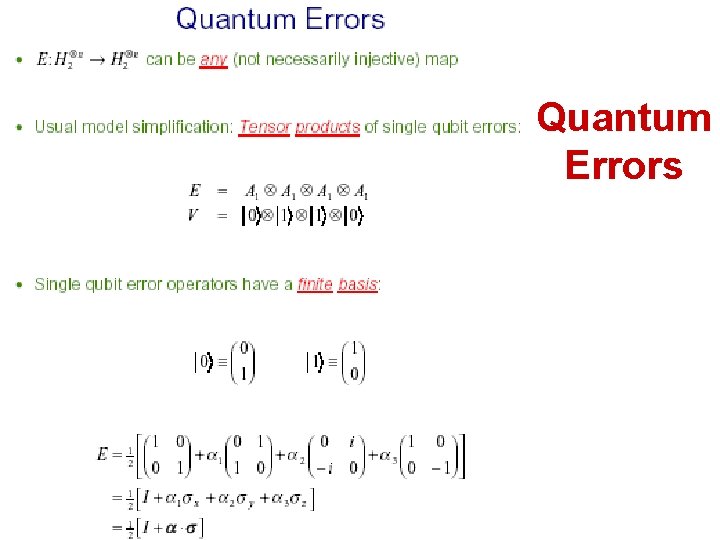
Quantum Errors
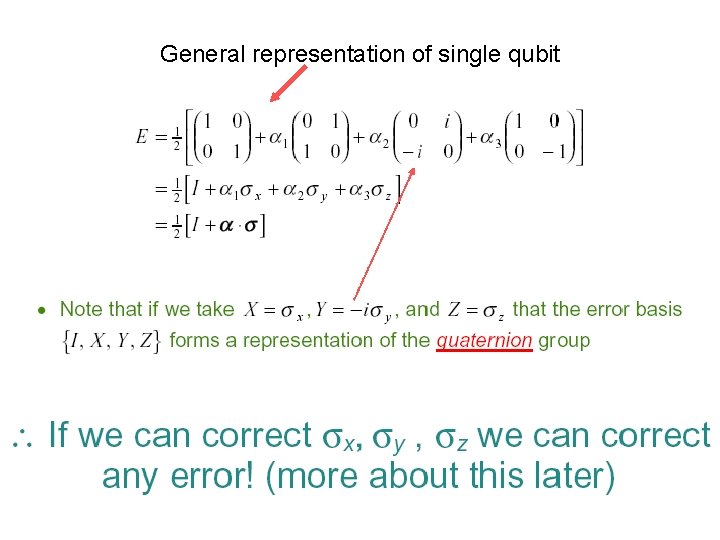
General representation of single qubit
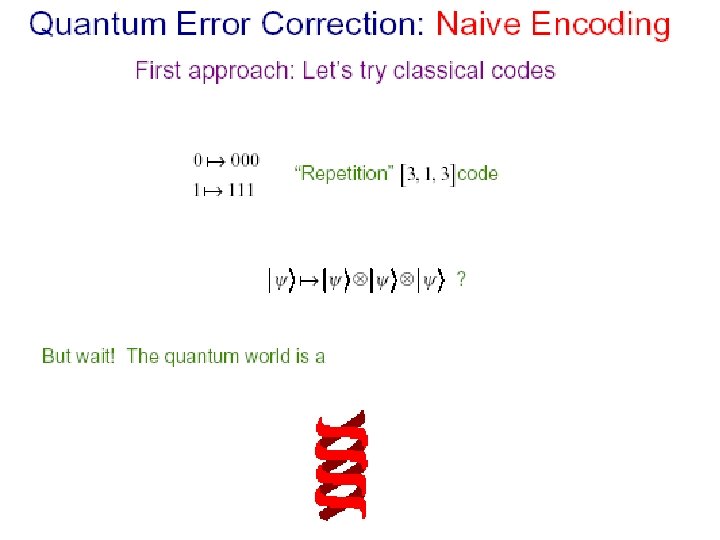
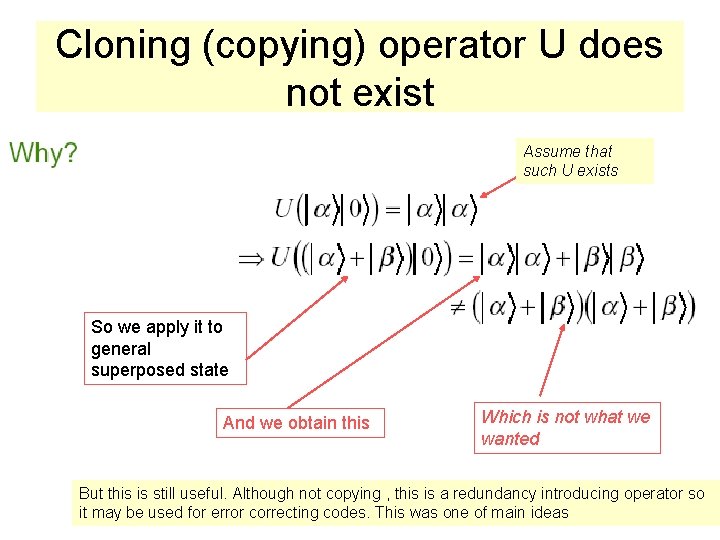
Cloning (copying) operator U does not exist Assume that such U exists So we apply it to general superposed state And we obtain this Which is not what we wanted But this is still useful. Although not copying , this is a redundancy introducing operator so it may be used for error correcting codes. This was one of main ideas
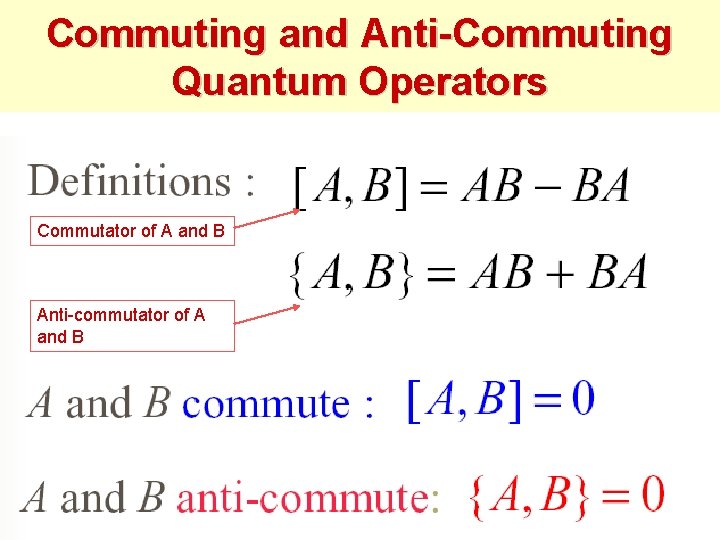
Commuting and Anti-Commuting Quantum Operators Commutator of A and B Anti-commutator of A and B
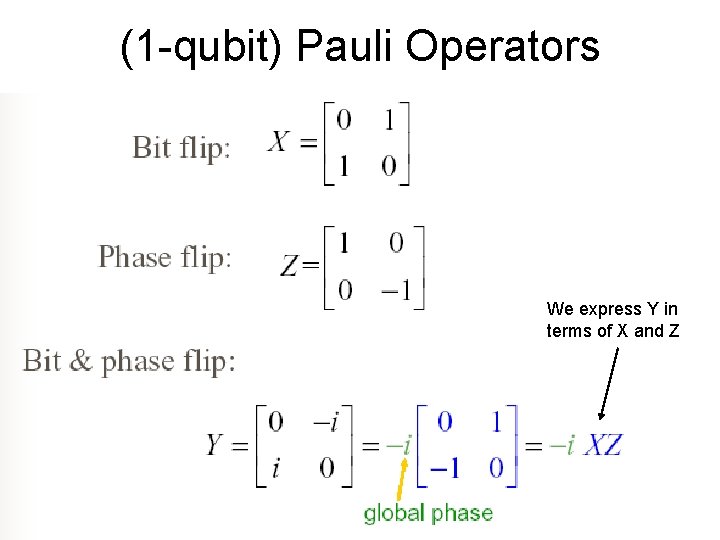
(1 -qubit) Pauli Operators We express Y in terms of X and Z
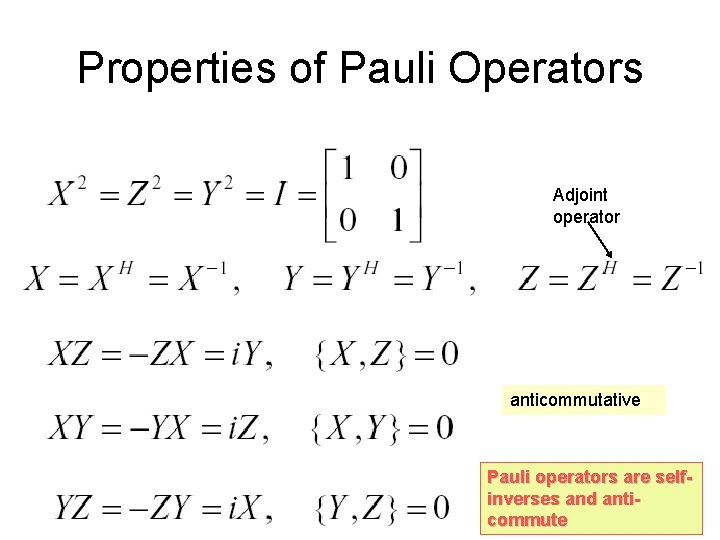
Properties of Pauli Operators Adjoint operator commutative anticommutative Pauli operators are selfinverses and anticommute
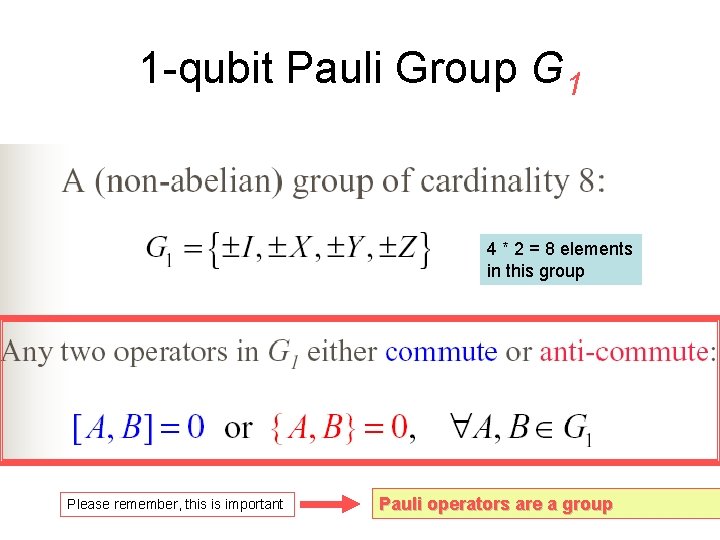
1 -qubit Pauli Group G 1 4 * 2 = 8 elements in this group Please remember, this is important Pauli operators are a group
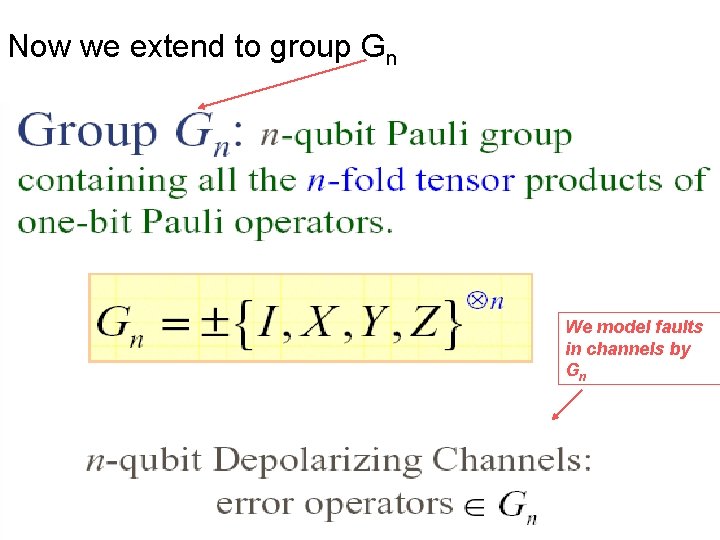
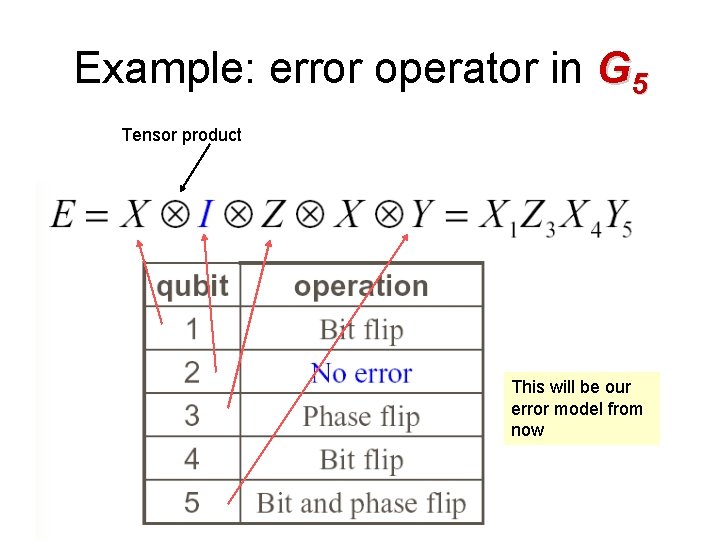
Now we extend to group Gn We model faults in channels by Gn
Example: error operator in G 5 Tensor product This will be our error model from now
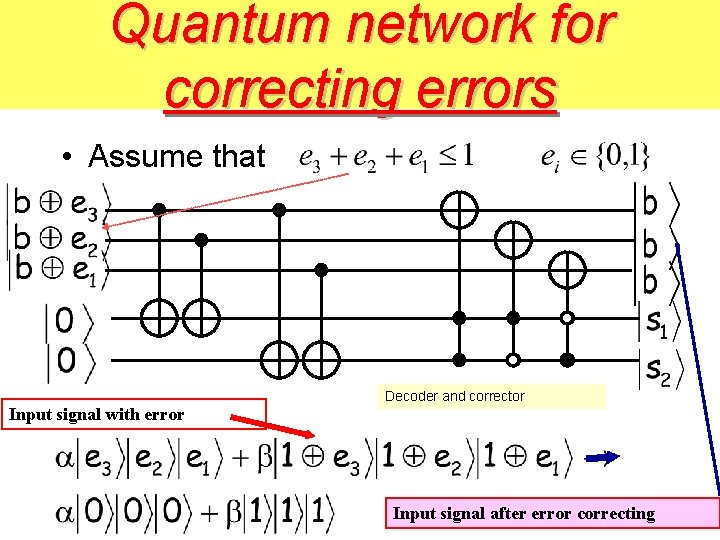
Quantum network for correcting errors • Assume that Input signal with error Decoder and corrector Input signal after error correcting
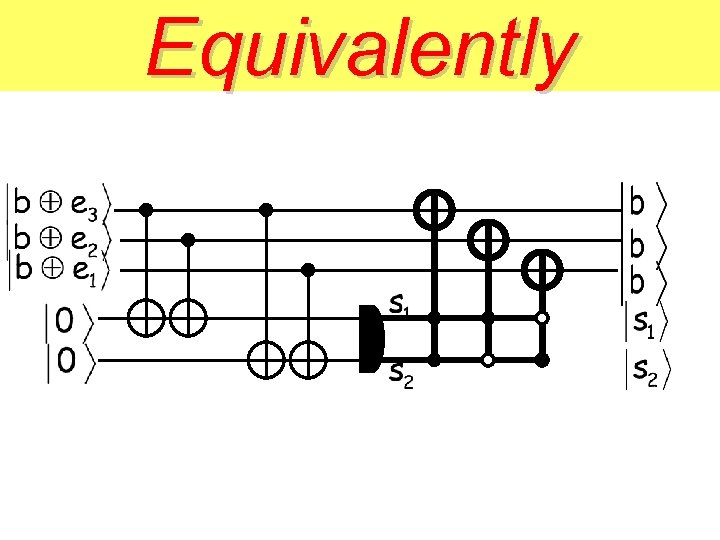
Equivalently
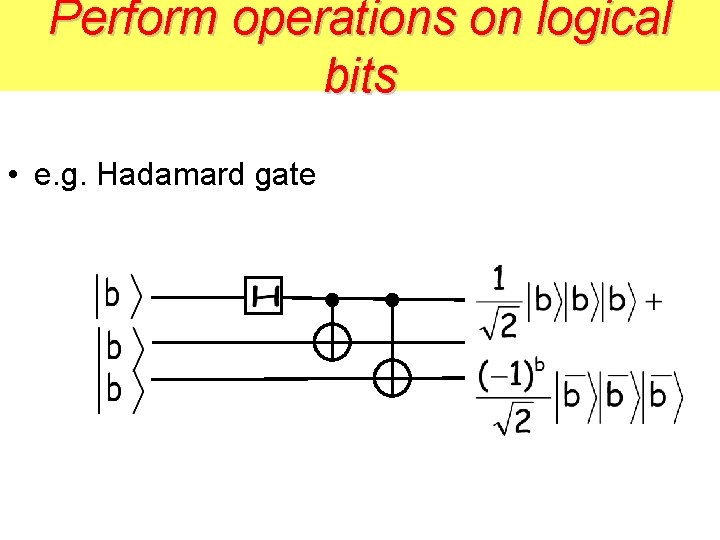
Perform operations on logical bits • e. g. Hadamard gate
Quantum Error Correcting by Peter Shor • In 1995, Peter Shor developed an improved procedure using 9 qubits to encode a single qubit of information • His algorithm was a majority vote type of system that allowed all single qubit errors to be detected and corrected This was a starting point to great research area, although his paper had many bugs