
Chicago Style 17 th edition Notes Bibliography Citing
Chicago Style (17 th edition): Notes & Bibliography Citing Sources Mc. Master University Library
Why Cite? �to distinguish your contributions from those of others �to document sources used �to credit authors of the works that you are using �to support your analysis �to put your interpretations into context �to help readers find the sources used �to provide additional sources for further study �to trace your research �to avoid plagiarism
When to Cite? When the work or idea of another person is … �Quoted �Paraphrased �Summarized �Influential to you
Citation Styles Examples: • APA • MLA • Chicago • Vancouver • Harvard • etc. Purpose: �establishes a standard of writing and documentation within a particular field �uniform style helps readers scan references quickly for key points and findings �encourages full disclosure of essential information

Chicago Style - Notes & Bibliography Citation Guide for Business includes formatting rules for • Title Page • Contents • Text • Appendix(es) • Notes • Bibliography + citation examples for frequently used sources CMOS 17 (2017) Citation Guide for Business Available via Library website: library. mcmaster. ca
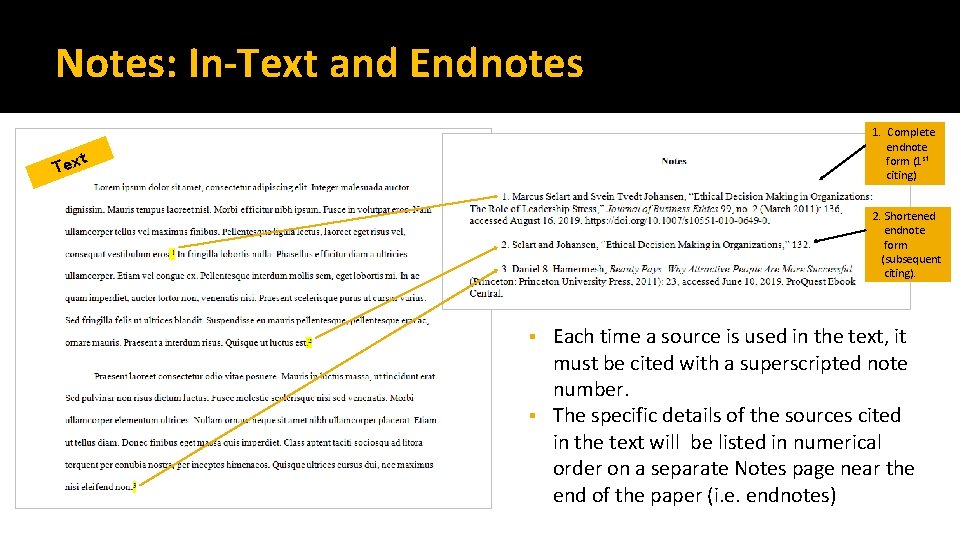
Notes: In-Text and Endnotes 1. Complete endnote form (1 st citing) t Tex 2. Shortened endnote form (subsequent citing). Each time a source is used in the text, it must be cited with a superscripted note number. § The specific details of the sources cited in the text will be listed in numerical order on a separate Notes page near the end of the paper (i. e. endnotes) §
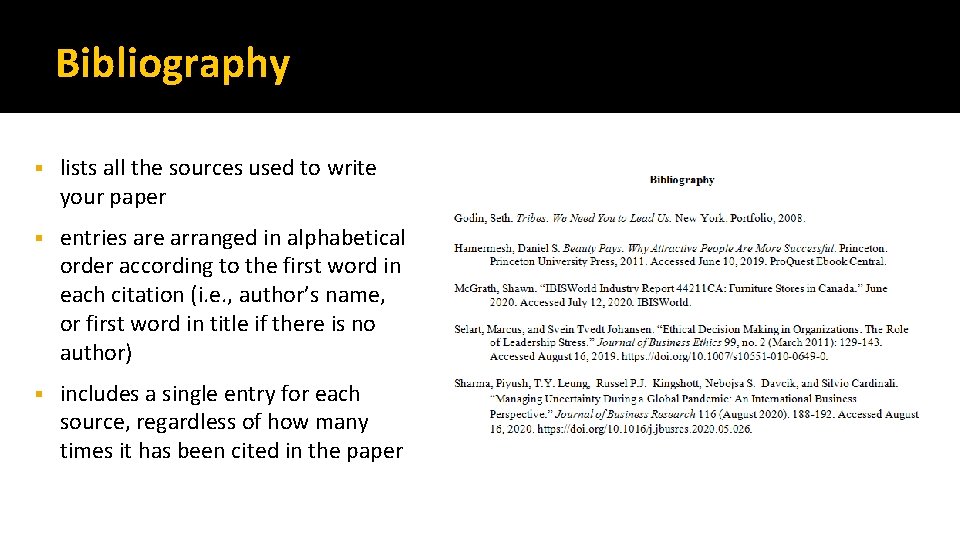
Bibliography § lists all the sources used to write your paper § entries are arranged in alphabetical order according to the first word in each citation (i. e. , author’s name, or first word in title if there is no author) § includes a single entry for each source, regardless of how many times it has been cited in the paper
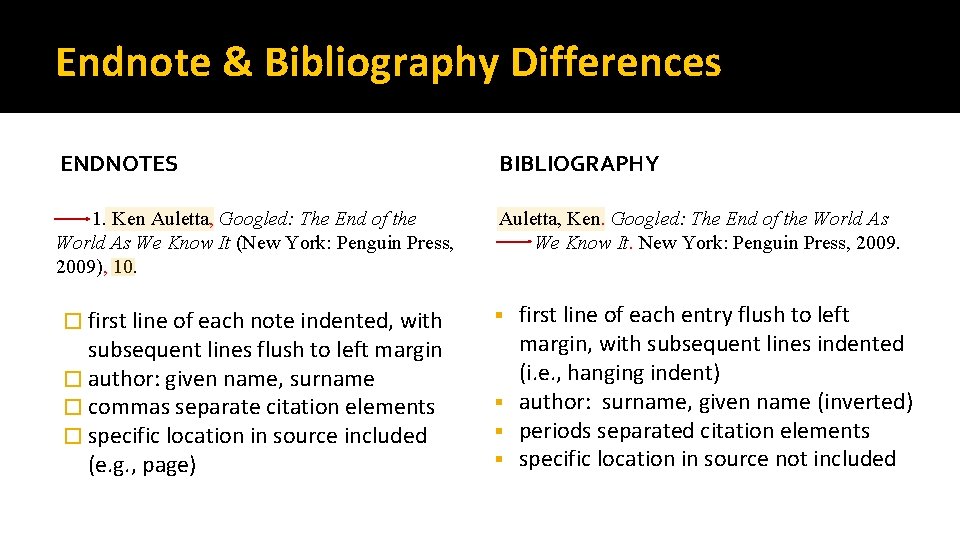
Endnote & Bibliography Differences ENDNOTES BIBLIOGRAPHY 1. Ken Auletta, Googled: The End of the World As We Know It (New York: Penguin Press, 2009), 10. Auletta, Ken. Googled: The End of the World As We Know It. New York: Penguin Press, 2009. � first line of each note indented, with subsequent lines flush to left margin � author: given name, surname � commas separate citation elements � specific location in source included (e. g. , page) first line of each entry flush to left margin, with subsequent lines indented (i. e. , hanging indent) § author: surname, given name (inverted) § periods separated citation elements § specific location in source not included §
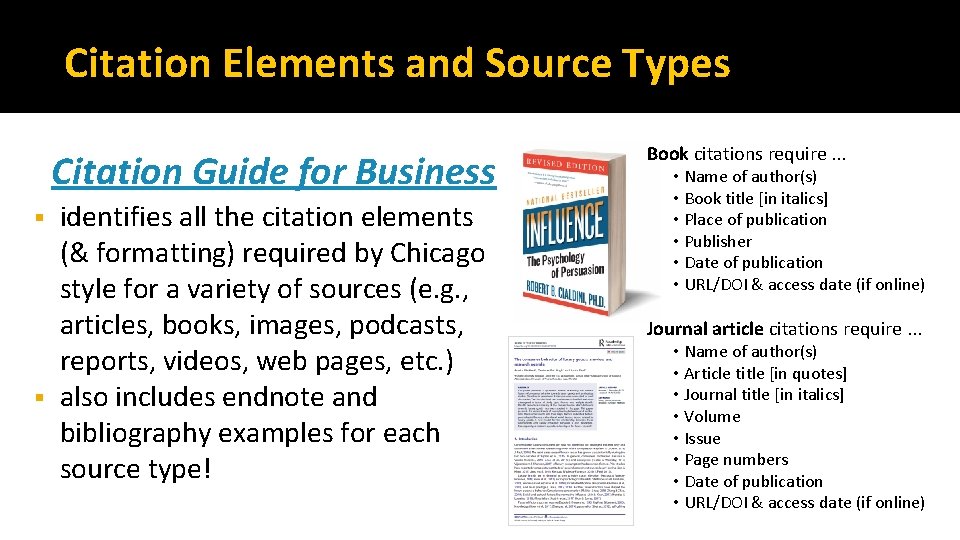
Citation Elements and Source Types Citation Guide for Business identifies all the citation elements (& formatting) required by Chicago style for a variety of sources (e. g. , articles, books, images, podcasts, reports, videos, web pages, etc. ) § also includes endnote and bibliography examples for each source type! § Book citations require. . . • Name of author(s) • Book title [in italics] • Place of publication • Publisher • Date of publication • URL/DOI & access date (if online) Journal article citations require. . . • Name of author(s) • Article title [in quotes] • Journal title [in italics] • Volume • Issue • Page numbers • Date of publication • URL/DOI & access date (if online)
Need Help? Just Ask • E-mail: library@mcmaster. ca • Phone: 905 -525 -9140 – ext. 22077 Mills Service Desk • Live Chat/Text: http: //library. mcmaster. ca/justask/
- Slides: 10