
Chicago Fire Digital Project Commander Leonard Edling Chicago
- Slides: 10
Chicago Fire Digital Project Commander Leonard Edling Chicago Fire Department MABAS CONFERENCE CHIEFS AND COMMAND February 21 – 23, 2011
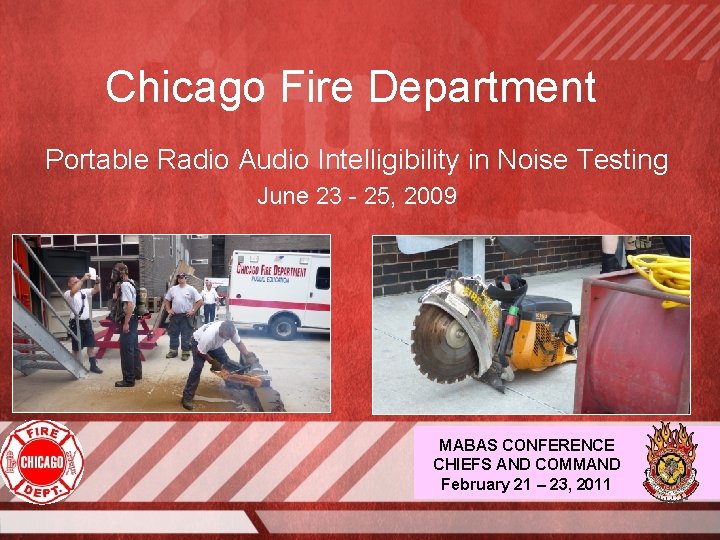
Chicago Fire Department Portable Radio Audio Intelligibility in Noise Testing June 23 - 25, 2009 MABAS CONFERENCE CHIEFS AND COMMAND February 21 – 23, 2011
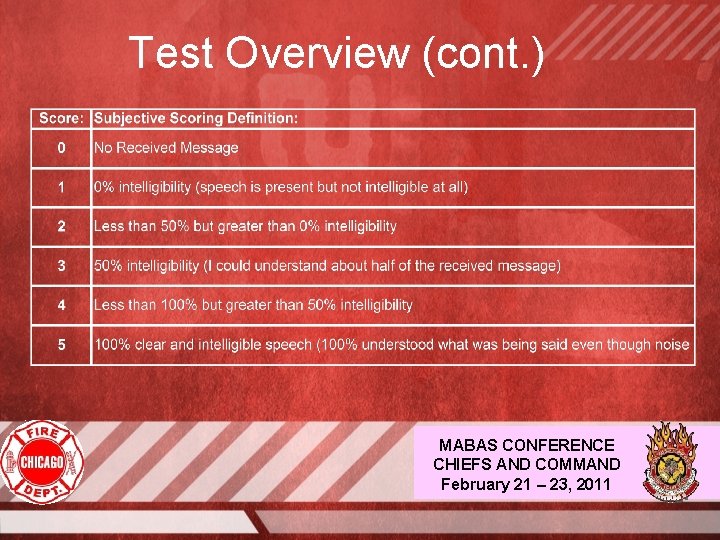
Test Overview • Test the radio “Transmitted Speech Intelligibility” while operating in typical fire ground background noise conditions • Instructions given to test scorers: – Test messages would be a series of fire ground related radio transmissions. Most transmissions will have noise in the background. score the perceived speech intelligibility of the received transmission. – Test were not meant to try and score the “delivered audio quality” of the transmission. Rather, the goal is to measure the transmitted speech intelligibility in various operating environments. MABAS CONFERENCE CHIEFS AND COMMAND February 21 – 23, 2011
Test Overview (cont. ) MABAS CONFERENCE CHIEFS AND COMMAND February 21 – 23, 2011
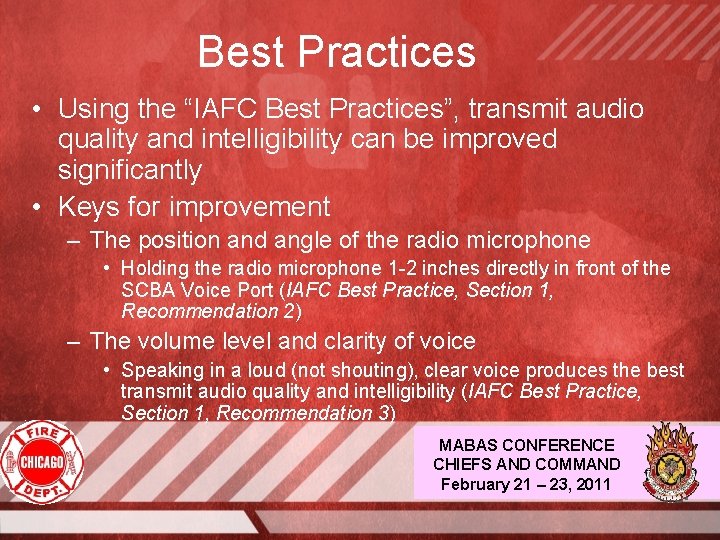
Best Practices • Using the “IAFC Best Practices”, transmit audio quality and intelligibility can be improved significantly • Keys for improvement – The position and angle of the radio microphone • Holding the radio microphone 1 -2 inches directly in front of the SCBA Voice Port (IAFC Best Practice, Section 1, Recommendation 2) – The volume level and clarity of voice • Speaking in a loud (not shouting), clear voice produces the best transmit audio quality and intelligibility (IAFC Best Practice, Section 1, Recommendation 3) MABAS CONFERENCE CHIEFS AND COMMAND February 21 – 23, 2011
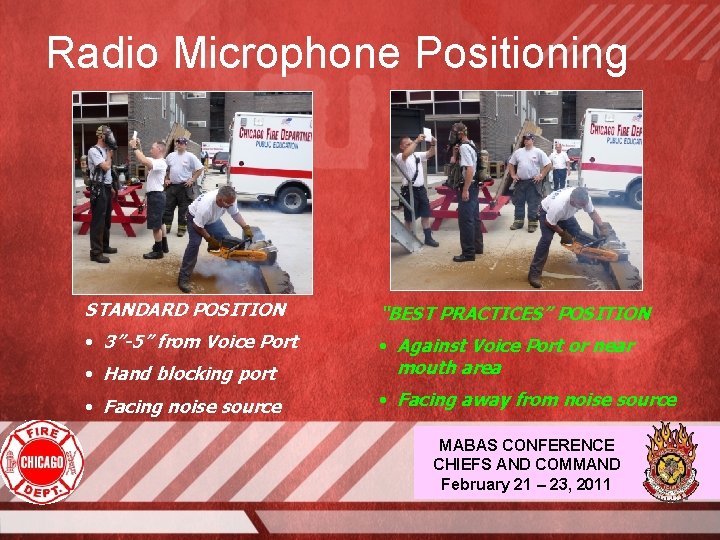
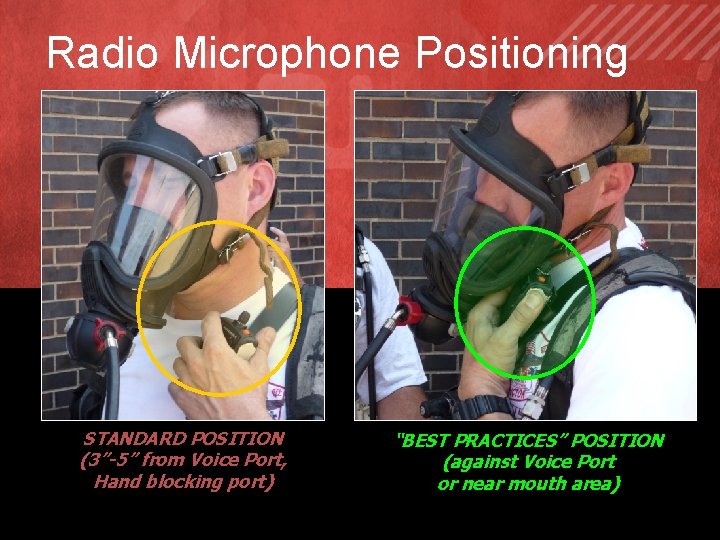
Radio Microphone Positioning STANDARD POSITION “BEST PRACTICES” POSITION • 3”-5” from Voice Port • Hand blocking port • Against Voice Port or near mouth area • Facing noise source • Facing away from noise source MABAS CONFERENCE CHIEFS AND COMMAND February 21 – 23, 2011
Radio Microphone Positioning STANDARD POSITION (3”-5” from Voice Port, Hand blocking port) “BESTMABAS PRACTICES” POSITION CONFERENCE (against Voice Port CHIEFS AND COMMAND February 21 – 23, area) 2011 or near mouth
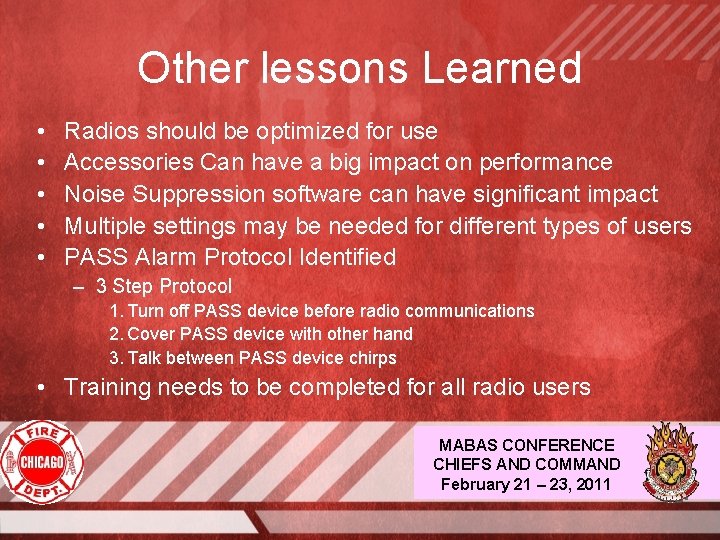
Other lessons Learned • • • Radios should be optimized for use Accessories Can have a big impact on performance Noise Suppression software can have significant impact Multiple settings may be needed for different types of users PASS Alarm Protocol Identified – 3 Step Protocol 1. Turn off PASS device before radio communications 2. Cover PASS device with other hand 3. Talk between PASS device chirps • Training needs to be completed for all radio users MABAS CONFERENCE CHIEFS AND COMMAND February 21 – 23, 2011
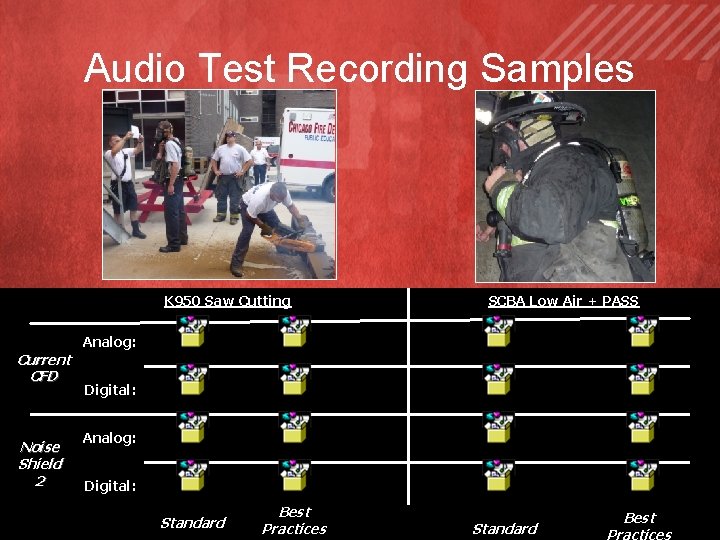
Audio Test Recording Samples K 950 Saw Cutting SCBA Low Air + PASS Analog: Current CFD Noise Shield 2 Digital: Analog: MABAS CONFERENCE CHIEFS AND COMMAND February 21 – 23, 2011 Digital: Standard Best Practices
QUESTIONS? Commander Leonard Edling 312 -745 -1045 ledling@cityofchicago. org MABAS CONFERENCE CHIEFS AND COMMAND February 21 – 23, 2011