
CHI Child Health Transformation Programme NSS Board Meeting
CHI & Child Health Transformation Programme NSS Board Meeting Fri 2 nd Feb 2018
Background Outline Business Case OBC based on a number of Business, Technical concerns: • Inflexibility: CHI system is poor at supporting changing business priorities and at meeting new requirements • Poor Architecture: CHI processes are batch based and compete for a very limited batch window. • Legacy Technology: hosted on the Fujitsu VME, old and expensive to maintain • Atos Contractual Position: support model expires in March 2018 (now extended through 2022)
Reminder : The Vision. . . To introduce first class technology that enables the health care system to transform services to improve outcomes for Scotland’s population. We will do this. . . – Once for Scotland through a consistent approach supported by standards; and – In collaboration with the health & care professionals, staff and people in Scotland. This vision describes a better future and provides the basis for the outcomes and the benefits to be delivered by the Programme.
Vision for the Community Health Index (CHI) Data Provide a unique and reliable identification service with improved data quality which enables data for an individual to be brought together from multiple systems. Practitioners Enable GPs, community and hospital staff to quickly and accurately complete Positive Patient Identification on a more flexible 24 hours/7 day basis and be assured that any communication is reaching the intended recipient in the form they require. Patients Support individuals to manage their health and influence their interaction with health services – unique identification based on CHI is key to the proposed online personal health record. Individuals want to “tell the service once” about their contact details and preferences. Integration By ‘cross-matching’ health and social care identifiers the CHI service will give the ability to exchange and improve the flow of data across organisational boundaries. Quality Contribute to the delivery of safe person centred care. Efficiency Develop and deliver a Once for Scotland service model that reduces costs and represents public sector value.
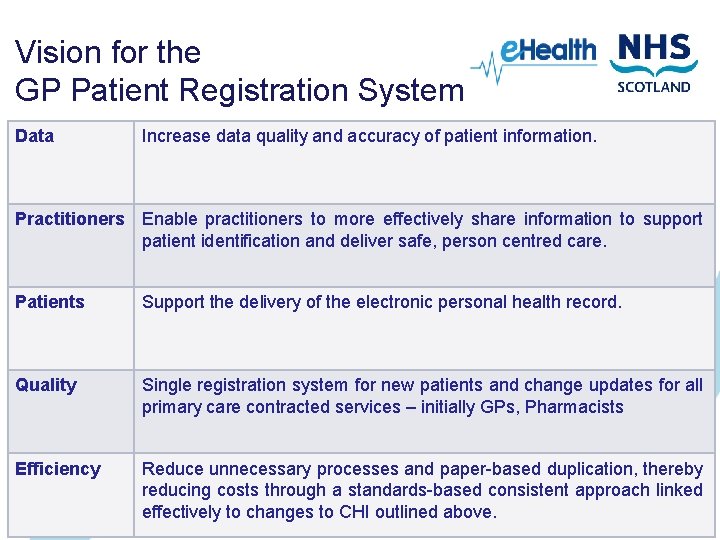
Vision for the GP Patient Registration System Data Increase data quality and accuracy of patient information. Practitioners Enable practitioners to more effectively share information to support patient identification and deliver safe, person centred care. Patients Support the delivery of the electronic personal health record. Quality Single registration system for new patients and change updates for all primary care contracted services – initially GPs, Pharmacists Efficiency Reduce unnecessary processes and paper-based duplication, thereby reducing costs through a standards-based consistent approach linked effectively to changes to CHI outlined above.
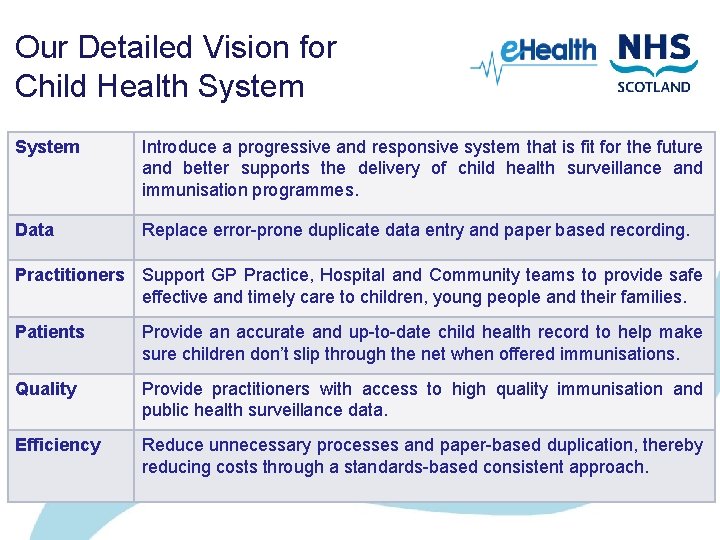
Our Detailed Vision for Child Health System Introduce a progressive and responsive system that is fit for the future and better supports the delivery of child health surveillance and immunisation programmes. Data Replace error-prone duplicate data entry and paper based recording. Practitioners Support GP Practice, Hospital and Community teams to provide safe effective and timely care to children, young people and their families. Patients Provide an accurate and up-to-date child health record to help make sure children don’t slip through the net when offered immunisations. Quality Provide practitioners with access to high quality immunisation and public health surveillance data. Efficiency Reduce unnecessary processes and paper-based duplication, thereby reducing costs through a standards-based consistent approach.
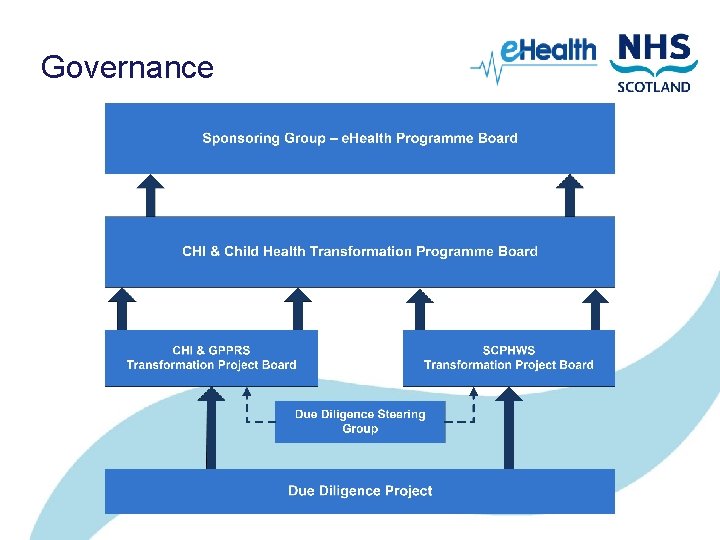
Governance
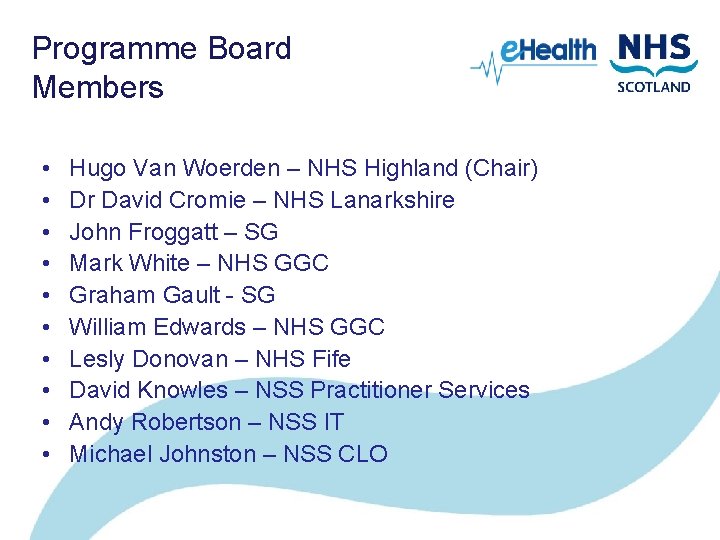
Programme Board Members • • • Hugo Van Woerden – NHS Highland (Chair) Dr David Cromie – NHS Lanarkshire John Froggatt – SG Mark White – NHS GGC Graham Gault - SG William Edwards – NHS GGC Lesly Donovan – NHS Fife David Knowles – NSS Practitioner Services Andy Robertson – NSS IT Michael Johnston – NSS CLO
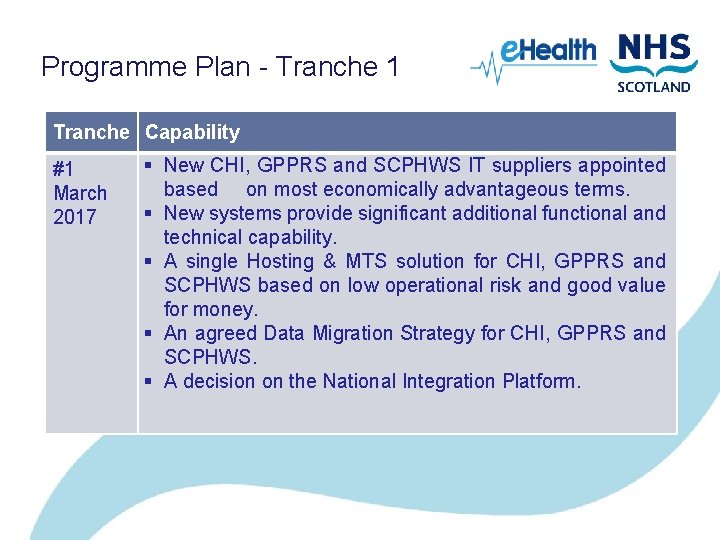
Programme Plan - Tranche 1 Tranche Capability #1 March 2017 New CHI, GPPRS and SCPHWS IT suppliers appointed based on most economically advantageous terms. New systems provide significant additional functional and technical capability. A single Hosting & MTS solution for CHI, GPPRS and SCPHWS based on low operational risk and good value for money. An agreed Data Migration Strategy for CHI, GPPRS and SCPHWS. A decision on the National Integration Platform.
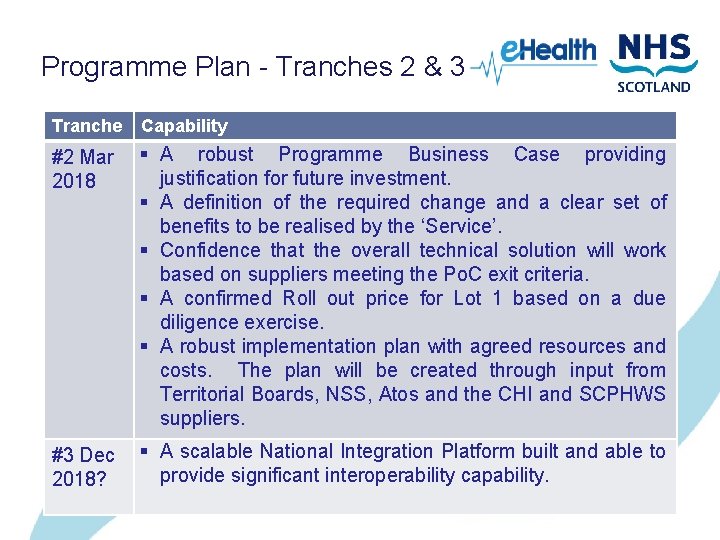
Programme Plan - Tranches 2 & 3 Tranche Capability #2 Mar 2018 A robust Programme Business Case providing justification for future investment. A definition of the required change and a clear set of benefits to be realised by the ‘Service’. Confidence that the overall technical solution will work based on suppliers meeting the Po. C exit criteria. A confirmed Roll out price for Lot 1 based on a due diligence exercise. A robust implementation plan with agreed resources and costs. The plan will be created through input from Territorial Boards, NSS, Atos and the CHI and SCPHWS suppliers. #3 Dec 2018? A scalable National Integration Platform built and able to provide significant interoperability capability.
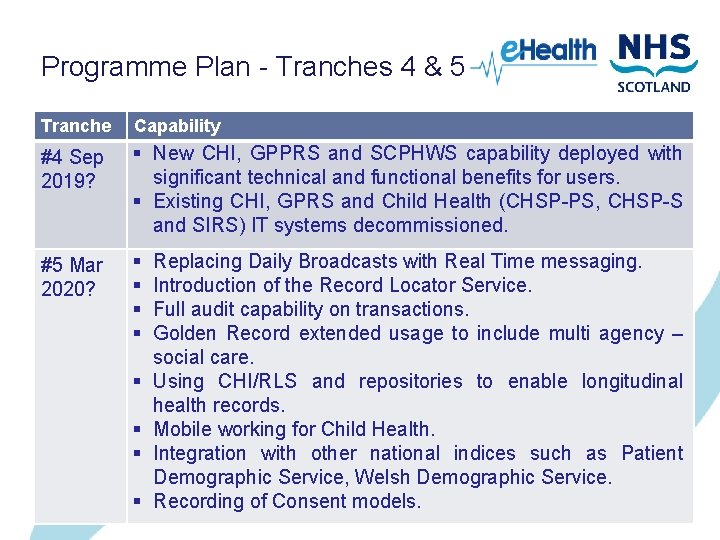
Programme Plan - Tranches 4 & 5 Tranche Capability #4 Sep 2019? New CHI, GPPRS and SCPHWS capability deployed with significant technical and functional benefits for users. Existing CHI, GPRS and Child Health (CHSP-PS, CHSP-S and SIRS) IT systems decommissioned. #5 Mar 2020? Replacing Daily Broadcasts with Real Time messaging. Introduction of the Record Locator Service. Full audit capability on transactions. Golden Record extended usage to include multi agency – social care. Using CHI/RLS and repositories to enable longitudinal health records. Mobile working for Child Health. Integration with other national indices such as Patient Demographic Service, Welsh Demographic Service. Recording of Consent models.
Programme Progress Completed • Tranche #1 ‘Procurement’ Contracts signed on 13 th February 2017: – Wipro (with Next. Gate) for CHI; and – Servelec for SCPHWS (i. e. Child Health). • In addition, Wipro (with Next. Gate) will provide the new GP Patient Registration System (GPPRS). • Atos will provide the Hosting & MTS for the new IT systems. • Integration Platform upgrade agreed.
Programme Progress Current • Tranche #2 ‘Transition’ • This ‘transition work’ has taken longer than planned (scheduled for Oct 17 but now Mar 18) : 1) A Proof of Concept to ensure the new IT systems can work with the existing technical infrastructure. 2) Due Diligence to gather information to inform the FBC and implementation approach for the new IT systems. 3) A planning exercise to produce a detailed implementation schedule. 4) A Full Business Case (FBC) with informed timeline, costs and high level choices / alternatives
Legal Position Terminate after Tranche 2 • There is a specific right for NSS to terminate before issue of the Implementation Start Notice, subject to payment of the Po. C and DD charges. • The contracts are in NSS’s favour proceeding to Implementation. - there was no guarantee that the project would proceed to full implementation and roll out. • However, a case for compensation beyond the sums agreed for the Po. C and DD charges is open to question, there may be advantages in reaching some sort of accommodation with a contractor with regard to reputational damage, avoid a formal legal dispute
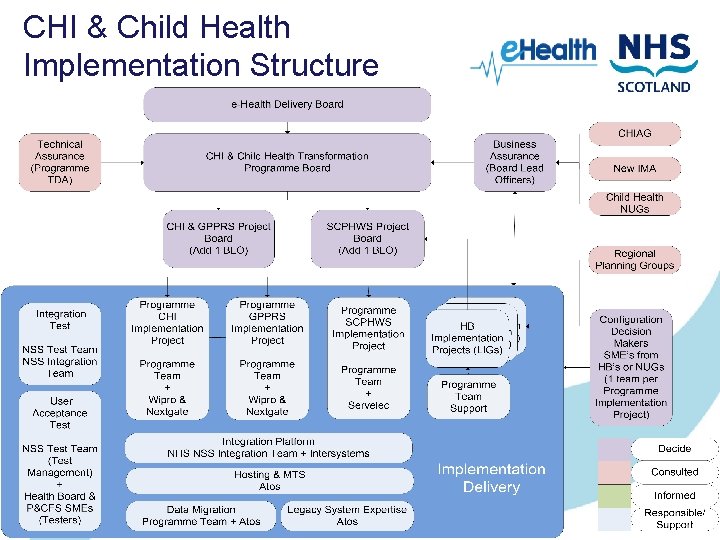
CHI & Child Health Implementation Structure
Funding • Programme funding is limited and is under the governance of the e. Health Delivery Board and the CHI & Child Health Transformation Programme Board. • The Programme is funded through mixture of Health Boards (thro e. Health Reinvestment Fund) and SG e. Health • Health Board Local Implementation activities, including local testing or activities needed to implement new working practices, are the responsibility of the respective NHS Health Boards. • As with the procurement, the programme funding does not cover payment to Health Boards to pay for Subject Matter Experts who support the Programme team – for example to support configuration decision making, or to carry out National User Acceptance Testing
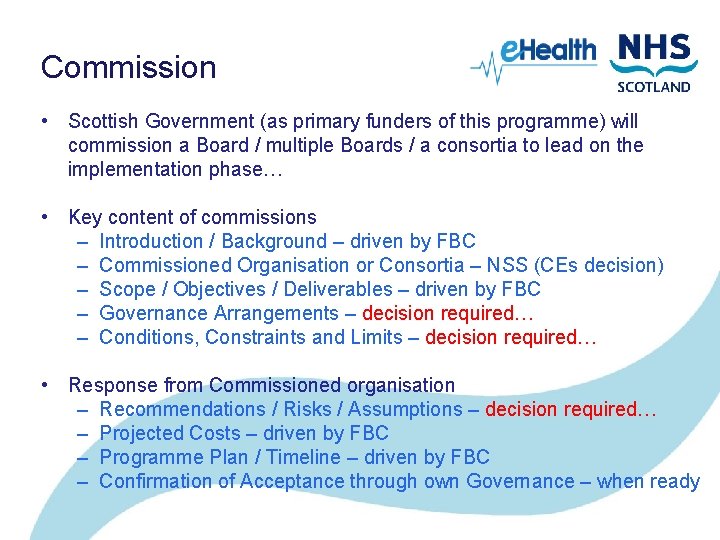
Commission • Scottish Government (as primary funders of this programme) will commission a Board / multiple Boards / a consortia to lead on the implementation phase… • Key content of commissions – Introduction / Background – driven by FBC – Commissioned Organisation or Consortia – NSS (CEs decision) – Scope / Objectives / Deliverables – driven by FBC – Governance Arrangements – decision required… – Conditions, Constraints and Limits – decision required… • Response from Commissioned organisation – Recommendations / Risks / Assumptions – decision required… – Projected Costs – driven by FBC – Programme Plan / Timeline – driven by FBC – Confirmation of Acceptance through own Governance – when ready
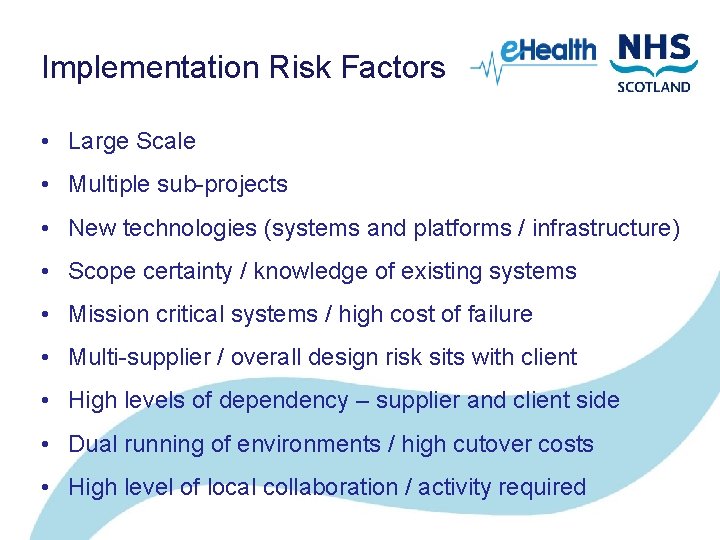
Implementation Risk Factors • Large Scale • Multiple sub-projects • New technologies (systems and platforms / infrastructure) • Scope certainty / knowledge of existing systems • Mission critical systems / high cost of failure • Multi-supplier / overall design risk sits with client • High levels of dependency – supplier and client side • Dual running of environments / high cutover costs • High level of local collaboration / activity required
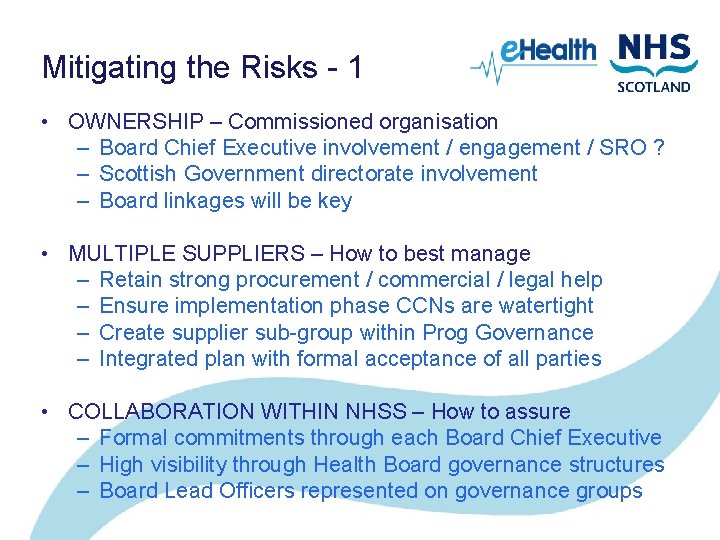
Mitigating the Risks - 1 • OWNERSHIP – Commissioned organisation – Board Chief Executive involvement / engagement / SRO ? – Scottish Government directorate involvement – Board linkages will be key • MULTIPLE SUPPLIERS – How to best manage – Retain strong procurement / commercial / legal help – Ensure implementation phase CCNs are watertight – Create supplier sub-group within Prog Governance – Integrated plan with formal acceptance of all parties • COLLABORATION WITHIN NHSS – How to assure – Formal commitments through each Board Chief Executive – High visibility through Health Board governance structures – Board Lead Officers represented on governance groups
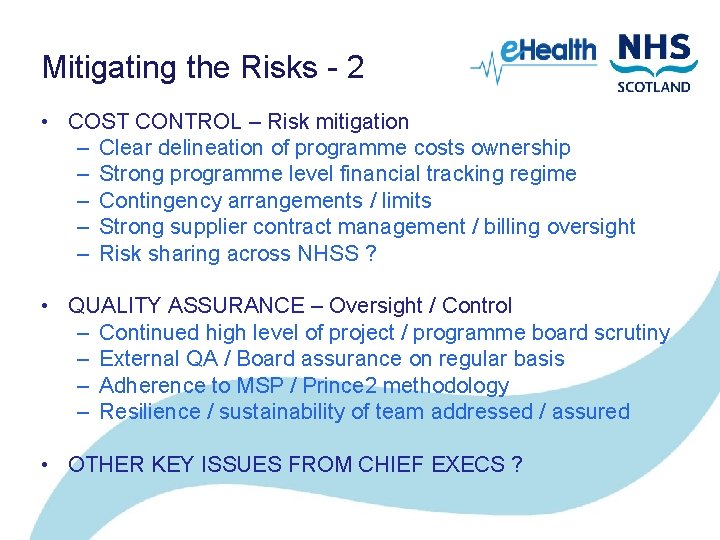
Mitigating the Risks - 2 • COST CONTROL – Risk mitigation – Clear delineation of programme costs ownership – Strong programme level financial tracking regime – Contingency arrangements / limits – Strong supplier contract management / billing oversight – Risk sharing across NHSS ? • QUALITY ASSURANCE – Oversight / Control – Continued high level of project / programme board scrutiny – External QA / Board assurance on regular basis – Adherence to MSP / Prince 2 methodology – Resilience / sustainability of team addressed / assured • OTHER KEY ISSUES FROM CHIEF EXECS ?
Major Decisions Required - 1 • SG Oversight / Commissioning Directorate – SG e. Health – Graham Gault / Geoff Huggins • Ownership Model – NSS to own commission • Governance Structure – As per current structure + linkage with Chief Execs Group – New SG Digital governance link tbd • Chief Executives involvement / engagement – Programme Board membership / leadership ? – Regular Review / Major Decision consultation ?
Major Decisions Required - 2 • Supplier Management Group – NSS, Servelec, Wipro, Atos, Health Board linkage ? • Resource Commitment / Risk Sharing – Chief Exec letter / MOU / written commitment ? – SG role / underwriting of risk ? • External Assurance – Programme Delivery - Ongoing / Gateway / Internal Audit Clinical Assurance arrangements thro NSS (P Campbell) • Conditions, Constraints & Limits – Tolerances and Contingencies / Escalation routes ? – External dependencies ?
Approval / Timeline • FBC / Commission Consultation / Approval / Governance – CHI / CHS Programme Board – SG Funding & Sponsoring Directorates / Do. F – e. Health Leads Group – SG Digital Assurance Board / Delivery Board – Chief Executives Group – Commissioned Health Boards Governance Groups – Local Health Boards Governance Groups • Timeline for Commission – Discussion with Programme Board : December 15 – Review with SG e. Health : January 12 – Discussion with Chief Execs : January 16 – Draft in correspondence for Board : Feb 9 – Final draft / proposal for FBC : February 23 – Back to Chief Execs / NSS Board in March…….
- Slides: 23