
Chi A Scalable Programmable Control Plane for Distributed
Chi: A Scalable & Programmable Control Plane for Distributed Stream Processing Luo Mai, Kai Zeng, Rahul Potharaju, Le Xu, Steve Suh, Shivaram Venkataraman, Paolo Costa, Terry Kim, Saravanan Muthukrishnan, Vamsi Kuppa, Sudheer Dhulipalla, and Sriram Rao Imperial College London, Microsoft and UIUC luo. mai 11@imperial. ac. uk 1
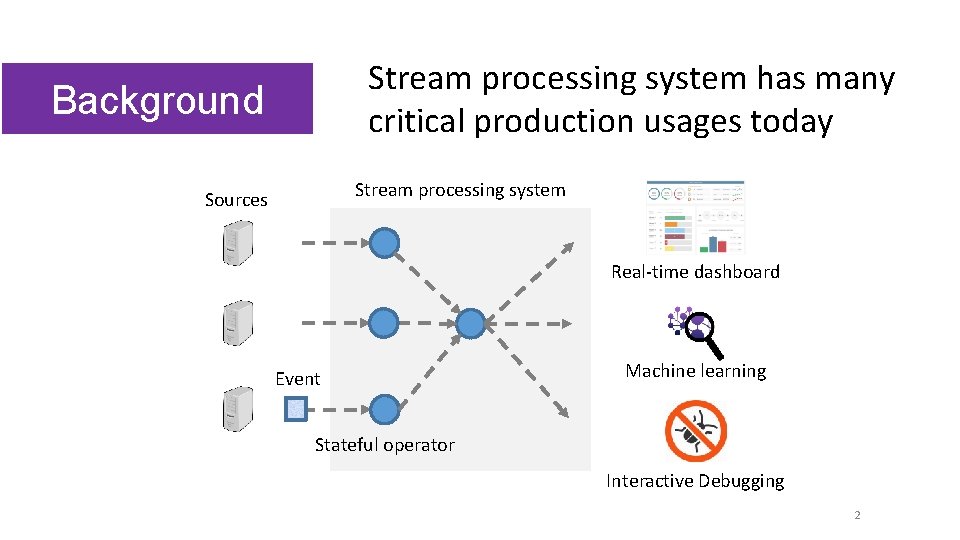
Stream processing system has many critical production usages today Background Stream processing system Sources Real-time dashboard Event Machine learning Stateful operator Interactive Debugging 2
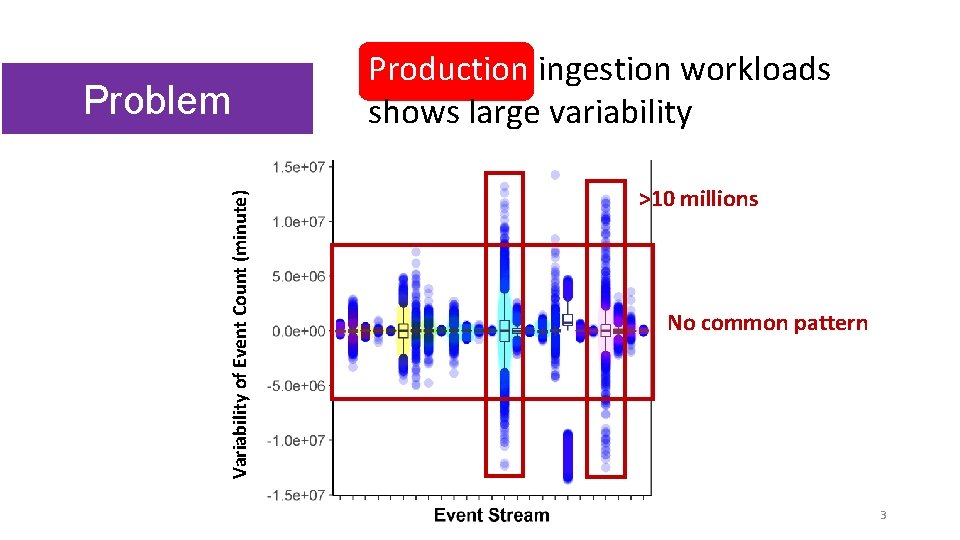
Variability of Event Count (minute) Problem Production ingestion workloads shows large variability >10 millions No common pattern 3
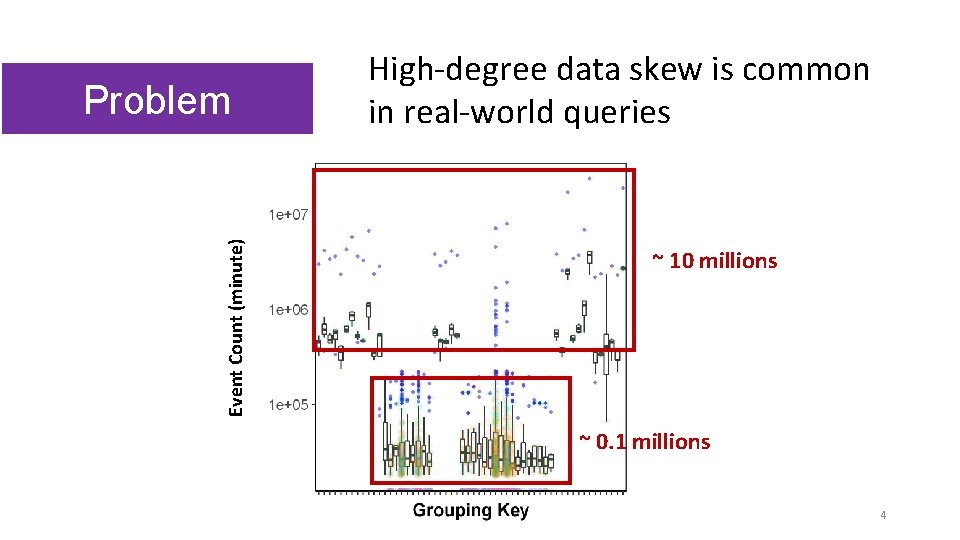
Event Count (minute) Problem High-degree data skew is common in real-world queries ~ 10 millions ~ 0. 1 millions 4
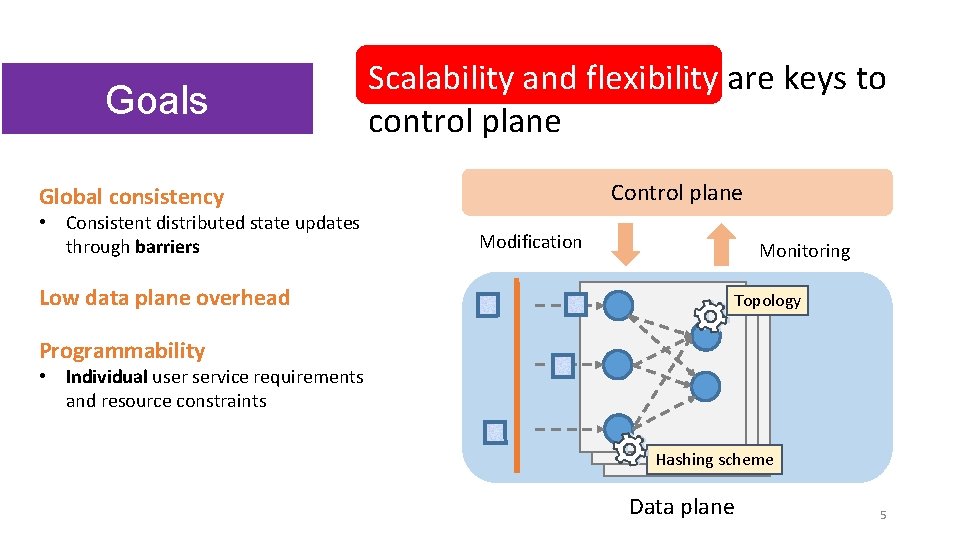
Goals Scalability and flexibility are keys to control plane Control plane Global consistency • Consistent distributed state updates through barriers Low data plane overhead Modification Monitoring Topology Programmability • Individual user service requirements and resource constraints Hashing scheme Data plane 5
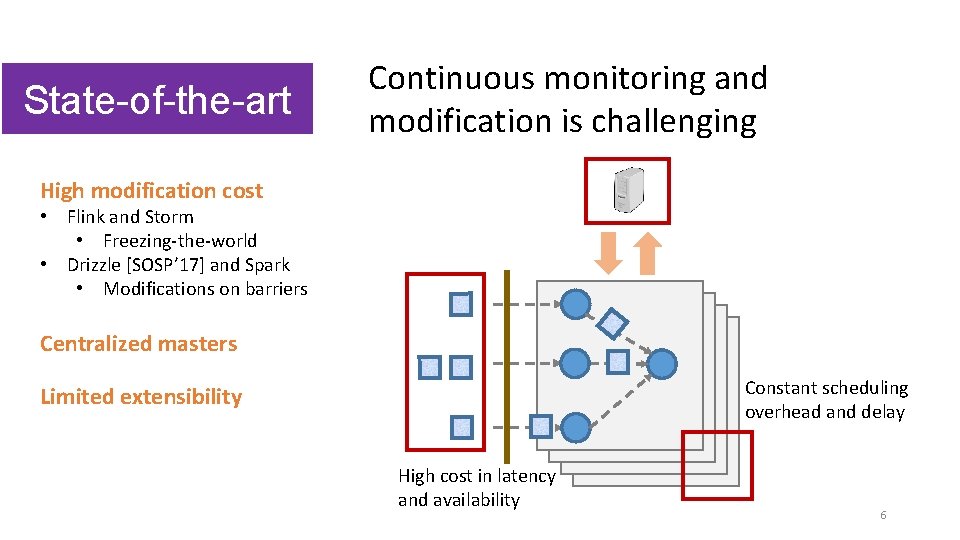
State-of-the-art Continuous monitoring and modification is challenging High modification cost • Flink and Storm • Freezing-the-world • Drizzle [SOSP’ 17] and Spark • Modifications on barriers Centralized masters Constant scheduling overhead and delay Limited extensibility High cost in latency and availability 6
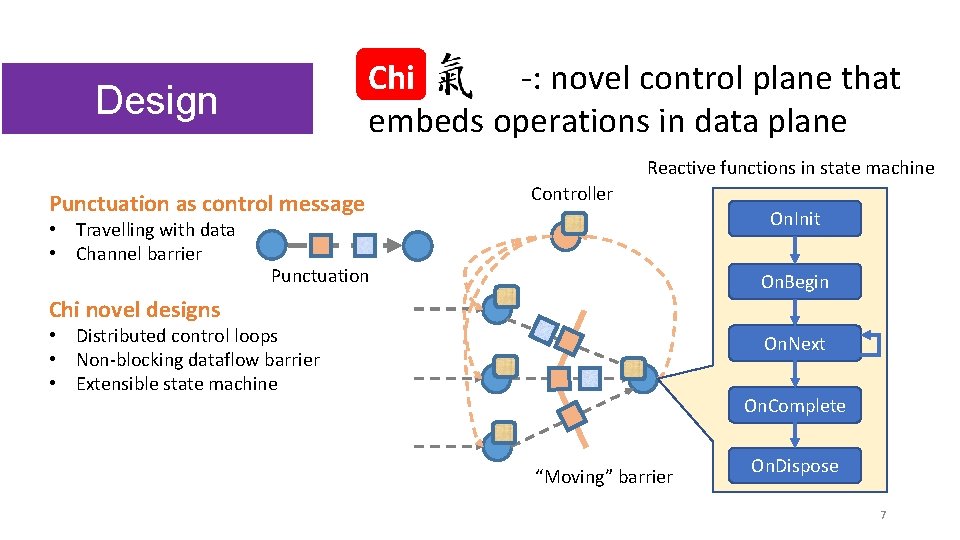
Chi -: novel control plane that embeds operations in data plane Design Reactive functions in state machine Punctuation as control message • Travelling with data • Channel barrier Controller On. Init Punctuation On. Begin Chi novel designs • Distributed control loops • Non-blocking dataflow barrier • Extensible state machine On. Next On. Complete “Moving” barrier On. Dispose 7
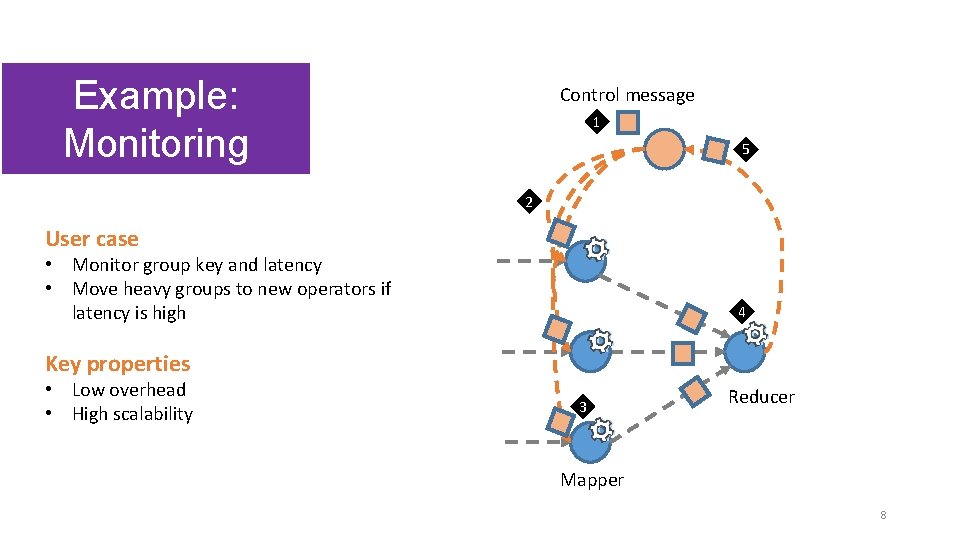
Example: Monitoring Control message 1 5 2 User case • Monitor group key and latency • Move heavy groups to new operators if latency is high 4 Key properties • Low overhead • High scalability 3 Reducer Mapper 8
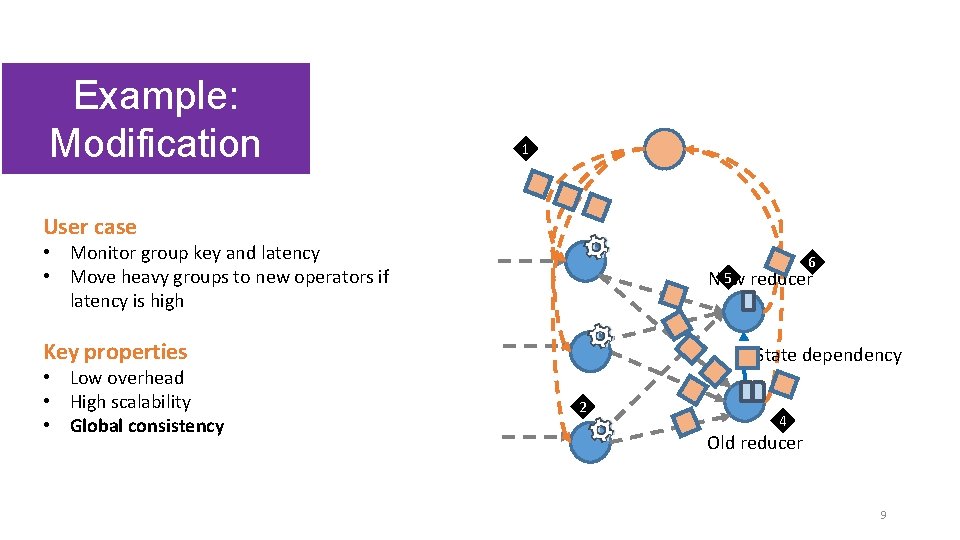
Example: Modification 1 User case • Monitor group key and latency • Move heavy groups to new operators if latency is high 6 5 reducer New Key properties • Low overhead • High scalability • Global consistency State dependency 2 4 Old reducer 9
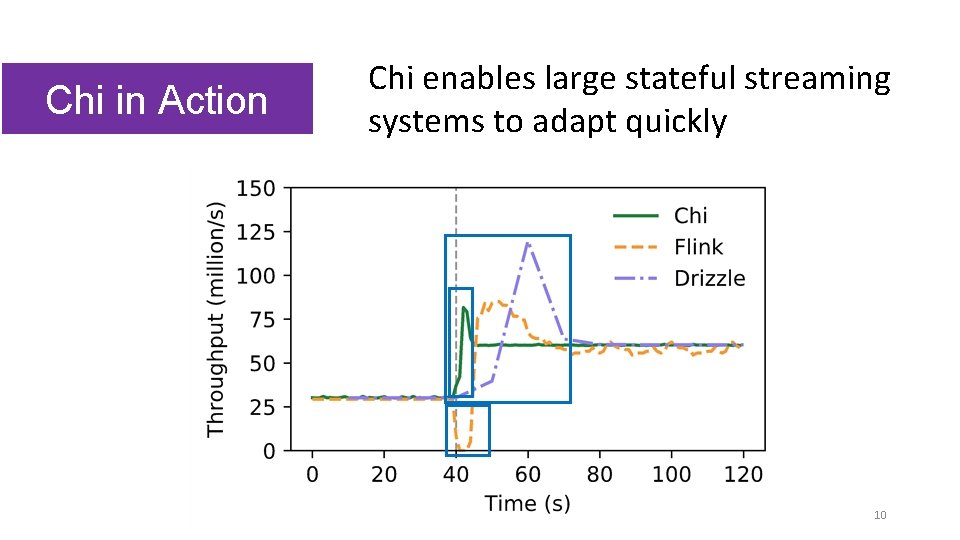
Chi in Action Chi enables large stateful streaming systems to adapt quickly 10
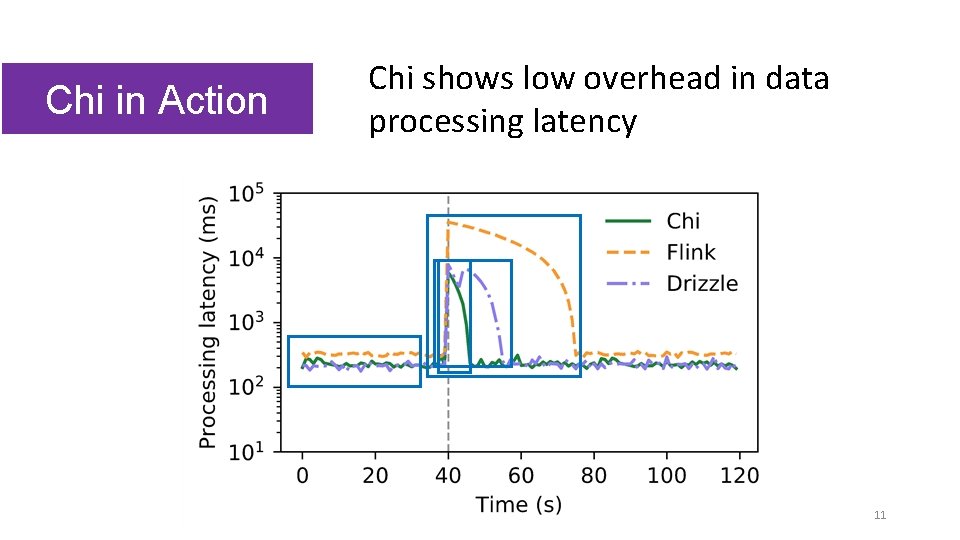
Chi in Action Chi shows low overhead in data processing latency 11
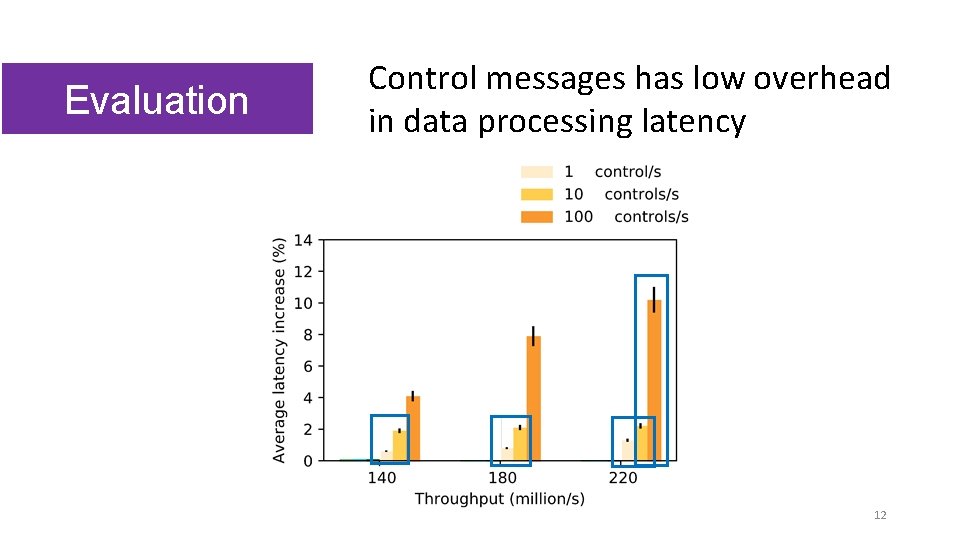
Evaluation Control messages has low overhead in data processing latency 12
Summary Chi enables online monitoring and modification to streaming systems • Global consistency • Programmability • Low overhead Chi opens up many research opportunities • • System self-regulation Multi-tenant scheduling Online query and runtime optimization Many more … The awesome team I interned in at Microsoft is hiring! Please contact rapoth@microsoft. com if you are interested. 13

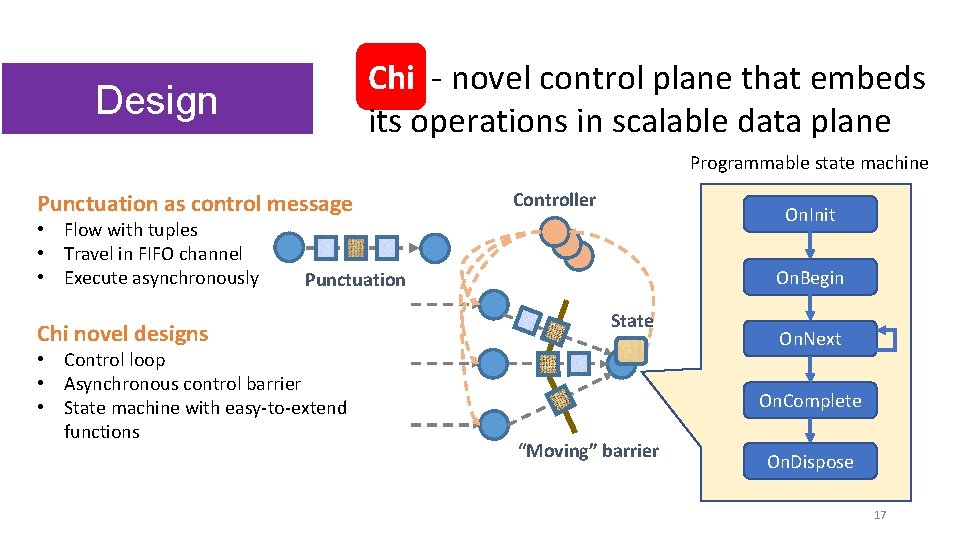
Chi - novel control plane that embeds its operations in scalable data plane Design Programmable state machine Punctuation as control message • Flow with tuples • Travel in FIFO channel • Execute asynchronously Chi novel designs Controller On. Init On. Begin Punctuation • Control loop • Asynchronous control barrier • State machine with easy-to-extend functions State On. Next On. Complete “Moving” barrier On. Dispose 17
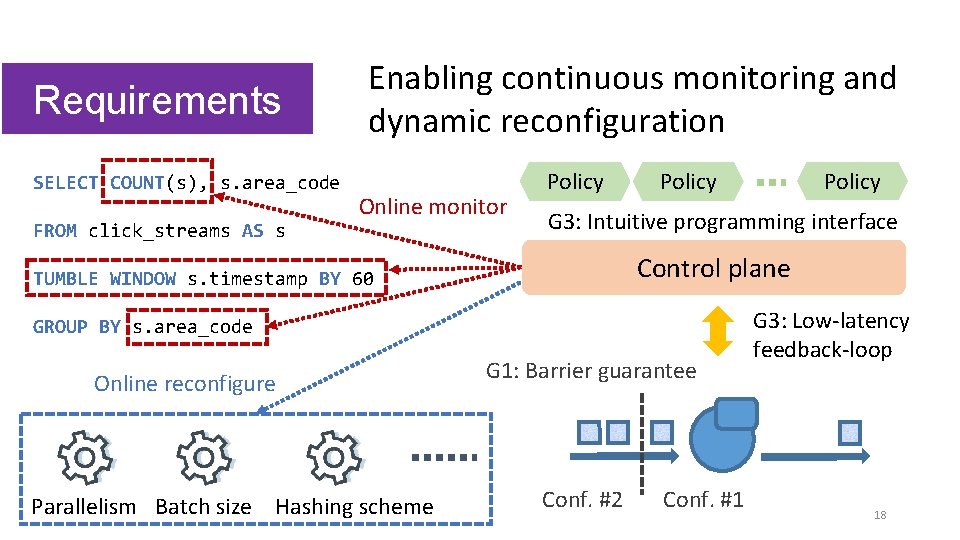
Requirements SELECT COUNT(s), s. area_code FROM click_streams AS s Enabling continuous monitoring and dynamic reconfiguration Online monitor Policy G 3: Intuitive programming interface Control plane TUMBLE WINDOW s. timestamp BY 60 GROUP BY s. area_code Online reconfigure Parallelism Batch size Hashing scheme Policy G 1: Barrier guarantee Conf. #2 Conf. #1 G 3: Low-latency feedback-loop 18
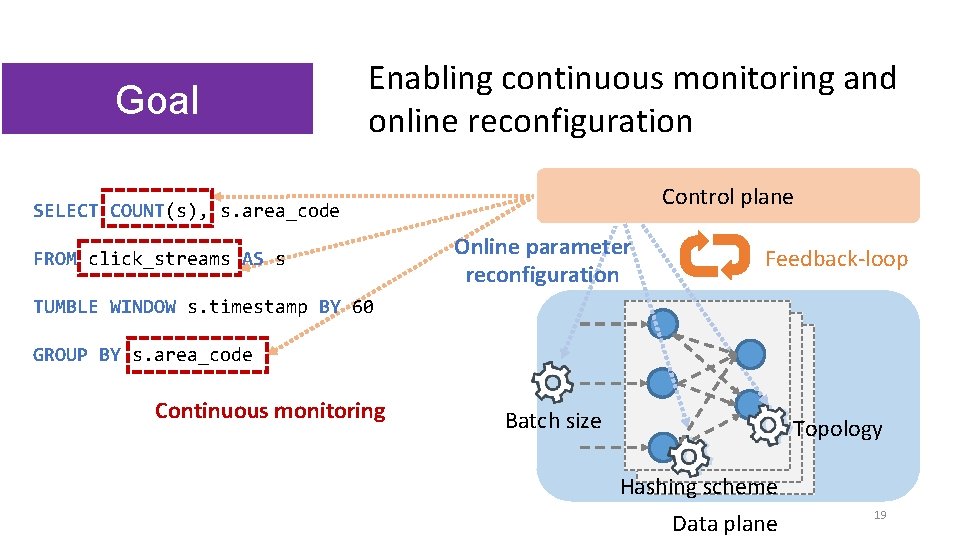
Goal Enabling continuous monitoring and online reconfiguration Control plane SELECT COUNT(s), s. area_code FROM click_streams AS s Online parameter reconfiguration Feedback-loop TUMBLE WINDOW s. timestamp BY 60 GROUP BY s. area_code Continuous monitoring Batch size Topology Hashing scheme Data plane 19
![Key idea Embed control plane in data plane [Punctuation / watermark] • • Special](http://slidetodoc.com/presentation_image_h2/c7b725d2d80fd48a9879808579fb7b4d/image-18.jpg "Key idea Embed control plane in data plane [Punctuation / watermark] • • Special")
Key idea Embed control plane in data plane [Punctuation / watermark] • • Special data events for notification Travel with data events -> low overhead Travel asynchronously -> no lock Travel in FIFO channel -> channel barrier Policy Control plane Start control [Potential benefits] Extending punctuations to be control messages to run both monitoring and reconfiguration Complete control Control state • Piggyback control information in punctuations • Policy Punctuation • Coordinate control message propagation • Consolidating channel barrier as dataflow barrier • Controller as stream operators • Reusing programming and scaling-out techniques Dataflow barrier 20
![Runtime Guarantee ”freeze-the-world” update through asynchronous execution [Control life-cycle steps] 1. Start control with](http://slidetodoc.com/presentation_image_h2/c7b725d2d80fd48a9879808579fb7b4d/image-19.jpg "Runtime Guarantee ”freeze-the-world” update through asynchronous execution [Control life-cycle steps] 1. Start control with")
Runtime Guarantee ”freeze-the-world” update through asynchronous execution [Control life-cycle steps] 1. Start control with a meta topology including data, state and control dependency 2. Generate operator control configurations and piggyback into control message 3. Broadcast messages to dataflow leaves 4. Leaves record input channel sequence, run control actions, and broadcast messages downstream 5. Operator blocks input channel once receiving a control message (if barrier is required) 6. Operator perform control actions when receiving control messages from all inputs 7. Operator broadcast control messages to all downstream (and unblock inputs if need) 8. Controller do post-control actions when receiving messages from all dataflow roots 1 2 3 8 Controller 4 New operator Control dependency 7 State dependency 5 6 Meta topology 21
![Runtime Guaranteeing global barrier semantic through decentralized execution [Decentralized execution] • Operator knows all](http://slidetodoc.com/presentation_image_h2/c7b725d2d80fd48a9879808579fb7b4d/image-20.jpg "Runtime Guaranteeing global barrier semantic through decentralized execution [Decentralized execution] • Operator knows all")
Runtime Guaranteeing global barrier semantic through decentralized execution [Decentralized execution] • Operator knows all old data are processed if all parents mark the end by control messages • Operator reconfigure itself to process new data • Operator notifies dependents the end of old data [Execution sequence] • Computation dependency • State dependency • Control dependency [Blocking control messages] • • Block channel if receiving control message from parent Unblock inputs when notifying dependents Operator Parents Dependents 22
- Slides: 20