
Chewing mastication Voluntary but has more of reflex
Chewing (mastication) Voluntary, but has more of reflex behavior Mixing of food with saliva and grinding
Gastrointestinal Motilities
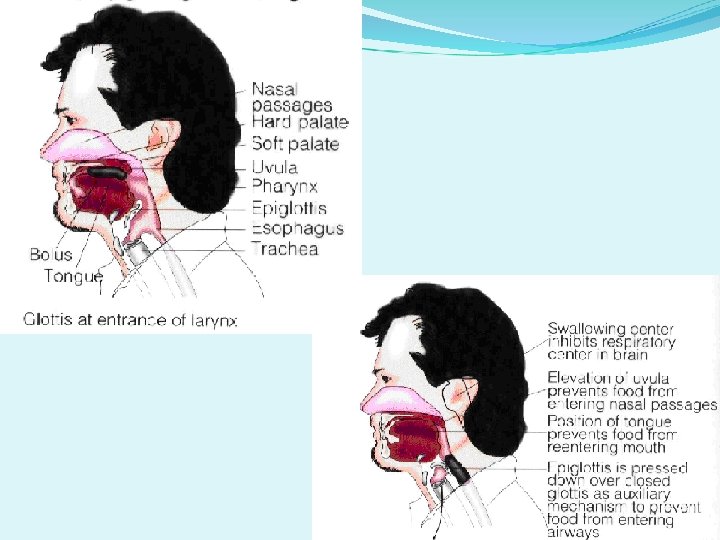
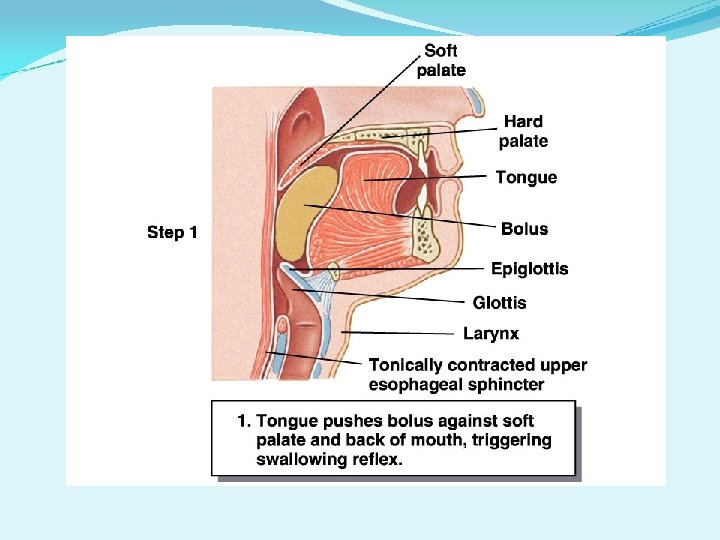
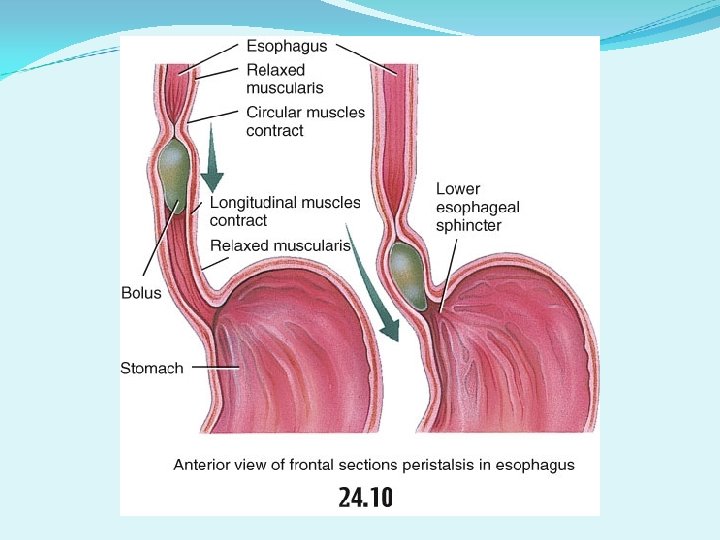
Swallowing (deglutition) - initiated voluntarily - Continuing as involuntary reflex - Voluntary stage: in which tongue is pressing food by upward and backward movement against soft palate, which results in squeezing food bolus into pharynx.
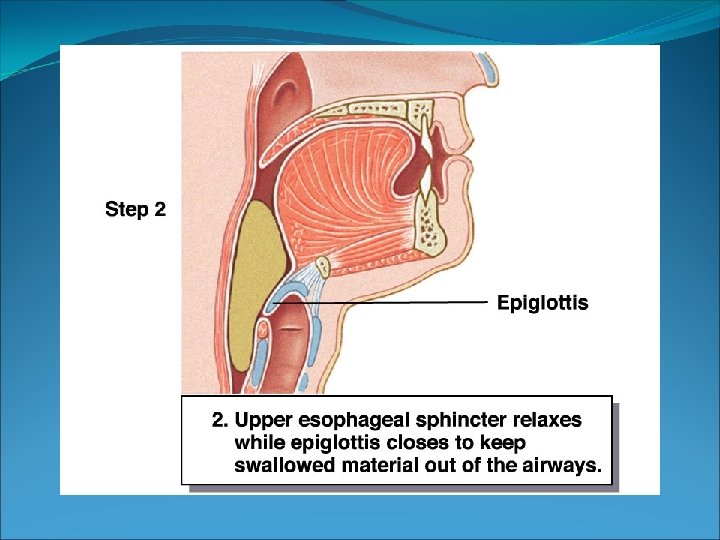
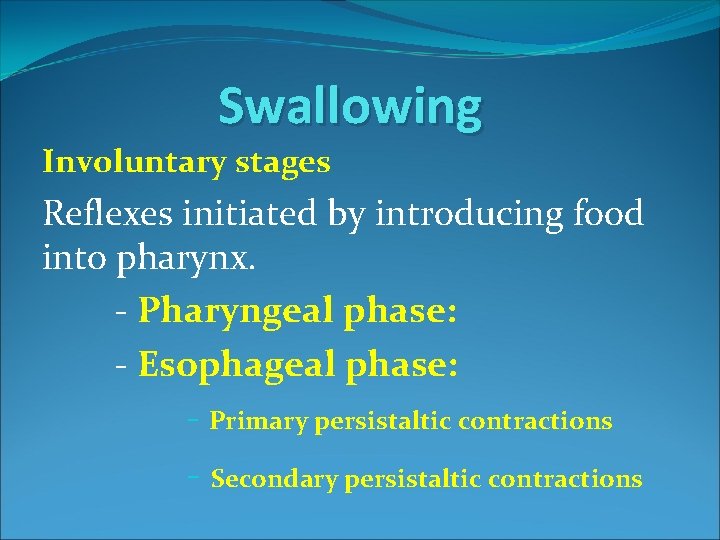
Swallowing Involuntary stages Reflexes initiated by introducing food into pharynx. - Pharyngeal phase: - Esophageal phase: - Primary persistaltic contractions - Secondary persistaltic contractions
Gastric Motilities - Receptive relaxation - Gastric Peristaltic movements Retropulsion Gastric emptying - Hunger contractions
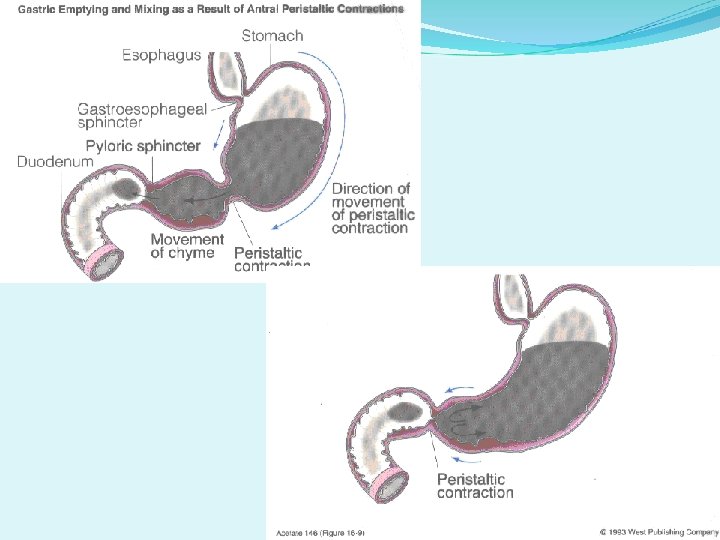
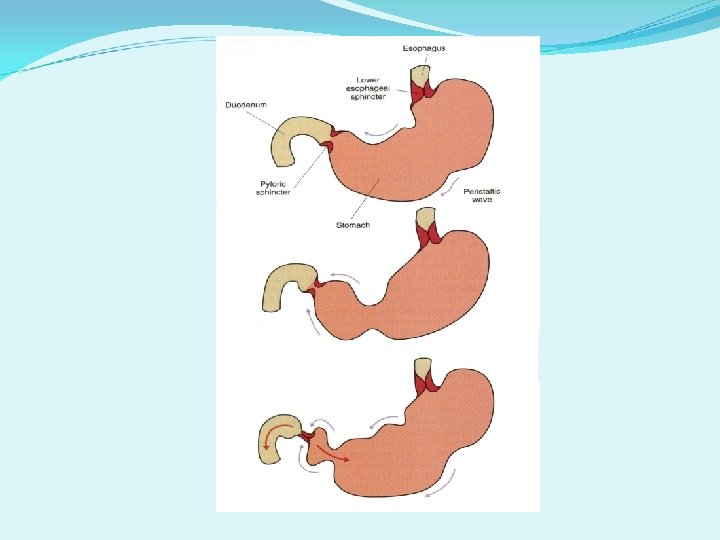
Gastric Motilities - Receptive relaxation - Gastric Peristaltic movements Retropulsion Gastric emptying - Hunger contractions
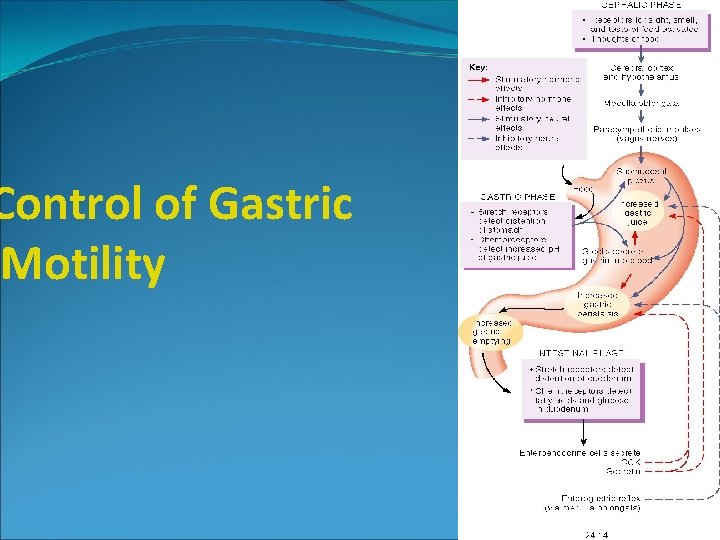
Control of Gastric Motility
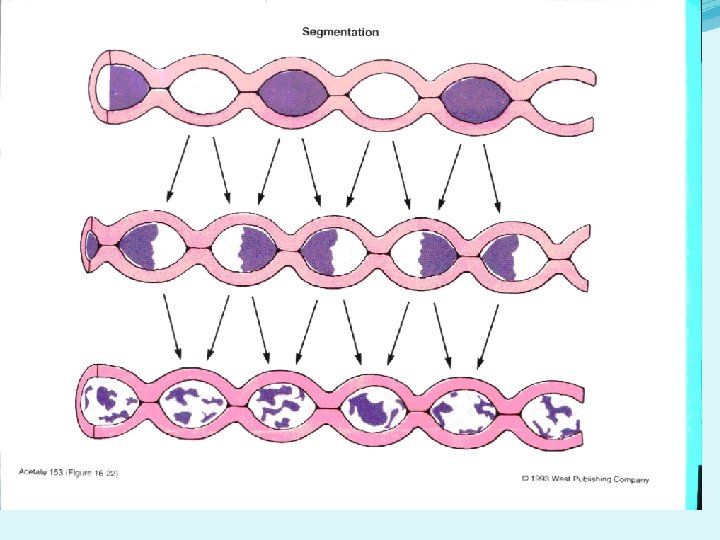
Motility in Small Intestine Site of most digestion and absorption: duodenum and jejunum types of movement Segmentation (mixing) - digestive state Peristalsis (propulsive)-interdigestive Migrating motor complex Peristaltic rush (power
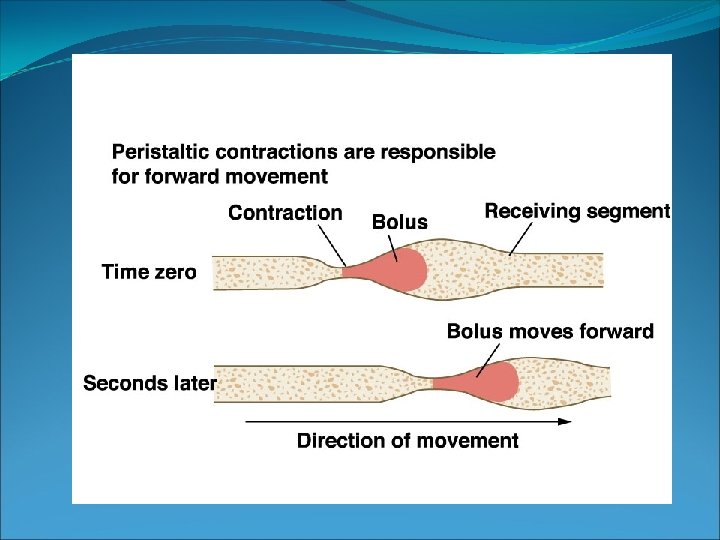
Migrating motor complex cycle of quiescence and intense motor activity that begins in antrum and continues along the small intestine Function: Sweeps the stomach
Other movements - Peristaltic rush: Remove harmeful agents- - Movements caused by the activity of muscularis mucosa: : Spreading chyme over the mucosa-
Control of Intestinal movements -Electrical activity of muscle-Neural control: ENS, ANS - Hormonal control - Gastrin, CCK, Serotonin enhance intestinal motility. - Secretin and Glucagon inhibit intestinal motility.
Summary of Motilities of Small intestine Segmentation contraction: characterize the digestive or fed state and have mixing effects Peristaltic contractions: mainly Propulsive effect Migrating motor complex characterizes the inter-digestive state, ended with ingestion of food Peristaltic rush is a response to harmful agents
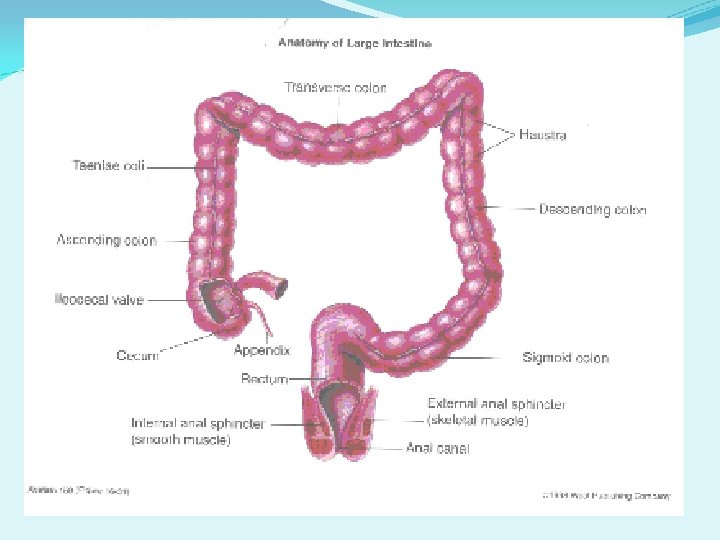
Motilities of the Colon - Haustration contractions: effect: propulsive - Mass contractions: - facilitated by: gastrocolic and duodenocolic reflexes- effect: propulsive
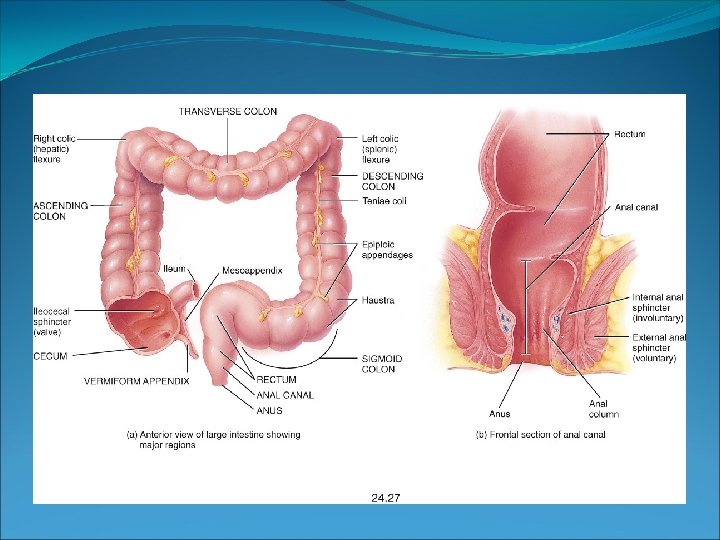
Defecation - Intrinsic reflexes - Extrinsic reflexes-
- Slides: 25