
Chest Pain in Children and Adolescents Common cause

- Slides: 8
Chest Pain in Children and Adolescents Common cause of referral 98% is non-cardiac
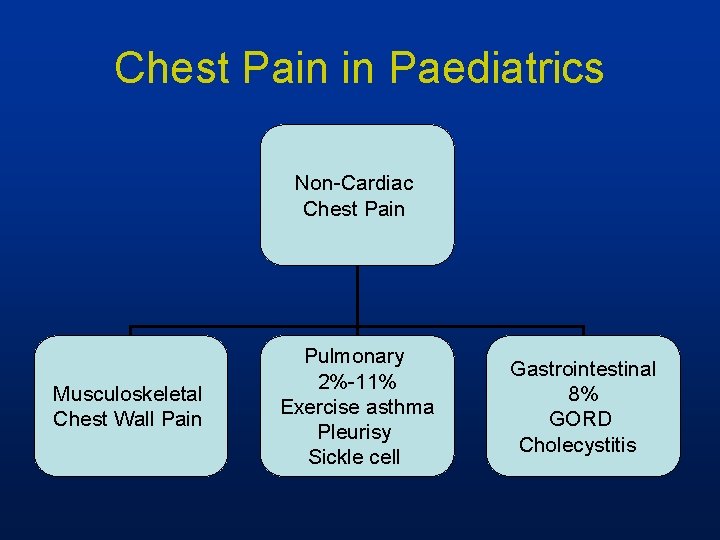
Chest Pain in Paediatrics Non-Cardiac Chest Pain Musculoskeletal Chest Wall Pain Pulmonary 2%-11% Exercise asthma Pleurisy Sickle cell Gastrointestinal 8% GORD Cholecystitis
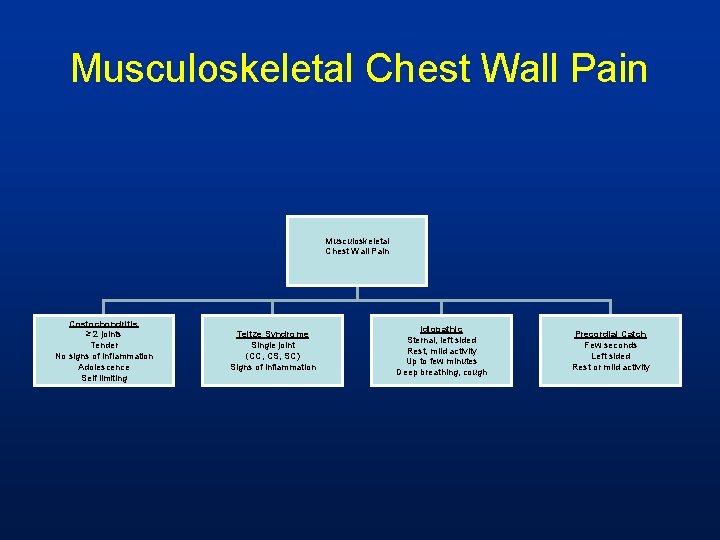
Musculoskeletal Chest Wall Pain Costochondritis ≥ 2 joints Tender No signs of inflammation Adolescence Self limiting Teitze Syndrome Single joint (CC, CS, SC) Signs of inflammation Idiopathic Sternal, left sided Rest, mild activity Up to few minutes Deep breathing, cough Precordial Catch Few seconds Left sided Rest or mild activity
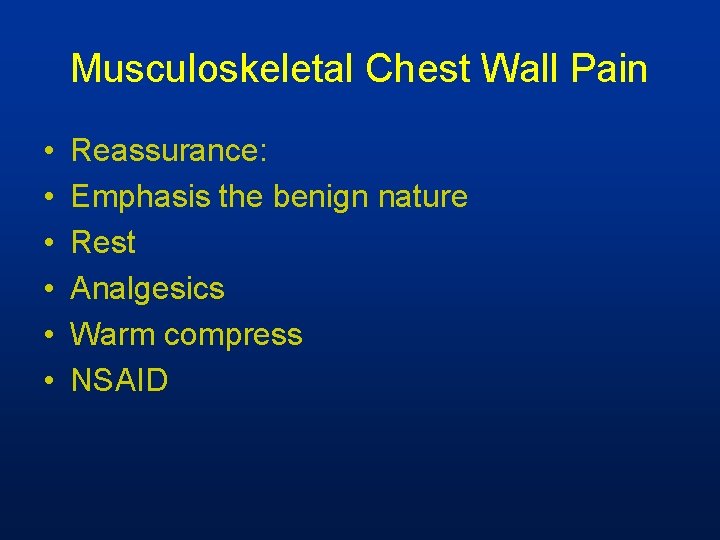
Musculoskeletal Chest Wall Pain • • • Reassurance: Emphasis the benign nature Rest Analgesics Warm compress NSAID
Cardiac Chest Pain Rare <6% of the chest pains
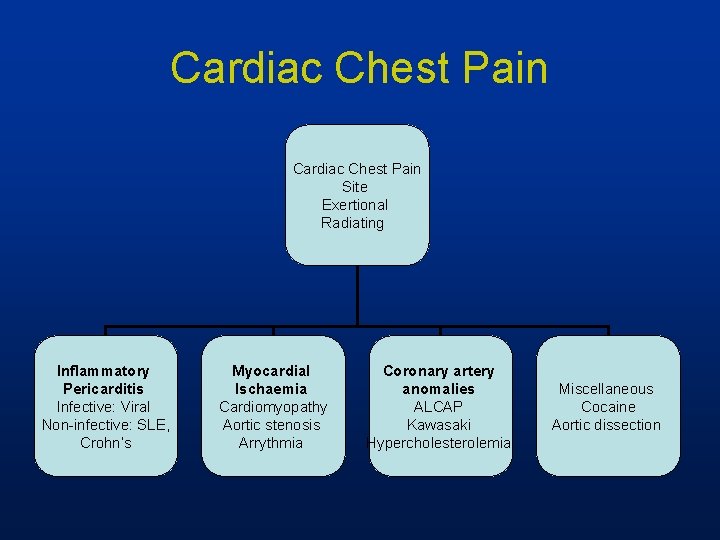
Cardiac Chest Pain Site Exertional Radiating Inflammatory Pericarditis Infective: Viral Non-infective: SLE, Crohn’s Myocardial Ischaemia Cardiomyopathy Aortic stenosis Arrythmia Coronary artery anomalies ALCAP Kawasaki Hypercholesterolemia Miscellaneous Cocaine Aortic dissection
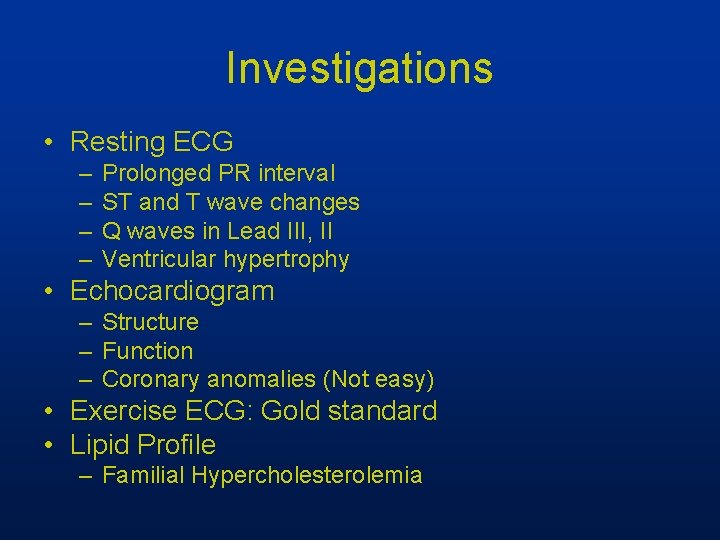
Investigations • Resting ECG – – Prolonged PR interval ST and T wave changes Q waves in Lead III, II Ventricular hypertrophy • Echocardiogram – Structure – Function – Coronary anomalies (Not easy) • Exercise ECG: Gold standard • Lipid Profile – Familial Hypercholesterolemia
Red flag signs and referral • • • Abnormal cardiac findings Exertional chest pain and syncope Chest pain with palpitations Electrocardiographic abnormalities Significant family history of arrhythmias, sudden death, or genetic disorders (Marfan’s) History of cardiac surgery or interventions History of Kawasaki disease First-degree relatives have familial hypercholesterolemia