
Chest Pain and syncope Dr Cynthia Lim Dr
- Slides: 11
Chest Pain and syncope Dr Cynthia Lim, Dr Peter Jordan, Dr Megan Robb
ACS - STEMI • If there is ST elevation, it will be a STEMI if: • Any ST dep except V 1 or a. VR (allowed in acute pericarditis) • ST elevation III > II • Horizontal or convex up ST elevation • New Q waves
ACS - Pericarditis • If ST elevation, pericarditis is more likely if: • PR depression multiple leads – Only reliably seen viral – transient • Low voltage and tachycardia = large pericardial effusion • Use T-P as baseline (not P-P interval) • If in doubt serial ECGs, seek opinion
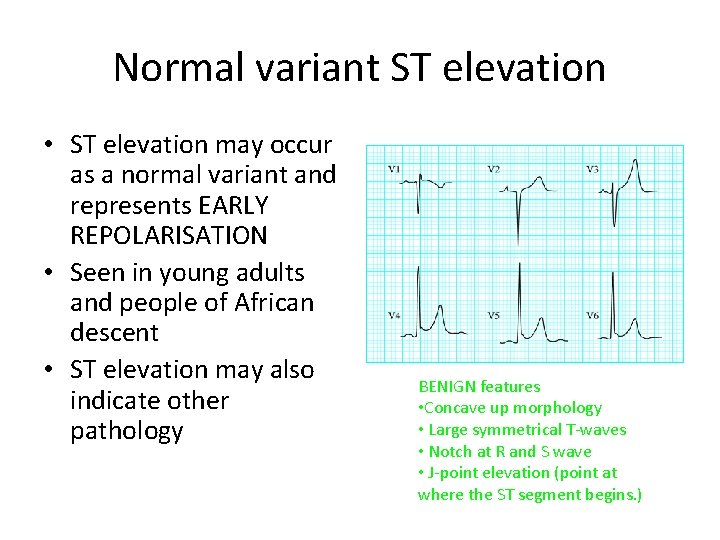
Normal variant ST elevation • ST elevation may occur as a normal variant and represents EARLY REPOLARISATION • Seen in young adults and people of African descent • ST elevation may also indicate other pathology BENIGN features • Concave up morphology • Large symmetrical T-waves • Notch at R and S wave • J-point elevation (point at where the ST segment begins. )
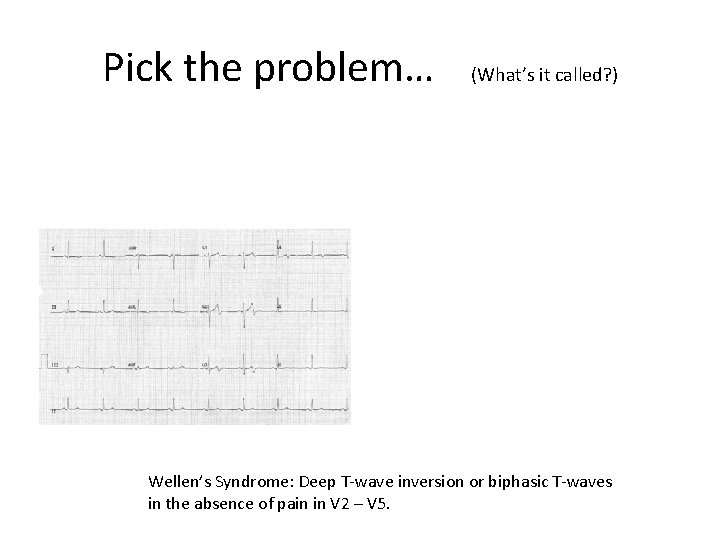
Pick the problem… (What’s it called? ) Wellen’s Syndrome: Deep T-wave inversion or biphasic T-waves in the absence of pain in V 2 – V 5.
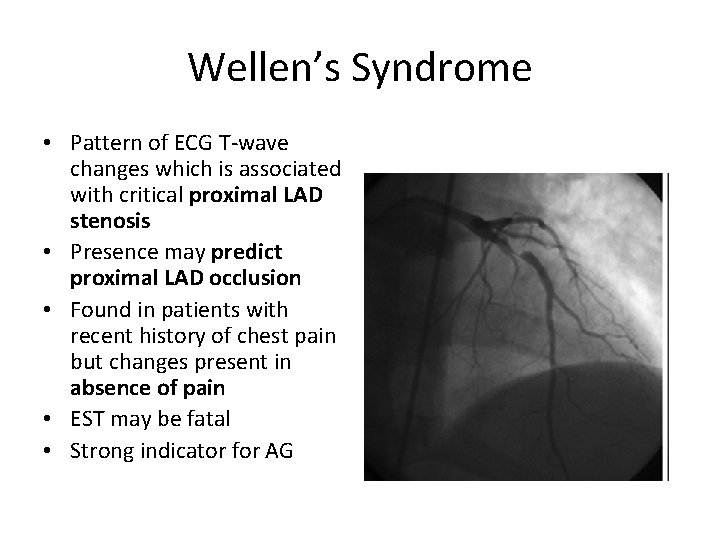
Wellen’s Syndrome • Pattern of ECG T-wave changes which is associated with critical proximal LAD stenosis • Presence may predict proximal LAD occlusion • Found in patients with recent history of chest pain but changes present in absence of pain • EST may be fatal • Strong indicator for AG
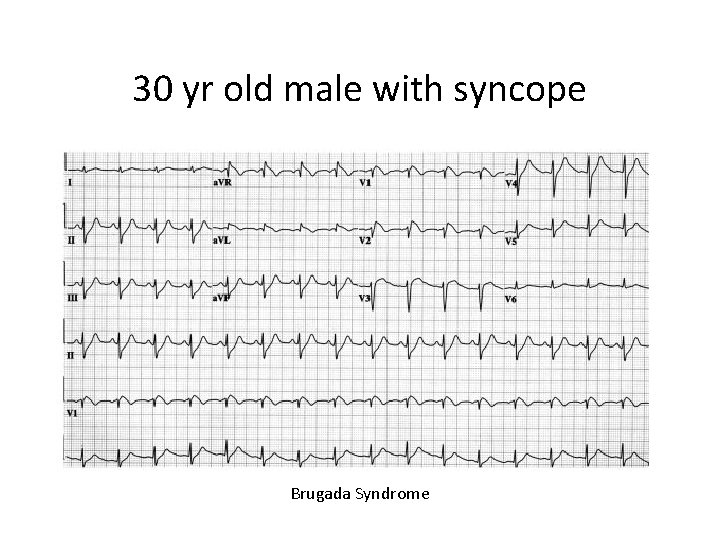
30 yr old male with syncope Brugada Syndrome
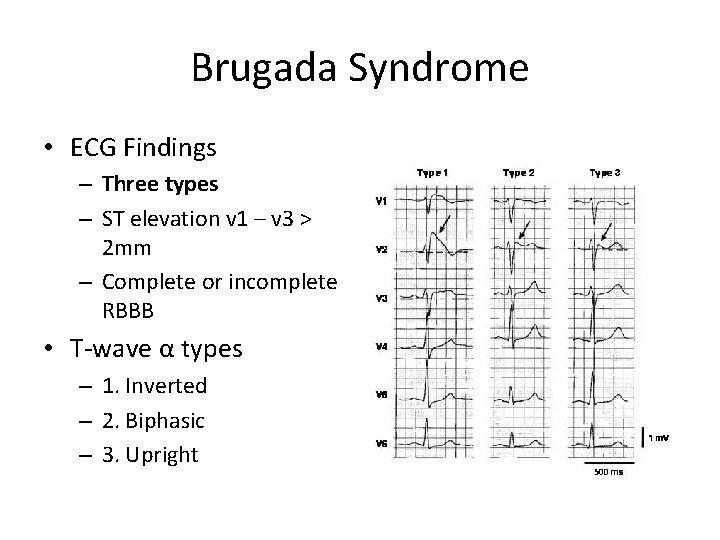
Brugada Syndrome • ECG Findings – Three types – ST elevation v 1 – v 3 > 2 mm – Complete or incomplete RBBB • T-wave α types – 1. Inverted – 2. Biphasic – 3. Upright
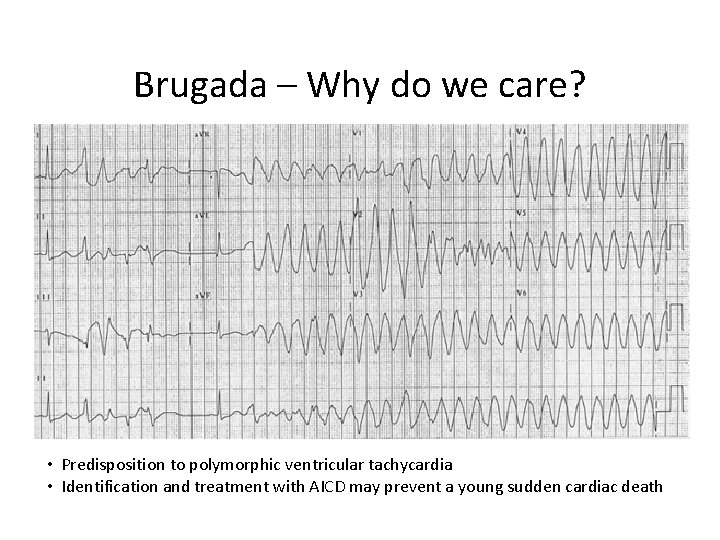
Brugada – Why do we care? • Predisposition to polymorphic ventricular tachycardia • Identification and treatment with AICD may prevent a young sudden cardiac death
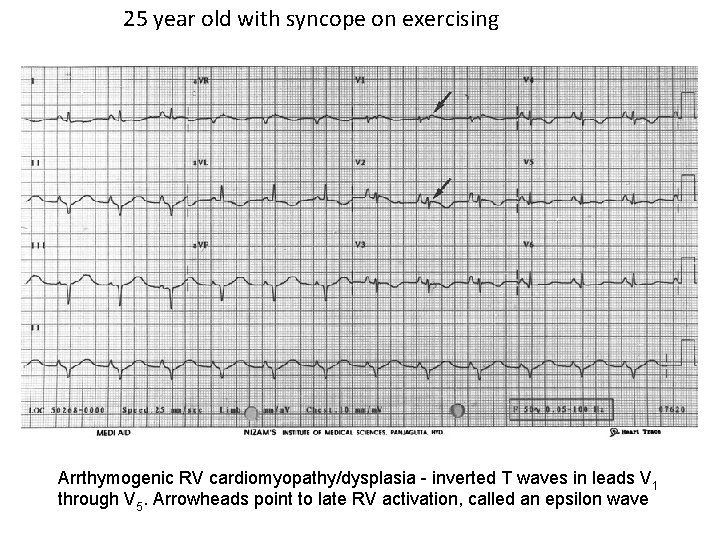
25 year old with syncope on exercising Arrthymogenic RV cardiomyopathy/dysplasia - inverted T waves in leads V 1 through V 5. Arrowheads point to late RV activation, called an epsilon wave
When to refer cardiac syncope to ED • All 2 nd degree and 3 rd degree heart blocks • All trifascicular blocks • All rapid AF >120 • All SVTs in not terminated by Valsalva manouvre • “funny looking” ST/T segments – discuss/fax • Asymptomatic patients with WPW, ST changes can be referred to cardiology OPA