
Chesapeake Bay Pollution Types of Pollution Chemical Toxic
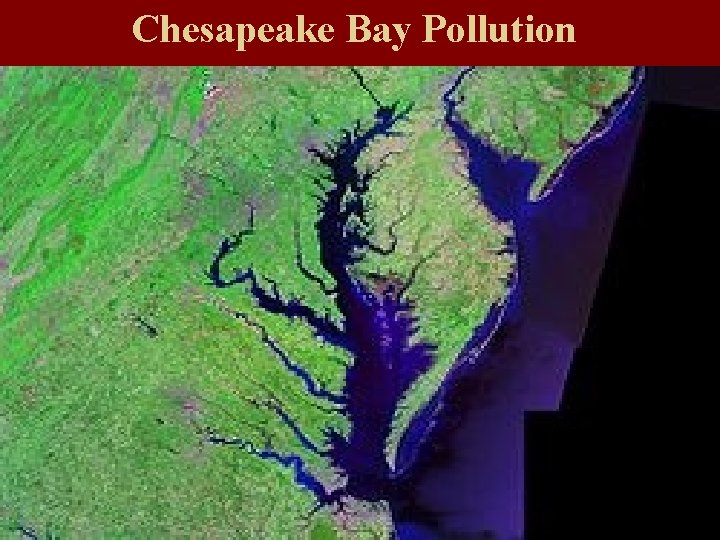
Chesapeake Bay Pollution
Types of Pollution Chemical = Toxic Substances • The introduction of toxic substances into an ecosystem. • Clearly Human Caused.
Types of Chemical Pollution Petroleum Products Crude and Refined Oil Inorganic Chemicals Heavy Metals Lead & Mercury Toxic Compounds TBT – Tributal Tin PCB – Polychlorinated Biphenals Pesticides & Herbicides Acid Rain – Sulfur Dioxide
Types of Pollution Thermal = Heat/Temperature • Varying temperatures above or below the normal conditions. Electrical power plants release hot water after making steam to turn the turbine. Manufacturing plants use water as a coolant. Dams release cold water from the base of the dam.
Types of Pollution Organic = Living things = Nutrients • Oversupplying an ecosystem with nutrients.
Types of Organic Pollution Animal Waste (including raw sewage) Farms and Untreated Sewage Bacteria and Viruses Organic Waste Treated Sewage, Paper Mills, and Food Processing Plants Fertilizers Chemical and Natural (Poop)
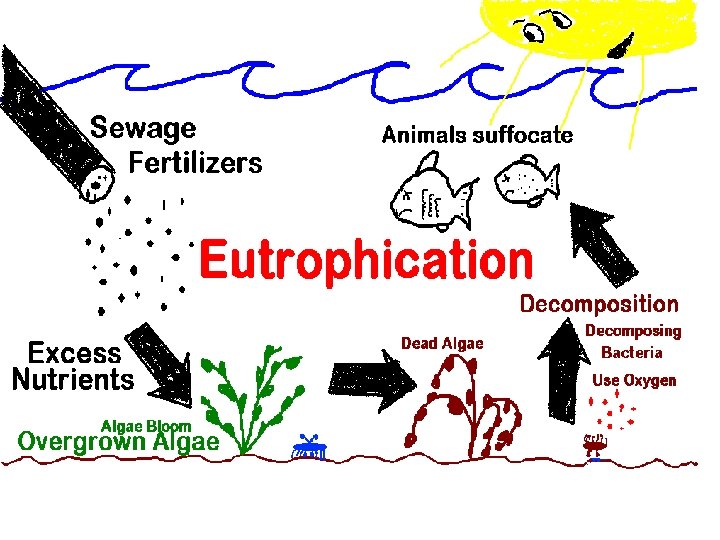
Problem with Organic Pollution (EUTROPHICATION) • Excess nutrient. • Causes algae to grow. • Algae die after nutrient is used up. • Bacteria (Decomposers) use up Oxygen. • Organisms die from lack of oxygen.
Types of Pollution Ecological = Natural • Pollution created by natural processes. Adding a substance that is not naturally occurring. (Extreme tides add salt water to fresh) Increasing the amount of a naturally occurring substance. (Sediment in runoff – clogs gills and blocks sunlight)
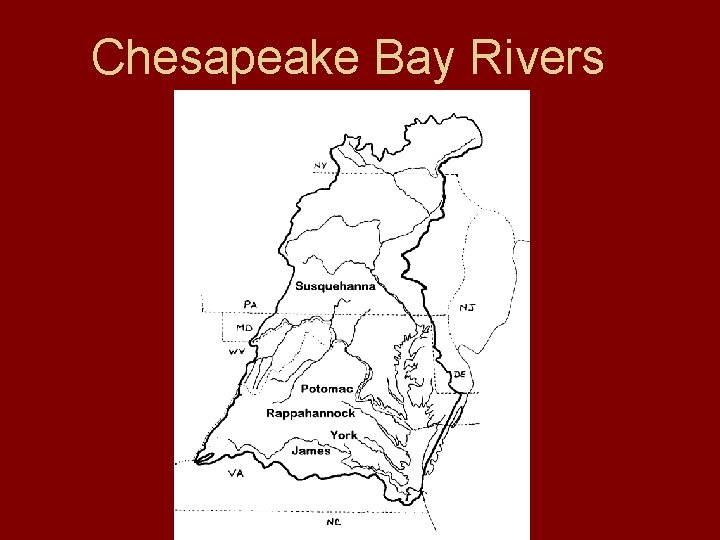
Chesapeake Bay Rivers
Susquehanna River • Main Pollution Sources Nutrients from crop runoff Nutrients due to livestock = Manure (Poop) High sediment loads Cropland runoff Fertilizers
Potomac River • Main Pollution Sources Acid from mining – makes river as acidic as vinegar. Sewage treatment plants. Livestock = Manure (Poop) Cropland runoff Sediment from fields. Fertilizers
James River • Main Pollution Sources Industrial discharges Kepone contamination Creosote Shipyards –TBT Sewage treatment plants Cropland runoff Fertilizers
The Elizabeth river, a tributary of the James river, is one of the most polluted rivers in the United States.
Rappahannock River • Main Pollution Sources Least Polluted Sewage treatment plants Cropland runoff Pesticides, Herbicides, Nutrients Fertilizers
York River • Main Pollution Sources Sewage treatment plants Paper Mills Lumber mills Cropland runoff Fertilizers
Three main problems with the Chesapeake Bay • Decline in Submerged Aquatic Vegetation (SAV). • Excessive Nutrients. • Toxic material buildup in the sediment.
Decline in SAV • Why important – Food source – Protective cover – Buffer wave action – retards erosion • Why important – Found in shallow water – Roots in the sediment – Unable to photosynthesize suspended particles/sediment overabundance of phytoplankton
Excessive Nutrients • From – Fertilizers (Rural and Urban) – Sewage – Organic waste – Manure (Poop) • Causes EUTROPHICATION
Toxic Material in Sediment • What are these Metals – cadmium, copper, lead Organic compounds PCBs, Kepone, DDT (DDT=Dichloro-diphenyl-trichloroethane) • What do these cause Low survival rate of offspring Lesions and cancers in older species Premature death Toxins accumulate in shellfish
- Slides: 20