
Chemotaxis Clinical approaches Dr habil Khidai Lszl 2017

Chemotaxis - Clinical approaches Dr. habil. Kőhidai László 2017.
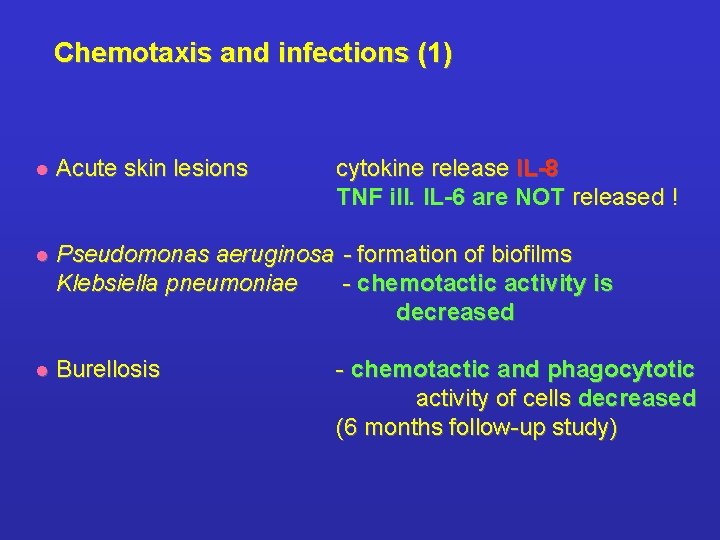
Chemotaxis and infections (1) l Acute skin lesions cytokine release IL-8 TNF ill. IL-6 are NOT released ! l Pseudomonas aeruginosa - formation of biofilms Klebsiella pneumoniae - chemotactic activity is decreased l Burellosis - chemotactic and phagocytotic activity of cells decreased (6 months follow-up study)

Chemotaxis in infections (2) Helicobacter pylori - gastric ulcer porin 30 k. D rapid effect decreased chemotaxis 3 h incubation TNF 18 h incubation g-IF, GM-CSF, IL-8, IL-3, IL-4
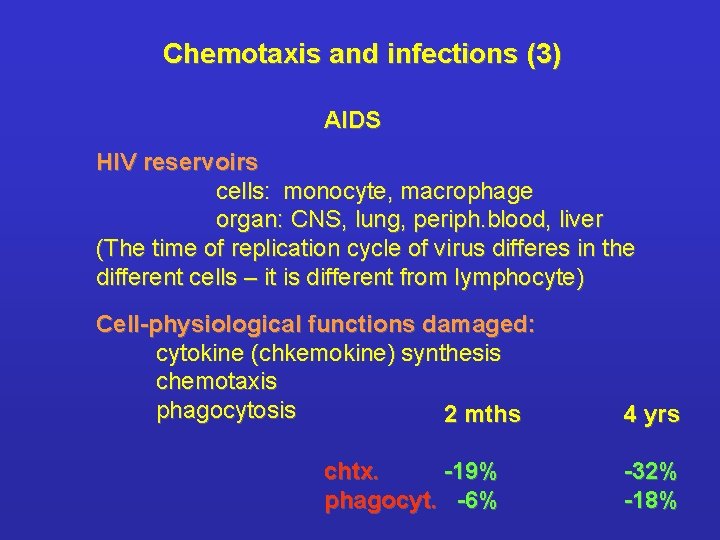
Chemotaxis and infections (3) AIDS HIV reservoirs cells: monocyte, macrophage organ: CNS, lung, periph. blood, liver (The time of replication cycle of virus differes in the different cells – it is different from lymphocyte) Cell-physiological functions damaged: cytokine (chkemokine) synthesis chemotaxis phagocytosis 2 mths chtx. -19% phagocyt. -6% 4 yrs -32% -18%
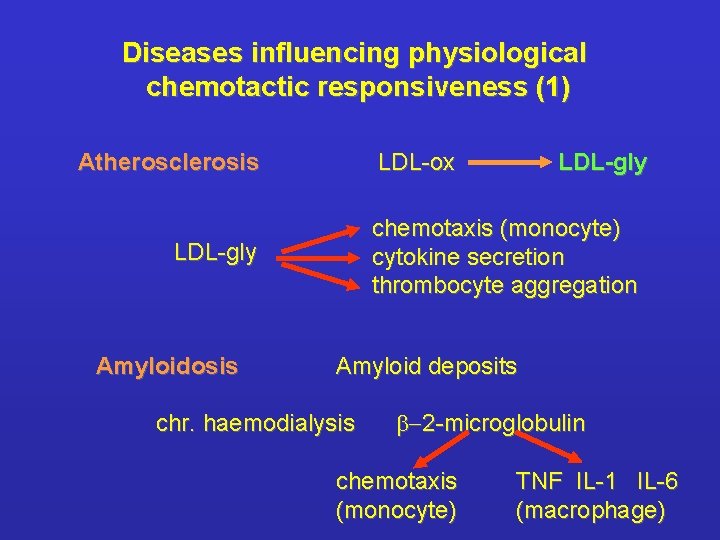
Diseases influencing physiological chemotactic responsiveness (1) Atherosclerosis LDL-ox chemotaxis (monocyte) cytokine secretion thrombocyte aggregation LDL-gly Amyloidosis LDL-gly Amyloid deposits chr. haemodialysis b-2 -microglobulin chemotaxis (monocyte) TNF IL-1 IL-6 (macrophage)
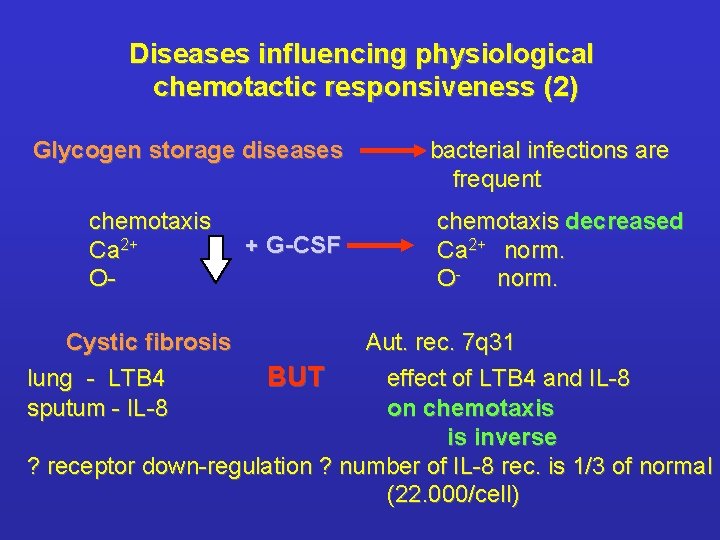
Diseases influencing physiological chemotactic responsiveness (2) Glycogen storage diseases chemotaxis Ca 2+ OCystic fibrosis lung - LTB 4 sputum - IL-8 + G-CSF bacterial infections are frequent chemotaxis decreased Ca 2+ norm. Onorm. Aut. rec. 7 q 31 BUT effect of LTB 4 and IL-8 on chemotaxis is inverse ? receptor down-regulation ? number of IL-8 rec. is 1/3 of normal (22. 000/cell)
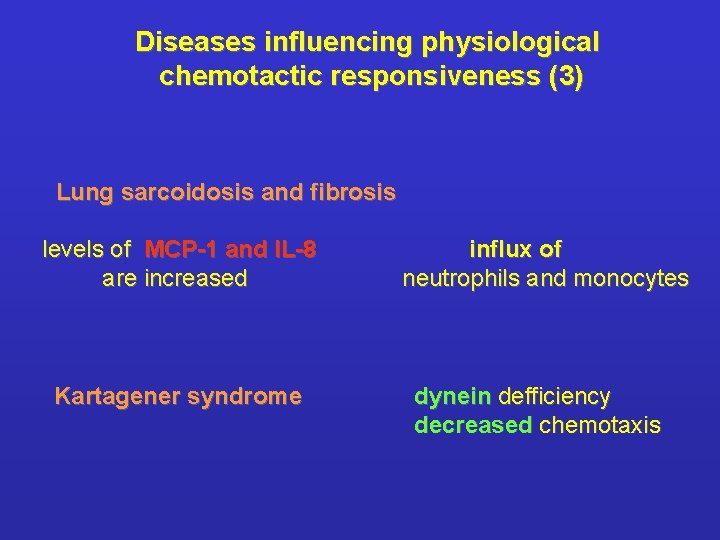
Diseases influencing physiological chemotactic responsiveness (3) Lung sarcoidosis and fibrosis levels of MCP-1 and IL-8 are increased Kartagener syndrome influx of neutrophils and monocytes dynein defficiency decreased chemotaxis
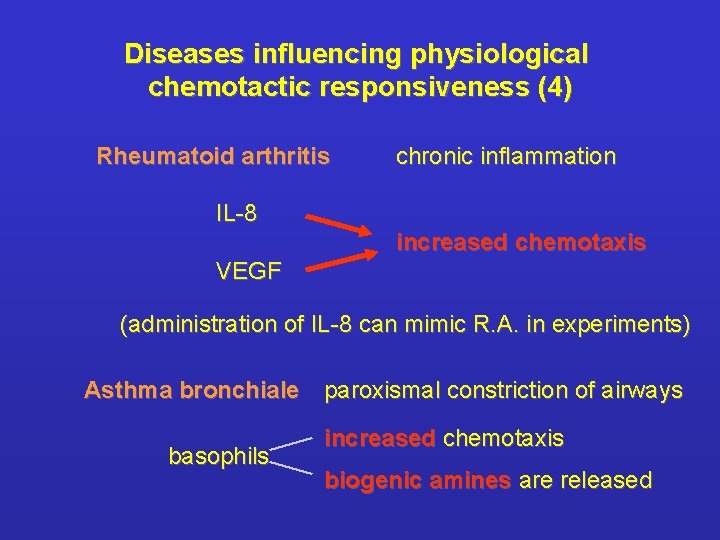
Diseases influencing physiological chemotactic responsiveness (4) Rheumatoid arthritis chronic inflammation IL-8 increased chemotaxis VEGF (administration of IL-8 can mimic R. A. in experiments) Asthma bronchiale paroxismal constriction of airways basophils increased chemotaxis biogenic amines are released
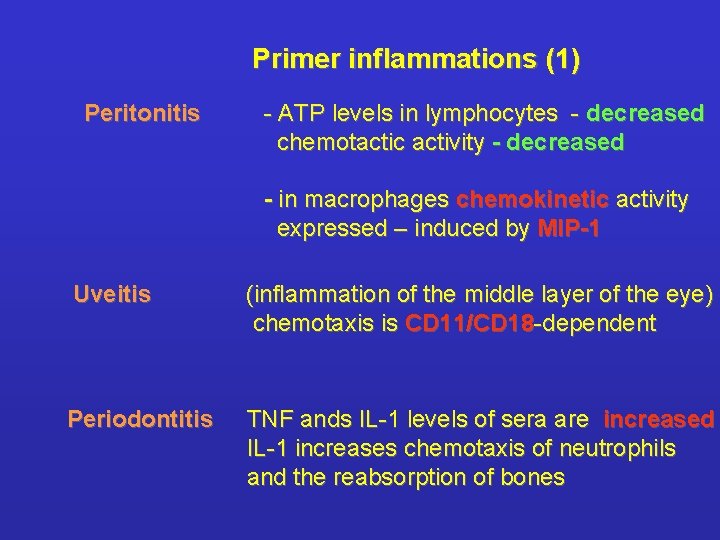
Primer inflammations (1) Peritonitis - ATP levels in lymphocytes - decreased chemotactic activity - decreased - in macrophages chemokinetic activity expressed – induced by MIP-1 Uveitis (inflammation of the middle layer of the eye) chemotaxis is CD 11/CD 18 -dependent Periodontitis TNF ands IL-1 levels of sera are increased IL-1 increases chemotaxis of neutrophils and the reabsorption of bones
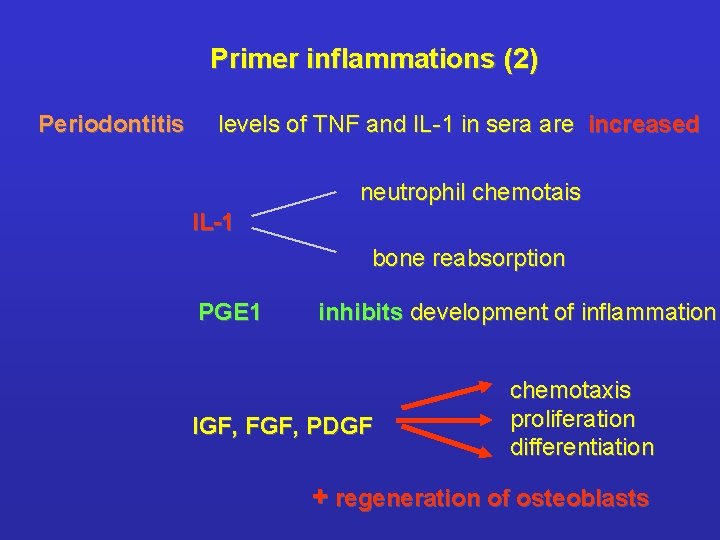
Primer inflammations (2) Periodontitis levels of TNF and IL-1 in sera are increased neutrophil chemotais IL-1 bone reabsorption PGE 1 inhibits development of inflammation IGF, FGF, PDGF chemotaxis proliferation differentiation + regeneration of osteoblasts
Neutrophil defect of newborns 1 - 8 days chemotaxis - decreased 13 - 14 days chemotaxis - normalized 1 - 2 day chemokinetic act. - normal after 3 rd day chemotactic act. - decreased REASON: - low level expression of CD 11 integrin - low level expression of L selectin
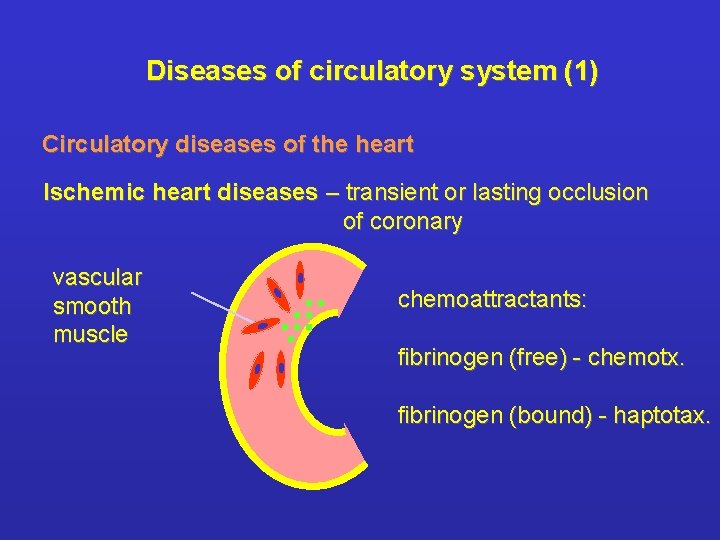
Diseases of circulatory system (1) Circulatory diseases of the heart Ischemic heart diseases – transient or lasting occlusion of coronary vascular smooth muscle chemoattractants: fibrinogen (free) - chemotx. fibrinogen (bound) - haptotax.
Diseases of circulatory system (2) Reperfusion Release of chemoattractants is detectable in the early stage of reperfusion Invasion of neutrophils guided by E selectins
Diseases of circulatory system (3) Peripherial blood vessels Angiogenesis proliferation chemotaxis morphogenesis Thrombospondin 1 (TSP 1): inhibits chemotaxis and morphogenesis -strats 24 h after a min. 3 hrs occlusion - chemotaxis of PMN cells Blood vessels in brain - ischemia results release of FGF - starts chemotaxis, mitosis, differentiation and angiogenesis Reperfusion
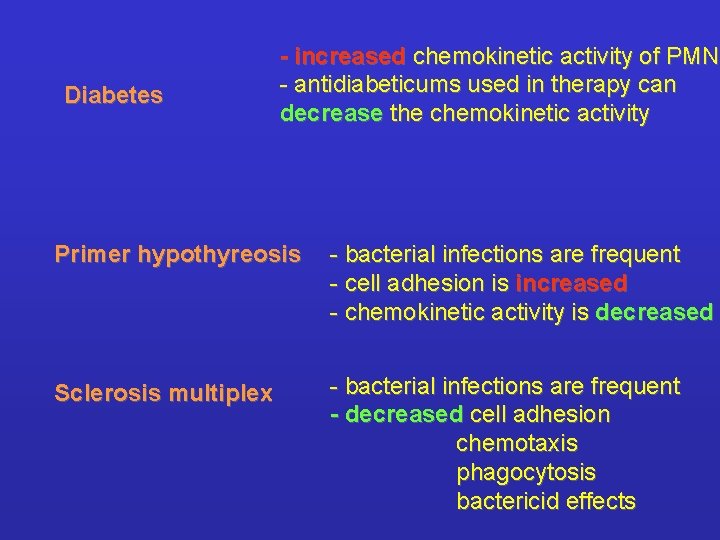
Diabetes - increased chemokinetic activity of PMN - antidiabeticums used in therapy can decrease the chemokinetic activity Primer hypothyreosis - bacterial infections are frequent - cell adhesion is increased - chemokinetic activity is decreased Sclerosis multiplex - bacterial infections are frequent - decreased cell adhesion chemotaxis phagocytosis bactericid effects
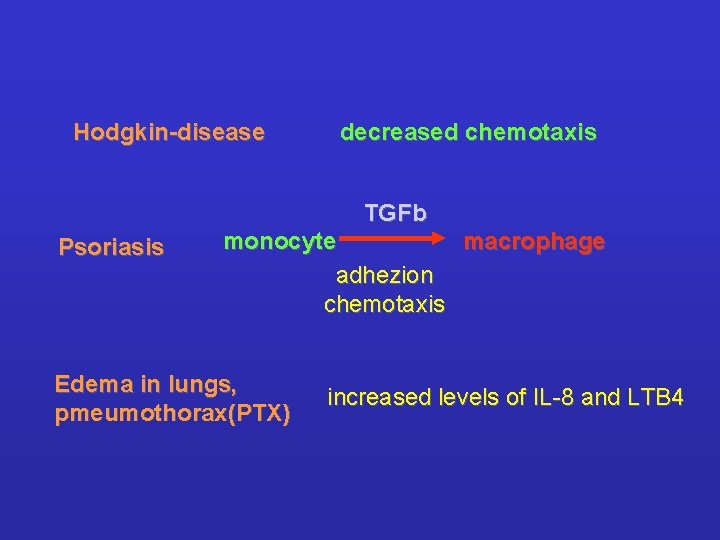
Hodgkin-disease decreased chemotaxis TGFb Psoriasis monocyte macrophage adhezion chemotaxis Edema in lungs, pmeumothorax(PTX) increased levels of IL-8 and LTB 4
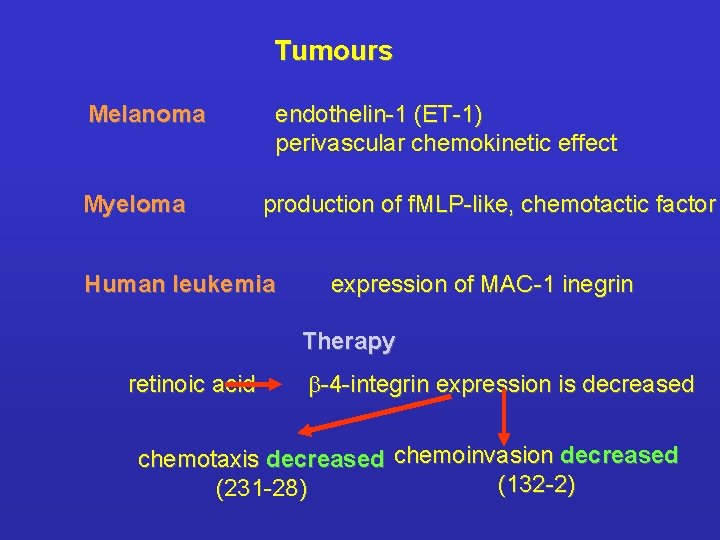
Tumours Melanoma Myeloma endothelin-1 (ET-1) perivascular chemokinetic effect production of f. MLP-like, chemotactic factor Human leukemia expression of MAC-1 inegrin Therapy retinoic acid b-4 -integrin expression is decreased chemotaxis decreased chemoinvasion decreased (132 -2) (231 -28)
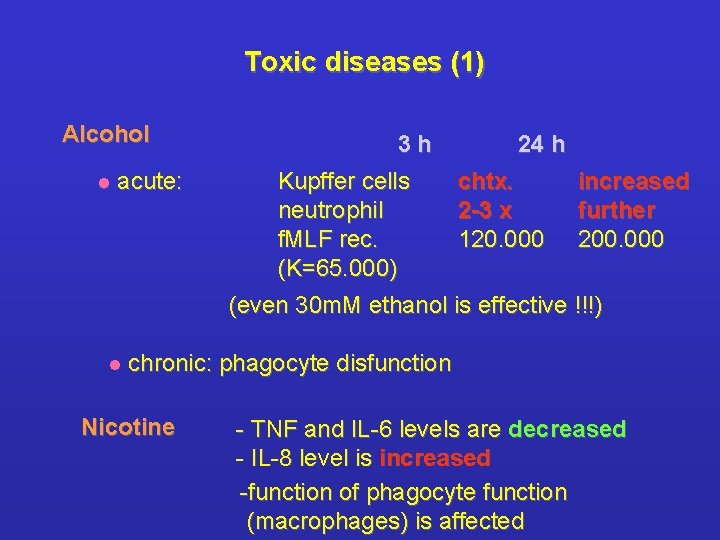
Toxic diseases (1) Alcohol l acute: 3 h Kupffer cells neutrophil f. MLF rec. (K=65. 000) 24 h chtx. 2 -3 x 120. 000 increased further 200. 000 (even 30 m. M ethanol is effective !!!) l chronic: phagocyte disfunction Nicotine - TNF and IL-6 levels are decreased - IL-8 level is increased -function of phagocyte function (macrophages) is affected
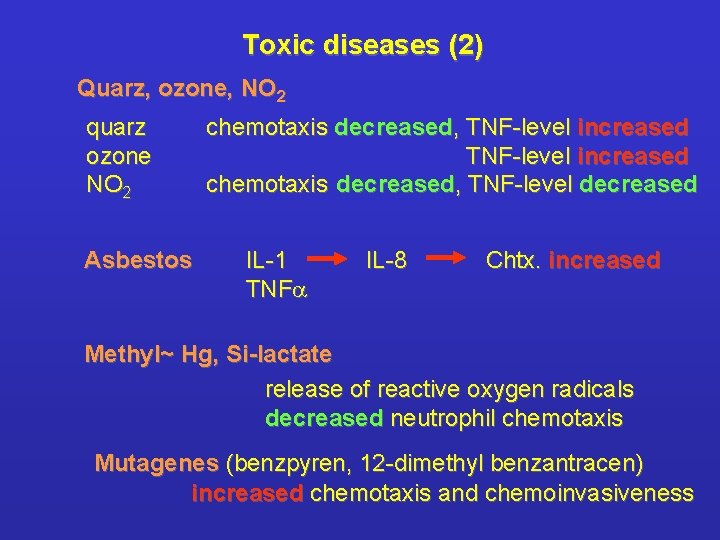
Toxic diseases (2) Quarz, ozone, NO 2 quarz ozone NO 2 Asbestos chemotaxis decreased, TNF-level increased chemotaxis decreased, TNF-level decreased IL-1 TNFa IL-8 Chtx. increased Methyl~ Hg, Si-lactate release of reactive oxygen radicals decreased neutrophil chemotaxis Mutagenes (benzpyren, 12 -dimethyl benzantracen) increased chemotaxis and chemoinvasiveness
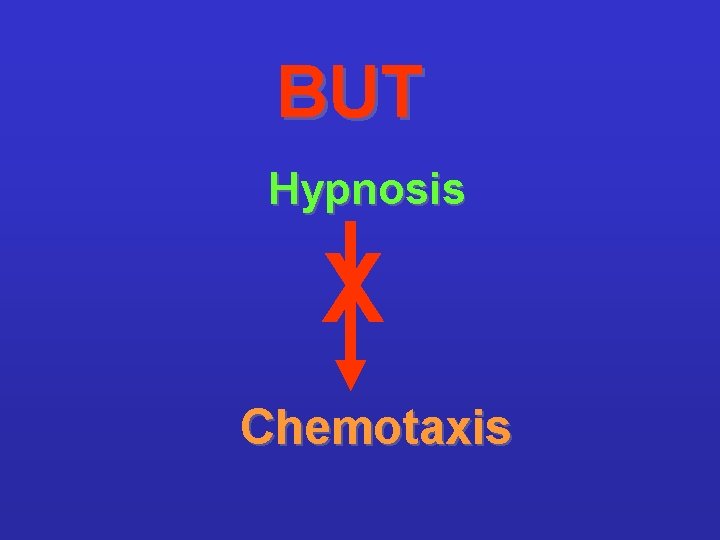
BUT Hypnosis X Chemotaxis
- Slides: 20