
Chemistry Unit 3 Atomic Structure Basics of the
Chemistry Unit 3: Atomic Structure
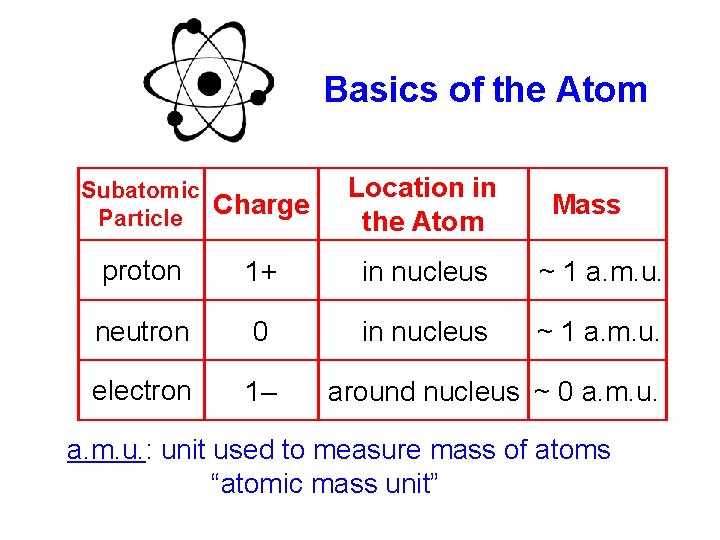
Basics of the Atom Subatomic Charge Particle Location in the Atom Mass proton 1+ in nucleus ~ 1 a. m. u. neutron 0 in nucleus ~ 1 a. m. u. electron 1– around nucleus ~ 0 a. m. u. : unit used to measure mass of atoms “atomic mass unit”
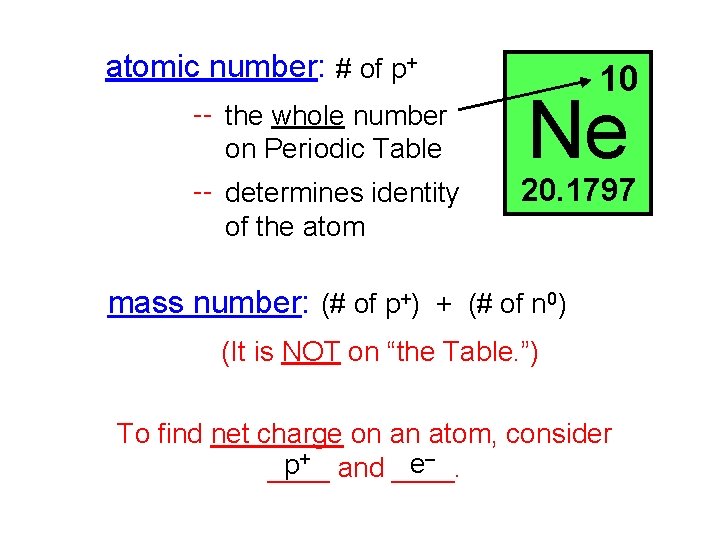
atomic number: # of p+ -- the whole number on Periodic Table -- determines identity of the atom 10 Ne 20. 1797 mass number: (# of p+) + (# of n 0) (It is NOT on “the Table. ”) To find net charge on an atom, consider e– p+ and ____
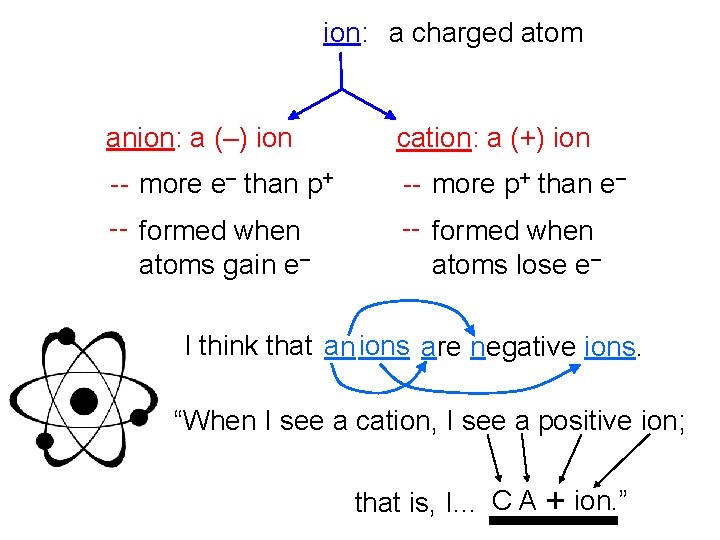
ion: a charged atom anion: a (–) ion cation: a (+) ion -- more e– than p+ -- more p+ than e– -- formed when atoms gain e– -- formed when atoms lose e– I think that anions are negative ions. “When I see a cation, I see a positive ion; that is, I… C A + ion. ”

Other Mnemonic Devices Metals form positive ions Cations are “paws”itive
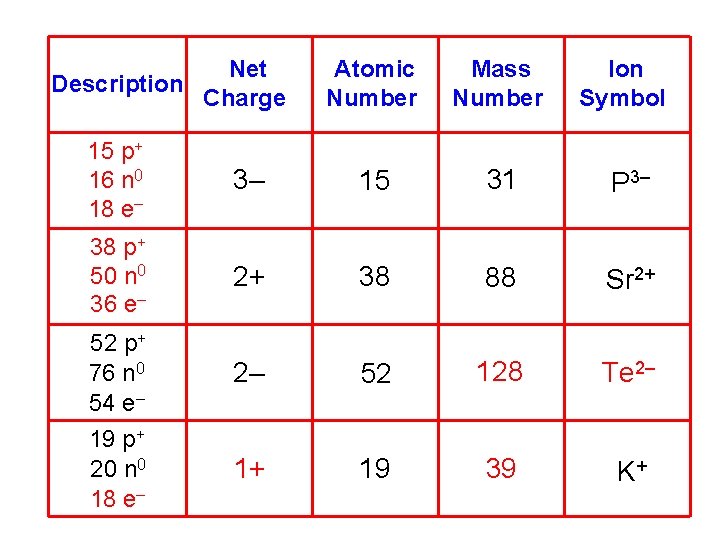
Description Net Charge Atomic Number Mass Number 15 p+ 16 n 0 18 e– 3– 15 31 P 3– 38 p+ 50 n 0 36 e– 2+ 38 88 Sr 2+ 2– 52 128 Te 2– 1+ 19 39 K+ 52 p+ 76 n 0 54 e– 19 p+ 20 n 0 18 e– Ion Symbol
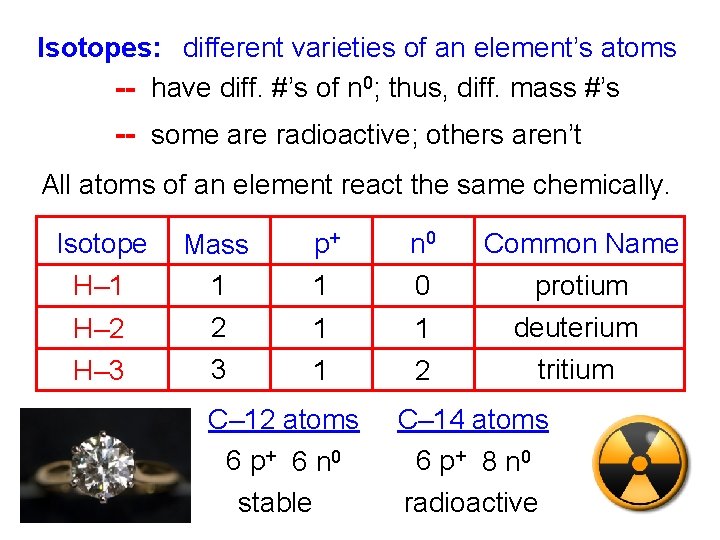
Isotopes: different varieties of an element’s atoms -- have diff. #’s of n 0; thus, diff. mass #’s -- some are radioactive; others aren’t All atoms of an element react the same chemically. Isotope H– 1 H– 2 H– 3 Mass 1 2 3 p+ n 0 Common Name 1 0 1 1 1 2 protium deuterium tritium C– 12 atoms 6 p+ 6 n 0 stable C– 14 atoms 6 p+ 8 n 0 radioactive
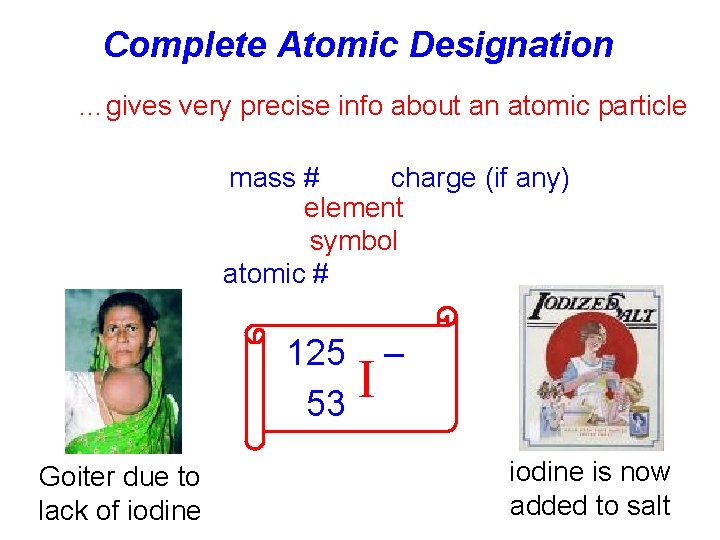
Complete Atomic Designation …gives very precise info about an atomic particle mass # charge (if any) element symbol atomic # 125 53 Goiter due to lack of iodine I – iodine is now added to salt
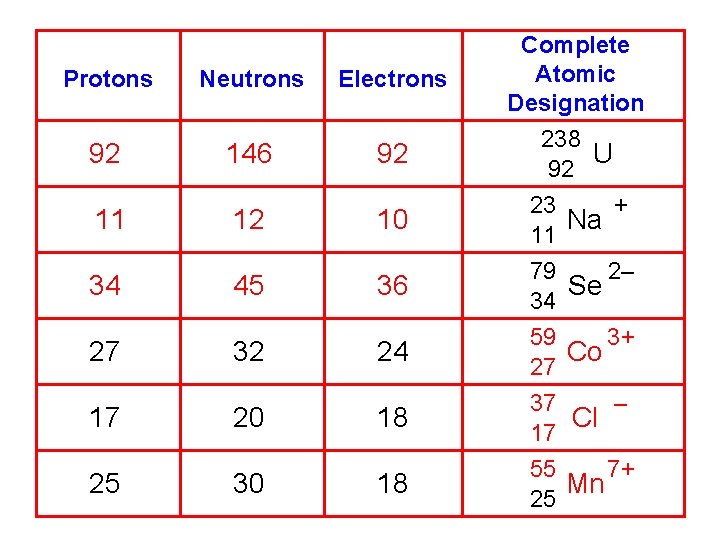
Protons Neutrons Electrons 92 146 92 11 12 10 34 27 17 25 45 32 20 30 36 24 18 18 Complete Atomic Designation 238 U 92 23 + Na 11 79 34 59 27 37 17 55 25 Se Co Cl Mn 2– 3+ – 7+
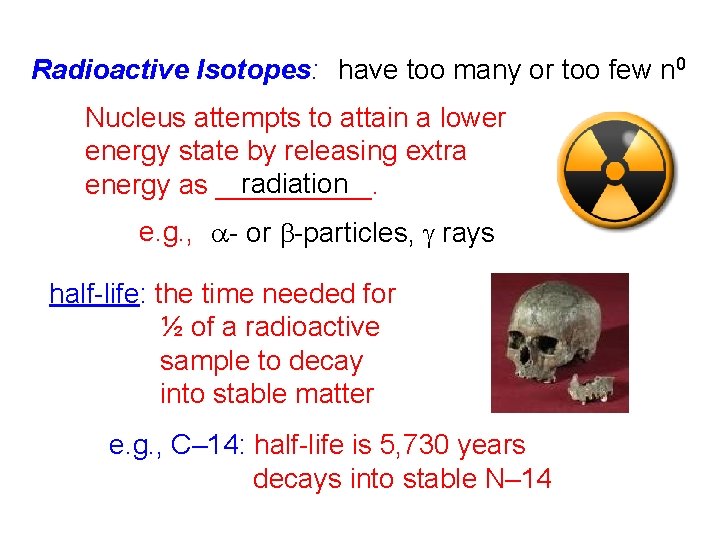
Radioactive Isotopes: have too many or too few n 0 Nucleus attempts to attain a lower energy state by releasing extra radiation energy as _____. e. g. , a- or b-particles, g rays half-life: the time needed for ½ of a radioactive sample to decay into stable matter e. g. , C– 14: half-life is 5, 730 years decays into stable N– 14
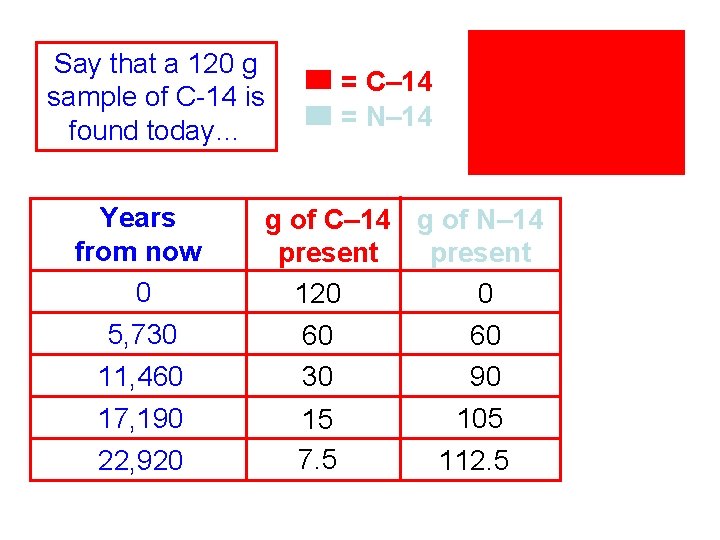
Say that a 120 g sample of C-14 is found today… Years from now 0 5, 730 11, 460 17, 190 22, 920 = C– 14 = N– 14 g of C– 14 g of N– 14 present 120 0 60 60 30 90 105 15 7. 5 112. 5
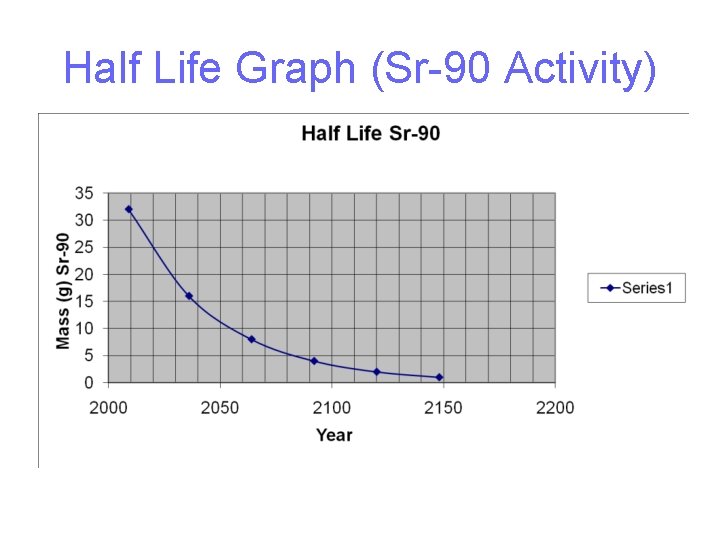
Half Life Graph (Sr-90 Activity)
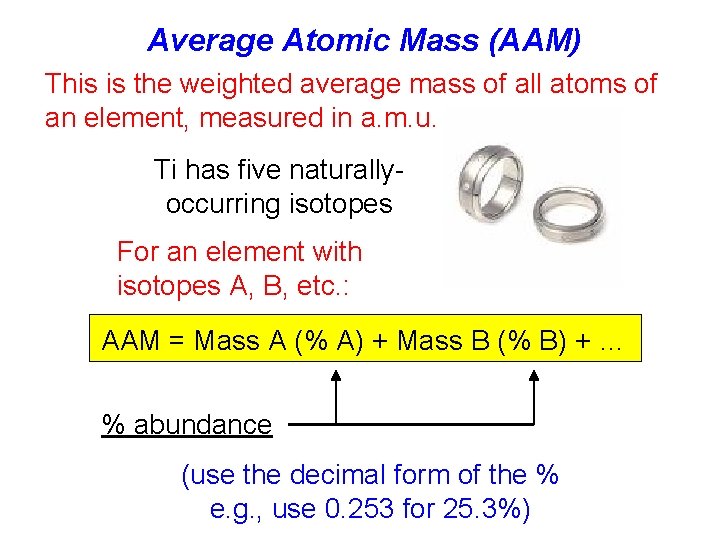
Average Atomic Mass (AAM) This is the weighted average mass of all atoms of an element, measured in a. m. u. Ti has five naturallyoccurring isotopes For an element with isotopes A, B, etc. : AAM = Mass A (% A) + Mass B (% B) + … % abundance (use the decimal form of the % e. g. , use 0. 253 for 25. 3%)
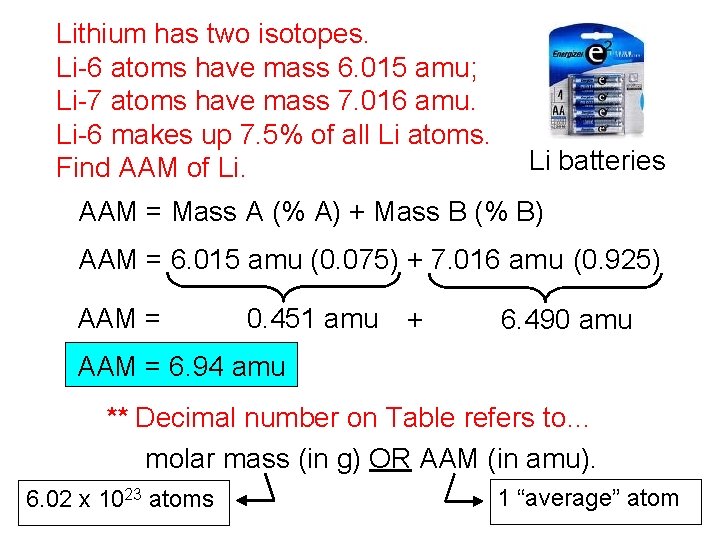
Lithium has two isotopes. Li-6 atoms have mass 6. 015 amu; Li-7 atoms have mass 7. 016 amu. Li-6 makes up 7. 5% of all Li atoms. Find AAM of Li. Li batteries AAM = Mass A (% A) + Mass B (% B) AAM = 6. 015 amu (0. 075) + 7. 016 amu (0. 925) AAM = 0. 451 amu + 6. 490 amu AAM = 6. 94 amu ** Decimal number on Table refers to… molar mass (in g) OR AAM (in amu). 6. 02 x 1023 atoms 1 “average” atom
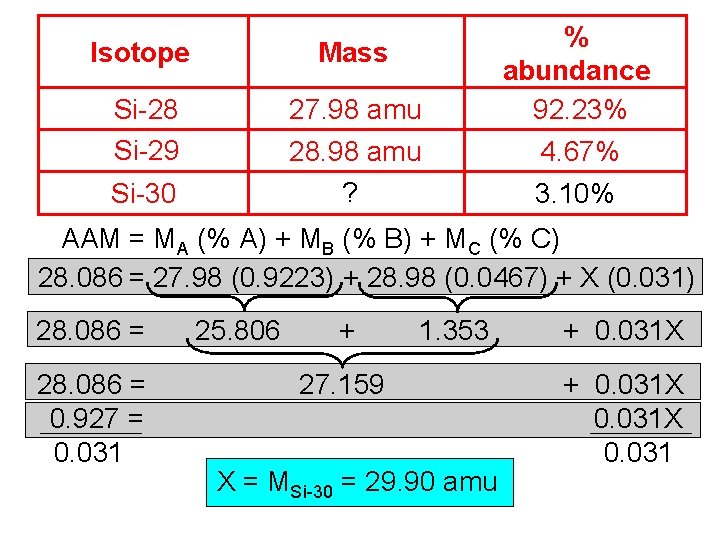
Isotope Mass Si-28 Si-29 27. 98 amu 28. 98 amu ? Si-30 % abundance 92. 23% 4. 67% 3. 10% AAM = MA (% A) + MB (% B) + MC (% C) 28. 086 = 27. 98 (0. 9223) + 28. 98 (0. 0467) + X (0. 031) 28. 086 = 0. 927 = 0. 031 25. 806 + 1. 353 27. 159 X = MSi-30 = 29. 90 amu + 0. 031 X 0. 031
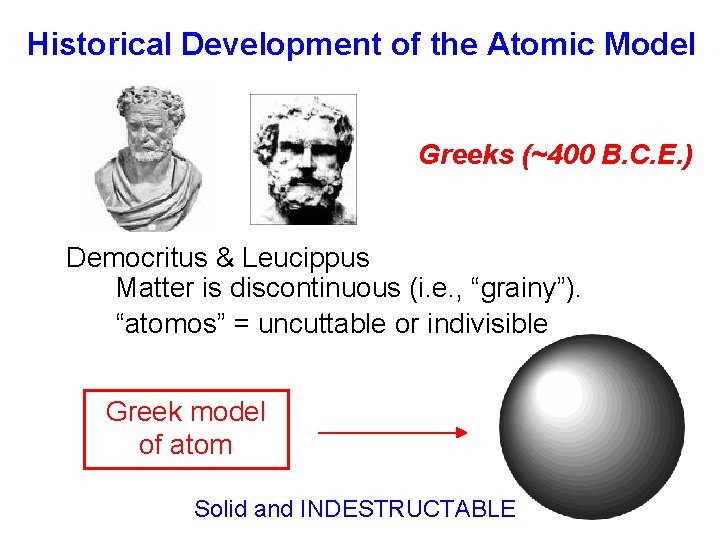
Historical Development of the Atomic Model Greeks (~400 B. C. E. ) Democritus & Leucippus Matter is discontinuous (i. e. , “grainy”). “atomos” = uncuttable or indivisible Greek model of atom Solid and INDESTRUCTABLE
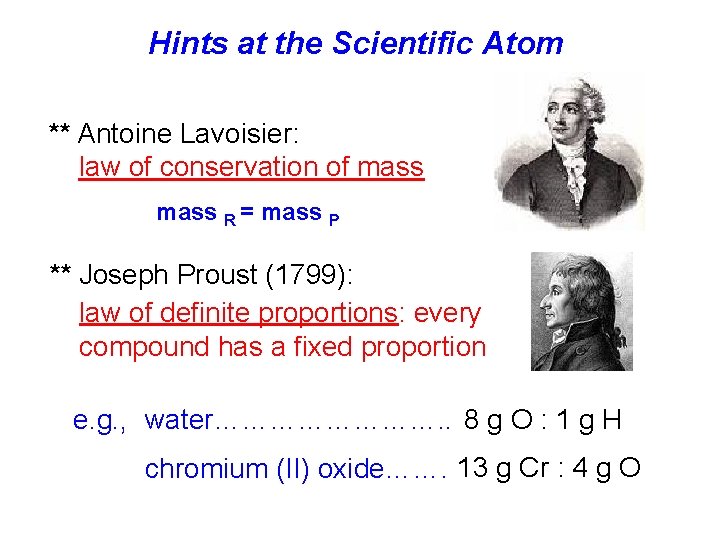
Hints at the Scientific Atom ** Antoine Lavoisier: law of conservation of mass R = mass P ** Joseph Proust (1799): law of definite proportions: every compound has a fixed proportion e. g. , water…………. . 8 g O : 1 g H chromium (II) oxide……. 13 g Cr : 4 g O
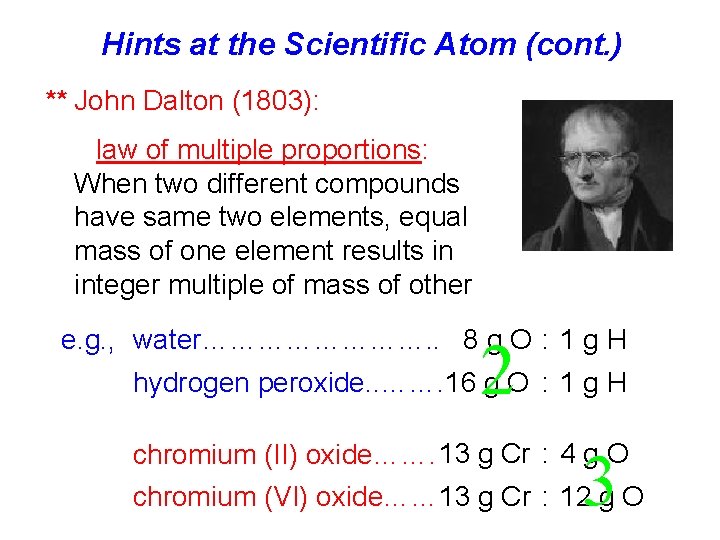
Hints at the Scientific Atom (cont. ) ** John Dalton (1803): law of multiple proportions: When two different compounds have same two elements, equal mass of one element results in integer multiple of mass of other e. g. , water…………. . 8 g O : 1 g H 2 hydrogen peroxide. . ……. 16 g O : 1 g H chromium (II) oxide……. 13 g Cr : 4 g O chromium (VI) oxide…… 13 g Cr : 12 g O 3
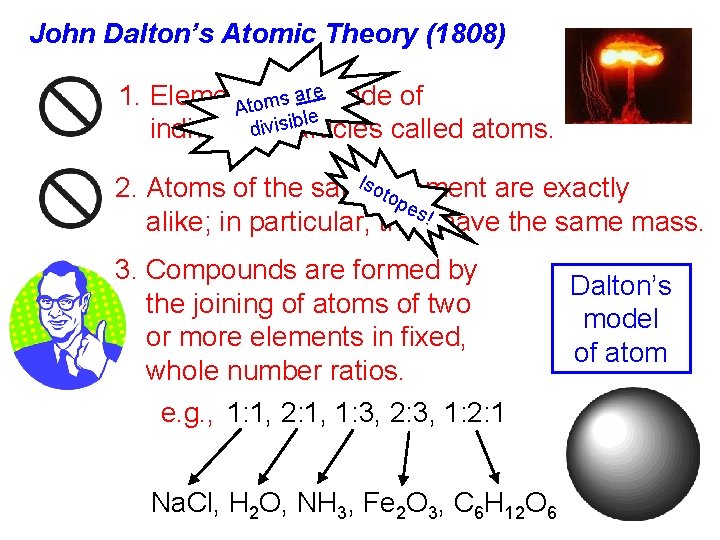
John Dalton’s Atomic Theory (1808) aremade of 1. Elements are s m o At sible diviparticles indivisible called atoms. Iso 2. Atoms of the same are exactly toelement pe s! alike; in particular, they have the same mass. 3. Compounds are formed by the joining of atoms of two or more elements in fixed, whole number ratios. e. g. , 1: 1, 2: 1, 1: 3, 2: 3, 1: 2: 1 Na. Cl, H 2 O, NH 3, Fe 2 O 3, C 6 H 12 O 6 Dalton’s model of atom
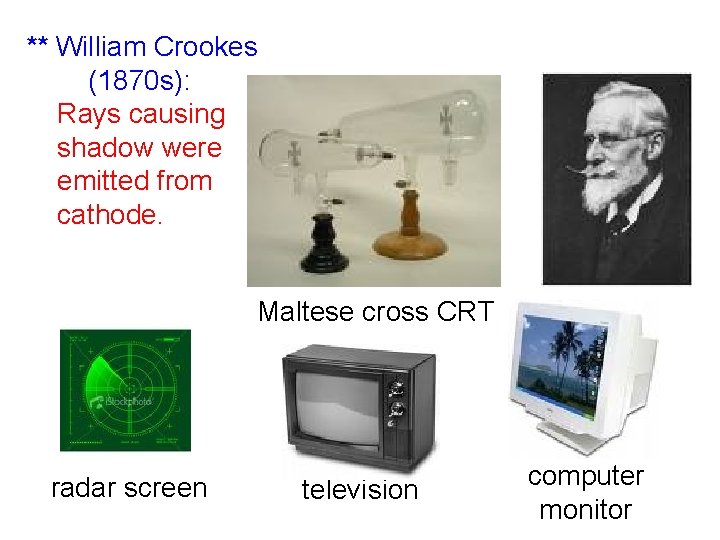
** William Crookes (1870 s): Rays causing shadow were emitted from cathode. Maltese cross CRT radar screen television computer monitor
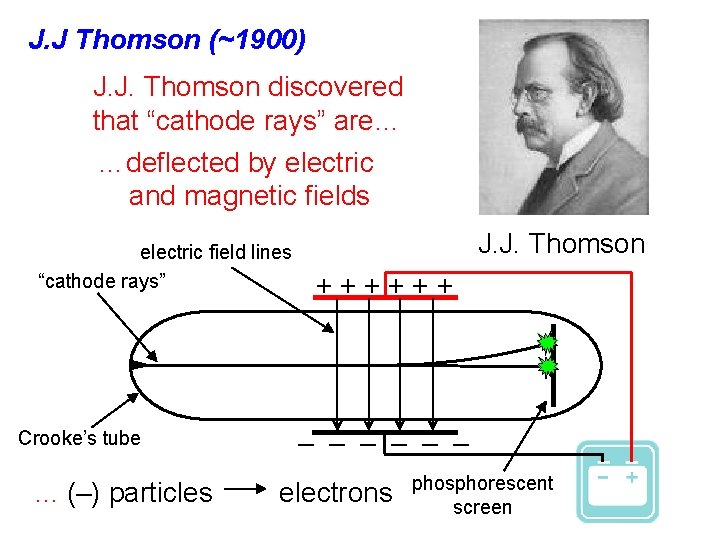
J. J Thomson (~1900) J. J. Thomson discovered that “cathode rays” are… …deflected by electric and magnetic fields electric field lines “cathode rays” Crooke’s tube … (–) particles J. J. Thomson ++++++ – – – electrons phosphorescent screen
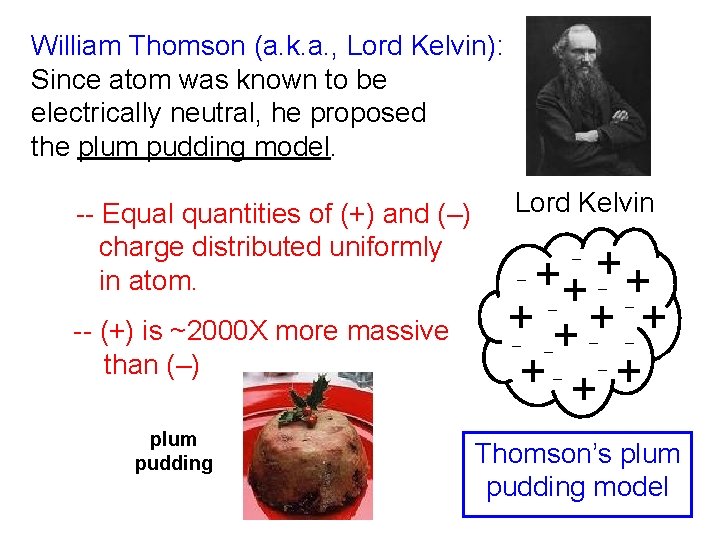
William Thomson (a. k. a. , Lord Kelvin): Since atom was known to be electrically neutral, he proposed the plum pudding model. -- Equal quantities of (+) and (–) charge distributed uniformly in atom. -- (+) is ~2000 X more massive than (–) plum pudding Lord Kelvin ++ ++ + + ++ – – – Thomson’s plum pudding model
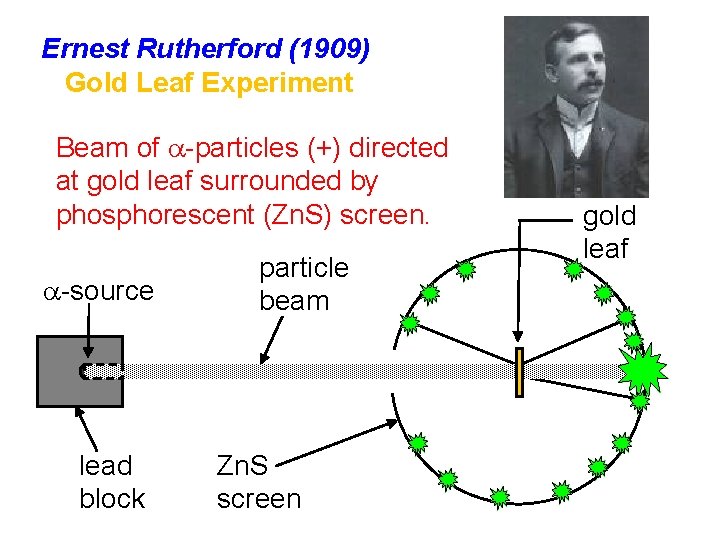
Ernest Rutherford (1909) Gold Leaf Experiment Beam of a-particles (+) directed at gold leaf surrounded by phosphorescent (Zn. S) screen. a-source lead block particle beam Zn. S screen gold leaf
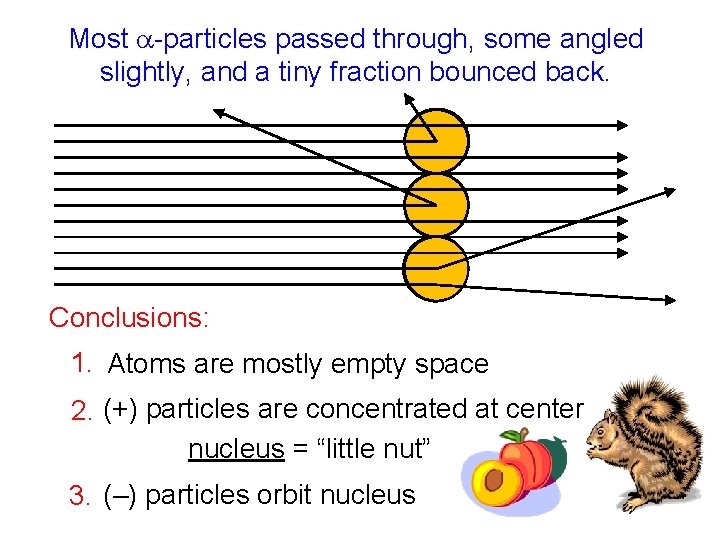
Most a-particles passed through, some angled slightly, and a tiny fraction bounced back. Conclusions: 1. Atoms are mostly empty space 2. (+) particles are concentrated at center nucleus = “little nut” 3. (–) particles orbit nucleus
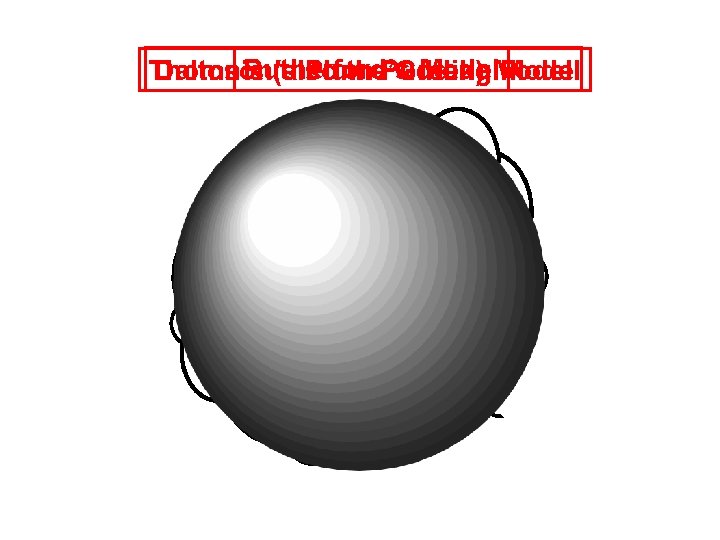
Rutherford’s Model Dalton’s (also the. Pudding Greek) Thomson’s Plum Model + – + + – – + + + N – + – – – + – +– + – – –
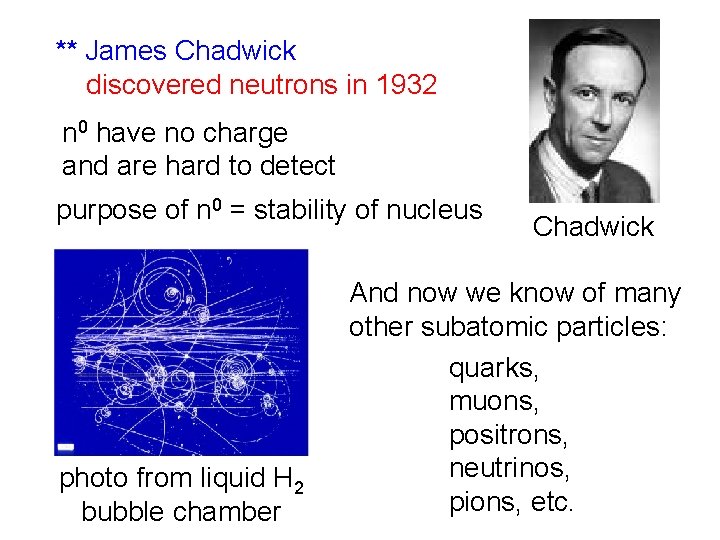
** James Chadwick discovered neutrons in 1932 n 0 have no charge and are hard to detect purpose of n 0 = stability of nucleus photo from liquid H 2 bubble chamber Chadwick And now we know of many other subatomic particles: quarks, muons, positrons, neutrinos, pions, etc.
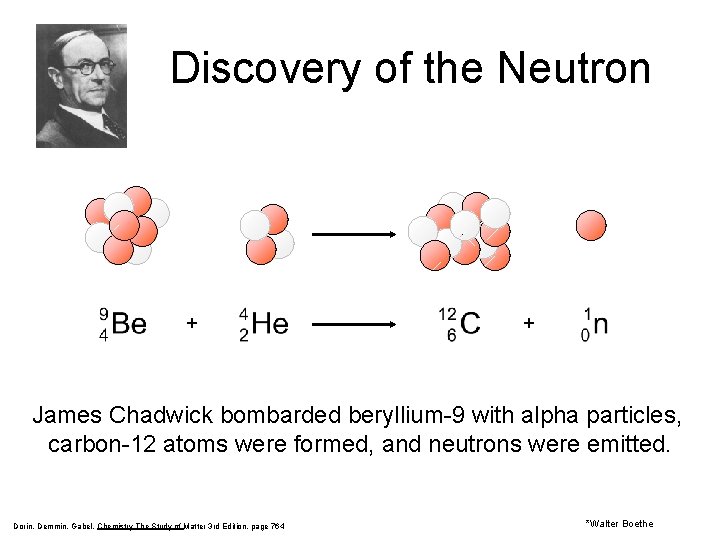
Discovery of the Neutron + + James Chadwick bombarded beryllium-9 with alpha particles, carbon-12 atoms were formed, and neutrons were emitted. Dorin, Demmin, Gabel, Chemistry The Study of Matter 3 rd Edition, page 764 *Walter Boethe
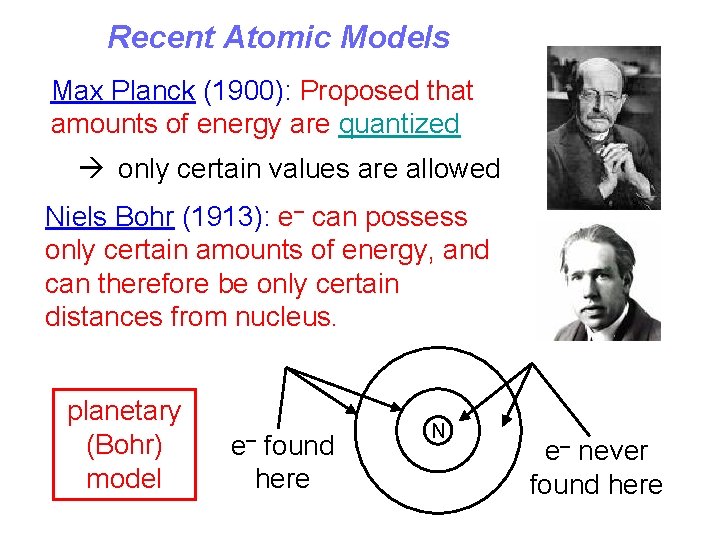
Recent Atomic Models Max Planck (1900): Proposed that amounts of energy are quantized only certain values are allowed Niels Bohr (1913): e– can possess only certain amounts of energy, and can therefore be only certain distances from nucleus. planetary (Bohr) model e– found here N e– never found here
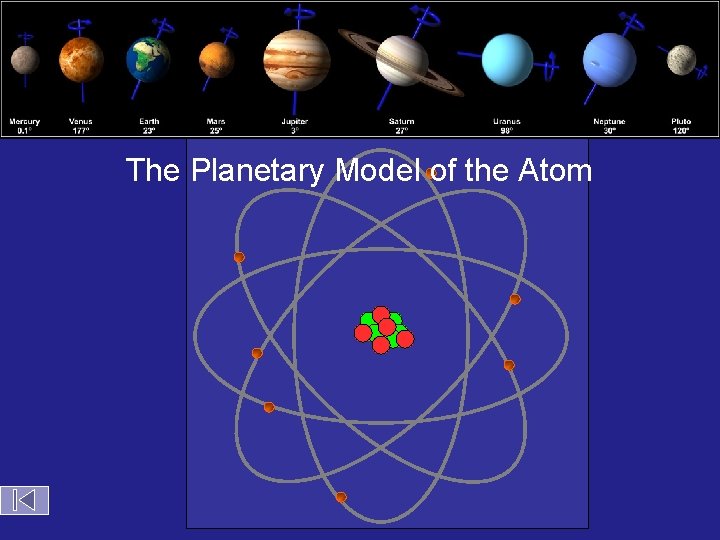
Bohr Atom The Planetary Model of the Atom
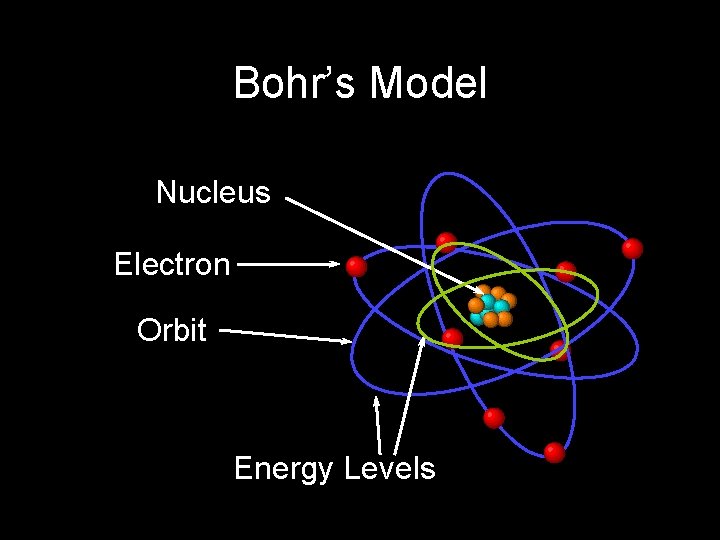
Bohr’s Model Nucleus Electron Orbit Energy Levels
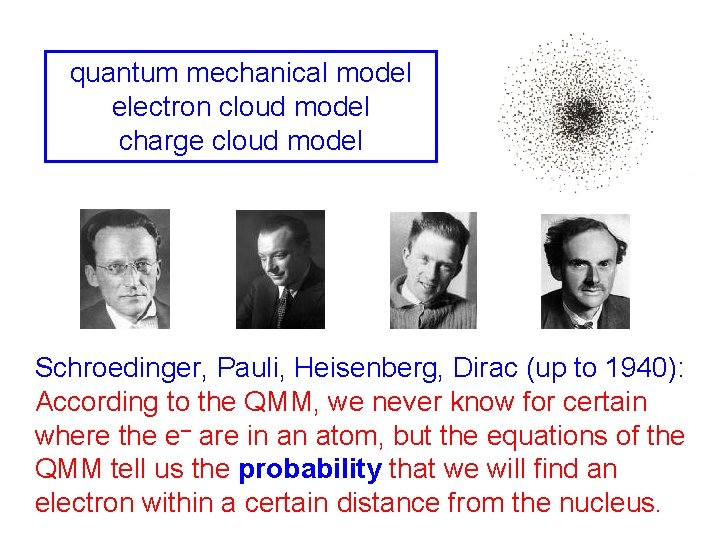
quantum mechanical model electron cloud model charge cloud model Schroedinger, Pauli, Heisenberg, Dirac (up to 1940): According to the QMM, we never know for certain where the e– are in an atom, but the equations of the QMM tell us the probability that we will find an electron within a certain distance from the nucleus.
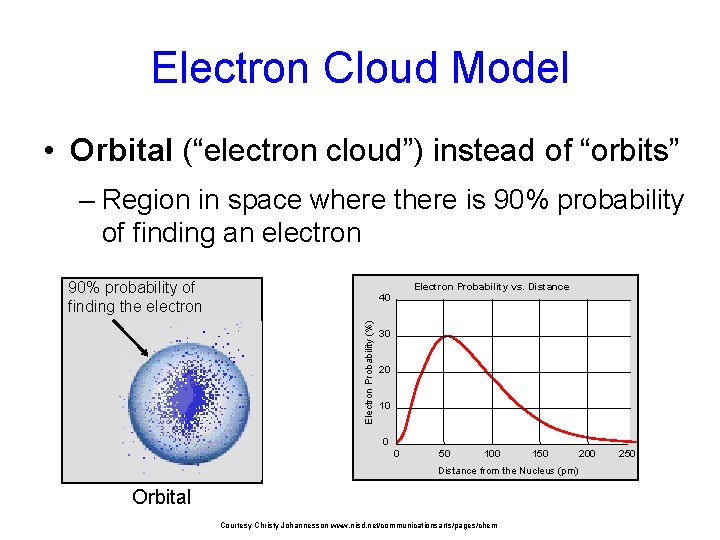
Electron Cloud Model • Orbital (“electron cloud”) instead of “orbits” – Region in space where there is 90% probability of finding an electron 90% probability of finding the electron Electron Probability vs. Distance Electron Probability (%) 40 30 20 10 0 0 50 100 150 Distance from the Nucleus (pm) Orbital Courtesy Christy Johannesson www. nisd. net/communicationsarts/pages/chem 200 250
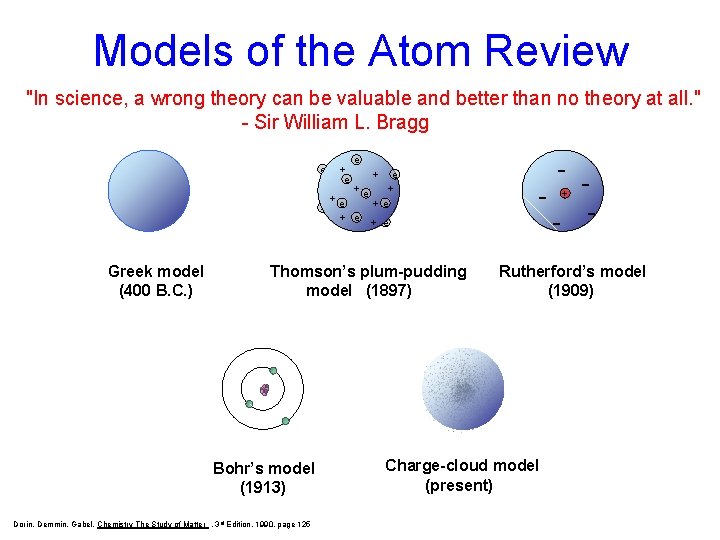
Models of the Atom Review "In science, a wrong theory can be valuable and better than no theory at all. " - Sir William L. Bragg e + e +e + e + e Dalton’s Greek model (400 (1803) B. C. ) Thomson’s plum-pudding model (1897) Bohr’s model (1913) Dorin, Demmin, Gabel, Chemistry The Study of Matter , 3 rd Edition, 1990, page 125 - - + Rutherford’s model (1909) Charge-cloud model (present)
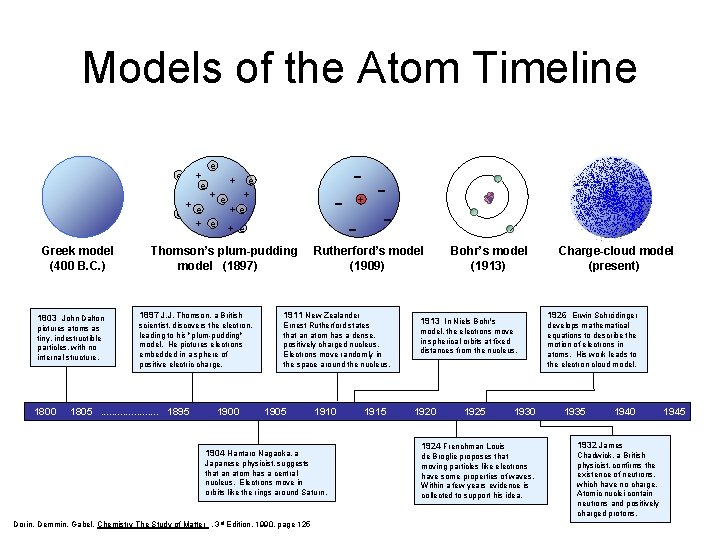
Models of the Atom Timeline e + e e - + e +e +e e + e Dalton’s model Greek model (1803) (400 B. C. ) 1803 John Dalton pictures atoms as tiny, indestructible particles, with no internal structure. 1800 - Thomson’s plum-pudding model (1897) - + Rutherford’s model (1909) 1897 J. J. Thomson, a British 1911 New Zealander scientist, discovers the electron, leading to his "plum-pudding" model. He pictures electrons embedded in a sphere of positive electric charge. Ernest Rutherford states that an atom has a dense, positively charged nucleus. Electrons move randomly in the space around the nucleus. 1805. . . . . 1895 1900 1905 1910 1904 Hantaro Nagaoka, a Japanese physicist, suggests that an atom has a central nucleus. Electrons move in orbits like the rings around Saturn. Dorin, Demmin, Gabel, Chemistry The Study of Matter , 3 rd Edition, 1990, page 125 1915 Bohr’s model (1913) 1926 Erwin Schrödinger 1913 In Niels Bohr's model, the electrons move in spherical orbits at fixed distances from the nucleus. 1920 1925 Charge-cloud model (present) 1930 1924 Frenchman Louis de Broglie proposes that moving particles like electrons have some properties of waves. Within a few years evidence is collected to support his idea. develops mathematical equations to describe the motion of electrons in atoms. His work leads to the electron cloud model. 1935 1940 1932 James Chadwick, a British physicist, confirms the existence of neutrons, which have no charge. Atomic nuclei contain neutrons and positively charged protons. 1945
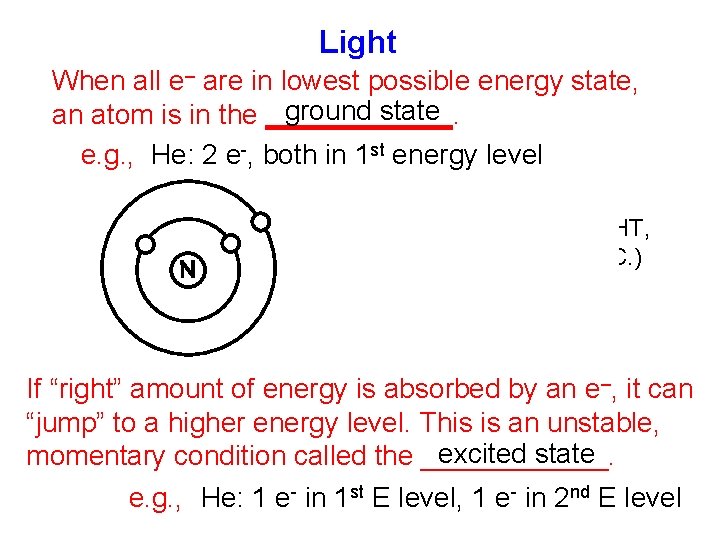
Light When all e– are in lowest possible energy state, ground state an atom is in the ______. e. g. , He: 2 e-, both in 1 st energy level ENERGY (HEAT, LIGHT, ELEC. , ETC. ) If “right” amount of energy is absorbed by an e–, it can “jump” to a higher energy level. This is an unstable, excited state momentary condition called the ______. e. g. , He: 1 e- in 1 st E level, 1 e- in 2 nd E level
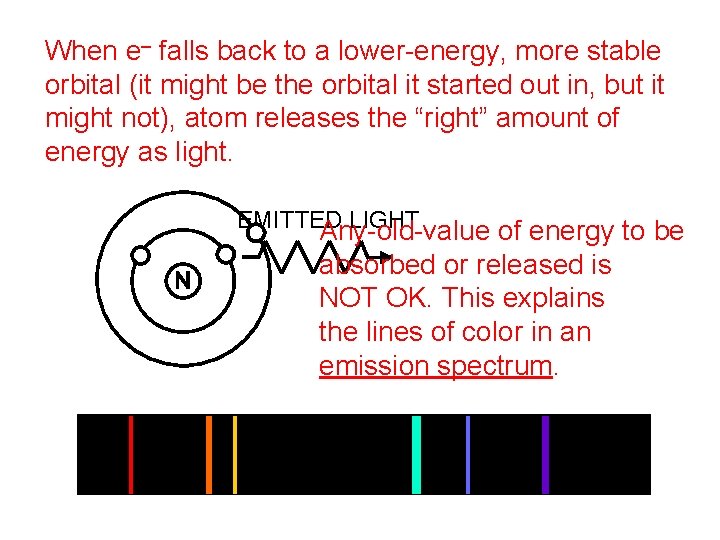
When e– falls back to a lower-energy, more stable orbital (it might be the orbital it started out in, but it might not), atom releases the “right” amount of energy as light. EMITTED LIGHT Any-old-value of energy to be absorbed or released is NOT OK. This explains the lines of color in an emission spectrum.
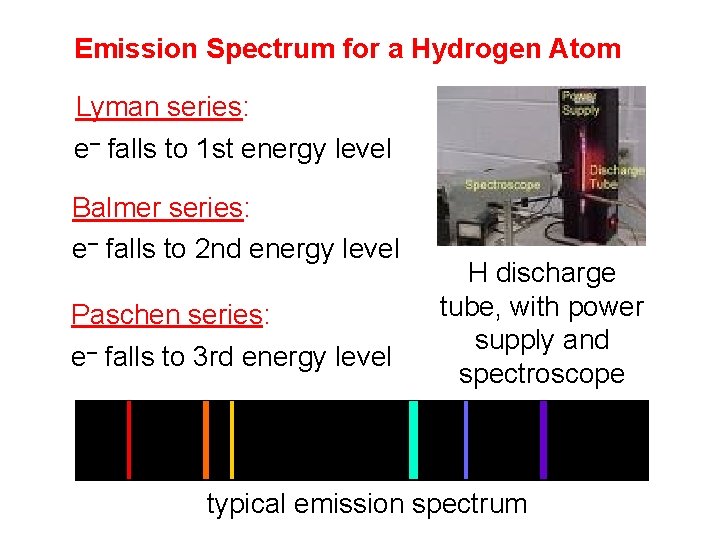
Emission Spectrum for a Hydrogen Atom Lyman series: e– falls to 1 st energy level Balmer series: e– falls to 2 nd energy level Paschen series: e– falls to 3 rd energy level H discharge tube, with power supply and spectroscope typical emission spectrum
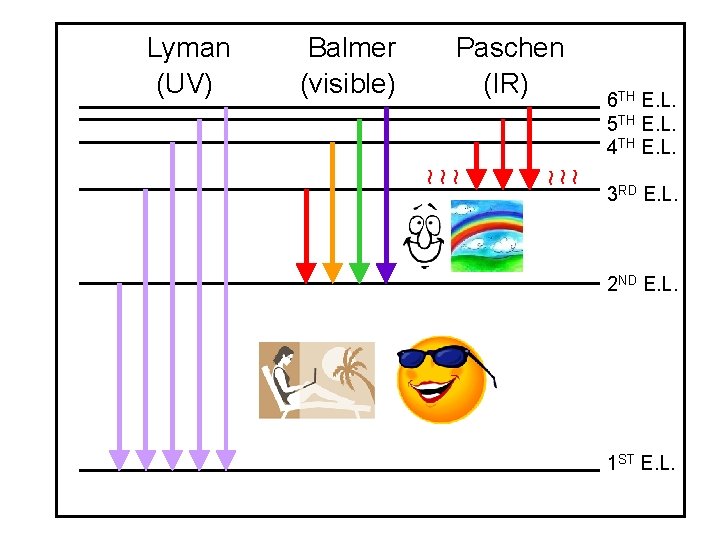
Lyman (UV) Balmer (visible) Paschen (IR) 6 TH E. L. 5 TH E. L. 4 TH E. L. ~ ~ ~ 3 RD E. L. 2 ND E. L. 1 ST E. L.
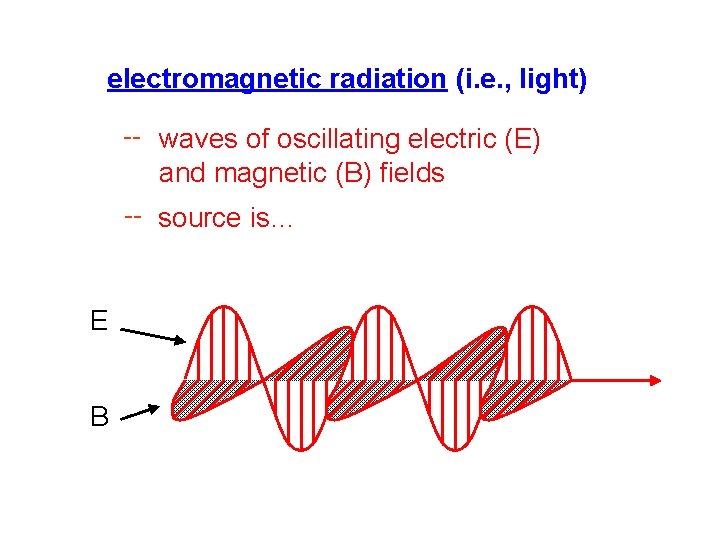
electromagnetic radiation (i. e. , light) -- waves of oscillating electric (E) and magnetic (B) fields -- source is… vibrating electric charges E B
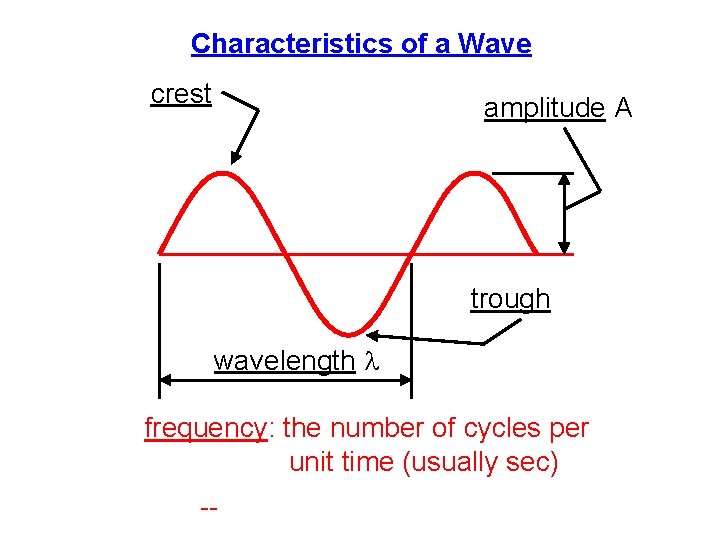
Characteristics of a Wave crest amplitude A trough wavelength l frequency: the number of cycles per unit time (usually sec) -- unit is Hz, or s– 1 or 1/s
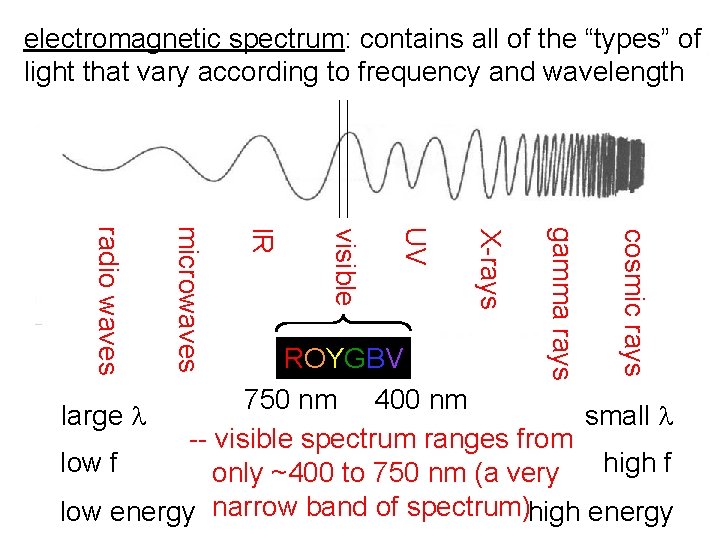
electromagnetic spectrum: contains all of the “types” of light that vary according to frequency and wavelength cosmic rays gamma rays X-rays UV visible IR microwaves radio waves ROYGBV 750 nm 400 nm large l small l -- visible spectrum ranges from low f high f only ~400 to 750 nm (a very low energy narrow band of spectrum)high energy
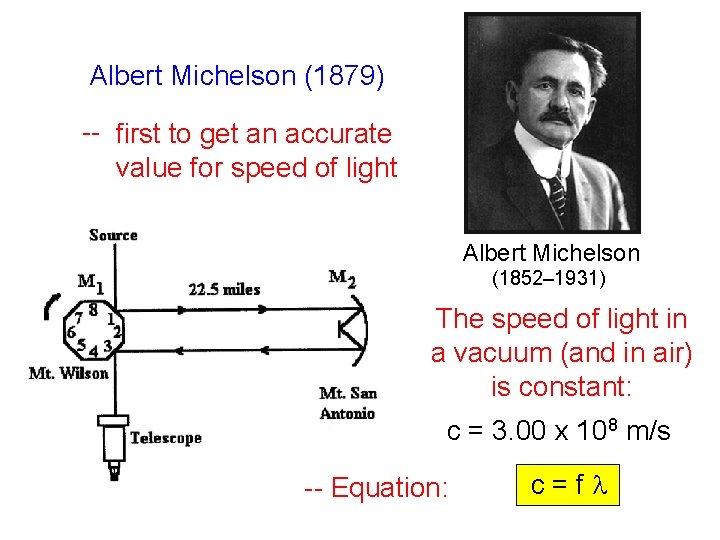
Albert Michelson (1879) -- first to get an accurate value for speed of light Albert Michelson (1852– 1931) The speed of light in a vacuum (and in air) is constant: c = 3. 00 x 108 m/s -- Equation: c=fl
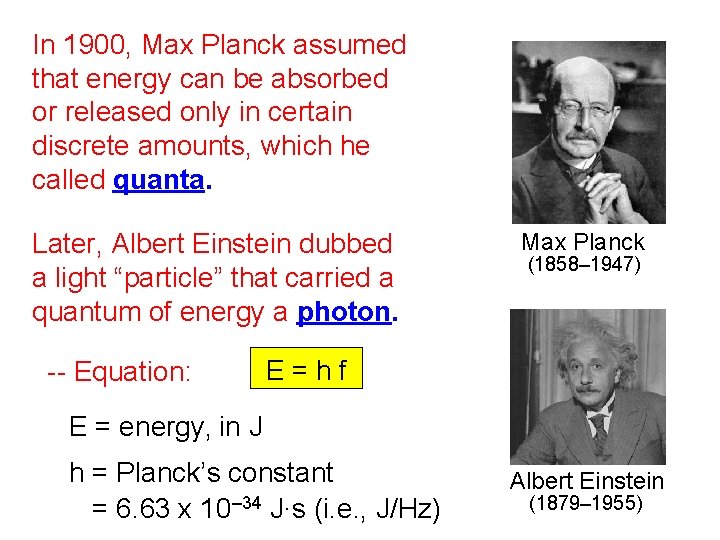
In 1900, Max Planck assumed that energy can be absorbed or released only in certain discrete amounts, which he called quanta. Later, Albert Einstein dubbed a light “particle” that carried a quantum of energy a photon. -- Equation: Max Planck (1858– 1947) E=hf E = energy, in J h = Planck’s constant = 6. 63 x 10– 34 J∙s (i. e. , J/Hz) Albert Einstein (1879– 1955)
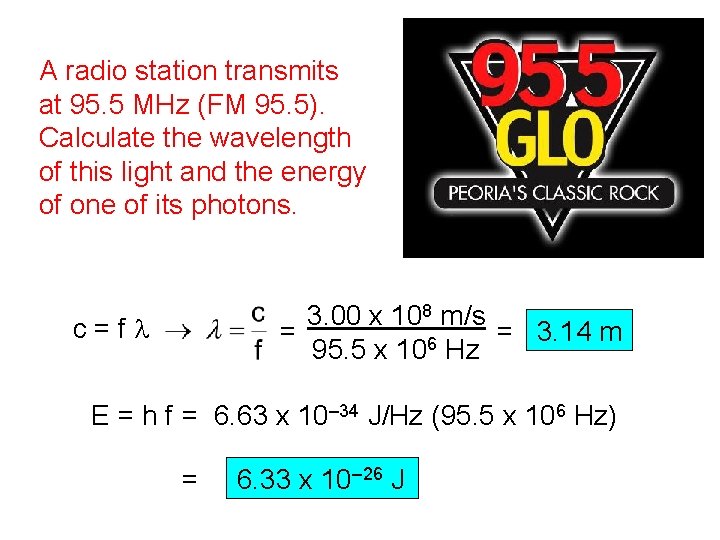
A radio station transmits at 95. 5 MHz (FM 95. 5). Calculate the wavelength of this light and the energy of one of its photons. 3. 00 x 108 m/s = 3. 14 m = 6 95. 5 x 10 Hz c=fl E = h f = 6. 63 x 10– 34 J/Hz (95. 5 x 10⁶ Hz) = 6. 33 x 10– 26 J
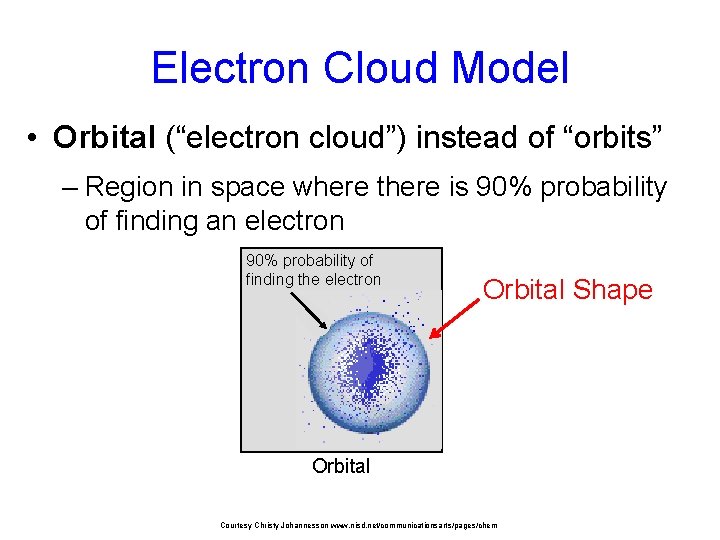
Electron Cloud Model • Orbital (“electron cloud”) instead of “orbits” – Region in space where there is 90% probability of finding an electron 90% probability of finding the electron Orbital Shape Orbital Courtesy Christy Johannesson www. nisd. net/communicationsarts/pages/chem
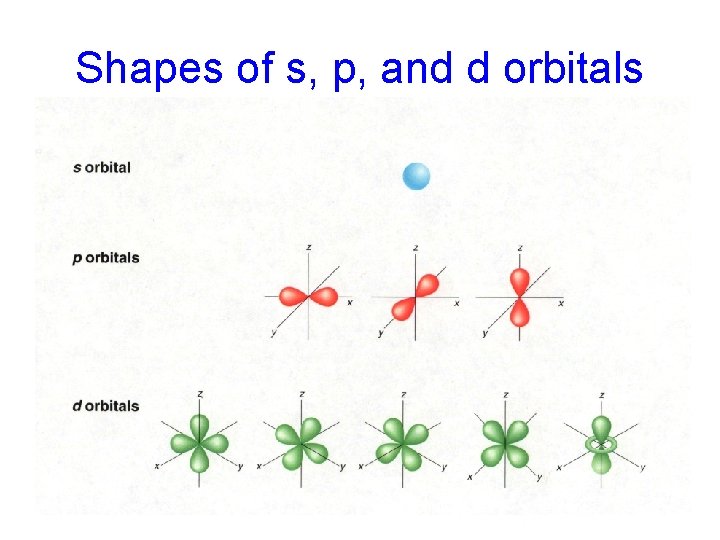
Shapes of s, p, and d orbitals
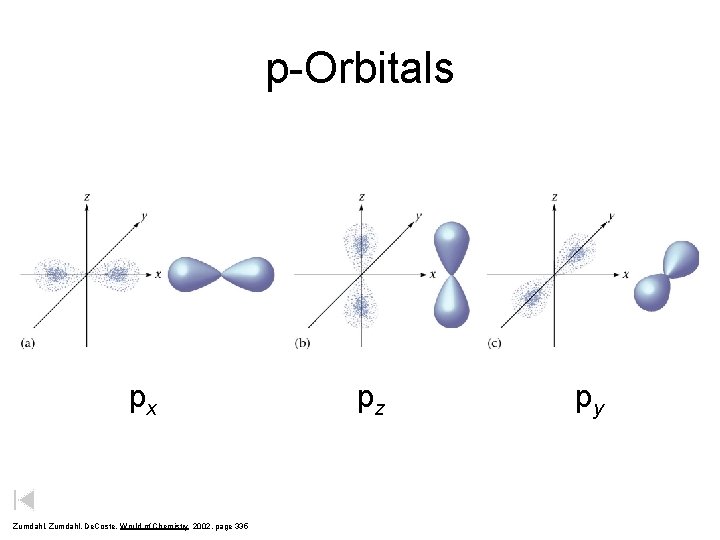
p-Orbitals px Zumdahl, De. Coste, World of Chemistry 2002, page 335 pz py
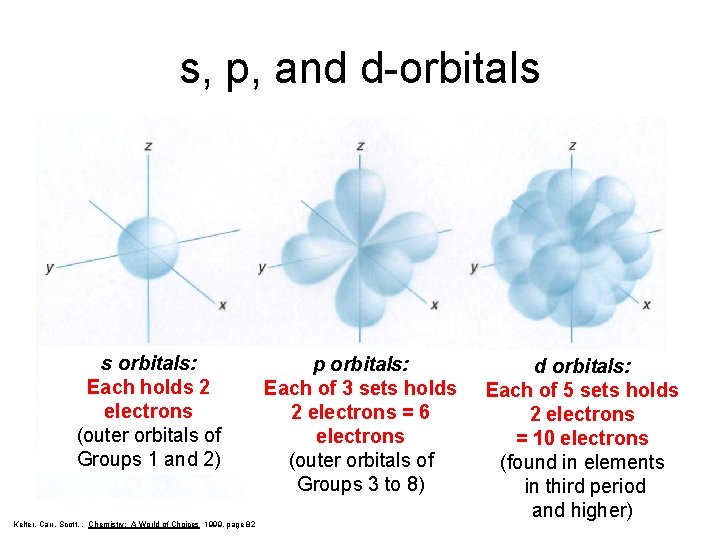
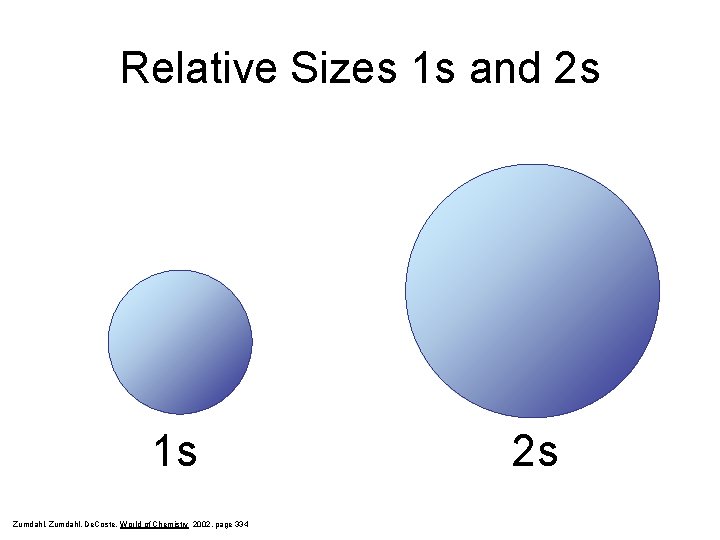
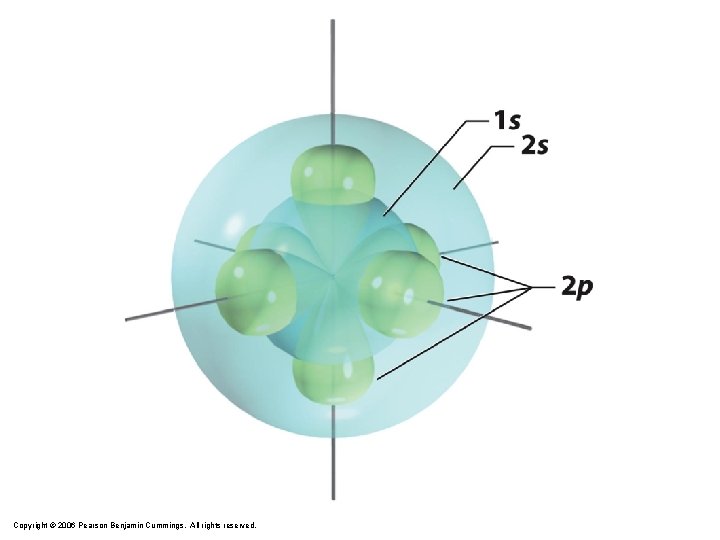
s, p, and d-orbitals s orbitals: Each holds 2 electrons (outer orbitals of Groups 1 and 2) Kelter, Carr, Scott, , Chemistry: A World of Choices 1999, page 82 p orbitals: Each of 3 sets holds 2 electrons = 6 electrons (outer orbitals of Groups 3 to 8) d orbitals: Each of 5 sets holds 2 electrons = 10 electrons (found in elements in third period and higher)
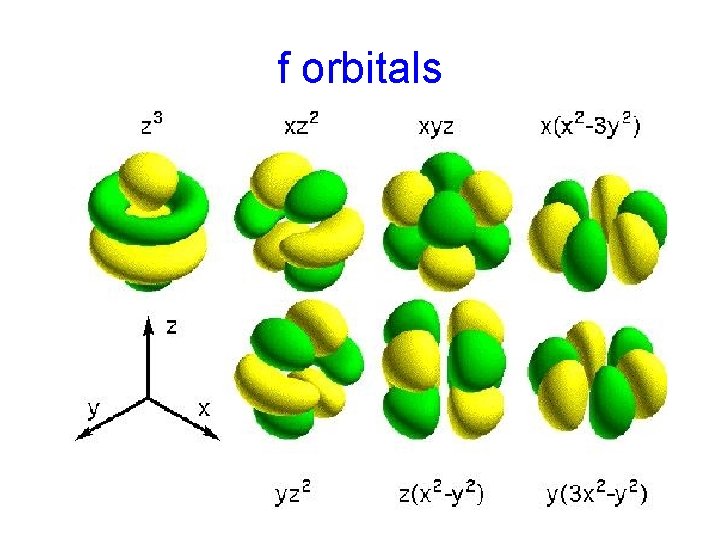
f orbitals
Relative Sizes 1 s and 2 s 1 s Zumdahl, De. Coste, World of Chemistry 2002, page 334 2 s
Copyright © 2006 Pearson Benjamin Cummings. All rights reserved.
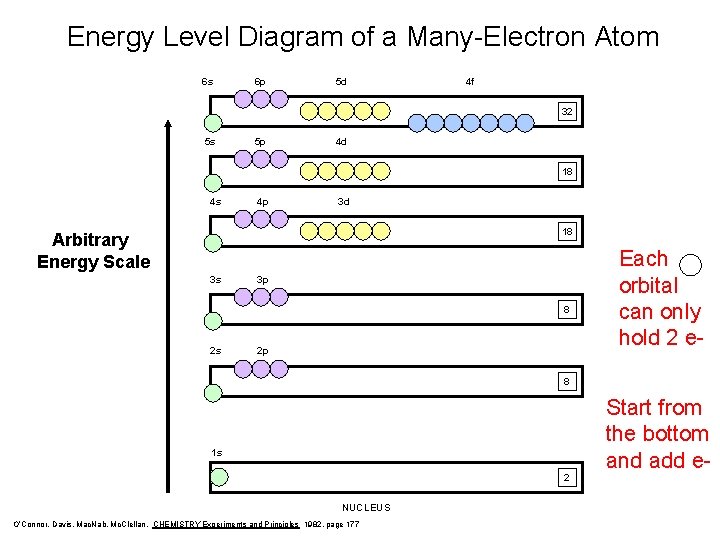
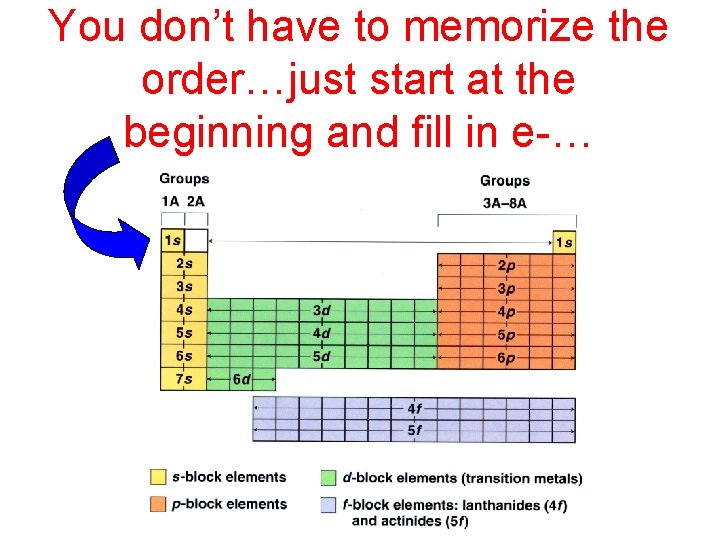
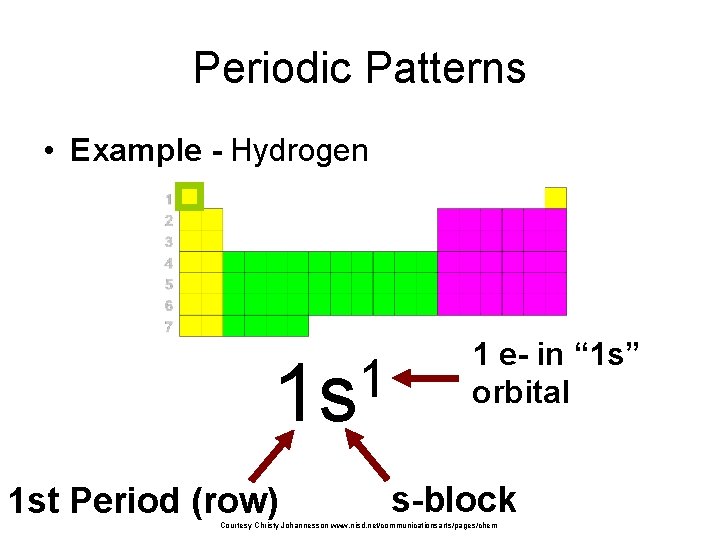
Periodic Patterns p block n s block 1 2 3 4 5 6 7 1 s 1 s 2 s 2 p d block (n-1) 3 s 3 p 4 s 3 d 4 p 5 s 4 d 5 p 6 s 5 d 6 p 7 s 6 d 7 p f (n-2) block 6 7 4 f 5 f
Sections of Periodic Table to Know s-block p-block d-block f-block
Energy Level Diagram of a Many-Electron Atom 6 s 6 p 5 d 4 f 32 5 s 5 p 4 d 18 4 s 4 p 3 d 18 Arbitrary Energy Scale 3 s 3 p 8 2 s 2 p Each orbital can only hold 2 e- 8 1 s 2 NUCLEUS O’Connor, Davis, Mac. Nab, Mc. Clellan, CHEMISTRY Experiments and Principles 1982, page 177 Start from the bottom and add e-
You don’t have to memorize the order…just start at the beginning and fill in e-…
Periodic Patterns • Example - Hydrogen 1 1 s 1 st Period (row) 1 e- in “ 1 s” orbital s-block Courtesy Christy Johannesson www. nisd. net/communicationsarts/pages/chem
Writing Electron Configurations: Where are the e–? (probably) H 1 s 1 He 1 s 2 Li 1 s 2 2 s 1 N 1 s 2 2 p 3 Al 1 s 2 2 p 6 3 s 2 3 p 1 Ti 1 s 2 2 p 6 3 s 2 3 p 6 4 s 2 3 d 2 As 1 s 2 2 p 6 3 s 2 3 p 6 4 s 2 3 d 10 4 p 3 Xe 1 s 2 2 p 6 3 s 2 3 p 6 4 s 2 3 d 10 4 p 6 5 s 2 4 d 10 5 p 6 Filling Order 1 s 2 2 p 6 3 s 2 3 p 6 4 s 2 3 d 10 4 p 6…
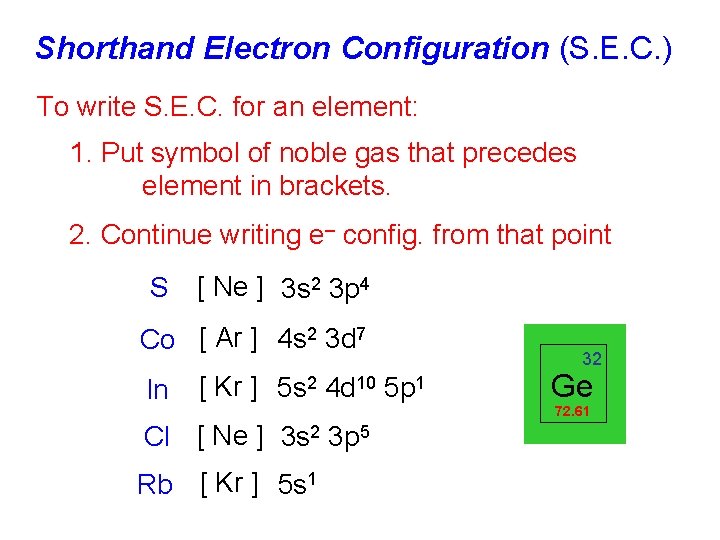
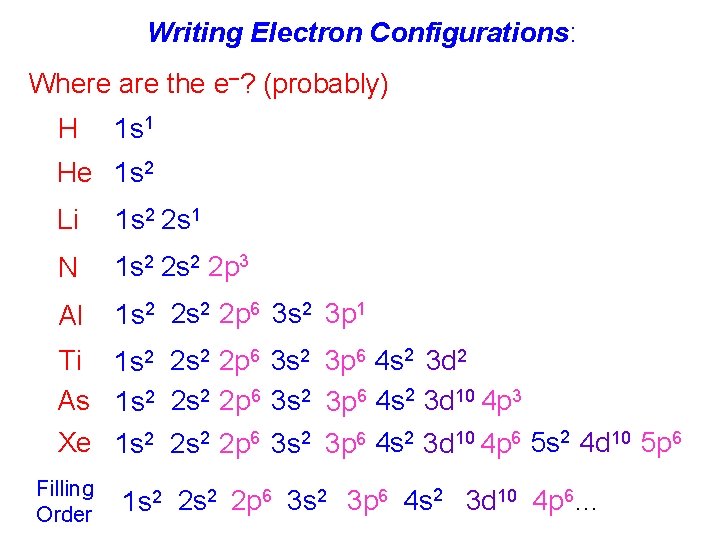
Shorthand Electron Configuration (S. E. C. ) To write S. E. C. for an element: 1. Put symbol of noble gas that precedes element in brackets. 2. Continue writing e– config. from that point S [ Ne ] 3 s 2 3 p 4 Co [ Ar ] 4 s 2 3 d 7 In [ Kr ] 5 s 2 4 d 10 5 p 1 Cl [ Ne ] 3 s 2 3 p 5 Rb [ Kr ] 5 s 1 32 Ge 72. 61
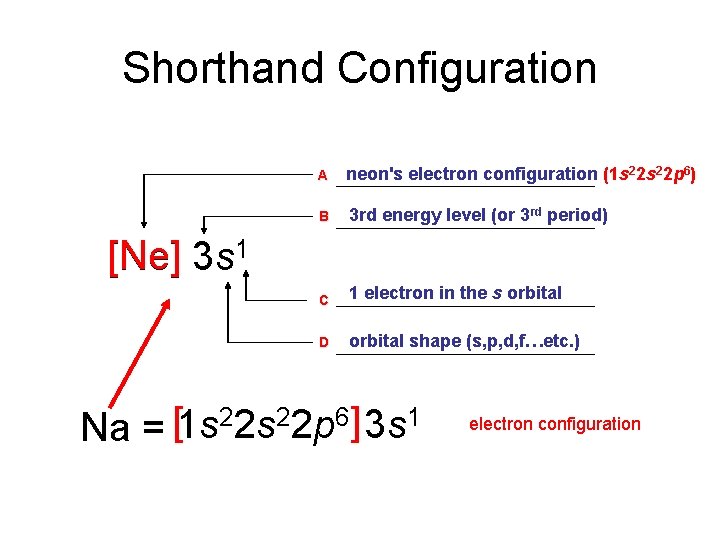
Shorthand Configuration A neon's electron configuration (1 s 22 p 6) B 3 rd energy level (or 3 rd period) C 1 electron in the s orbital D orbital shape (s, p, d, f…etc. ) [Ne] 3 s 1 22 s 22 p 6] 3 s 1 [ 1 s Na = electron configuration
![Shorthand Configuration Review Element symbol Electron configuration Ca [Ar] 4 s 2 V [Ar]](http://slidetodoc.com/presentation_image/1fbc2bf595346af3f17aaa691d2c6ad9/image-60.jpg "Shorthand Configuration Review Element symbol Electron configuration Ca [Ar] 4 s 2 V [Ar]")
Shorthand Configuration Review Element symbol Electron configuration Ca [Ar] 4 s 2 V [Ar] 4 s 2 3 d 3 F [He] 2 s 2 2 p 5 Ag [Kr] 5 s 2 4 d 9 I [Kr] 5 s 2 4 d 10 5 p 5 Xe [Kr] 5 s 2 4 d 10 5 p 6 or [Xe] Fe 22 p 64 s [He] 2 s[Ar] 3 s 223 d 3 p 664 s 23 d 6 Sg [Rn] 7 s 2 5 f 14 6 d 4
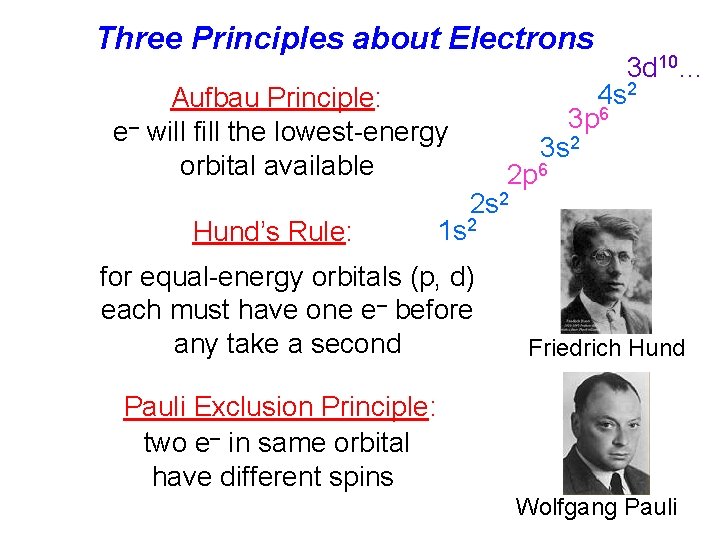
Three Principles about Electrons 4 s 2 3 p 6 3 s 2 Aufbau Principle: e– will fill the lowest-energy orbital available Hund’s Rule: 3 d 10… 2 p 6 2 s 2 1 s 2 for equal-energy orbitals (p, d) each must have one e– before any take a second Friedrich Hund Pauli Exclusion Principle: two e– in same orbital have different spins Wolfgang Pauli
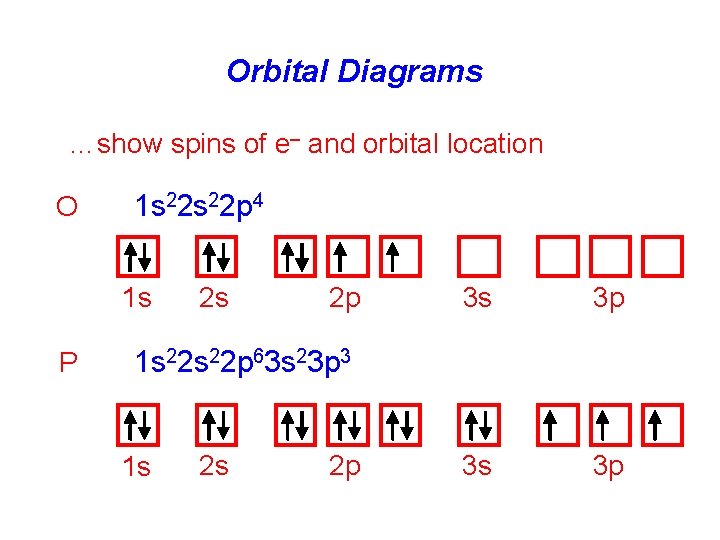
Orbital Diagrams …show spins of e– and orbital location O 1 s 22 p 4 1 s P 2 s 2 p 3 s 3 p 1 s 22 p 63 s 23 p 3 1 s 2 s 2 p
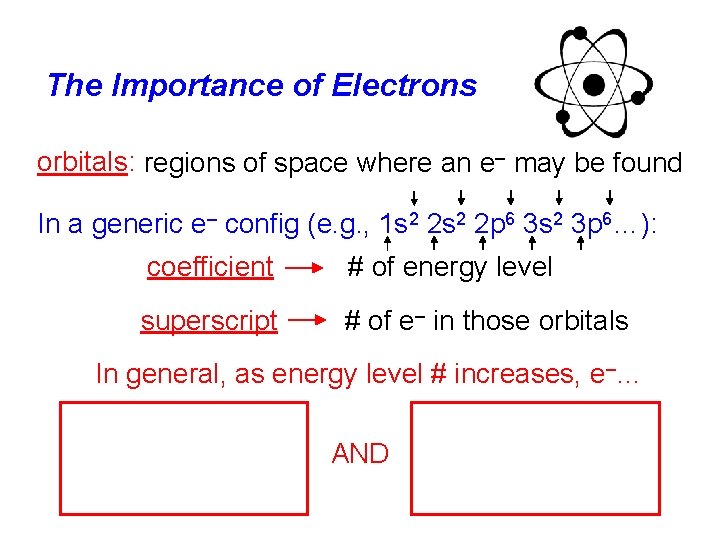
The Importance of Electrons orbitals: regions of space where an e– may be found In a generic e– config (e. g. , 1 s 2 2 p 6 3 s 2 3 p 6…): coefficient # of energy level superscript # of e– in those orbitals In general, as energy level # increases, e–… HAVE MORE ENERGY AND ARE FURTHER FROM NUCLEUS
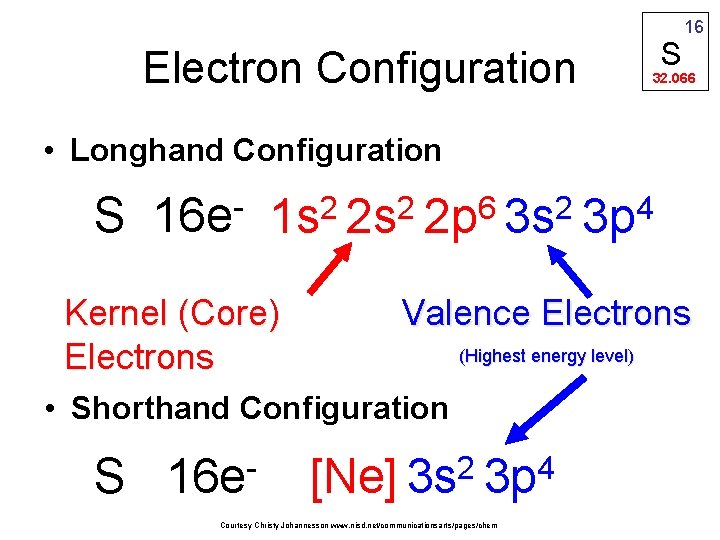
S Electron Configuration 16 32. 066 • Longhand Configuration S 16 e 6 2 2 2 1 s 2 s 2 p 3 s Kernel (Core) Electrons Valence Electrons (Highest energy level) • Shorthand Configuration S 16 e 4 3 p 2 4 [Ne] 3 s 3 p Courtesy Christy Johannesson www. nisd. net/communicationsarts/pages/chem
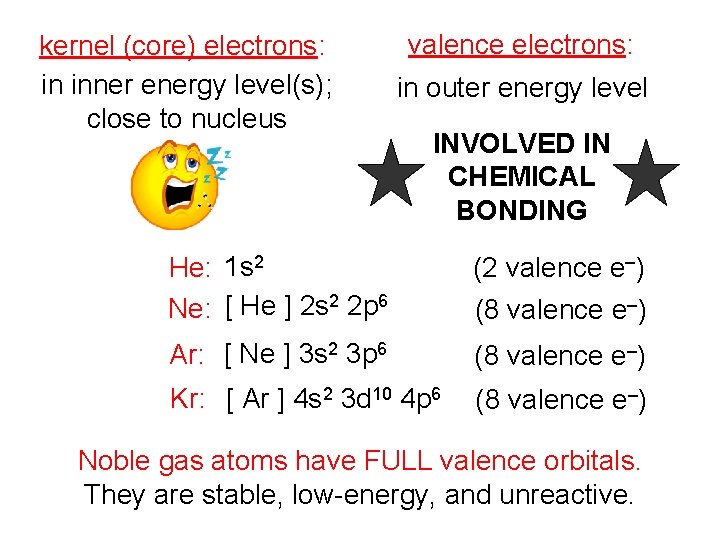
kernel (core) electrons: in inner energy level(s); close to nucleus valence electrons: in outer energy level INVOLVED IN CHEMICAL BONDING He: 1 s 2 Ne: [ He ] 2 s 2 2 p 6 (2 valence e–) Ar: [ Ne ] 3 s 2 3 p 6 (8 valence e–) Kr: [ Ar ] 4 s 2 3 d 10 4 p 6 (8 valence e–) Noble gas atoms have FULL valence orbitals. They are stable, low-energy, and unreactive.
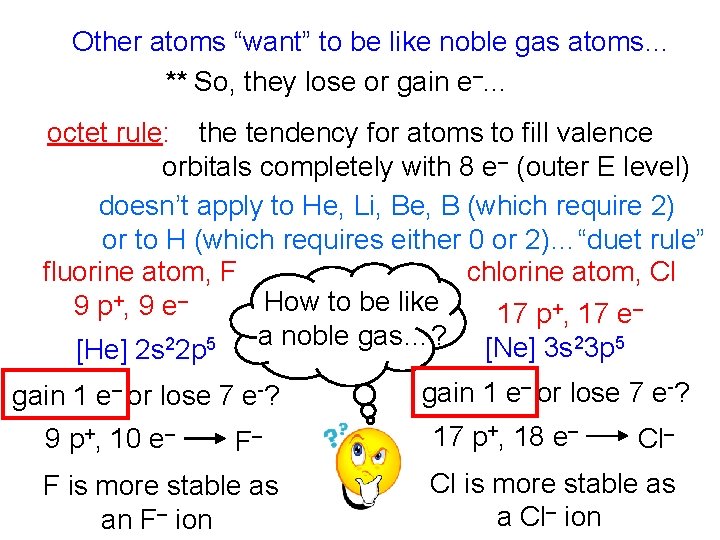
Other atoms “want” to be like noble gas atoms… ** So, they lose or gain e–. . . octet rule: the tendency for atoms to fill valence orbitals completely with 8 e– (outer E level) doesn’t apply to He, Li, Be, B (which require 2) or to H (which requires either 0 or 2)…“duet rule” chlorine atom, Cl fluorine atom, F How to be like 9 p +, 9 e – 17 p+, 17 e– [He] 2 s 22 p 5 a noble gas…? [Ne] 3 s 23 p 5 gain 1 e– or lose 7 e-? 9 p+, 10 e– F– F is more stable as an F– ion gain 1 e– or lose 7 e-? 17 p+, 18 e– Cl is more stable as a Cl– ion
![lithium atom, Li 3 p +, 3 e – [He] 2 s 1 sodium](http://slidetodoc.com/presentation_image/1fbc2bf595346af3f17aaa691d2c6ad9/image-67.jpg "lithium atom, Li 3 p +, 3 e – [He] 2 s 1 sodium")
lithium atom, Li 3 p +, 3 e – [He] 2 s 1 sodium atom, Na How to be like a noble gas…? lose 1 e– or gain 7 e-? 3 p +, 2 e – Li+ Li is more stable as the Li+ ion. 11 p+, 11 e– [Ne] 3 s 1 lose 1 e– or gain 7 e-? 11 p+, 10 e– Na+ Na is more stable as Na+ ion
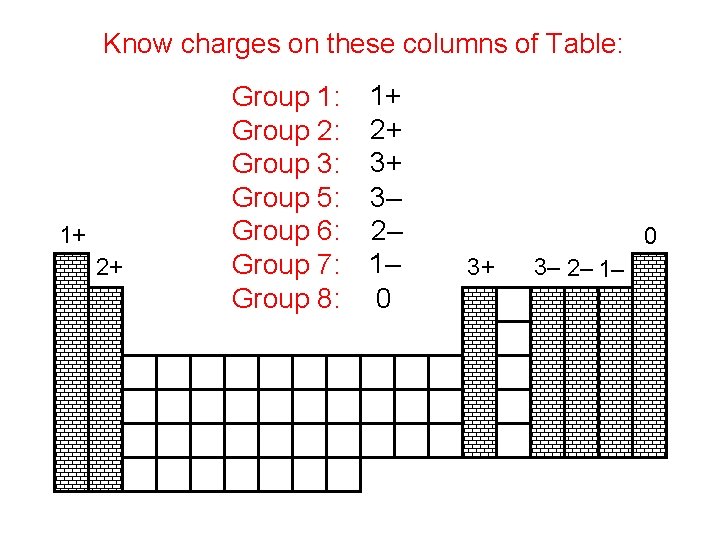
Know charges on these columns of Table: 1+ 2+ Group 1: Group 2: Group 3: Group 5: Group 6: Group 7: Group 8: 1+ 2+ 3+ 3– 2– 1– 0 0 3+ 3– 2– 1–
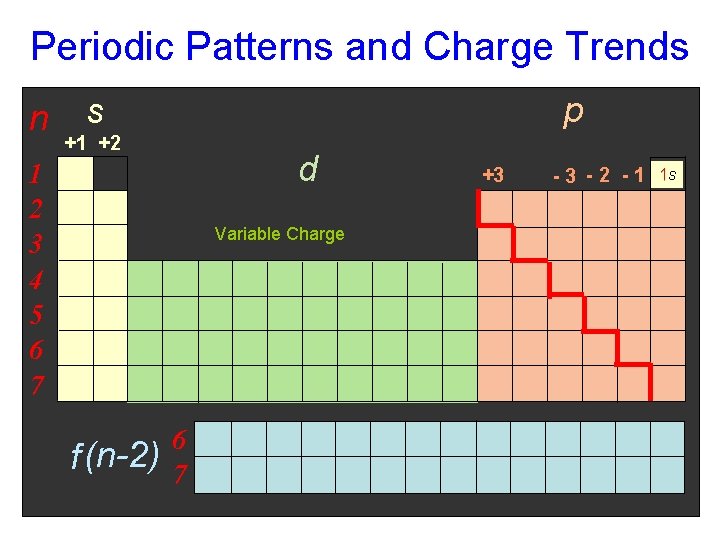
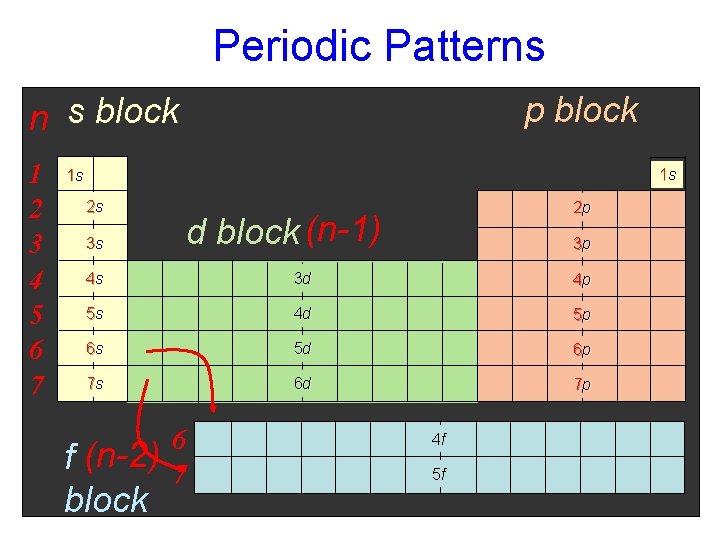
Periodic Patterns and Charge Trends n p s +1 +2 d 1 2 3 4 5 6 7 Variable Charge f (n-2) 6 7 +3 -3 -2 -1 1 s
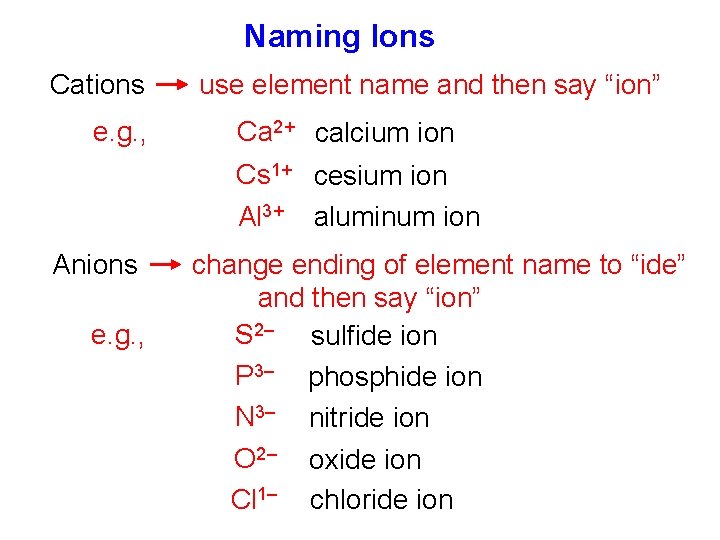
Naming Ions Cations e. g. , use element name and then say “ion” Ca 2+ calcium ion Cs 1+ cesium ion Al 3+ aluminum ion Anions e. g. , change ending of element name to “ide” and then say “ion” S 2– sulfide ion P 3– phosphide ion N 3– nitride ion O 2– oxide ion Cl 1– chloride ion
Extra Slides
- Slides: 71