
Chemistry Review 1 Atomic Structure What should you


- Slides: 38
Chemistry Review 1 Atomic Structure
What should you study? • VOCAB, VOCAB (Auto Pilot, flash cards) • Basic Concepts and Ideas (review book) • Regents type questions with solutions (school Island)
Today’s vocab • • • Atom Alpha Particle Atomic mass Mass number Atomic mass unit Atomic number Beta particle Compound Electron nucleus • • • Electron configuration Electron dot diagram Electron shells Element Empty space concept Excited state Ground state Ion Isotope neutron
Today’s vocab • • Orbital Principal energy level Proton Spectral lines Subatomic particle Valence electron wave mechanical model
• Smallest particle of an element that represents its physical and chemical properties
• Atom
Subatomic particle with a charge of -1 and a mass of 1/1836 of an amu; orbits the nucleus
electron
Substance that can be decomposed by a chemical change; composed of 2 or more elements chemically combined in a definite ratio
compound
An atom with one or more electrons not in the ground state or lowest energy level
Excited state
Atoms with the same number of protons but a different number of neutrons
Isotopes
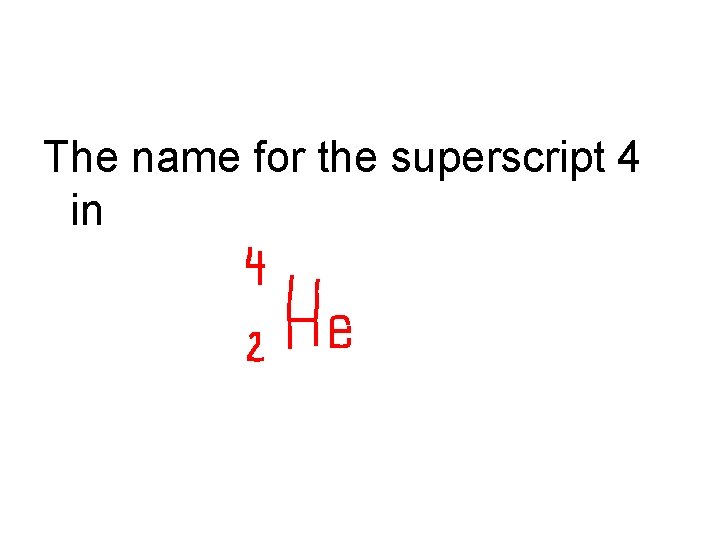
The name for the superscript 4 in
Mass number
Name given to the outermost principal energy level
Valence level
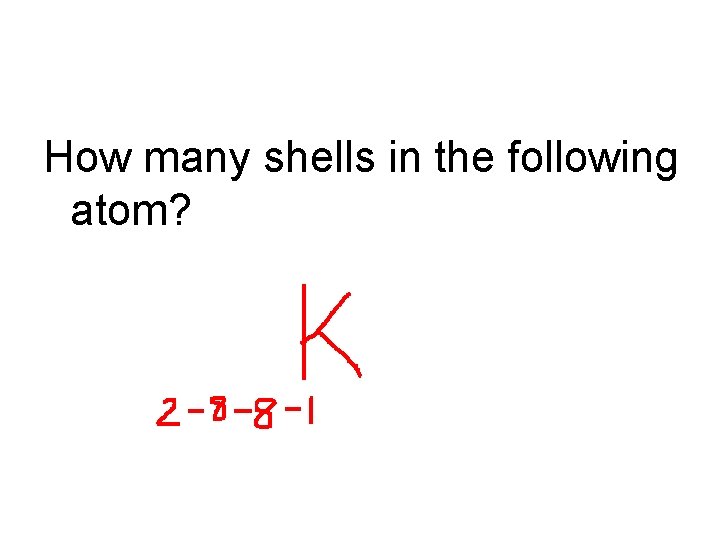
How many shells in the following atom?
Four
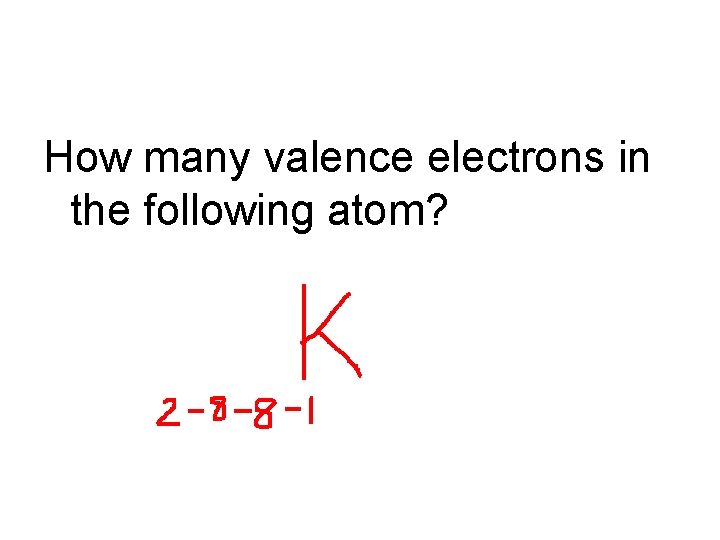
How many valence electrons in the following atom?
one
Region of most probable location of electrons in an atom
orbital
Subatomic particle located in the nucleus with a charge of +1; determines the identity of the element
proton
Weighted average of all the isotopic masses of an element
Atomic mass
1/12 of the mass of a carbon-12 atom
amu or atomic mass unit
Concepts Atoms: What are they made of? How are they put together? How do we know?
Parts • Nucleus has most of mass (protons: +1, neutrons: 0) • Electrons (-, lightweight) orbit in shells
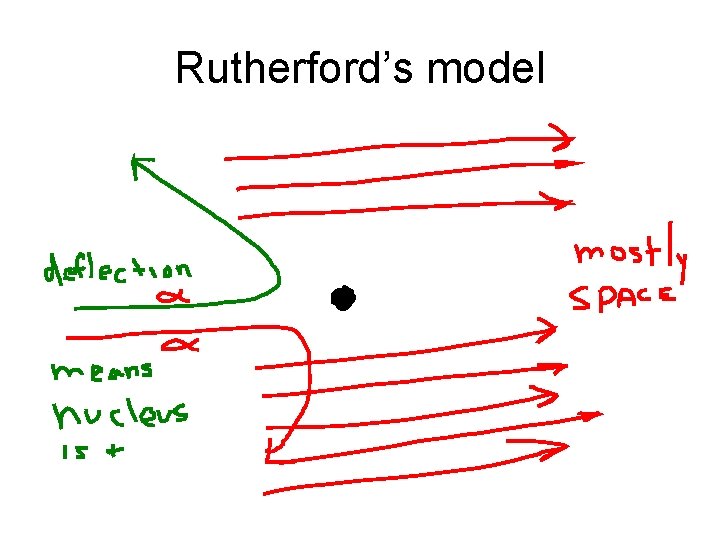
Rutherford’s model
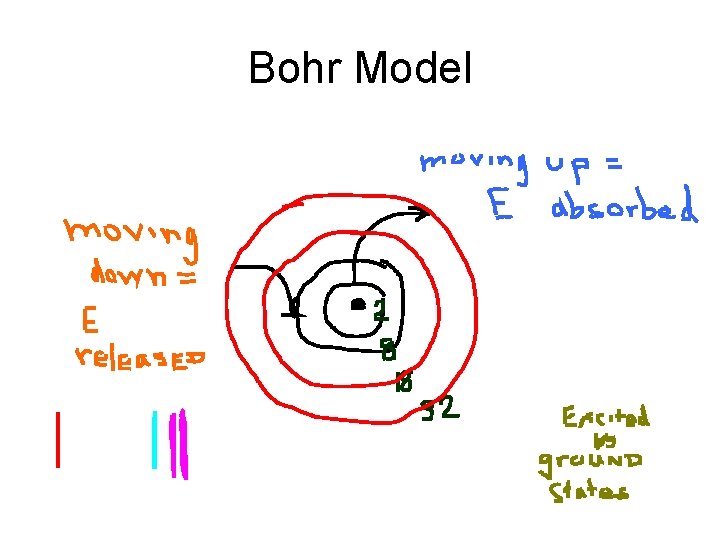
Bohr Model
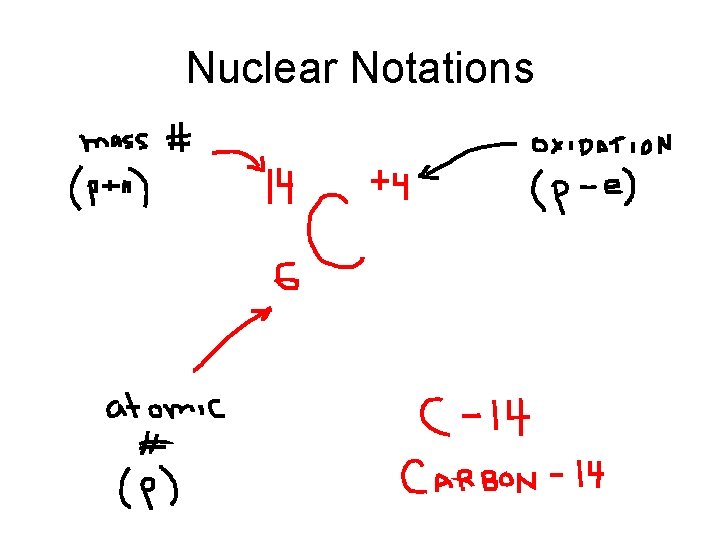
Nuclear Notations
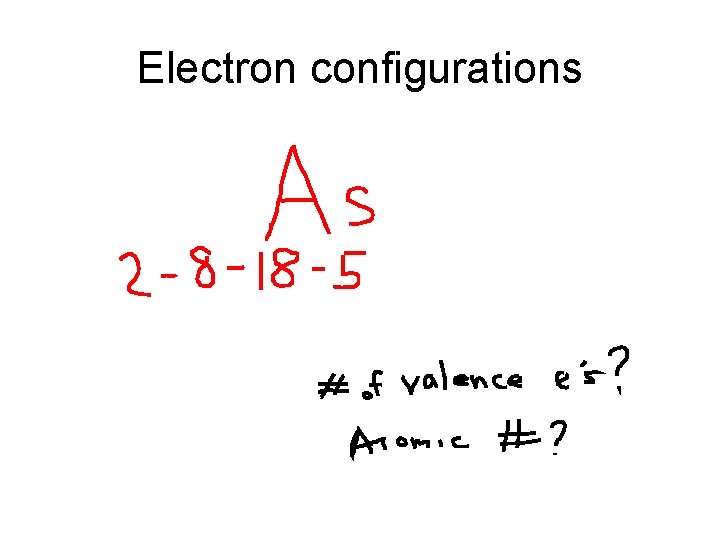
Electron configurations
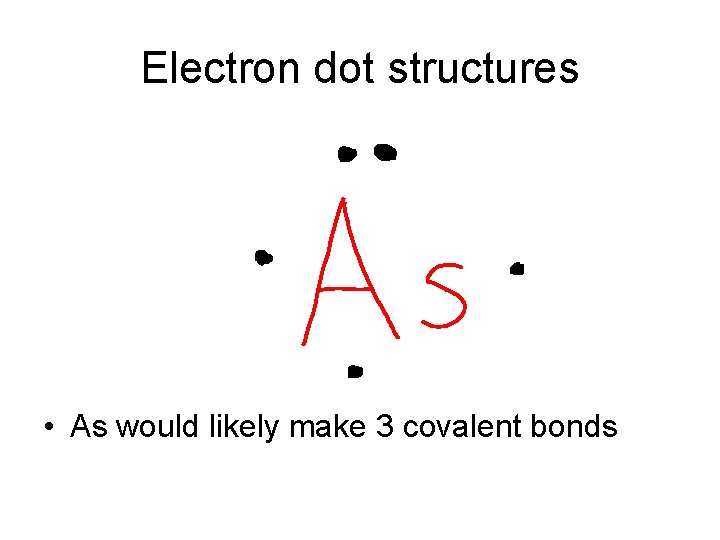
Electron dot structures • As would likely make 3 covalent bonds