
Chemistry of Life CARBOHYDRATES Organic Compound CARBOHYDRATES n
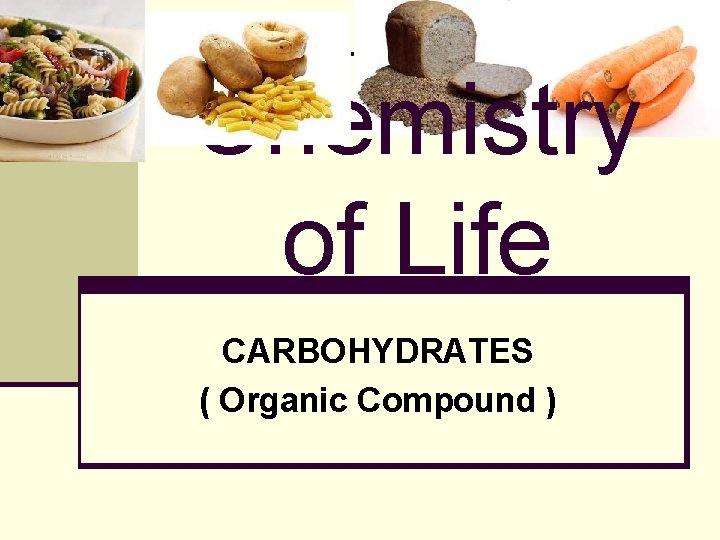
Chemistry of Life CARBOHYDRATES ( Organic Compound )
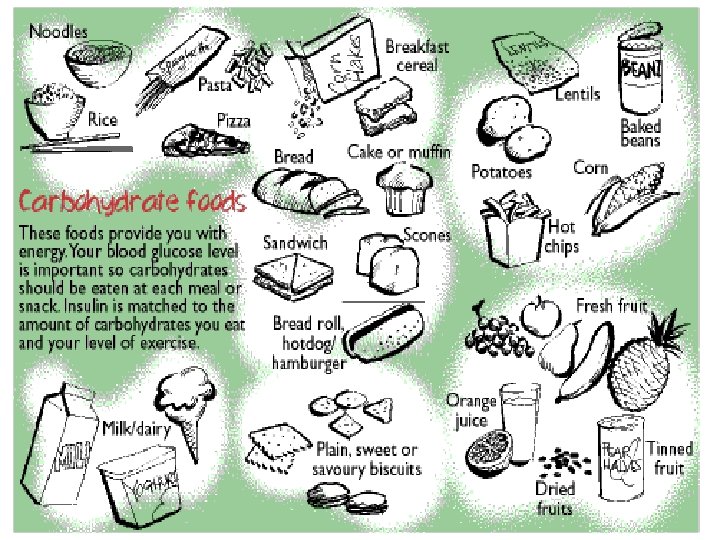
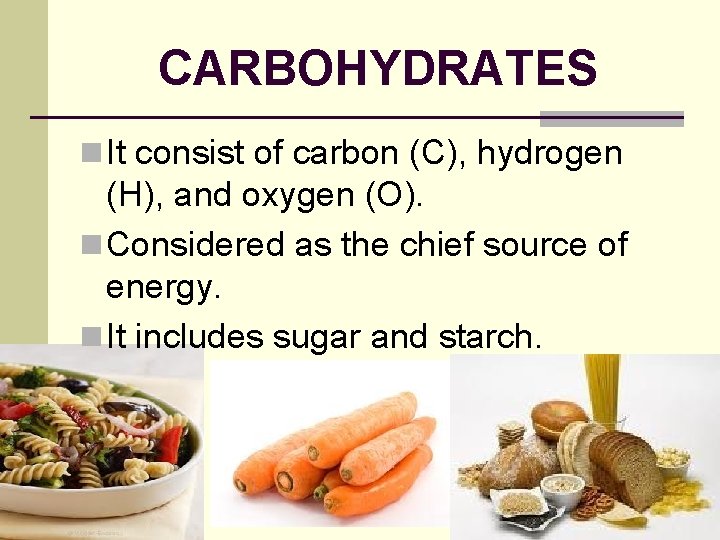
CARBOHYDRATES n It consist of carbon (C), hydrogen (H), and oxygen (O). n Considered as the chief source of energy. n It includes sugar and starch.
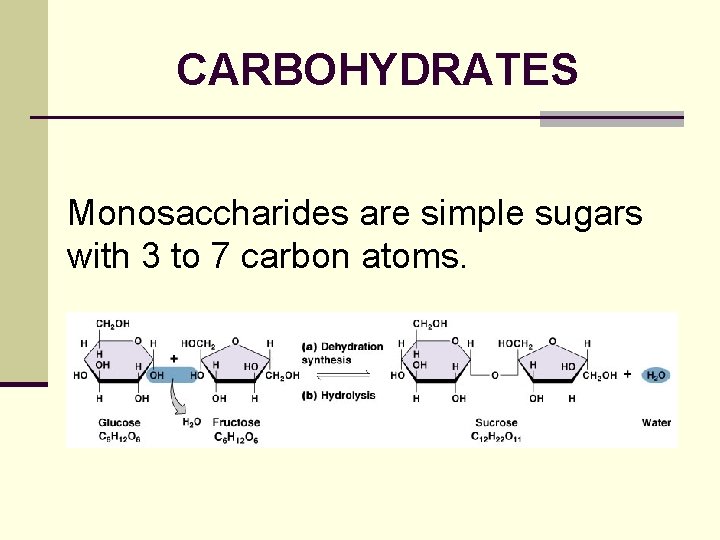
CARBOHYDRATES Monosaccharides are simple sugars with 3 to 7 carbon atoms.
CARBOHYDRATES n Oligosaccharides consist of 2 to 20 monosaccharides. n Polysaccharides consist of tens or hundreds of monosaccharides joined through dehydration synthesis. n Starch, glycogen, dextran, and cellulose are polymers of glucose that are covalently bonded differently. n Chitin is a polymer of two sugars repeating many times. What is Chitin?
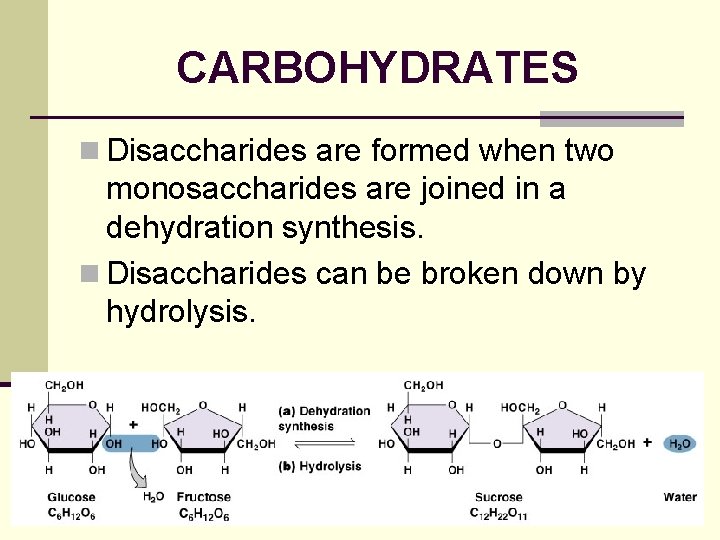
CARBOHYDRATES n Disaccharides are formed when two monosaccharides are joined in a dehydration synthesis. n Disaccharides can be broken down by hydrolysis.
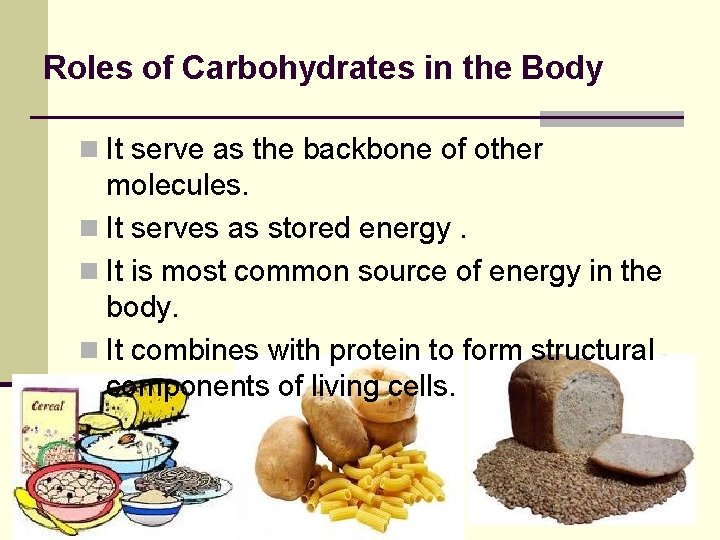
Roles of Carbohydrates in the Body n It serve as the backbone of other molecules. n It serves as stored energy. n It is most common source of energy in the body. n It combines with protein to form structural components of living cells.
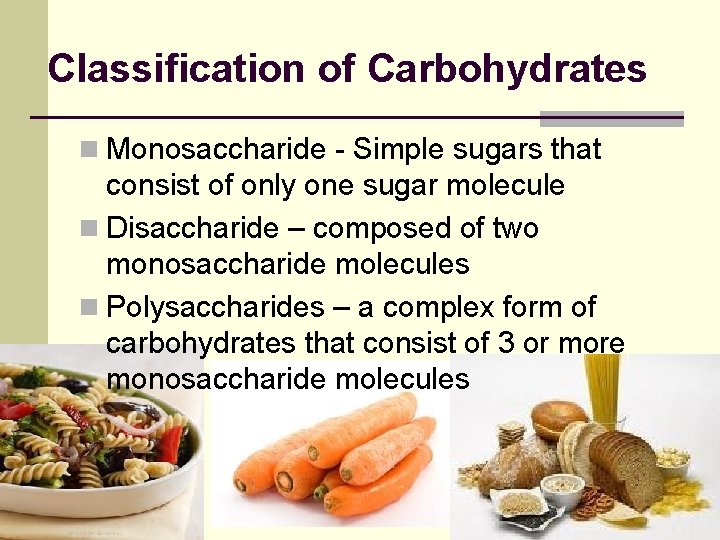
Classification of Carbohydrates n Monosaccharide - Simple sugars that consist of only one sugar molecule n Disaccharide – composed of two monosaccharide molecules n Polysaccharides – a complex form of carbohydrates that consist of 3 or more monosaccharide molecules
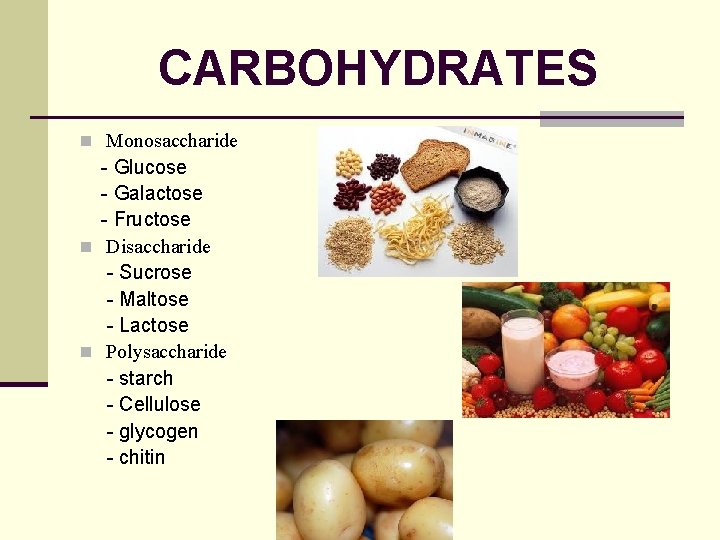
CARBOHYDRATES n Monosaccharide - Glucose - Galactose - Fructose n Disaccharide - Sucrose - Maltose - Lactose n Polysaccharide - starch - Cellulose - glycogen - chitin
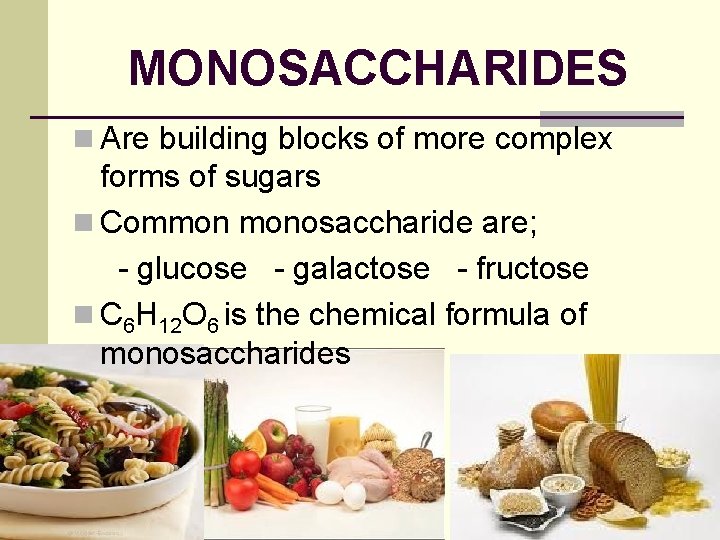
MONOSACCHARIDES n Are building blocks of more complex forms of sugars n Common monosaccharide are; - glucose - galactose - fructose n C 6 H 12 O 6 is the chemical formula of monosaccharides
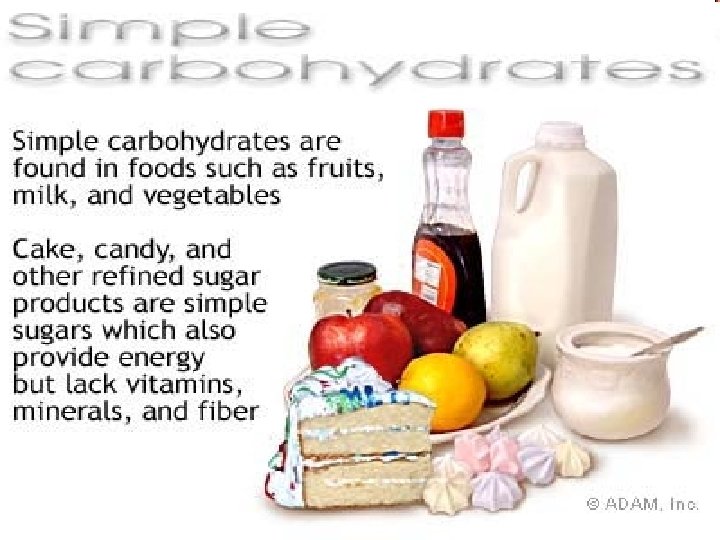
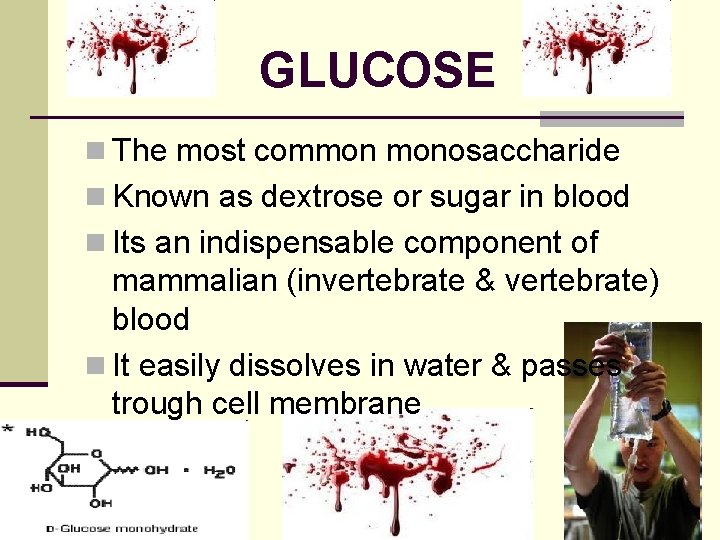
GLUCOSE n The most common monosaccharide n Known as dextrose or sugar in blood n Its an indispensable component of mammalian (invertebrate & vertebrate) blood n It easily dissolves in water & passes trough cell membrane
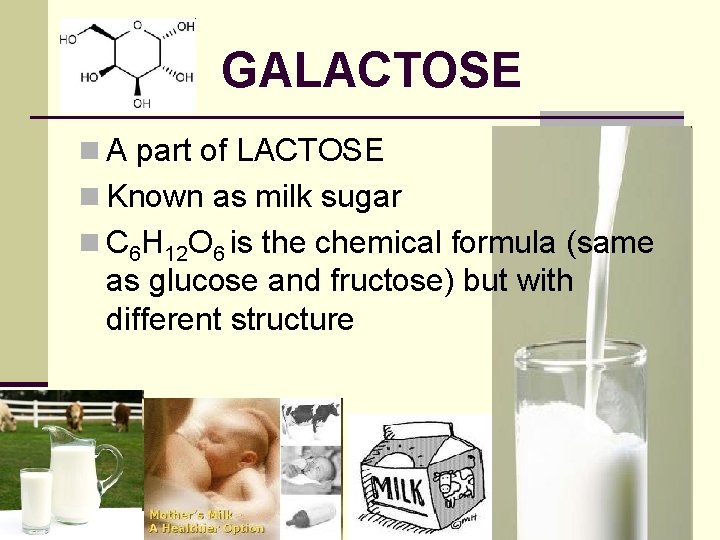
GALACTOSE n A part of LACTOSE n Known as milk sugar n C 6 H 12 O 6 is the chemical formula (same as glucose and fructose) but with different structure
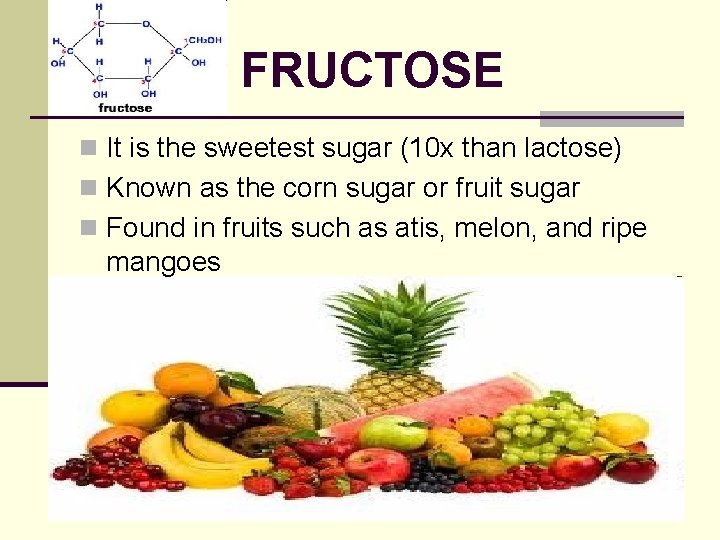
FRUCTOSE n It is the sweetest sugar (10 x than lactose) n Known as the corn sugar or fruit sugar n Found in fruits such as atis, melon, and ripe mangoes
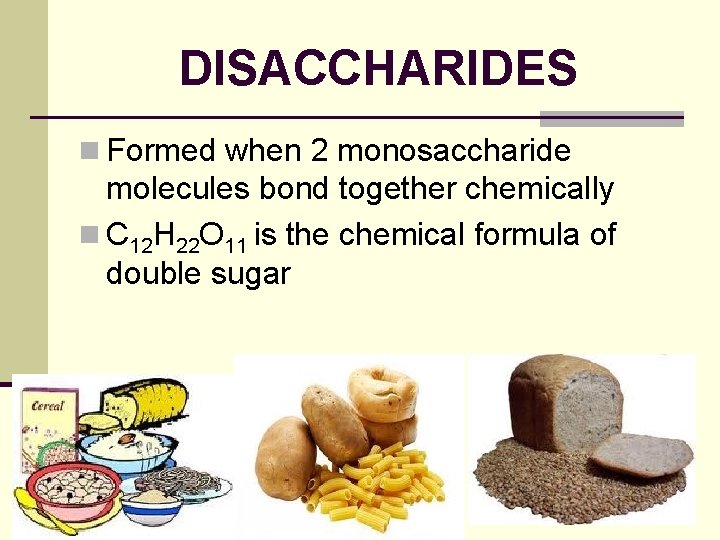
DISACCHARIDES n Formed when 2 monosaccharide molecules bond together chemically n C 12 H 22 O 11 is the chemical formula of double sugar
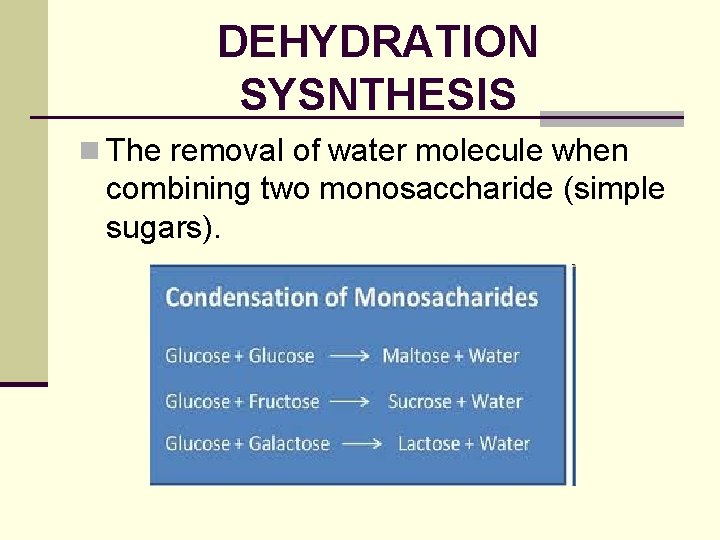
DEHYDRATION SYSNTHESIS n The removal of water molecule when combining two monosaccharide (simple sugars).
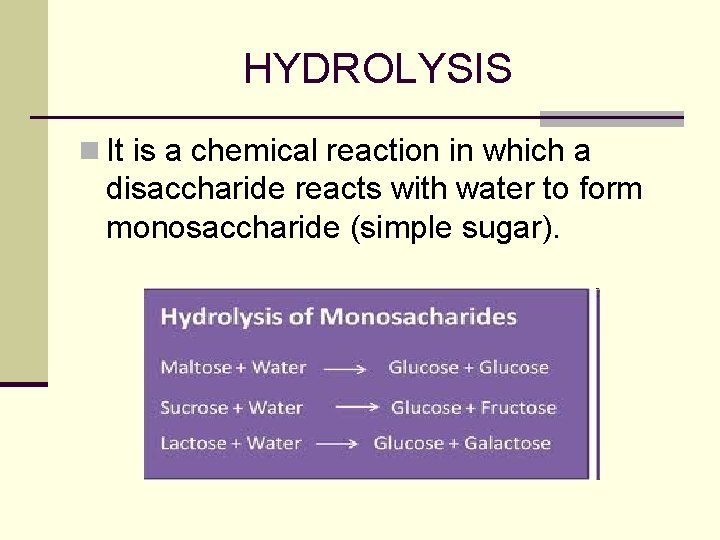
HYDROLYSIS n It is a chemical reaction in which a disaccharide reacts with water to form monosaccharide (simple sugar).
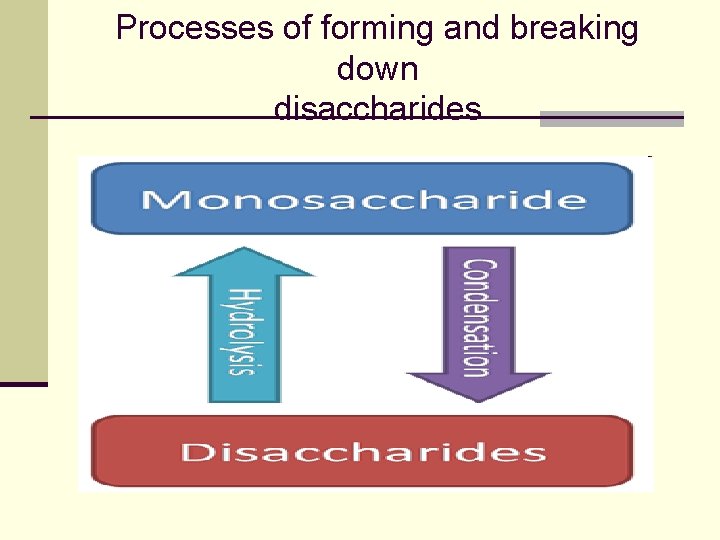
Processes of forming and breaking down disaccharides
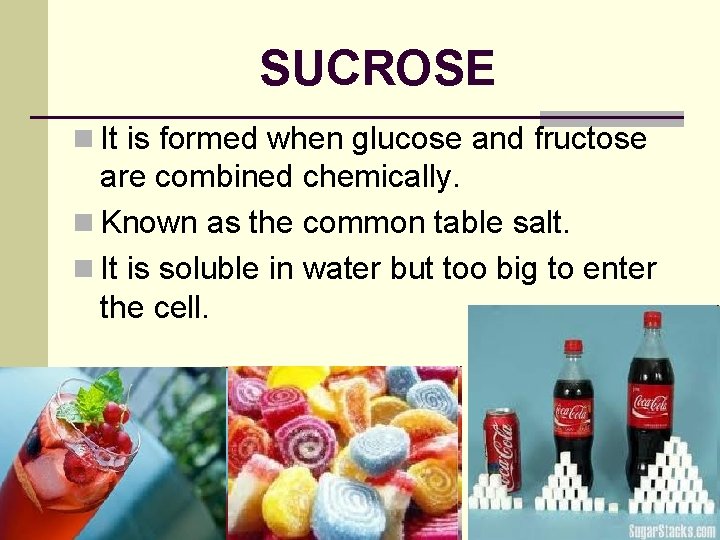
SUCROSE n It is formed when glucose and fructose are combined chemically. n Known as the common table salt. n It is soluble in water but too big to enter the cell.
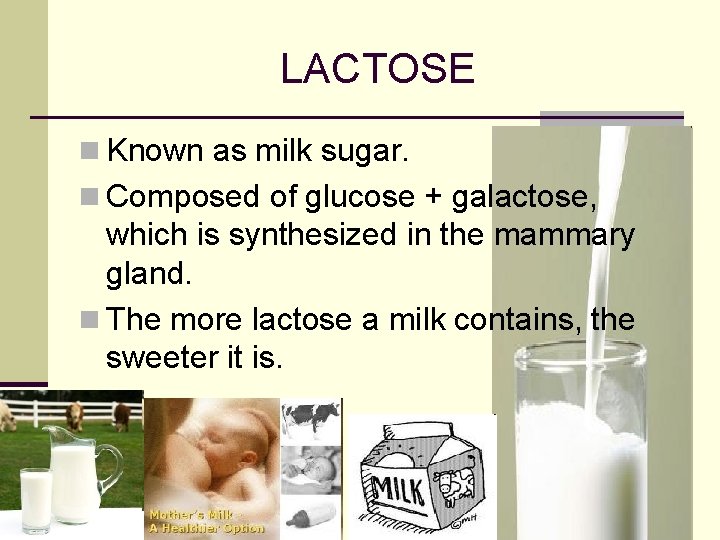
LACTOSE n Known as milk sugar. n Composed of glucose + galactose, which is synthesized in the mammary gland. n The more lactose a milk contains, the sweeter it is.
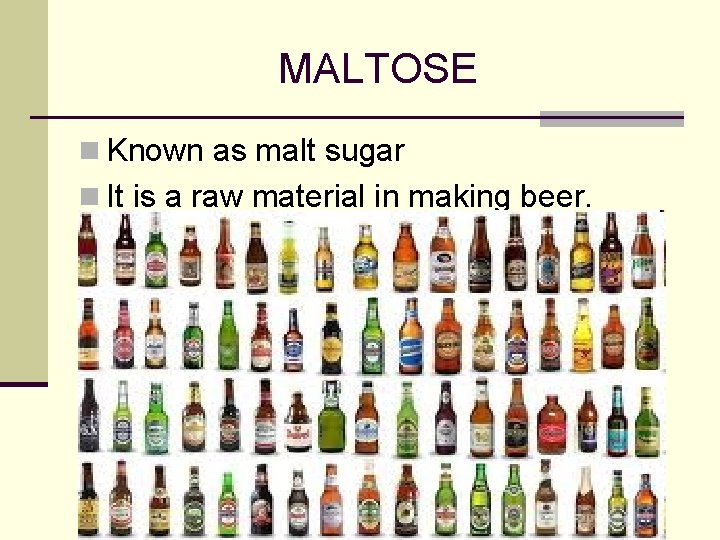
MALTOSE n Known as malt sugar n It is a raw material in making beer.
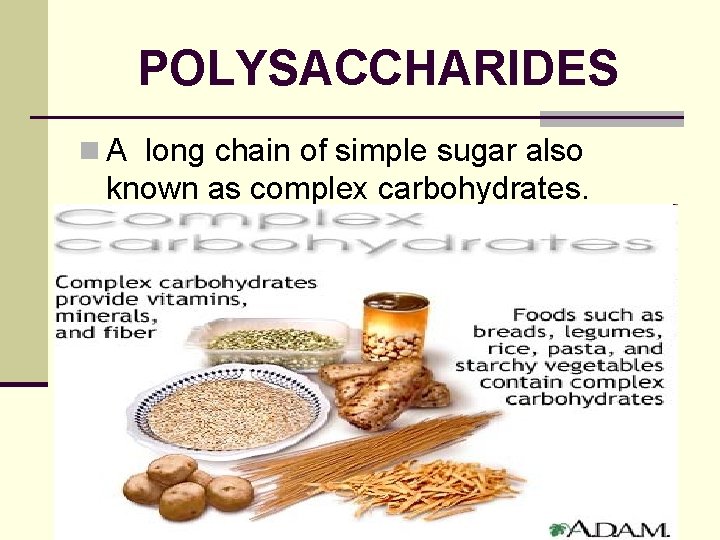
POLYSACCHARIDES n A long chain of simple sugar also known as complex carbohydrates.
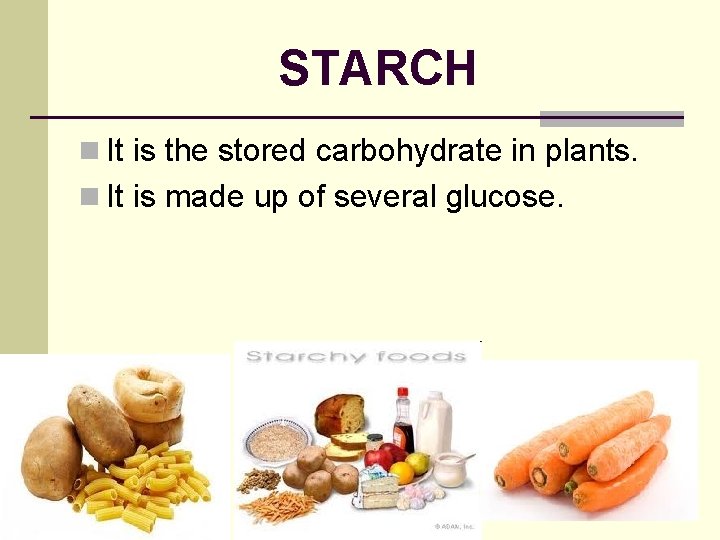
STARCH n It is the stored carbohydrate in plants. n It is made up of several glucose.
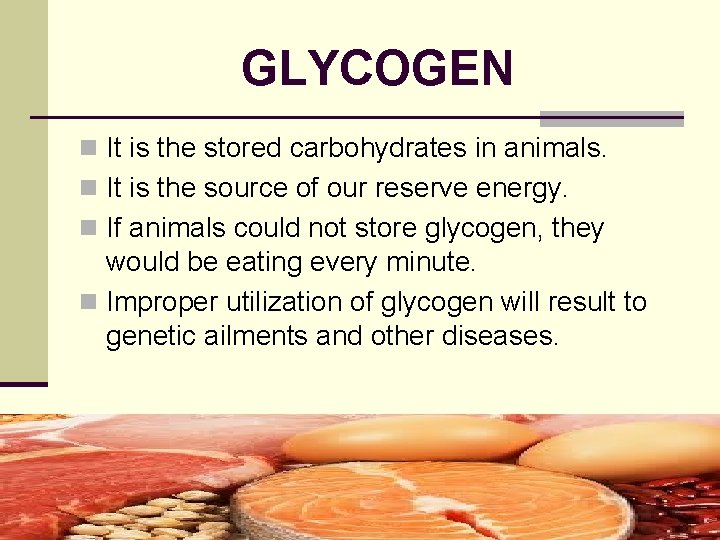
GLYCOGEN n It is the stored carbohydrates in animals. n It is the source of our reserve energy. n If animals could not store glycogen, they would be eating every minute. n Improper utilization of glycogen will result to genetic ailments and other diseases.
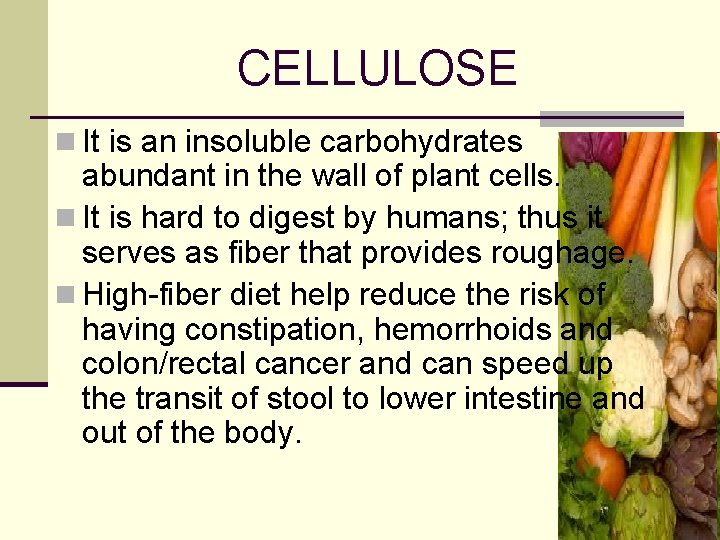
CELLULOSE n It is an insoluble carbohydrates abundant in the wall of plant cells. n It is hard to digest by humans; thus it serves as fiber that provides roughage. n High-fiber diet help reduce the risk of having constipation, hemorrhoids and colon/rectal cancer and can speed up the transit of stool to lower intestine and out of the body.
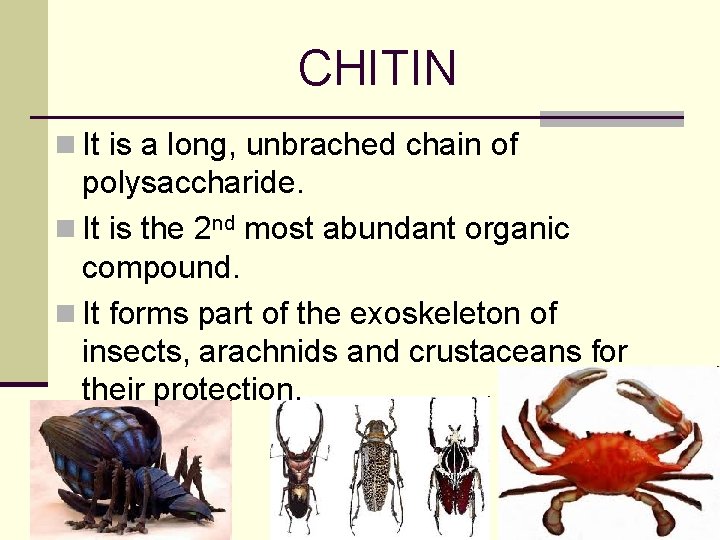
CHITIN n It is a long, unbrached chain of polysaccharide. n It is the 2 nd most abundant organic compound. n It forms part of the exoskeleton of insects, arachnids and crustaceans for their protection.
Side effects of Carbohydrates n Excessive carbohydrates can cause an increase in total caloric intake, causing obesity and pancreatic cancer in women. n Deficient carbohydrates can cause a lack of calories (malnutrition) or excessive intake of fat to make up the calories. n Low-fat, high-carbohydrate diets contribute to hyperinsulinemia and hypertriglyceridemia.
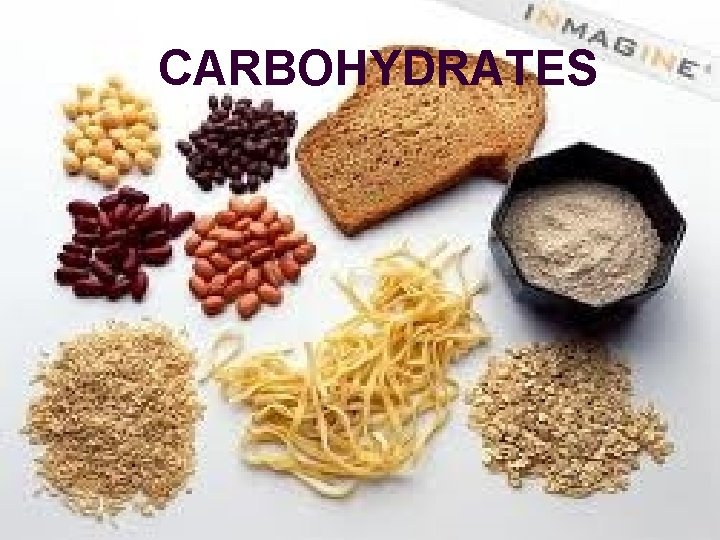
CARBOHYDRATES
- Slides: 28