
Chemistry of Life Atoms Ions Molecules and Water
- Slides: 14
Chemistry of Life: Atoms, Ions, Molecules, and Water August 13 & 14 Lecture and Lab Rotations
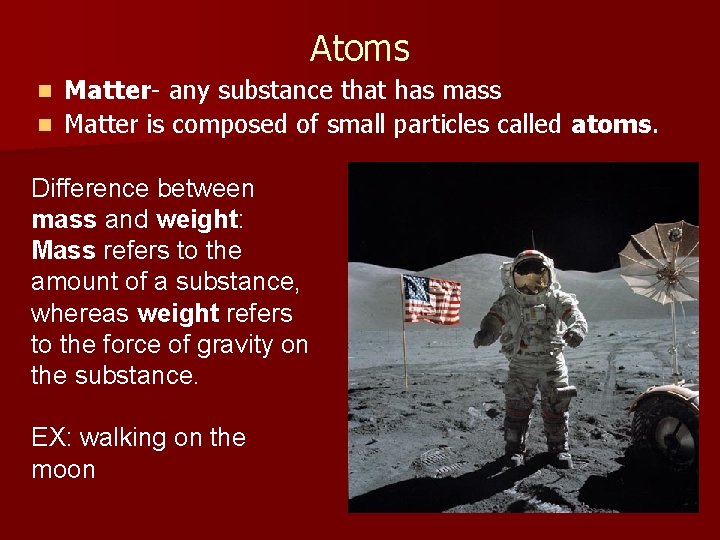
Atoms Matter- any substance that has mass n Matter is composed of small particles called atoms. n Difference between mass and weight: Mass refers to the amount of a substance, whereas weight refers to the force of gravity on the substance. EX: walking on the moon
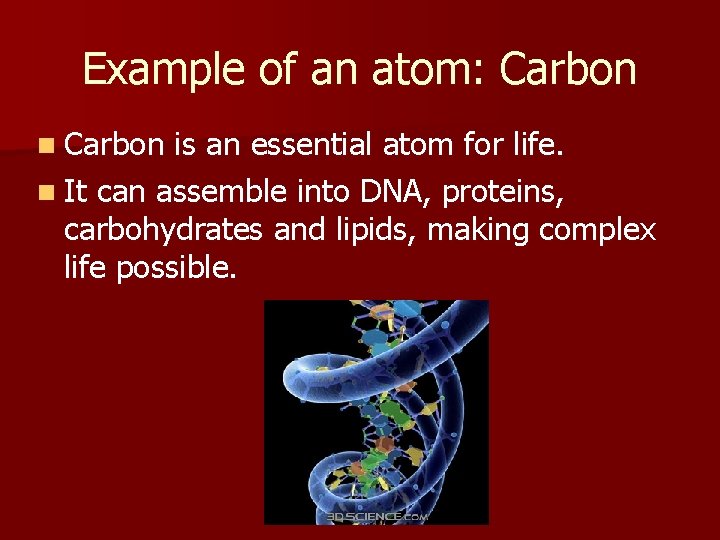
Example of an atom: Carbon n Carbon is an essential atom for life. n It can assemble into DNA, proteins, carbohydrates and lipids, making complex life possible.
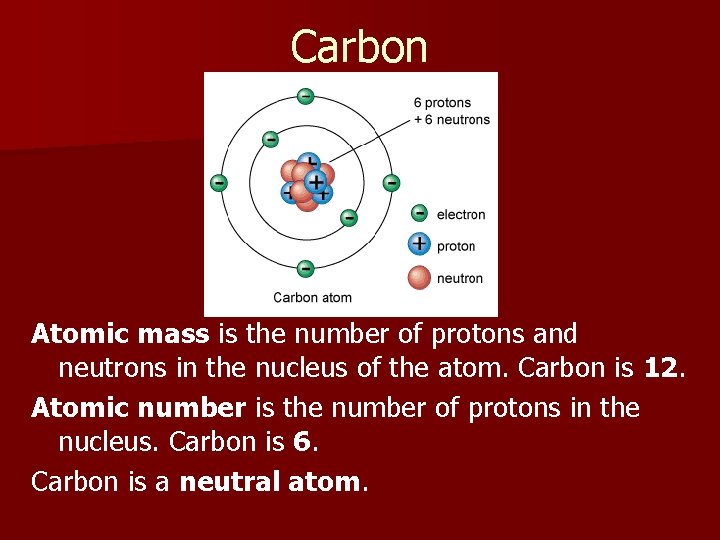
Carbon Atomic mass is the number of protons and neutrons in the nucleus of the atom. Carbon is 12. Atomic number is the number of protons in the nucleus. Carbon is 6. Carbon is a neutral atom.
Element Atoms with the same atomic number (same number of protons) have the same chemical properties and belong to the same element.
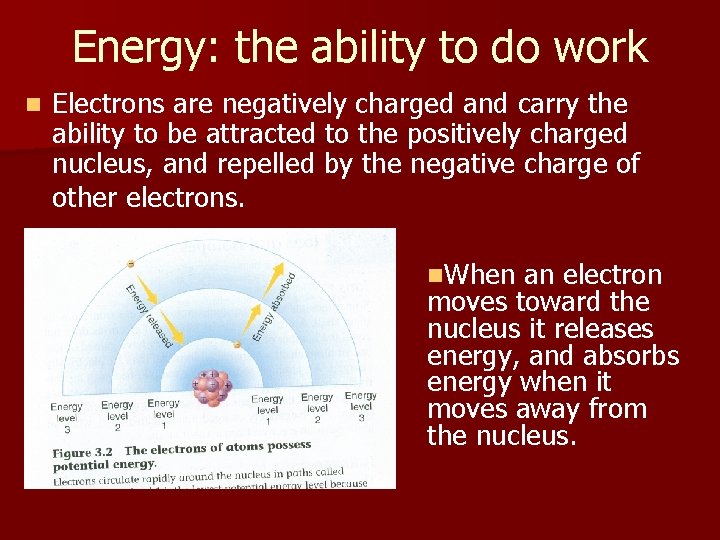
Energy: the ability to do work n Electrons are negatively charged and carry the ability to be attracted to the positively charged nucleus, and repelled by the negative charge of other electrons. n. When an electron moves toward the nucleus it releases energy, and absorbs energy when it moves away from the nucleus.
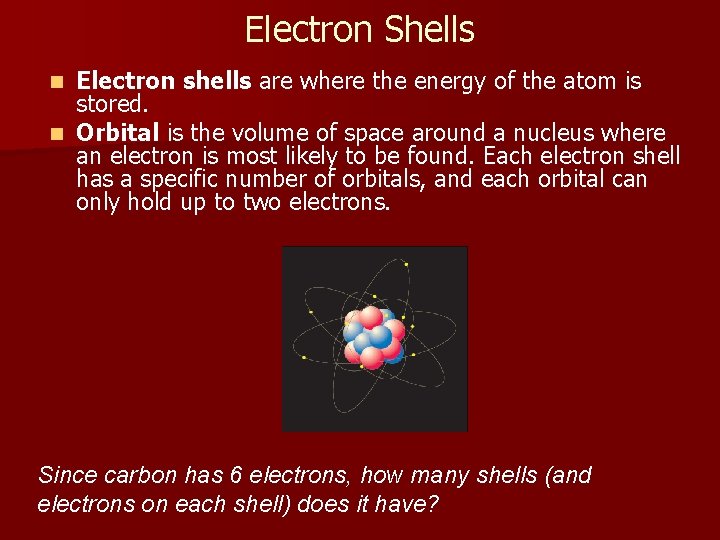
Electron Shells Electron shells are where the energy of the atom is stored. n Orbital is the volume of space around a nucleus where an electron is most likely to be found. Each electron shell has a specific number of orbitals, and each orbital can only hold up to two electrons. n Since carbon has 6 electrons, how many shells (and electrons on each shell) does it have?
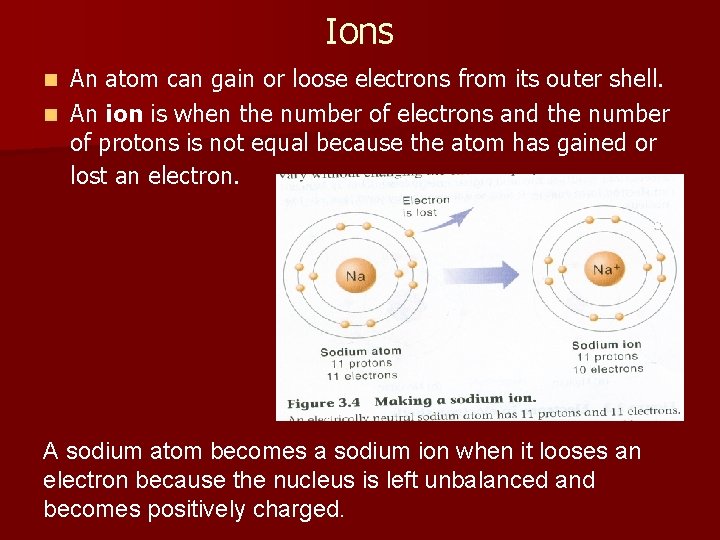
Ions An atom can gain or loose electrons from its outer shell. n An ion is when the number of electrons and the number of protons is not equal because the atom has gained or lost an electron. n A sodium atom becomes a sodium ion when it looses an electron because the nucleus is left unbalanced and becomes positively charged.
Isotopes n An isotope is an atom that has the same number of protons but different number of neutrons. n The number of neutrons in an atom of a particular element can vary without changing the properties of the element. n Isotopes have the same atomic number, but different atomic mass.
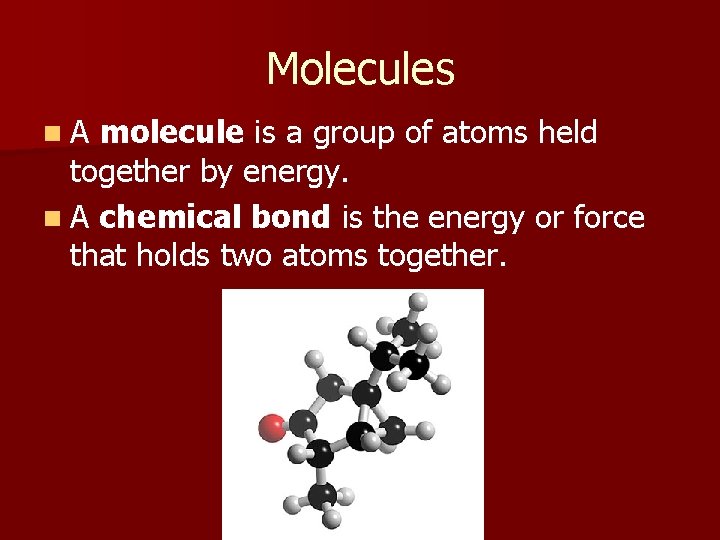
Molecules n. A molecule is a group of atoms held together by energy. n A chemical bond is the energy or force that holds two atoms together.
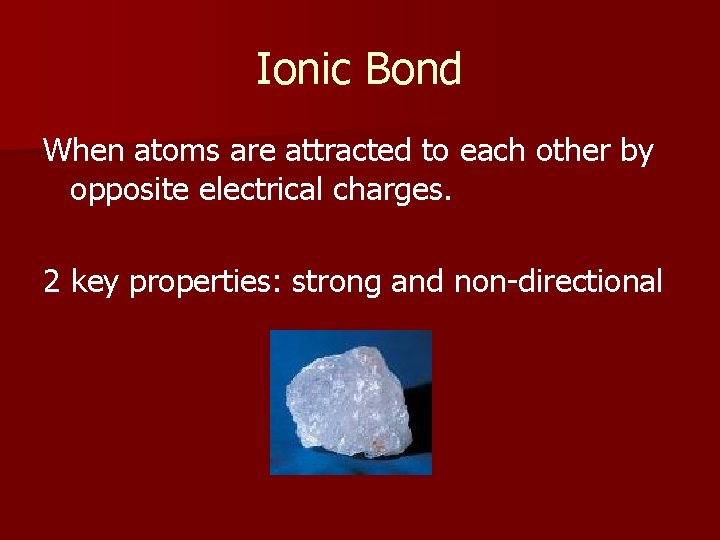
Ionic Bond When atoms are attracted to each other by opposite electrical charges. 2 key properties: strong and non-directional
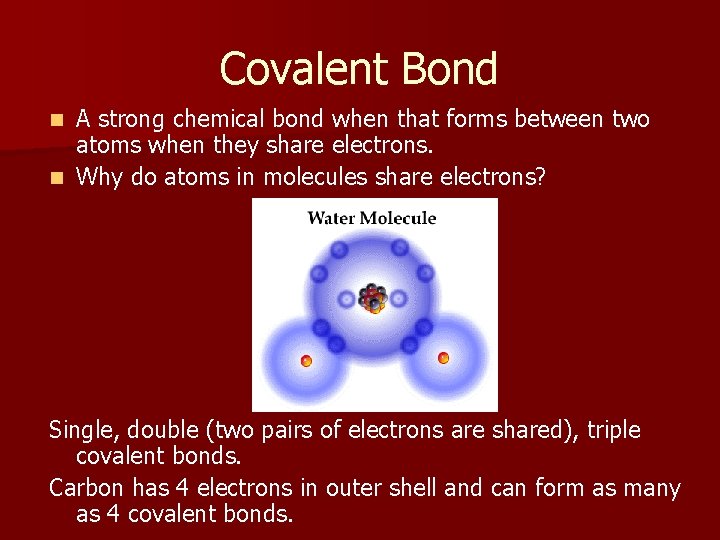
Covalent Bond A strong chemical bond when that forms between two atoms when they share electrons. n Why do atoms in molecules share electrons? n Single, double (two pairs of electrons are shared), triple covalent bonds. Carbon has 4 electrons in outer shell and can form as many as 4 covalent bonds.
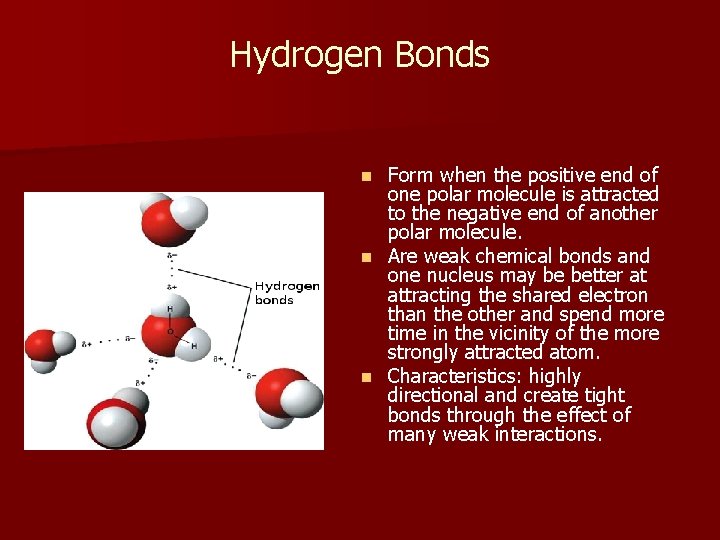
Hydrogen Bonds Form when the positive end of one polar molecule is attracted to the negative end of another polar molecule. n Are weak chemical bonds and one nucleus may be better at attracting the shared electron than the other and spend more time in the vicinity of the more strongly attracted atom. n Characteristics: highly directional and create tight bonds through the effect of many weak interactions. n
Hydrogen bonds give water unique properties: Heat storage- it takes water a long time to boil and cool n Ice formation- Why is ice less dense than water? n High heat of vaporization- water can evaporate n Cohesion (ability to bind to other polar molecules that are water; when this polar substance is not water, it is adhesion) n High polarity- hydrophilic and hydrophobic n