
Chemistry of Food Carbohydrates Carbohydrates Bonds of Carbon
Chemistry of Food Carbohydrates
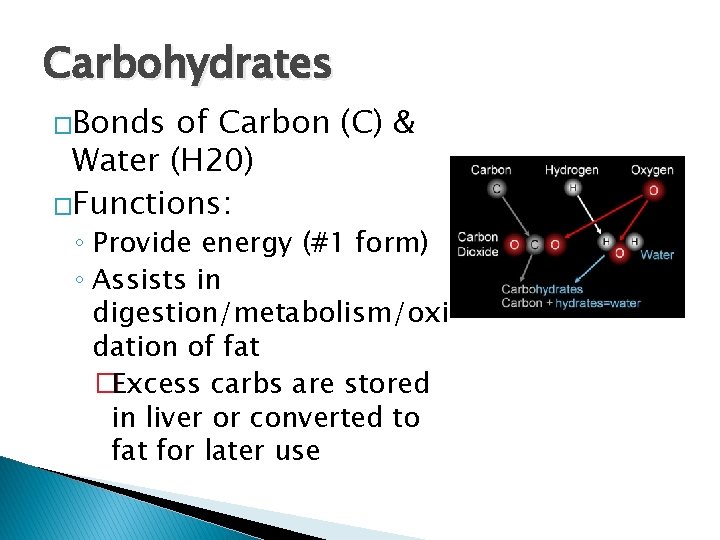
Carbohydrates �Bonds of Carbon (C) & Water (H 20) �Functions: ◦ Provide energy (#1 form) ◦ Assists in digestion/metabolism/oxi dation of fat �Excess carbs are stored in liver or converted to fat for later use

2 Types – Simple and Complex �Hypothesize with reasoning which of your samples is simple and which is complex – be ready to share.

Simple Carbohydrates � Quick energy sources, but they do not usually supply any other nutrients or fiber � Ex: SUGARS - Glucose is the major kind of simple sugar. Glucose is the basic source of energy for all living things ◦ Glucose supplies the body with quick energy. ◦ Occurs naturally in some fruits and vegetables and is also produced in the body by breaking down other foods into glucose
Complex Carbohydrates �Supply long term energy and other nutrients and fiber that the body needs. �Healthier choice ◦ Ex: STARCH - in the body breaks down into simple sugars. The body has to break down all sugar/starch into glucose to use it. Starch supplies the body with long, sustained energy.
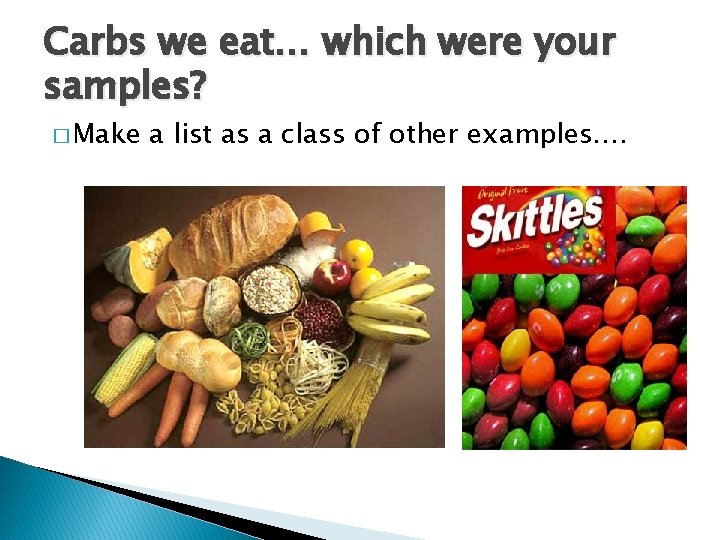
Carbs we eat… which were your samples? � Make a list as a class of other examples….
Examples: � SIMPLE CARBOHYDRATE: ◦ Sugar - fruit, fruit juice, table sugar, honey, soft drinks, and other sweets � COMPLEX CARBOHYDRATE: ◦ Starch - bread, cereal, potatoes, pasta, rice, and legumes (dried peas and beans) ◦ Fiber - bran, whole-grain foods, raw vegetables and fruit (especially the seeds and skins), legumes, nuts, seeds and popcorn

Questions/Comments on Simple VS Complex Carbs?
Carbohydrates � Make up 60% of the food we consume daily � Usually from a PLANT origin as well as milk (lactose) FIVE types of simple sugars (simple carbohydrates) exist – can you hypothesize what they are?
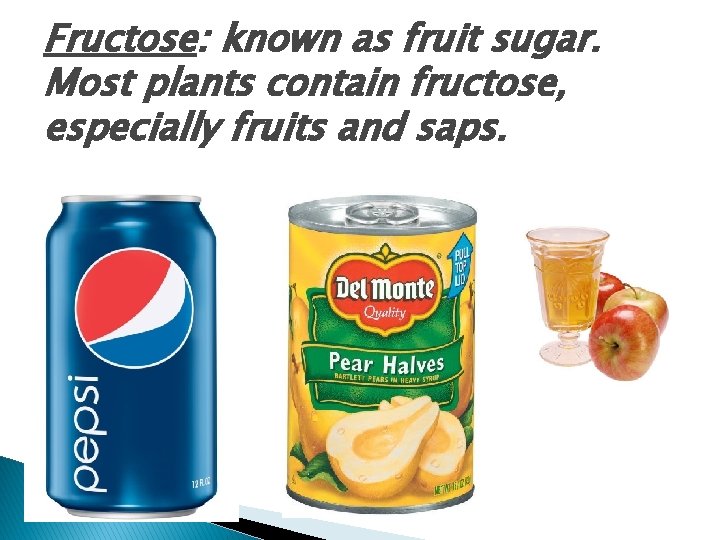
Fructose: known as fruit sugar. Most plants contain fructose, especially fruits and saps.
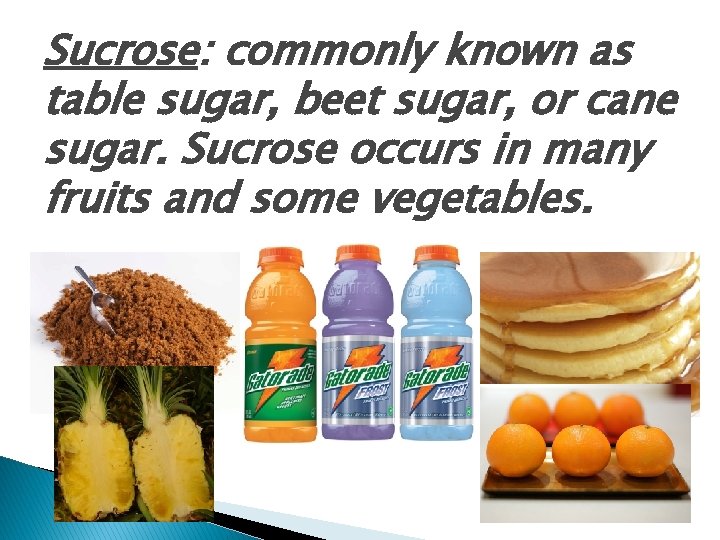
Sucrose: commonly known as table sugar, beet sugar, or cane sugar. Sucrose occurs in many fruits and some vegetables.
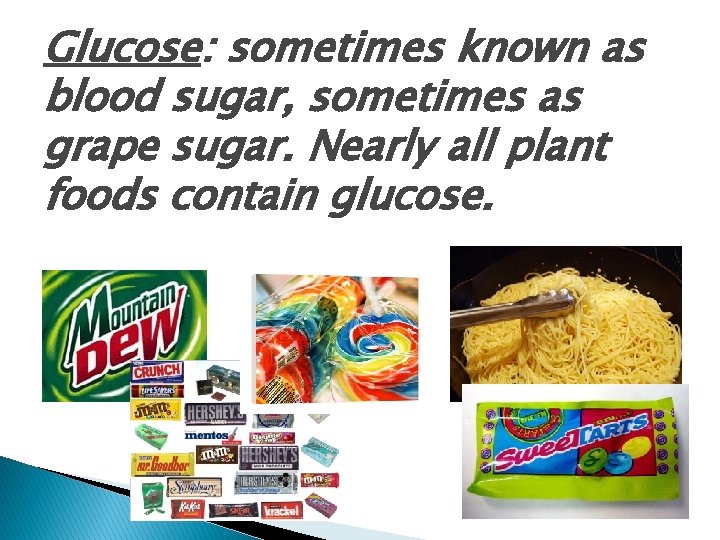
Glucose: sometimes known as blood sugar, sometimes as grape sugar. Nearly all plant foods contain glucose.
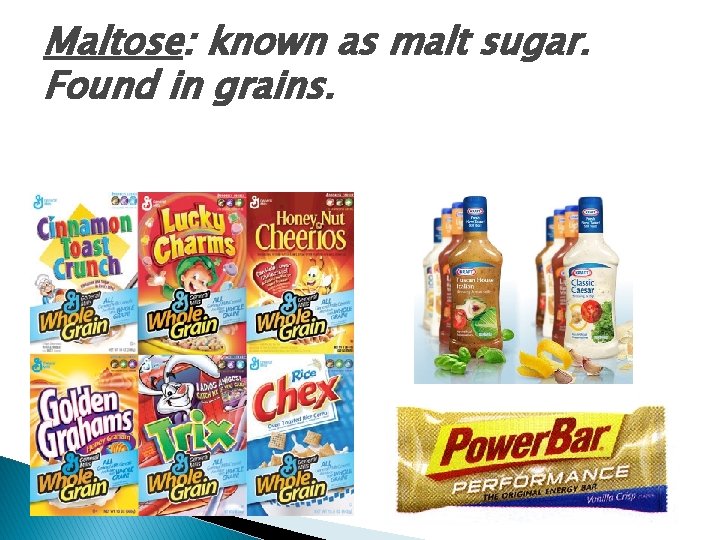
Maltose: known as malt sugar. Found in grains.
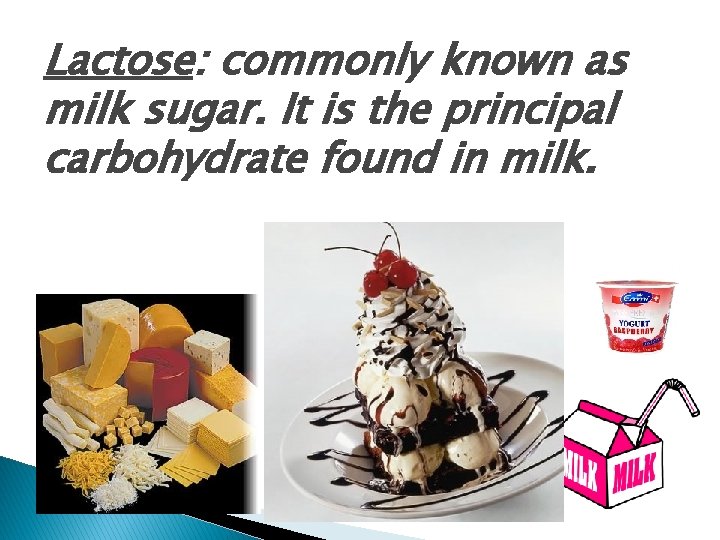
Lactose: commonly known as milk sugar. It is the principal carbohydrate found in milk.
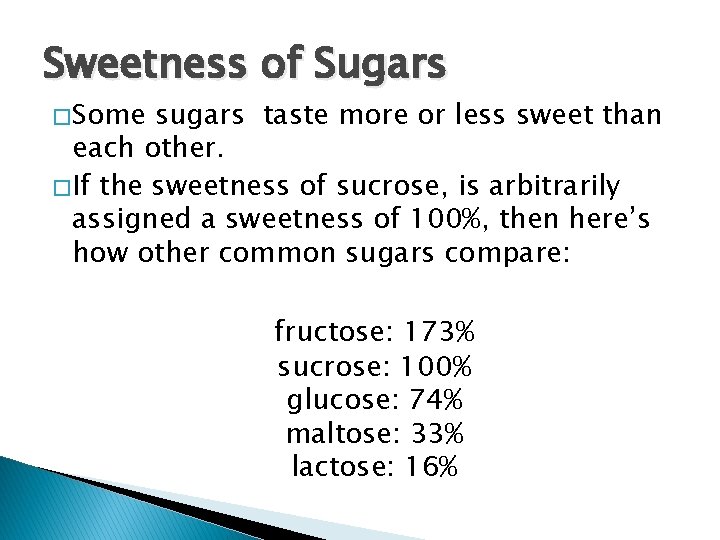
Sweetness of Sugars � Some sugars taste more or less sweet than each other. � If the sweetness of sucrose, is arbitrarily assigned a sweetness of 100%, then here’s how other common sugars compare: fructose: 173% sucrose: 100% glucose: 74% maltose: 33% lactose: 16%

REVIEW 5 Types of Sugars
How Body Uses Carbohydrates � Body breaks carbs down into simple sugars->bloodstream � As the sugar level rises in your body, the pancreas releases a hormone called insulin � Insulin moves sugar from the blood into the cells -> energy! � Happens fast — as with simple— you're more likely to feel hungry again � Happens slow – complex – you will be satisfied longer
How Body Uses Carbohydrates � Simple - cause the blood sugar level to rise quickly � Eating foods that cause big jumps in blood sugar may be related to health problems like diabetes & heart disease � YOU SHOULD ◦ Limit simple carbohydrates (candy) ◦ Eat complex carbohydrates (vegetables, oatmeal, whole-grain wheat bread)
- Slides: 18