
Chemistry of Digestion Digestive System Functions The Digestive
- Slides: 11
Chemistry of Digestion
Digestive System Functions �The Digestive System has 3 very important jobs: �Ingest (bring in food) �Digest (break down food) �Egest (get rid of unusable food)
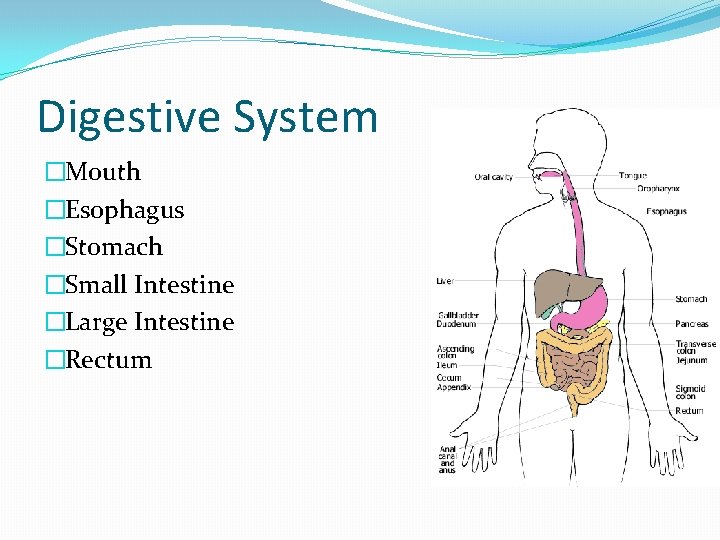
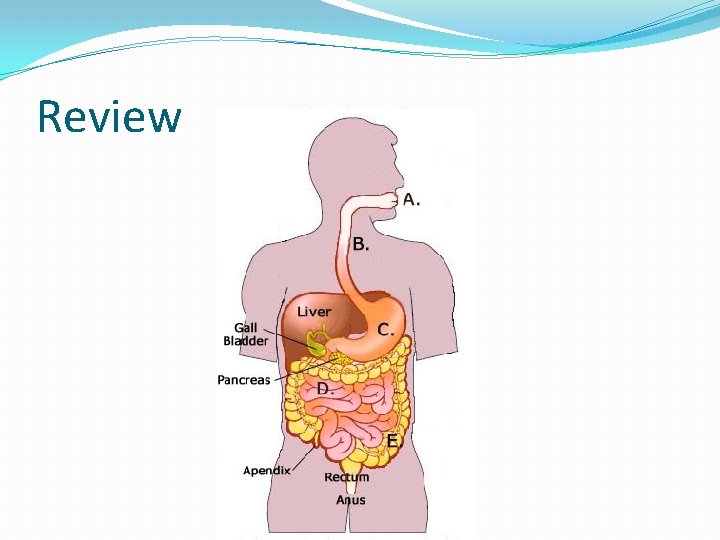
Digestive System �Mouth �Esophagus �Stomach �Small Intestine �Large Intestine �Rectum
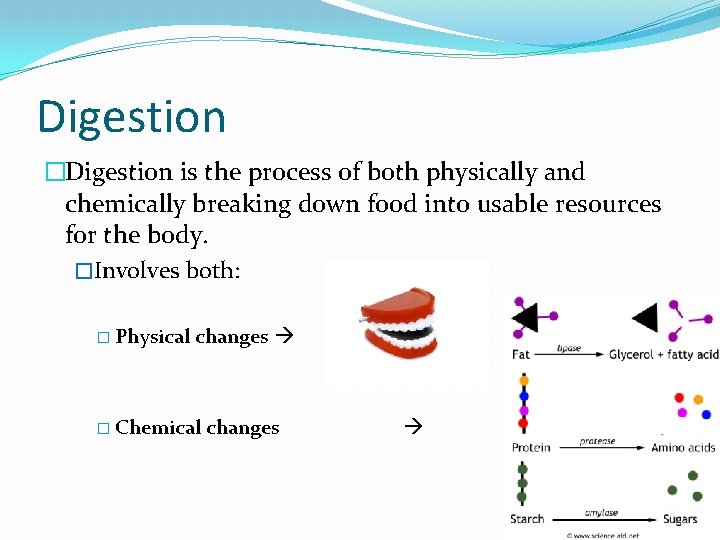
Digestion �Digestion is the process of both physically and chemically breaking down food into usable resources for the body. �Involves both: � Physical changes � Chemical changes
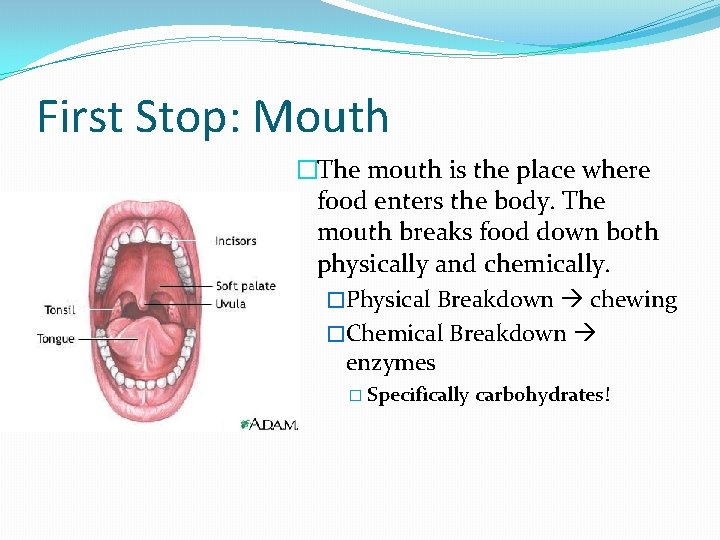
First Stop: Mouth �The mouth is the place where food enters the body. The mouth breaks food down both physically and chemically. �Physical Breakdown chewing �Chemical Breakdown enzymes � Specifically carbohydrates!
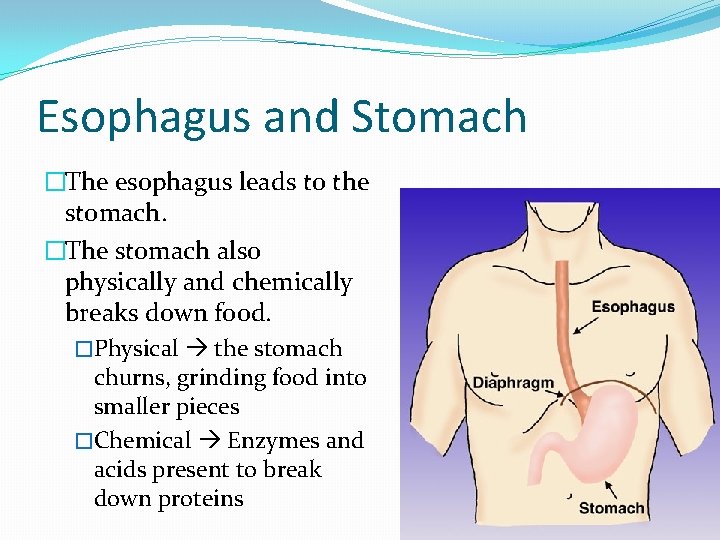
Esophagus and Stomach �The esophagus leads to the stomach. �The stomach also physically and chemically breaks down food. �Physical the stomach churns, grinding food into smaller pieces �Chemical Enzymes and acids present to break down proteins
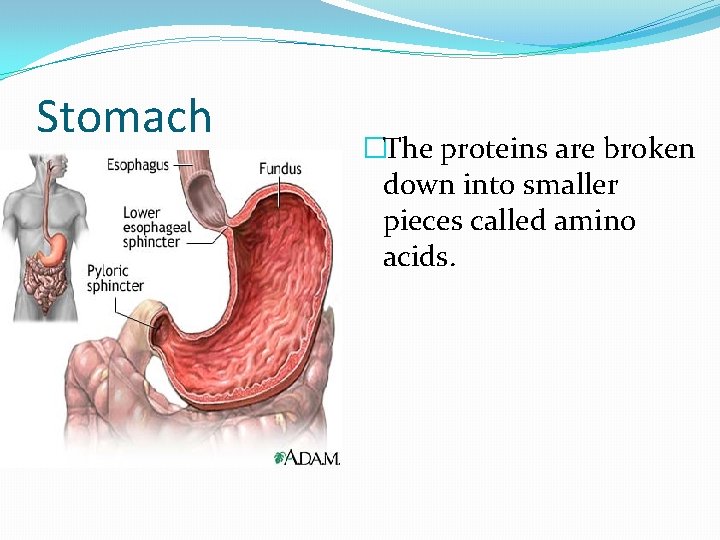
Stomach �The proteins are broken down into smaller pieces called amino acids.
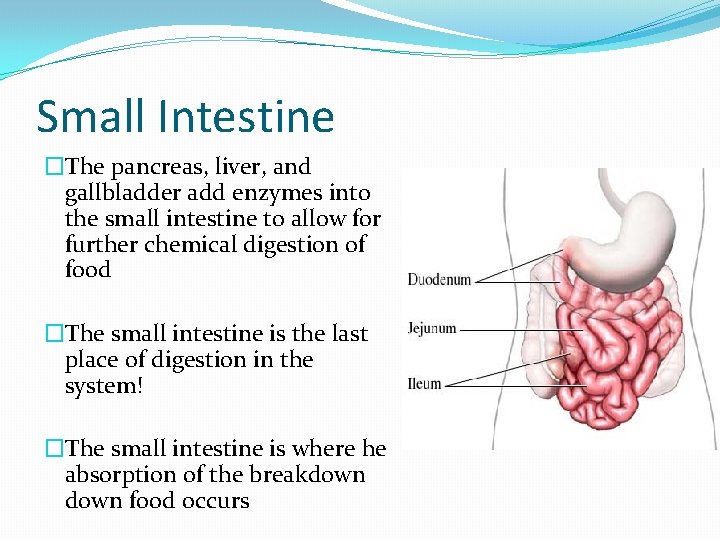
Small Intestine �The small intestine is a very long, thin tube that leads away from the stomach. �The small intestine is 7 m long! �Three organs dump more enzymes into the small intestine for further chemical digestion �Chemical breakdown of fats, more proteins, and more sugars occurs in the small intestine. �Food is also mechanically broken down and pushed through the small intestine.
Small Intestine �The pancreas, liver, and gallbladder add enzymes into the small intestine to allow for further chemical digestion of food �The small intestine is the last place of digestion in the system! �The small intestine is where he absorption of the breakdown food occurs
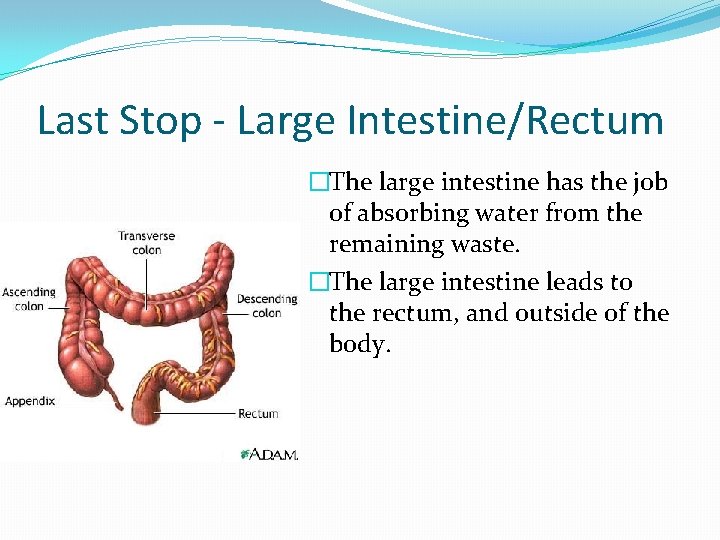
Last Stop - Large Intestine/Rectum �The large intestine has the job of absorbing water from the remaining waste. �The large intestine leads to the rectum, and outside of the body.
Review