
Chemistry Ions Ions Ionic bonding occurs between metals
Chemistry: Ions

Ions � Ionic bonding occurs between metals and non metals
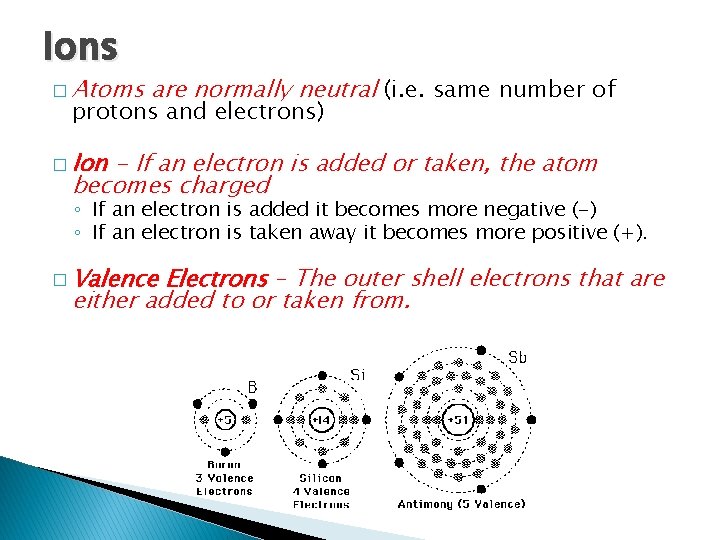
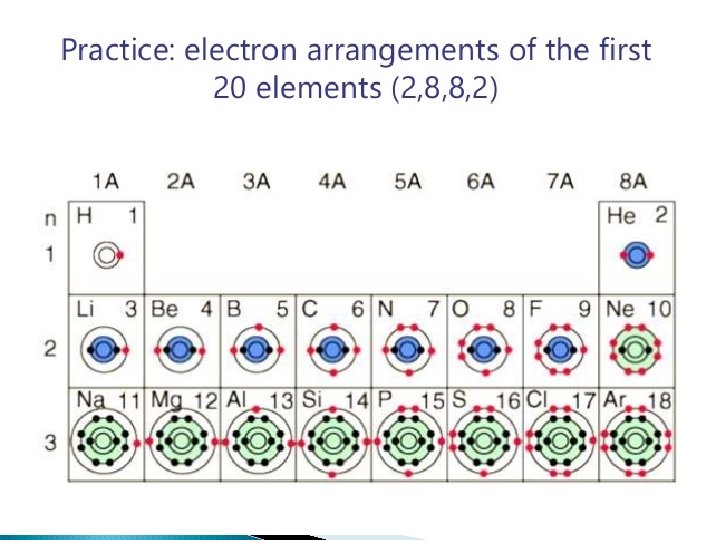
Ions � Atoms are normally neutral (i. e. same number of protons and electrons) � Ion - If an electron is added or taken, the atom becomes charged ◦ If an electron is added it becomes more negative (-) ◦ If an electron is taken away it becomes more positive (+). � Valence Electrons – The outer shell electrons that are either added to or taken from.
Why do Ions form?
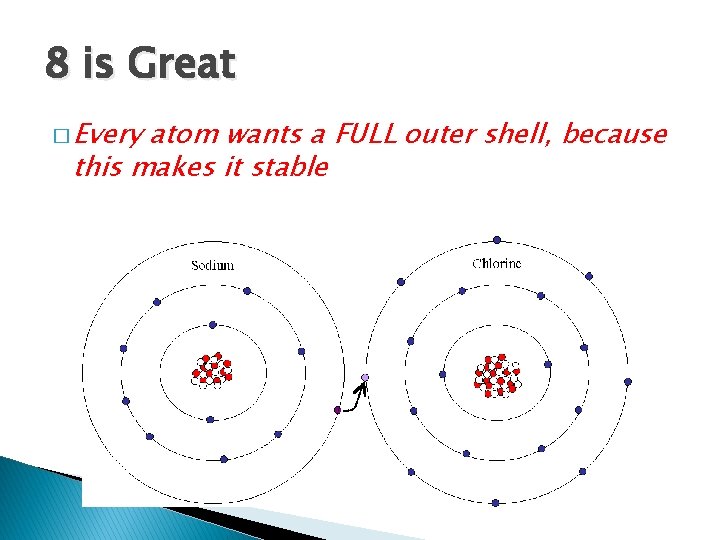
8 is Great � Every atom wants a FULL outer shell, because this makes it stable
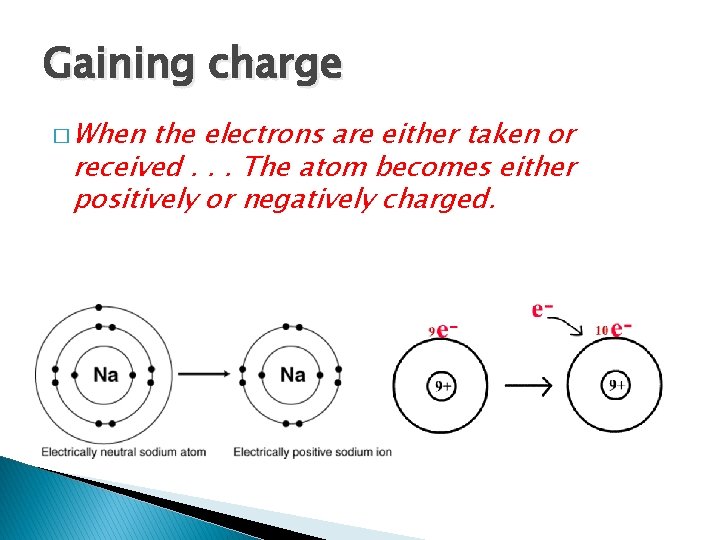
Gaining charge � When the electrons are either taken or received. . . The atom becomes either positively or negatively charged.
Using the Periodic Table to Identify Charges
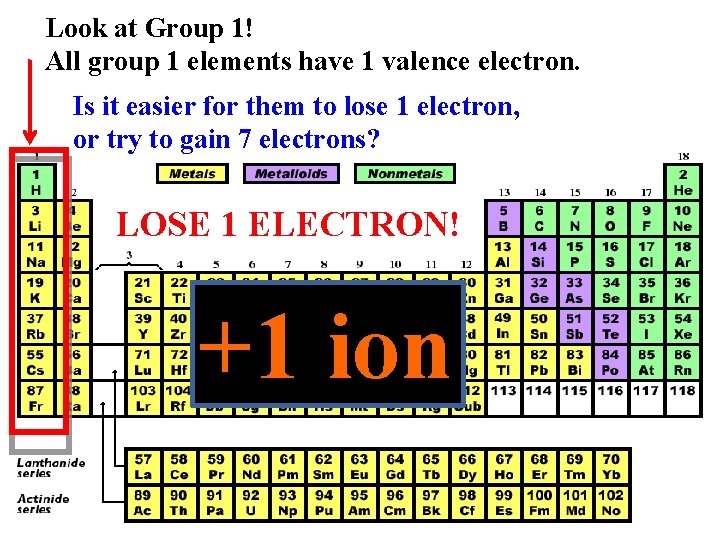
Look at Group 1! All group 1 elements have 1 valence electron. Is it easier for them to lose 1 electron, or try to gain 7 electrons? LOSE 1 ELECTRON! +1 ion
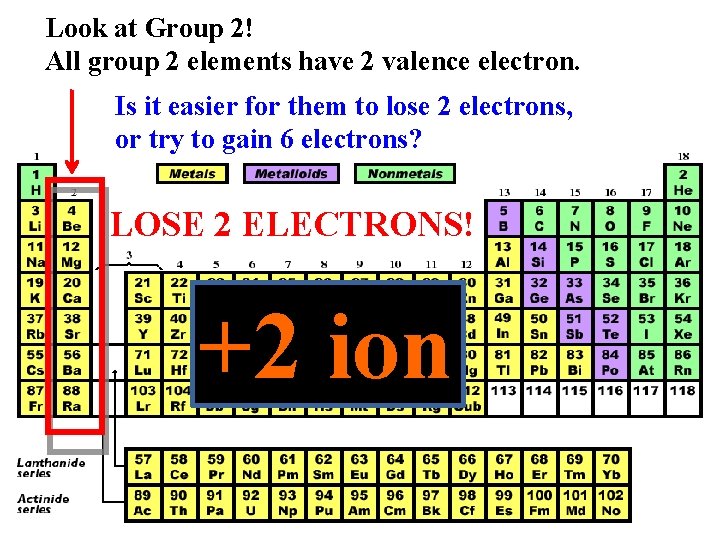
Look at Group 2! All group 2 elements have 2 valence electron. Is it easier for them to lose 2 electrons, or try to gain 6 electrons? LOSE 2 ELECTRONS! +2 ion
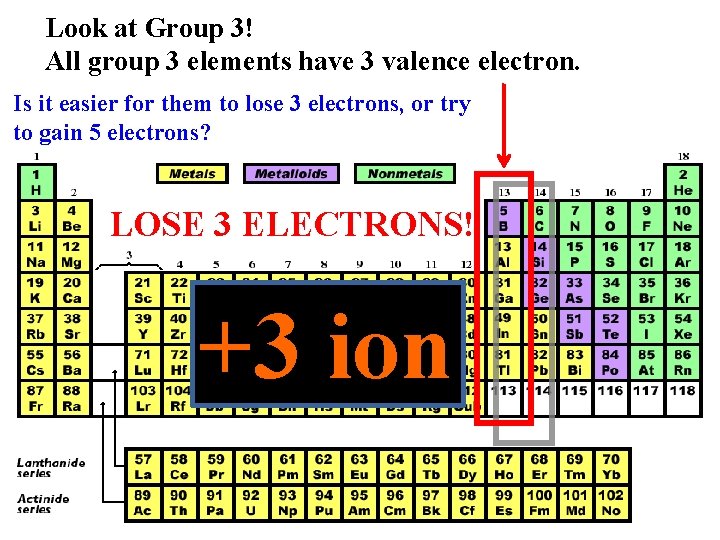
Look at Group 3! All group 3 elements have 3 valence electron. Is it easier for them to lose 3 electrons, or try to gain 5 electrons? LOSE 3 ELECTRONS! +3 ion
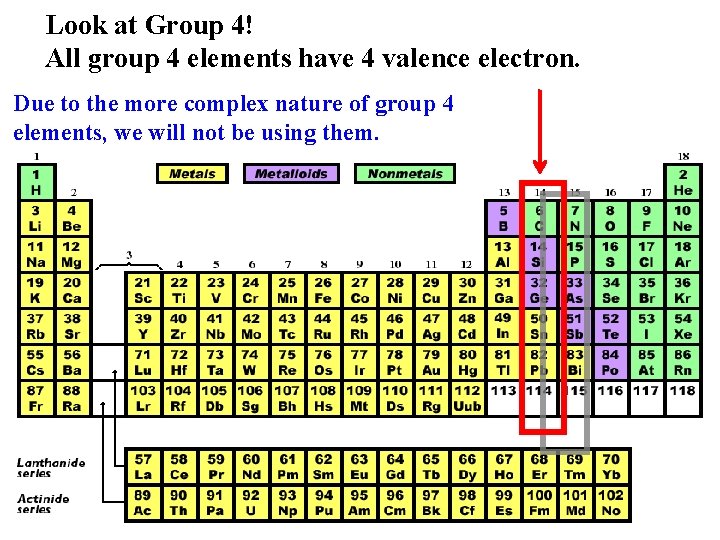
Look at Group 4! All group 4 elements have 4 valence electron. Due to the more complex nature of group 4 elements, we will not be using them.
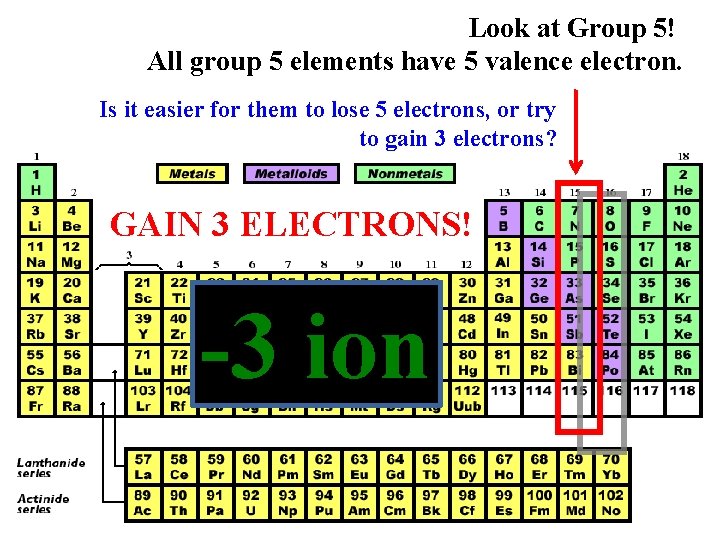
Look at Group 5! All group 5 elements have 5 valence electron. Is it easier for them to lose 5 electrons, or try to gain 3 electrons? GAIN 3 ELECTRONS! -3 ion
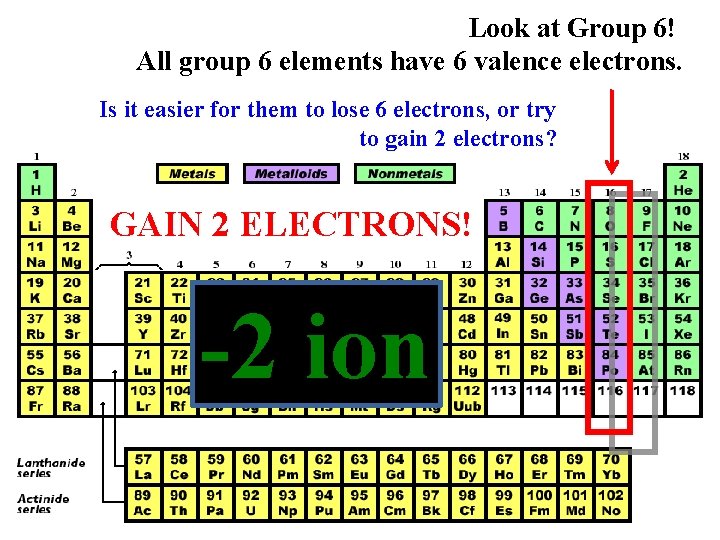
Look at Group 6! All group 6 elements have 6 valence electrons. Is it easier for them to lose 6 electrons, or try to gain 2 electrons? GAIN 2 ELECTRONS! -2 ion
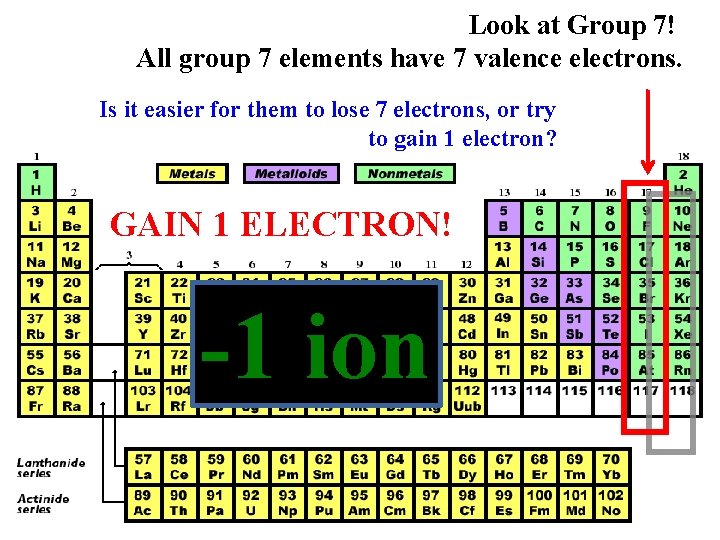
Look at Group 7! All group 7 elements have 7 valence electrons. Is it easier for them to lose 7 electrons, or try to gain 1 electron? GAIN 1 ELECTRON! -1 ion
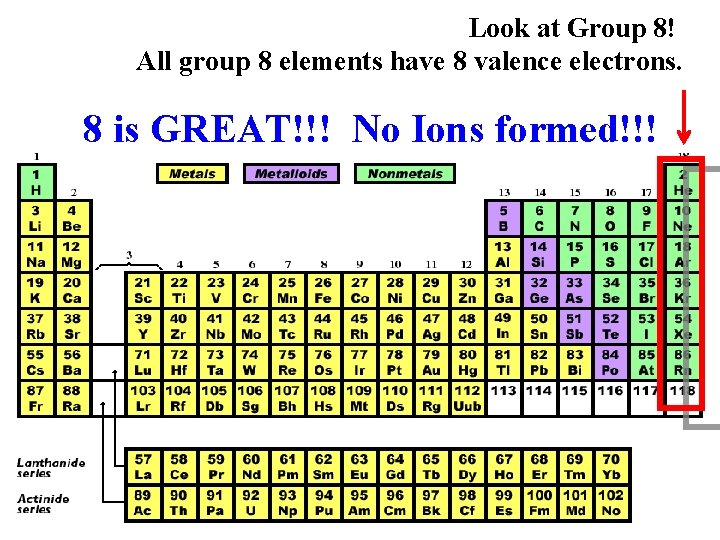
Look at Group 8! All group 8 elements have 8 valence electrons. 8 is GREAT!!! No Ions formed!!!
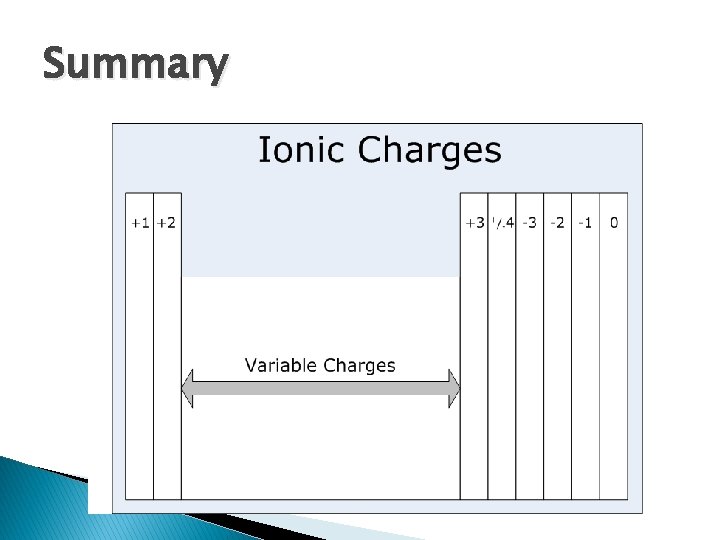
Summary
Why do Ions bond?
Opposites Attract � Atoms that are positively charged will be attracted to atoms that are negatively charged. � They will be attracted to atoms that will make their overall charge 0. ◦ Ie. A 3+ atom will be attracted to a 3 - atom

Cations
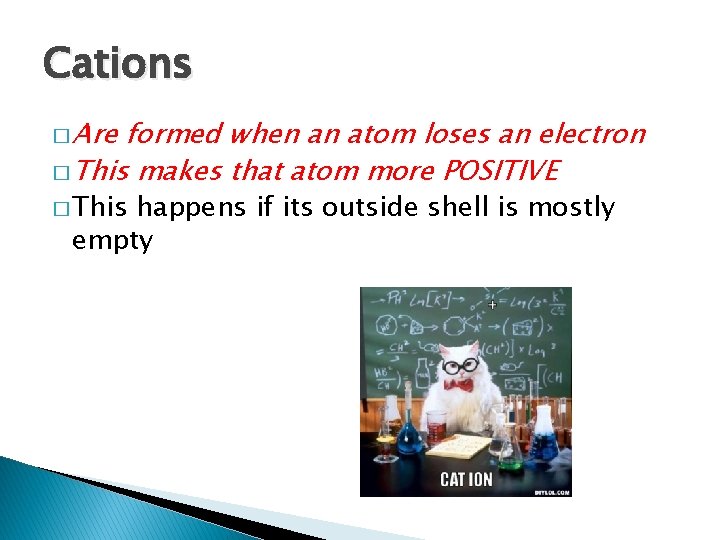
Cations � Are formed when an atom loses an electron � This makes that atom more POSITIVE � This happens if its outside shell is mostly empty
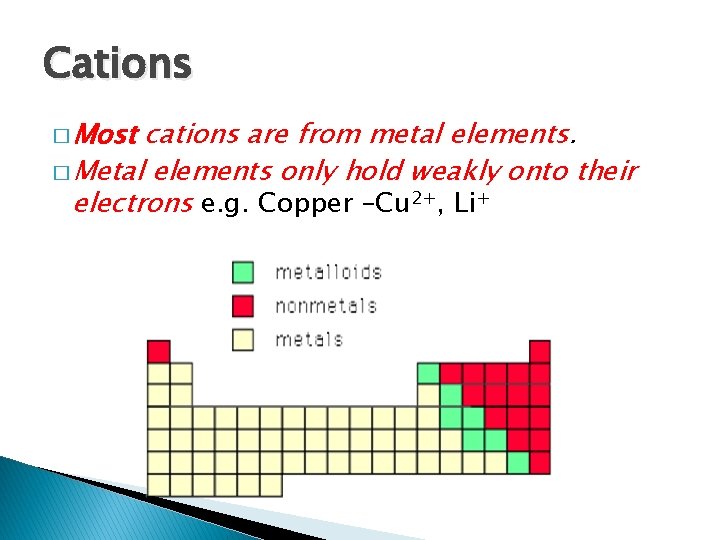
Cations � Most cations are from metal elements. � Metal elements only hold weakly onto their electrons e. g. Copper –Cu 2+, Li+

Anions
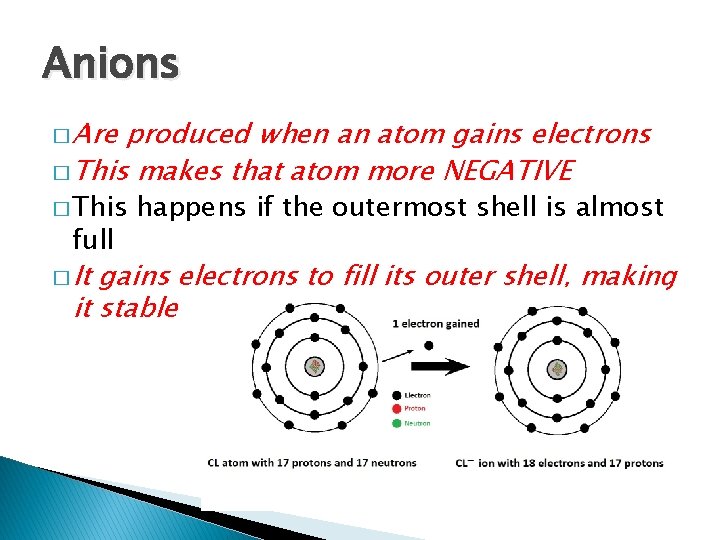
Anions � Are produced when an atom gains electrons � This makes that atom more NEGATIVE � This full � It happens if the outermost shell is almost gains electrons to fill its outer shell, making it stable
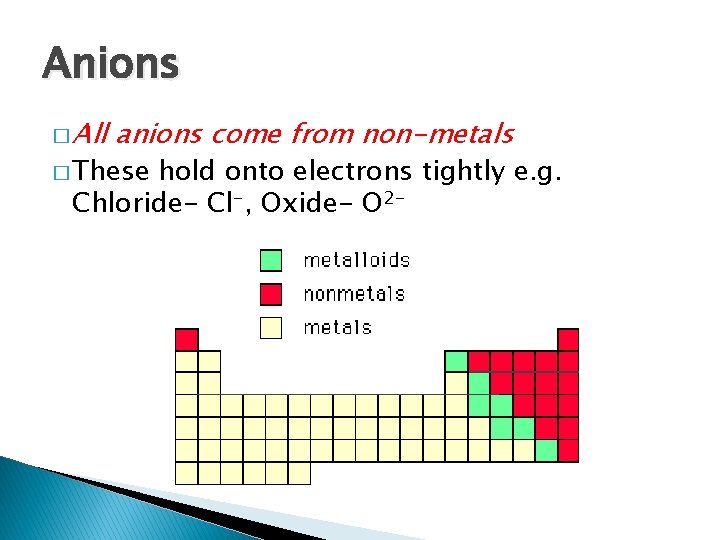
Anions � All anions come from non-metals � These hold onto electrons tightly e. g. Chloride- Cl-, Oxide- O 2 -
Ions can exist as Monatomic ions or Polyatomic ions � Monatomic – mono means one � Polyatomic – poly means many ◦ Calcium ion – Ca 2+. . . Has one calcium ◦ Nitrate ion – NO 31 - has. . . 1 nitrogen and 3 oxygen

How to Write Ionic Formula
Writing Ionic compound formula � Atoms are happiest when all charges are 0, so there must be an equal number of positive protons and negative electrons. ◦ E. g. For Sodium (1+) and Chloride (1 -), only 1 of each is needed to make it even (Na. Cl) ◦ For Magnesium (2+) Chloride (1 -), two chlorides are needed for every magnesium (Mg. Cl 2)

Using Swap and Drop
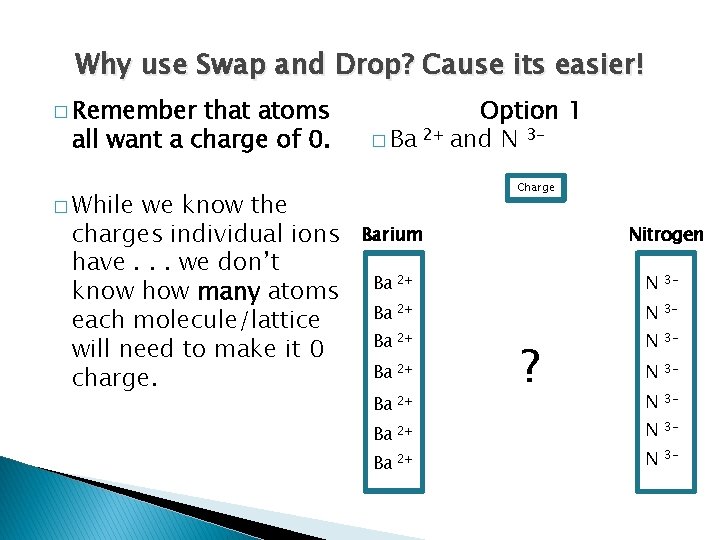
Why use Swap and Drop? Cause its easier! � Remember that atoms all want a charge of 0. � While we know the charges individual ions have. . . we don’t know how many atoms each molecule/lattice will need to make it 0 charge. Option 1 � Ba 2+ and N 3 Charge Barium Nitrogen Ba 2+ N 3 - N 3 - Ba 2+ ?
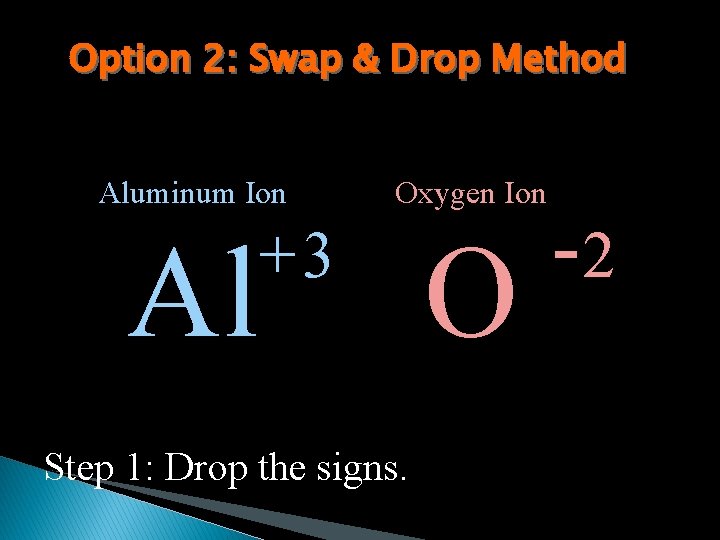
Option 2: Swap & Drop Method Aluminum Ion Al Oxygen Ion +3 Step 1: Drop the signs. O -2
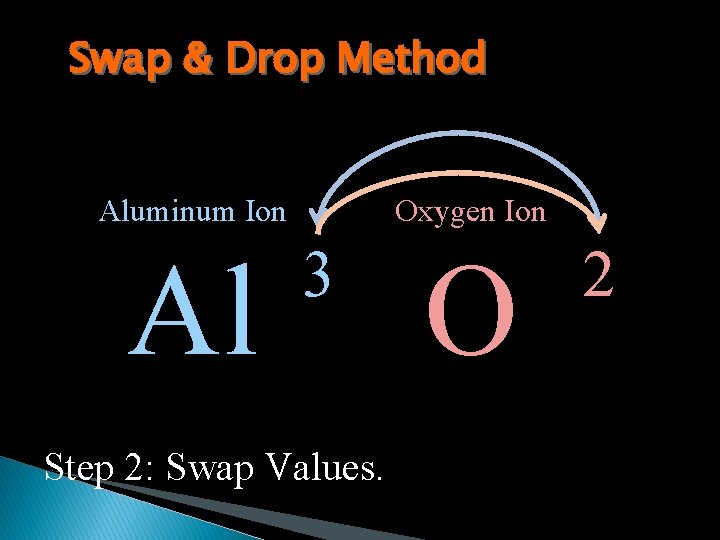
Swap & Drop Method Aluminum Ion Al Oxygen Ion 3 Step 2: Swap Values. O 2
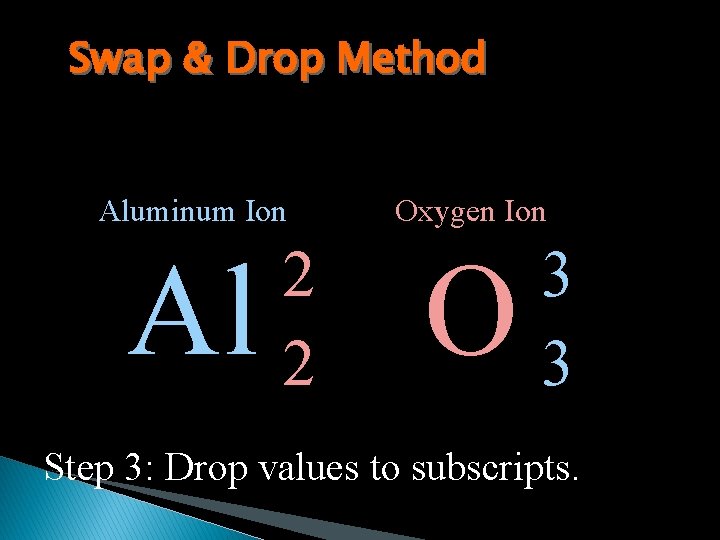
Swap & Drop Method Aluminum Ion Al 2 2 Oxygen Ion O 3 3 Step 3: Drop values to subscripts.
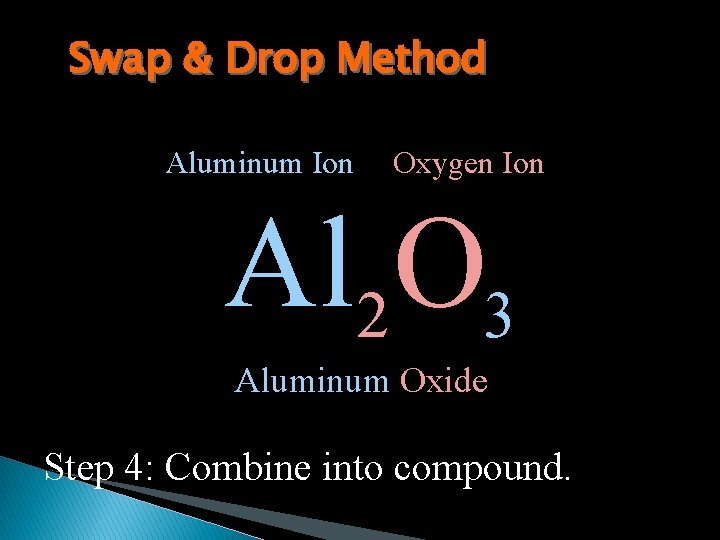
Swap & Drop Method Aluminum Ion Oxygen Ion Al 2 O 3 Aluminum Oxide Step 4: Combine into compound.
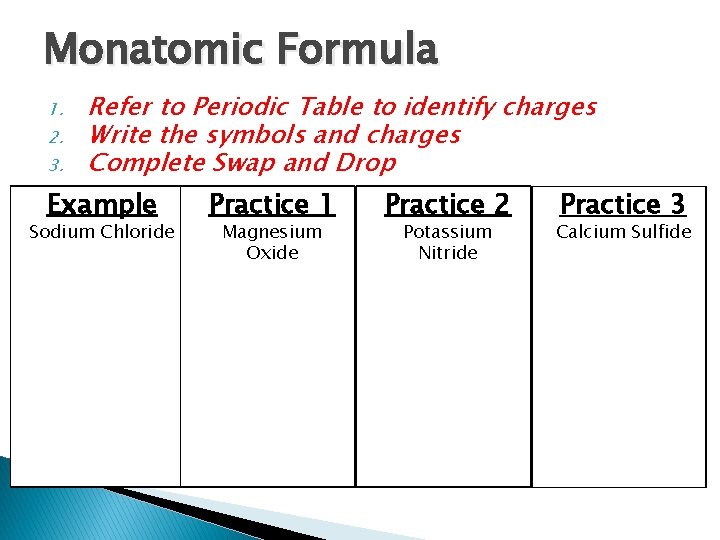
Monatomic Formula 1. 2. 3. Refer to Periodic Table to identify charges Write the symbols and charges Complete Swap and Drop Example Sodium Chloride Practice 1 Magnesium Oxide Practice 2 Potassium Nitride Practice 3 Calcium Sulfide
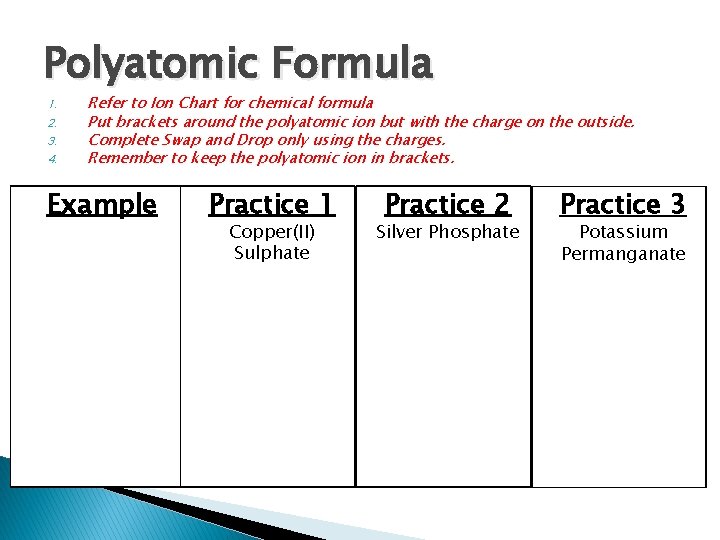
Polyatomic Formula 1. 2. 3. 4. Refer to Ion Chart for chemical formula Put brackets around the polyatomic ion but with the charge on the outside. Complete Swap and Drop only using the charges. Remember to keep the polyatomic ion in brackets. Example Practice 1 Copper(II) Sulphate Practice 2 Silver Phosphate Practice 3 Potassium Permanganate
How to name Ionic Compounds Name Ionic Compounds Write Ionic Formula
Naming Ionic compounds � Remember: When anions (-) and cations (+) come together, they make compounds which are crystal lattices � Steps 1. Name the cation first 2. Name the anion second 3. BUT. . . we change the last letters to ‘ide’) ◦ Calcium + Chlorine = Calcium Chloride ◦ Sodium + Oxygen = Sodium Oxide ◦ Copper+ Oxygen = _____________
Naming Practice 1. 2. 3. Easy a) Sodium + Fluorine = ______________ b) Potassium + Chlorine = ____________ c) Magnesium + Oxygen = ____________ Medium a) Chlorine and Copper = _____________ b) Oxygen and Aluminium = ___________ Hard a) Fe 2+ + F- = ______________ b) Ba 2+ + S 2 - = _____________
Facts about Ions in a Solution
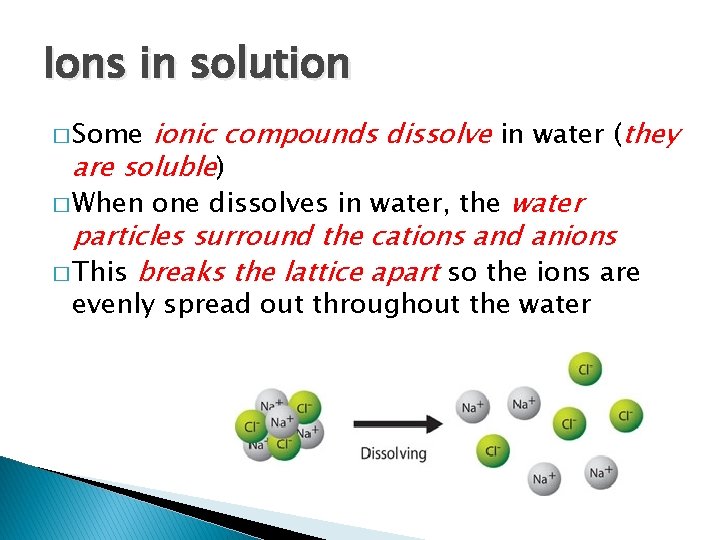
Ions in solution ionic compounds dissolve in water (they are soluble) � When one dissolves in water, the water particles surround the cations and anions � This breaks the lattice apart so the ions are � Some evenly spread out throughout the water
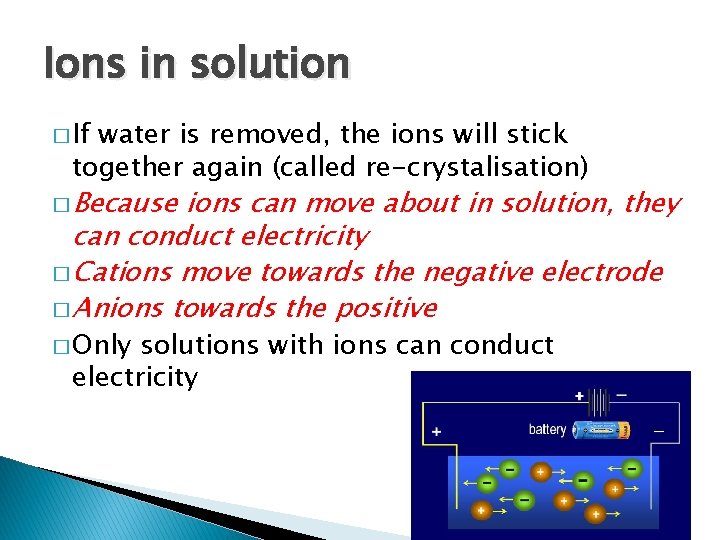
Ions in solution � If water is removed, the ions will stick together again (called re-crystalisation) � Because ions can move about in solution, they can conduct electricity � Cations move towards the negative electrode � Anions towards the positive � Only solutions with ions can conduct electricity
Facts about Ionic Compounds
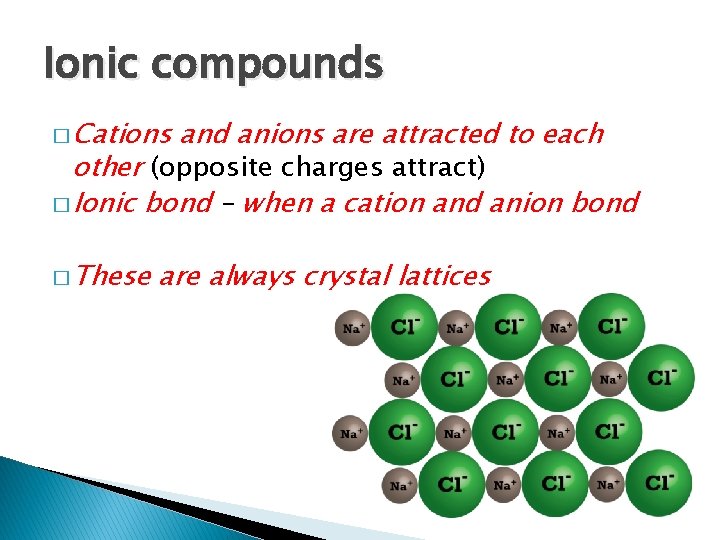
Ionic compounds � Cations and anions are attracted to each other (opposite charges attract) � Ionic bond – when a cation and anion bond � These are always crystal lattices
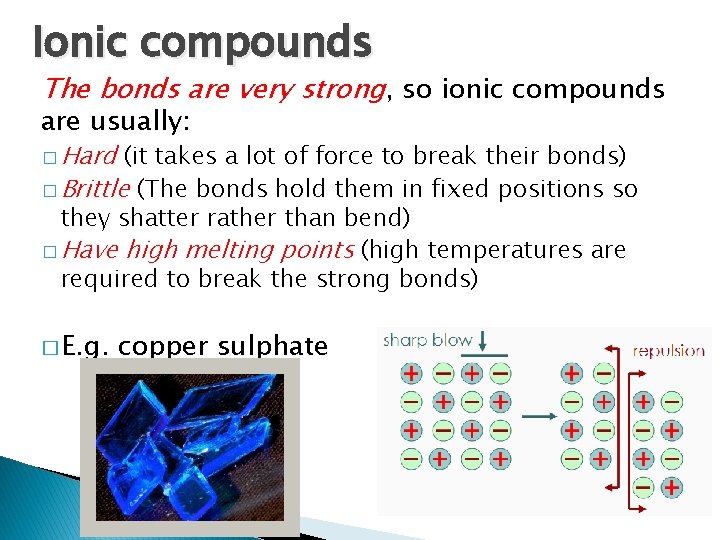
Ionic compounds The bonds are very strong, so ionic compounds are usually: � Hard (it takes a lot of force to break their bonds) � Brittle (The bonds hold them in fixed positions so they shatter rather than bend) � Have high melting points (high temperatures are required to break the strong bonds) � E. g. copper sulphate
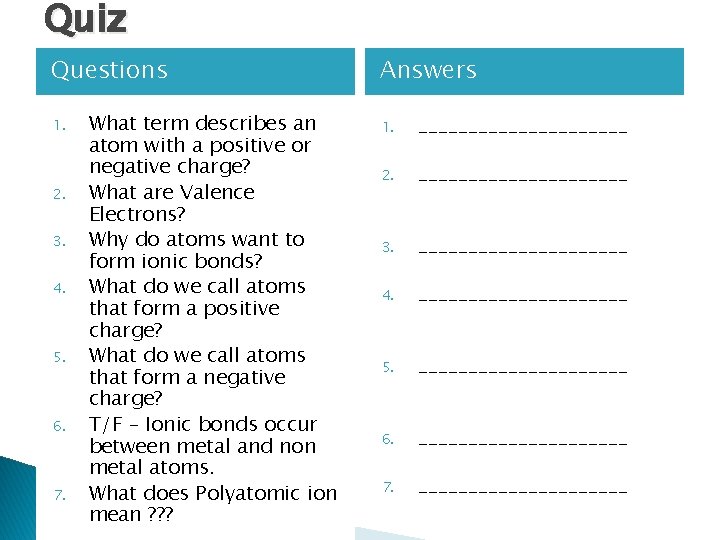
Quiz Questions 1. 2. 3. 4. 5. 6. 7. What term describes an atom with a positive or negative charge? What are Valence Electrons? Why do atoms want to form ionic bonds? What do we call atoms that form a positive charge? What do we call atoms that form a negative charge? T/F – Ionic bonds occur between metal and non metal atoms. What does Polyatomic ion mean ? ? ? Answers 1. ___________ 2. ___________ 3. ___________ 4. ___________ 5. ___________ 6. ___________ 7. ___________
- Slides: 46