
Chemistry in Hair Relaxing Permanently Straighten Hair Chemical
- Slides: 11
Chemistry in Hair Relaxing Permanently Straighten Hair
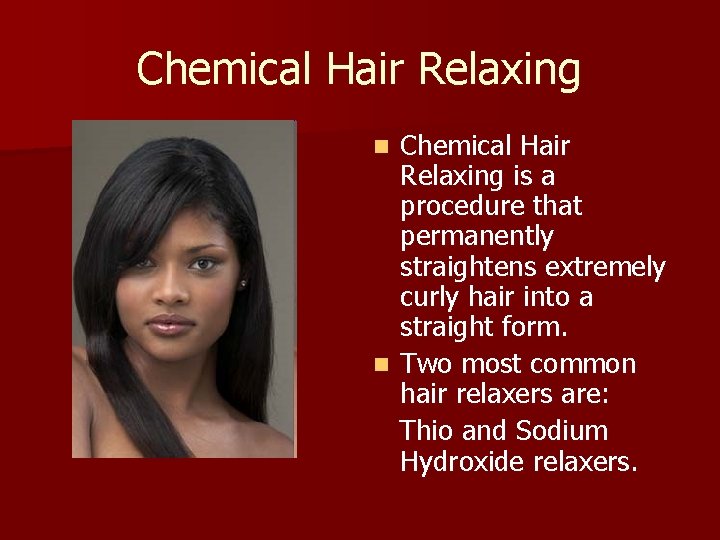
Chemical Hair Relaxing is a procedure that permanently straightens extremely curly hair into a straight form. n Two most common hair relaxers are: Thio and Sodium Hydroxide relaxers. n
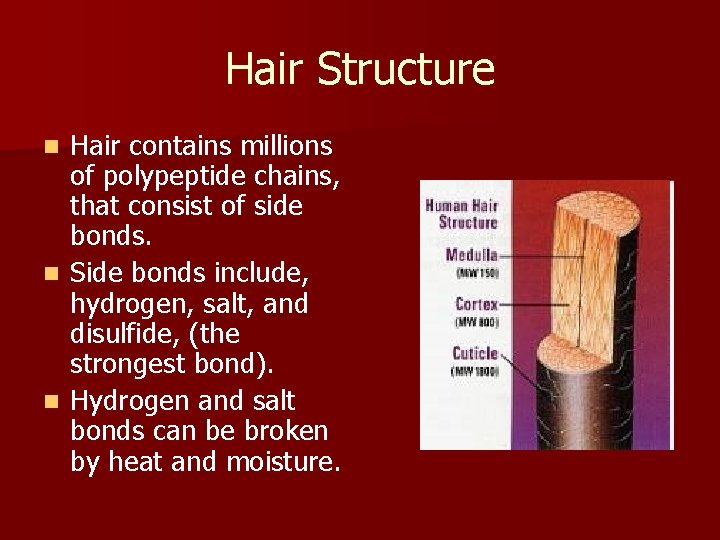
Hair Structure Hair contains millions of polypeptide chains, that consist of side bonds. n Side bonds include, hydrogen, salt, and disulfide, (the strongest bond). n Hydrogen and salt bonds can be broken by heat and moisture. n
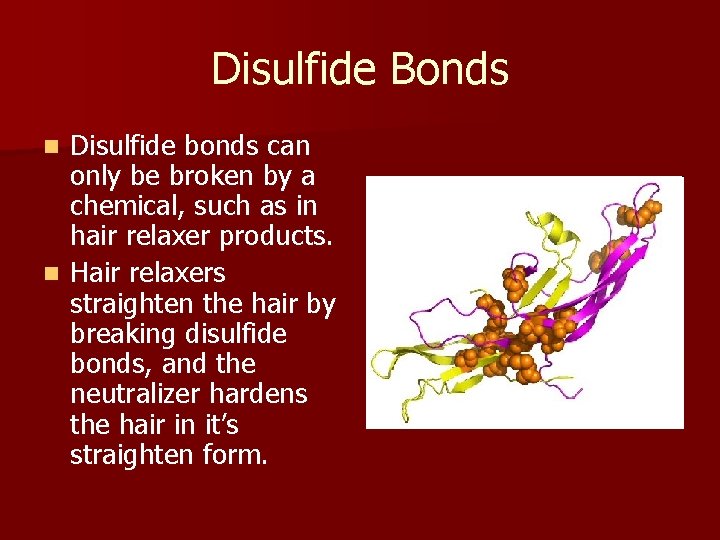
Disulfide Bonds Disulfide bonds can only be broken by a chemical, such as in hair relaxer products. n Hair relaxers straighten the hair by breaking disulfide bonds, and the neutralizer hardens the hair in it’s straighten form. n
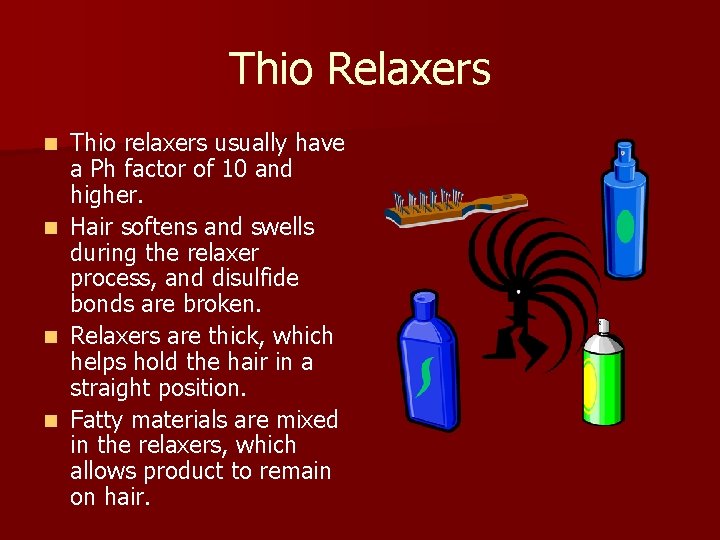
Thio Relaxers n n Thio relaxers usually have a Ph factor of 10 and higher. Hair softens and swells during the relaxer process, and disulfide bonds are broken. Relaxers are thick, which helps hold the hair in a straight position. Fatty materials are mixed in the relaxers, which allows product to remain on hair.
Thio Neutralizers The neutralizer provides an oxidation reaction that rebuilds the hair bonds in a straighten form. n It breaks bonds by adding hydrogen atoms to the two sulfur bonds within the disulfide bond. n
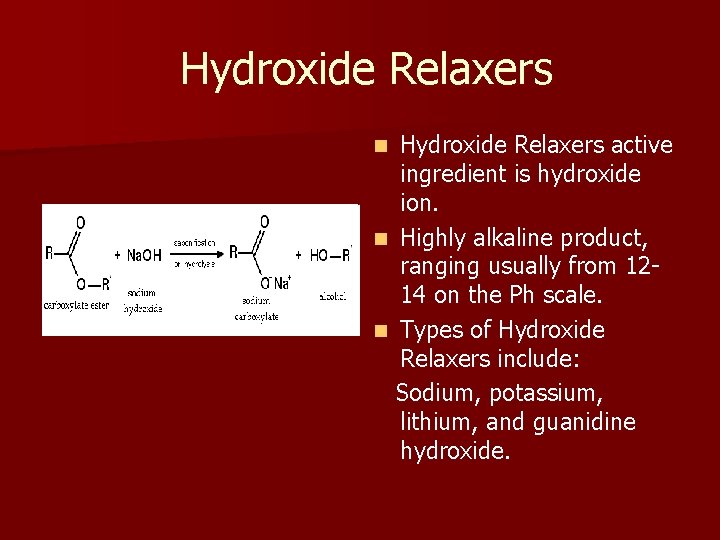
Hydroxide Relaxers active ingredient is hydroxide ion. n Highly alkaline product, ranging usually from 1214 on the Ph scale. n Types of Hydroxide Relaxers include: Sodium, potassium, lithium, and guanidine hydroxide. n
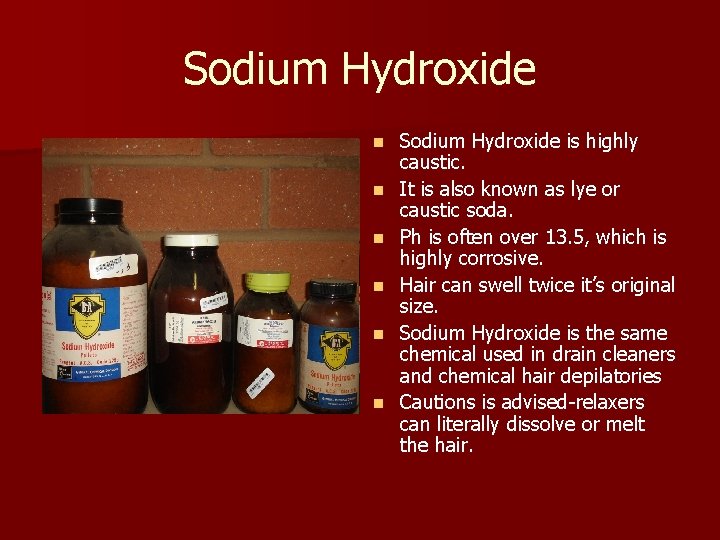
Sodium Hydroxide n n n Sodium Hydroxide is highly caustic. It is also known as lye or caustic soda. Ph is often over 13. 5, which is highly corrosive. Hair can swell twice it’s original size. Sodium Hydroxide is the same chemical used in drain cleaners and chemical hair depilatories Cautions is advised-relaxers can literally dissolve or melt the hair.
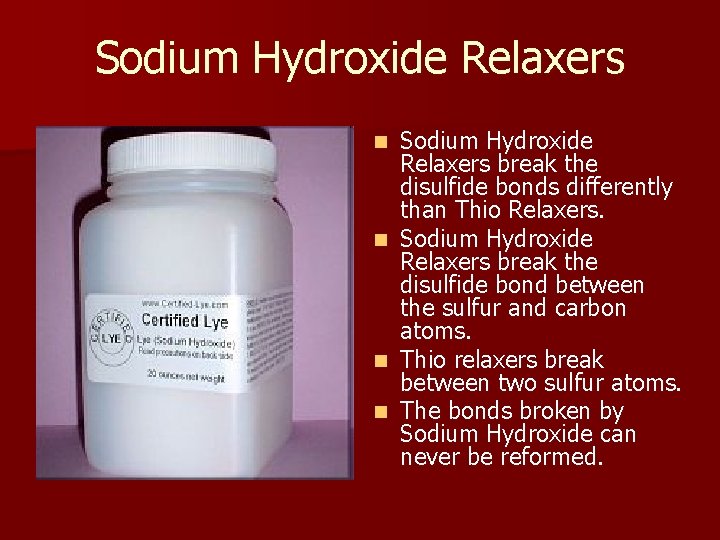
Sodium Hydroxide Relaxers n n Sodium Hydroxide Relaxers break the disulfide bonds differently than Thio Relaxers. Sodium Hydroxide Relaxers break the disulfide bond between the sulfur and carbon atoms. Thio relaxers break between two sulfur atoms. The bonds broken by Sodium Hydroxide can never be reformed.
Warning!!! Sodium Hydroxide Relaxers are NOT compatible with Thio Relaxers!!! Extreme damage could occur!!!
Works Cited n Milady’s Textbook, copyright 2004 n Hair Structure and Chemistry Simplified by John Halal, Fifth Edition, 2009