
Chemistry Energy and Climate Change Dr Richard Pike
- Slides: 24
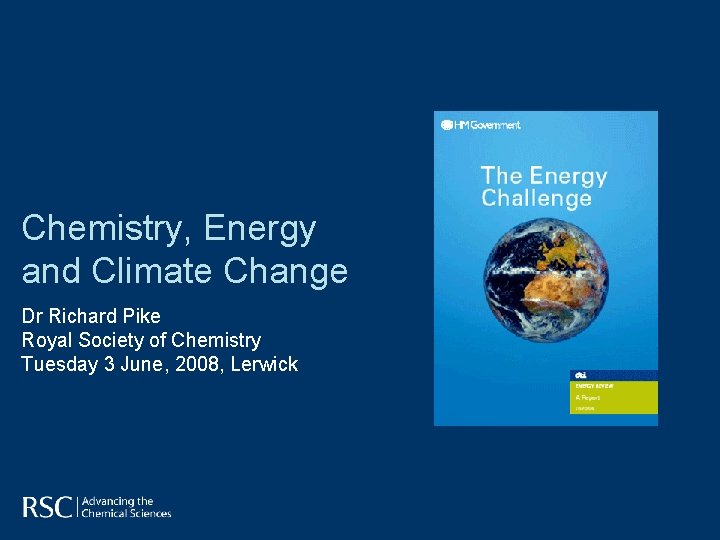
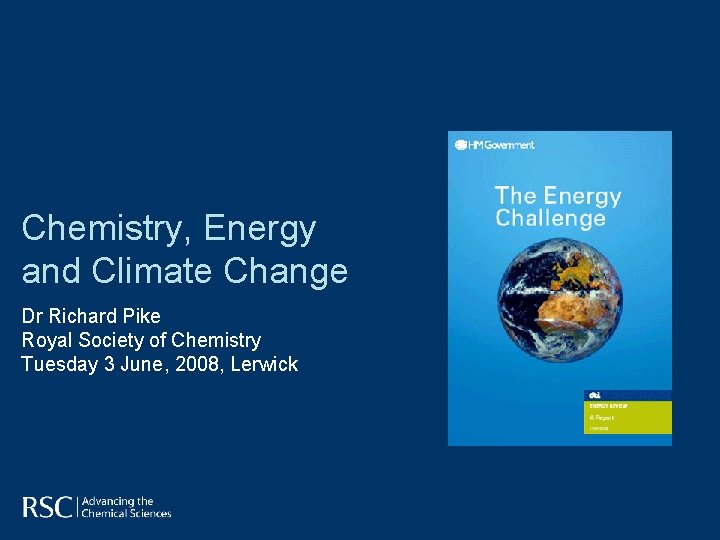
Chemistry, Energy and Climate Change Dr Richard Pike Royal Society of Chemistry Tuesday 3 June, 2008, Lerwick
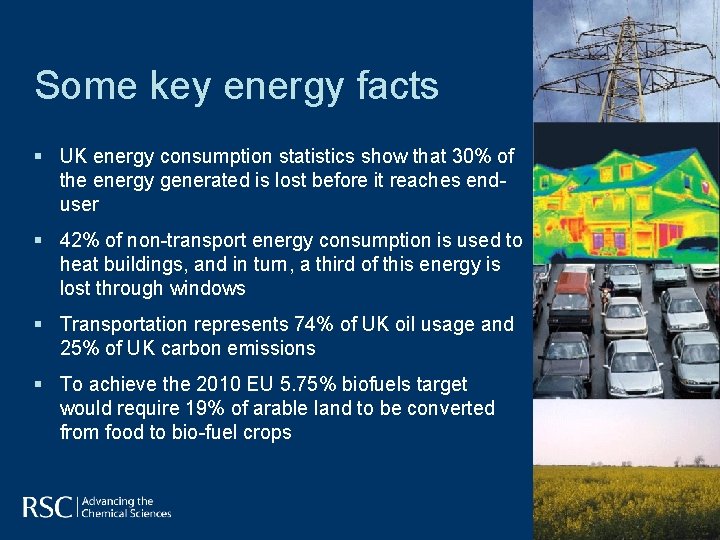
Some key energy facts § UK energy consumption statistics show that 30% of the energy generated is lost before it reaches enduser § 42% of non-transport energy consumption is used to heat buildings, and in turn, a third of this energy is lost through windows § Transportation represents 74% of UK oil usage and 25% of UK carbon emissions § To achieve the 2010 EU 5. 75% biofuels target would require 19% of arable land to be converted from food to bio-fuel crops
Chemical science can provide energy that is… § Secure § Affordable § Sustainable Addressing climate change
Key messages are: § Saving energy is critical § Nurture and harness research skills § Provide vision, mechanisms and funding to deliver solutions
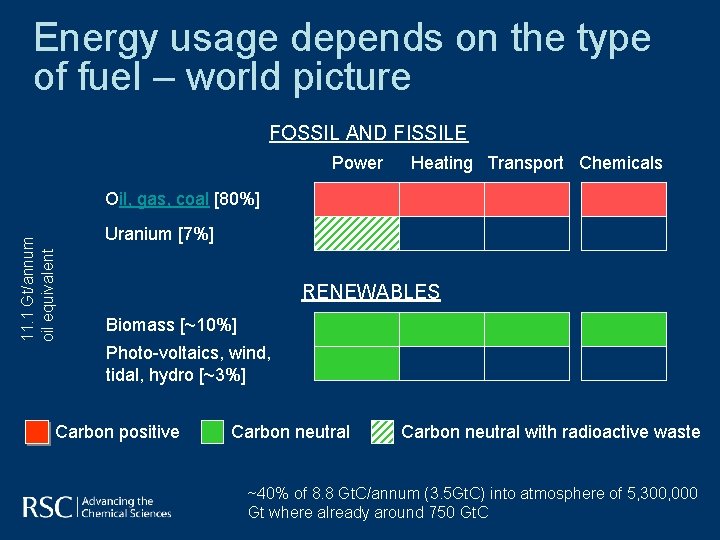
Energy usage depends on the type of fuel – world picture FOSSIL AND FISSILE Power Heating Transport Chemicals 11. 1 Gt/annum oil equivalent Oil, gas, coal [80%] Uranium [7%] RENEWABLES Biomass [~10%] Photo-voltaics, wind, tidal, hydro [~3%] Carbon positive Carbon neutral with radioactive waste ~40% of 8. 8 Gt. C/annum (3. 5 Gt. C) into atmosphere of 5, 300, 000 Gt where already around 750 Gt. C
Some early observations are alarming § Focus on some, trivial energy-saving schemes is detracting from the ‘big picture’ § Lack of global, decisive strategy is leading to extraordinary contradictions [melting of permafrost → more opportunities to drill for oil] § Lack of appreciation of numbers, mechanisms and processes is inhibiting good decision-making [yields, life cycle analysis, pros and cons, economics……eg balance of wind vs tidal, solar vs biofuel]
Global and national strategies must be integrated § Global strategy must be based not on ‘fossil fuels are running out’, but ‘we must address climate change’ § Major consumer country strategies (eg UK) must § § respond to declining local oil and gas supply conserve for high-value applications improve utilisation and efficiencies throughout the supply chain innovate with these and other non-fossil energy sources
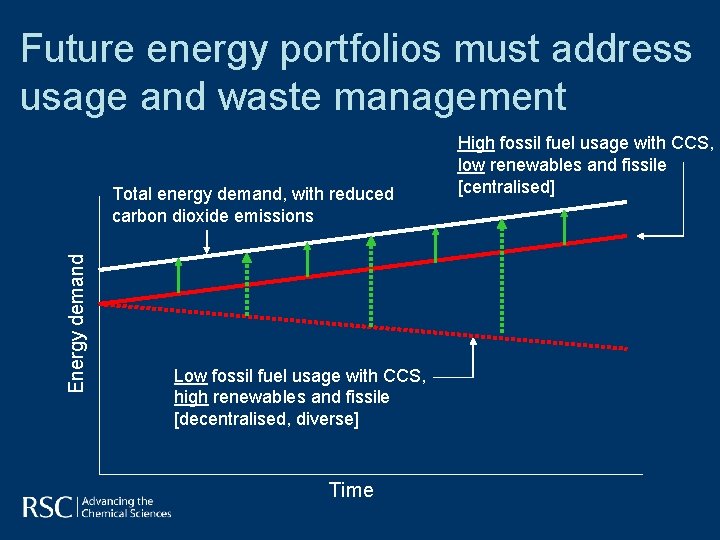
Future energy portfolios must address usage and waste management Energy demand Total energy demand, with reduced carbon dioxide emissions Low fossil fuel usage with CCS, high renewables and fissile [decentralised, diverse] Time High fossil fuel usage with CCS, low renewables and fissile [centralised]
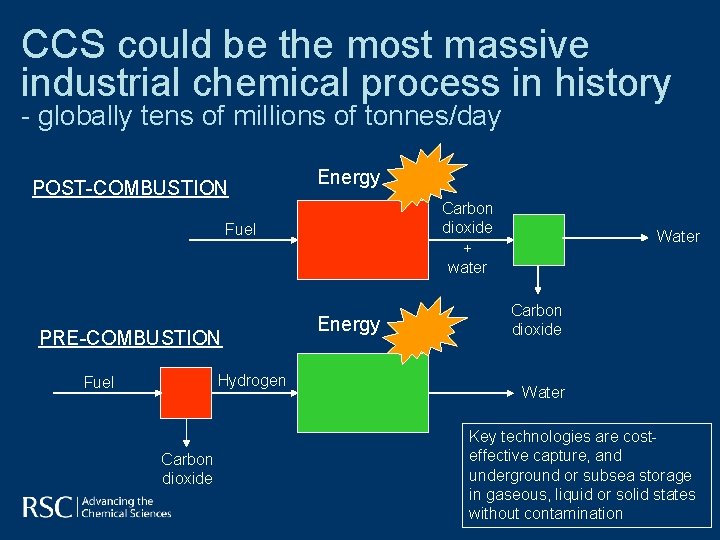
CCS could be the most massive industrial chemical process in history - globally tens of millions of tonnes/day POST-COMBUSTION Energy Carbon dioxide + water Fuel PRE-COMBUSTION Hydrogen Fuel Carbon dioxide Energy Water Carbon dioxide Water Key technologies are costeffective capture, and underground or subsea storage in gaseous, liquid or solid states without contamination
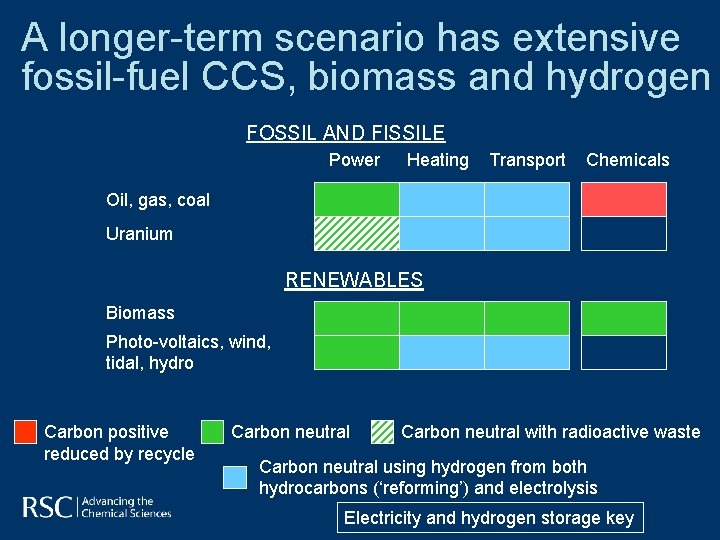
A longer-term scenario has extensive fossil-fuel CCS, biomass and hydrogen FOSSIL AND FISSILE Power Heating Transport Chemicals Oil, gas, coal Uranium RENEWABLES Biomass Photo-voltaics, wind, tidal, hydro Carbon positive reduced by recycle Carbon neutral with radioactive waste Carbon neutral using hydrogen from both hydrocarbons (‘reforming’) and electrolysis Electricity and hydrogen storage key
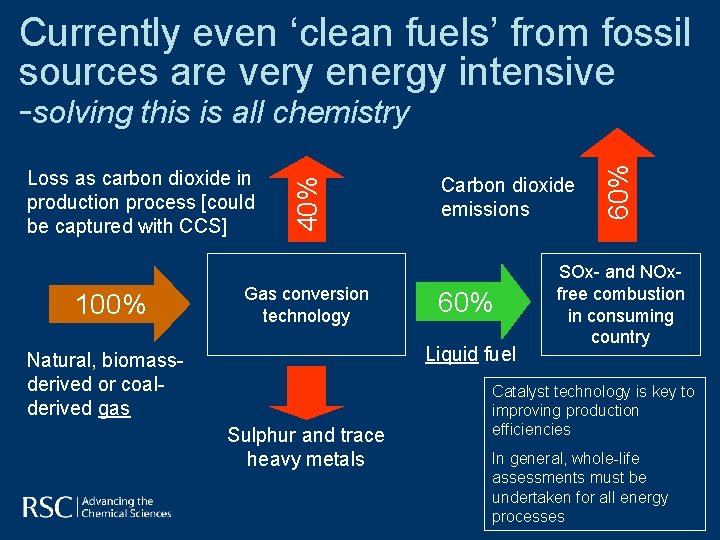
100% Gas conversion technology Carbon dioxide emissions 60% Liquid fuel Natural, biomassderived or coalderived gas Sulphur and trace heavy metals 60% Loss as carbon dioxide in production process [could be captured with CCS] 40% Currently even ‘clean fuels’ from fossil sources are very energy intensive -solving this is all chemistry SOx- and NOxfree combustion in consuming country Catalyst technology is key to improving production efficiencies In general, whole-life assessments must be undertaken for all energy processes
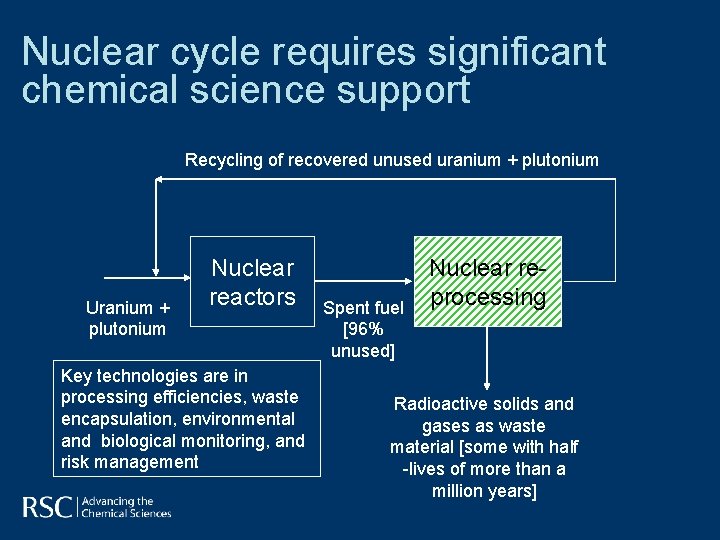
Nuclear cycle requires significant chemical science support Recycling of recovered unused uranium + plutonium Uranium + plutonium Nuclear reactors Key technologies are in processing efficiencies, waste encapsulation, environmental and biological monitoring, and risk management Spent fuel [96% unused] Nuclear reprocessing Radioactive solids and gases as waste material [some with half -lives of more than a million years]
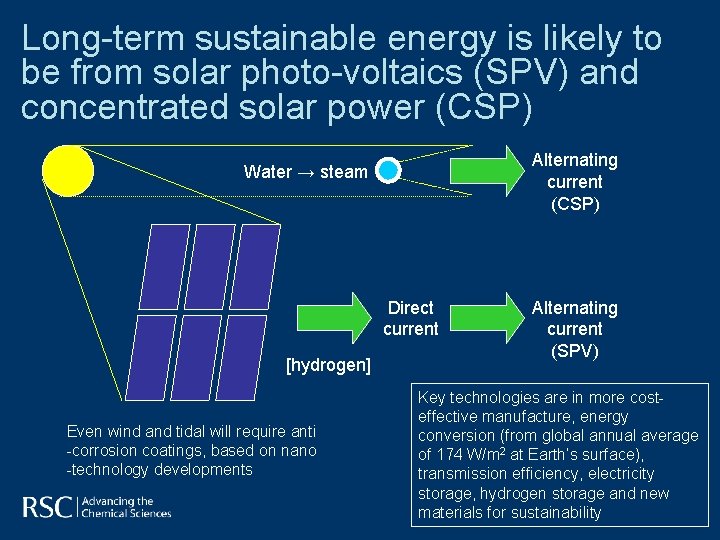
Long-term sustainable energy is likely to be from solar photo-voltaics (SPV) and concentrated solar power (CSP) Alternating current (CSP) Water → steam Direct current [hydrogen] Even wind and tidal will require anti -corrosion coatings, based on nano -technology developments Alternating current (SPV) Key technologies are in more costeffective manufacture, energy conversion (from global annual average of 174 W/m 2 at Earth’s surface), transmission efficiency, electricity storage, hydrogen storage and new materials for sustainability
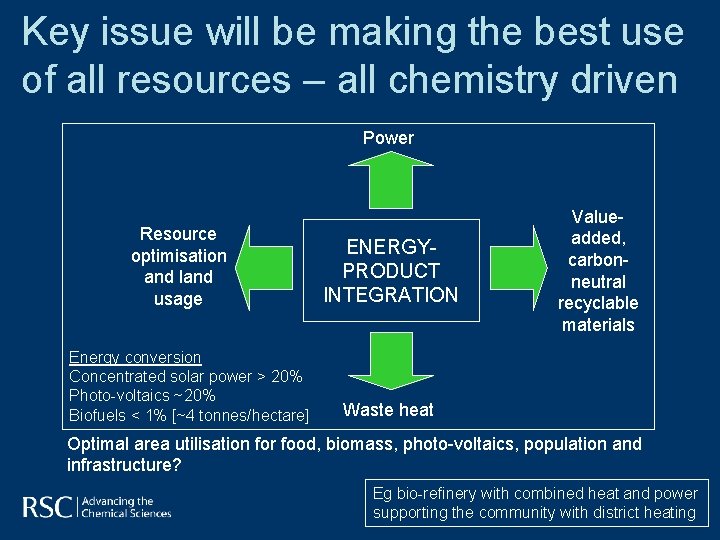
Key issue will be making the best use of all resources – all chemistry driven Power Resource optimisation and land usage Energy conversion Concentrated solar power > 20% Photo-voltaics ~20% Biofuels < 1% [~4 tonnes/hectare] ENERGYPRODUCT INTEGRATION Valueadded, carbonneutral recyclable materials Waste heat Optimal area utilisation for food, biomass, photo-voltaics, population and infrastructure? Eg bio-refinery with combined heat and power supporting the community with district heating
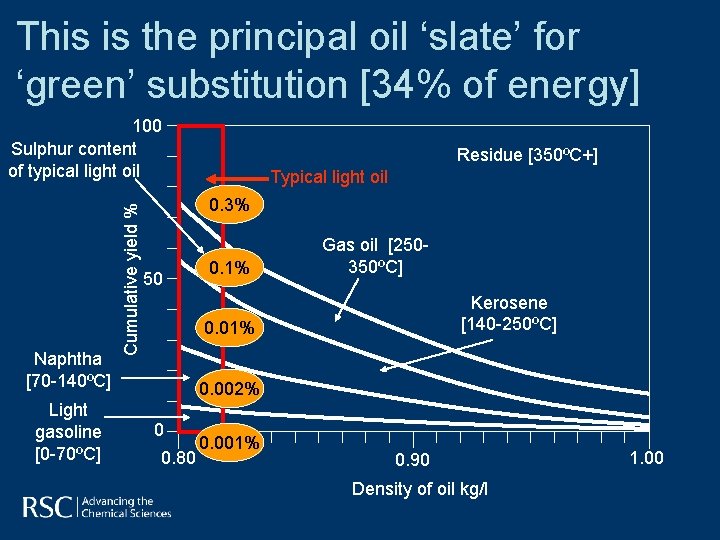
This is the principal oil ‘slate’ for ‘green’ substitution [34% of energy] Naphtha [70 -140ºC] Light gasoline [0 -70ºC] Cumulative yield % 100 Sulphur content of typical light oil Residue [350ºC+] Typical light oil 0. 3% 50 0. 1% Gas oil [250350ºC] Kerosene [140 -250ºC] 0. 01% 0. 002% 0 0. 80 0. 001% 0. 90 Density of oil kg/l 1. 00
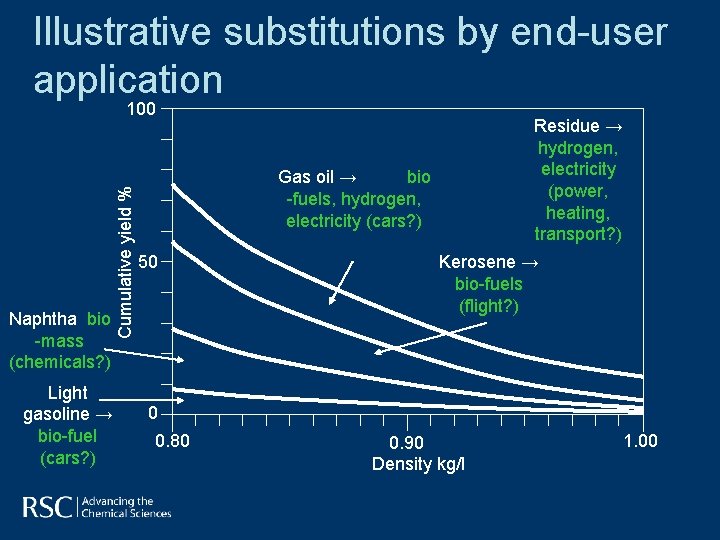
Illustrative substitutions by end-user application Naphtha bio -mass (chemicals? ) Light gasoline → bio-fuel (cars? ) Cumulative yield % 100 Residue → hydrogen, electricity (power, heating, transport? ) Gas oil → bio -fuels, hydrogen, electricity (cars? ) 50 Kerosene → bio-fuels (flight? ) 0 0. 80 0. 90 Density kg/l 1. 00
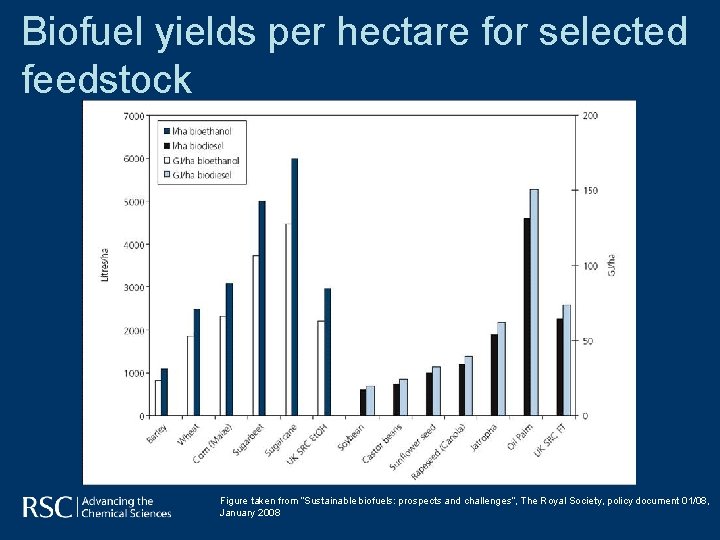
Biofuel yields per hectare for selected feedstock Figure taken from “Sustainable biofuels: prospects and challenges“, The Royal Society, policy document 01/08, January 2008
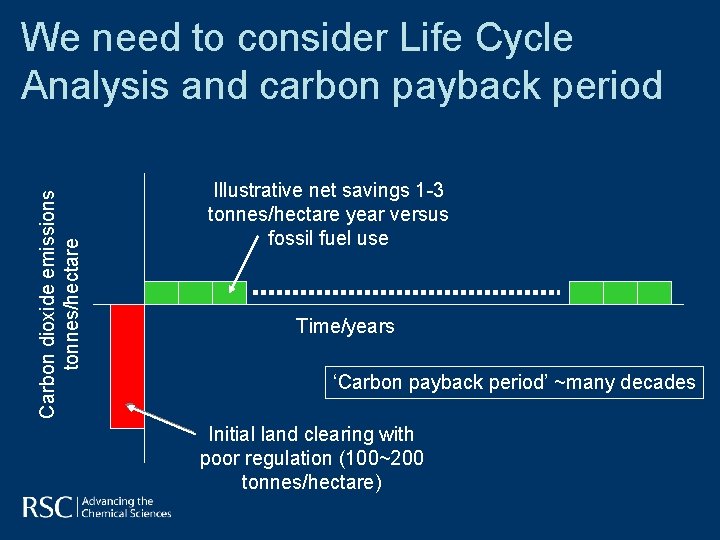
Carbon dioxide emissions tonnes/hectare We need to consider Life Cycle Analysis and carbon payback period Illustrative net savings 1 -3 tonnes/hectare year versus fossil fuel use Time/years ‘Carbon payback period’ ~many decades Initial land clearing with poor regulation (100~200 tonnes/hectare)
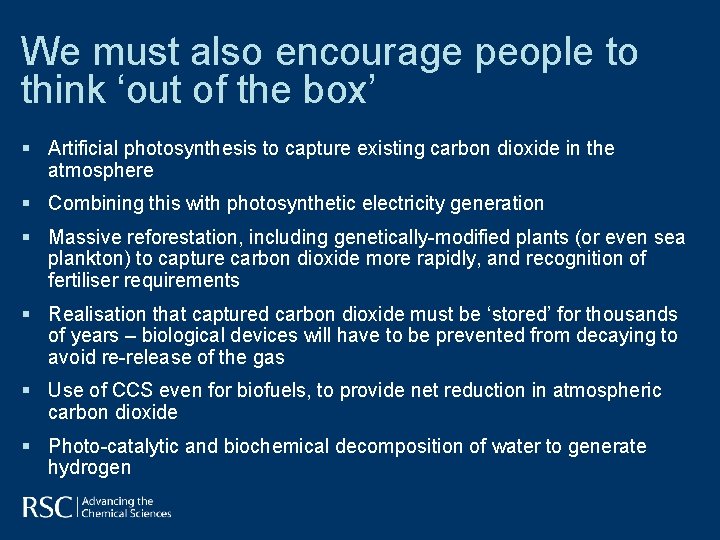
We must also encourage people to think ‘out of the box’ § Artificial photosynthesis to capture existing carbon dioxide in the atmosphere § Combining this with photosynthetic electricity generation § Massive reforestation, including genetically-modified plants (or even sea plankton) to capture carbon dioxide more rapidly, and recognition of fertiliser requirements § Realisation that captured carbon dioxide must be ‘stored’ for thousands of years – biological devices will have to be prevented from decaying to avoid re-release of the gas § Use of CCS even for biofuels, to provide net reduction in atmospheric carbon dioxide § Photo-catalytic and biochemical decomposition of water to generate hydrogen
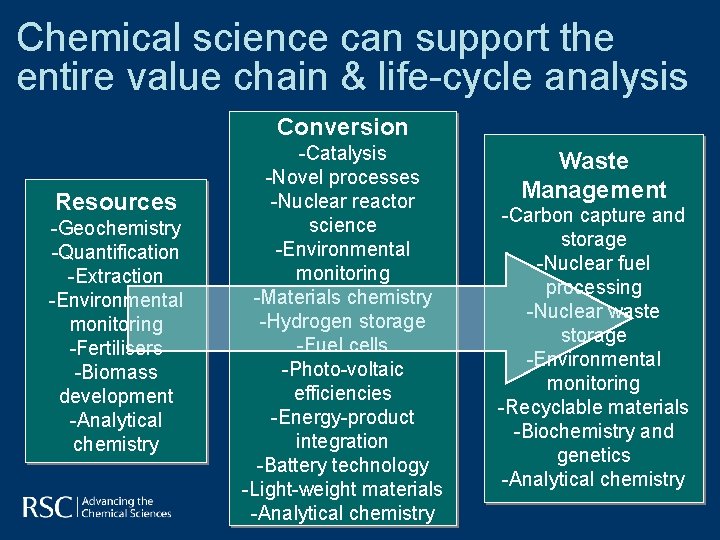
Chemical science can support the entire value chain & life-cycle analysis Conversion Resources -Geochemistry -Quantification -Extraction -Environmental monitoring -Fertilisers -Biomass development -Analytical chemistry -Catalysis -Novel processes -Nuclear reactor science -Environmental monitoring -Materials chemistry -Hydrogen storage -Fuel cells -Photo-voltaic efficiencies -Energy-product integration -Battery technology -Light-weight materials -Analytical chemistry Waste Management -Carbon capture and storage -Nuclear fuel processing -Nuclear waste storage -Environmental monitoring -Recyclable materials -Biochemistry and genetics -Analytical chemistry
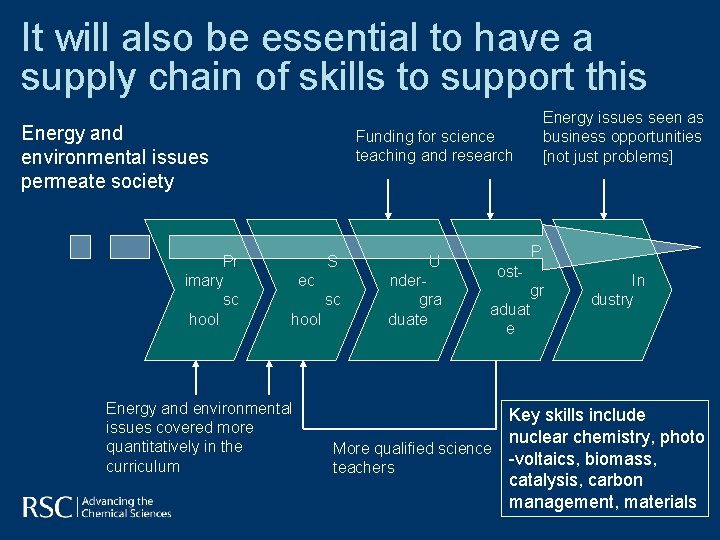
It will also be essential to have a supply chain of skills to support this Energy and environmental issues permeate society Pr imary sc hool Energy issues seen as business opportunities [not just problems] Funding for science teaching and research S U sc ndergra duate ec hool Energy and environmental issues covered more quantitatively in the curriculum P ostgr aduat e In dustry Key skills include nuclear chemistry, photo More qualified science -voltaics, biomass, teachers catalysis, carbon management, materials
Key messages are: § Saving energy is critical § Nurture and harness research skills § Provide vision, mechanisms and funding to deliver solutions
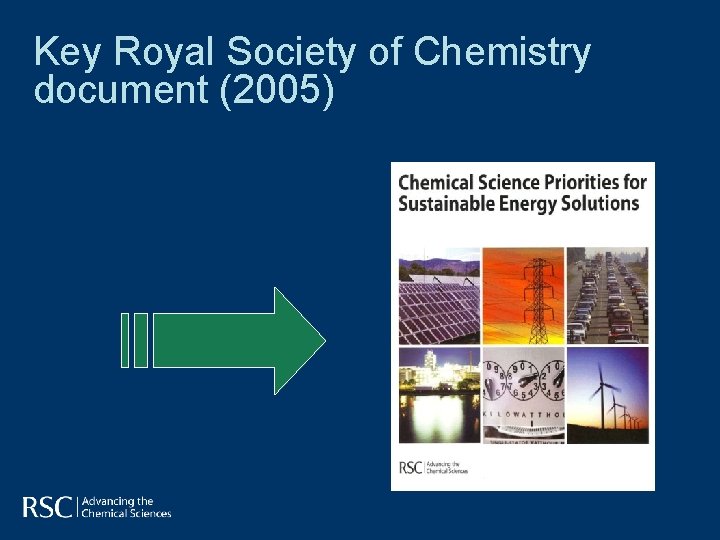
Key Royal Society of Chemistry document (2005)
Chemistry, Energy and Climate Change Dr Richard Pike Royal Society of Chemistry Tuesday 3 June, 2008, Lerwick