
Chemistry Endothermic and Exothermic Reactions HEAT AND ENERGY
- Slides: 34
Chemistry: Endothermic and Exothermic Reactions HEAT AND ENERGY Standards: 7 b. Students know chemical processes can either release (exothermic) or absorb (endothermic) thermal energy. 7 c. Students know energy is released when a material condenses or freezes (exothermic) and is absorbed when a material evaporates or melts (endothermic).
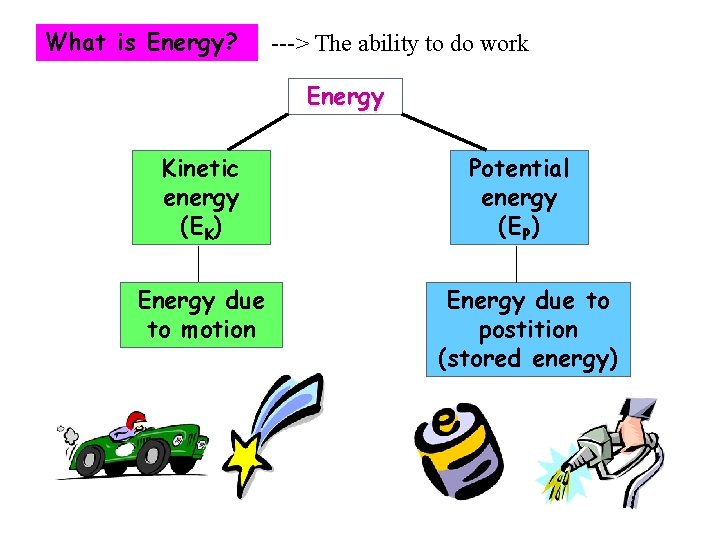
What is Energy? ---> The ability to do work Energy Kinetic energy (EK) Energy due to motion Potential energy (EP) Energy due to postition (stored energy)
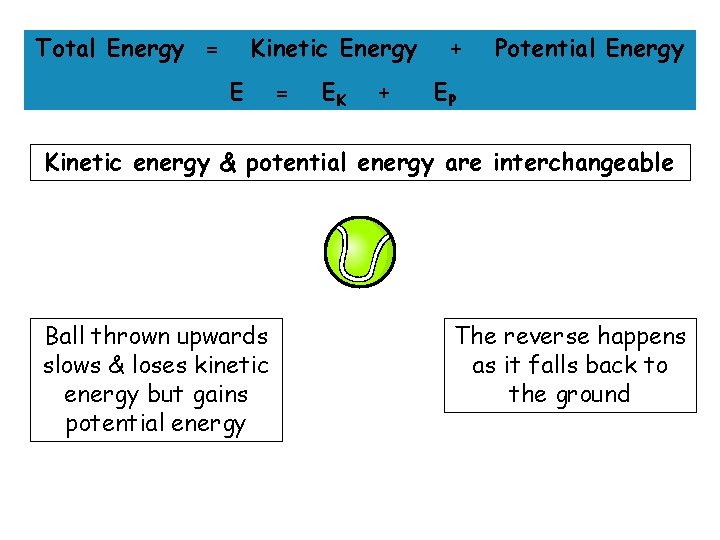
Total Energy = Kinetic Energy E = EK + + Potential Energy EP Kinetic energy & potential energy are interchangeable Ball thrown upwards slows & loses kinetic energy but gains potential energy The reverse happens as it falls back to the ground
Law of Conservation of Energy: Energy the total energy of the universe is constant and can neither be created nor destroyed; it can only be transformed.
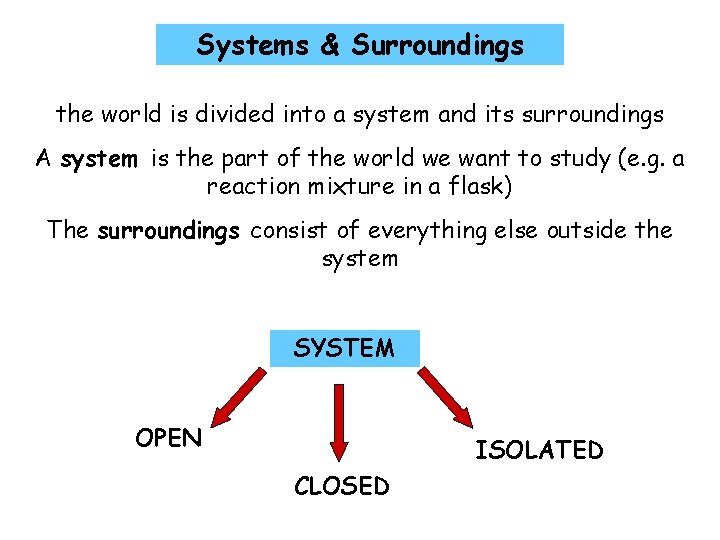
Systems & Surroundings the world is divided into a system and its surroundings A system is the part of the world we want to study (e. g. a reaction mixture in a flask) The surroundings consist of everything else outside the system SYSTEM OPEN ISOLATED CLOSED
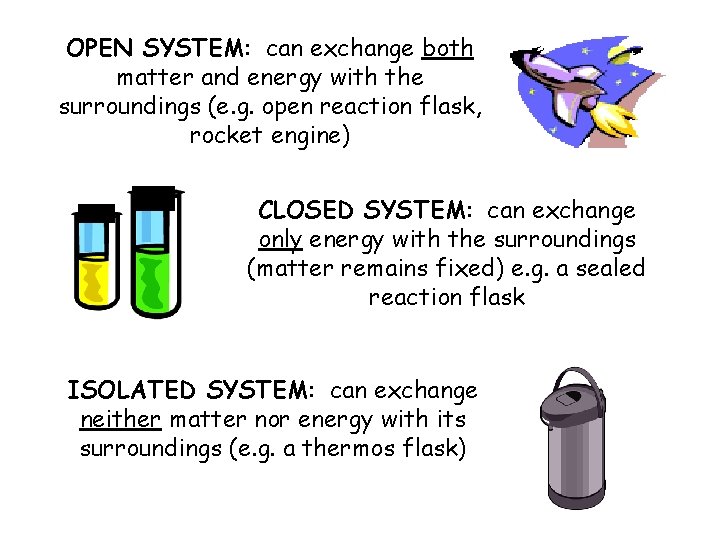
OPEN SYSTEM: can exchange both matter and energy with the surroundings (e. g. open reaction flask, rocket engine) CLOSED SYSTEM: can exchange only energy with the surroundings (matter remains fixed) e. g. a sealed reaction flask ISOLATED SYSTEM: can exchange neither matter nor energy with its surroundings (e. g. a thermos flask)
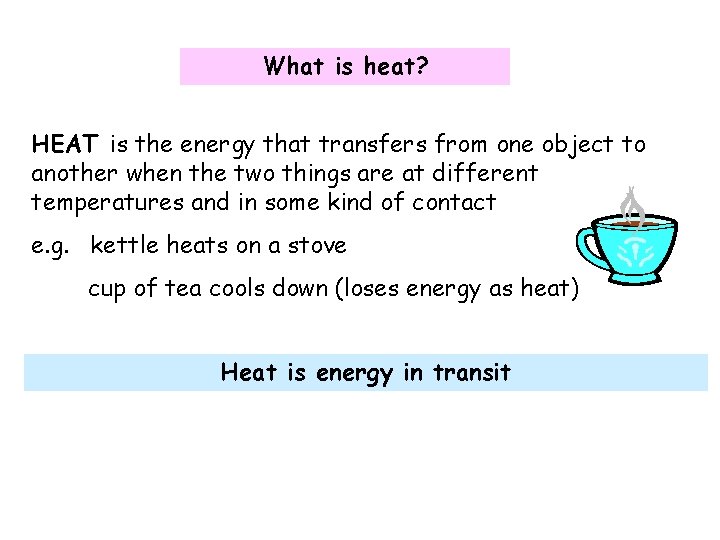
What is heat? HEAT is the energy that transfers from one object to another when the two things are at different temperatures and in some kind of contact e. g. kettle heats on a stove cup of tea cools down (loses energy as heat) Heat is energy in transit
UNITS OF ENERGY S. I. unit of energy is the joules (J) Heat and work ( energy in transit) also measured in joules 1 k. J (kilojoule) = 103 J Calorie (cal): 1 cal is the energy needed to raise the temperature of 1 g of water by 1 o. C 1 cal = 4. 184 J
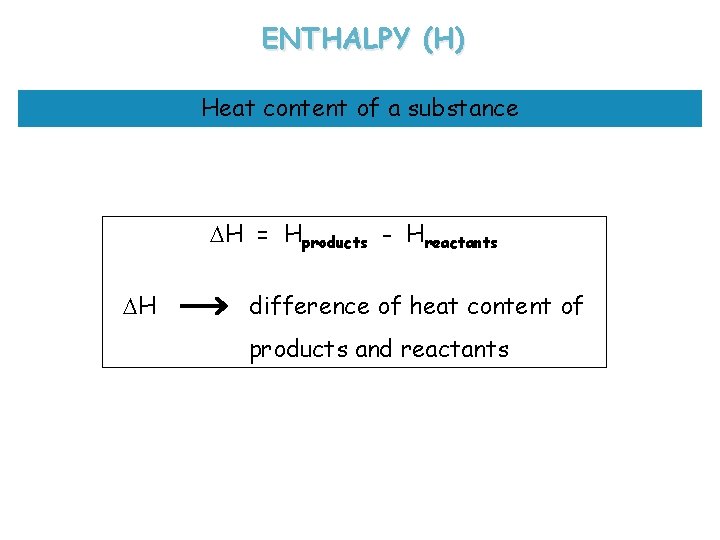
ENTHALPY (H) Heat content of a substance H = Hproducts - Hreactants H difference of heat content of products and reactants
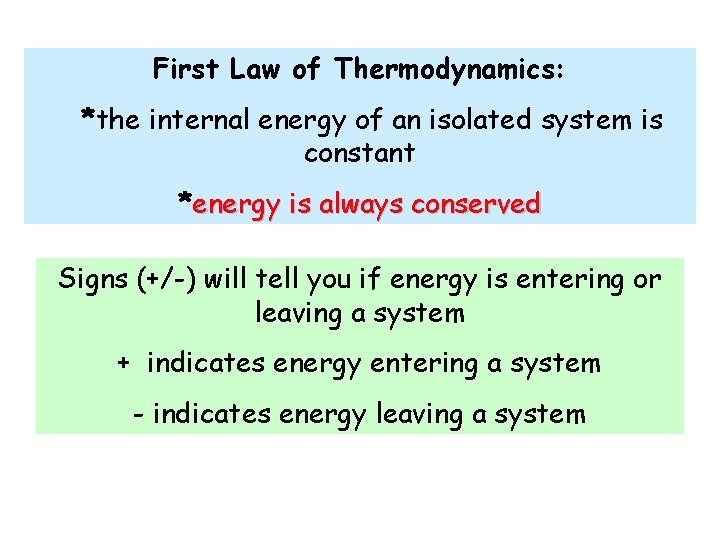
First Law of Thermodynamics: *the internal energy of an isolated system is constant *energy is always conserved Signs (+/-) will tell you if energy is entering or leaving a system + indicates energy entering a system - indicates energy leaving a system
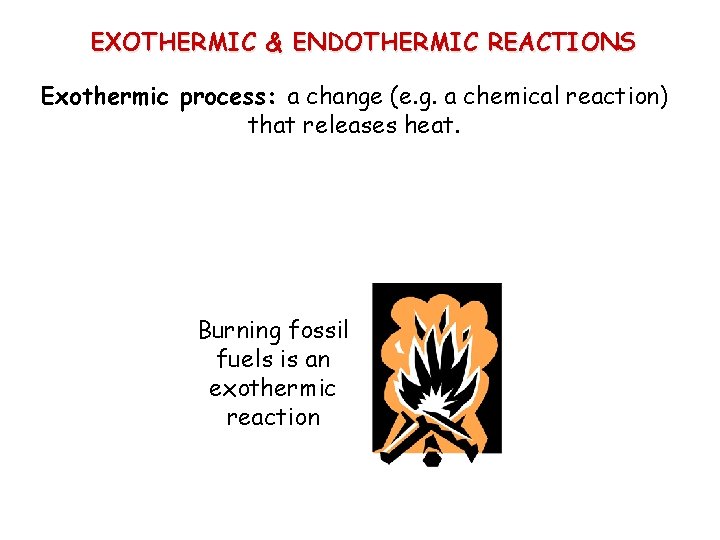
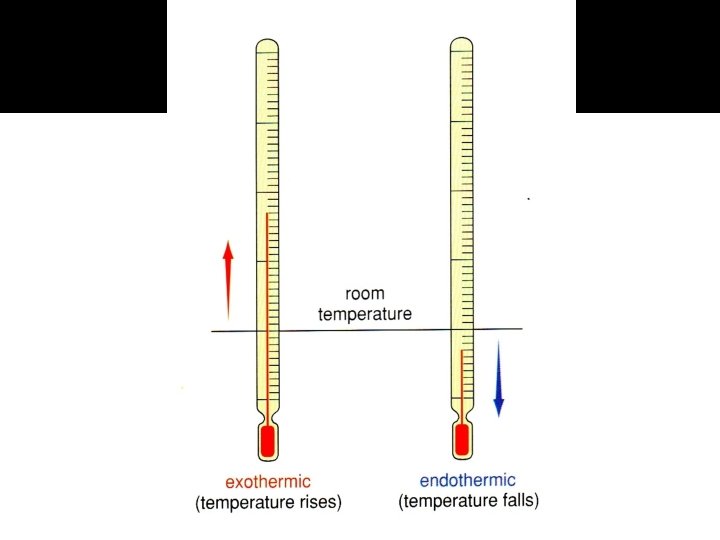
EXOTHERMIC & ENDOTHERMIC REACTIONS Exothermic process: a change (e. g. a chemical reaction) that releases heat. Burning fossil fuels is an exothermic reaction
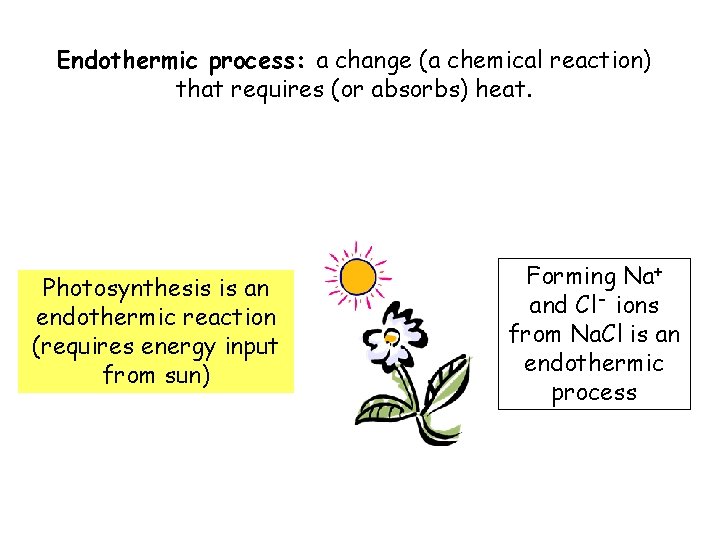
Endothermic process: a change (a chemical reaction) that requires (or absorbs) heat. Photosynthesis is an endothermic reaction (requires energy input from sun) Forming Na+ and Cl- ions from Na. Cl is an endothermic process
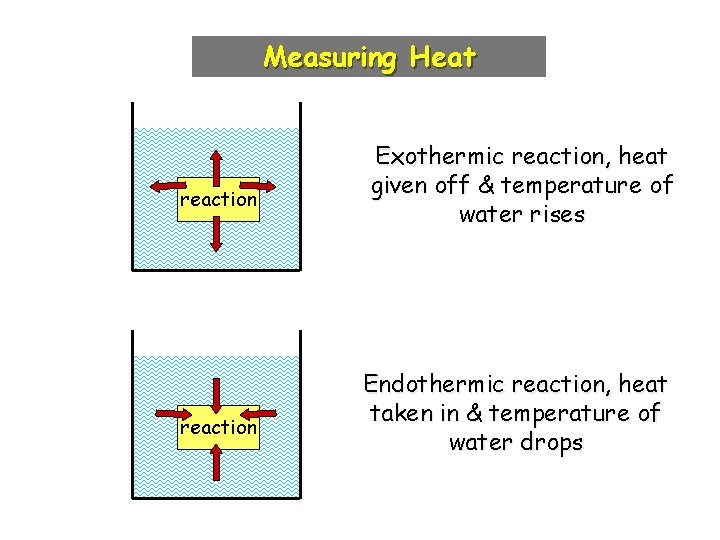
Measuring Heat reaction Exothermic reaction, heat given off & temperature of water rises Endothermic reaction, heat taken in & temperature of water drops
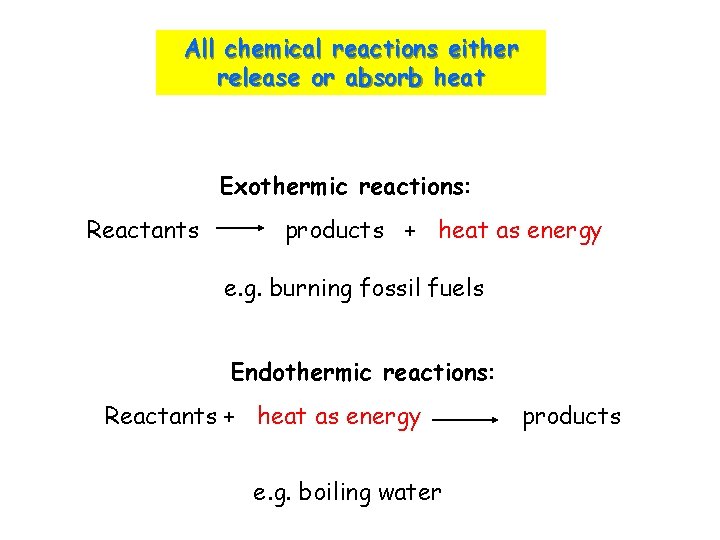
All chemical reactions either release or absorb heat Exothermic reactions: Reactants products + heat as energy e. g. burning fossil fuels Endothermic reactions: Reactants + heat as energy e. g. boiling water products
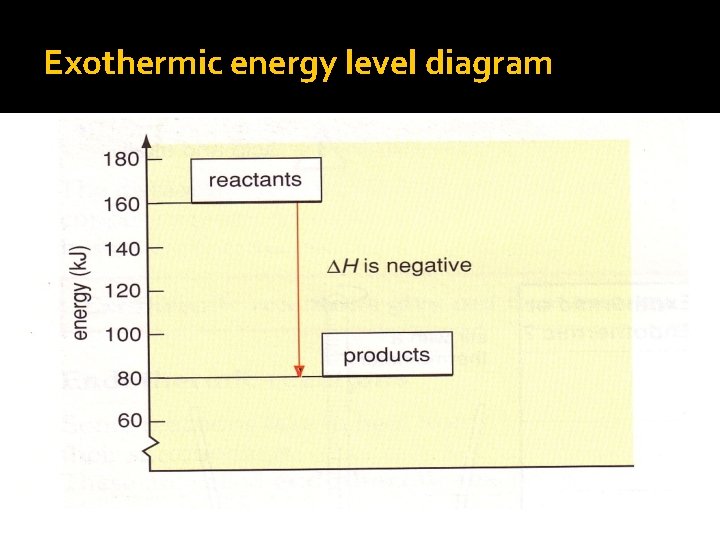
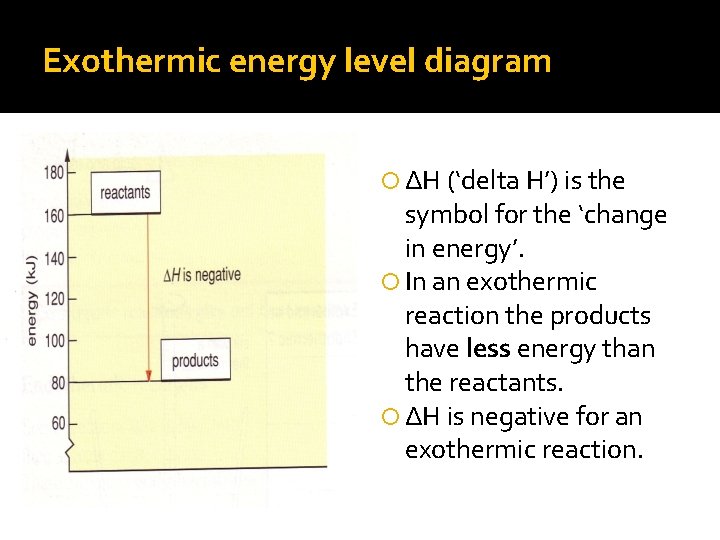
Exothermic energy level diagram
Exothermic energy level diagram ∆H (‘delta H’) is the symbol for the ‘change in energy’. In an exothermic reaction the products have less energy than the reactants. ∆H is negative for an exothermic reaction.
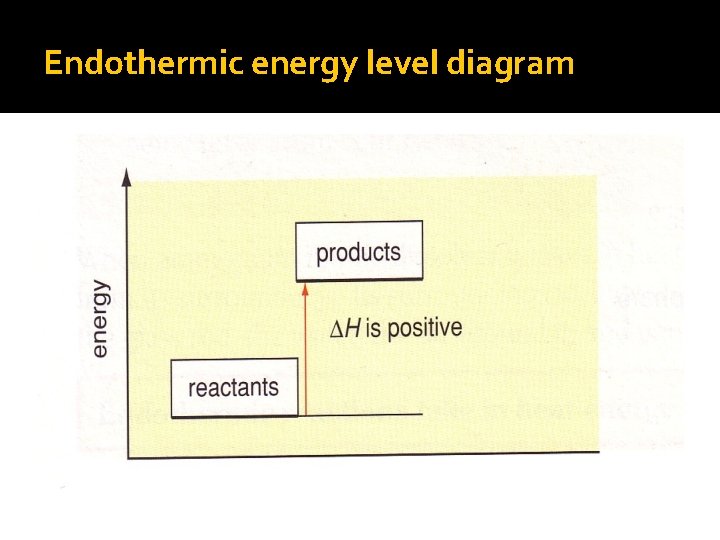
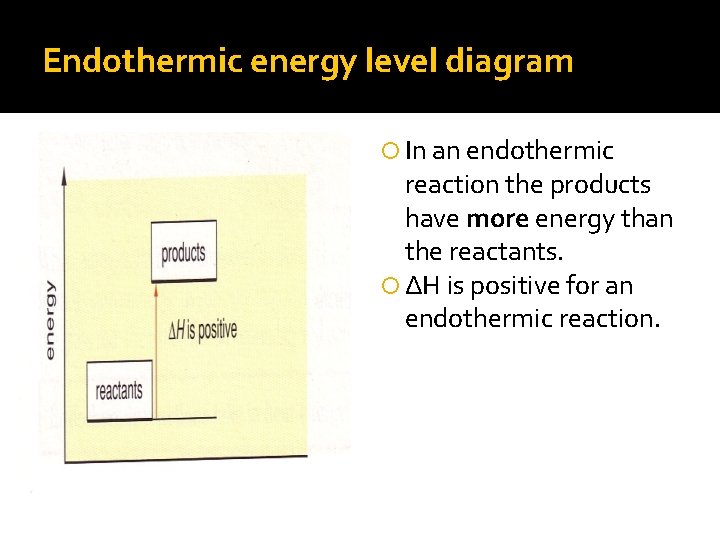
Endothermic energy level diagram
Endothermic energy level diagram In an endothermic reaction the products have more energy than the reactants. ∆H is positive for an endothermic reaction.
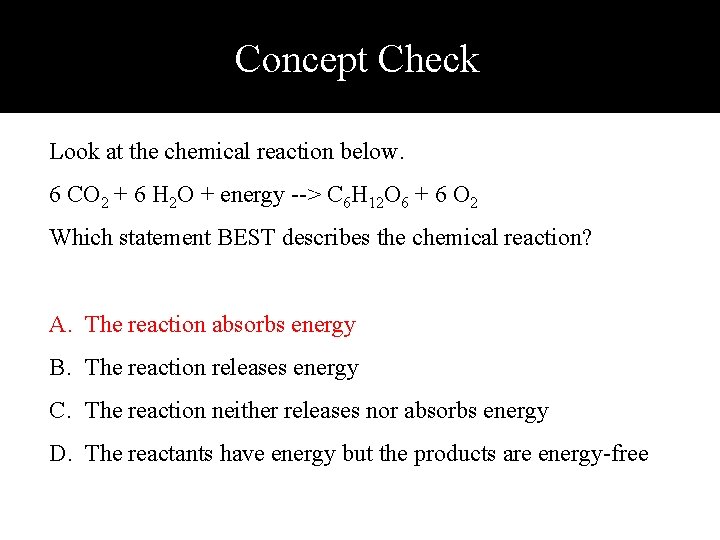
Concept Check Look at the chemical reaction below. 6 CO 2 + 6 H 2 O + energy --> C 6 H 12 O 6 + 6 O 2 Which statement BEST describes the chemical reaction? A. The reaction absorbs energy B. The reaction releases energy C. The reaction neither releases nor absorbs energy D. The reactants have energy but the products are energy-free
Concept Check Look at the chemical reaction below. 6 CO 2 + 6 H 2 O + energy --> C 6 H 12 O 6 + 6 O 2 Which statement BEST describes the chemical reaction? A. The reaction absorbs energy B. The reaction releases energy C. The reaction neither releases nor absorbs energy D. The reactants have energy but the products are energy-free
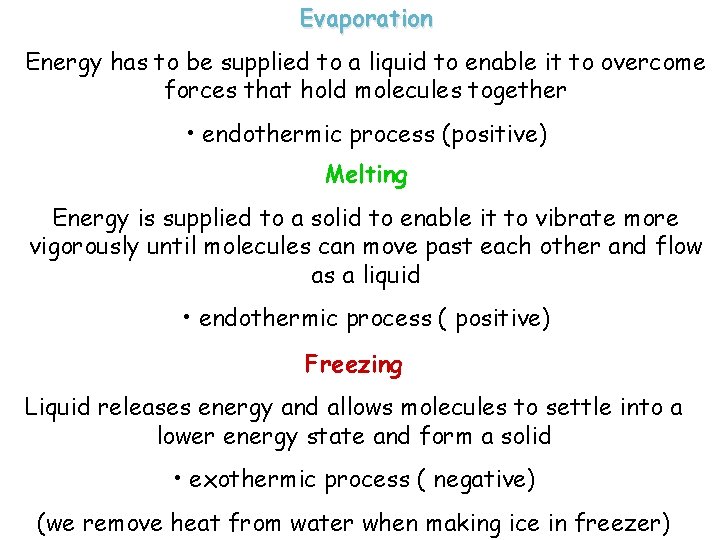
Evaporation Energy has to be supplied to a liquid to enable it to overcome forces that hold molecules together • endothermic process (positive) Melting Energy is supplied to a solid to enable it to vibrate more vigorously until molecules can move past each other and flow as a liquid • endothermic process ( positive) Freezing Liquid releases energy and allows molecules to settle into a lower energy state and form a solid • exothermic process ( negative) (we remove heat from water when making ice in freezer)
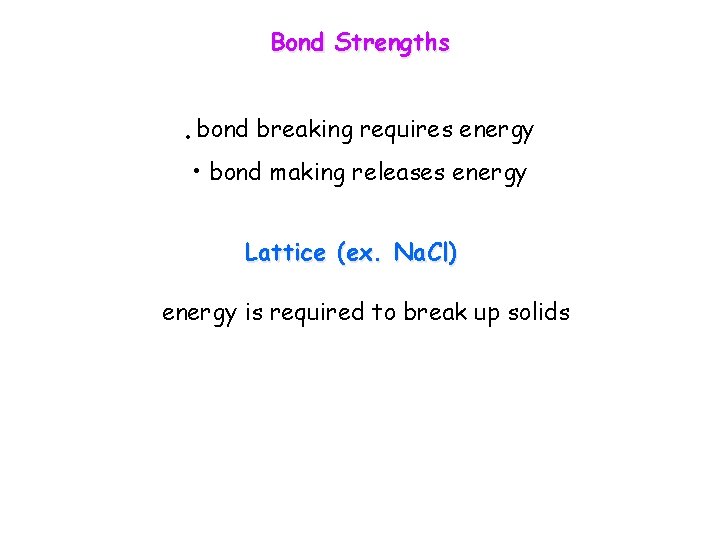
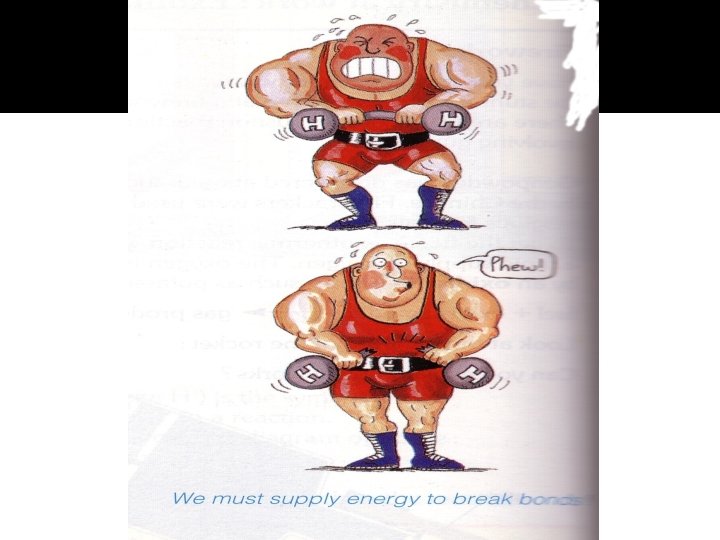
Bond Strengths • bond breaking requires energy • bond making releases energy Lattice (ex. Na. Cl) energy is required to break up solids
Concept Check Which term BEST describes the energy process involved in forming a chemical bond? A. Endothermic B. Exothermic C. Kinetic D. Potential
Concept Check Which term BEST describes the energy process involved in forming a chemical bond? A. Endothermic B. Exothermic C. Kinetic D. Potential
Concept Check Which term BEST describes the energy process involved in breaking a chemical bond? A. Endothermic B. Exothermic C. Kinetic D. Potential
Concept Check Which term BEST describes the energy process involved in breaking a chemical bond? A. Endothermic B. Exothermic C. Kinetic D. Potential
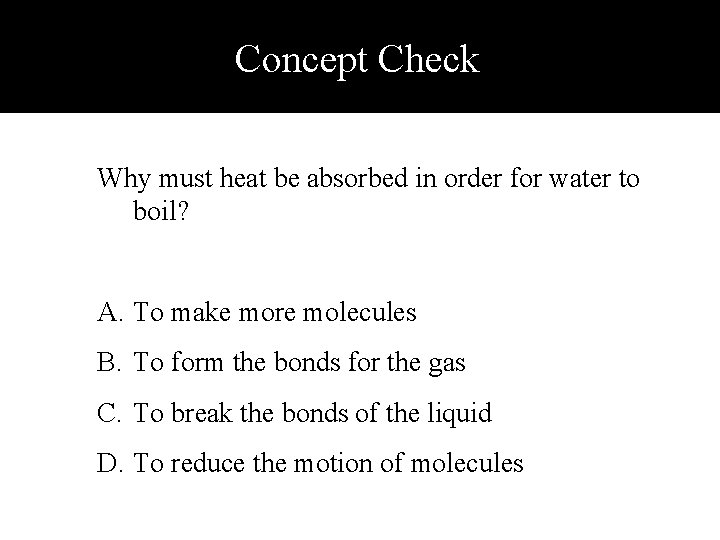
Concept Check Why must heat be absorbed in order for water to boil? A. To make more molecules B. To form the bonds for the gas C. To break the bonds of the liquid D. To reduce the motion of molecules
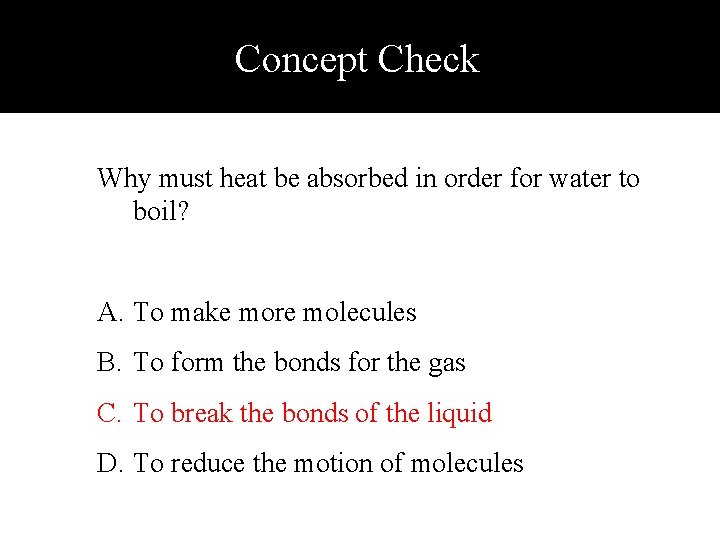
Concept Check Why must heat be absorbed in order for water to boil? A. To make more molecules B. To form the bonds for the gas C. To break the bonds of the liquid D. To reduce the motion of molecules
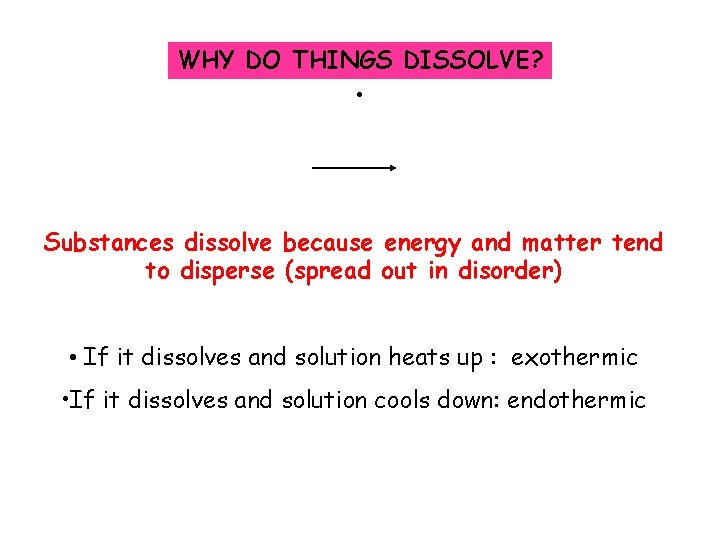
WHY DO THINGS DISSOLVE? • Substances dissolve because energy and matter tend to disperse (spread out in disorder) • If it dissolves and solution heats up : exothermic • If it dissolves and solution cools down: endothermic
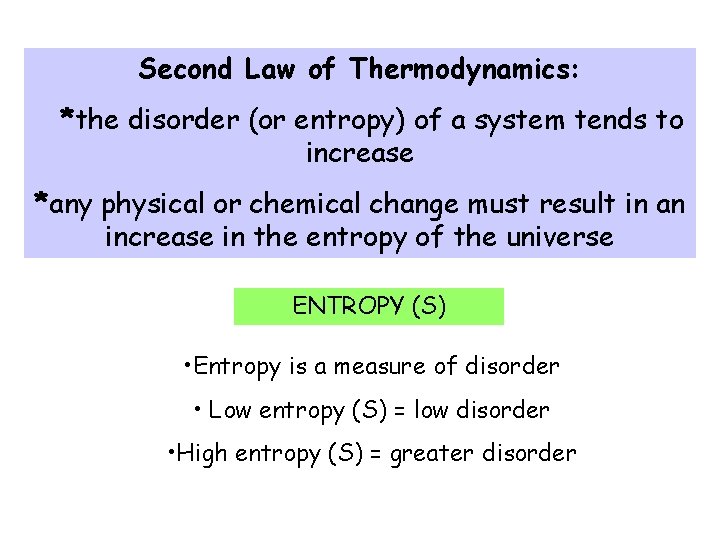
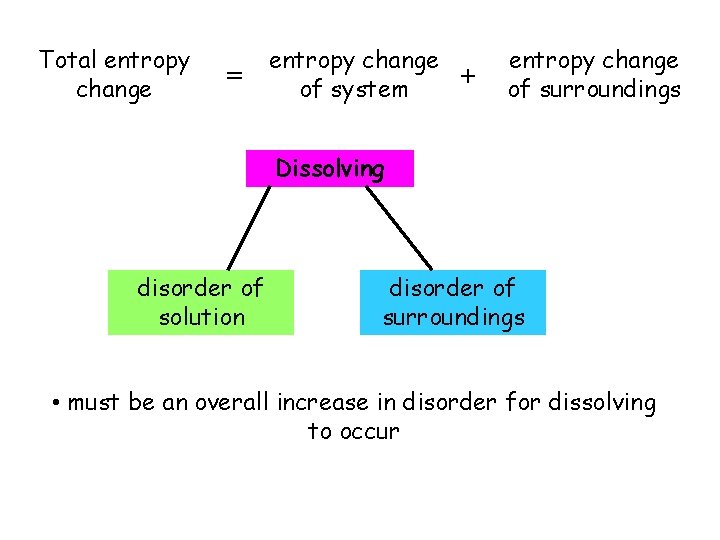
Second Law of Thermodynamics: *the disorder (or entropy) of a system tends to increase *any physical or chemical change must result in an increase in the entropy of the universe ENTROPY (S) • Entropy is a measure of disorder • Low entropy (S) = low disorder • High entropy (S) = greater disorder
Total entropy change = entropy change + of system entropy change of surroundings Dissolving disorder of solution disorder of surroundings • must be an overall increase in disorder for dissolving to occur
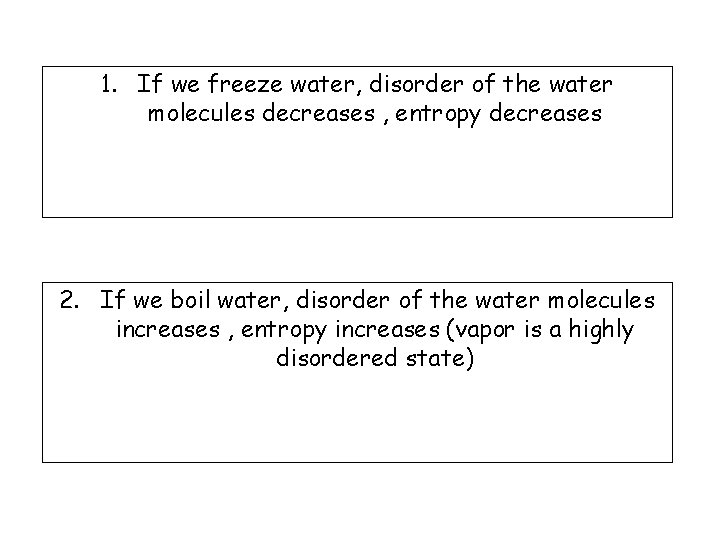
1. If we freeze water, disorder of the water molecules decreases , entropy decreases 2. If we boil water, disorder of the water molecules increases , entropy increases (vapor is a highly disordered state)