
Chemistry Bond Polarity and Molecular Geometry Just a
Chemistry Bond Polarity and Molecular Geometry
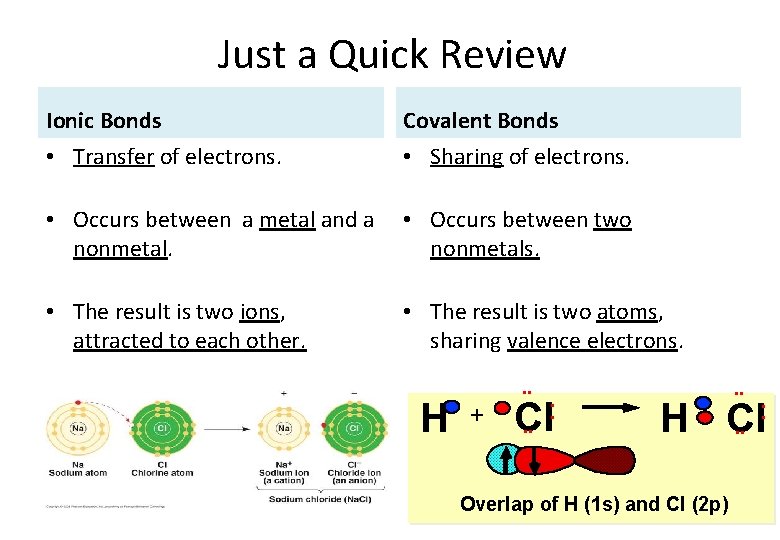
Just a Quick Review Ionic Bonds Covalent Bonds • Transfer of electrons. • Sharing of electrons. • Occurs between a metal and a nonmetal. • Occurs between two nonmetals. • The result is two ions, attracted to each other. • The result is two atoms, sharing valence electrons. H • • + Cl • • H Cl Overlap of H (1 s) and Cl (2 p) • • • •
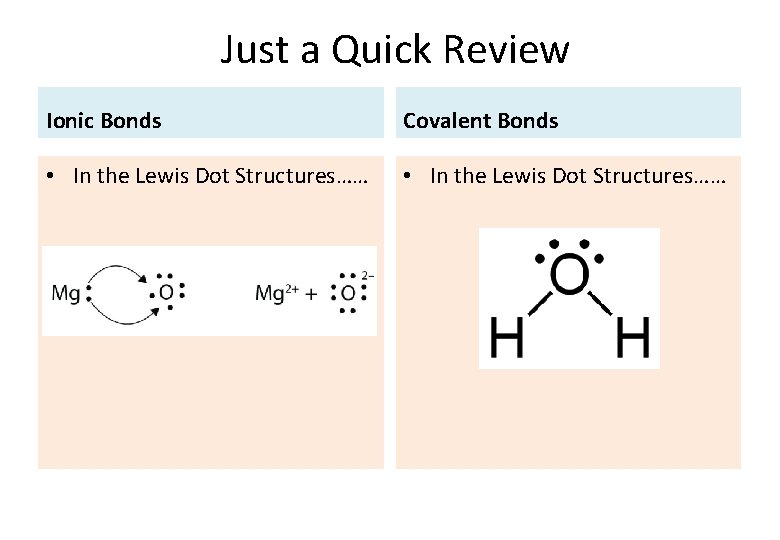
Just a Quick Review Ionic Bonds Covalent Bonds • In the Lewis Dot Structures……
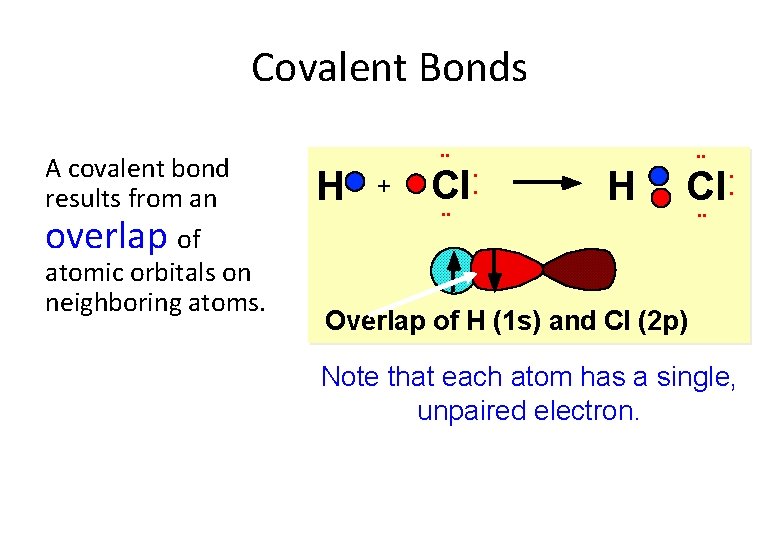
Covalent Bonds A covalent bond results from an overlap of atomic orbitals on neighboring atoms. • • H + Cl • • • • H • • Cl • • • • Overlap of H (1 s) and Cl (2 p) Note that each atom has a single, unpaired electron.
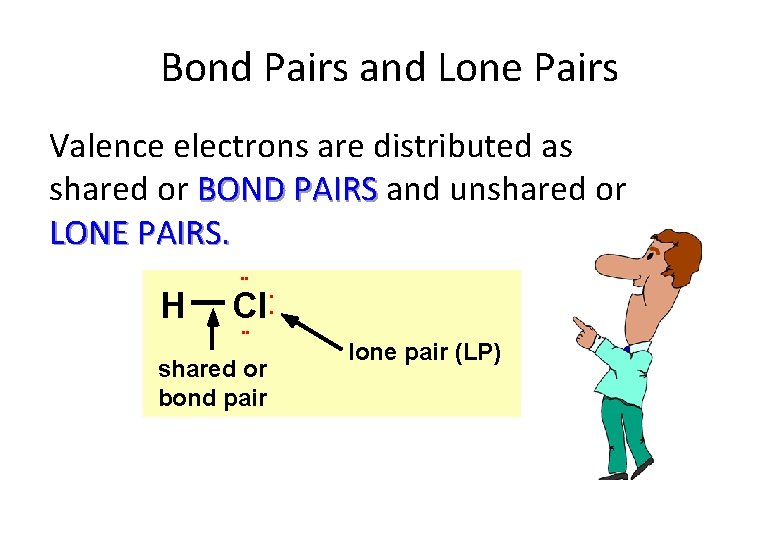
Bond Pairs and Lone Pairs Valence electrons are distributed as shared or BOND PAIRS and unshared or LONE PAIRS. • • H Cl • • shared or bond pair • • lone pair (LP)
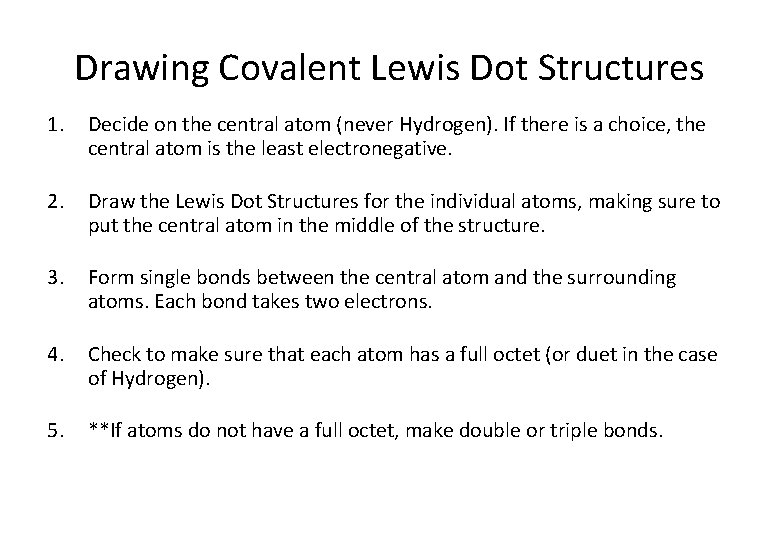
Drawing Covalent Lewis Dot Structures 1. Decide on the central atom (never Hydrogen). If there is a choice, the central atom is the least electronegative. 2. Draw the Lewis Dot Structures for the individual atoms, making sure to put the central atom in the middle of the structure. 3. Form single bonds between the central atom and the surrounding atoms. Each bond takes two electrons. 4. Check to make sure that each atom has a full octet (or duet in the case of Hydrogen). 5. **If atoms do not have a full octet, make double or triple bonds.
Now You Try One! Draw Carbon tetrachloride, CCl 4
Now You Try One! Draw Sulfur Dioxide, SO 2
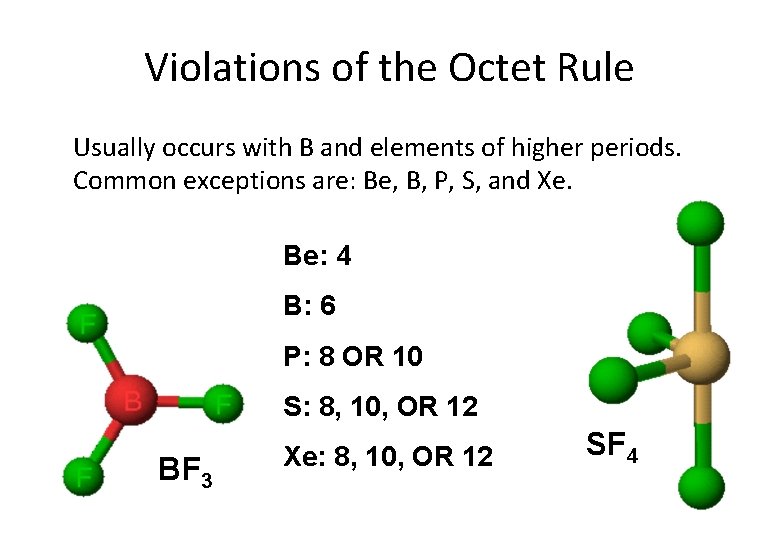
Violations of the Octet Rule Usually occurs with B and elements of higher periods. Common exceptions are: Be, B, P, S, and Xe. Be: 4 B: 6 P: 8 OR 10 S: 8, 10, OR 12 BF 3 Xe: 8, 10, OR 12 SF 4
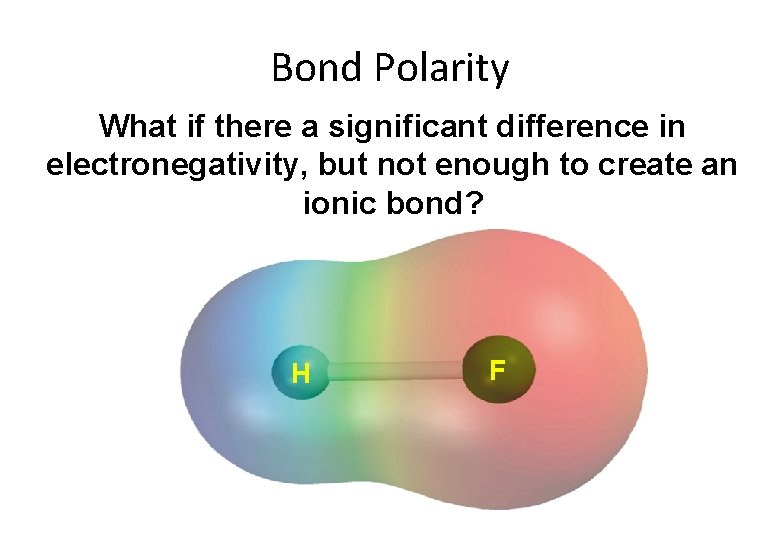
Bond Polarity What if there a significant difference in electronegativity, but not enough to create an ionic bond? H F
Share out what we learned from HW
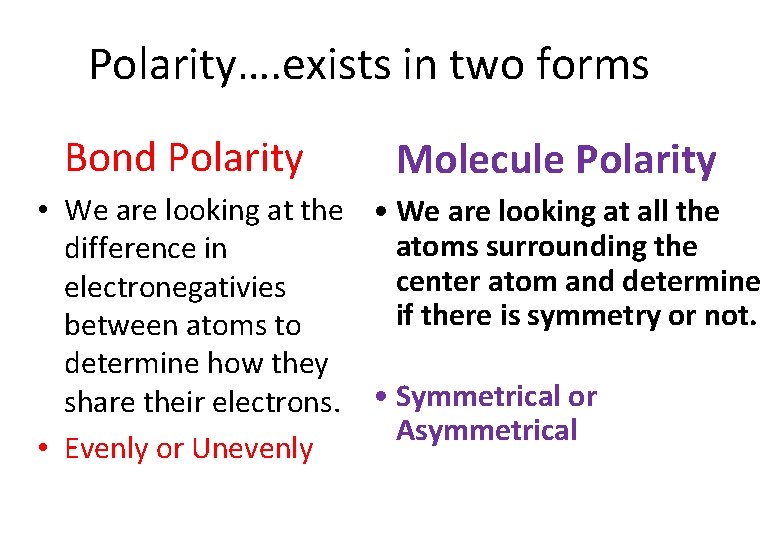
Polarity…. exists in two forms Bond Polarity Molecule Polarity • We are looking at the • We are looking at all the atoms surrounding the difference in center atom and determine electronegativies if there is symmetry or not. between atoms to determine how they share their electrons. • Symmetrical or Asymmetrical • Evenly or Unevenly
Bond Polarity ØThe difference in electronegativities affects how atoms bond together. ØUsing the electronegativity values, we can predict the type of bond that forms. ØAlthough all covalent bonds involve the sharing of electrons, most of the time this sharing is not equal.
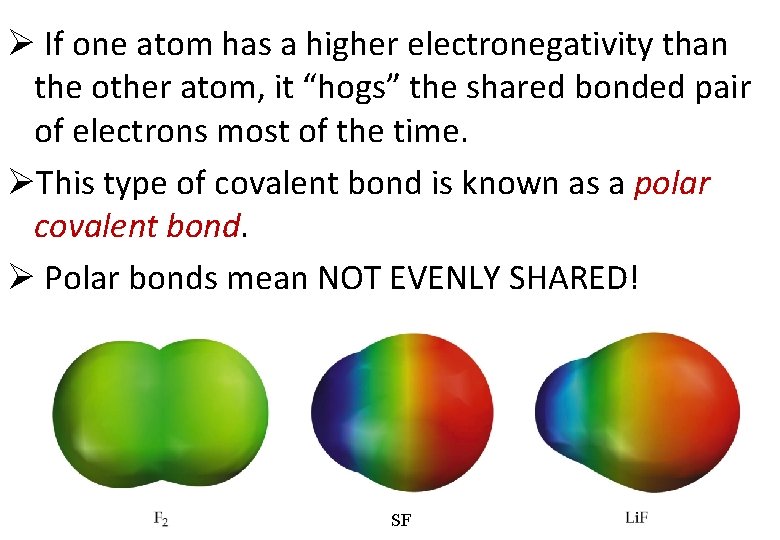
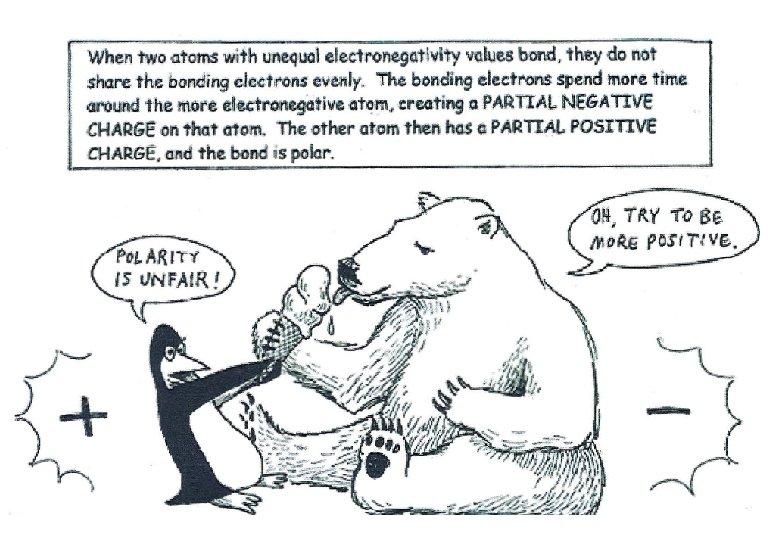
Ø If one atom has a higher electronegativity than the other atom, it “hogs” the shared bonded pair of electrons most of the time. ØThis type of covalent bond is known as a polar covalent bond. Ø Polar bonds mean NOT EVENLY SHARED! SF
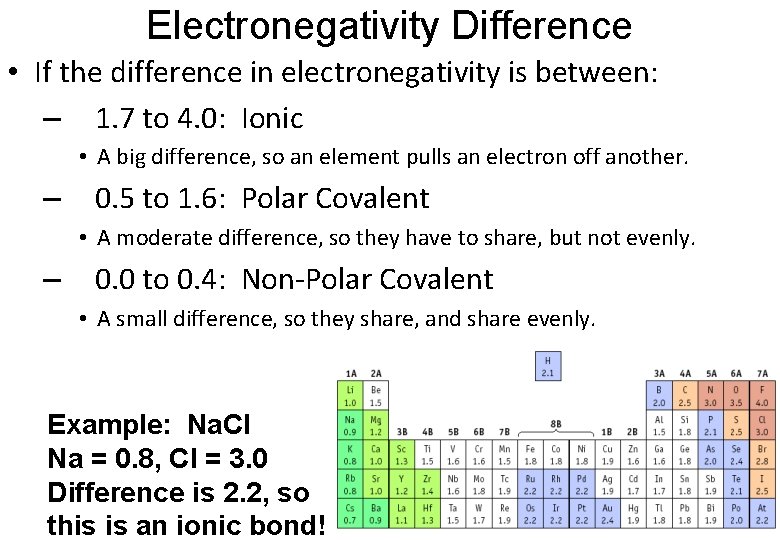
Electronegativity Difference • If the difference in electronegativity is between: – 1. 7 to 4. 0: Ionic • A big difference, so an element pulls an electron off another. – 0. 5 to 1. 6: Polar Covalent • A moderate difference, so they have to share, but not evenly. – 0. 0 to 0. 4: Non-Polar Covalent • A small difference, so they share, and share evenly. Example: Na. Cl Na = 0. 8, Cl = 3. 0 Difference is 2. 2, so this is an ionic bond!
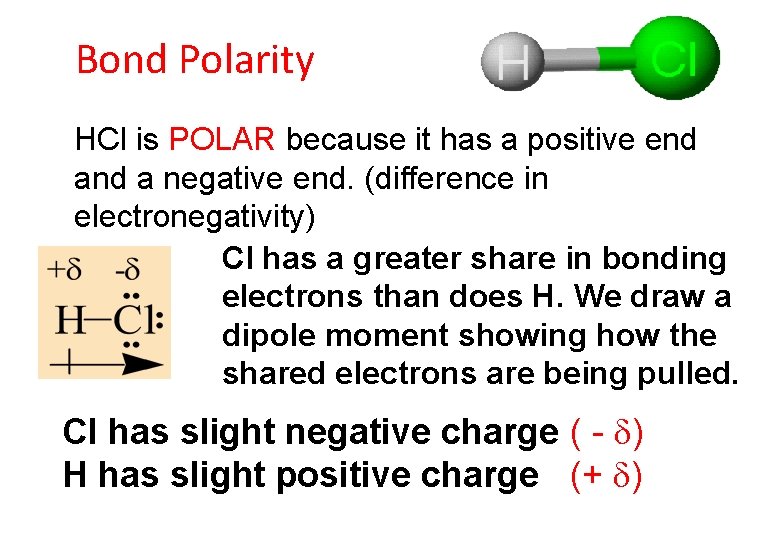
Bond Polarity HCl is POLAR because it has a positive end a negative end. (difference in electronegativity) Cl has a greater share in bonding electrons than does H. We draw a dipole moment showing how the shared electrons are being pulled. Cl has slight negative charge ( - d) H has slight positive charge (+ d)
Polarity of Whole Molecule Ø Determining the polarity of a bond is easy, but what about the molecule as a whole? Ø Strangely enough, you can have nonpolar molecules that contain polar bonds! Ø SO…. Ø How do you determine if a molecule itself is going to be polar or nonpolar? Ø Look at the Lewis Structure and check out the central atom!
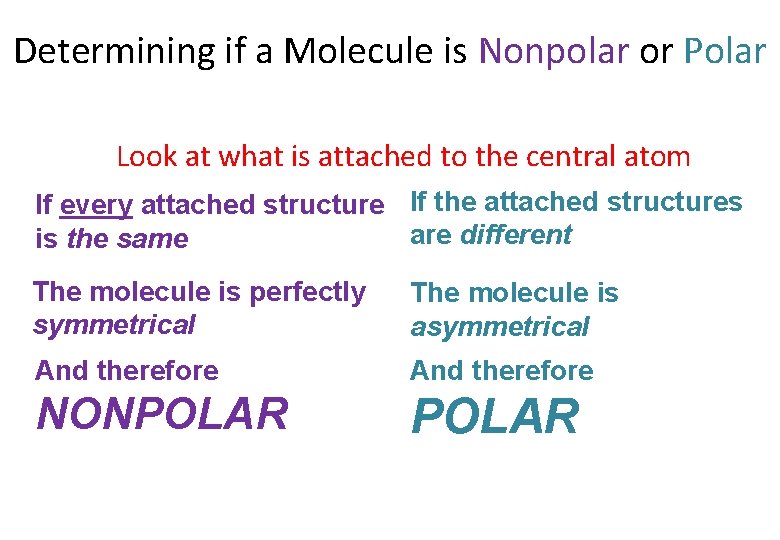
Determining if a Molecule is Nonpolar or Polar Look at what is attached to the central atom If every attached structure If the attached structures are different is the same The molecule is perfectly symmetrical The molecule is asymmetrical And therefore NONPOLAR
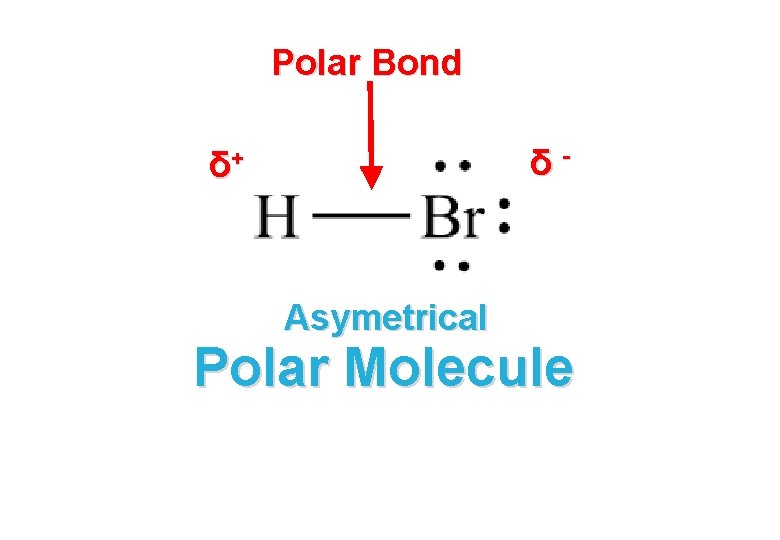
Polar Bond δ- δ+ Asymetrical Polar Molecule
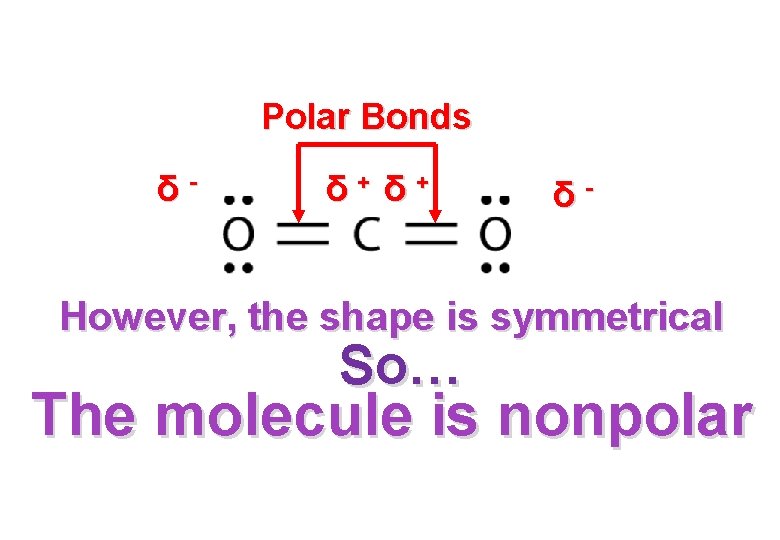
Polar Bonds δ- δ+δ+ δ- However, the shape is symmetrical So… The molecule is nonpolar

Nonpolar Bond Symmetrical Nonpolar Molecule
- Slides: 21