
Chemistry atomic theory development Quick Brainstorm What is
Chemistry: atomic theory development {
Quick Brainstorm What is matter? • Term matter refers to anything that occupies space and has mass—in other words, the “stuff” that the universe is made of. All matter is made up of substances called elements. Can anyone give examples of matter now? • Computer • Book • Proton • Atoms (e. g. , a helium atom) • Molecules (e. g. , water, sugar) • Compounds (e. g. , table salt, silicon dioxide) https: //www. youtube. com/watch? v=U 2 g 1 H 5 w. Pm. UE
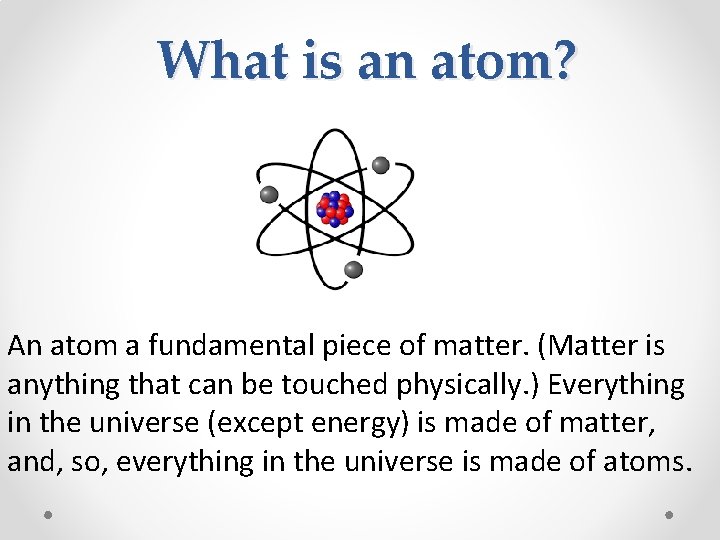
What is an atom? An atom a fundamental piece of matter. (Matter is anything that can be touched physically. ) Everything in the universe (except energy) is made of matter, and, so, everything in the universe is made of atoms.
Development of atomic theory

Timeline overview • https: //www. youtube. com/watch? v=NSAg. Lv. KOPLQ
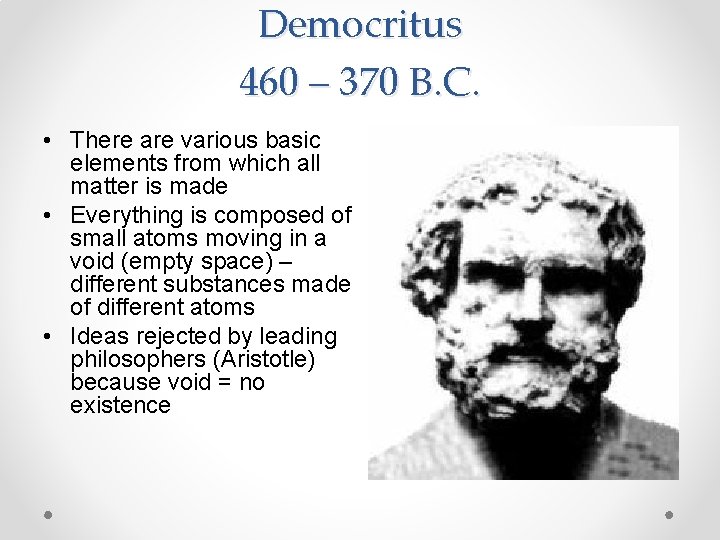
Democritus 460 – 370 B. C. • There are various basic elements from which all matter is made • Everything is composed of small atoms moving in a void (empty space) – different substances made of different atoms • Ideas rejected by leading philosophers (Aristotle) because void = no existence
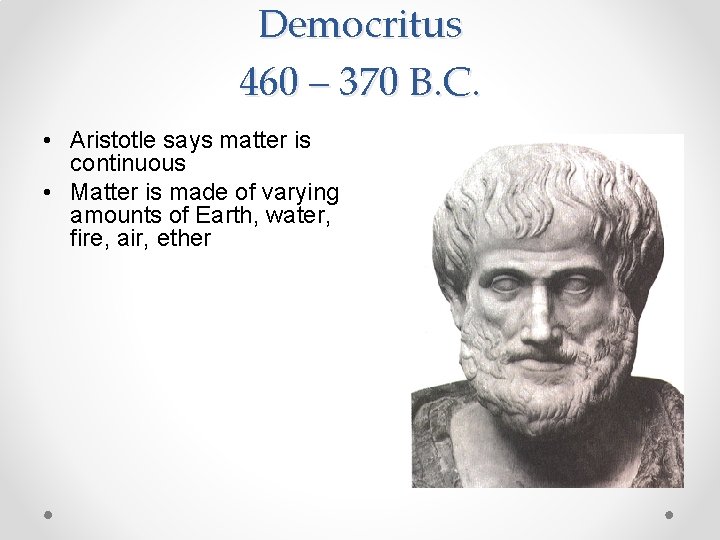
Democritus 460 – 370 B. C. • Aristotle says matter is continuous • Matter is made of varying amounts of Earth, water, fire, air, ether
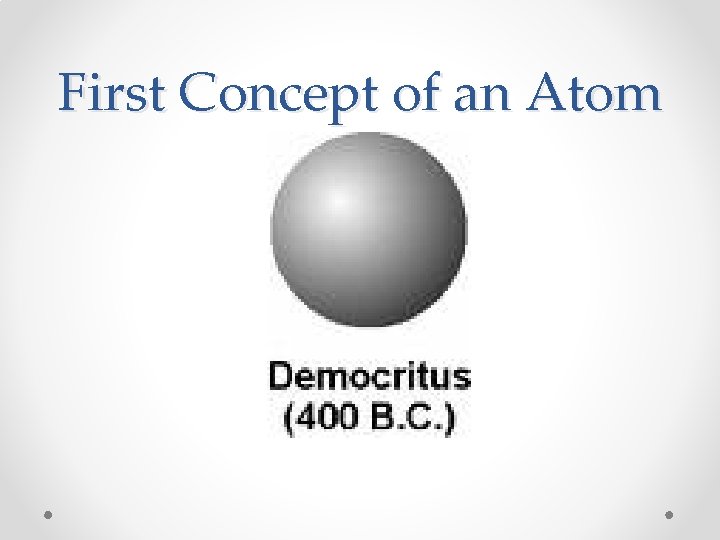
First Concept of an Atom
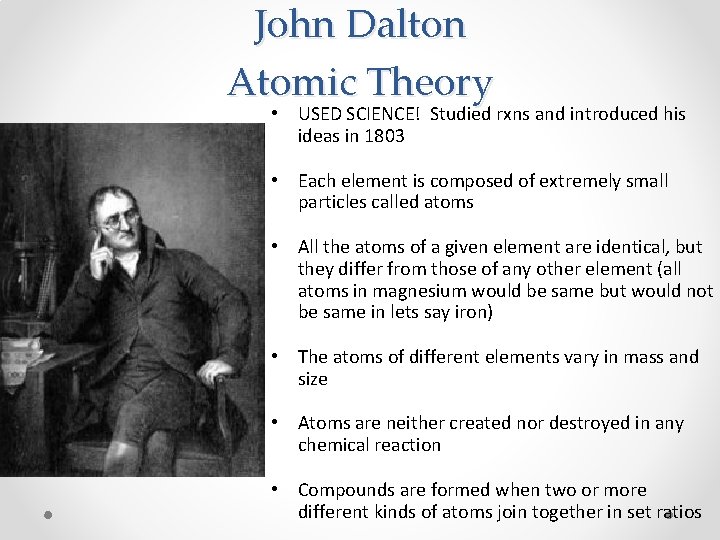
John Dalton Atomic Theory • USED SCIENCE! Studied rxns and introduced his ideas in 1803 • Each element is composed of extremely small particles called atoms • All the atoms of a given element are identical, but they differ from those of any other element (all atoms in magnesium would be same but would not be same in lets say iron) • The atoms of different elements vary in mass and size • Atoms are neither created nor destroyed in any chemical reaction • Compounds are formed when two or more different kinds of atoms join together in set ratios
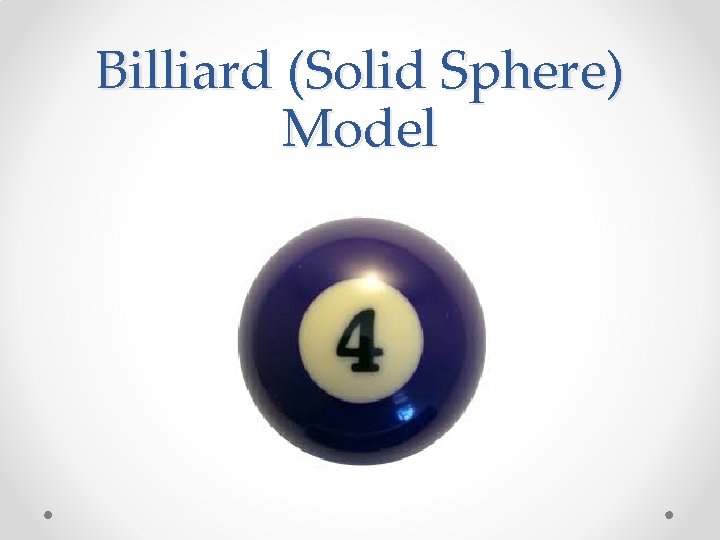
Billiard (Solid Sphere) Model
J. J. Thomson 1856 -1940 • Discovered electron 1897 – Cathode Ray Experiment • Plum Pudding model 1904 o Electrons in a cloudof positive charges • Concluded that atoms were made of positive cores and negative charged particles within it. • He failed to recognize positive charges in the atom as particles.

Plum Pudding Model
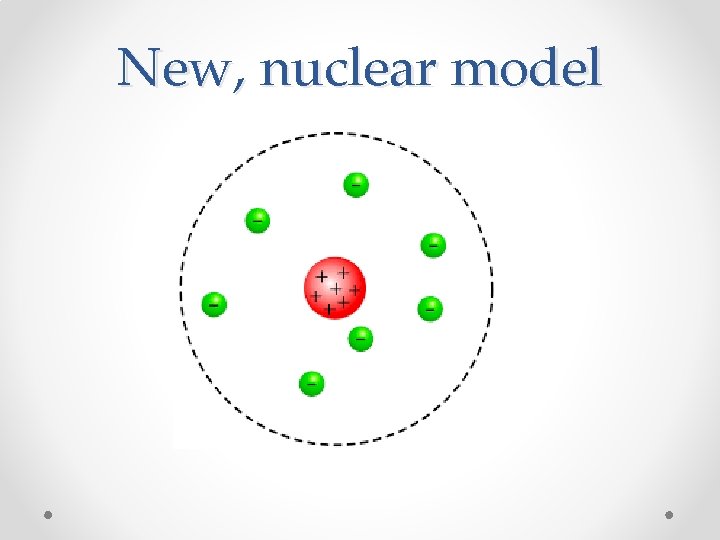
Ernest Rutherford 1871 -1937 • Nucleus Theory 1911 o alpha particle gold foil experiment (allowed him to showcase that atom has a tiny and heavy nucleus) • An atom’s mass is mostly in the nucleus. With this holding the electrons in place by electrical attraction • The nucleus has a positive charge https: //www. youtube. com/watch? v=IQ 1 h_gd. Vl. Hg
• He fired α, alpha, particles (Helium nuclei) at a piece of gold foil which was only a few atoms thick. Opposite the gold foil is a zinc sulfide screen that emits a flash of light when struck by an alpha particle. Due to the “understood” dispersion of positive charge and small sized electrons, α particles were expected to pass straight through the thin foil. • HOWEVER, they found that while most of the helium nuclei passed through the foil, a small number were deflected at very large angles and, to their surprise, some helium nuclei bounced straight back! • Because alpha particles have about 8000 times the mass of an electron and impacted the foil at very high velocities, it was clear that very strong forces were necessary to deflect and backscatter these particles. IOW, the α particles were hitting something other than electrons!
New, nuclear model
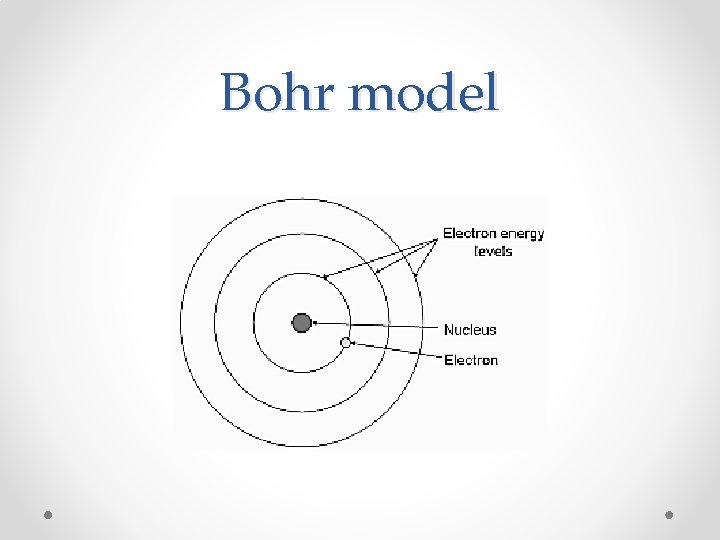
Niels Bohr 1885 -1962 Planetary Model 1913 • Bohr refined Rutherford's idea by adding that the electrons moved in set paths, or orbits, of specific energy levels numbers of electrons per orbit. • Electrons could not exist between these levels. However, the electrons could jump from one level to another as they gained or lost energy. • Quantum, or cloud, model will be studied in detail soon.
Bohr model
James Chadwick • He discovered the neutron in atoms (1932) • Neutrons are located in the center of an atom, in the nucleus along with the protons. • They have neither a positive nor negative charge, but contribute the atomic weight with the same effect as a proton. • Neutrons buffer the charge of neighboring protons so they do not repel each other
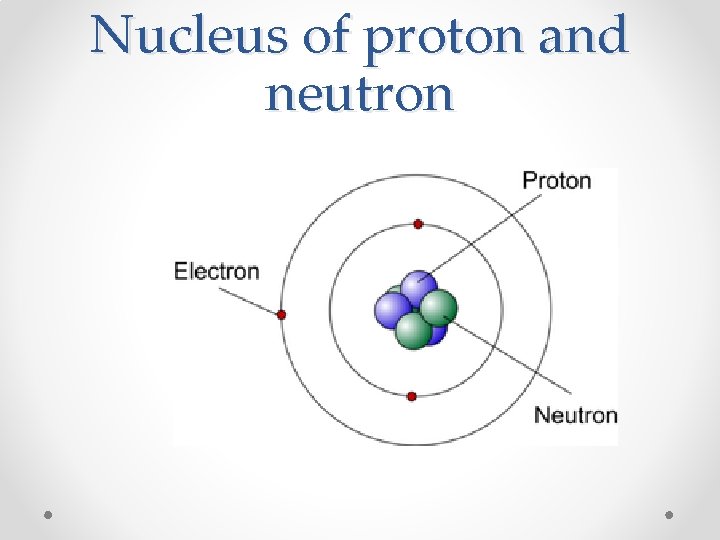
Nucleus of proton and neutron
Atomic Theory Recap ted ed https: //www. youtube. com/watch? v=xaz. QRc. SCRa. Y crash course https: //www. youtube. com/watch? v=thn. Dx. Fdkz. Zs
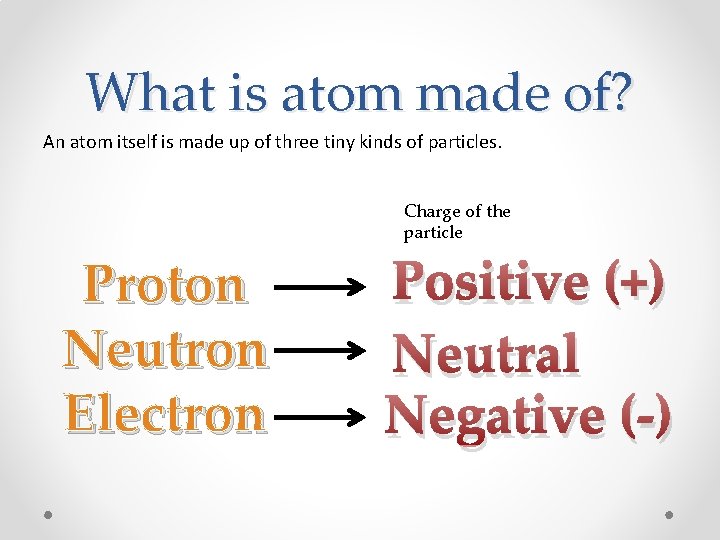
What is atom made of? An atom itself is made up of three tiny kinds of particles. Charge of the particle Proton Neutron Electron Positive (+) Neutral Negative (-)
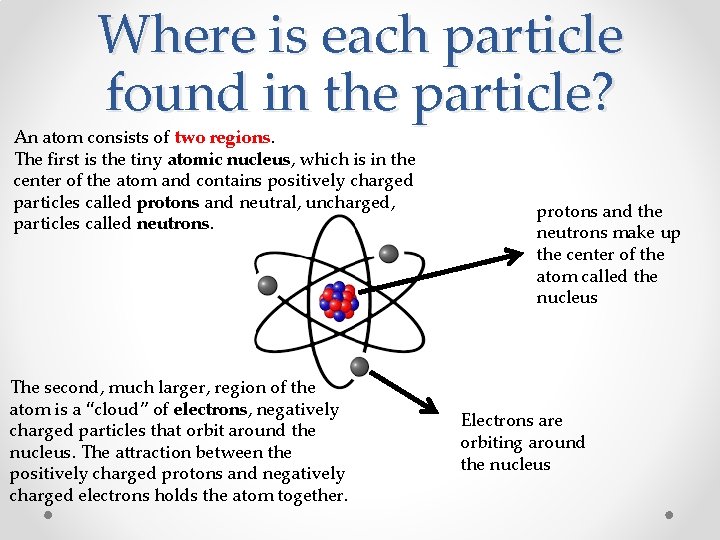
Where is each particle found in the particle? An atom consists of two regions. The first is the tiny atomic nucleus, which is in the center of the atom and contains positively charged particles called protons and neutral, uncharged, particles called neutrons. The second, much larger, region of the atom is a “cloud” of electrons, negatively charged particles that orbit around the nucleus. The attraction between the positively charged protons and negatively charged electrons holds the atom together. protons and the neutrons make up the center of the atom called the nucleus Electrons are orbiting around the nucleus
- Slides: 22