
Chemistry Alchemy vs Chemistry The Alchemists Dream Zinc


- Slides: 30
Chemistry
Alchemy vs. Chemistry The Alchemist’s Dream Zinc Pennies Alchemy vs. Chemistry Pure Science Applied Science Aluminum Mining Corning Glass Fertilizers (5 -15 -10) Areas of Chemistry Stereotypes of Chemists A Career in Chemistry Forensic Scientist The Scope of Chemistry Starting Salaries
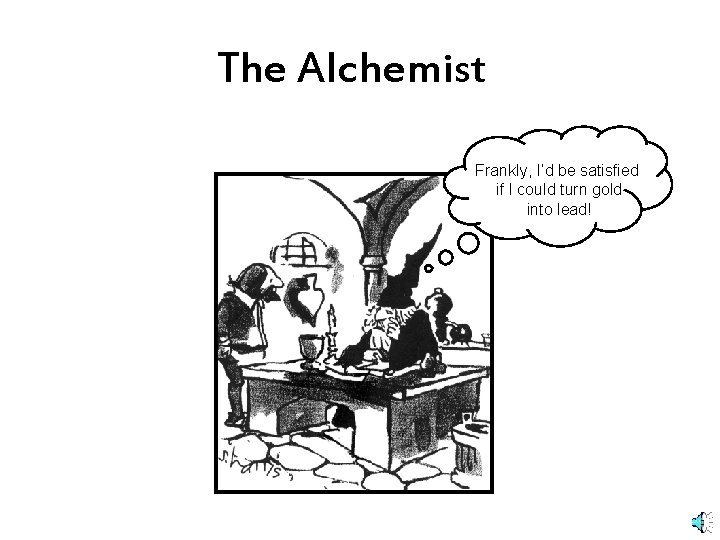
The Alchemist Frankly, I’d be satisfied if I could turn gold into lead!
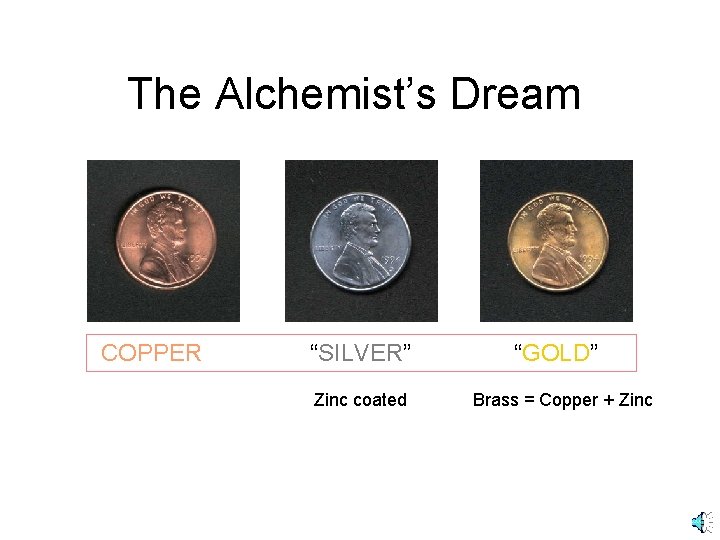
The Alchemist’s Dream COPPER “SILVER” Zinc coated “GOLD” Brass = Copper + Zinc
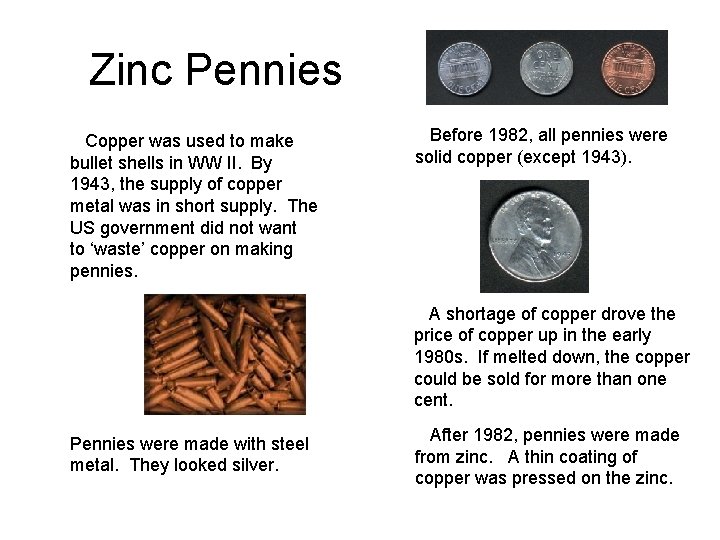
Zinc Pennies Copper was used to make bullet shells in WW II. By 1943, the supply of copper metal was in short supply. The US government did not want to ‘waste’ copper on making pennies. Before 1982, all pennies were solid copper (except 1943). A shortage of copper drove the price of copper up in the early 1980 s. If melted down, the copper could be sold for more than one cent. Pennies were made with steel metal. They looked silver. After 1982, pennies were made from zinc. A thin coating of copper was pressed on the zinc.
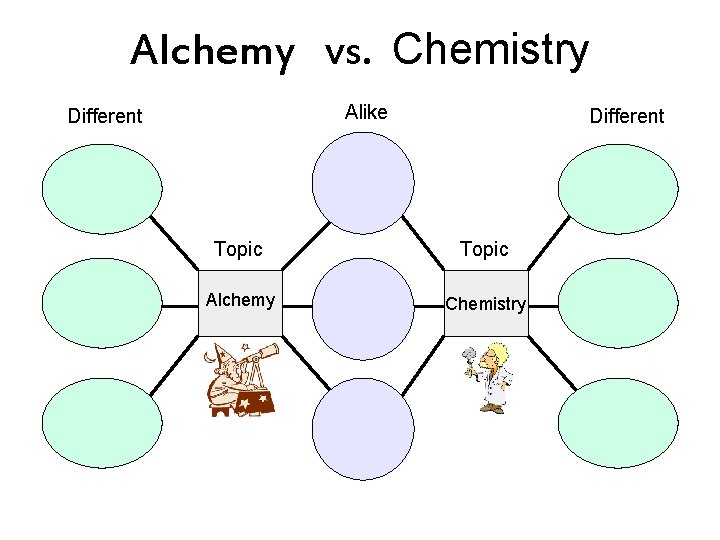
Alchemy vs. Chemistry Alike Different Topic Alchemy Chemistry
“I think you’ve crossed that thin line between transmuting and cooking. ”
Paracelsus Man consisted of three elements SALT represented the body SULFUR the soul MERCURY the spirit He thought he could rearrange the amounts of the elements to change man. He desired immortality and searched for a mystical elixir of life.
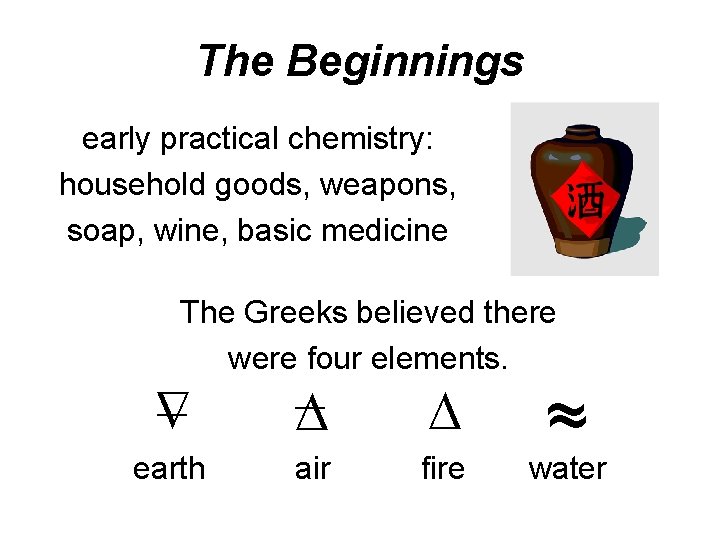
The Beginnings early practical chemistry: household goods, weapons, soap, wine, basic medicine The Greeks believed there were four elements. ___ D D earth air fire ~ water
Timeline Greeks (Democratus ~450 BC) Discontinuous theory of matter ALCHEMY 400 BC 300 AD Issac Newton (1642 - 1727) 1000 2000 Greeks (Aristotle ~350 BC)) Continuous theory of matter American Independence (1776)
Alchemy In Europe, alchemy was the quest for the Philosopher’s Stone (the elixir, the Sorcerer’s Stone). Allegedly, this substance would turn cheap metals into gold.
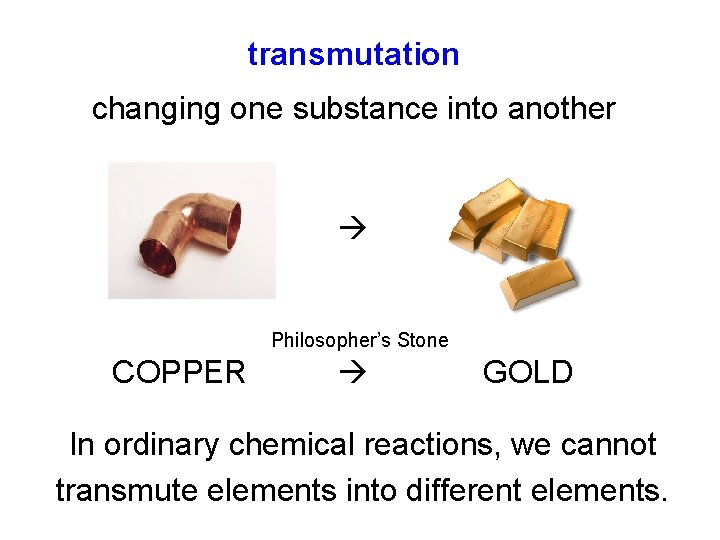
transmutation changing one substance into another Philosopher’s Stone COPPER GOLD In ordinary chemical reactions, we cannot transmute elements into different elements.
Alchemy • After that chemistry was ruled by alchemy. • They believed that could take any cheap metals and turn them into gold. • Alchemists were almost like magicians. – Elixirs, physical immortality
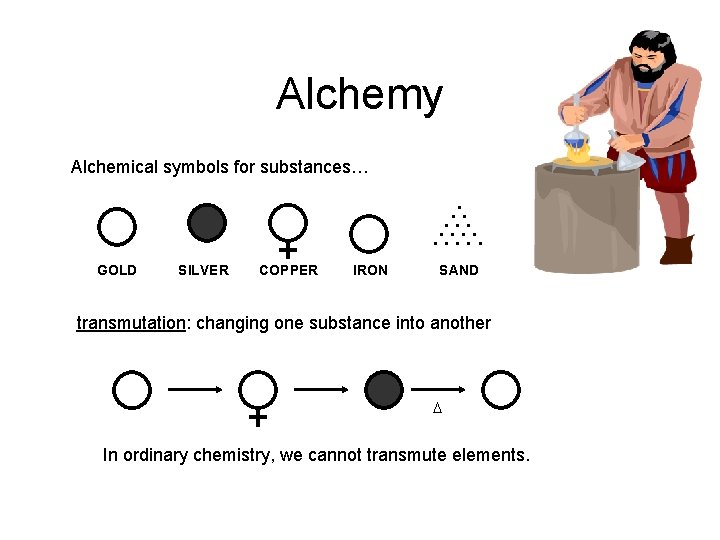
Alchemy Alchemical symbols for substances… . . . . GOLD SILVER COPPER IRON SAND transmutation: changing one substance into another D In ordinary chemistry, we cannot transmute elements.
Alchemy was practiced in many regions of the world, including China and the Middle East. Alchemy arrived in western Europe around the year 500 C. E. Modern chemistry evolved from alchemy.
Contributions of alchemists: Information about elements - the elements mercury, sulfur, and antimony were discovered - properties of some elements Develop lab apparatus / procedures / experimental techniques - alchemists learned how to prepare acids. - developed several alloys - new glassware
What is Chemistry? the study of matter and its changes
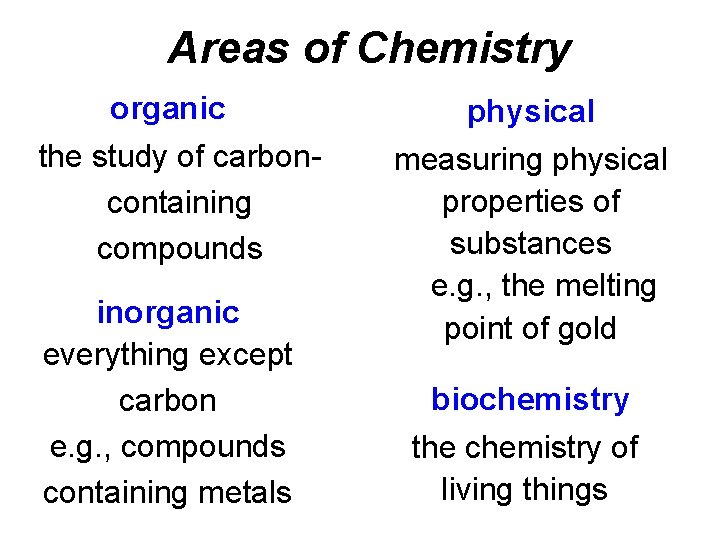
Areas of Chemistry • Organic The study of most carbon-containing compounds • Inorganic The study of all substances not classified as organic, mainly those compounds that do not contain carbon • Analytical The identification of the components and composition of materials • Physical The study of the properties, changes, and relationships between energy and matter • Biochemistry The study of substances and processes occurring in living things
Areas of Chemistry organic the study of carboncontaining compounds inorganic everything except carbon e. g. , compounds containing metals physical measuring physical properties of substances e. g. , the melting point of gold biochemistry the chemistry of living things
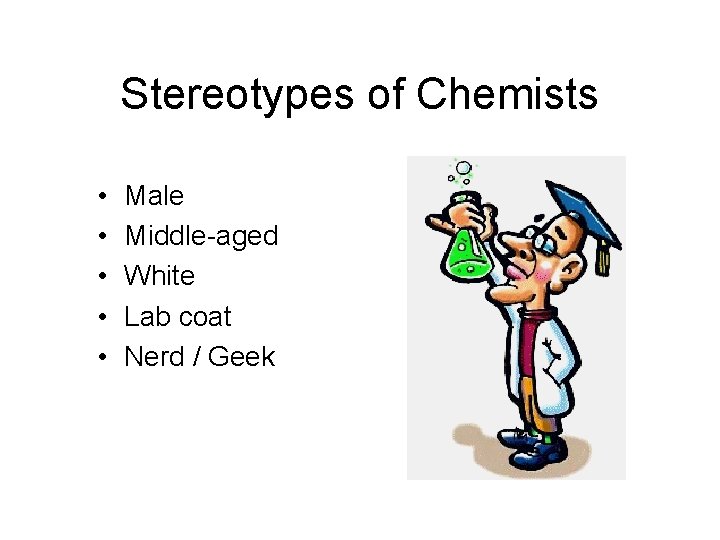
Stereotypes of Chemists • • • Male Middle-aged White Lab coat Nerd / Geek
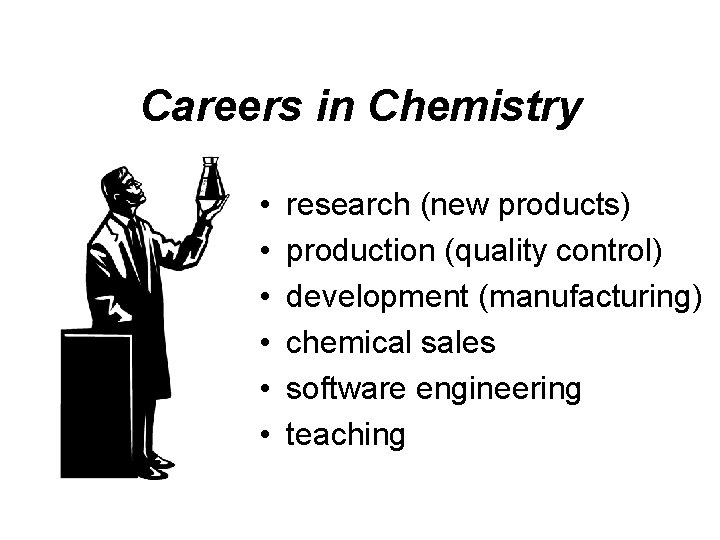
Careers in Chemistry • • • research (new products) production (quality control) development (manufacturing) chemical sales software engineering teaching
A Career in the Field of Chemistry • Research Chemist • Chemist who works in Development
Production Chemists and Technicians • Other Jobs for Chemists – Chemical sales, software engineering, patent law, teaching
The skills you will develop by an earnest study of chemistry will help you in any career field.
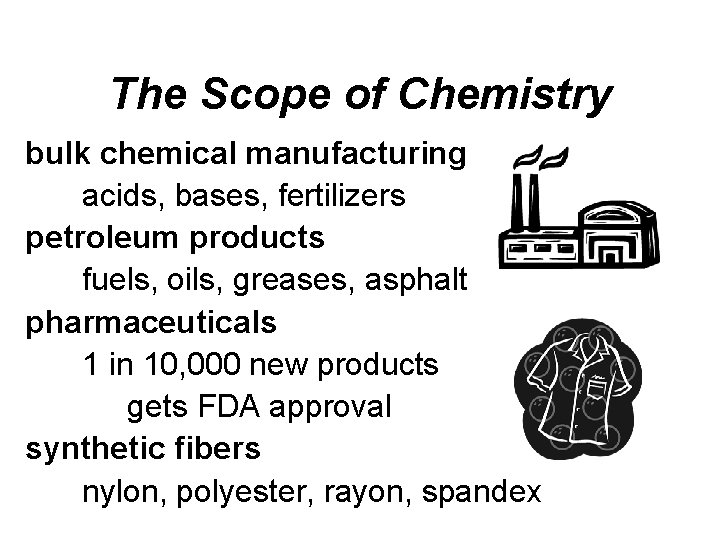
The Scope of Chemistry bulk chemical manufacturing acids, bases, fertilizers petroleum products fuels, oils, greases, asphalt pharmaceuticals 1 in 10, 000 new products gets FDA approval synthetic fibers nylon, polyester, rayon, spandex
Research Basic Research – Carried out for the sake of increasing knowledge – Driven by curiosity or a desire to know – Roy Plunkett ‘discovers’ Teflon is a nonstick material Applied Research – Carried out to solve a specific problem – Safer refrigerant that does not harm ozone layer Technological Development – Production and use of products that improve our quality of life – Computer chips, biodegradable materials, catalytic converters for automobiles
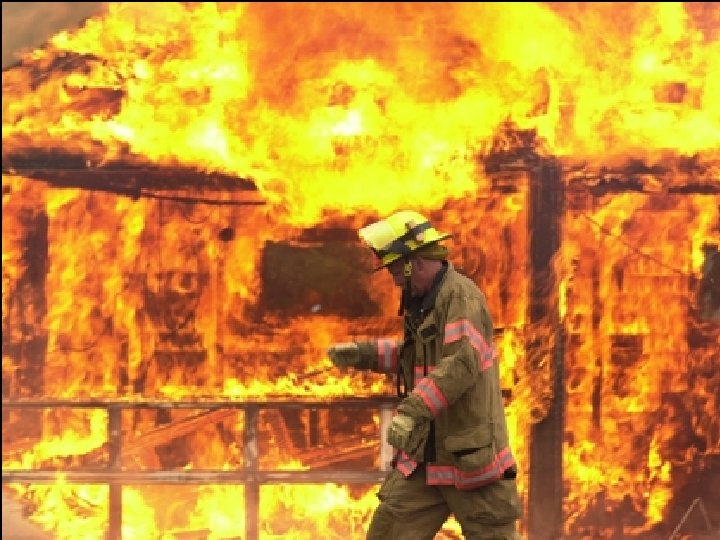
Forensic Scientist Arson is suspected in the burning of this house. • • Use science to solve crimes Arson investigation DNA fingerprinting Luminol test for blood Gasoline, paint, and bottled gas are extremely volatile.
The Scope of Chemistry The chemical industry has a large effect on our lives. • bulk chemical manufacturing • synthetic fibers • petroleum products • pharmaceuticals • ALL fields of endeavor are affected by chemistry.
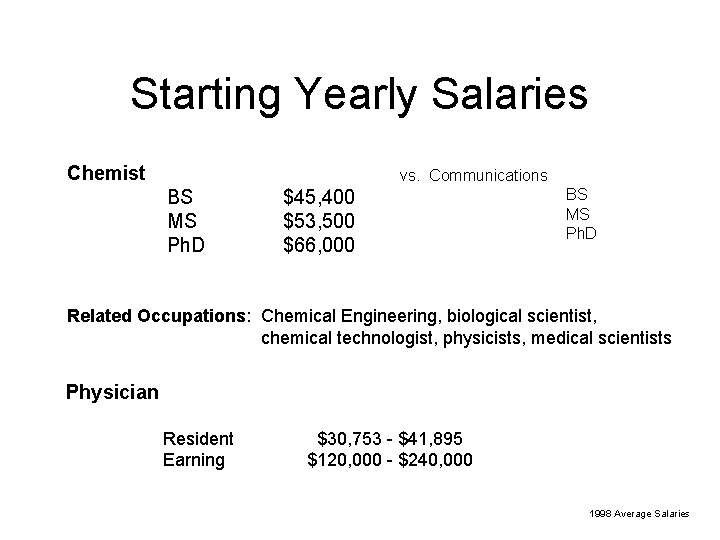
Starting Yearly Salaries Chemist vs. Communications BS MS Ph. D $45, 400 $53, 500 $66, 000 BS MS Ph. D Related Occupations: Chemical Engineering, biological scientist, chemical technologist, physicists, medical scientists Physician Resident Earning $30, 753 - $41, 895 $120, 000 - $240, 000 1998 Average Salaries
All fields of endeavor are affected by chemistry.