
Chemistry 2100 Lecture 7 Amines Amines are nitrogencontaining

















- Slides: 34
Chemistry 2100 Lecture 7
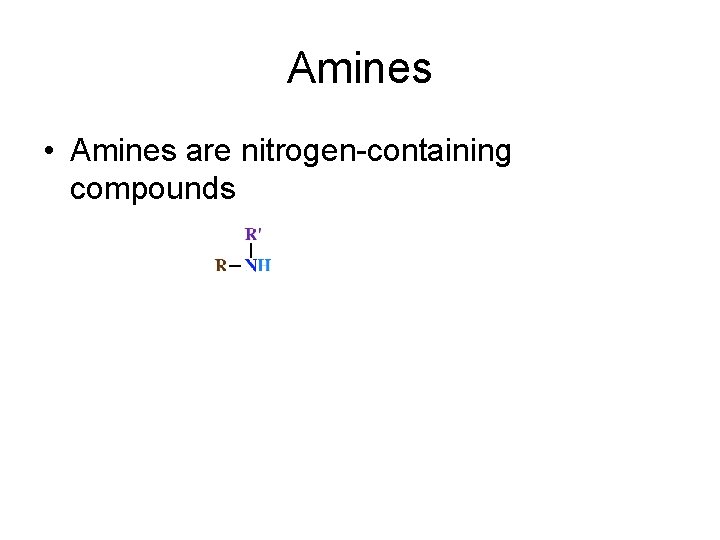
Amines • Amines are nitrogen-containing compounds
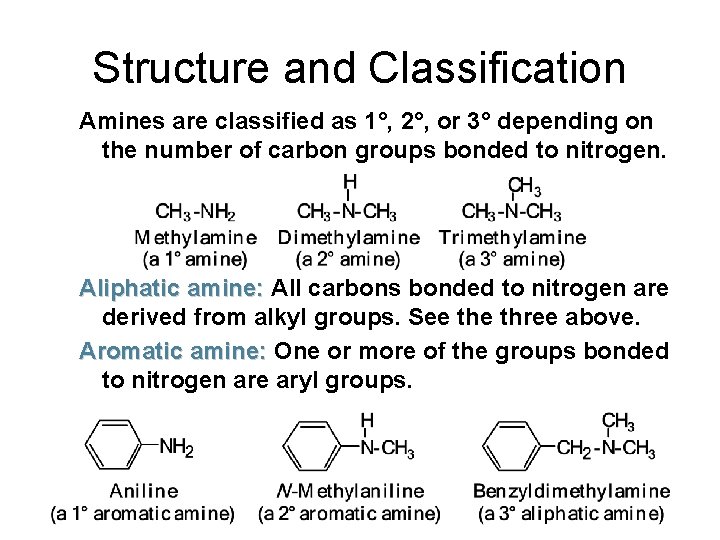
Structure and Classification Amines are classified as 1°, 2°, or 3° depending on the number of carbon groups bonded to nitrogen. Aliphatic amine: All carbons bonded to nitrogen are derived from alkyl groups. See three above. Aromatic amine: One or more of the groups bonded to nitrogen are aryl groups.
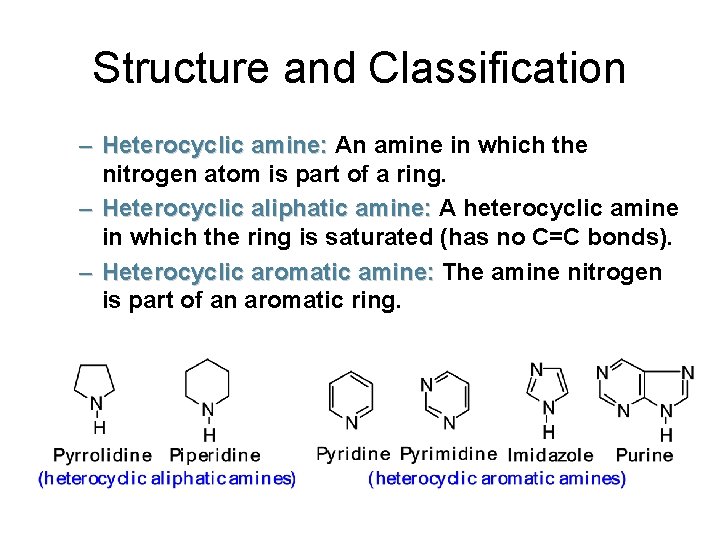
Structure and Classification – Heterocyclic amine: An amine in which the nitrogen atom is part of a ring. – Heterocyclic aliphatic amine: A heterocyclic amine in which the ring is saturated (has no C=C bonds). – Heterocyclic aromatic amine: The amine nitrogen is part of an aromatic ring.
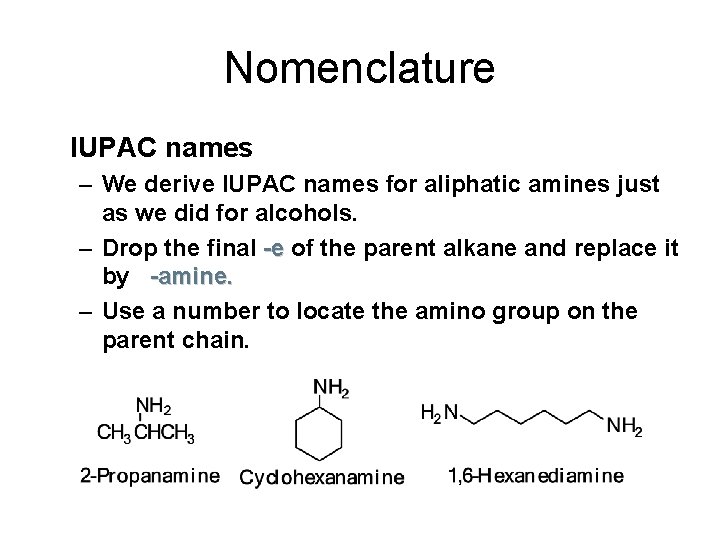
Nomenclature IUPAC names – We derive IUPAC names for aliphatic amines just as we did for alcohols. – Drop the final -e of the parent alkane and replace it by -amine. – Use a number to locate the amino group on the parent chain.
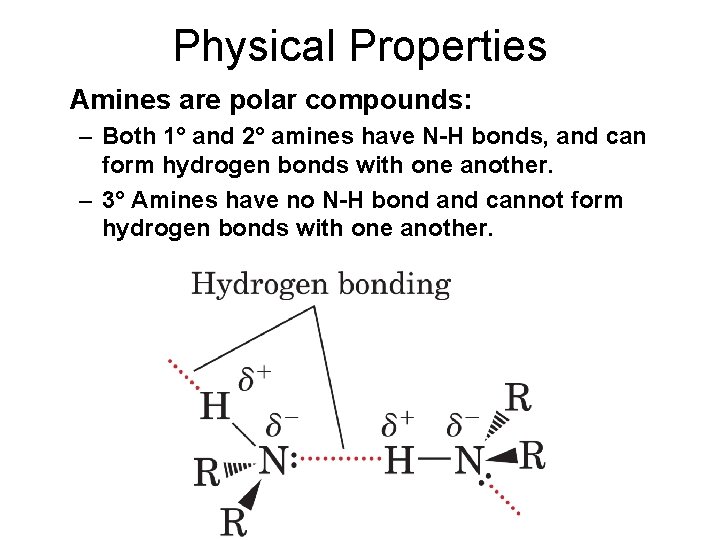
Physical Properties Amines are polar compounds: – Both 1° and 2° amines have N-H bonds, and can form hydrogen bonds with one another. – 3° Amines have no N-H bond and cannot form hydrogen bonds with one another.
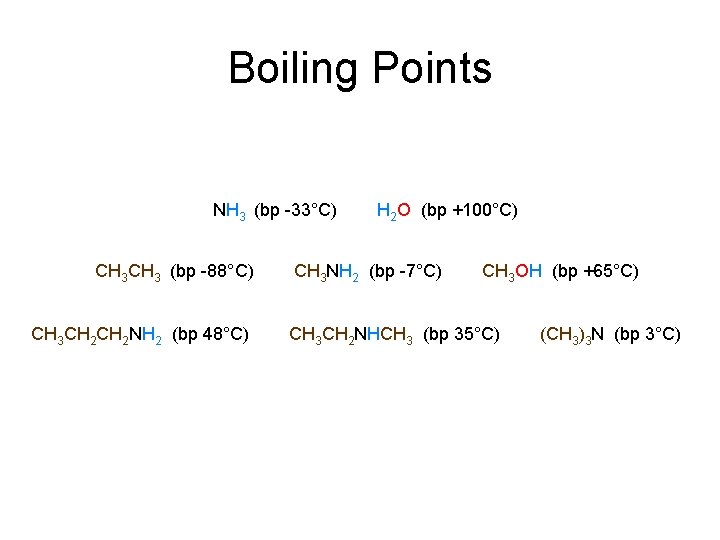
Boiling Points NH 3 (bp -33°C) CH 3 (bp -88°C) CH 3 CH 2 NH 2 (bp 48°C) H 2 O (bp +100°C) CH 3 NH 2 (bp -7°C) CH 3 OH (bp +65°C) CH 3 CH 2 NHCH 3 (bp 35°C) (CH 3)3 N (bp 3°C)
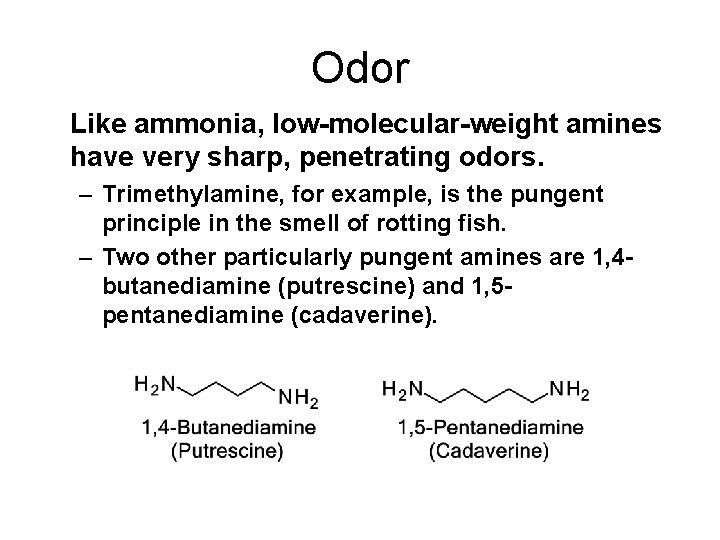
Odor Like ammonia, low-molecular-weight amines have very sharp, penetrating odors. – Trimethylamine, for example, is the pungent principle in the smell of rotting fish. – Two other particularly pungent amines are 1, 4 butanediamine (putrescine) and 1, 5 pentanediamine (cadaverine).
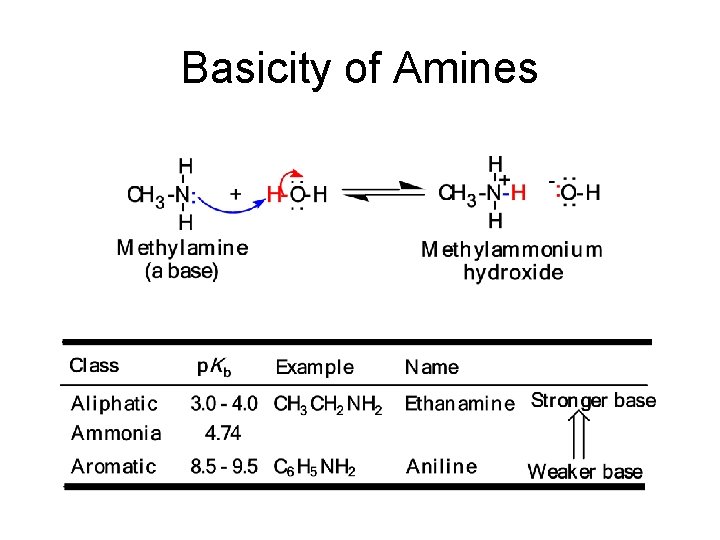
Basicity of Amines
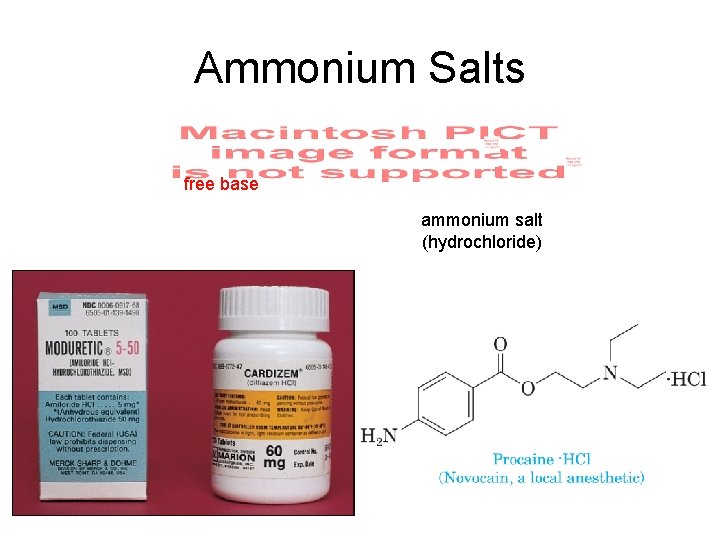
Ammonium Salts free base ammonium salt (hydrochloride)
Alkaloids (S)-(–)-nicotine (S)-(+)-coniine (–)-cocaine hydrochloride (–)-strychnine
Nitrosation
Azo Dyes
Orange II
Orange II
Orange II
Orange IIFlag Red American
Heterocyclic Amines
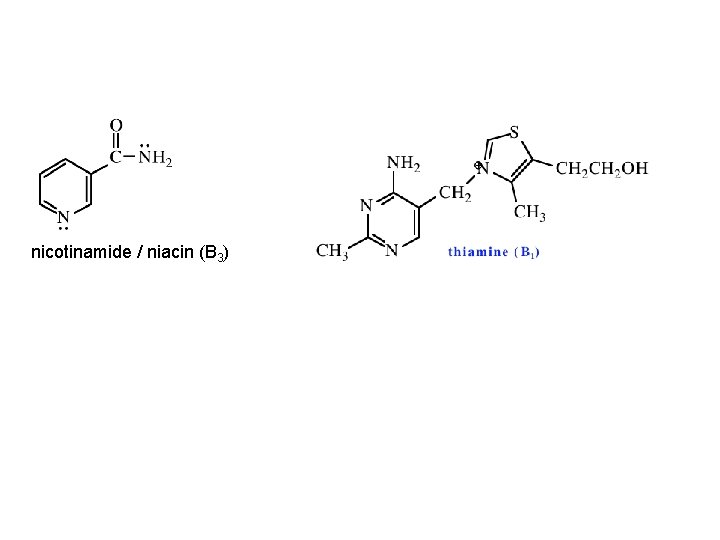
nicotinamide / niacin (B 3)
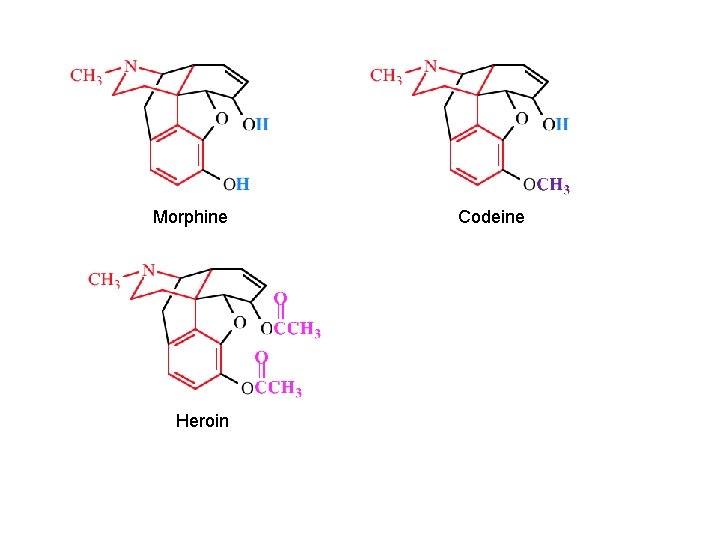
Morphine Heroin Codeine
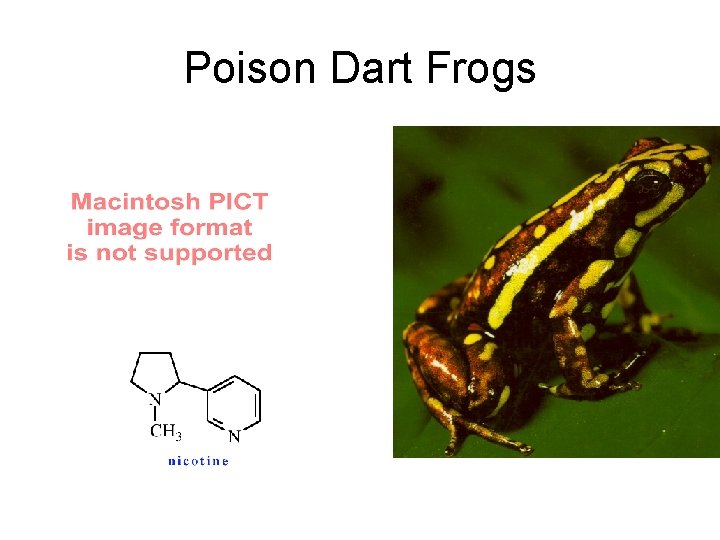
Poison Dart Frogs