
Chemistry 100 Chapter 10 Chemical Bonding Chemical Bonds
Chemistry 100 Chapter 10 Chemical Bonding
Chemical Bonds 1. Ionic bonds 2. Covalent bonds 3. Metallic bonds 4. Hydrogen bonds 5. Van der Waals forces
Chemical Bonds 1. Ionic bonds 2. Covalent bonds
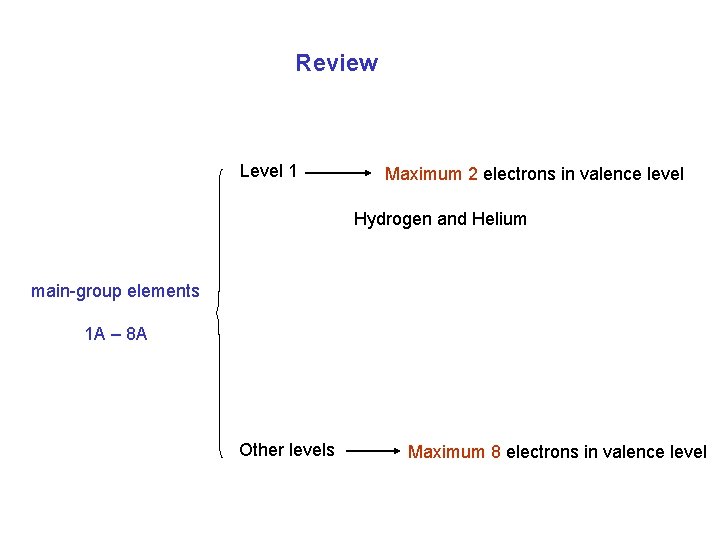
Review Level 1 Maximum 2 electrons in valence level Hydrogen and Helium main-group elements 1 A – 8 A Other levels Maximum 8 electrons in valence level
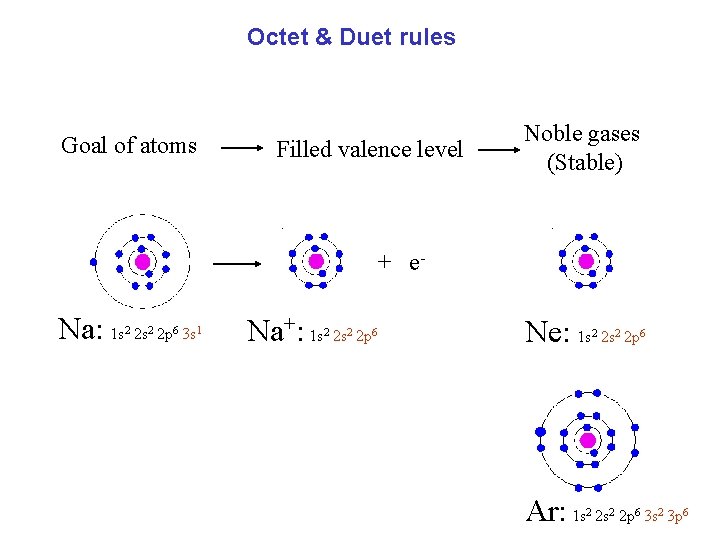
Octet & Duet rules Goal of atoms Filled valence level Noble gases (Stable) + e- Na: 1 s 2 s 2 p 3 s 2 2 6 1 Na+: 1 s 2 s 2 p 2 2 6 Ne: 1 s 2 s 2 p 2 2 6 Ar: 1 s 2 s 2 p 3 s 3 p 2 2 6
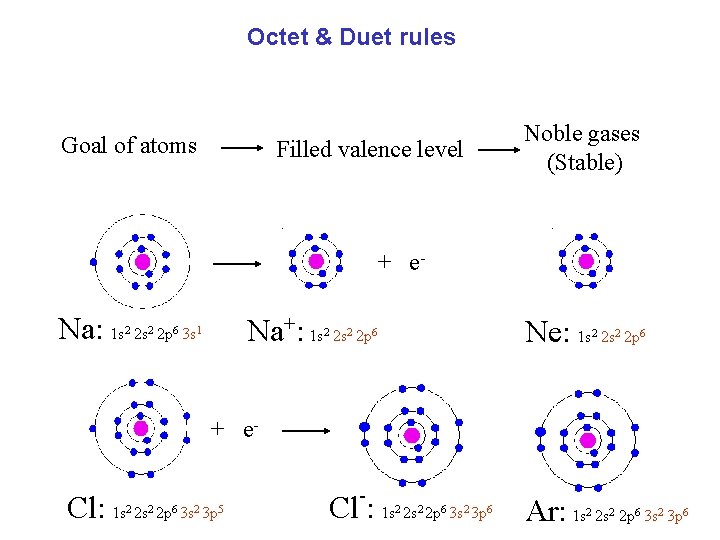
Octet & Duet rules Goal of atoms Noble gases (Stable) Filled valence level + e- Na: 1 s 2 s 2 p 3 s 2 2 6 Na+: 1 s 2 s 2 p 1 2 2 Ne: 1 s 2 s 2 p 6 2 2 6 + e- Cl: 1 s 2 2 p 6 3 s 2 3 p 5 - Cl : 1 s 2 s 2 p 3 s 3 p 2 2 6 Ar: 1 s 2 s 2 p 3 s 3 p 2 2 6
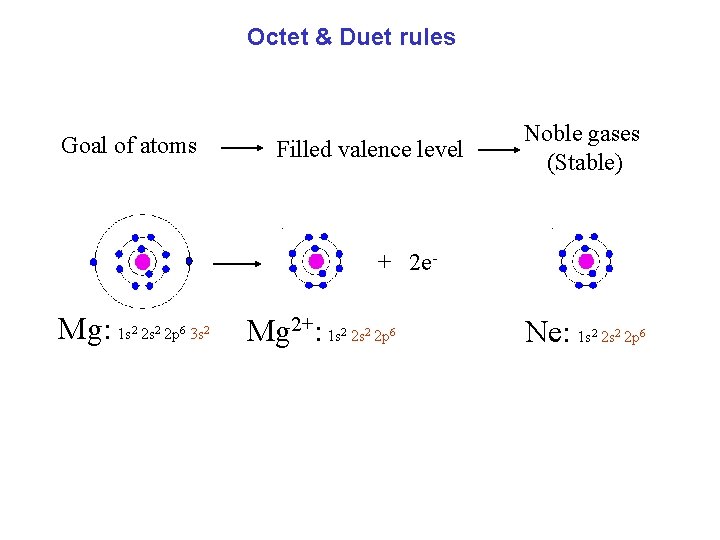
Octet & Duet rules Goal of atoms Filled valence level Noble gases (Stable) + 2 e- Mg: 1 s 2 s 2 p 3 s 2 2 6 2 Mg 2+: 1 s 2 s 2 p 2 2 6 Ne: 1 s 2 s 2 p 2 2 6
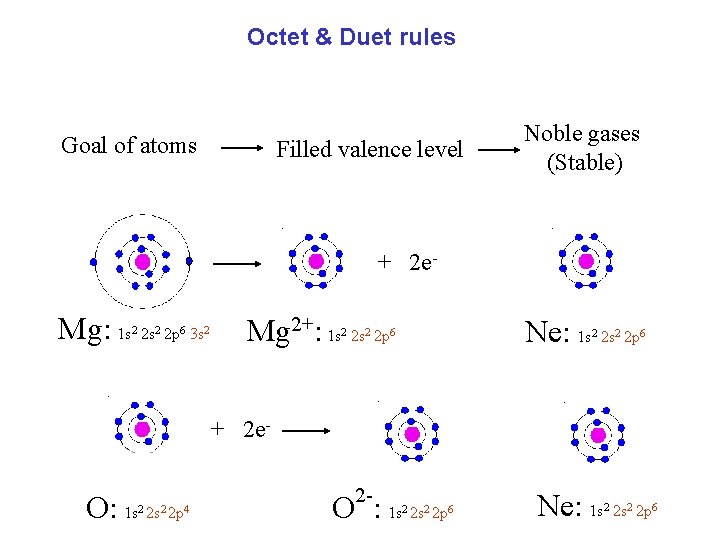
Octet & Duet rules Goal of atoms Filled valence level Noble gases (Stable) + 2 e- Mg: 1 s 2 s 2 p 3 s 2 2 6 2 Mg 2+: 1 s 2 s 2 p 2 2 Ne: 1 s 2 s 2 p 6 2 2 6 + 2 e- O: 1 s 2 2 p 4 2 - O : 1 s 2 s 2 p 2 2 6 Ne: 1 s 2 s 2 p 2 2 6
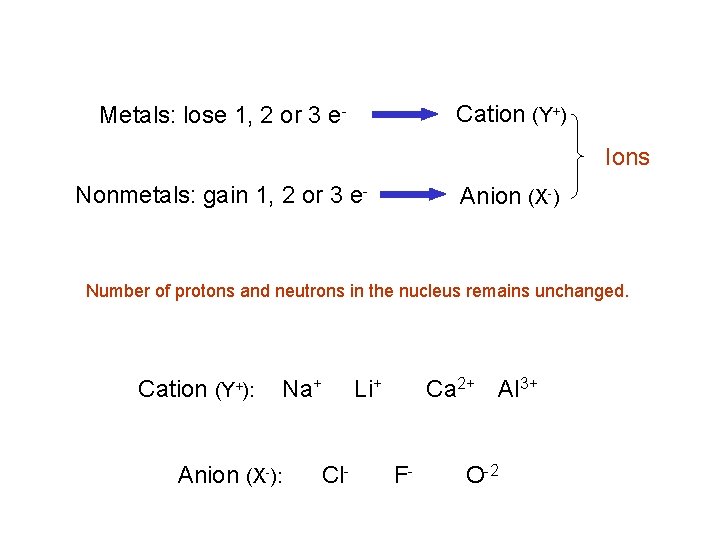
Cation (Y+) Metals: lose 1, 2 or 3 e- Ions Nonmetals: gain 1, 2 or 3 e- Anion (X-) Number of protons and neutrons in the nucleus remains unchanged. Cation (Y+): Anion (X-): Na+ Cl- Li+ Ca 2+ Al 3+ F- O-2
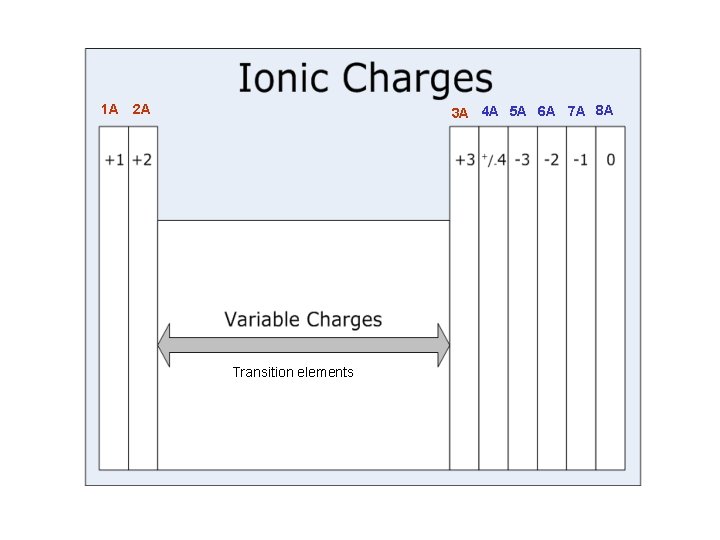
1 A 2 A 3 A 4 A 5 A 6 A 7 A 8 A Transition elements
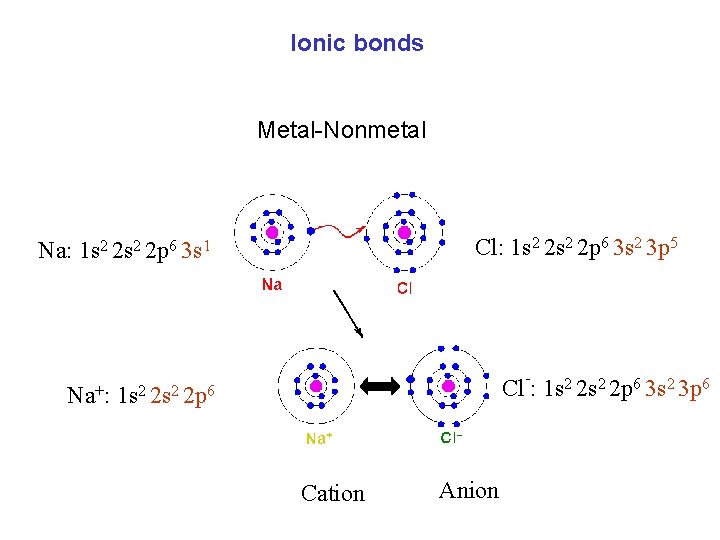
Ionic bonds Metal-Nonmetal Cl: 1 s 2 2 p 6 3 s 2 3 p 5 Na: 1 s 2 2 p 6 3 s 1 Na+: - Cl : 1 s 2 2 p 6 3 s 2 3 p 6 1 s 2 2 p 6 Cation Anion
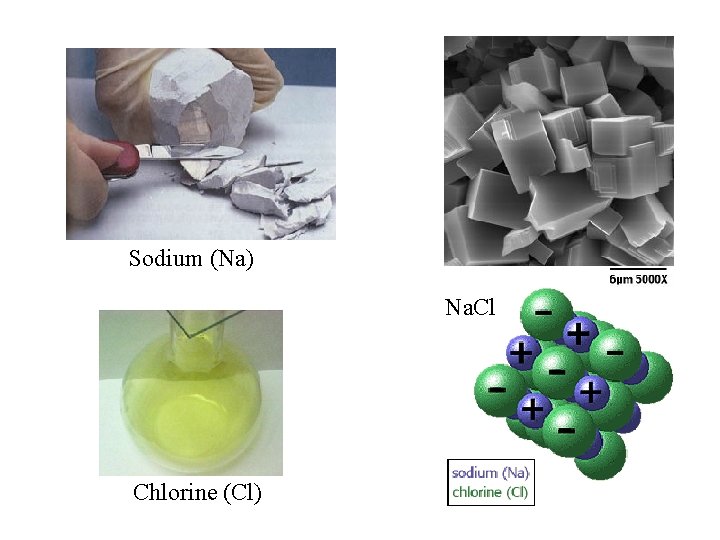
Sodium (Na) Na. Cl Chlorine (Cl)
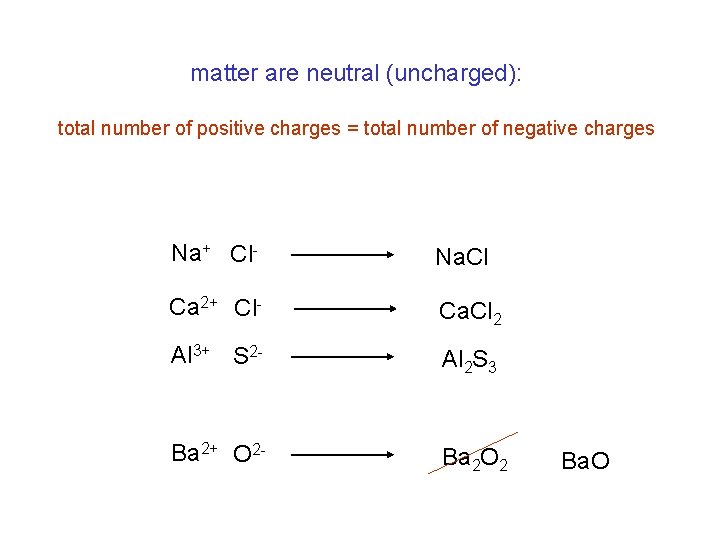
matter are neutral (uncharged): total number of positive charges = total number of negative charges Na+ Cl- Na. Cl Ca 2+ Cl- Ca. Cl 2 Al 3+ S 2 - Al 2 S 3 Ba 2+ O 2 - Ba 2 O 2 Ba. O
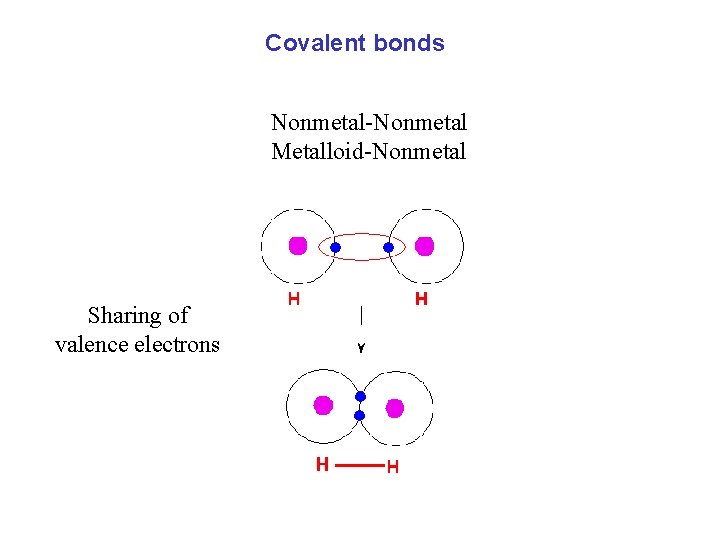
Covalent bonds Nonmetal-Nonmetal Metalloid-Nonmetal Sharing of valence electrons
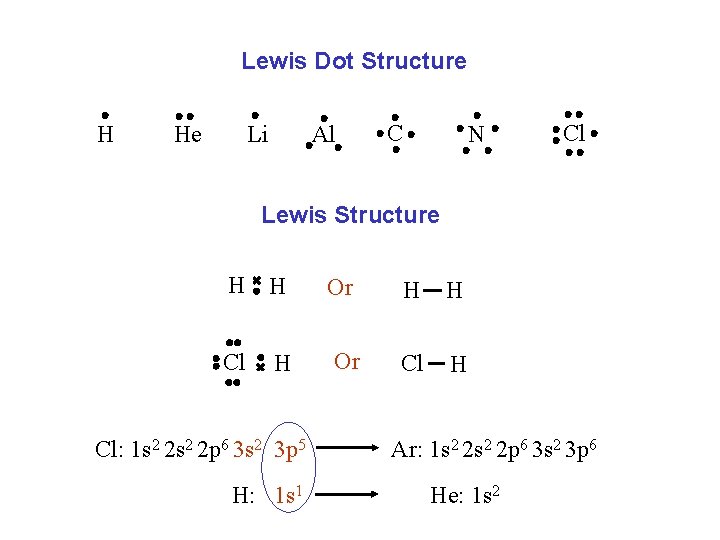
Lewis Dot Structure H Li He Al C N Cl Lewis Structure H H Or H H Cl Or Cl H H Cl: 1 s 2 2 p 6 3 s 2 3 p 5 H: 1 s 1 Ar: 1 s 2 2 p 6 3 s 2 3 p 6 He: 1 s 2
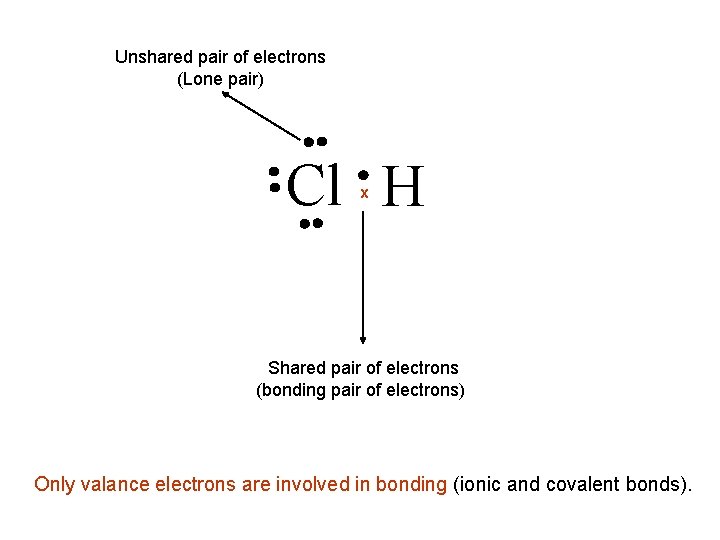
Unshared pair of electrons (Lone pair) Cl H x Shared pair of electrons (bonding pair of electrons) Only valance electrons are involved in bonding (ionic and covalent bonds).
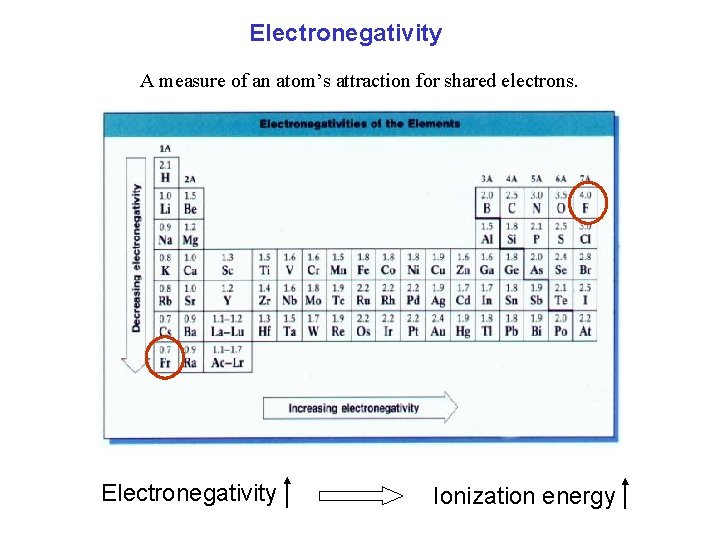
Electronegativity A measure of an atom’s attraction for shared electrons. Electronegativity Ionization energy
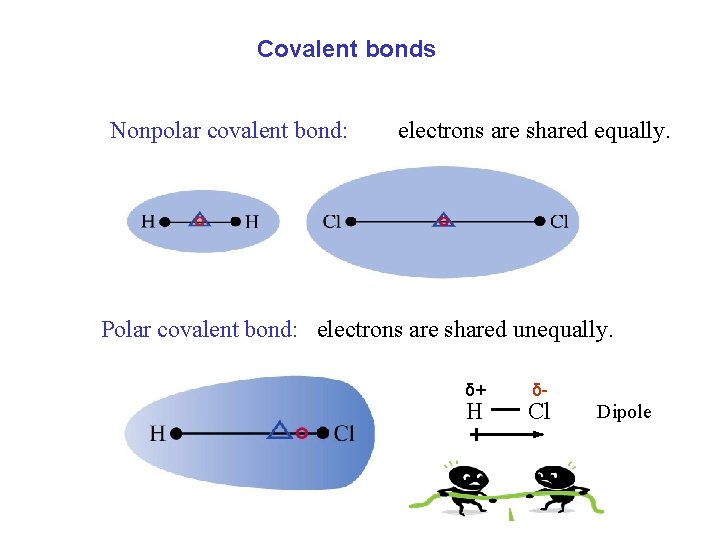
Covalent bonds Nonpolar covalent bond: electrons are shared equally. Polar covalent bond: electrons are shared unequally. δ+ H δ- Cl Dipole
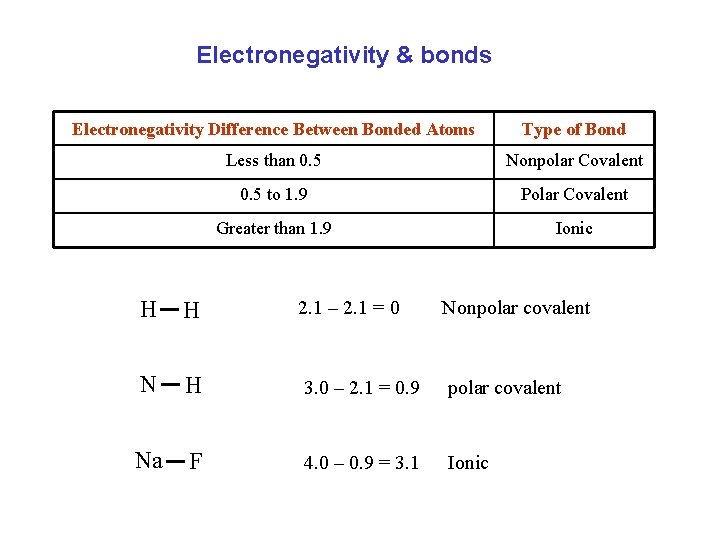
Electronegativity & bonds Electronegativity Difference Between Bonded Atoms Type of Bond Less than 0. 5 Nonpolar Covalent 0. 5 to 1. 9 Polar Covalent Greater than 1. 9 Ionic H H 2. 1 – 2. 1 = 0 Nonpolar covalent N H 3. 0 – 2. 1 = 0. 9 polar covalent Na F 4. 0 – 0. 9 = 3. 1 Ionic
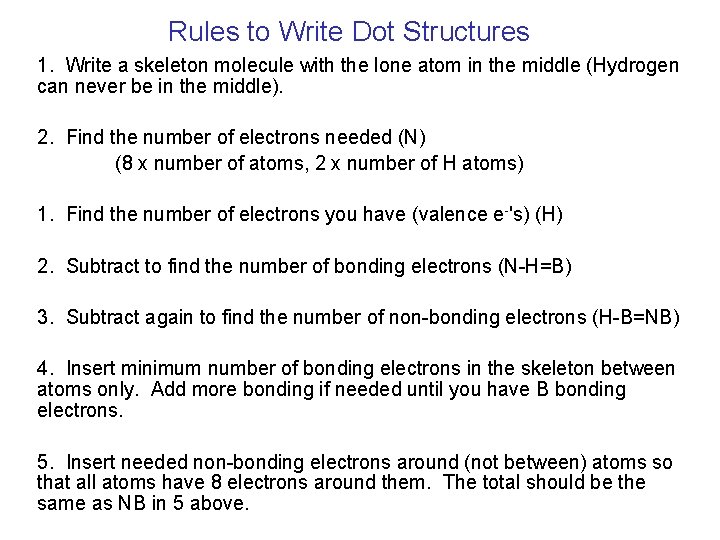
Rules to Write Dot Structures 1. Write a skeleton molecule with the lone atom in the middle (Hydrogen can never be in the middle). 2. Find the number of electrons needed (N) (8 x number of atoms, 2 x number of H atoms) 1. Find the number of electrons you have (valence e-'s) (H) 2. Subtract to find the number of bonding electrons (N-H=B) 3. Subtract again to find the number of non-bonding electrons (H-B=NB) 4. Insert minimum number of bonding electrons in the skeleton between atoms only. Add more bonding if needed until you have B bonding electrons. 5. Insert needed non-bonding electrons around (not between) atoms so that all atoms have 8 electrons around them. The total should be the same as NB in 5 above.
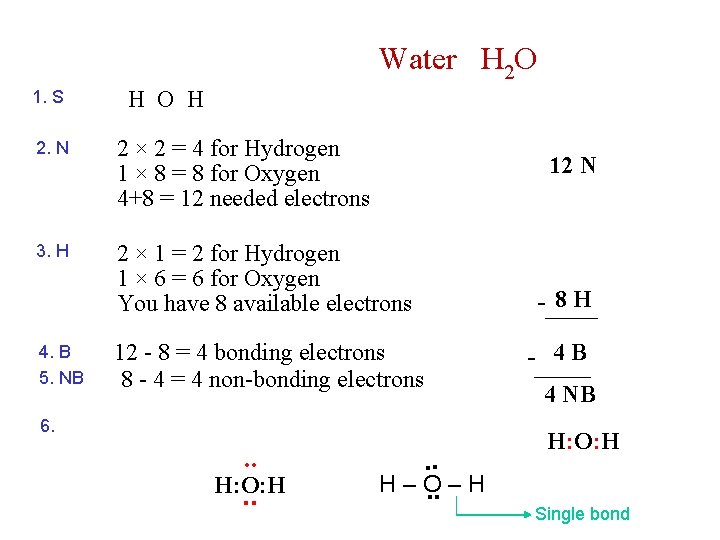
Water H 2 O 1. S H O H 2. N 2 × 2 = 4 for Hydrogen 1 × 8 = 8 for Oxygen 4+8 = 12 needed electrons 3. H 2 × 1 = 2 for Hydrogen 1 × 6 = 6 for Oxygen You have 8 available electrons 4. B 5. NB 12 N 12 - 8 = 4 bonding electrons 8 - 4 = 4 non-bonding electrons 6. . . H: O: H. . H–O. . – H - 8 H - 4 B 4 NB H: O: H Single bond
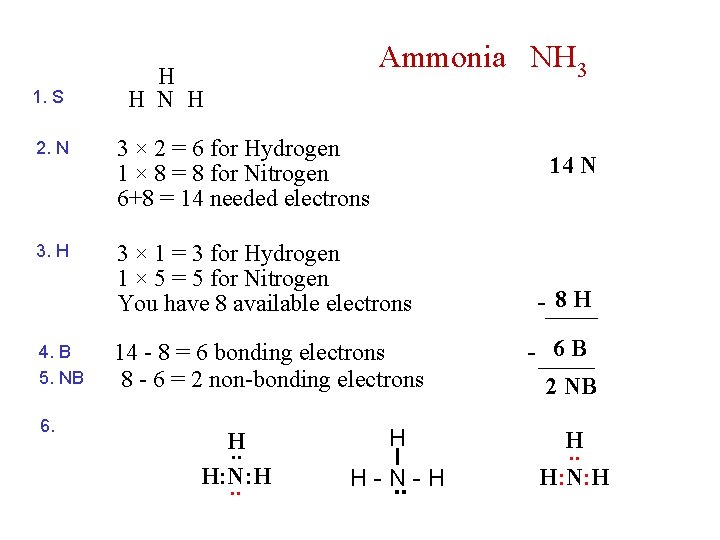
1. S Ammonia NH 3 H H N H 2. N 3 × 2 = 6 for Hydrogen 1 × 8 = 8 for Nitrogen 6+8 = 14 needed electrons 3. H 3 × 1 = 3 for Hydrogen 1 × 5 = 5 for Nitrogen You have 8 available electrons - 8 H 14 - 8 = 6 bonding electrons 8 - 6 = 2 non-bonding electrons - 6 B 2 NB 4. B 5. NB 6. H. . H: N: H. . 14 N H . . H-N-H H. . H: N: H
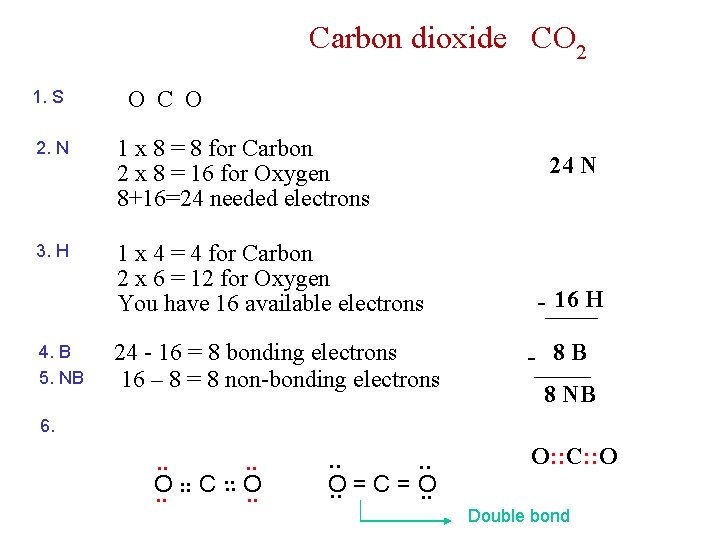
Carbon dioxide CO 2 1. S O C O 2. N 1 x 8 = 8 for Carbon 2 x 8 = 16 for Oxygen 8+16=24 needed electrons 3. H 1 x 4 = 4 for Carbon 2 x 6 = 12 for Oxygen You have 16 available electrons 4. B 5. NB 24 - 16 = 8 bonding electrons 16 – 8 = 8 non-bonding electrons 24 N - 16 H - 8 B 8 NB 6. . C. . O O. . . . O. . = C = O. . O: : C: : O Double bond
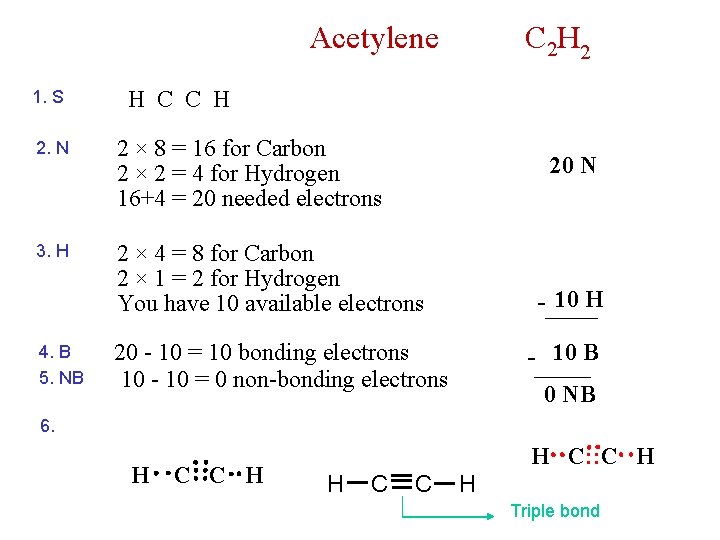
Acetylene 1. S H C C H 2. N 2 × 8 = 16 for Carbon 2 × 2 = 4 for Hydrogen 16+4 = 20 needed electrons 3. H 2 × 4 = 8 for Carbon 2 × 1 = 2 for Hydrogen You have 10 available electrons 4. B 5. NB C 2 H 2 20 N - 10 H 20 - 10 = 10 bonding electrons 10 - 10 = 0 non-bonding electrons - 10 B 0 NB 6. H C C H H C: : C H H C C H Triple bond
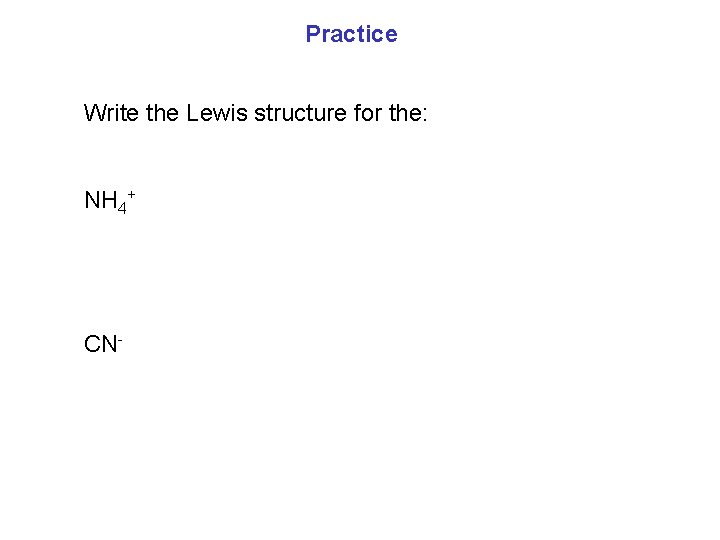
Practice Write the Lewis structure for the: NH 4+ CN-
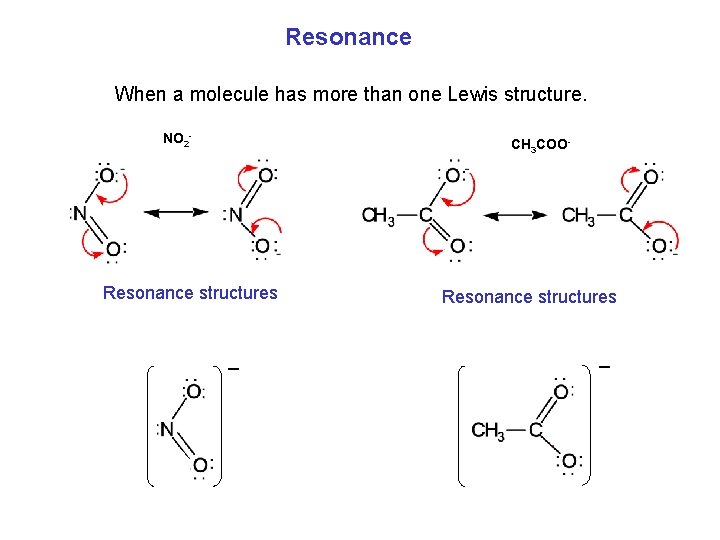
Resonance When a molecule has more than one Lewis structure. NO 2 - CH 3 COO- Resonance structures _
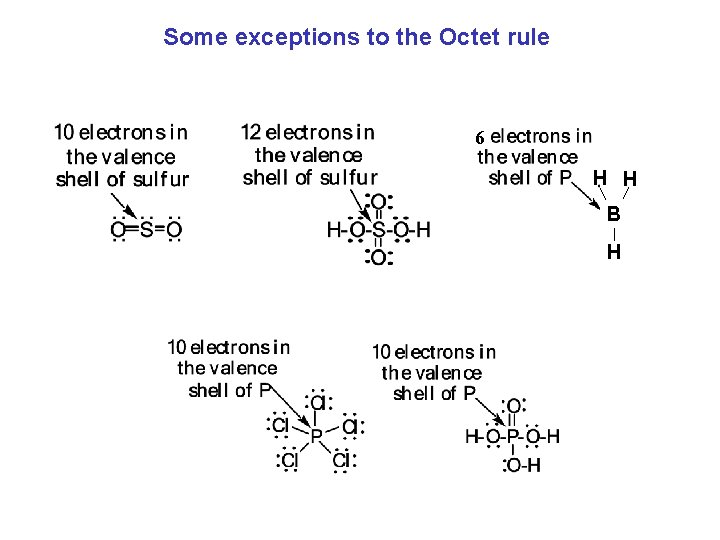
Some exceptions to the Octet rule 6 H H B H
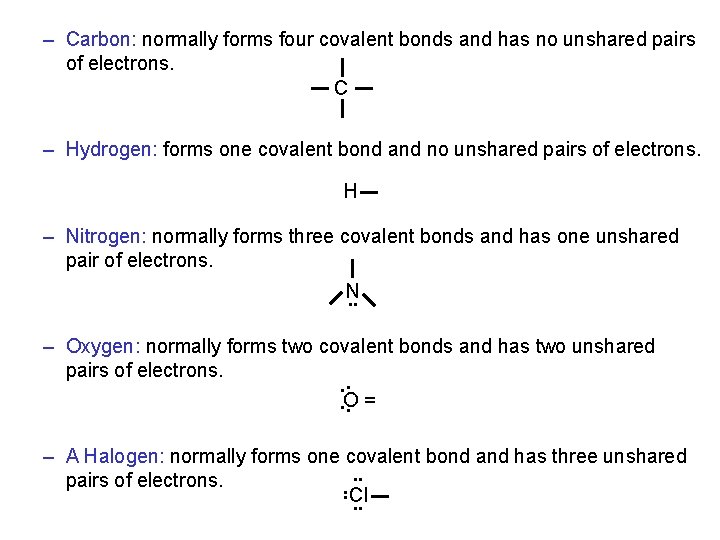
– Carbon: normally forms four covalent bonds and has no unshared pairs of electrons. C – Hydrogen: forms one covalent bond and no unshared pairs of electrons. H – Nitrogen: normally forms three covalent bonds and has one unshared pair of electrons. N. . – Oxygen: normally forms two covalent bonds and has two unshared pairs of electrons. . O. = – A Halogen: normally forms one covalent bond and has three unshared. . pairs of electrons. . . Cl. .
VSEPR Model VSEPR: Valence-Shell Electron-Pair Repulsion method Bond angle: angle between two atoms bonded to a central atom. Regions of electron like to be as far away as possible from the others.
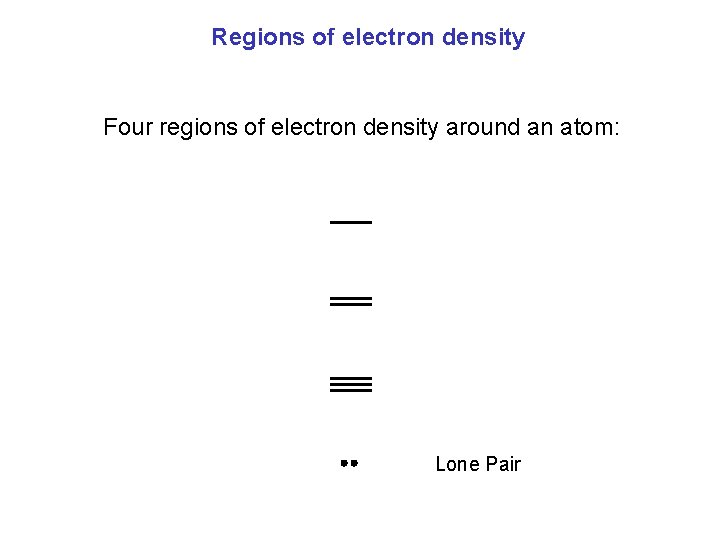
Regions of electron density Four regions of electron density around an atom: Lone Pair
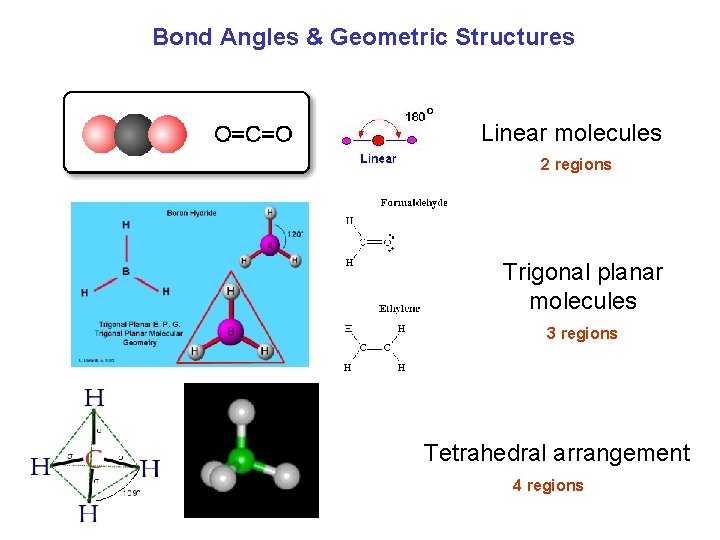
Bond Angles & Geometric Structures Linear molecules 2 regions Trigonal planar molecules 3 regions Tetrahedral arrangement 4 regions
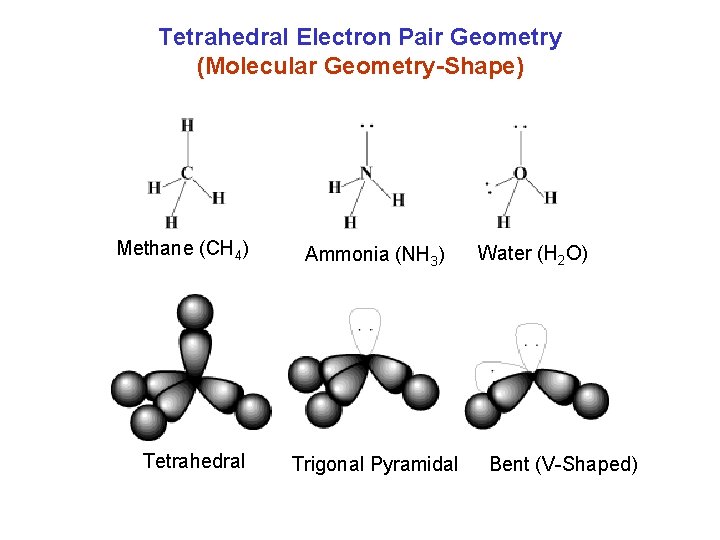
Tetrahedral Electron Pair Geometry (Molecular Geometry-Shape) Methane (CH 4) Tetrahedral Ammonia (NH 3) Trigonal Pyramidal Water (H 2 O) Bent (V-Shaped)
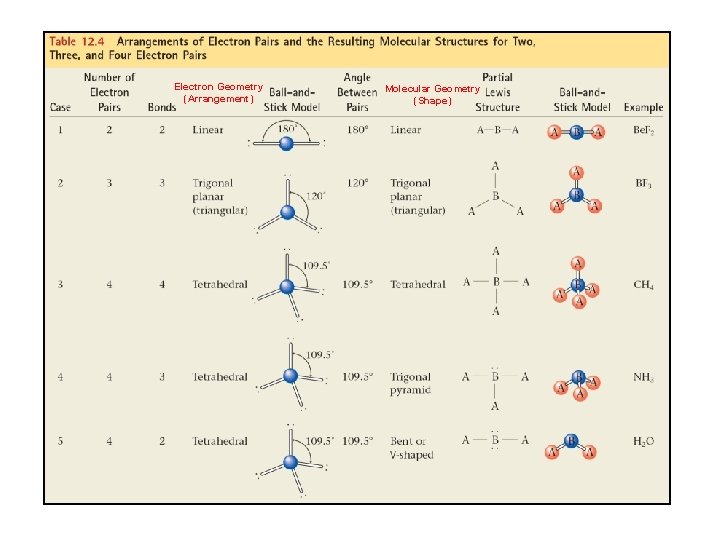
Electron Geometry (Arrangement) Molecular Geometry (Shape)
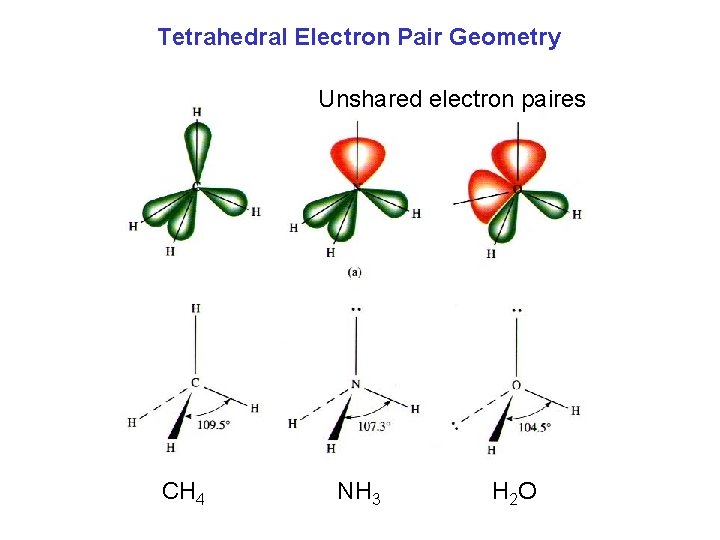
Tetrahedral Electron Pair Geometry Unshared electron paires CH 4 NH 3 H 2 O
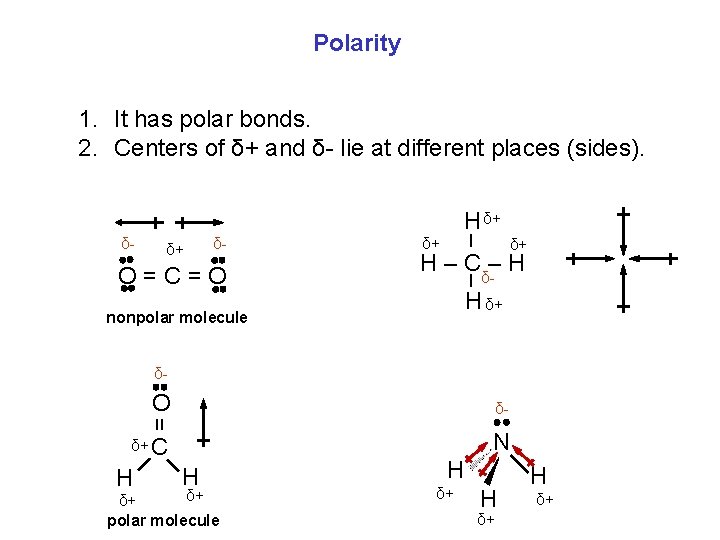
Polarity 1. It has polar bonds. 2. Centers of δ+ and δ- lie at different places (sides). H δ+ δ+ δ- δ+ H – Cδ-– H – O=C=O δ+ – δ- H δ+ nonpolar molecule δ- O δ- = N δ+ C H H δ+ δ+ polar molecule H δ+
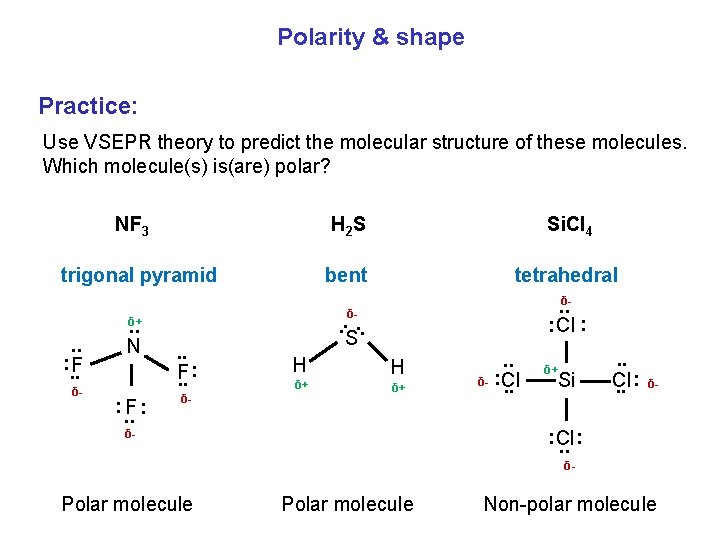
Polarity & shape Practice: Use VSEPR theory to predict the molecular structure of these molecules. Which molecule(s) is(are) polar? NF 3 trigonal pyramid. . N : F: . . bent tetrahedral. . δ: Cl : . . F. . : δ- . . δ- Si. Cl 4 δ- δ+ . . : . . F H 2 S S H δ+ . . δ- : Cl. . δ+ Si . . Cl. . : δ- : Cl. . : δ- δ- Polar molecule Non-polar molecule
At-home Practice • Predict the molecular shape of HCN using the VSEPR model. • Draw the Lewis structure of PCl 3 – How many lone pairs are on the P atom? – Are the phosphorous-chlorine bonds single, double or triple? Are the bonds ionic, polar covalent, or covalent? – What is the molecular shape predicted by VSEPR? – Based on the molecular shape, is the PCl 3 molecule polar?
- Slides: 37