
CHEMICALS AND OTHER HAZARDS IN PAINTING NDLON DISCLAIMER

- Slides: 29
CHEMICALS AND OTHER HAZARDS IN PAINTING NDLON
DISCLAIMER
IN THIS TRAINING, YOU WILL LEARN: To identify hazards associated with the job of painting, such as exposure to chemicals, working at heights and uncomfortable working positions, among others. To learn about the dangers associated with the use of chemical products, the symptoms of being exposed to chemicals and first aid measures. To provide preventative measures workers can adopt to protect themselves from hazards in painting. To provide information on how to read chemical labels to use chemical safely.
WHAT KIND OF TASKS DO PAINTERS DO?
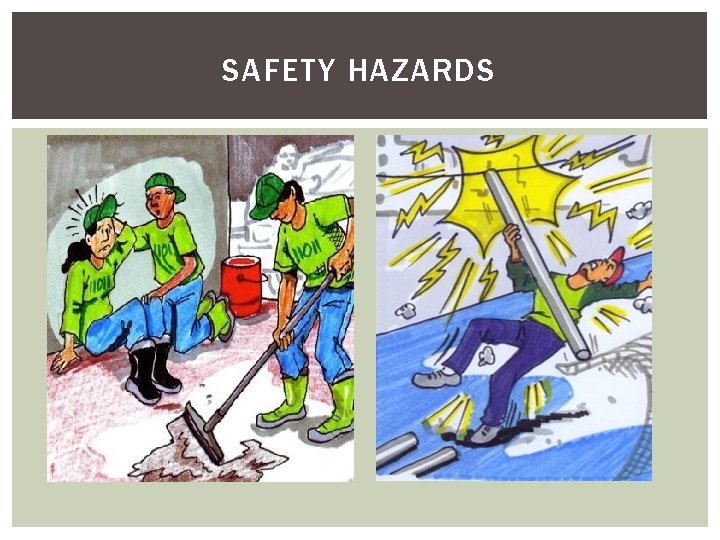
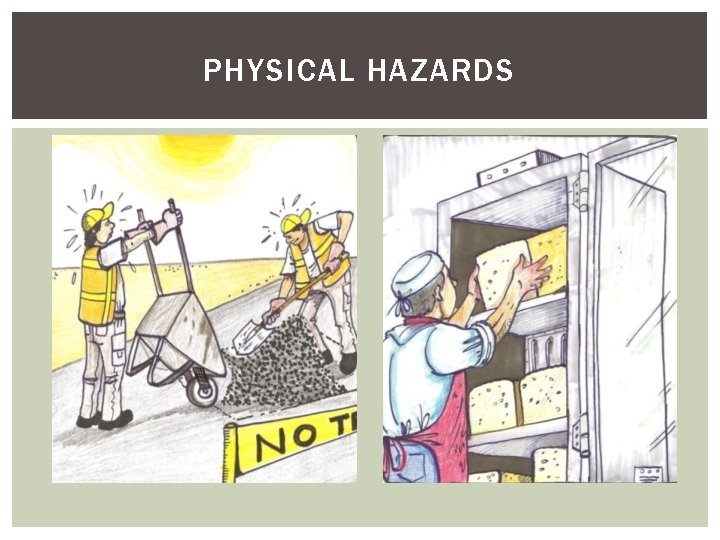
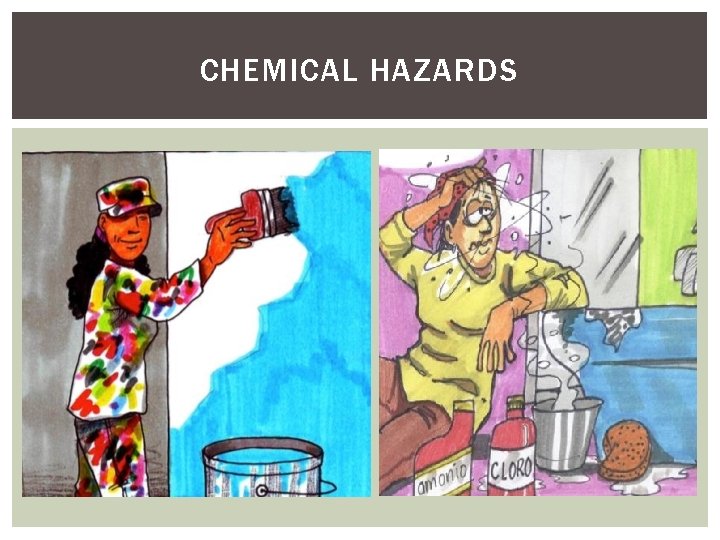
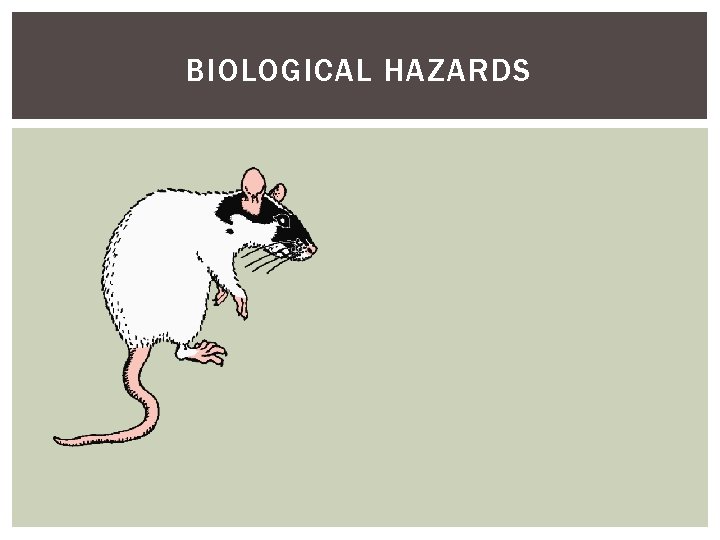
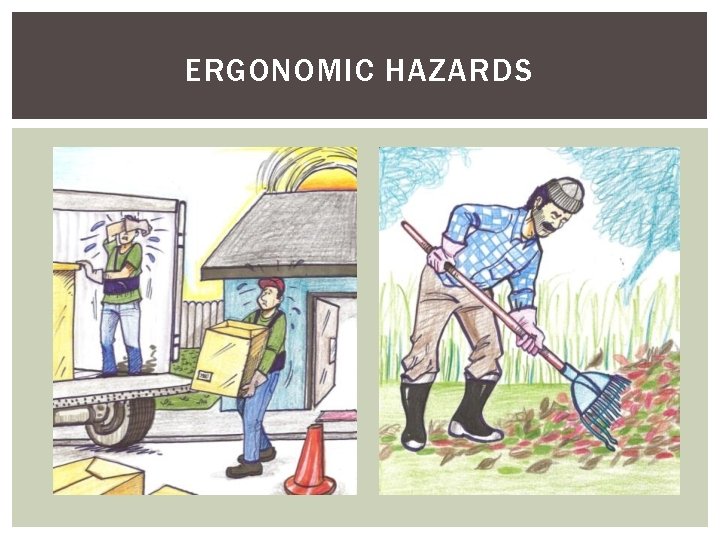
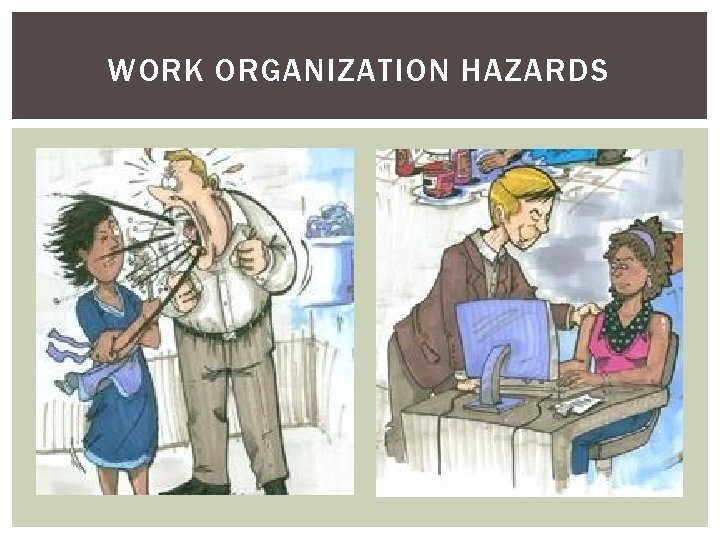
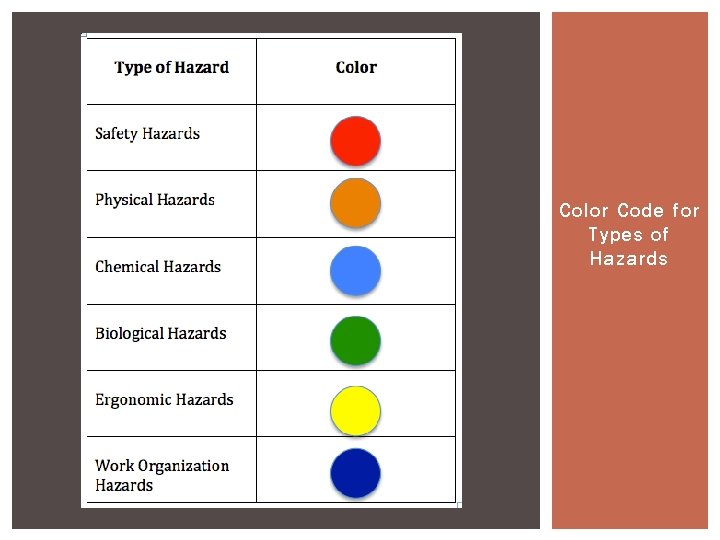
TYPES OF HAZARDS: Safety Hazards Physical Hazards Chemical Hazards Biological Hazards Ergonomic Hazards Work Organization Hazards
SAFETY HAZARDS
PHYSICAL HAZARDS
CHEMICAL HAZARDS
BIOLOGICAL HAZARDS
ERGONOMIC HAZARDS
WORK ORGANIZATION HAZARDS
COLOR CODE Color Code for Types of Hazards
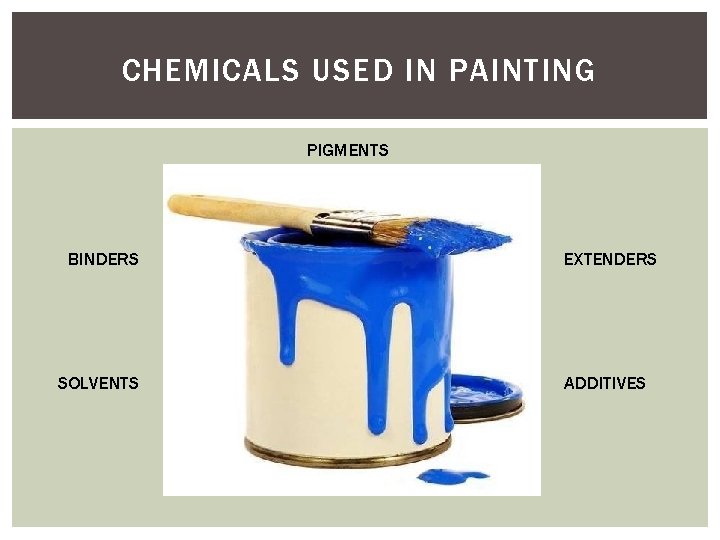
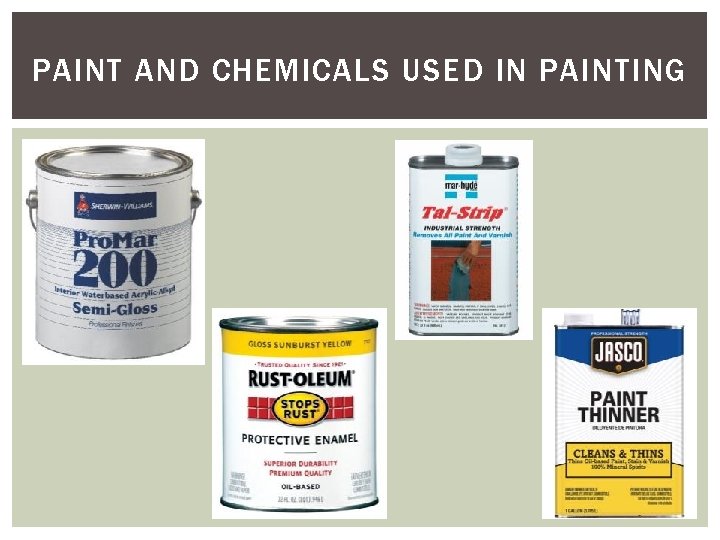
CHEMICALS USED IN PAINTING PIGMENTS BINDERS SOLVENTS EXTENDERS ADDITIVES
WHAT ARE HAZARDOUS CHEMICAL PRODUCTS? Hazardous chemical products are those that can harm people or the environment.
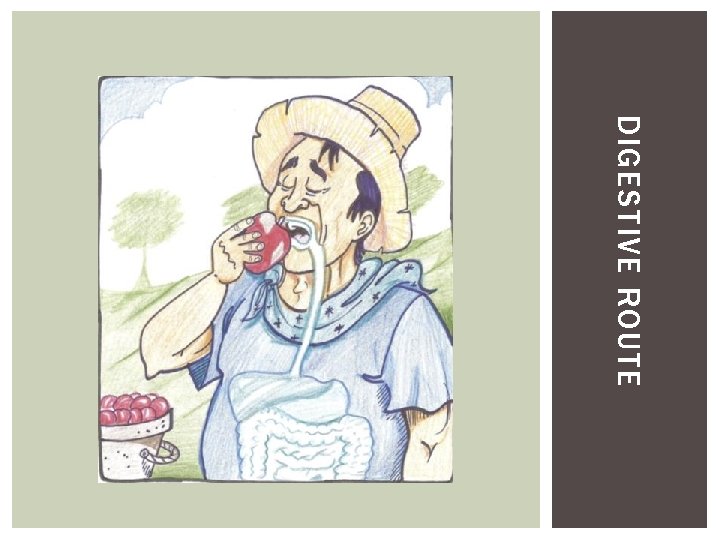
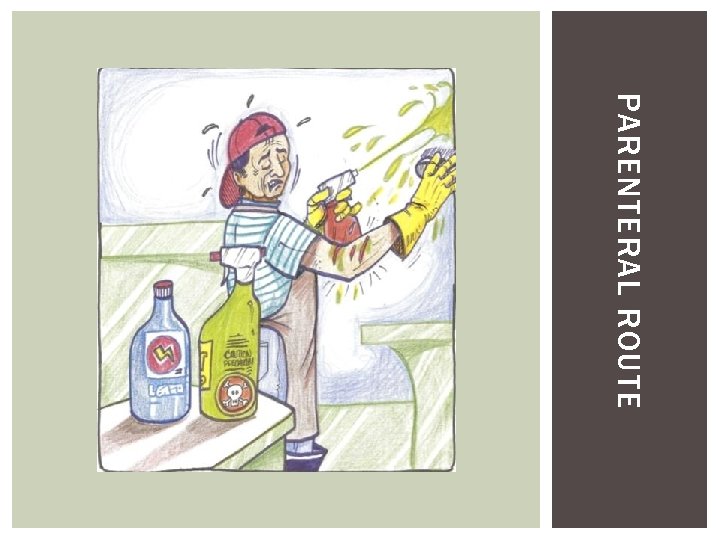
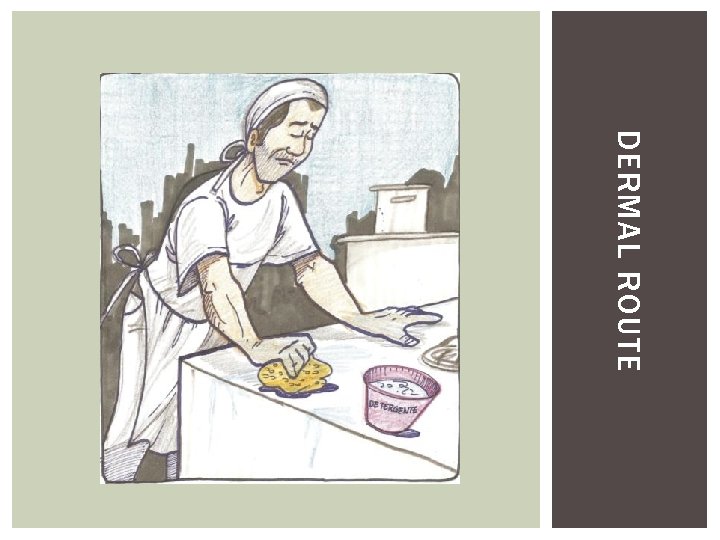
PHYSICAL FORM OF CHEMICALS The physical form of a chemical can influence the way in which it enters the organism, and to some extent, the harm it causes. The main physical forms of chemicals are solids, dusts, liquids, vapors and gases.
ROUTES OF ENTRY TO THE ORGANISM OF CHEMICAL POLLUTANTS
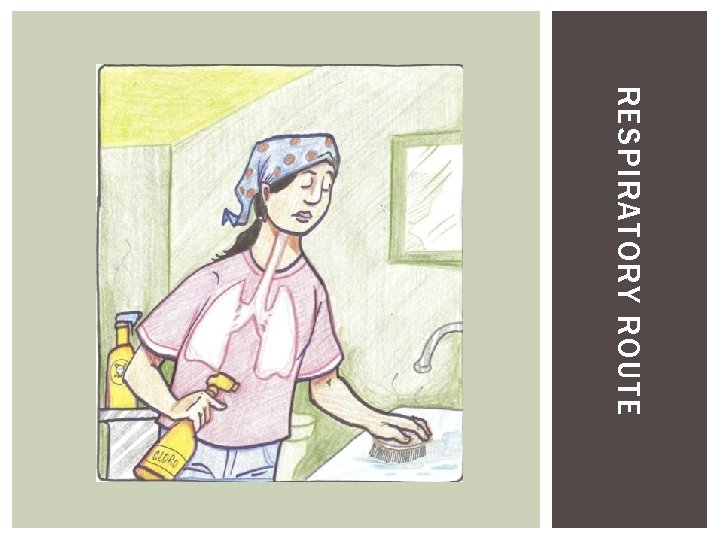
RESPIRATORY ROUTE
DIGESTIVE ROUTE
PARENTERAL ROUTE
DERMAL ROUTE
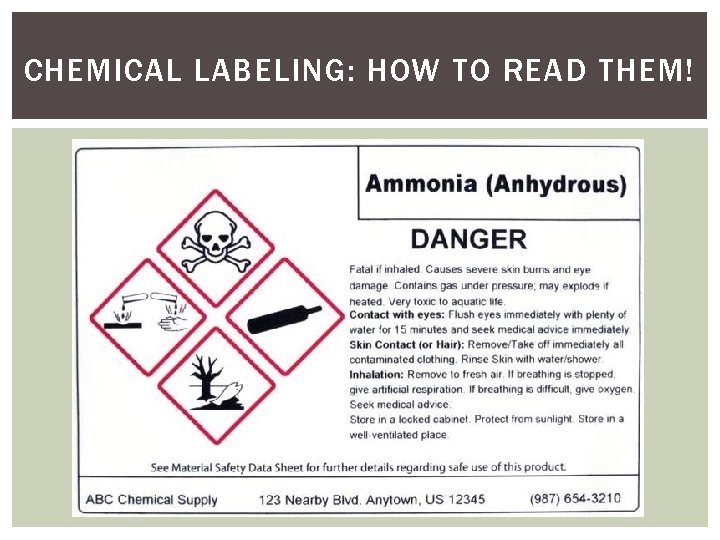
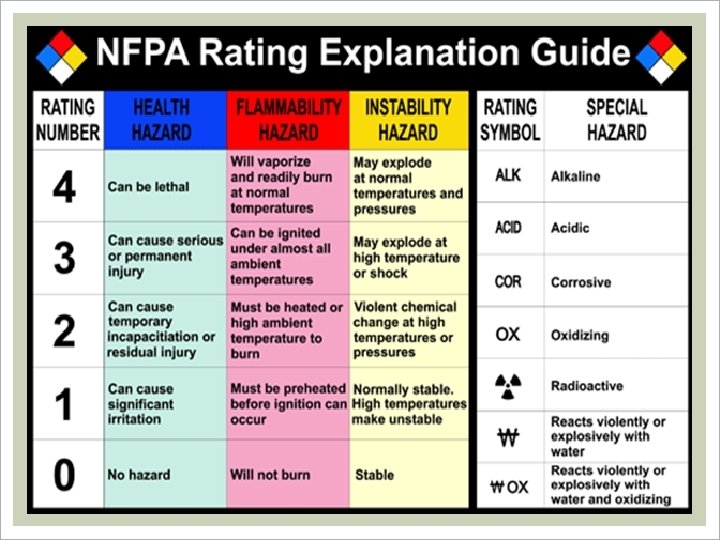
CHEMICAL LABELING: HOW TO READ THEM!
NFPA RATING EXPLANATION GUIDE
PAINT AND CHEMICALS USED IN PAINTING
OTHER HAZARDS Exposure to silica Exposure to lead Falls Electrical Hazards Musculoskeletal Disorders
HOW CAN I PROTECT MYSELF FROM HAZARDOUS CHEMICALS? The Right to Know Permissible Exposure Limits (PELs) Ventilation Substitution Work practices and behaviors Use of PPE
AVOIDING CREATING HAZARDS WHEN STORING CHEMICALS Storing Flammable Products: Store products in a cool environment Store products away from ignition sources Do not store incompatible products side by side Mark storage locations with signs/warnings Have easy access to fire extinguishers Fire extinguishers should be appropriate for the products being stored (see MSDS) Stored products should not block isles or exits
Storing Products that Release Vapor: • Keep product containers tightly closed when not in use. • Keep product containers upright. • Prevent product containers from being damaged (i. e. piercing). • When transferring products to new containers, make sure the container material is compatible with the product and clearly labeled. • Keep product containers in a well-ventilated area. • Keep product containers in a dry location.
WHAT IF I HAVE BEEN EXPOSED? Here are some things you can do in case of overexposure to chemical hazards: Stop what you are doing and leave the contaminated space. Alert your supervisor. Call 911 for emergencies or the Poison Control Center 1 -800 -222 -1222.
HERE ARE SOME THINGS YOU CAN DO IN CASE OF OVEREXPOSURE TO CHEMICAL HAZARDS: In case inhalation: clean air, rest in a semi recumbent position, artificial respiration if needed and medical care. In case of a spill: take off contaminated clothing, wash area with plenty of water, seek medical care. In case of splashing: Rinse with plenty of water for several minutes and seek medical care. In case of consumption: rinse the mouth, DO NOT induce vomiting, drink plenty of water, and seek medical care.