
Chemically PeculiarMagnetic Stars and the Da photometry Hans


- Slides: 14
Chemically Peculiar/Magnetic Stars and the Da photometry Hans Michael Maitzen, Ernst Paunzen Institute for Astronomy, University of Vienna
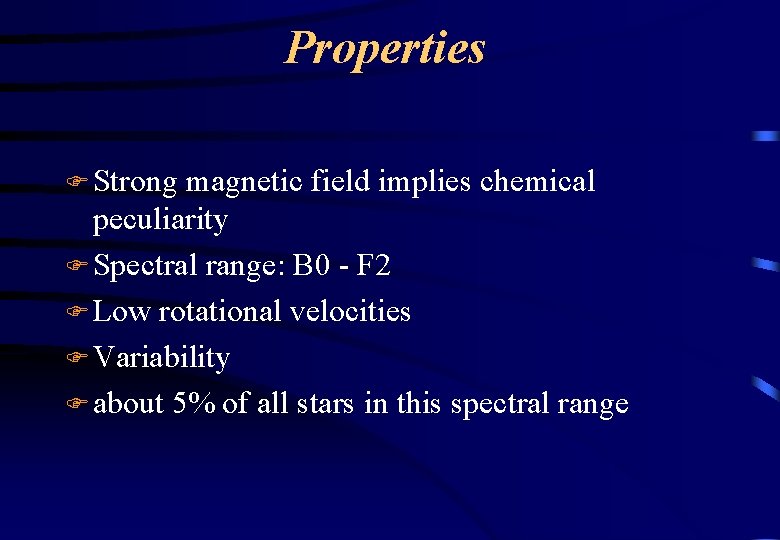
Properties F Strong magnetic field implies chemical peculiarity F Spectral range: B 0 - F 2 F Low rotational velocities F Variability F about 5% of all stars in this spectral range
Notation according to Preston
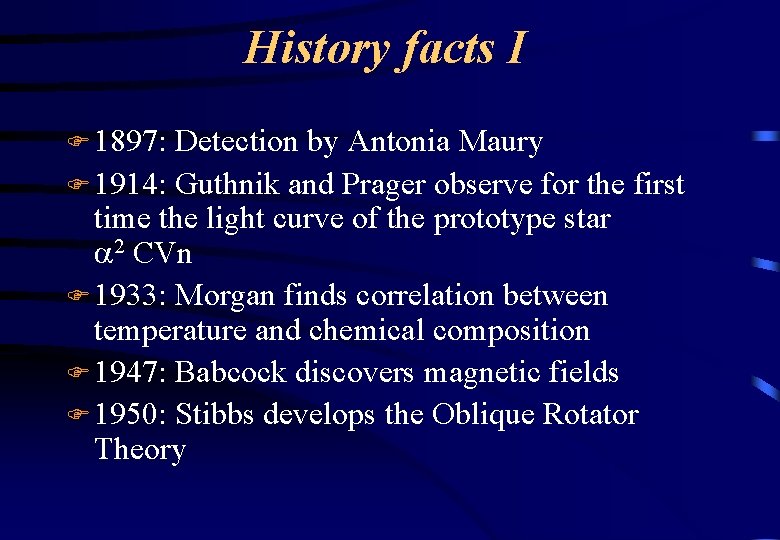
History facts I F 1897: Detection by Antonia Maury F 1914: Guthnik and Prager observe for the first time the light curve of the prototype star a 2 CVn F 1933: Morgan finds correlation between temperature and chemical composition F 1947: Babcock discovers magnetic fields F 1950: Stibbs develops the Oblique Rotator Theory
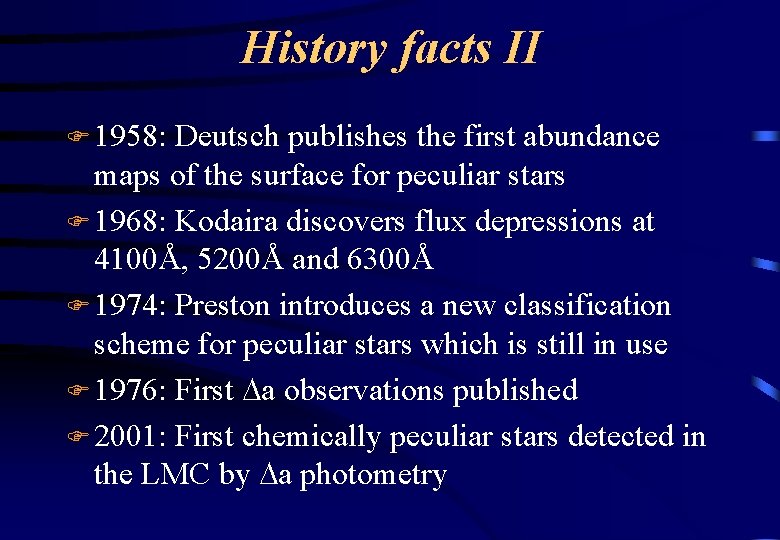
History facts II F 1958: Deutsch publishes the first abundance maps of the surface for peculiar stars F 1968: Kodaira discovers flux depressions at 4100Å, 5200Å and 6300Å F 1974: Preston introduces a new classification scheme for peculiar stars which is still in use F 1976: First Da observations published F 2001: First chemically peculiar stars detected in the LMC by Da photometry
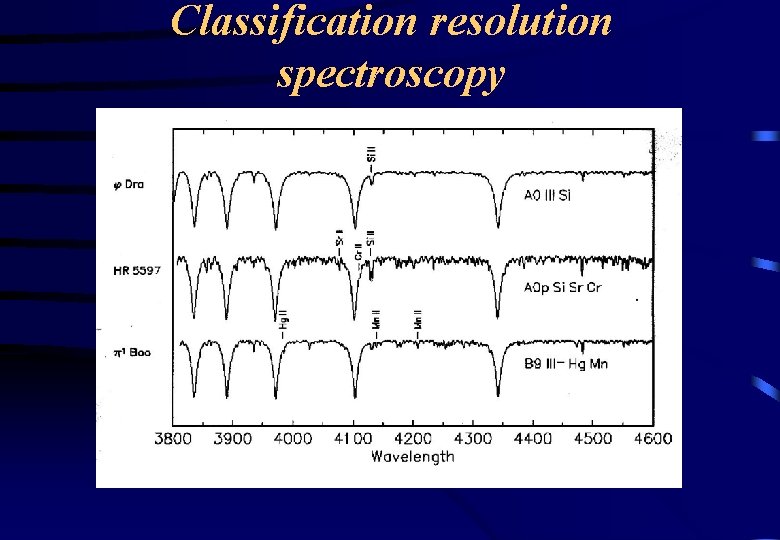
Classification resolution spectroscopy
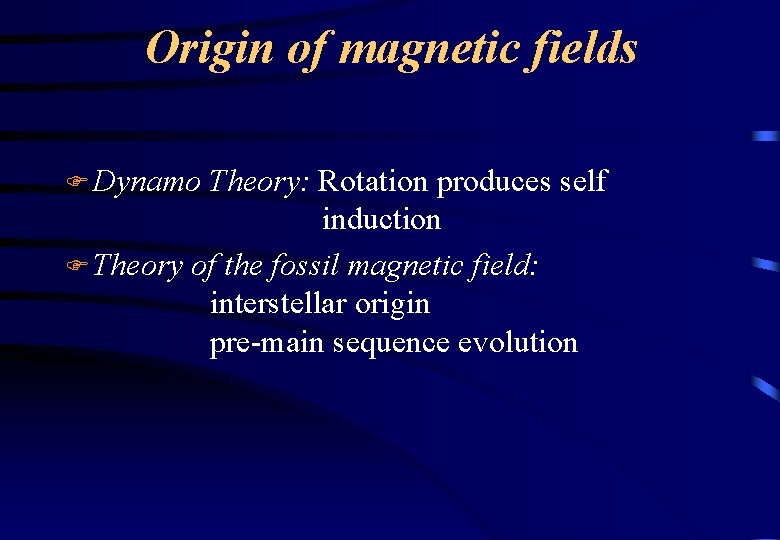
Origin of magnetic fields F Dynamo Theory: Rotation produces self induction F Theory of the fossil magnetic field: interstellar origin pre-main sequence evolution
Characteristics of magnetic fields F Dipole F Quadrupole axis ¹ Magnetic axis F 300 G £ Heff £ 40 k. G F Sun: 10 G (up to 4000 G) F Jupiter: 5 - 20 G F Earth: 0. 3 - 0. 6 G F Rotational
An example
b Corona Borealis
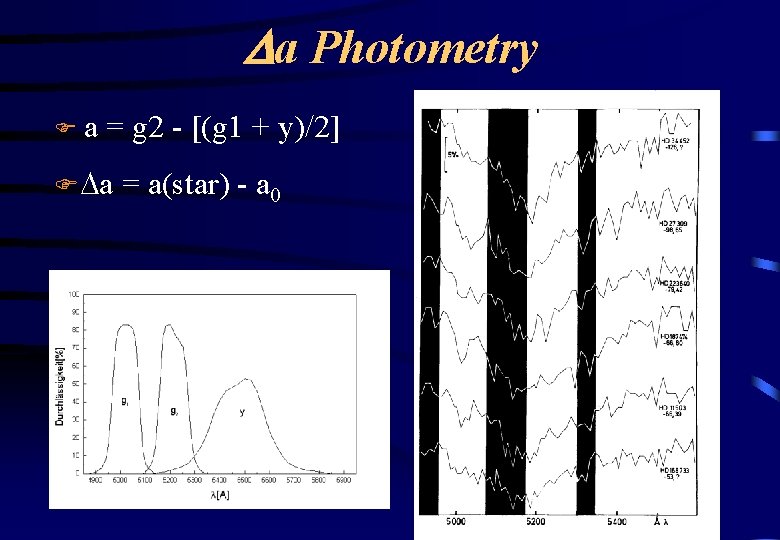
Da Photometry F a = g 2 - [(g 1 + y)/2] FDa = a(star) - a 0
Da Photometry of open clusters
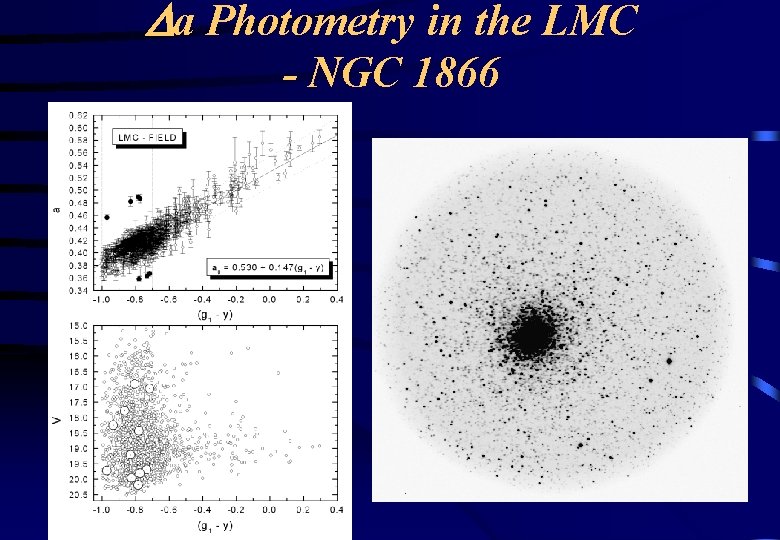
Da Photometry in the LMC - NGC 1866
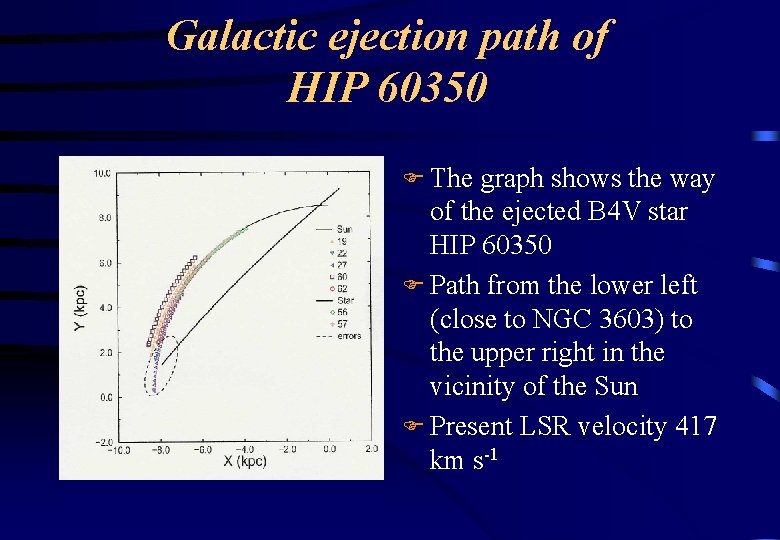
Galactic ejection path of HIP 60350 F The graph shows the way of the ejected B 4 V star HIP 60350 F Path from the lower left (close to NGC 3603) to the upper right in the vicinity of the Sun F Present LSR velocity 417 km s-1