
Chemical Waste Management What is chemical waste Any
- Slides: 12
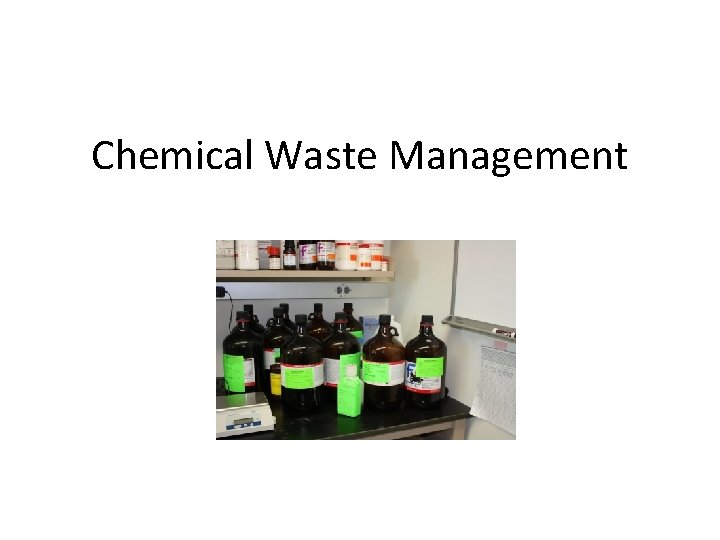
Chemical Waste Management
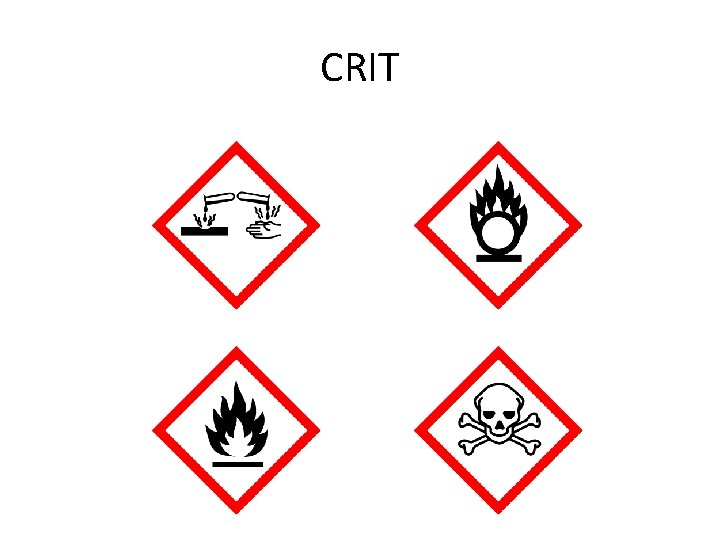
What is chemical waste? • Any chemical that is “CRIT”: – Corrosive: 2 ≥ p. H or 12. 5 ≤ p. H – Reactive: reacts violently or generates toxic/flammable gases – Ignitable: flash point of less than 140° F – Toxic: cause injury or death by inhalation, absorption, ingestion, or injection • Listed wastes • Universal wastes (e. g. , batteries, fluorescent lights)
CRIT
When do chemicals become waste? • Expired chemicals • Spent chemicals/waste that has bee used for intended purpose • Unstable materials • Unwanted surplus
Where to store waste? • Waste can be stored in the lab in a satellite accumulation area (SAA) • Everyone should know where the SAA is located
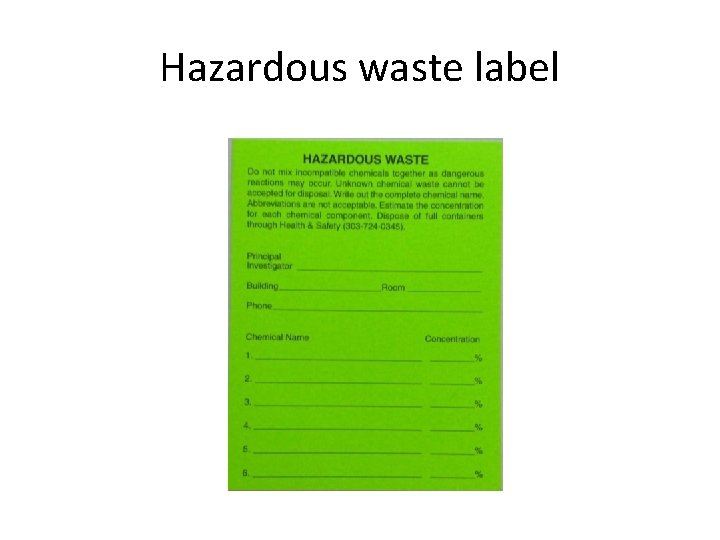
How to store waste? • Segregate waste by chemical characteristics (i. e. : flammables should not be stored with acids) – Same storage principles apply for raw materials as with waste • In accordance with storage limits • All containers must be labeled and intact • Must be inspected weekly
Hazardous waste label
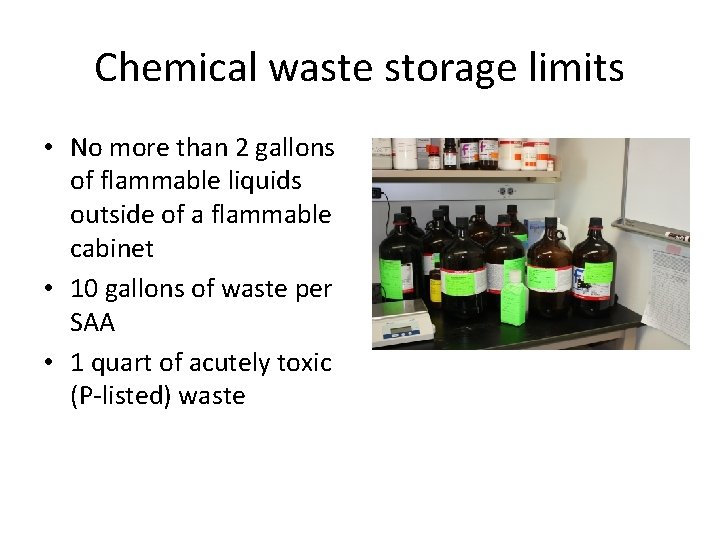
Chemical waste storage limits • No more than 2 gallons of flammable liquids outside of a flammable cabinet • 10 gallons of waste per SAA • 1 quart of acutely toxic (P-listed) waste
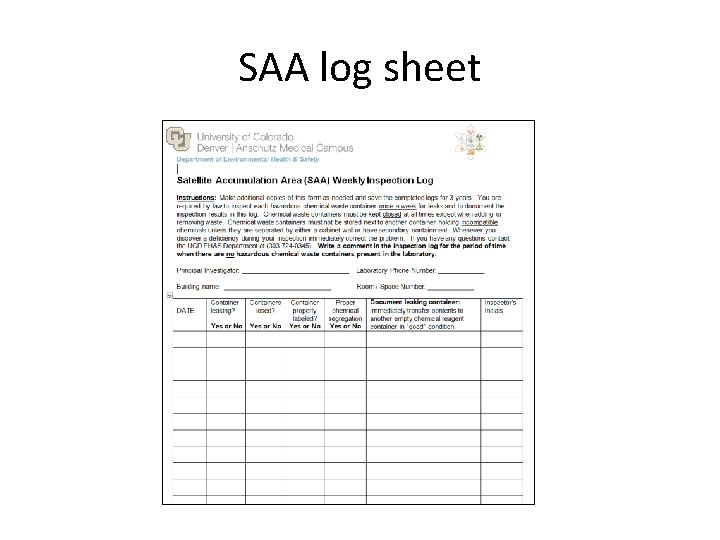
What should a weekly inspection entail? • Check that containers are in good condition with no leaks • Containers must be closed with a proper lid (no parafilm!) • UCD waste label is attached and completed for each container • No incompatible wastes are stored together • Weekly log sheet should be signed
SAA log sheet
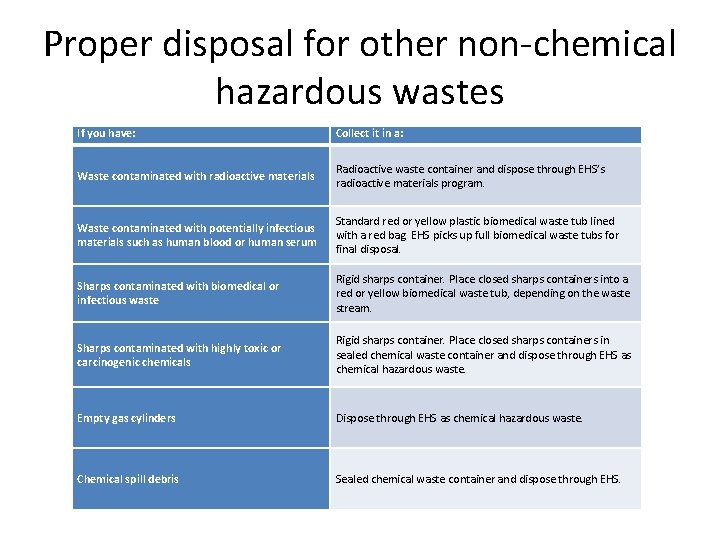
Proper disposal for other non-chemical hazardous wastes If you have: Collect it in a: Waste contaminated with radioactive materials Radioactive waste container and dispose through EHS’s radioactive materials program. Waste contaminated with potentially infectious materials such as human blood or human serum Standard red or yellow plastic biomedical waste tub lined with a red bag. EHS picks up full biomedical waste tubs for final disposal. Sharps contaminated with biomedical or infectious waste Rigid sharps container. Place closed sharps containers into a red or yellow biomedical waste tub, depending on the waste stream. Sharps contaminated with highly toxic or carcinogenic chemicals Rigid sharps container. Place closed sharps containers in sealed chemical waste container and dispose through EHS as chemical hazardous waste. Empty gas cylinders Dispose through EHS as chemical hazardous waste. Chemical spill debris Sealed chemical waste container and dispose through EHS.
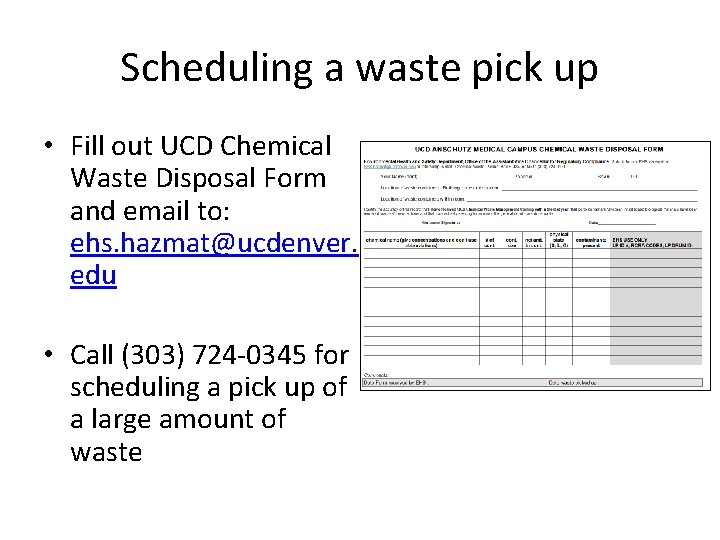
Scheduling a waste pick up • Fill out UCD Chemical Waste Disposal Form and email to: ehs. hazmat@ucdenver. edu • Call (303) 724 -0345 for scheduling a pick up of a large amount of waste