
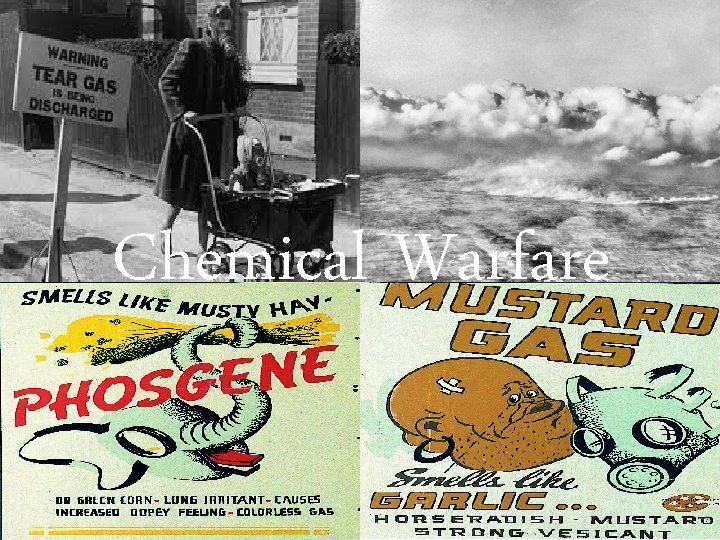
Chemical Warfare Chemical Warfare Four types Tear gases









- Slides: 24
Chemical Warfare
Chemical Warfare • Four types: Tear gases, Chlorine, Phosgene & Diphosgene, and Mustard gas • primarily used to demoralize, injure, and kill entrenched defenders, against whom the indiscriminate and generally slow-moving or static nature of gas clouds would be most effective.
How did the gas get to the enemies side? • 1: during the night, the soldiers snuck over to the enemy’s side and threw the canisters everywhere. Then the next day, they would shot the canisters so that they would release the gas into the enemy’s side. • 2: They could use pressurized cylinders and then release them when the wind was right, so the gas could blow over into the enemy’s side – This is dangerous because the wind can change, and the gas could blow back on your side. This happened to the British and caused hundreds of deaths. • 3: Or they could through or shot a grenade to the opposing side. Questions: #1, #2, #3, #4, #5
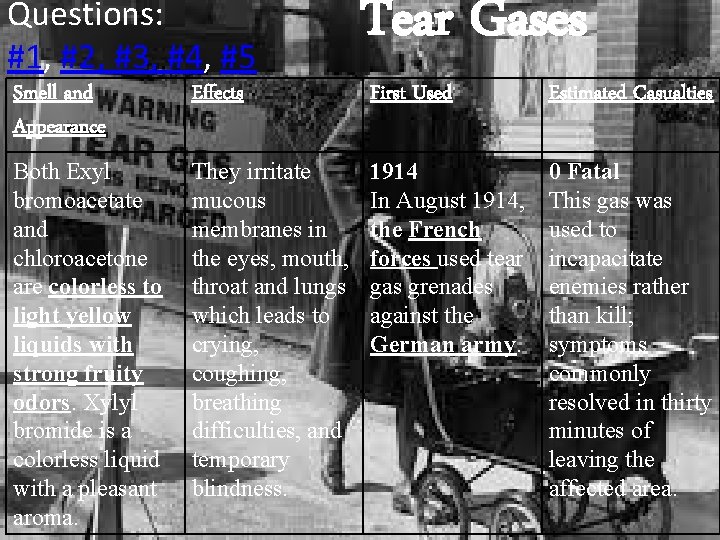
Questions: #1, #2, #3, #4, #5 Smell and Appearance Effects Both Exyl bromoacetate and chloroacetone are colorless to light yellow liquids with strong fruity odors. Xylyl bromide is a colorless liquid with a pleasant aroma. They irritate mucous membranes in the eyes, mouth, throat and lungs which leads to crying, coughing, breathing difficulties, and temporary blindness. Tear Gases First Used Estimated Casualties 1914 In August 1914, the French forces used tear gas grenades against the German army. 0 Fatal This gas was used to incapacitate enemies rather than kill; symptoms commonly resolved in thirty minutes of leaving the affected area.
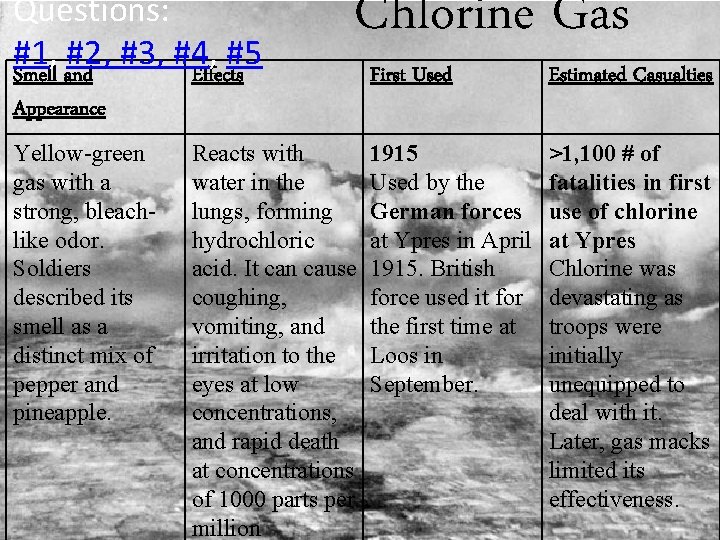
Questions: #1, #2, #3, #4, #5 Smell and Effects Chlorine Gas Appearance Yellow-green gas with a strong, bleachlike odor. Soldiers described its smell as a distinct mix of pepper and pineapple. Reacts with water in the lungs, forming hydrochloric acid. It can cause coughing, vomiting, and irritation to the eyes at low concentrations, and rapid death at concentrations of 1000 parts per million First Used Estimated Casualties 1915 Used by the German forces at Ypres in April 1915. British force used it for the first time at Loos in September. >1, 100 # of fatalities in first use of chlorine at Ypres Chlorine was devastating as troops were initially unequipped to deal with it. Later, gas macks limited its effectiveness.
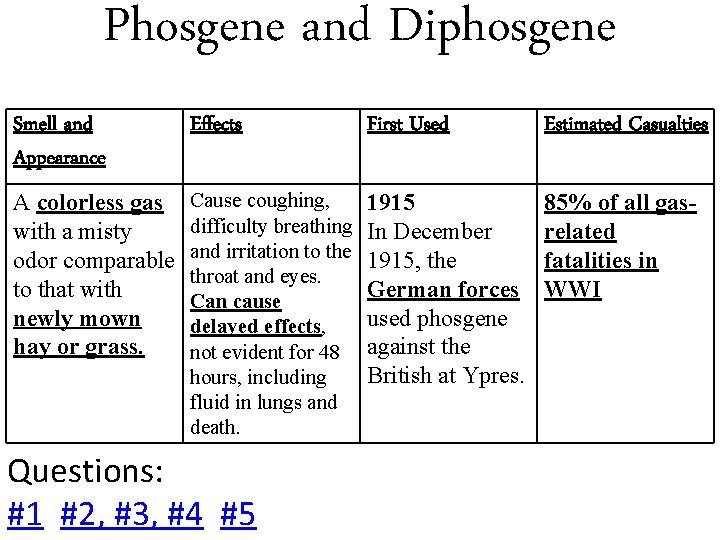
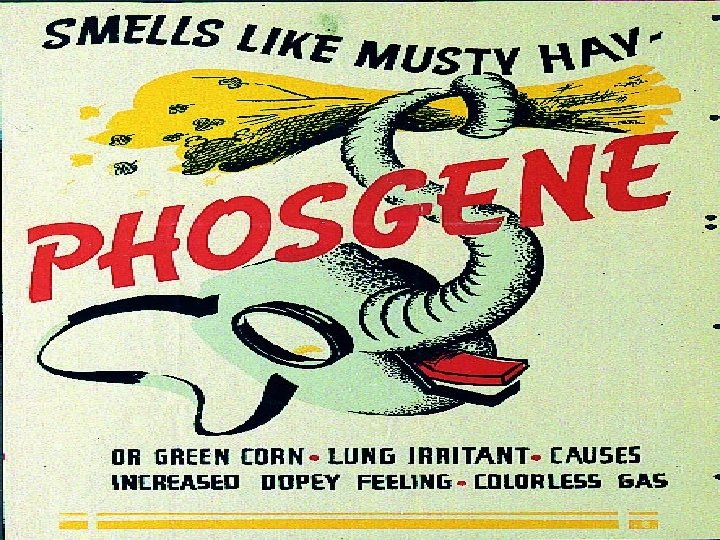
Phosgene and Diphosgene Smell and Appearance Effects First Used Estimated Casualties A colorless gas with a misty odor comparable to that with newly mown hay or grass. Cause coughing, difficulty breathing and irritation to the throat and eyes. Can cause delayed effects, not evident for 48 hours, including fluid in lungs and death. 1915 In December 1915, the German forces used phosgene against the British at Ypres. 85% of all gasrelated fatalities in WWI Questions: #1, #2, #3, #4, #5
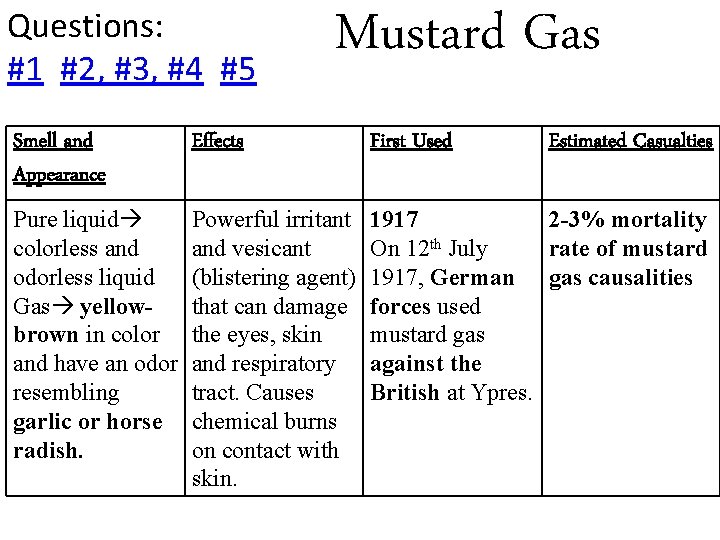
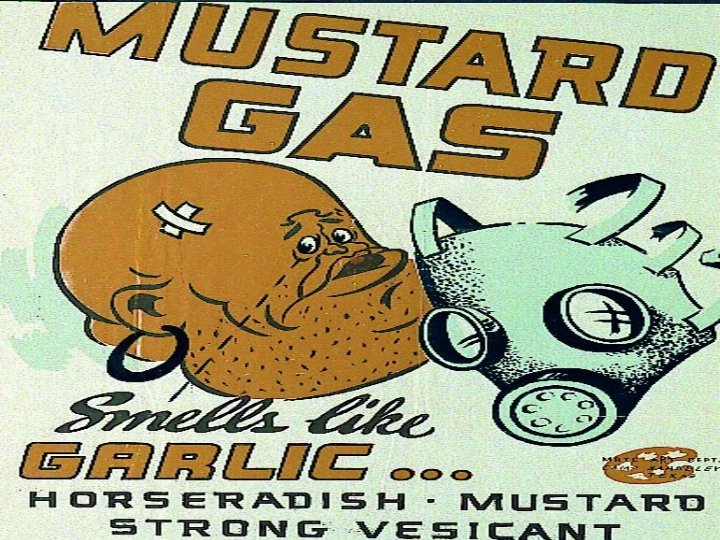
Questions: #1, #2, #3, #4, #5 Mustard Gas Smell and Appearance Effects First Used Estimated Casualties Pure liquid colorless and odorless liquid Gas yellowbrown in color and have an odor resembling garlic or horse radish. Powerful irritant and vesicant (blistering agent) that can damage the eyes, skin and respiratory tract. Causes chemical burns on contact with skin. 1917 2 -3% mortality On 12 th July rate of mustard 1917, German gas causalities forces used mustard gas against the British at Ypres.
#1—Which gas was used first? Chlorine Gas Mustard GAS TEAR GAS PHOSGENE AND Diphosgene To go back to the gas Slide click which one you need to go back to, then on that slide click the number of the question to come back to this slide. Tear Gas Chlorine Gas Phosgene and Diphosgene Gas Mustard GAS
INCORRECT TRY AGAIN (to go back to question clikc the arrow)
CORRECT Next question (click the arrow) Question #2
#2—I am in my trench, and suddenly, I smell garlic and see a yellow-borwn gas. What will happen to me? Most likely I will die! I will have burns on my skin, and I will have damage to my eyes, skin, and respiratory tract. I will just be disoriented. I will suffocate. To go back to the gas Slide click which one you need to go back to, then on that slide click the number of the question to come back to this slide. Tear Gas Chlorine Gas Phosgene and Diphosgene Gas Mustard GAS
INCORRECT TRY AGAIN (to go back to question clikc the arrow)
CORRECT Next question (click the arrow) Question #3
#3—Which was the most dangerous method in getting gas to the opposing side? Throwing a grenade over Sneaking over and dropping canisters then shooting them Pressurized cylinders They never used gas in World WAR 1. To go back to the Method Slide click which one you need to go back to, then on that slide click the number of the question to come back to this slide. Method Slide
INCORRECT TRY AGAIN (to go back to question clikc the arrow)
CORRECT Next question (click the arrow) Question #4
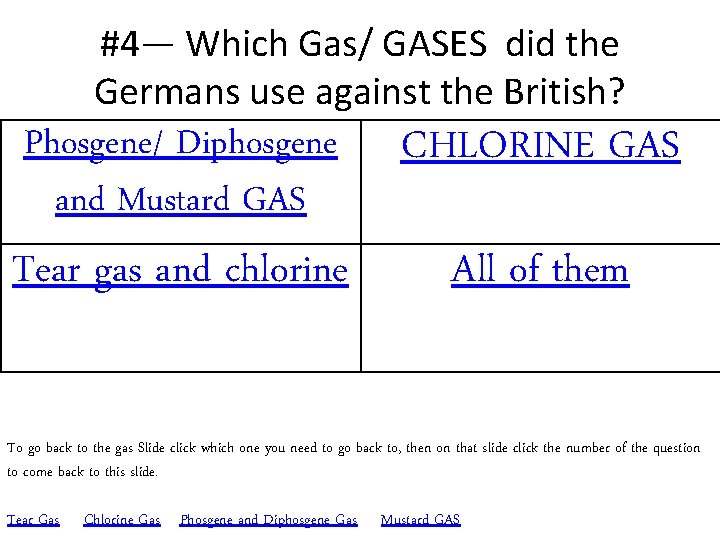
#4— Which Gas/ GASES did the Germans use against the British? Phosgene/ Diphosgene and Mustard GAS CHLORINE GAS Tear gas and chlorine All of them To go back to the gas Slide click which one you need to go back to, then on that slide click the number of the question to come back to this slide. Tear Gas Chlorine Gas Phosgene and Diphosgene Gas Mustard GAS
INCORRECT TRY AGAIN (to go back to question clikc the arrow)
CORRECT Next question (click the arrow) Question #5
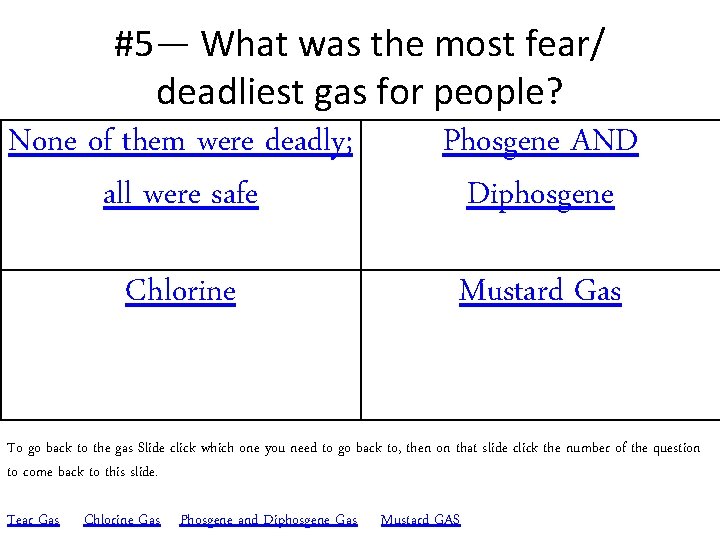
#5— What was the most fear/ deadliest gas for people? None of them were deadly; all were safe Phosgene AND Diphosgene Chlorine Mustard Gas To go back to the gas Slide click which one you need to go back to, then on that slide click the number of the question to come back to this slide. Tear Gas Chlorine Gas Phosgene and Diphosgene Gas Mustard GAS
INCORRECT TRY AGAIN (to go back to question clikc the arrow)
Correct!! Congratulations Now you know about the types o gases in ww. I!!