
CHEMICAL SIGNALS IN ANIMALS Key concepts Hormones are
- Slides: 12
CHEMICAL SIGNALS IN ANIMALS
Key concepts Hormones are compounds produced in one part of the body and transported to another location to produce specific responses; small amount s can induce substantial responses. Chemical signals produced by the body are mostly produced by glands. Hormones either affect a target effector organ directly or via the signal transduction pathway. Effects of hormones vary depending on whether they bind to a receptor in the plasma membrane or within the nucleus of a cell. Action of hormones is controlled by feedback mechanisms. Hormones are classified by mode of transport or through chemical composition. Diseases in the endocrine system occur when levels of hormones released are at an abnormal level or when receptors of that particular hormone are damaged.
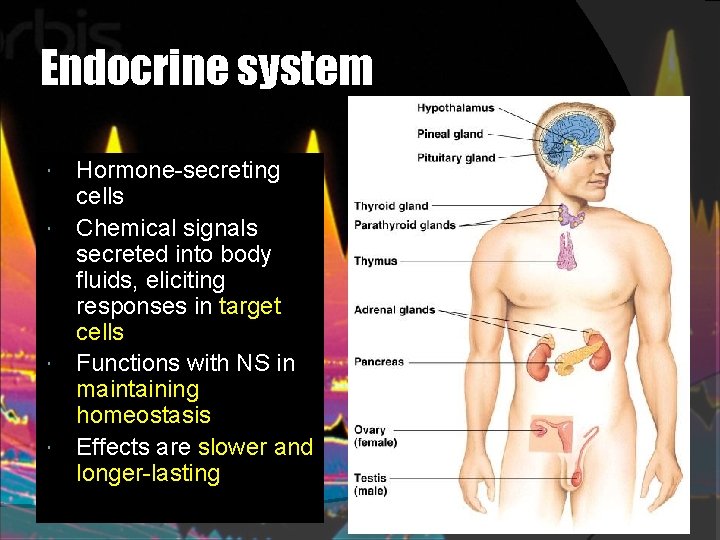
Endocrine system Hormone-secreting cells Chemical signals secreted into body fluids, eliciting responses in target cells Functions with NS in maintaining homeostasis Effects are slower and longer-lasting
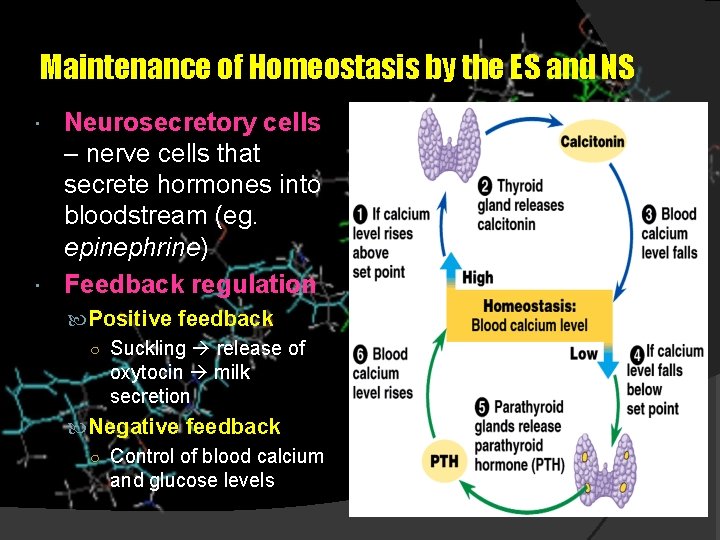
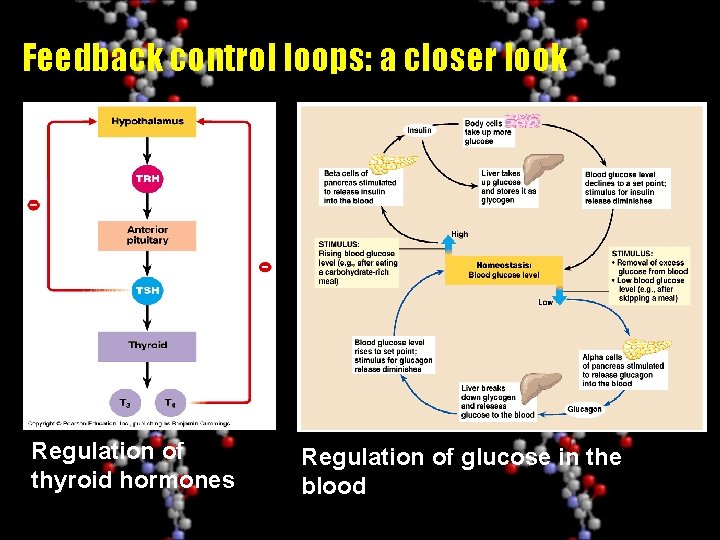
Maintenance of Homeostasis by the ES and NS Neurosecretory cells – nerve cells that secrete hormones into bloodstream (eg. epinephrine) Feedback regulation Positive feedback ○ Suckling release of oxytocin milk secretion Negative feedback ○ Control of blood calcium and glucose levels
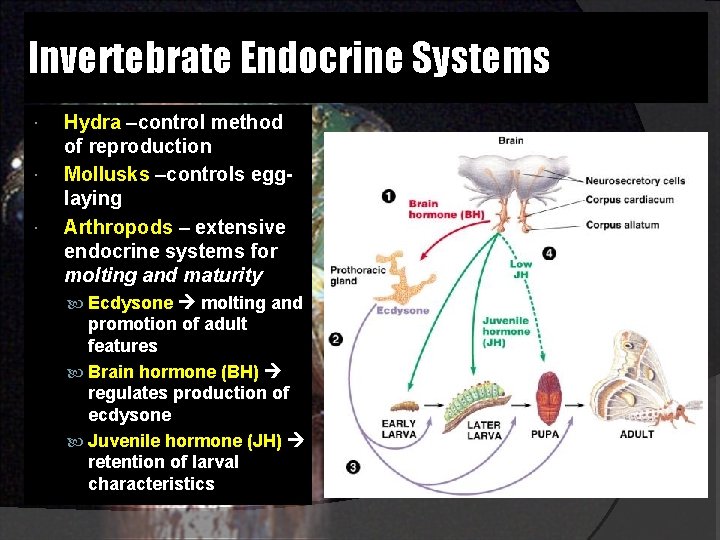
Invertebrate Endocrine Systems Hydra –control method of reproduction Mollusks –controls egglaying Arthropods – extensive endocrine systems for molting and maturity Ecdysone molting and promotion of adult features Brain hormone (BH) regulates production of ecdysone Juvenile hormone (JH) retention of larval characteristics
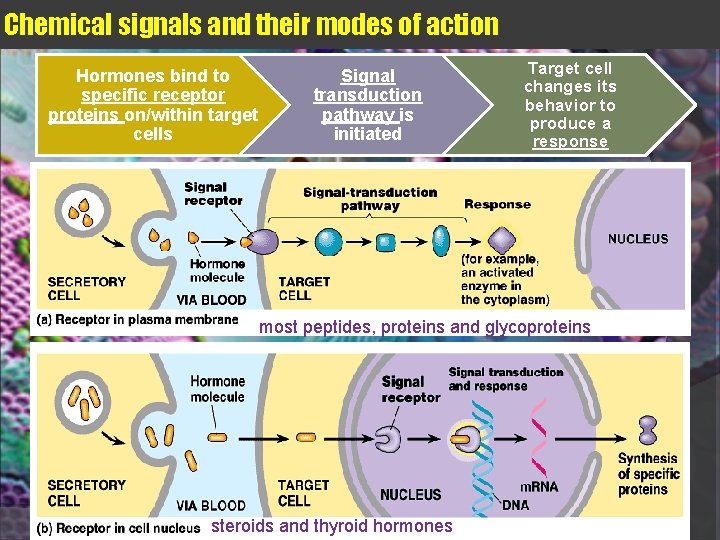
Chemical signals and their modes of action Hormones bind to specific receptor proteins on/within target cells Signal transduction pathway is initiated Target cell changes its behavior to produce a response most peptides, proteins and glycoproteins steroids and thyroid hormones
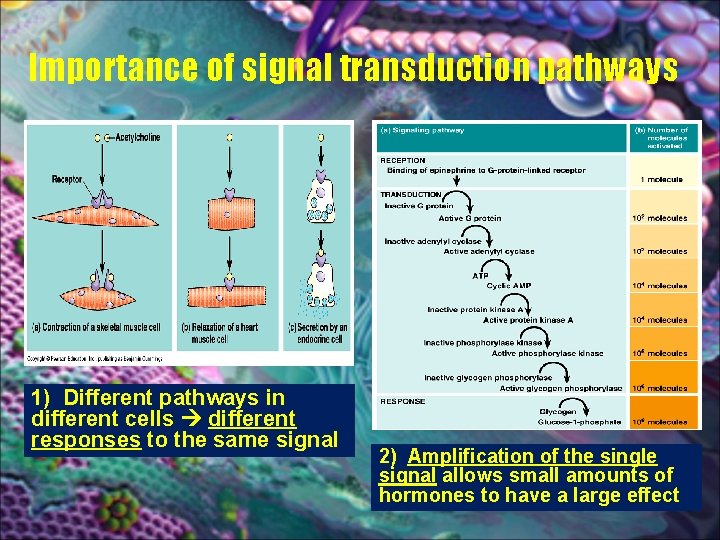
Importance of signal transduction pathways 1) Different pathways in different cells different responses to the same signal 2) Amplification of the single signal allows small amounts of hormones to have a large effect
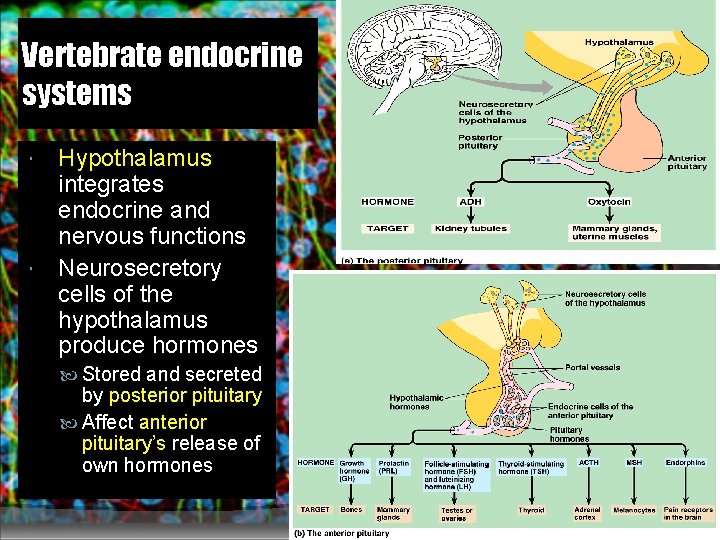
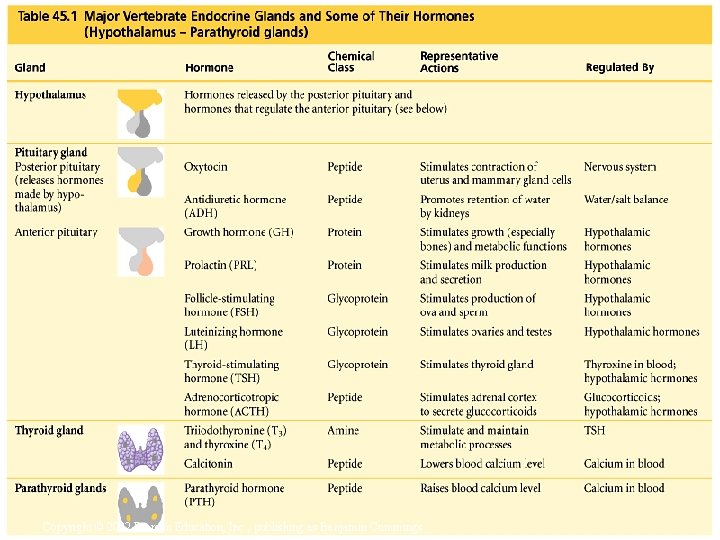
Vertebrate endocrine systems Hypothalamus integrates endocrine and nervous functions Neurosecretory cells of the hypothalamus produce hormones Stored and secreted by posterior pituitary Affect anterior pituitary’s release of own hormones
Copyright © 2002 Pearson Education, Inc. , publishing as Benjamin Cummings
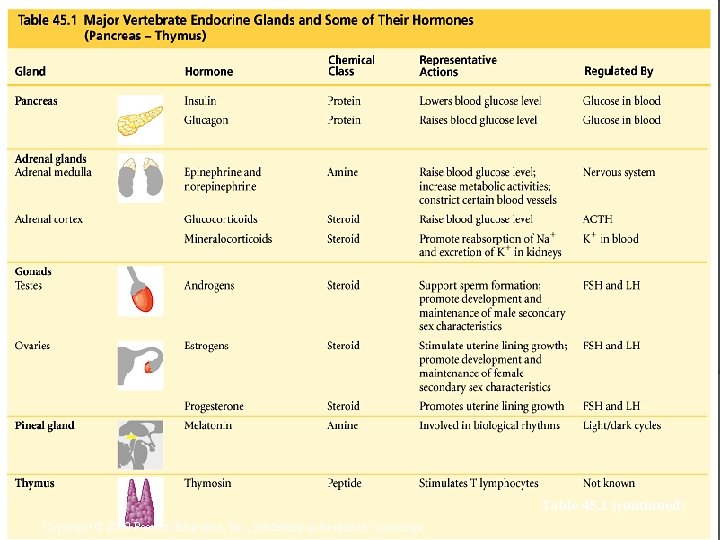
Table 45. 1 (continued) Copyright © 2002 Pearson Education, Inc. , publishing as Benjamin Cummings
Feedback control loops: a closer look Regulation of thyroid hormones Regulation of glucose in the blood
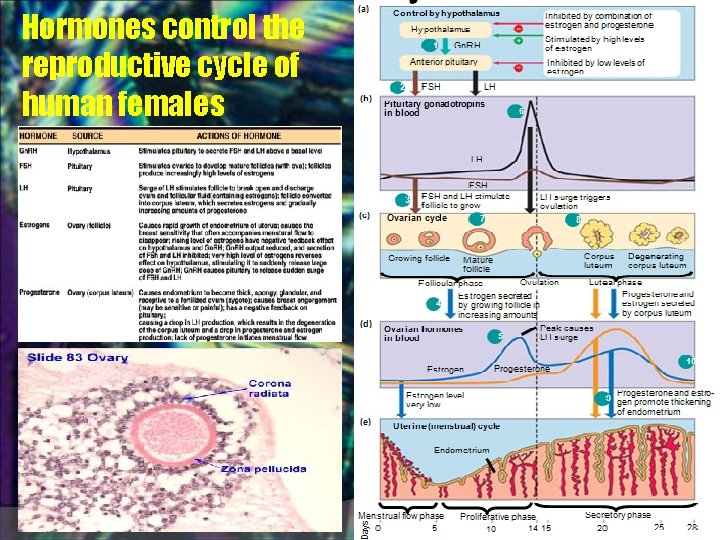
Hormones control the reproductive cycle of human females