
Chemical shift Inductive effects in alkanes Anisotropy Inductive
- Slides: 27
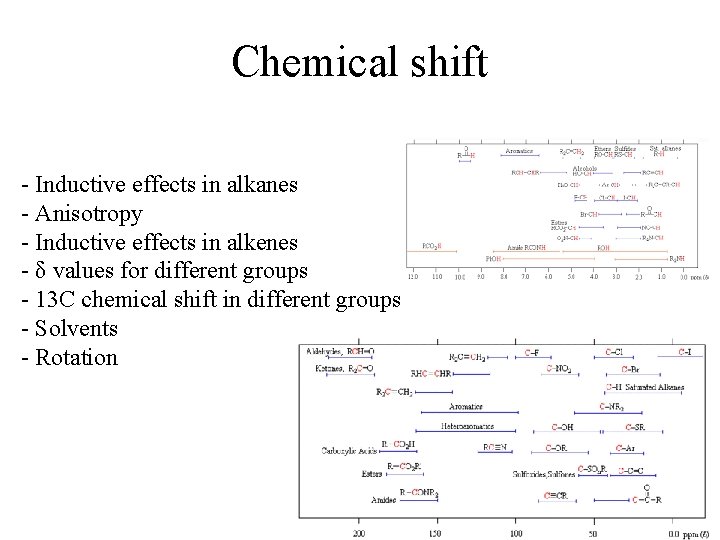
Chemical shift - Inductive effects in alkanes - Anisotropy - Inductive effects in alkenes - δ values for different groups - 13 C chemical shift in different groups - Solvents - Rotation
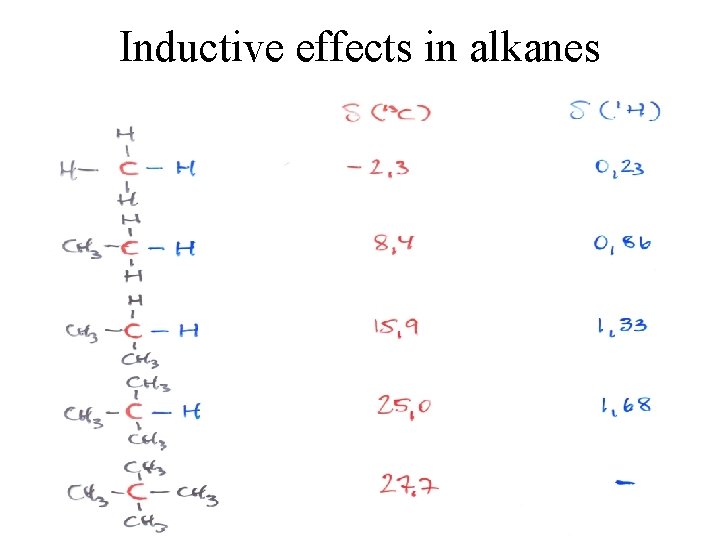
Inductive effects in alkanes
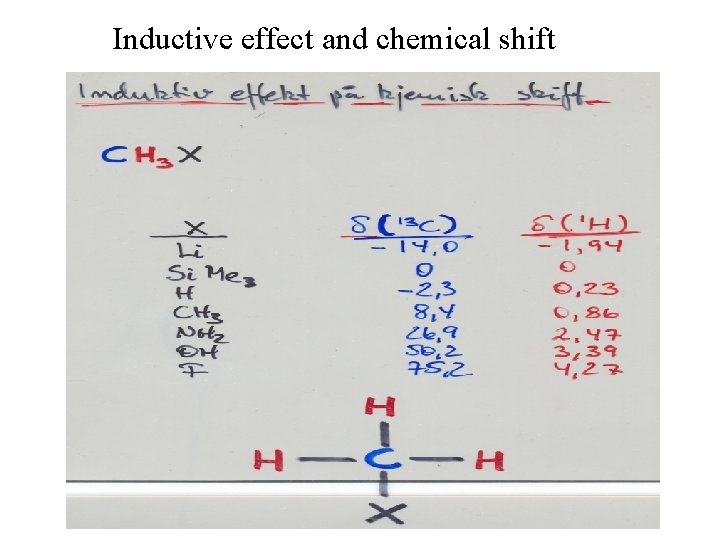
Inductive effect and chemical shift
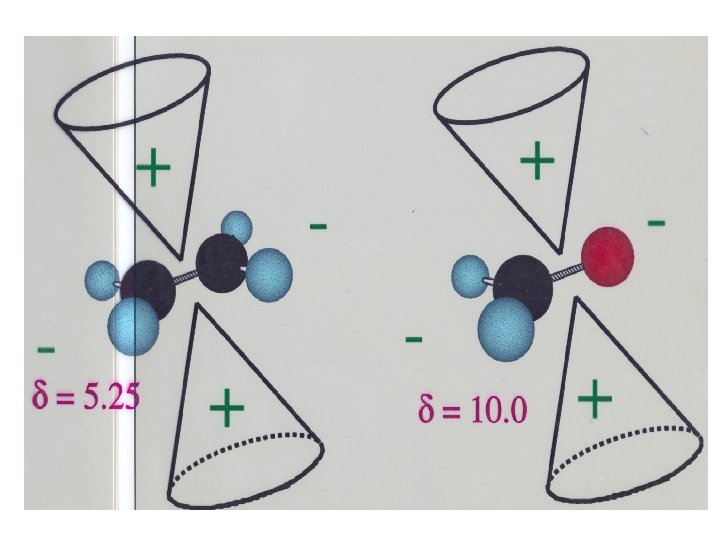
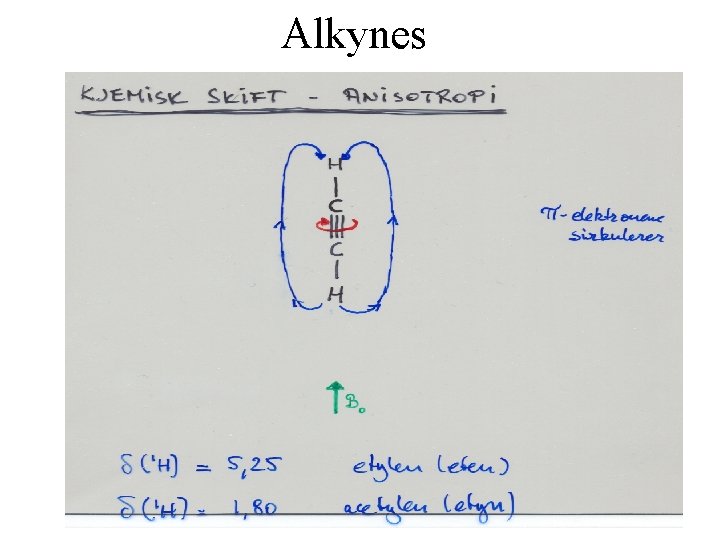
δ-values: Hybridization effects δ values: sp 3 < sp 2 < sp Carbons with sp 2 hybridization hold the electrons closer to the nucelus than do sp 3 carbons. This leads to less shielding of the attached protons. Thus vinyl hydrogens have higher chemical shifts than alifatic hydrogens Acetylenic protons (sp-hybridized C) would be expected to have a higher chemical shift than vinyl protons. This is not true due to magnetic anistropy
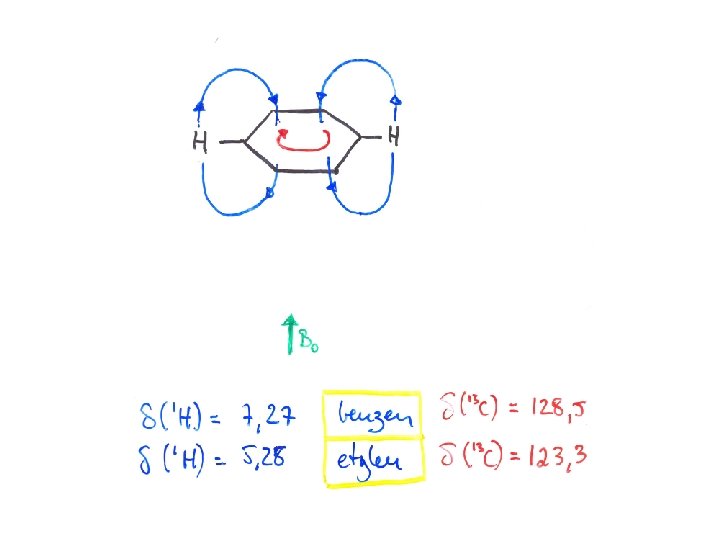
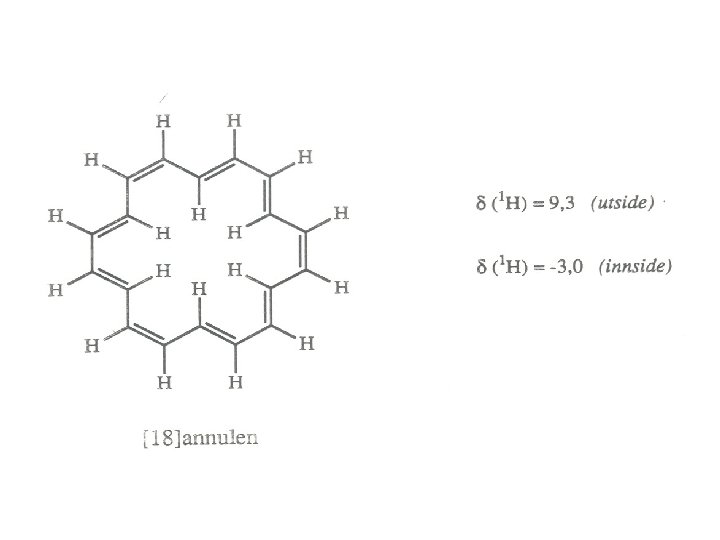
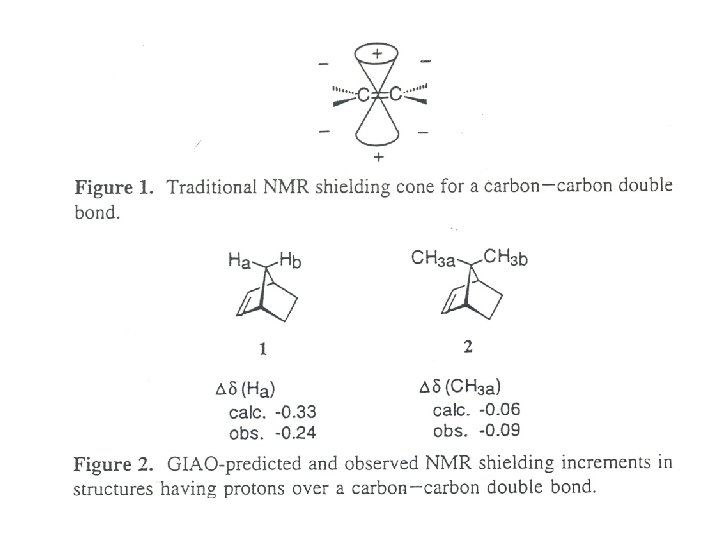
Magnetic anisotropy A magnetic field with non-uniform density or non-sperical distribution The presence of π-electrons in a magnetic field sets up a small, local current and an anisotropic magnetic field in its close proximity Applies only to atoms with sp 2 and sp hybridization
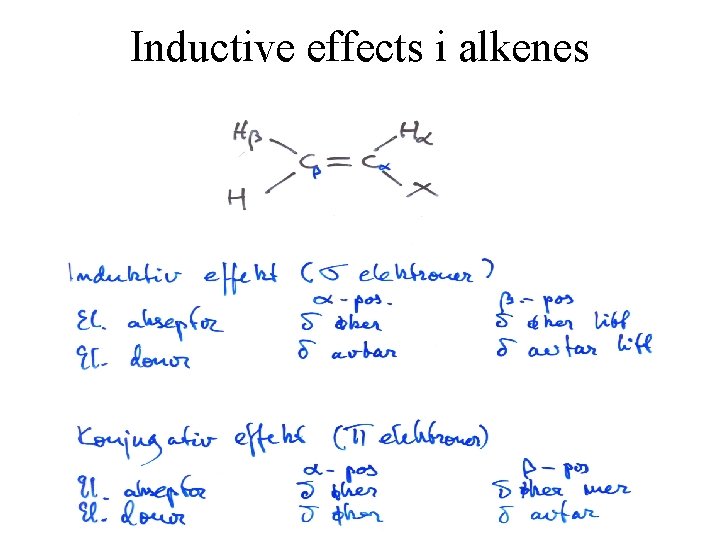
Inductive effects i alkenes
Alkynes
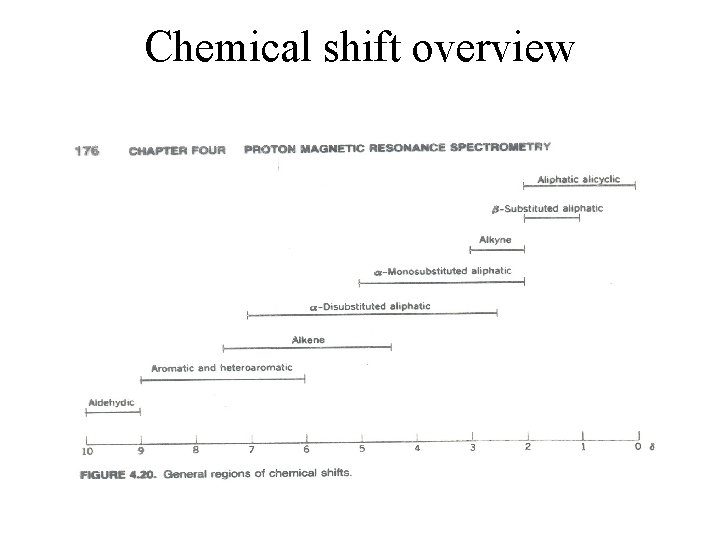
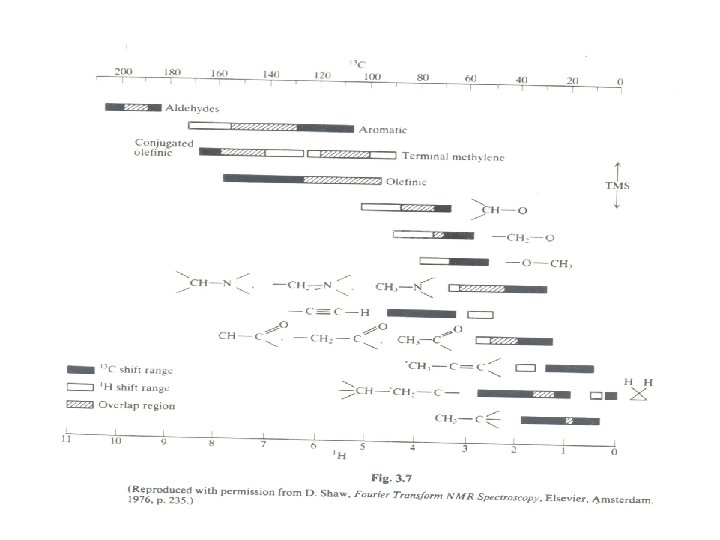
Chemical shift overview
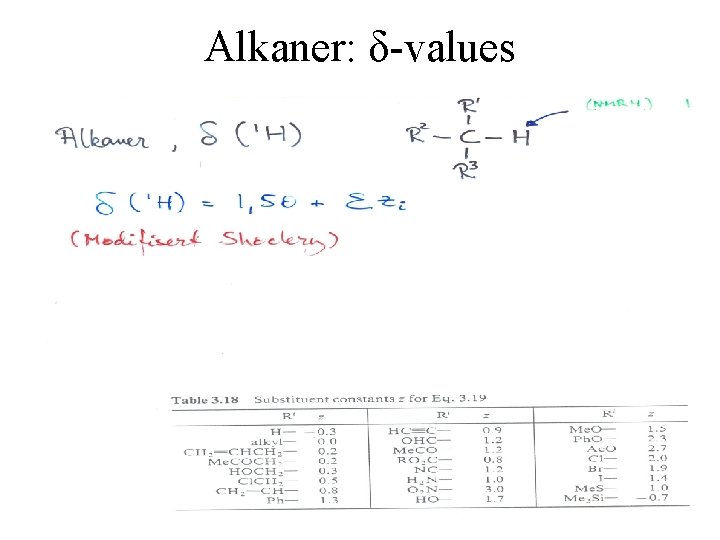
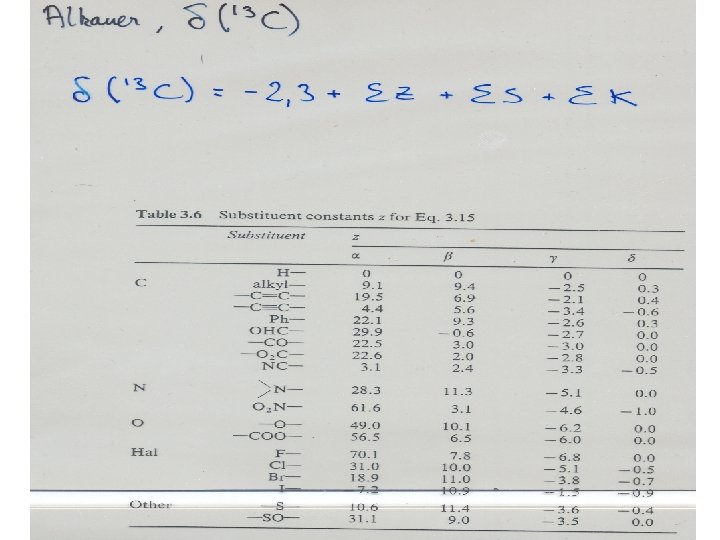
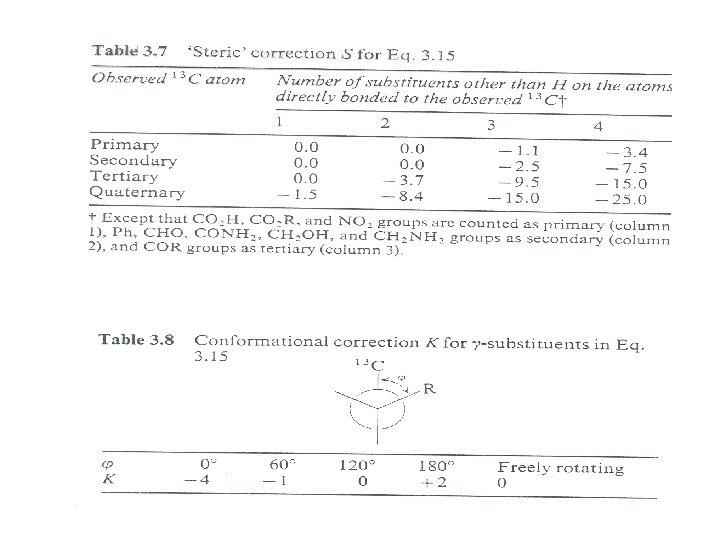
Alkaner: δ-values
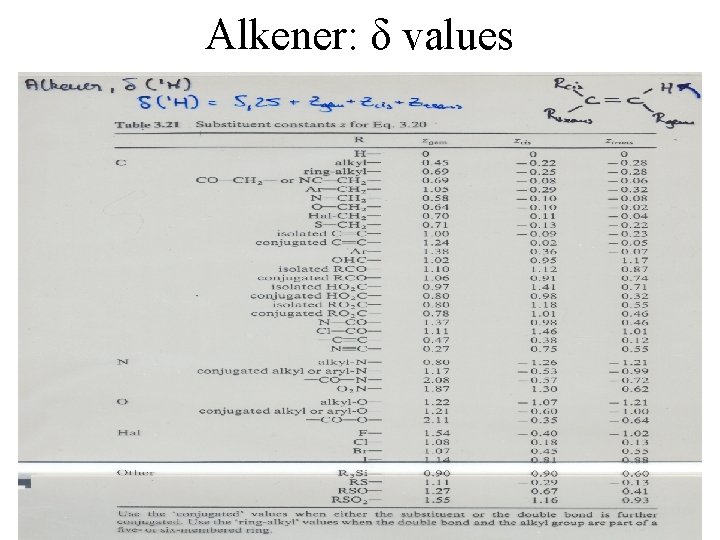
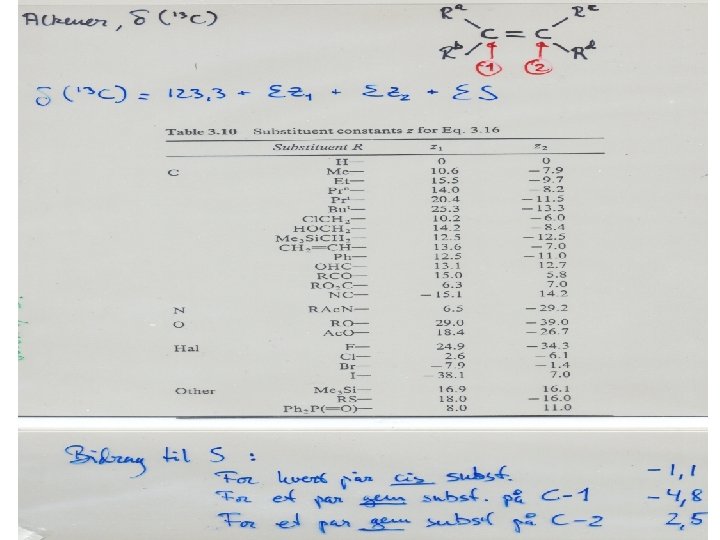
Alkener: δ values
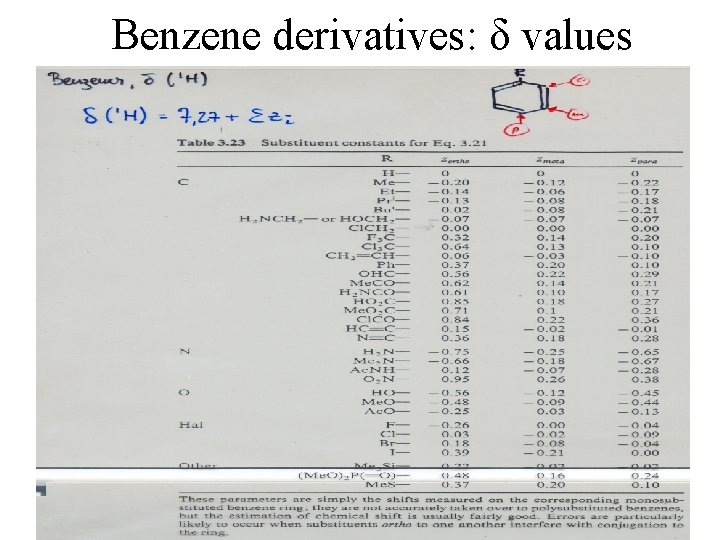
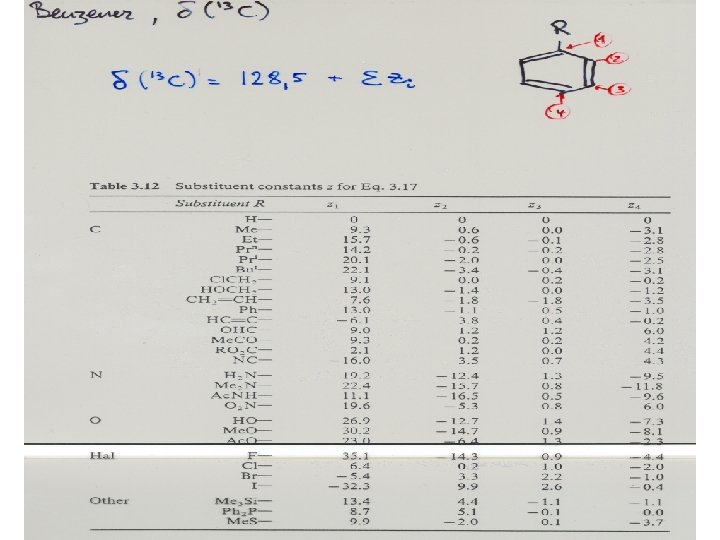
Benzene derivatives: δ values
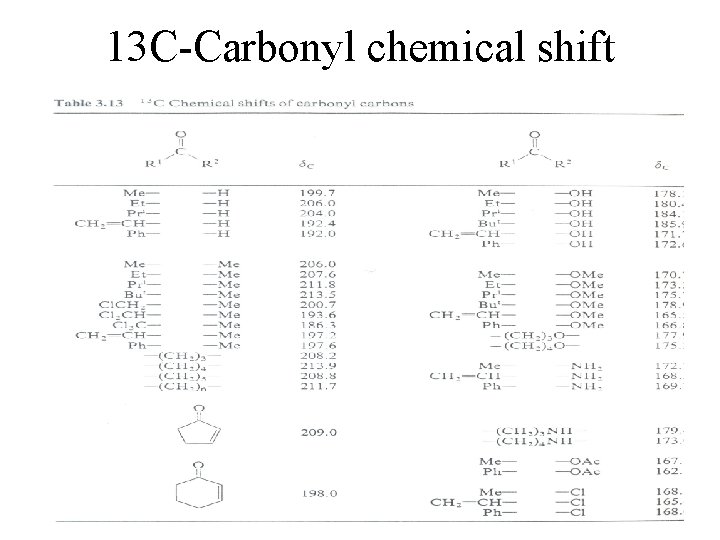
13 C-Carbonyl chemical shift
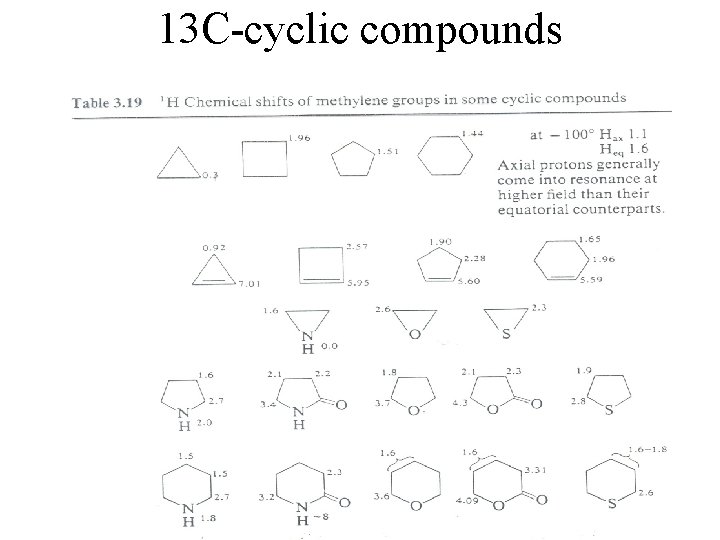
13 C-cyclic compounds
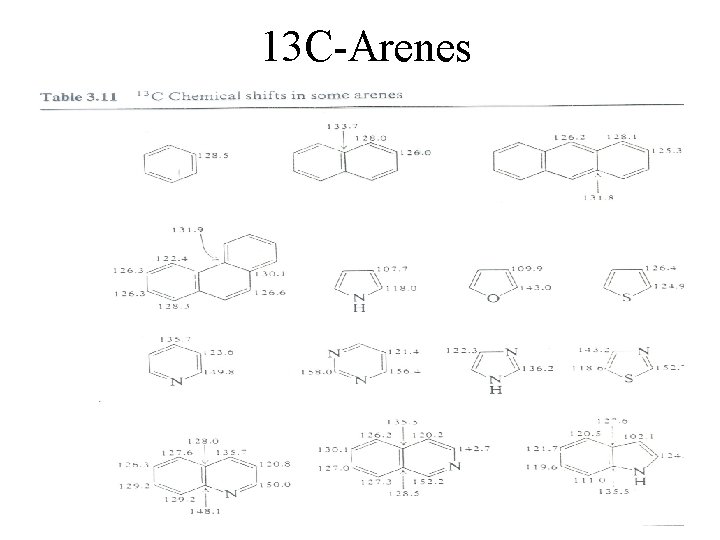
13 C-Arenes
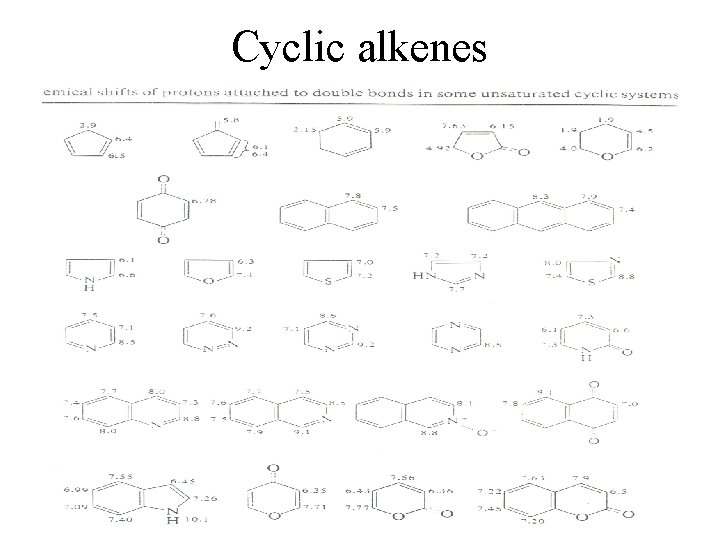
Cyclic alkenes
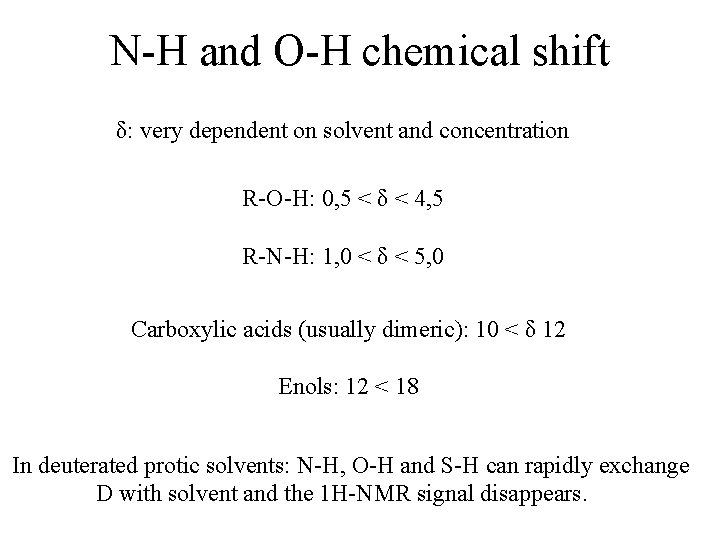
N-H and O-H chemical shift δ: very dependent on solvent and concentration R-O-H: 0, 5 < δ < 4, 5 R-N-H: 1, 0 < δ < 5, 0 Carboxylic acids (usually dimeric): 10 < δ 12 Enols: 12 < 18 In deuterated protic solvents: N-H, O-H and S-H can rapidly exchange D with solvent and the 1 H-NMR signal disappears.
Solvents Non polar solvents: Small effect on chemical shift Polart + benzene : significant effect on chemical shift
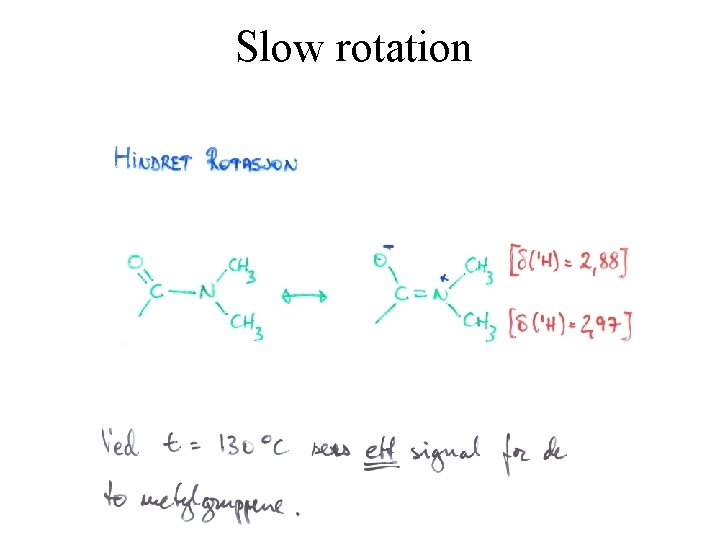
Slow rotation