
Chemical RxnsLimiting Reagents Types of Rxns 1 Today
- Slides: 10
Chemical Rxns-Limiting Reagents & Types of Rxns 1. Today you will learn: How much a rxn produces 2. The 5 types of reactions
Imagine…(don’t write this!) If you bought a kit to build a car, what happens if you don’t have enough bolts and screws? If you build a bookcase out of wood, what do you do with the extra pieces?
I. How much does a reaction produce? A. During a chemical reaction, the completeness of the reaction is dependant on the amount of the reactants and the product lost in the process.
Chemical Reactions B. Many times, there is an excess amount of one of the reactants and the other reactant is completely used up.
Chemical Reactions (cont) C. The limiting reagent is the substance that is used up first.
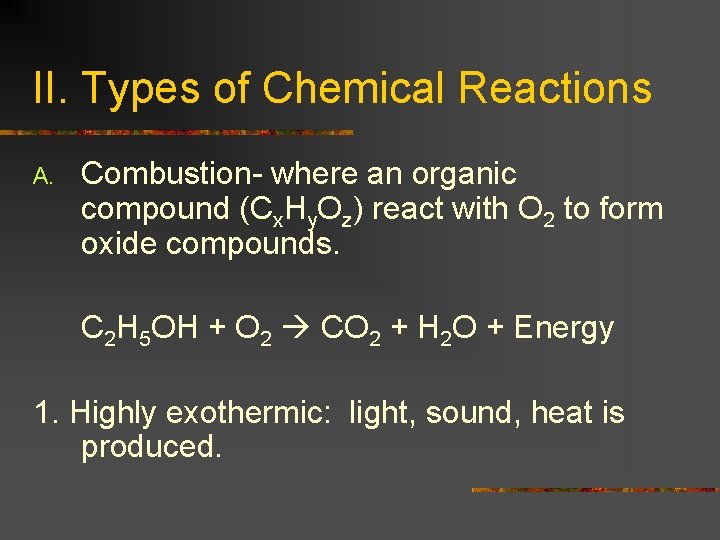
II. Types of Chemical Reactions A. Combustion- where an organic compound (Cx. Hy. Oz) react with O 2 to form oxide compounds. C 2 H 5 OH + O 2 CO 2 + H 2 O + Energy 1. Highly exothermic: light, sound, heat is produced.
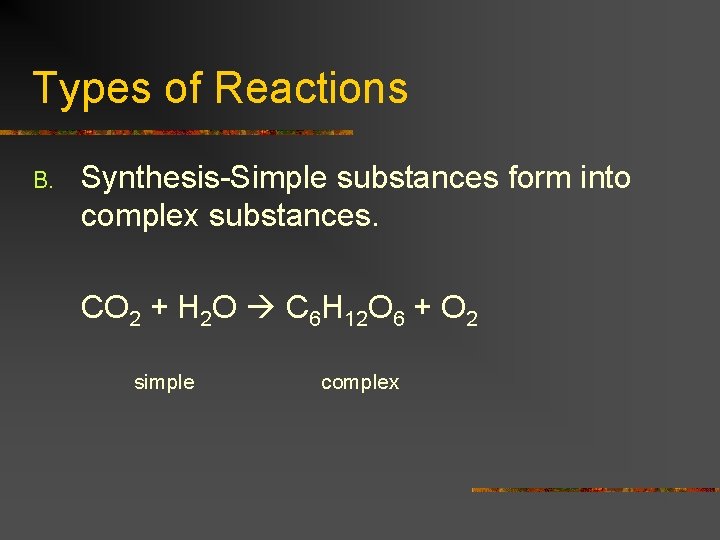
Types of Reactions B. Synthesis-Simple substances form into complex substances. CO 2 + H 2 O C 6 H 12 O 6 + O 2 simple complex
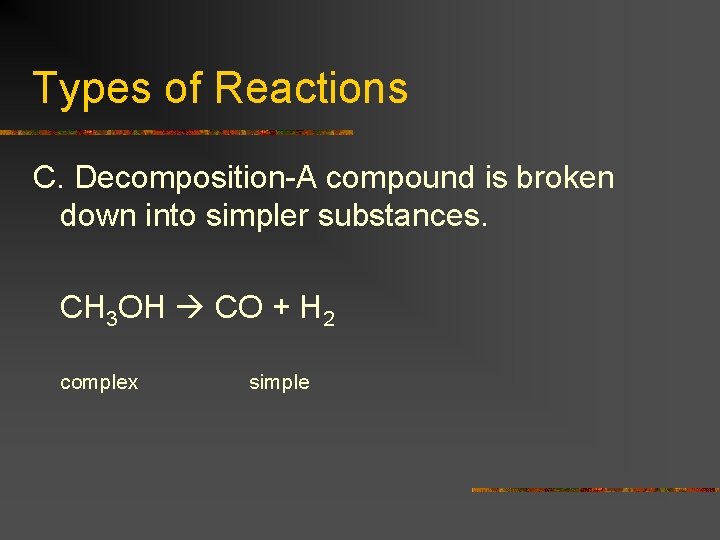
Types of Reactions C. Decomposition-A compound is broken down into simpler substances. CH 3 OH CO + H 2 complex simple
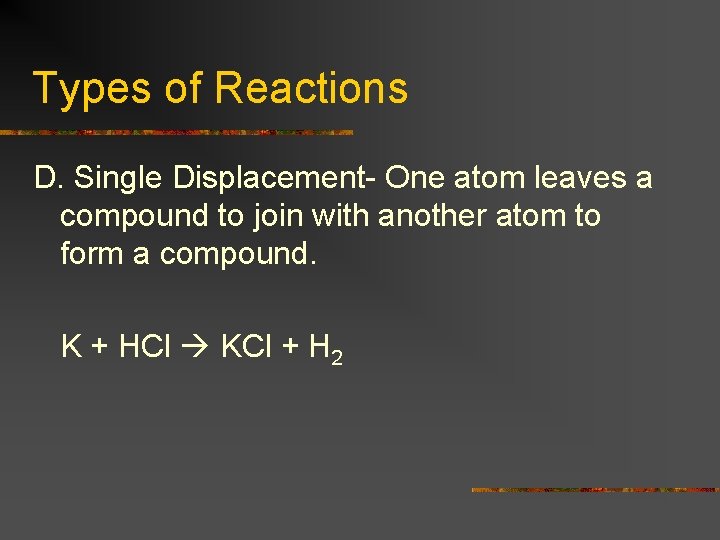
Types of Reactions D. Single Displacement- One atom leaves a compound to join with another atom to form a compound. K + HCl KCl + H 2
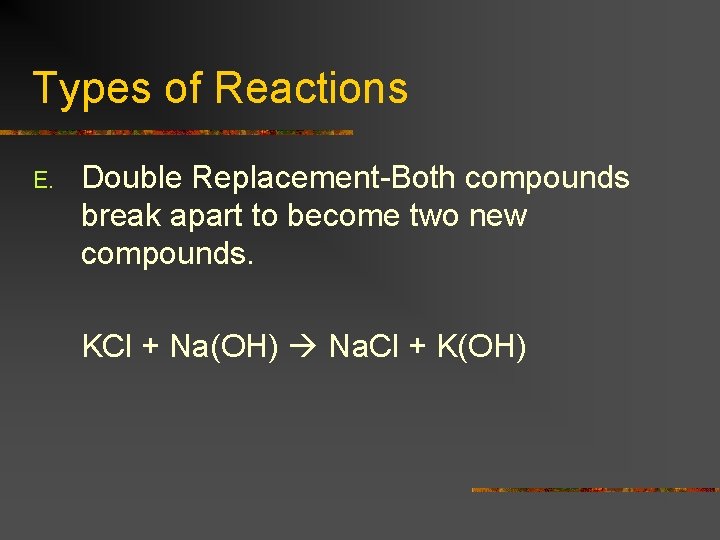
Types of Reactions E. Double Replacement-Both compounds break apart to become two new compounds. KCl + Na(OH) Na. Cl + K(OH)