
CHEMICAL REACTIONS When do chemical reactions take place
- Slides: 11
CHEMICAL REACTIONS
When do chemical reactions take place? Chemical reactions occur when substances undergo chemical changes to form new substances. Note: Atoms are not created or destroyed, but bonds between atoms are made or broken. This results in new substances being formed.
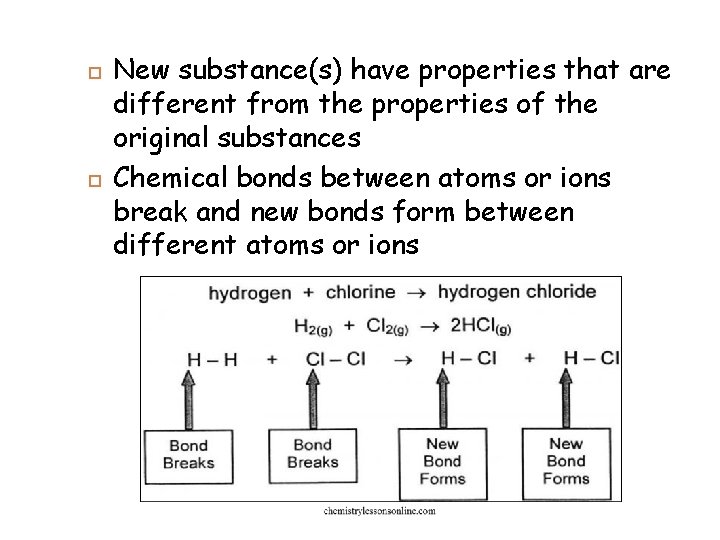
New substance(s) have properties that are different from the properties of the original substances Chemical bonds between atoms or ions break and new bonds form between different atoms or ions
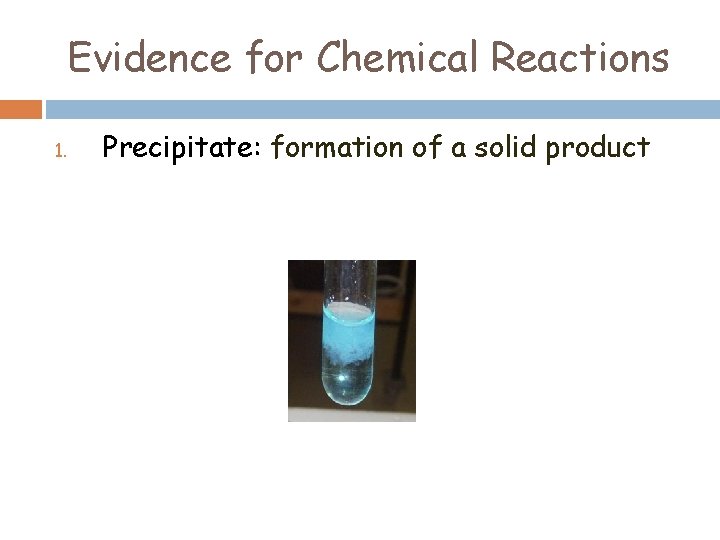
Evidence for Chemical Reactions 1. Precipitate: formation of a solid product
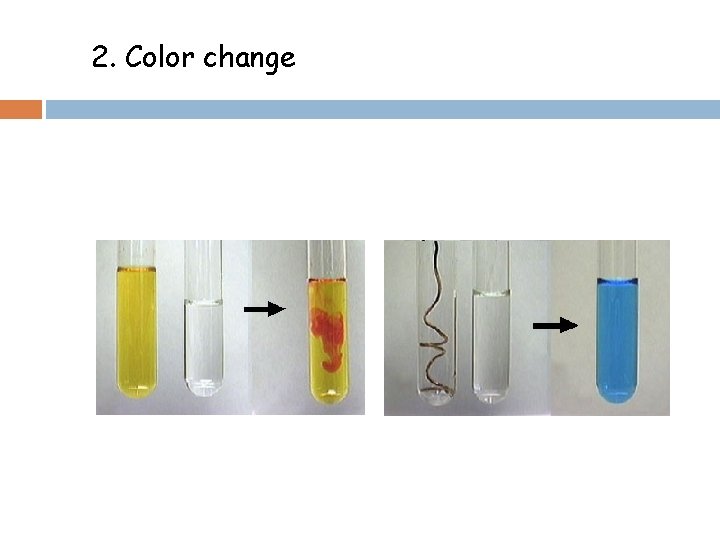
2. Color change
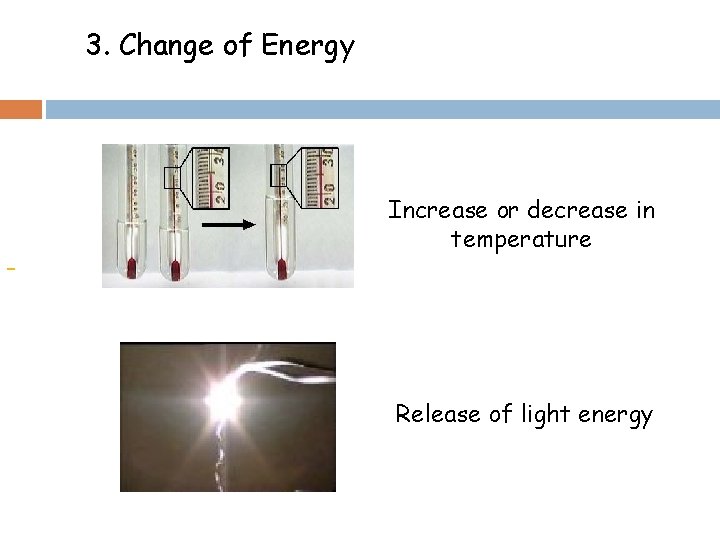
3. Change of Energy Increase or decrease in temperature Release of light energy
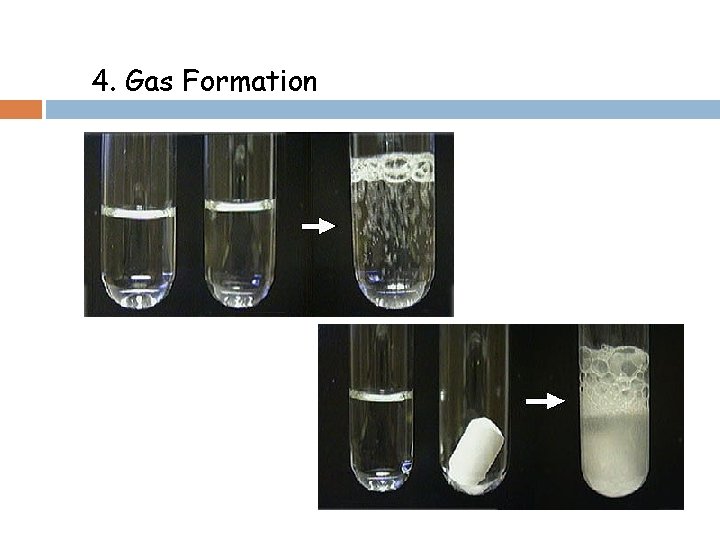
4. Gas Formation
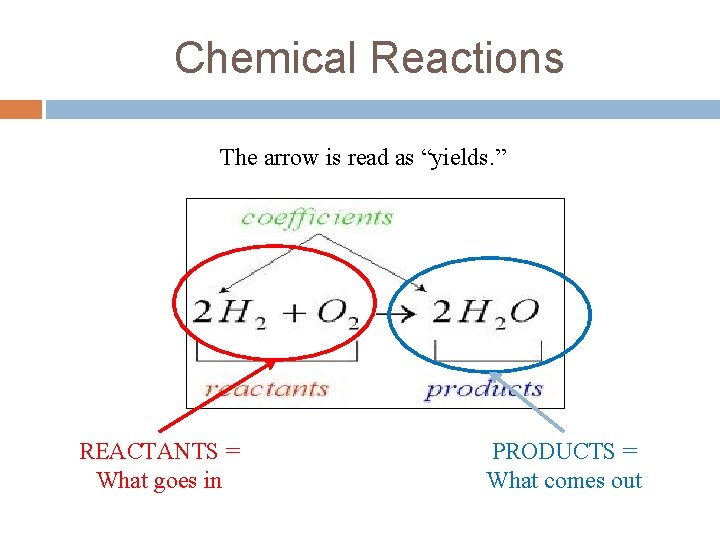
Chemical Reactions The arrow is read as “yields. ” REACTANTS = What goes in PRODUCTS = What comes out
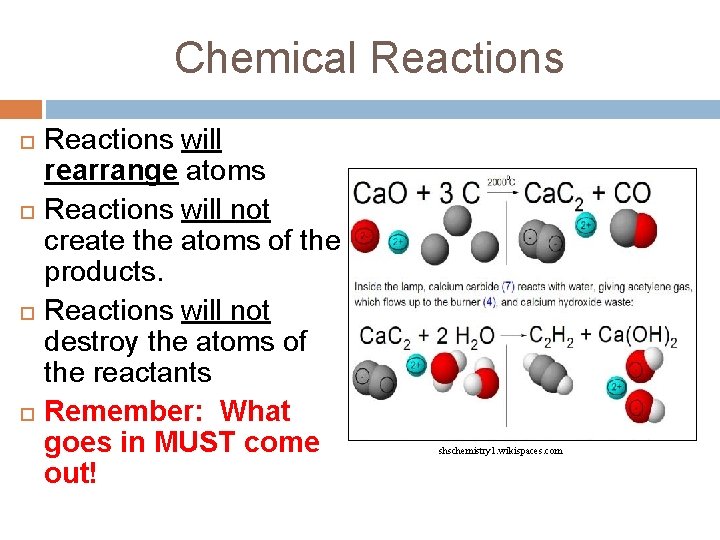
Chemical Reactions will rearrange atoms Reactions will not create the atoms of the products. Reactions will not destroy the atoms of the reactants Remember: What goes in MUST come out! shschemistry 1. wikispaces. com
Conservation of Mass What goes in MUST come out! This means that all of the atoms of the reactants will be present in the products. These atoms will simply be rearranged into new compounds. This also means that the total mass of reactants is equal to the total mass of products. Mass is conserved; no mass is lost or gained during a chemical reaction
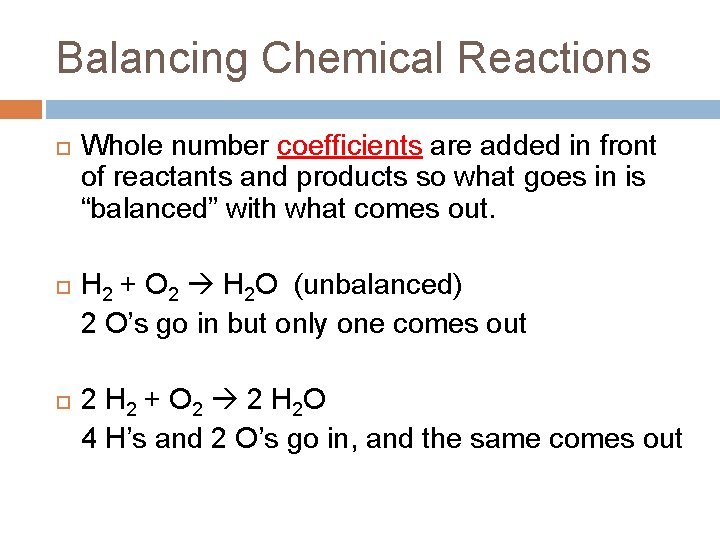
Balancing Chemical Reactions Whole number coefficients are added in front of reactants and products so what goes in is “balanced” with what comes out. H 2 + O 2 H 2 O (unbalanced) 2 O’s go in but only one comes out 2 H 2 + O 2 2 H 2 O 4 H’s and 2 O’s go in, and the same comes out