
Chemical Reactions What is a chemical reaction The
- Slides: 21
Chemical Reactions
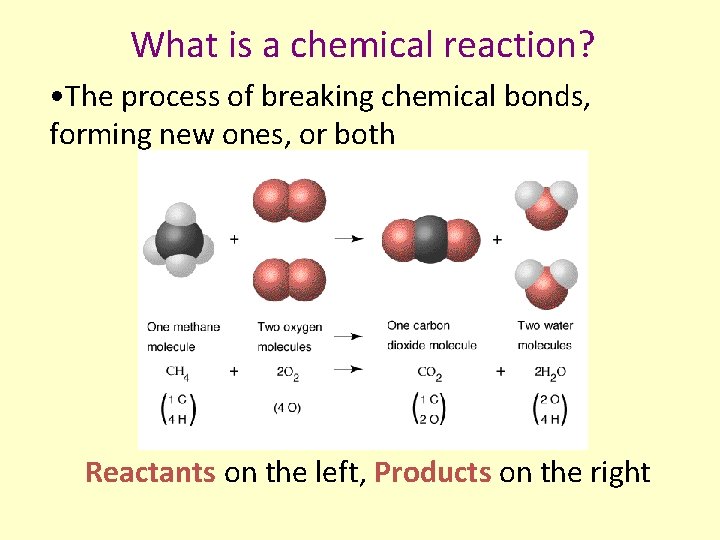
What is a chemical reaction? • The process of breaking chemical bonds, forming new ones, or both Reactants on the left, Products on the right
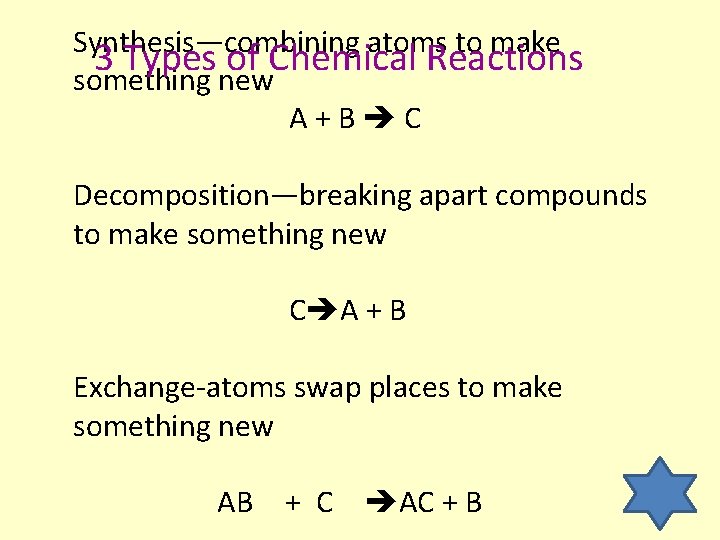
Synthesis—combining atoms to make 3 Types of Chemical Reactions something new A+B C Decomposition—breaking apart compounds to make something new C A + B Exchange-atoms swap places to make something new AB + C AC + B
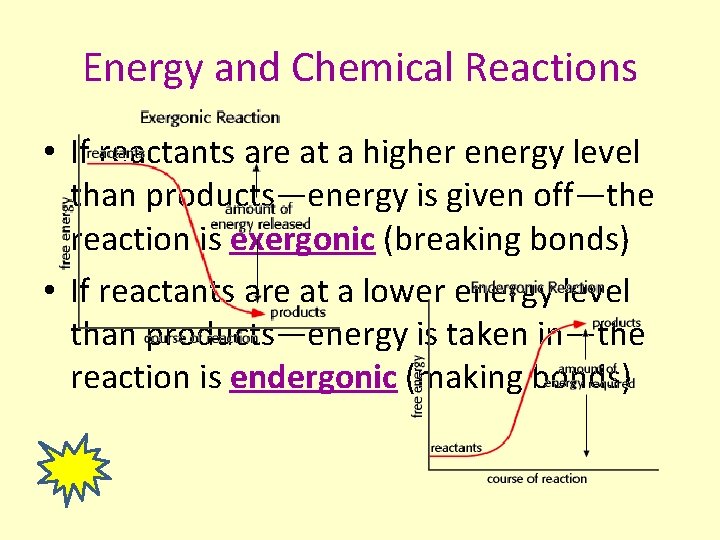
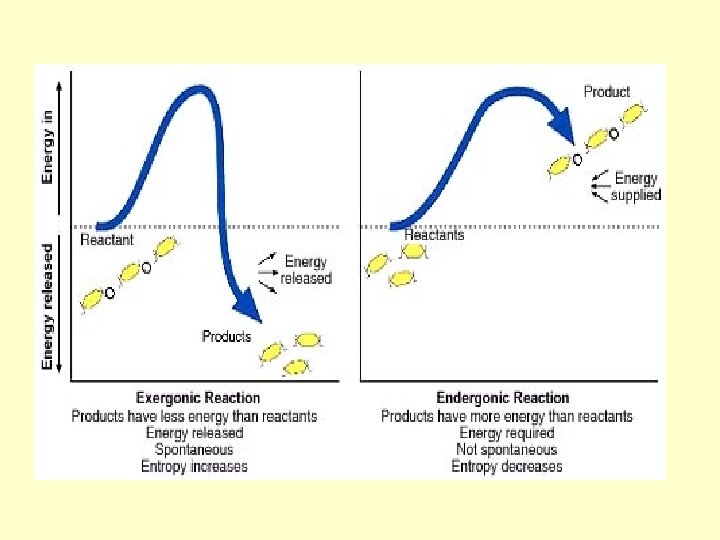
Energy and Chemical Reactions • If reactants are at a higher energy level than products—energy is given off—the reaction is exergonic (breaking bonds) • If reactants are at a lower energy level than products—energy is taken in—the reaction is endergonic (making bonds)
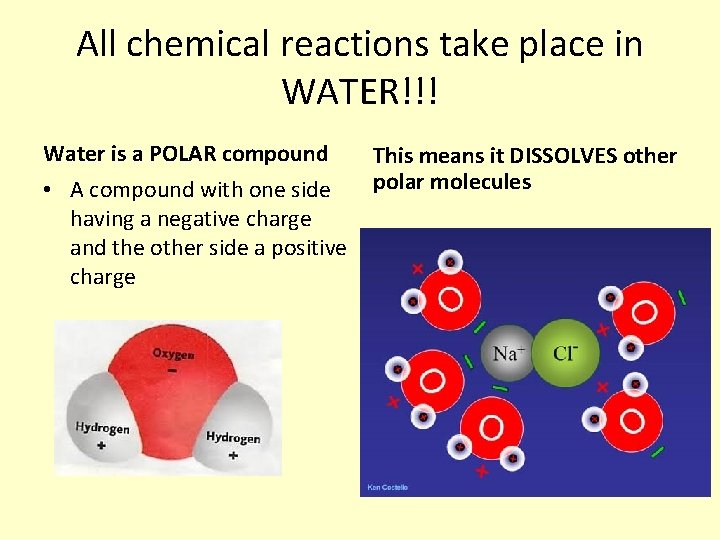
All chemical reactions take place in WATER!!! Water is a POLAR compound • A compound with one side having a negative charge and the other side a positive charge This means it DISSOLVES other polar molecules
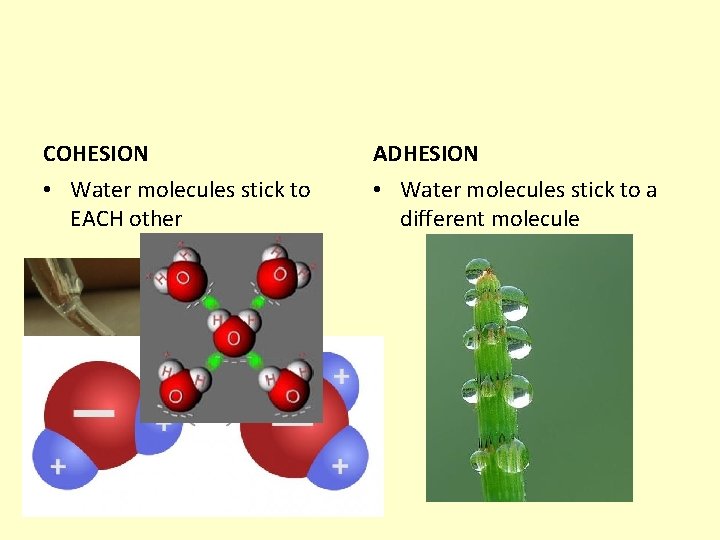
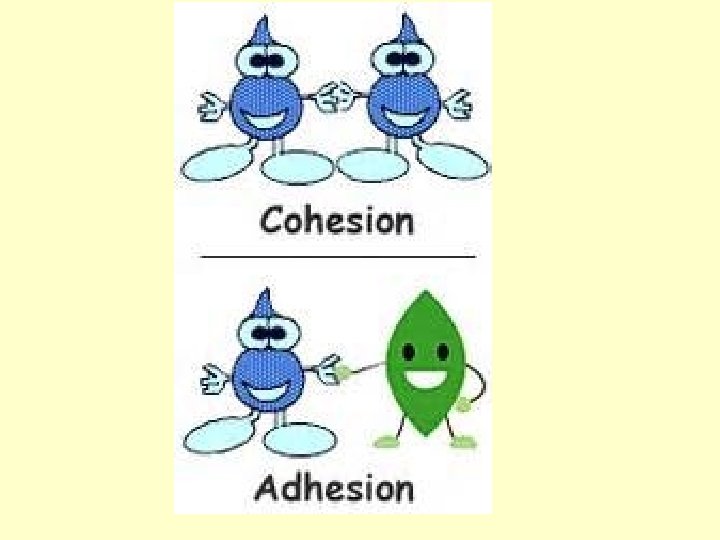
COHESION ADHESION • Water molecules stick to EACH other • Water molecules stick to a different molecule
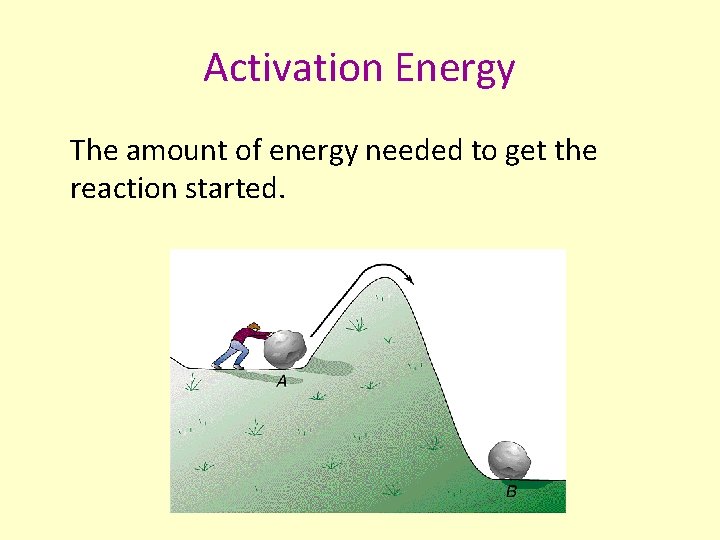
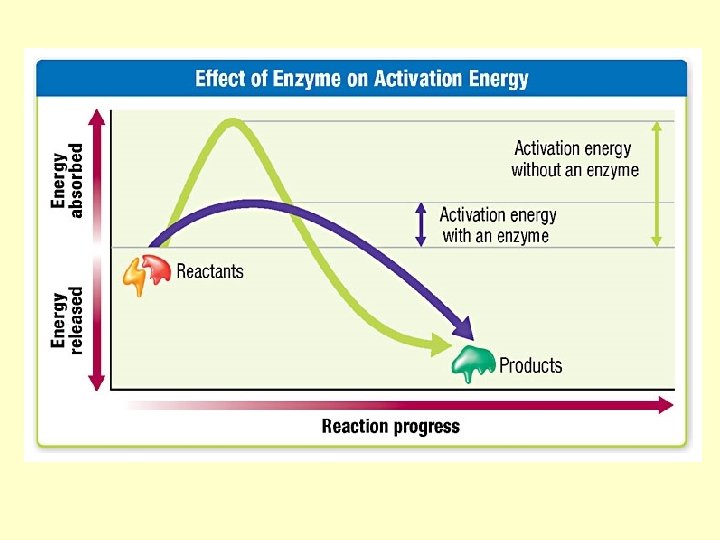
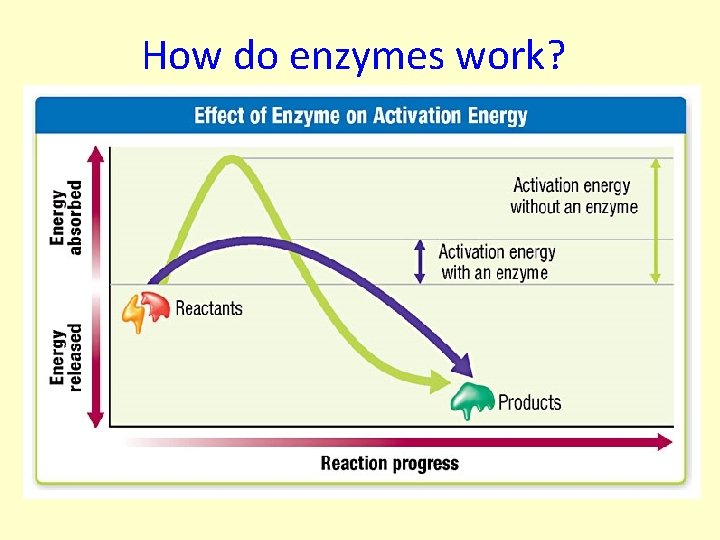
Activation Energy The amount of energy needed to get the reaction started.
Enzymes!!! Are organic catalysts So, what’s a catalyst?
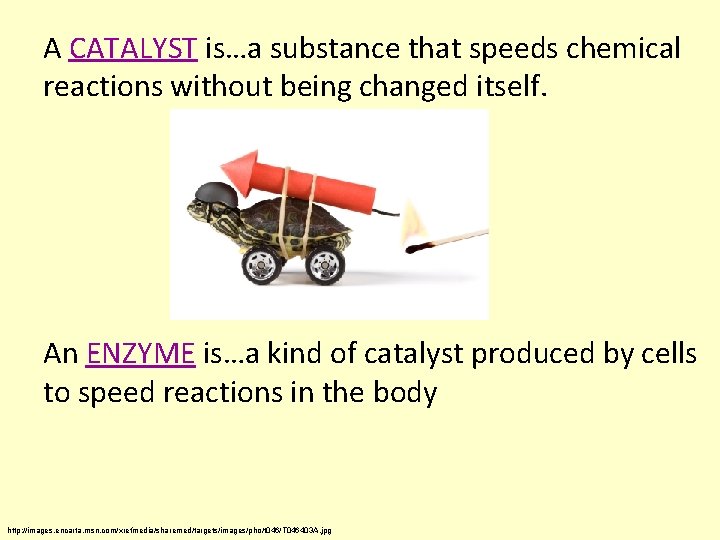
A CATALYST is…a substance that speeds chemical reactions without being changed itself. An ENZYME is…a kind of catalyst produced by cells to speed reactions in the body http: //images. encarta. msn. com/xrefmedia/sharemed/targets/images/pho/t 046/T 046403 A. jpg
• Enzymes are neither reactants, nor products • They are not used up in a chemical reaction • They make chemical reactions happen faster (up to 1, 000 x!) • Enzymes are proteins Enzyme Basics - You. Tube
How do enzymes work?
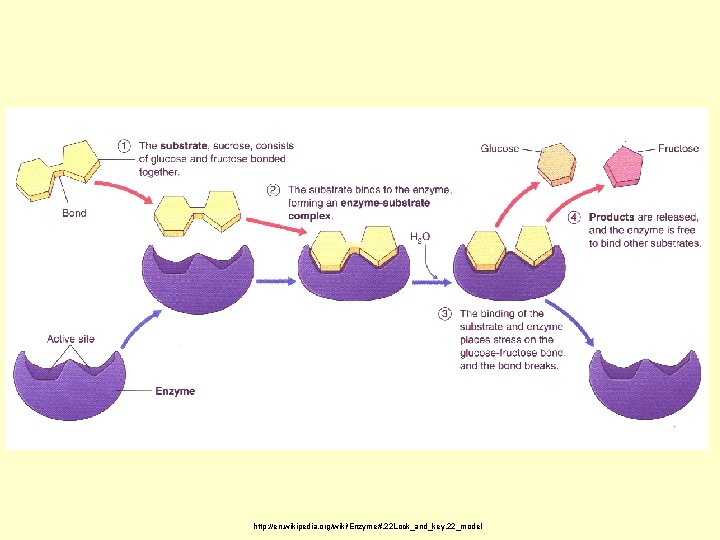
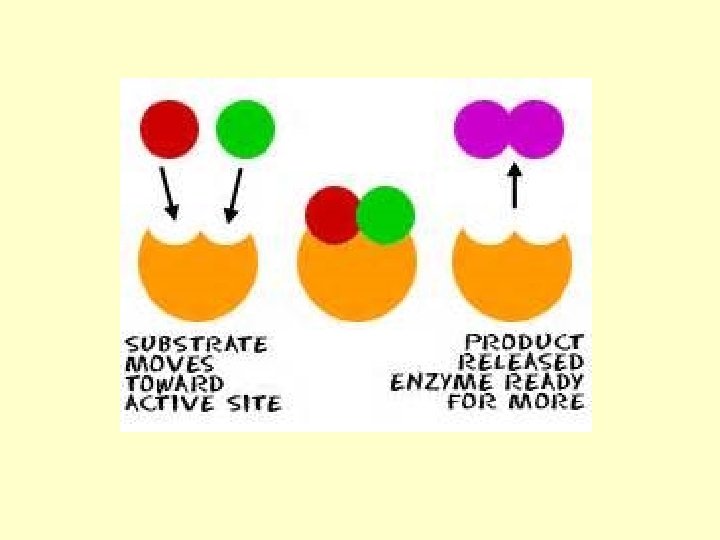
Ok…so…how do they do that? How do they make these reactions occur faster? Key terms • Substrate—the reactant that the enzyme will work upon • Active site—the location on the enzyme where the substrate will attach
http: //en. wikipedia. org/wiki/Enzyme#. 22 Lock_and_key. 22_model
Watch this animation—copy the link and paste in your browser http: //www. sumanasinc. com/webcontent/animations/content/enzymes. html
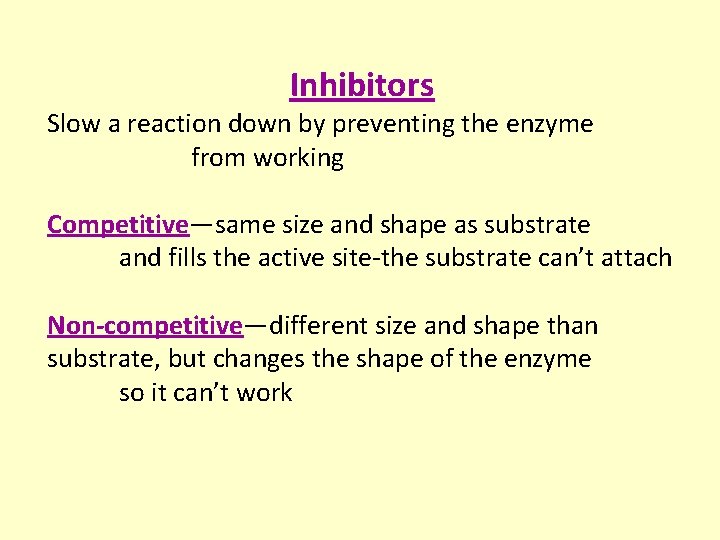
Inhibitors Slow a reaction down by preventing the enzyme from working Competitive—same size and shape as substrate and fills the active site-the substrate can’t attach Non-competitive—different size and shape than substrate, but changes the shape of the enzyme so it can’t work
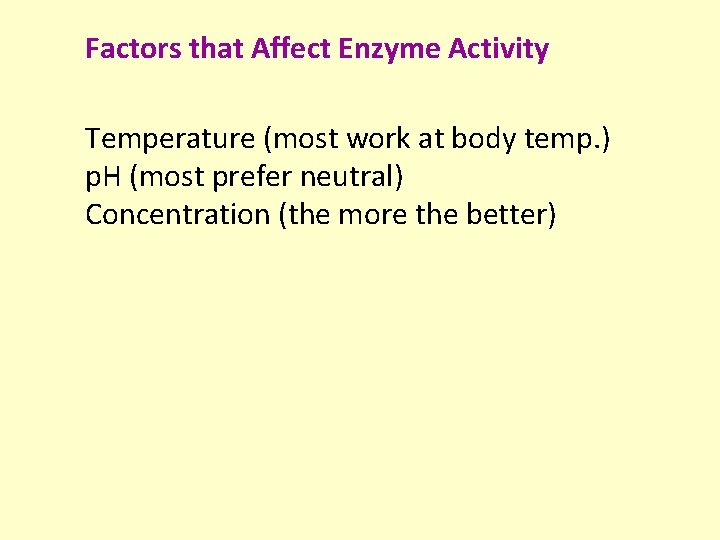
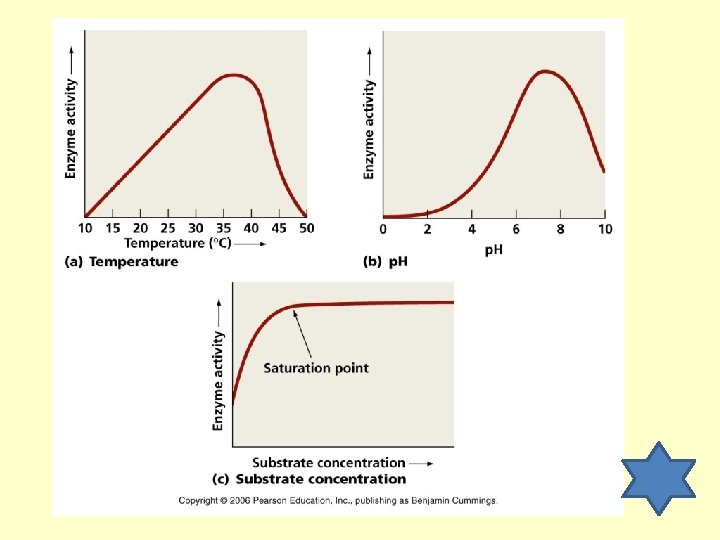
Factors that Affect Enzyme Activity Temperature (most work at body temp. ) p. H (most prefer neutral) Concentration (the more the better)