
Chemical Reactions The Law of Conservation of Matter
- Slides: 12
Chemical Reactions The Law of Conservation of Matter
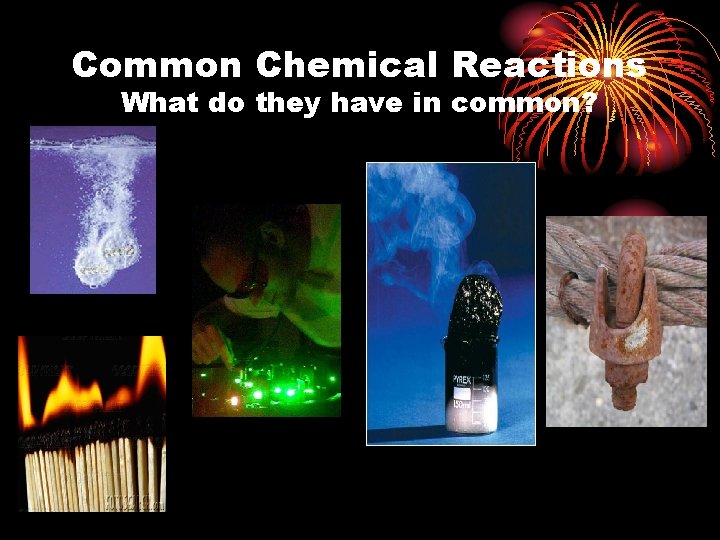
Common Chemical Reactions What do they have in common?
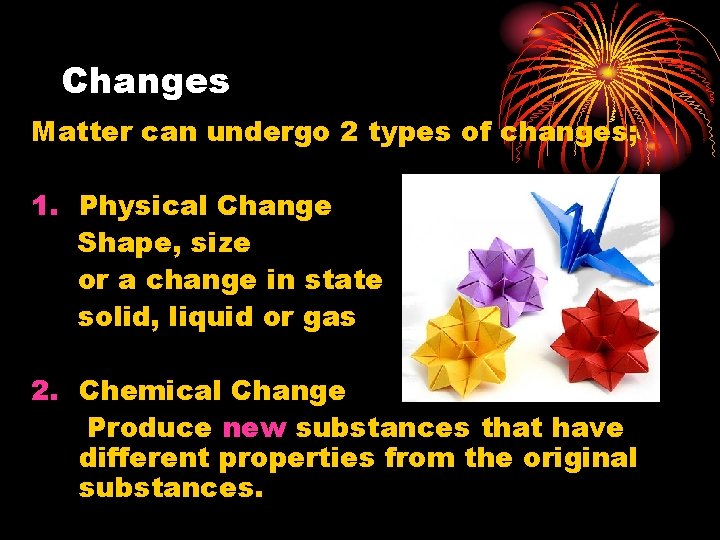
Changes Matter can undergo 2 types of changes; 1. Physical Change Shape, size or a change in state solid, liquid or gas 2. Chemical Change Produce new substances that have different properties from the original substances.
Chemical Changes Common signs of chemical changes; 1. 2. 3. 4. 5. Gas is produced A color changes Light or heat is produced Metal rusts A precipitate (a solid in a liquid) is formed.
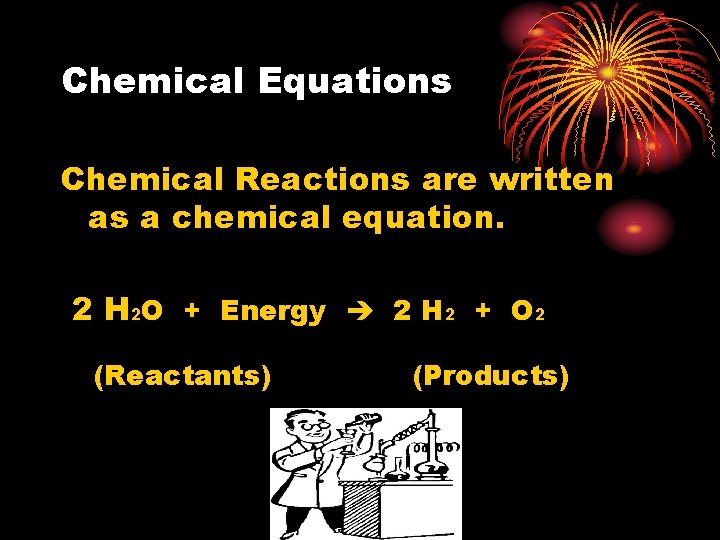
Chemical Equations Chemical Reactions are written as a chemical equation. 2 H 2 O + Energy 2 H 2 + O 2 (Reactants) (Products)
Chemical Equations
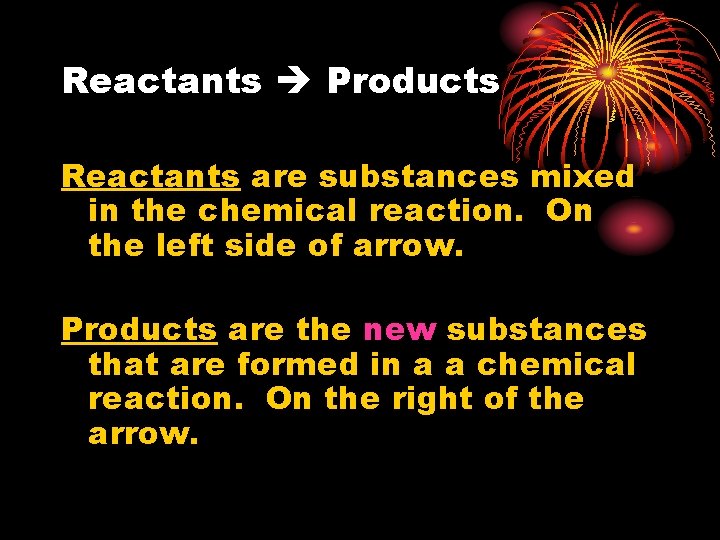
Reactants Products Reactants are substances mixed in the chemical reaction. On the left side of arrow. Products are the new substances that are formed in a a chemical reaction. On the right of the arrow.
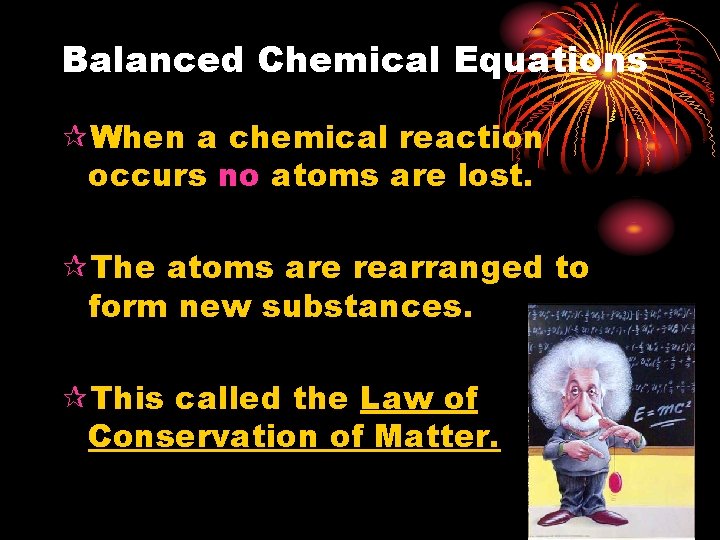
Balanced Chemical Equations ¶When a chemical reaction occurs no atoms are lost. ¶The atoms are rearranged to form new substances. ¶This called the Law of Conservation of Matter.
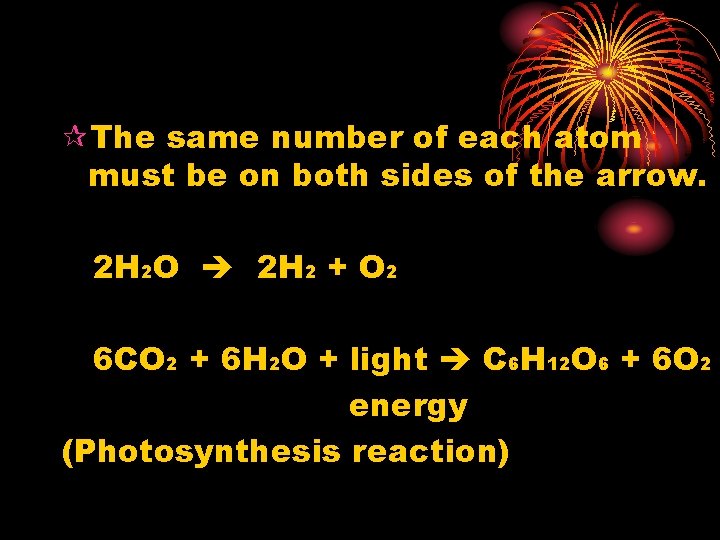
¶The same number of each atom must be on both sides of the arrow. 2 H 2 O 2 H 2 + O 2 6 CO 2 + 6 H 2 O + light C 6 H 12 O 6 + 6 O 2 energy (Photosynthesis reaction)
Physical vs. Chemical Properties of Matter Physical properties of matter can be observed and measured without changing the kind of matter being studied. Chemical properties of matter are not usually visible and, a change in the matter does occur.
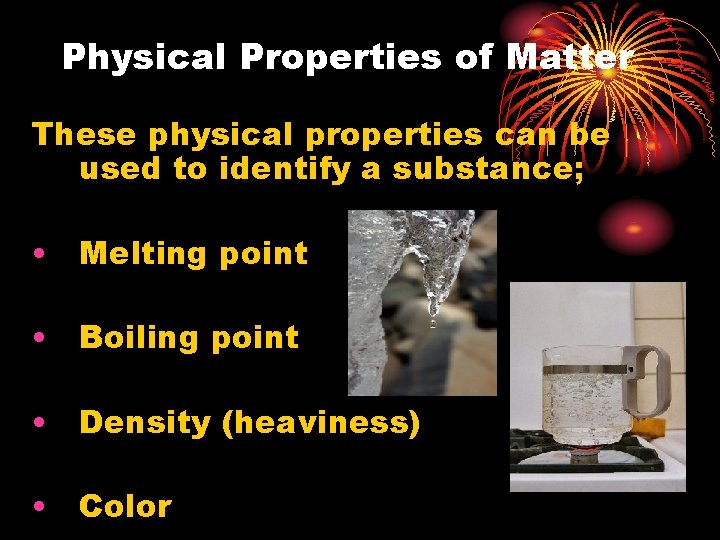
Physical Properties of Matter These physical properties can be used to identify a substance; • Melting point • Boiling point • Density (heaviness) • Color
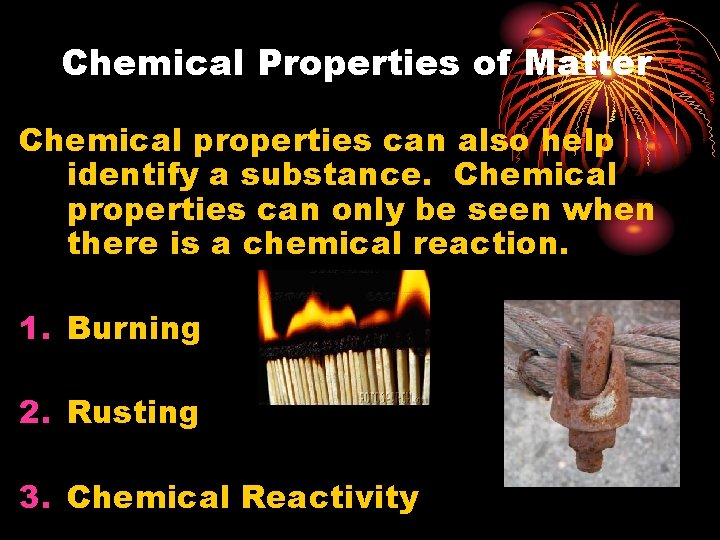
Chemical Properties of Matter Chemical properties can also help identify a substance. Chemical properties can only be seen when there is a chemical reaction. 1. Burning 2. Rusting 3. Chemical Reactivity