
Chemical Reactions The 5 Basic Classifications SYNTHESIS A
Chemical Reactions The 5 Basic Classifications
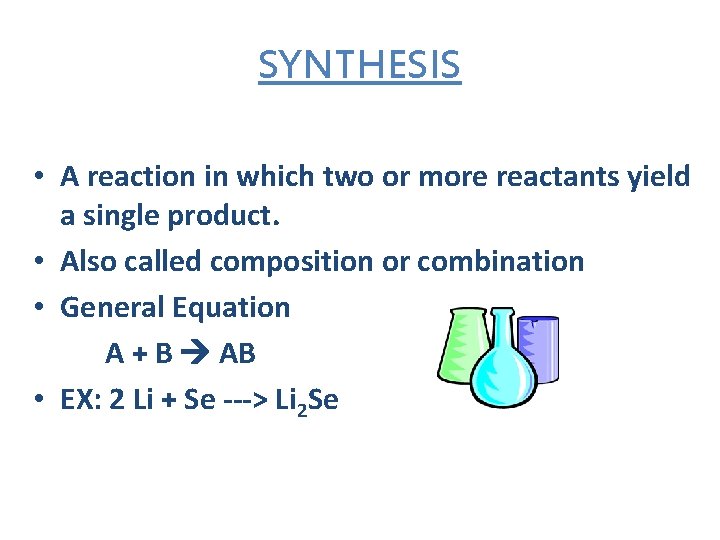
SYNTHESIS • A reaction in which two or more reactants yield a single product. • Also called composition or combination • General Equation A + B AB • EX: 2 Li + Se ---> Li 2 Se
Decomposition Reaction • One Reactant Breaking Down into two or more products • General Equation AB ---> A + B • Example: 2 Hg. O 2 Hg + O 2
Combustion One or more reactants combine with oxygen releasing heat or light Any combustion reaction must include the reactant oxygen, O 2 General Equation: A + O 2 AO Example: 2 Mg(s) + O 2(g) 2 Mg. O(s)
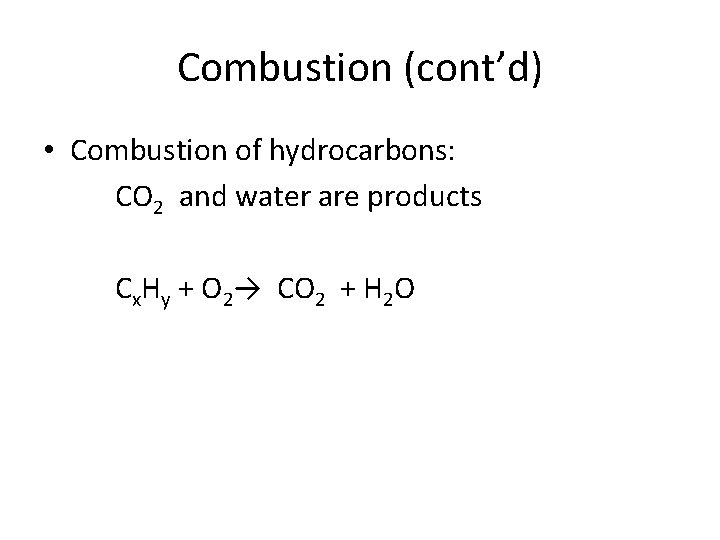
Combustion (cont’d) • Combustion of hydrocarbons: CO 2 and water are products Cx. Hy + O 2→ CO 2 + H 2 O
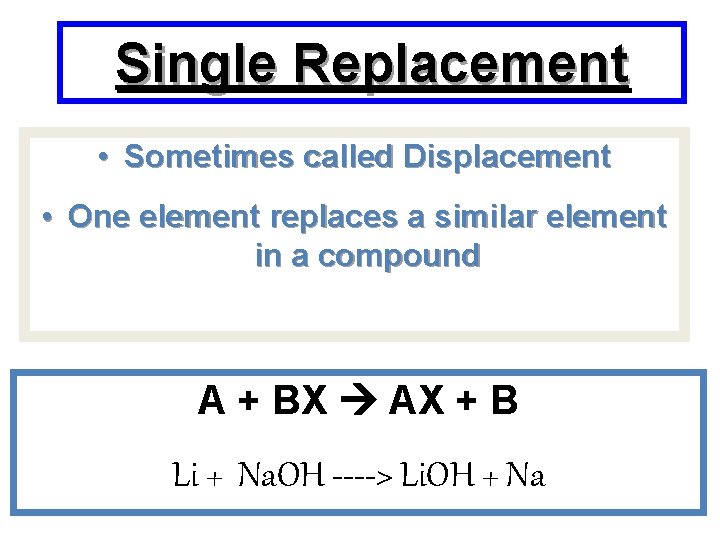
Single Replacement • Sometimes called Displacement • One element replaces a similar element in a compound A + BX AX + B Li + Na. OH ----> Li. OH + Na
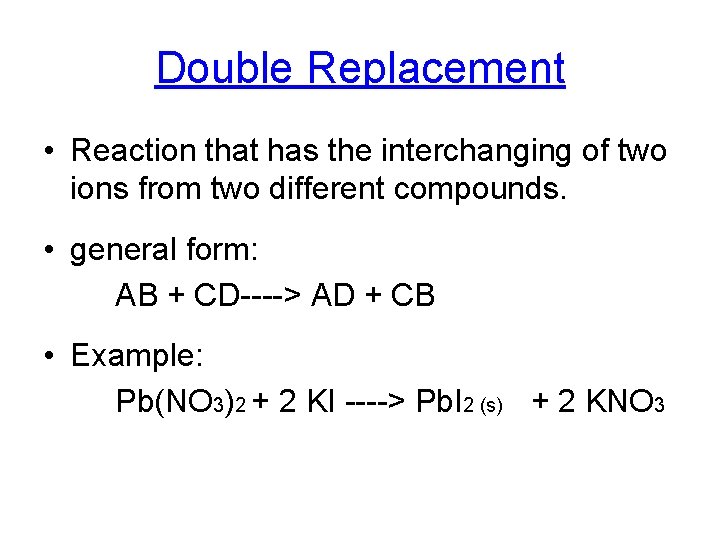
Double Replacement • Reaction that has the interchanging of two ions from two different compounds. • general form: AB + CD----> AD + CB • Example: Pb(NO 3)2 + 2 KI ----> Pb. I 2 (s) + 2 KNO 3
Double Replacement • Equation consists of two reactants are ionic. In other words, they have a cation and an anion. • During a reaction the cations switch places. • The products usually consist of a precipitate.
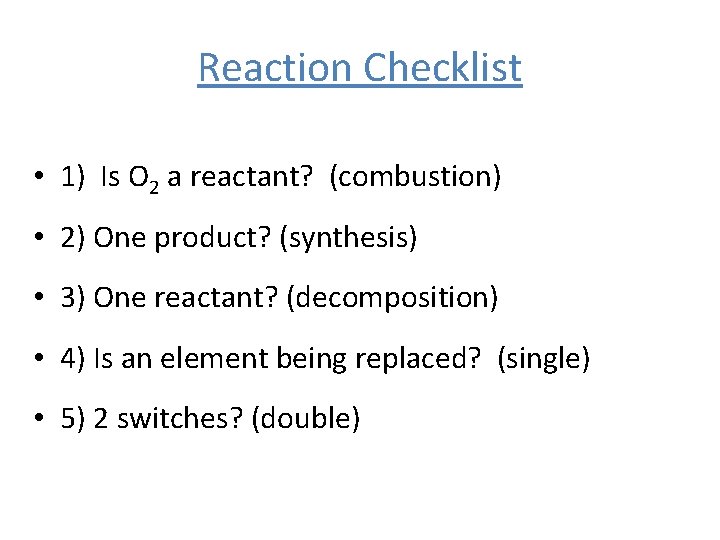
Reaction Checklist • 1) Is O 2 a reactant? (combustion) • 2) One product? (synthesis) • 3) One reactant? (decomposition) • 4) Is an element being replaced? (single) • 5) 2 switches? (double)
- Slides: 9