
Chemical Reactions Learning Objectives Define the following terms
Chemical Reactions
Learning Objectives • Define the following terms: chemical reaction, reactant, product, and activation energy • Explain how chemical reactions affect chemical bonds in compounds
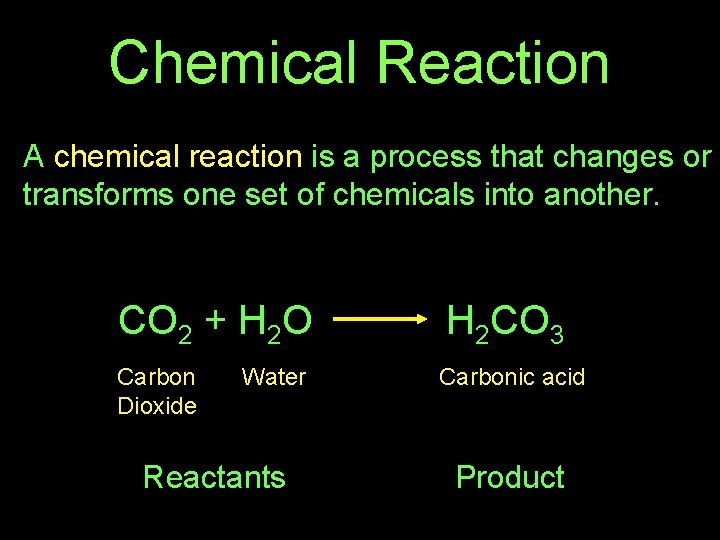
Chemical Reaction A chemical reaction is a process that changes or transforms one set of chemicals into another. CO 2 + H 2 O H 2 CO 3 Carbon Dioxide Carbonic acid Water Reactants Product
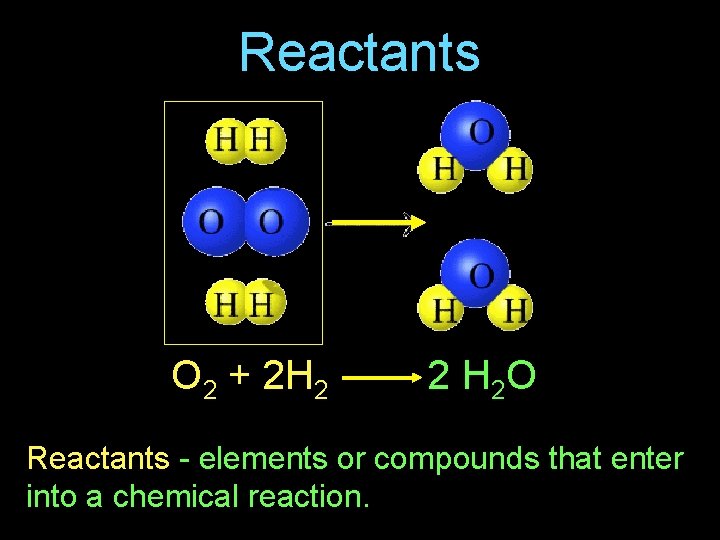
Reactants O 2 + 2 H 2 2 H 2 O Reactants - elements or compounds that enter into a chemical reaction.
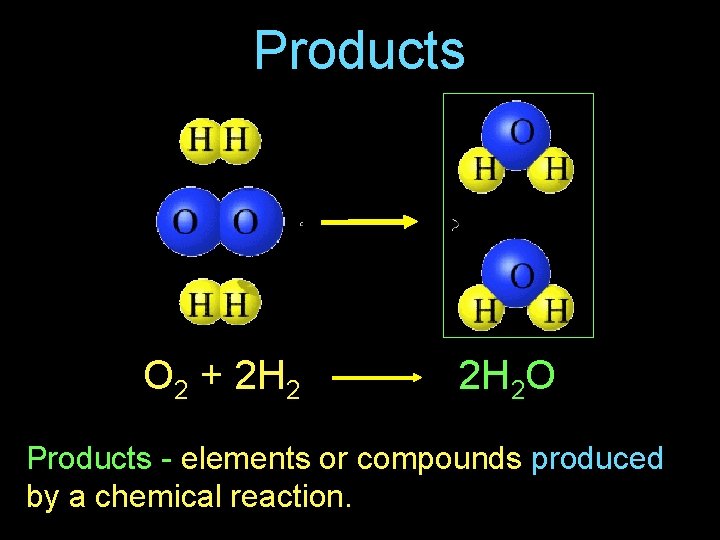
Products O 2 + 2 H 2 O Products - elements or compounds produced by a chemical reaction.
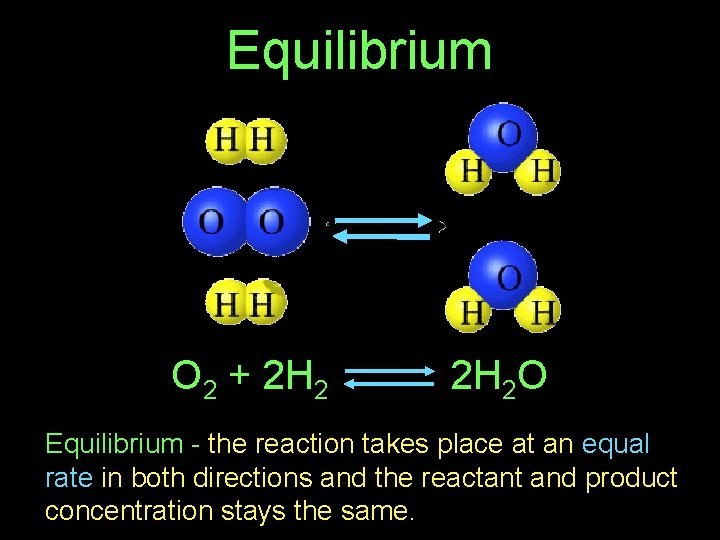
Equilibrium O 2 + 2 H 2 O Equilibrium - the reaction takes place at an equal rate in both directions and the reactant and product concentration stays the same.
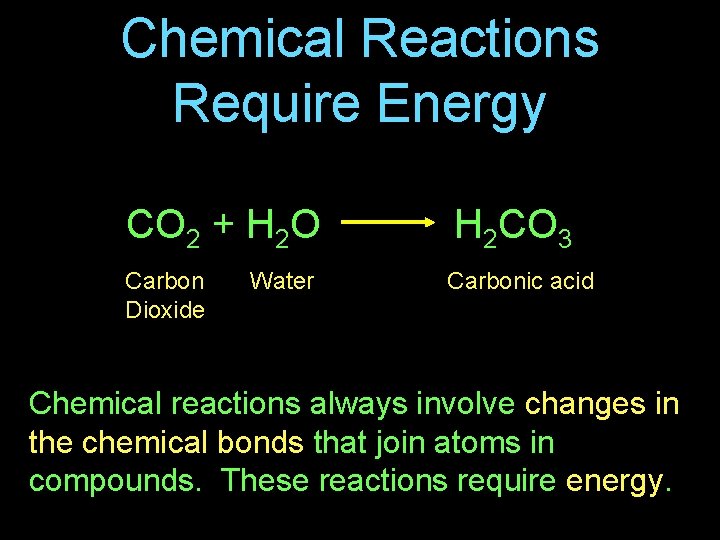
Chemical Reactions Require Energy CO 2 + H 2 O H 2 CO 3 Carbon Dioxide Carbonic acid Water Chemical reactions always involve changes in the chemical bonds that join atoms in compounds. These reactions require energy.
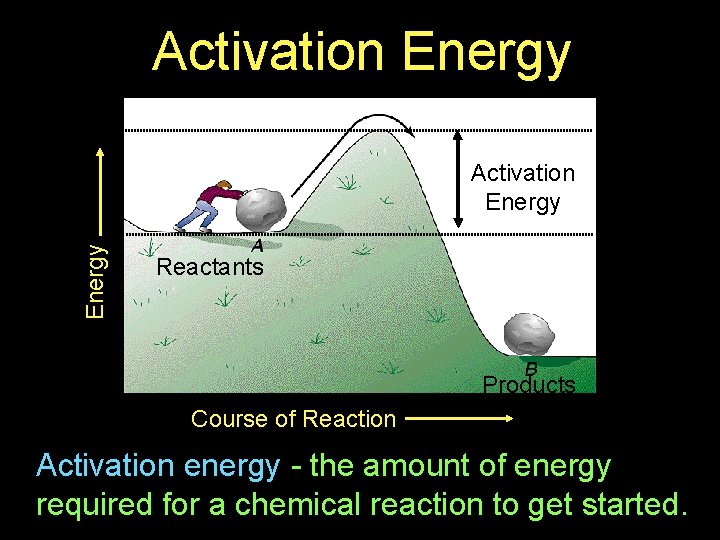
Activation Energy Reactants Products Course of Reaction Activation energy - the amount of energy required for a chemical reaction to get started.
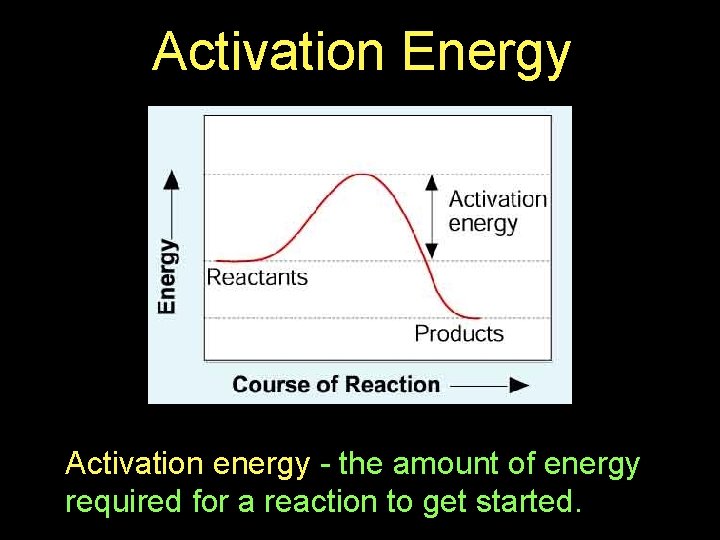
Activation Energy Products Activation energy - the amount of energy required for a reaction to get started.
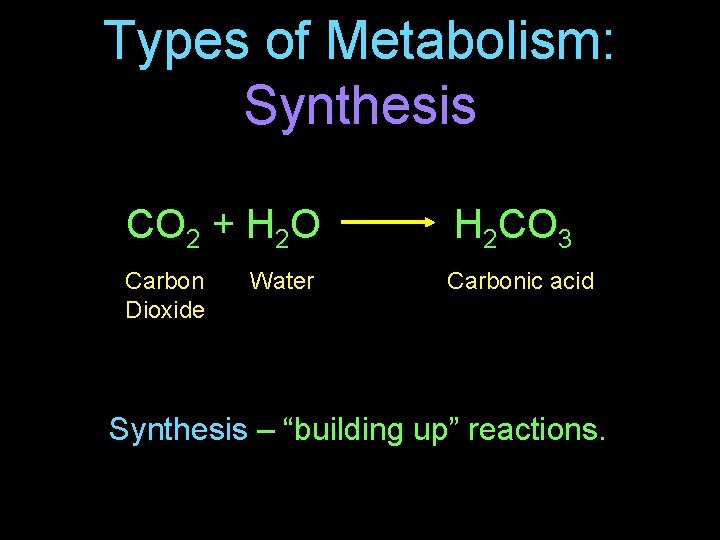
Types of Metabolism: Synthesis CO 2 + H 2 O H 2 CO 3 Carbon Dioxide Carbonic acid Water Synthesis – “building up” reactions.
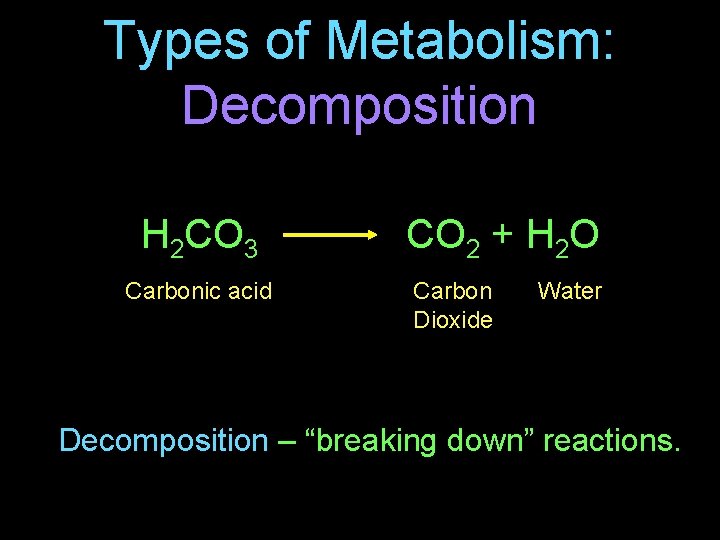
Types of Metabolism: Decomposition H 2 CO 3 Carbonic acid CO 2 + H 2 O Carbon Dioxide Water Decomposition – “breaking down” reactions.
Chemical Reactions
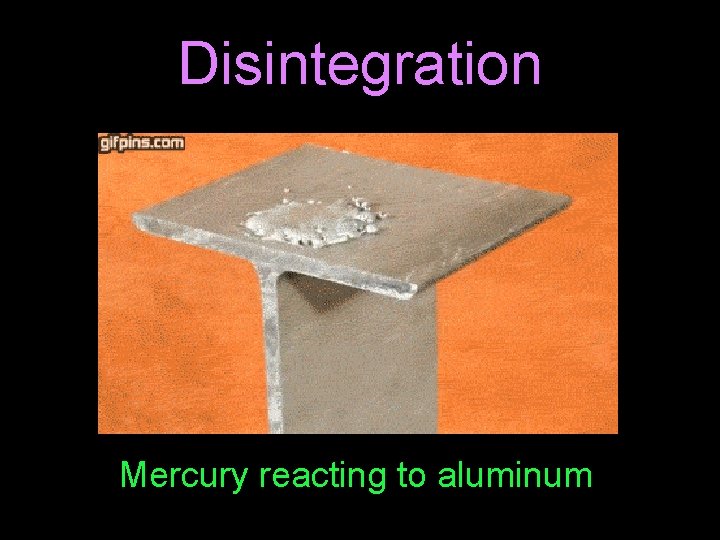
Disintegration Mercury reacting to aluminum
Pharaoh's Serpent Mercury reacting with oxygen
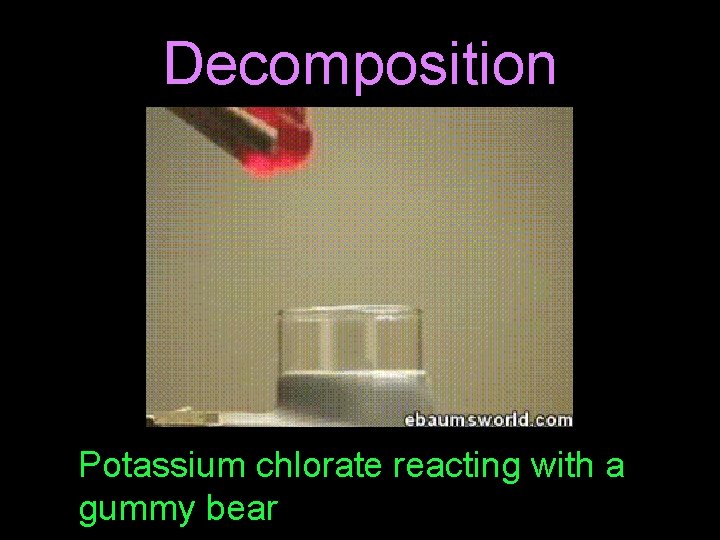
Decomposition Potassium chlorate reacting with a gummy bear
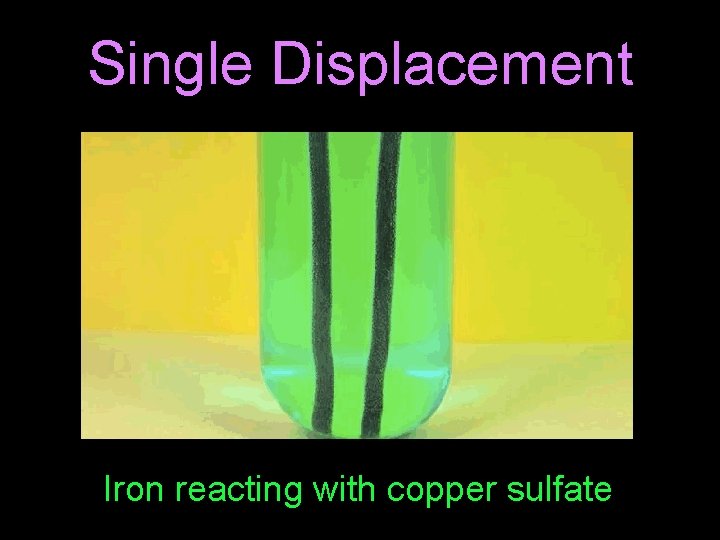
Single Displacement Iron reacting with copper sulfate
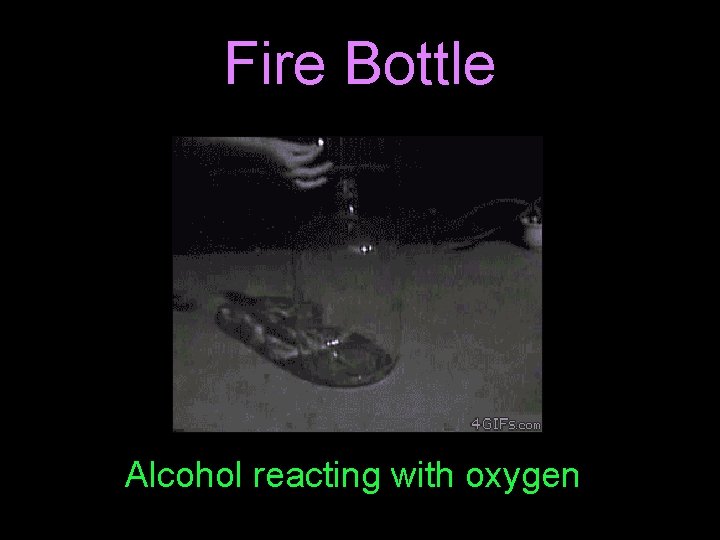
Fire Bottle Alcohol reacting with oxygen
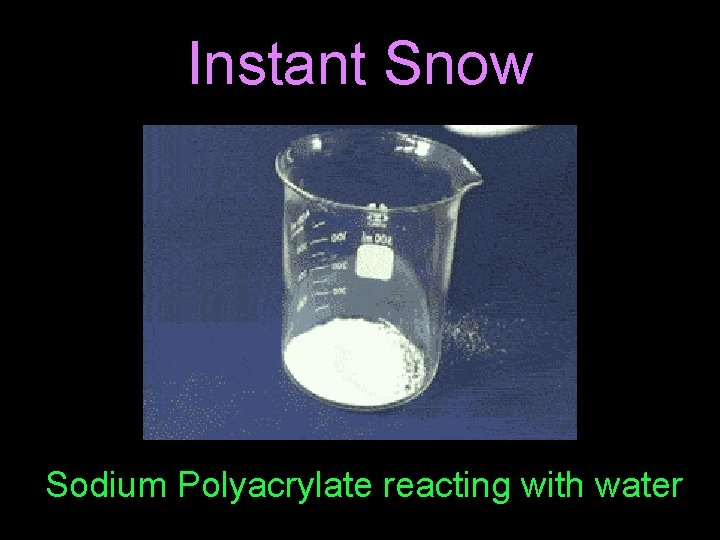
Instant Snow Sodium Polyacrylate reacting with water
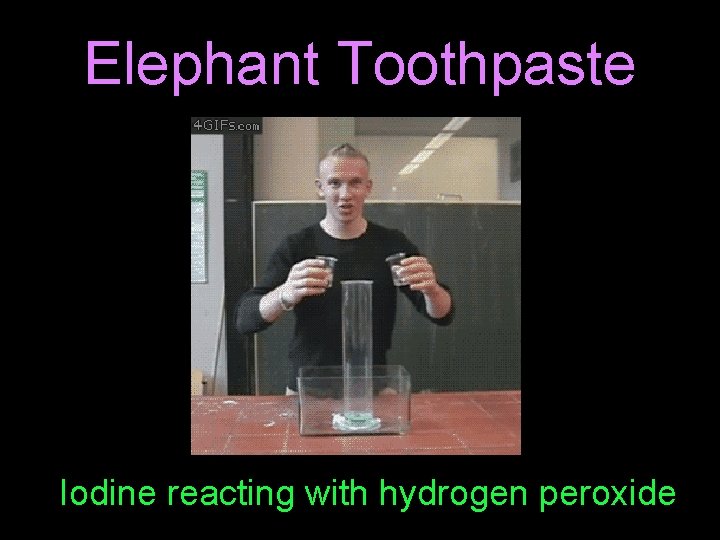
Elephant Toothpaste Iodine reacting with hydrogen peroxide

STOP HERE!
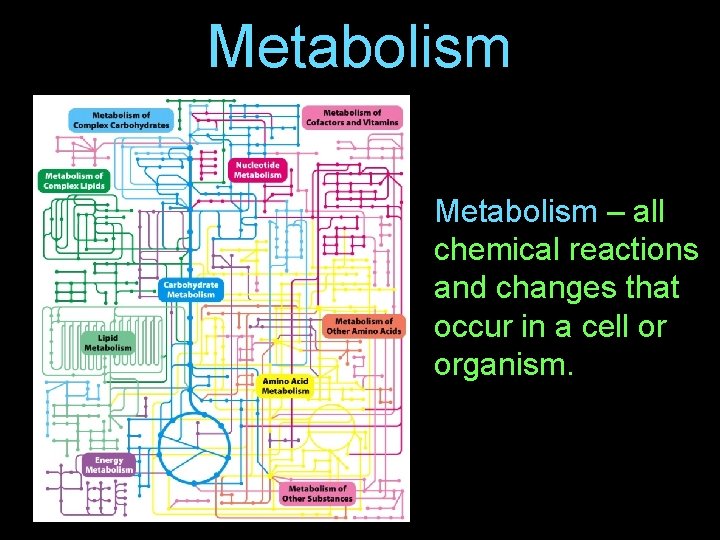
Metabolism – all chemical reactions and changes that occur in a cell or organism.
- Slides: 21