
Chemical Reactions KEY CONCEPT Life depends on chemical
- Slides: 12
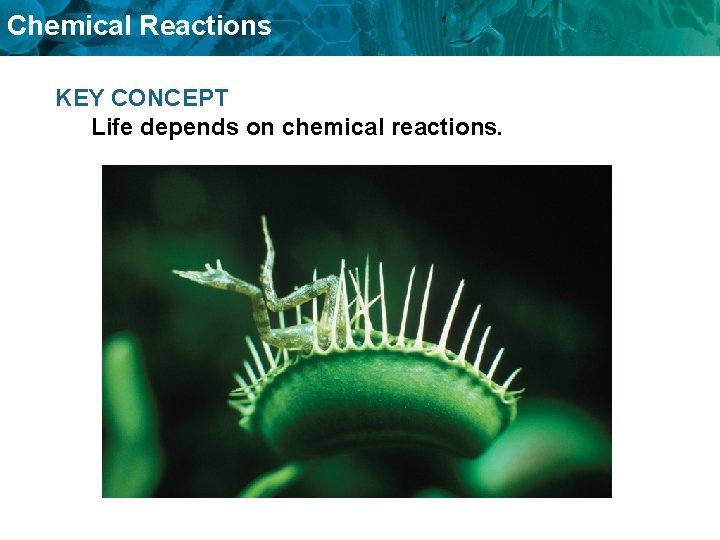
Chemical Reactions KEY CONCEPT Life depends on chemical reactions.
Chemical Reactions Bonds break and form during chemical reactions. • Chemical reactions change substances into different ones by breaking and forming chemical bonds. – Reactants are changed during a chemical reaction. – Products are made by a chemical reaction.
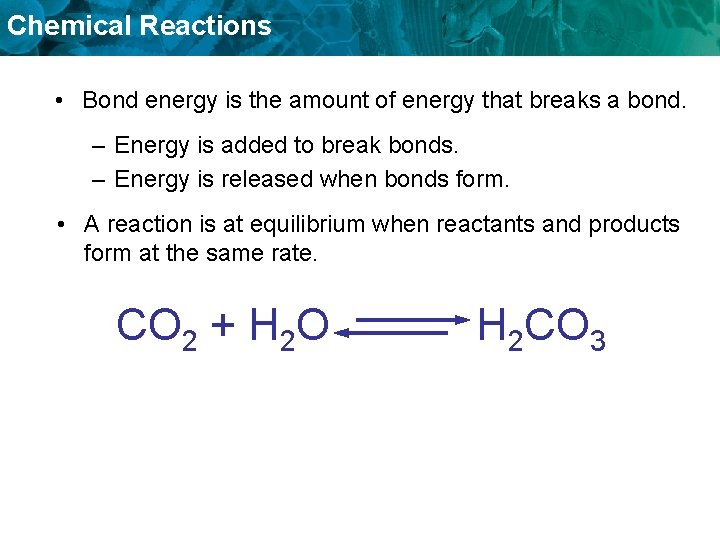
Chemical Reactions • Bond energy is the amount of energy that breaks a bond. – Energy is added to break bonds. – Energy is released when bonds form. • A reaction is at equilibrium when reactants and products form at the same rate. CO 2 + H 2 O H 2 CO 3
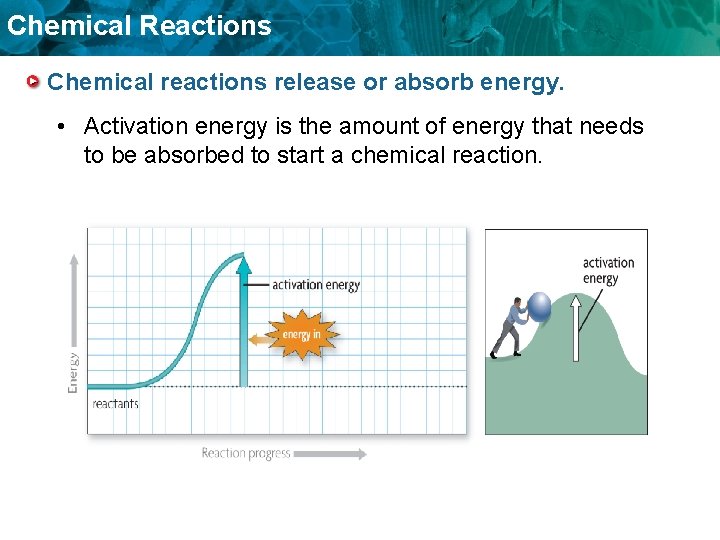
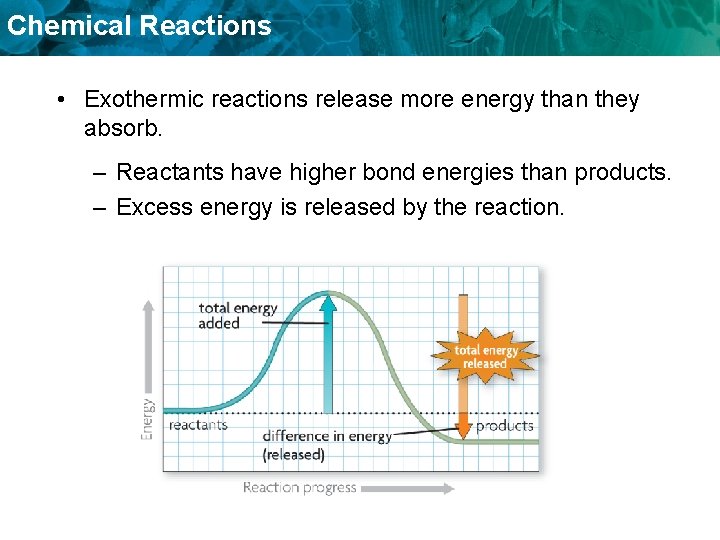
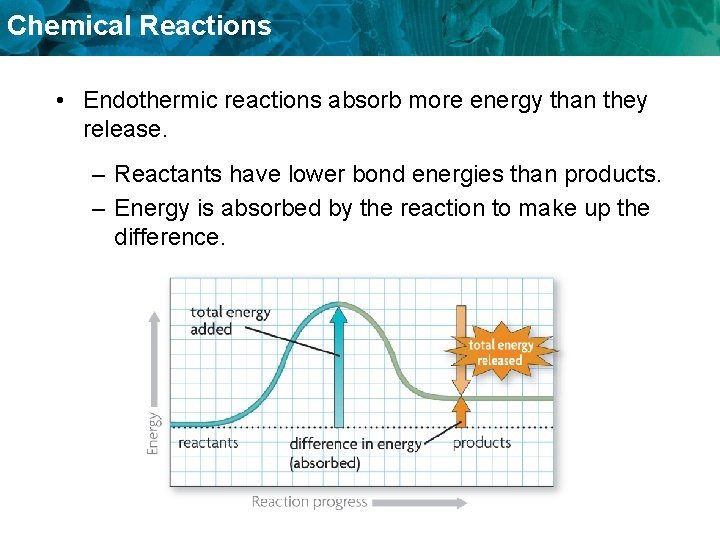
Chemical Reactions Chemical reactions release or absorb energy. • Activation energy is the amount of energy that needs to be absorbed to start a chemical reaction.
Chemical Reactions • Exothermic reactions release more energy than they absorb. – Reactants have higher bond energies than products. – Excess energy is released by the reaction.
Chemical Reactions • Endothermic reactions absorb more energy than they release. – Reactants have lower bond energies than products. – Energy is absorbed by the reaction to make up the difference.
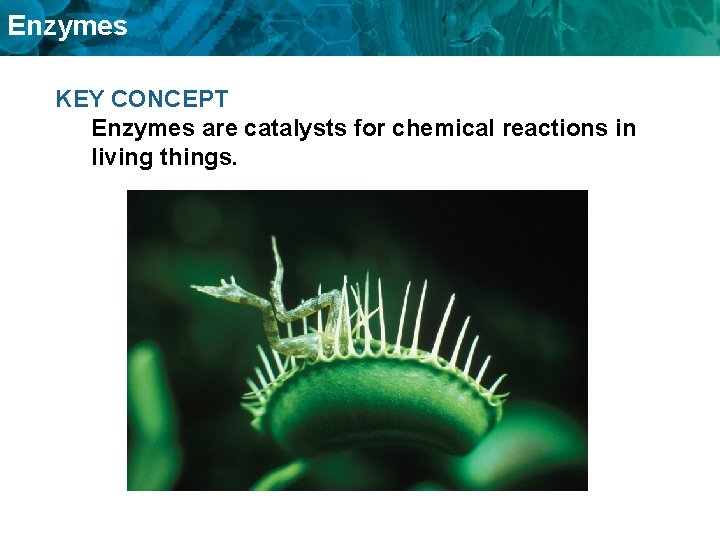
Enzymes KEY CONCEPT Enzymes are catalysts for chemical reactions in living things.
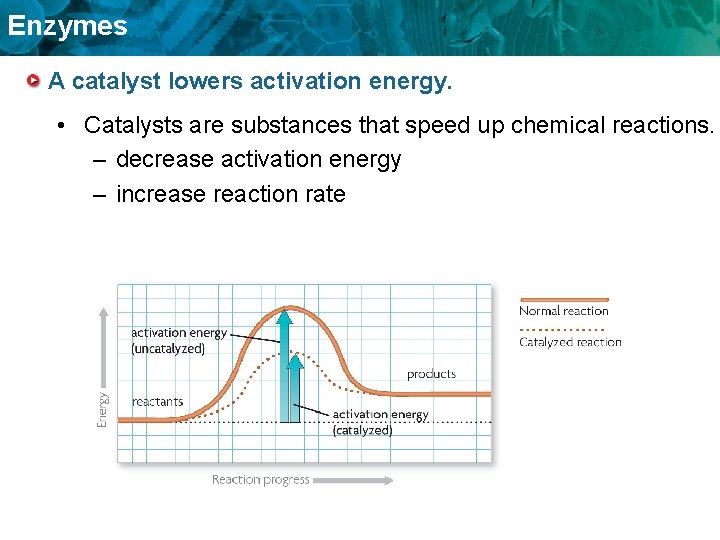
Enzymes A catalyst lowers activation energy. • Catalysts are substances that speed up chemical reactions. – decrease activation energy – increase reaction rate
Enzymes allow chemical reactions to occur under tightly controlled conditions. • Enzymes are catalysts in living things. – Enzymes are needed for almost all processes. – Most enzymes are proteins.
Enzymes • Disruptions in homeostasis can prevent enzymes from functioning. – Enzymes function best in a small range of conditions. – Changes in temperature and p. H can break hydrogen bonds. – An enzyme’s function depends on its structure.
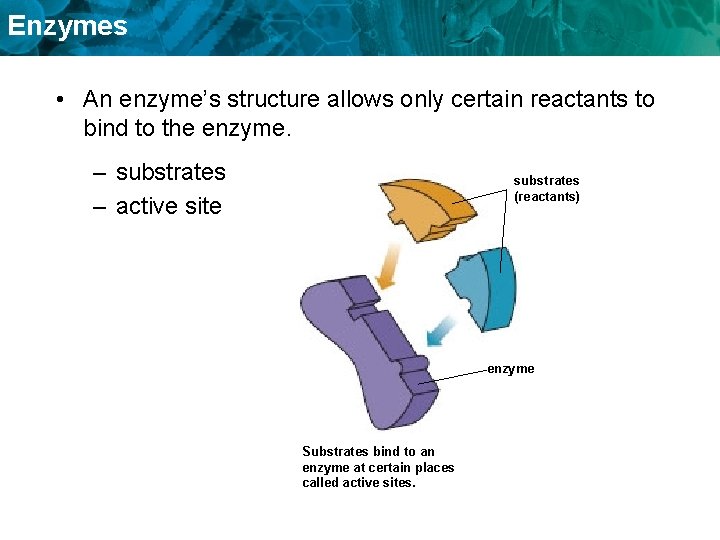
Enzymes • An enzyme’s structure allows only certain reactants to bind to the enzyme. – substrates – active site substrates (reactants) enzyme Substrates bind to an enzyme at certain places called active sites.
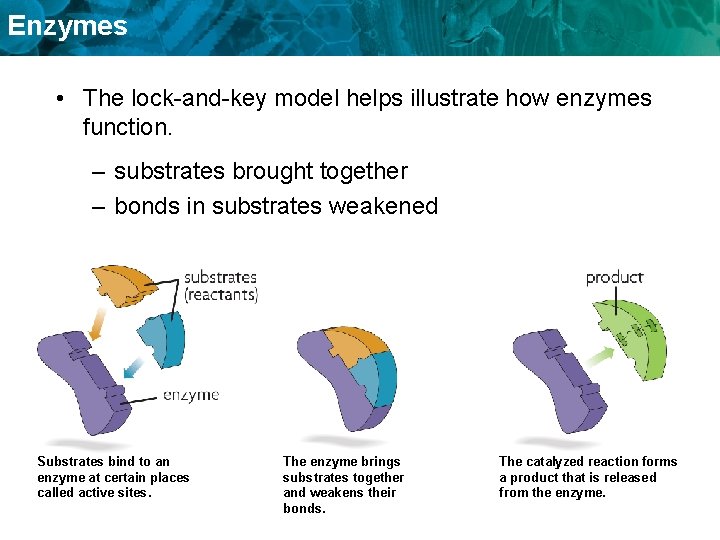
Enzymes • The lock-and-key model helps illustrate how enzymes function. – substrates brought together – bonds in substrates weakened Substrates bind to an enzyme at certain places called active sites. The enzyme brings substrates together and weakens their bonds. The catalyzed reaction forms a product that is released from the enzyme.