
Chemical Properties A property of matter which changes
- Slides: 9
Chemical Properties A property of matter which changes the matter’s identity (composition) when it is observed. Another way to say this is, the matter’s composition (identity) changes while testing a chemical property.
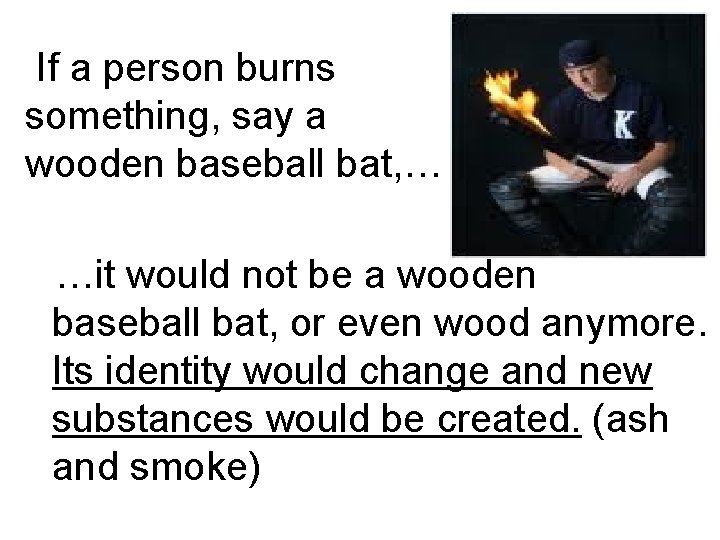
If a person burns something, say a wooden baseball bat, … …it would not be a wooden baseball bat, or even wood anymore. Its identity would change and new substances would be created. (ash and smoke)
Examples of Chemical Properties • Flammability (ability to be burned) • Reactivity (has a chemical reaction with other substances) – Rust on steel (reaction with oxygen) – Tarnish on silver or copper (reaction with oxygen) – Corrosion on a battery – Soured milk – Vinegar reacting with baking soda (produces carbon dioxide)
Signs of Chemical Changes • • • New substance created Change in odor Change in color Fizzing and foaming Production of heat, sound, light or electrical energy • Requires heat, sound, electrical or light energy • Not easily reversible
Chemical Property –vs. Chemical Change A chemical property describes what a substance might be able to do… …a chemical change is when it is actually happening.
Examples of Properties vs. Changes A substance may be flammable. (Chemical Property) Burning a piece of paper. (Chemical Change)
A substance may be reactive to acid. (Chemical Property) Baking soda bubbling and foaming when vinegar is placed on it. (Chemical Change)
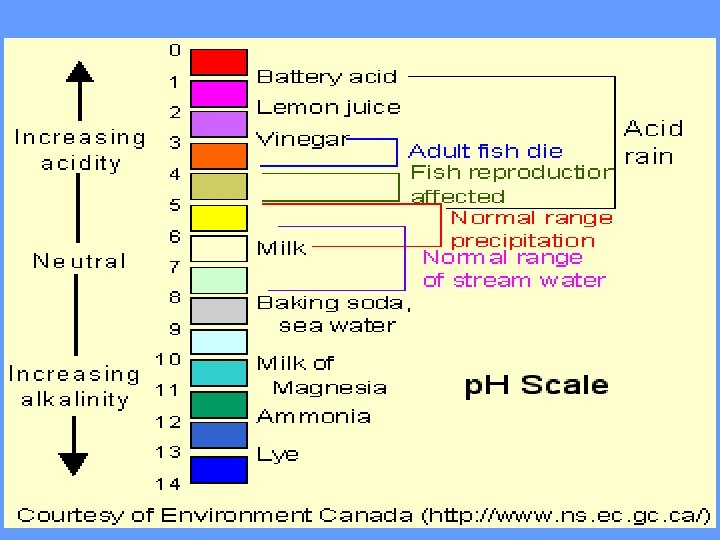
p. H scale • Scientists describe a substances acidity using a scale called the p. H scale. • The scale ranges from zero to 14. • 7 is in the middle and is considered neutral. • A substance that is very acidic, like battery acid, will be found near the zero end. • A substance that is very alkaline, like lye soap, will be found near the 14 end.