
Chemical Intramolecular Bonding Review of the Periodic Table
Chemical (Intramolecular) Bonding
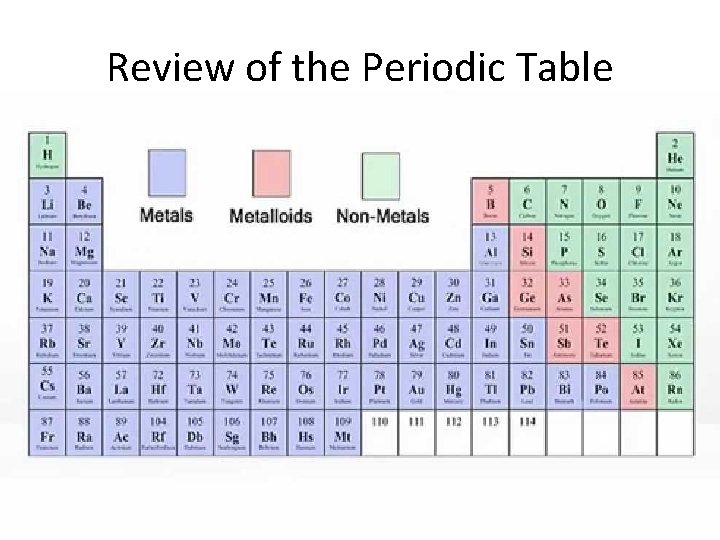
Review of the Periodic Table
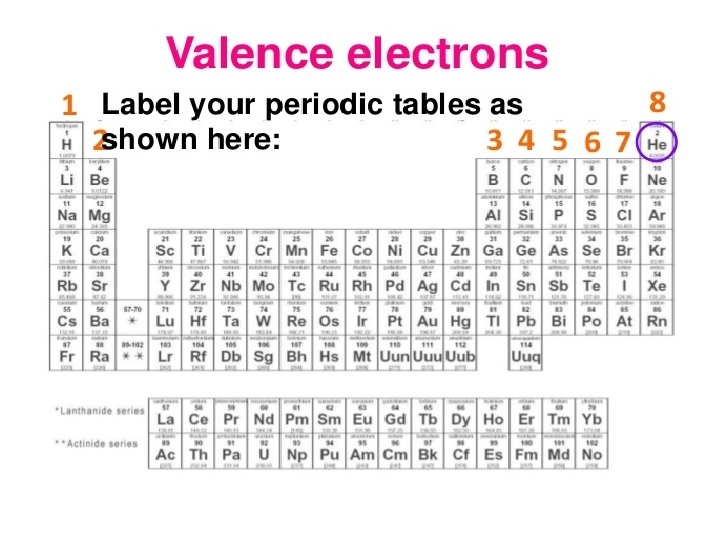
Review of Valence Electrons
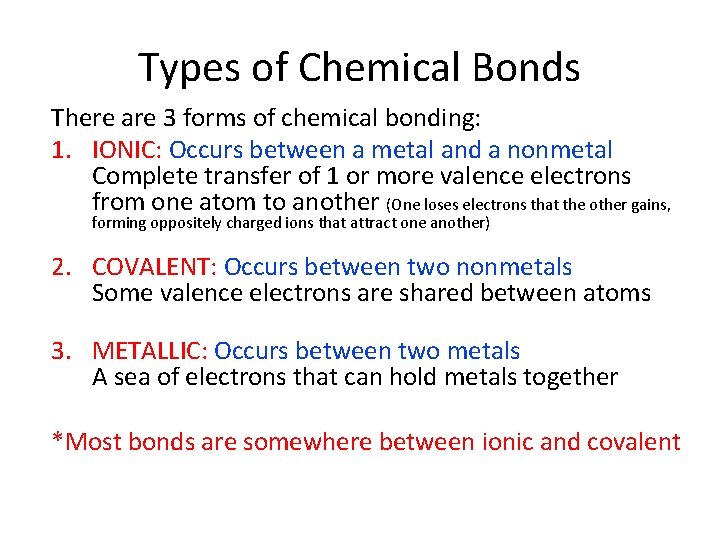
Types of Chemical Bonds There are 3 forms of chemical bonding: 1. IONIC: Occurs between a metal and a nonmetal Complete transfer of 1 or more valence electrons from one atom to another (One loses electrons that the other gains, forming oppositely charged ions that attract one another) 2. COVALENT: Occurs between two nonmetals Some valence electrons are shared between atoms 3. METALLIC: Occurs between two metals A sea of electrons that can hold metals together *Most bonds are somewhere between ionic and covalent
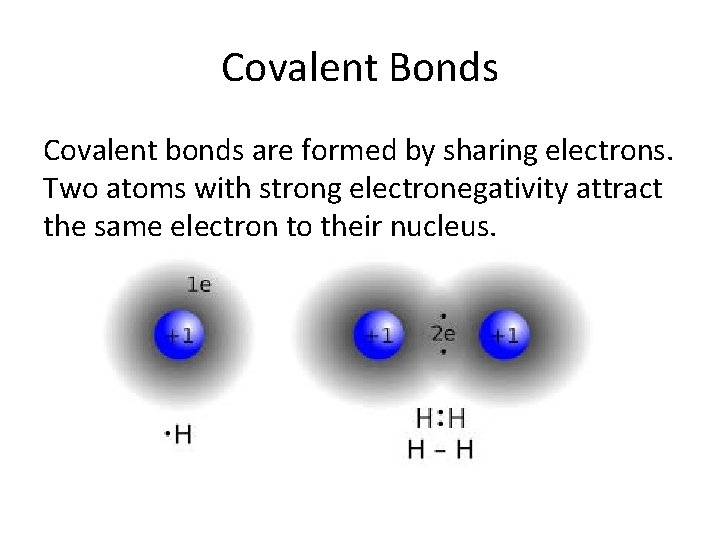
Covalent Bonds Covalent bonds are formed by sharing electrons. Two atoms with strong electronegativity attract the same electron to their nucleus.
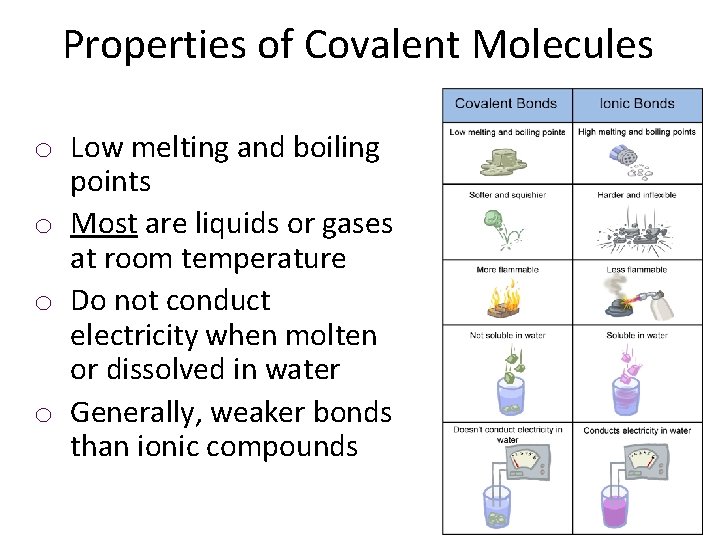
Properties of Covalent Molecules o Low melting and boiling points o Most are liquids or gases at room temperature o Do not conduct electricity when molten or dissolved in water o Generally, weaker bonds than ionic compounds
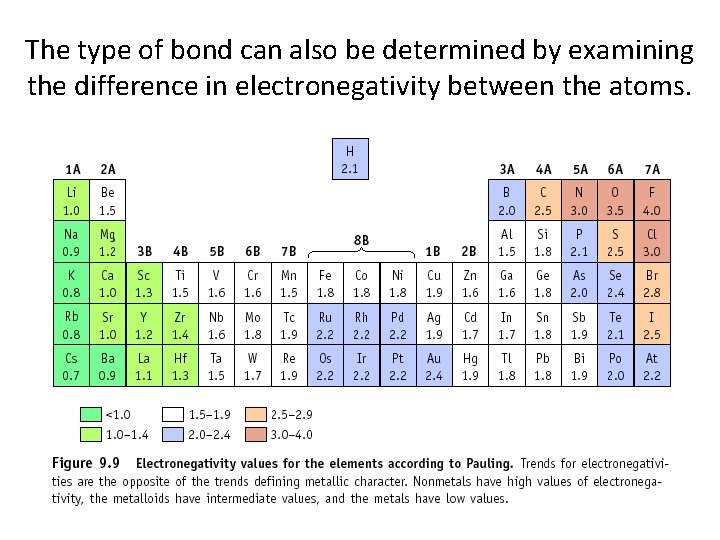
The type of bond can also be determined by examining the difference in electronegativity between the atoms.

Determining Types of Bonds If the difference in electronegativity is between: 1. 7 to 4. 0: Ionic 0. 5 to 1. 6: Polar Covalent 0. 0 to 0. 4: Non-Polar Covalent Example: H 2 O H = 2. 1, O = 3. 5 Difference is 1. 4, so this is a polar covalent bond!
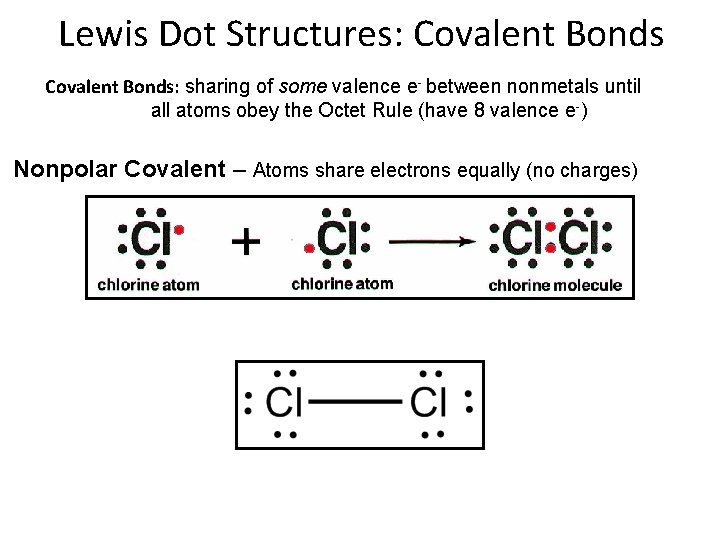
Lewis Dot Structures: Covalent Bonds: sharing of some valence e- between nonmetals until all atoms obey the Octet Rule (have 8 valence e-) Nonpolar Covalent – Atoms share electrons equally (no charges)
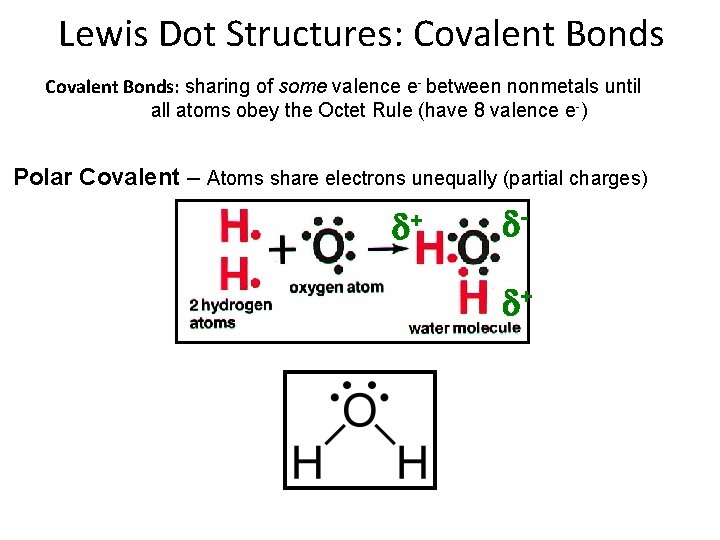
Lewis Dot Structures: Covalent Bonds: sharing of some valence e- between nonmetals until all atoms obey the Octet Rule (have 8 valence e-) Polar Covalent – Atoms share electrons unequally (partial charges) + +
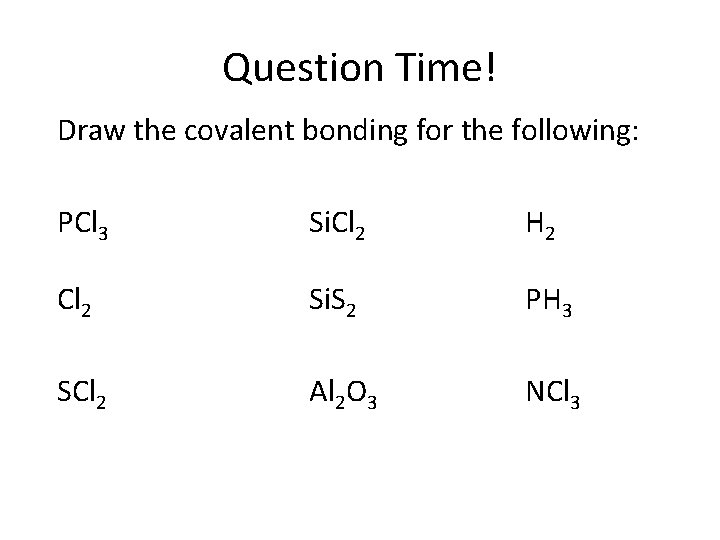
Question Time! Draw the covalent bonding for the following: PCl 3 Si. Cl 2 H 2 Cl 2 Si. S 2 PH 3 SCl 2 Al 2 O 3 NCl 3
- Slides: 11