
Chemical indicators How to detect macromolecules in food

- Slides: 8
Chemical indicators How to detect macromolecules in food
What is a chemical indicator? • A substance that changes to indicate that a specific compound is in what you’re testing. • The change can be color, temperature, odor, or production of bubbles. • They are VERY specific! • Easiest to use is color usually.
Indicators we will use • • Benedict’s Solution Lugol’s Iodine Biuret Solution Sudan IV
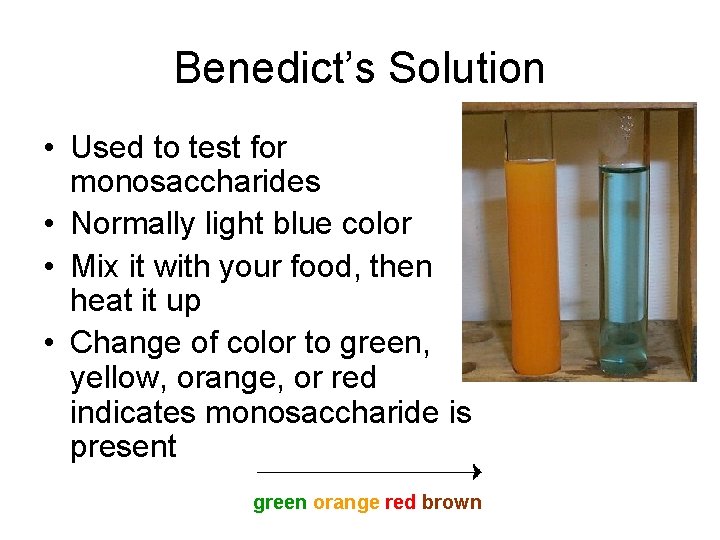
Benedict’s Solution • Used to test for monosaccharides • Normally light blue color • Mix it with your food, then heat it up • Change of color to green, yellow, orange, or red indicates monosaccharide is present green orange red brown
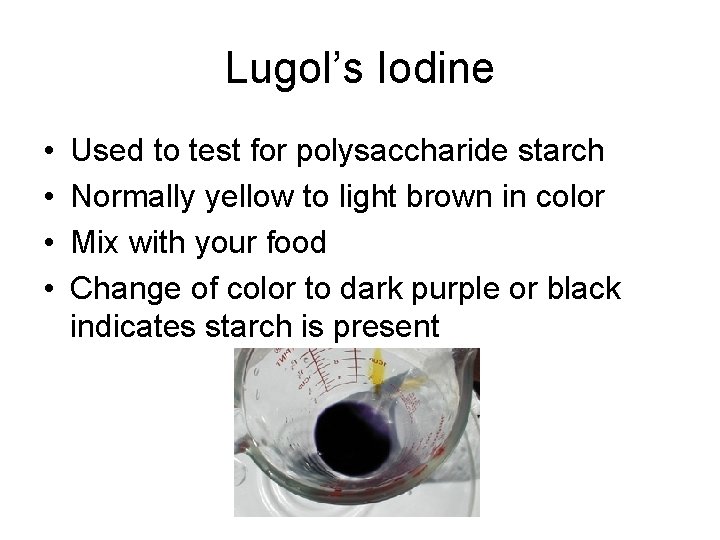
Lugol’s Iodine • • Used to test for polysaccharide starch Normally yellow to light brown in color Mix with your food Change of color to dark purple or black indicates starch is present
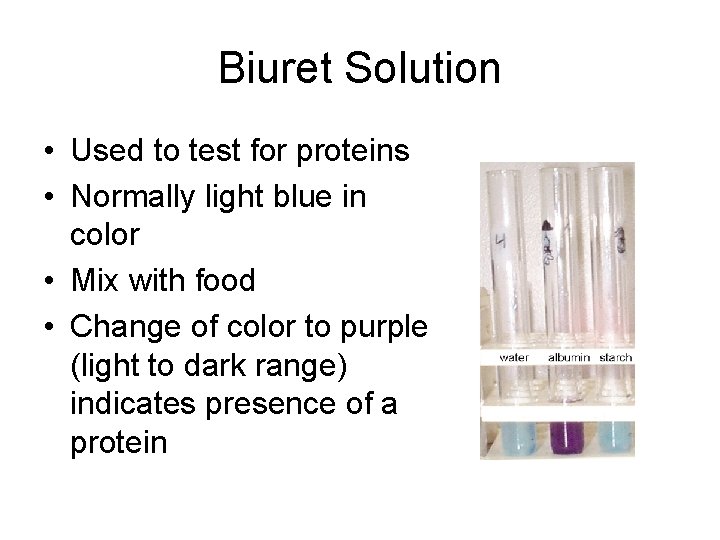
Biuret Solution • Used to test for proteins • Normally light blue in color • Mix with food • Change of color to purple (light to dark range) indicates presence of a protein
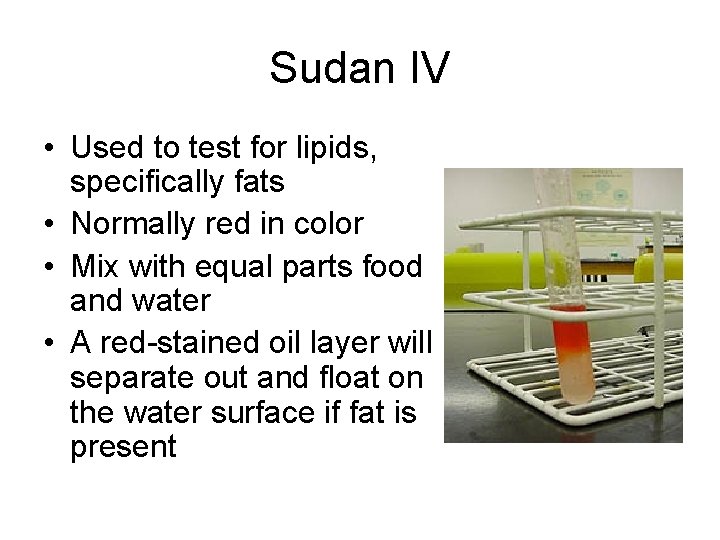
Sudan IV • Used to test for lipids, specifically fats • Normally red in color • Mix with equal parts food and water • A red-stained oil layer will separate out and float on the water surface if fat is present
Procedure • First you need to perform the tests on control so that you know what a positive test looks like • Then test on unknown foods • Some foods will have more than one type of macromolecule